

As an Amazon Associate, I earn from qualifying purchases.
Marigolds are the friendliest flowers in the garden. They bloom nonstop, shrug off heat, and cost almost nothing. But where you plant them changes everything. These marigold garden design ideas cover borders, pots, vegetable beds, color schemes, and a few surprising spots you may not have tried. Pick one that fits your space, grab a few seed packets, and let the sunshine begin.
1. Vegetable Bed Border
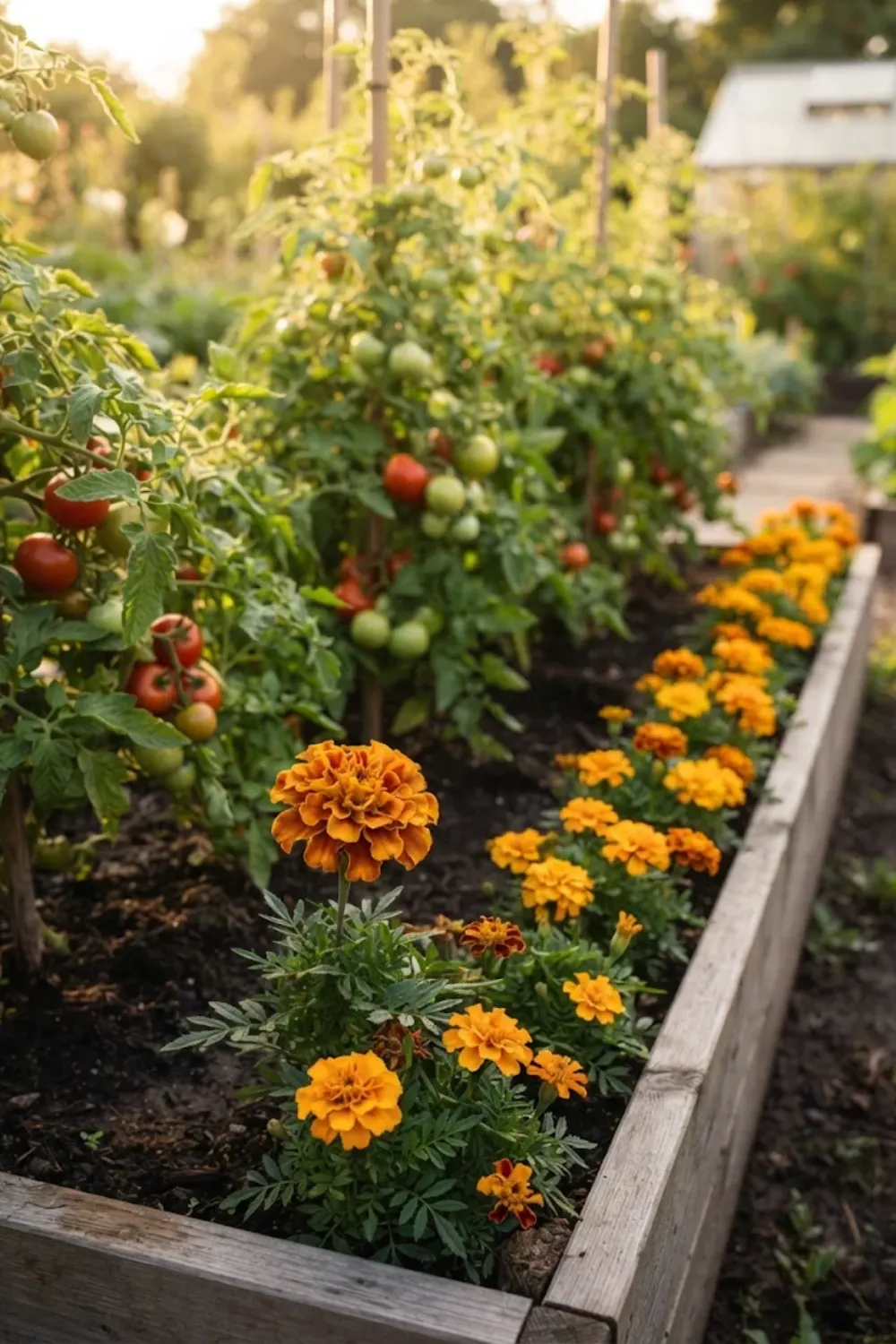
Ring your tomato or pepper bed with French marigolds and you get a tidy, golden frame that also earns its keep. Many gardeners plant them to discourage root-knot nematodes in the soil, though results vary. Space them about 8 inches apart and tuck one in every corner. When the vegetables crowd in, the marigolds keep blooming at their feet.
2. Cottage Garden Jumble
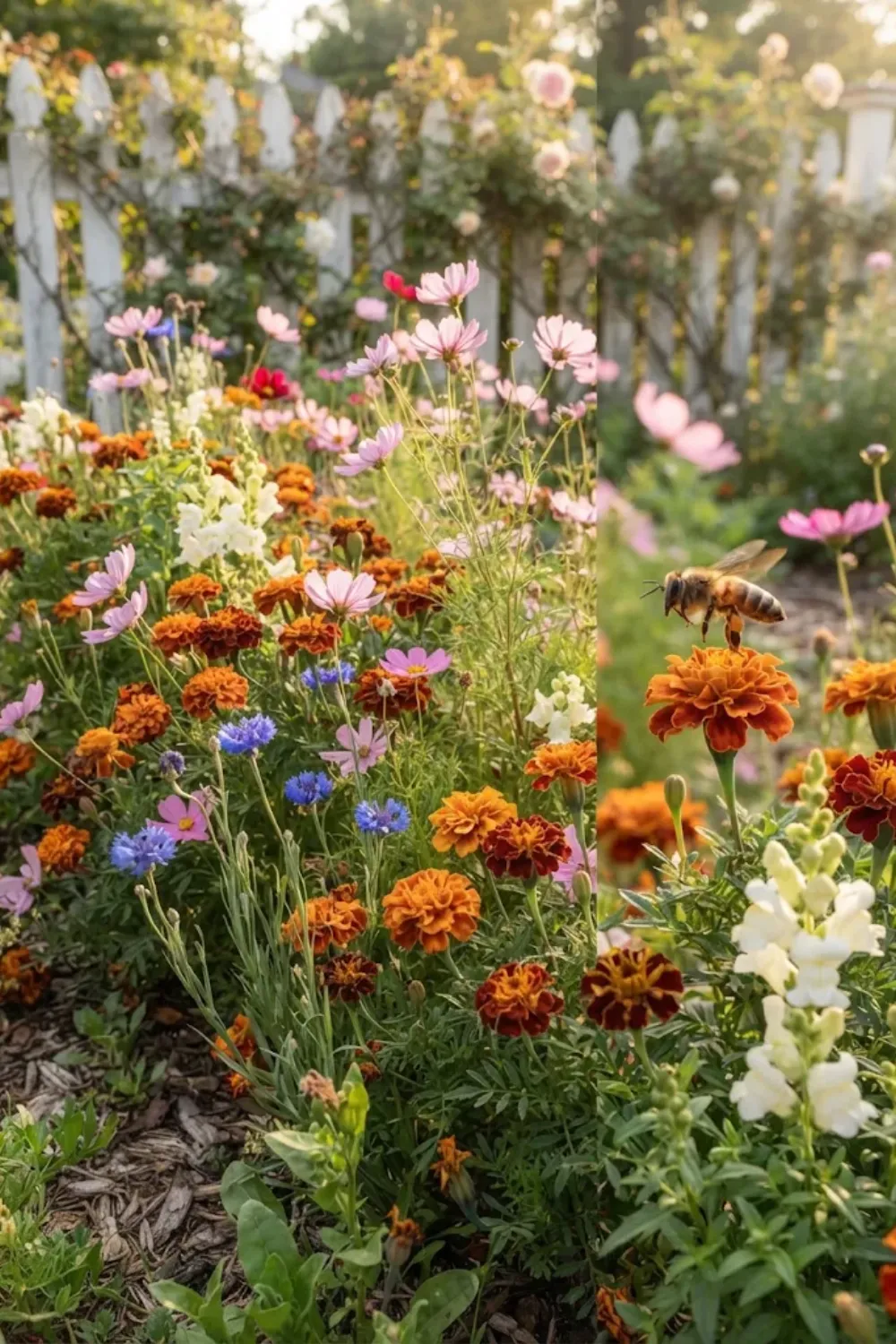
Skip the neat rows and scatter marigold seeds between cosmos, snapdragons, and bachelor’s buttons. The result looks like it grew by accident, which is the charm. Choose a mix of heights and flower shapes, from ruffled carnation types to simple single blooms. Sow them in loose drifts rather than straight lines. By midsummer, the whole bed hums with color and bees.
3. Orange and Blue Pairing
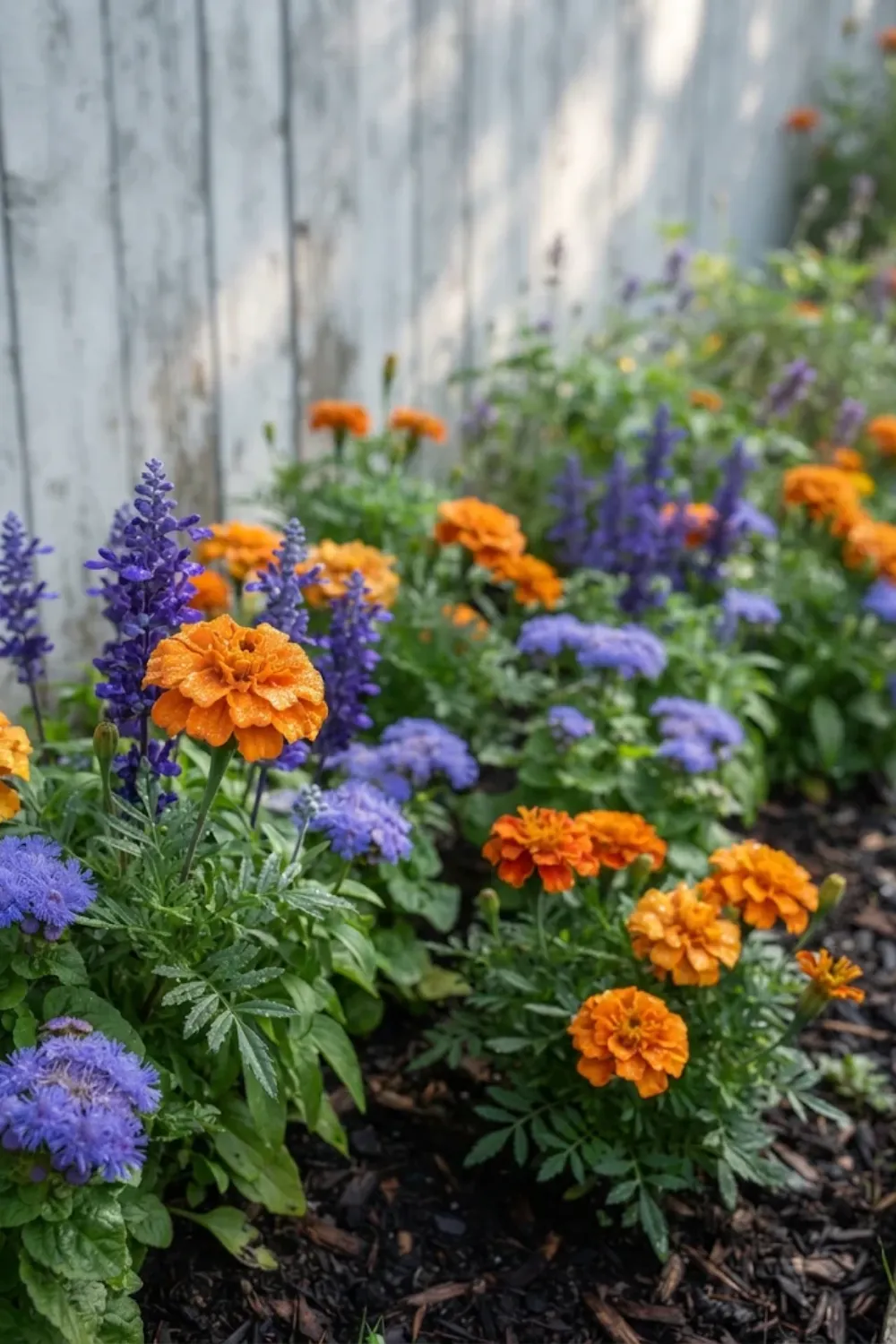
Orange and blue sit opposite each other on the color wheel, so they make each other pop. Plant orange marigolds beside blue salvia, ageratum, or lobelia. Keep the blues in clumps of three or five so they read as bold patches, not scattered dots. This combo looks sharp in a bed beside a gray fence or white house wall.
4. Front Path Edging
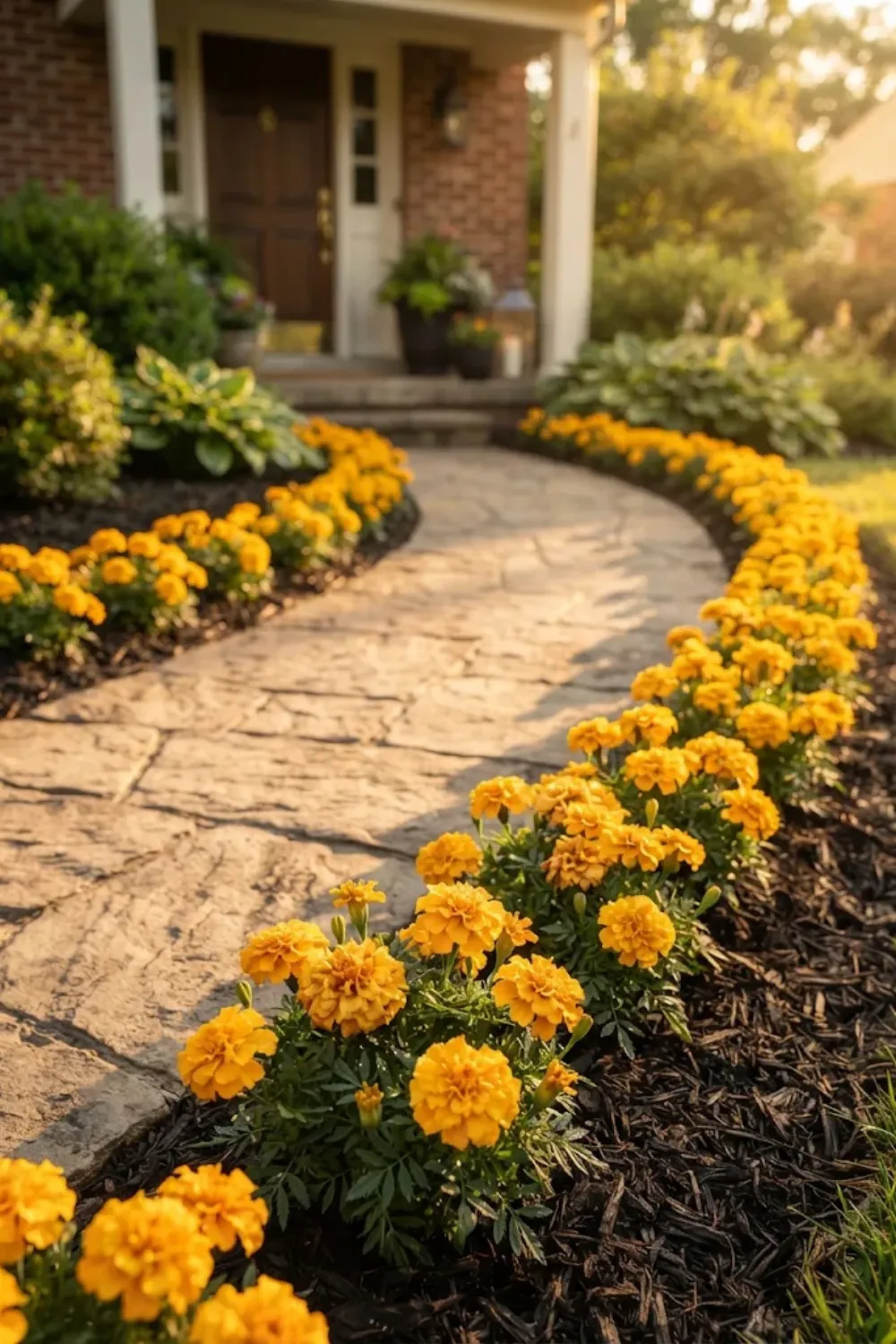
Line a walkway with dwarf French marigolds, and your front path suddenly feels welcoming. Pick one variety and one color so the edge looks crisp, like a ribbon. Plant them 6 inches apart, about 4 inches from the path. Most dwarf types stay compact, so they won’t flop onto anyone’s feet. Pinch off faded blooms every week or so to keep the row going.
5. Hanging Baskets
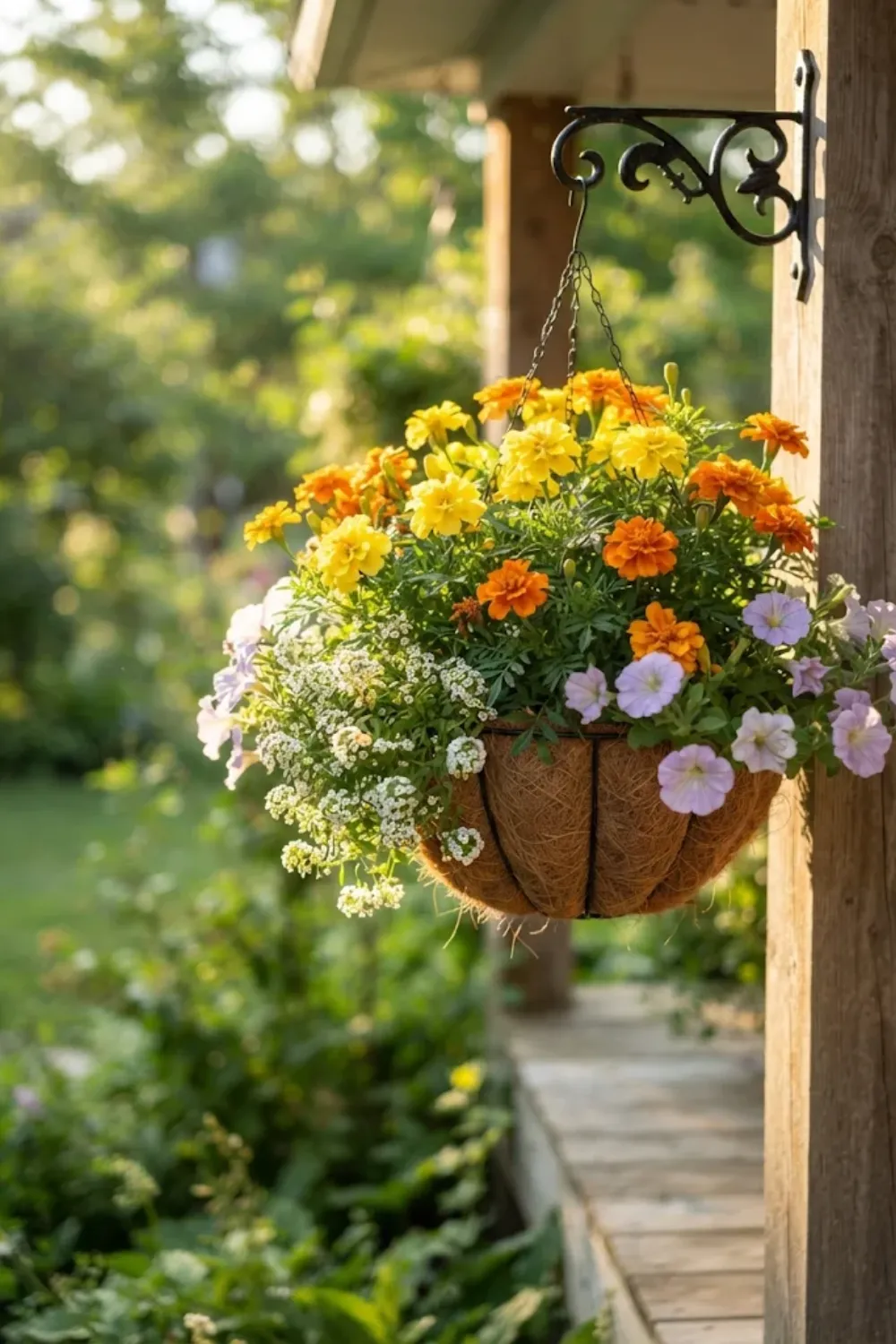
Signet marigolds suit baskets beautifully. Their lacy leaves and small, single flowers spill over the edge without looking heavy. Pair them with trailing petunias or sweet alyssum for a soft cascade. Hang the basket where it gets at least six hours of sun, and water whenever the top inch feels dry. Baskets dry out fast in summer, so check them daily.
6. Tall Backdrop
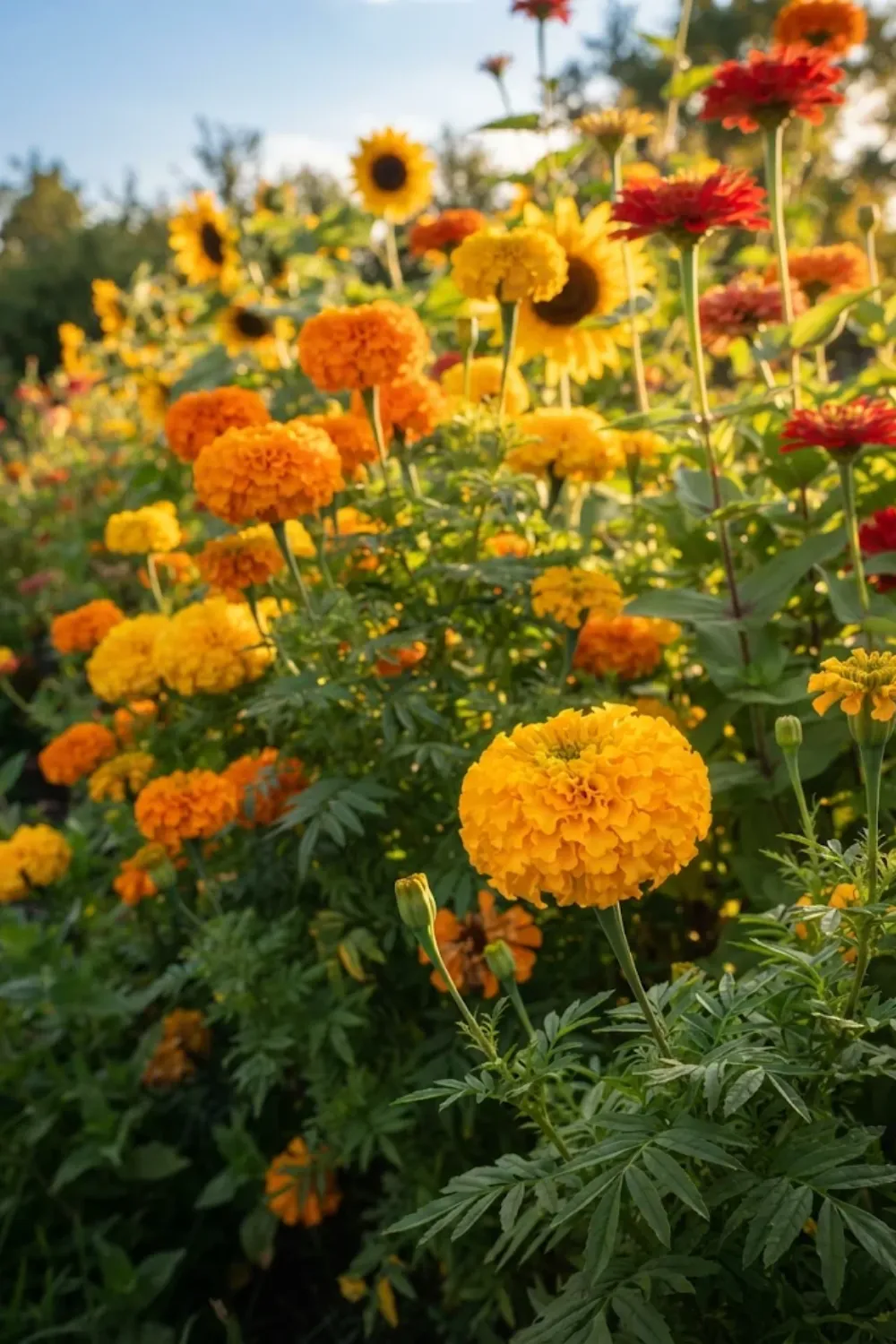
African marigolds can reach three feet, with big pom-pom blooms the size of a tennis ball. Use them at the back of a border, where they hide the bare stems of earlier bloomers. Pair them with sunflowers or tall zinnias. Stake the tallest varieties if your spot is windy, and give each plant a foot of space so air moves through.
7. Container Trio
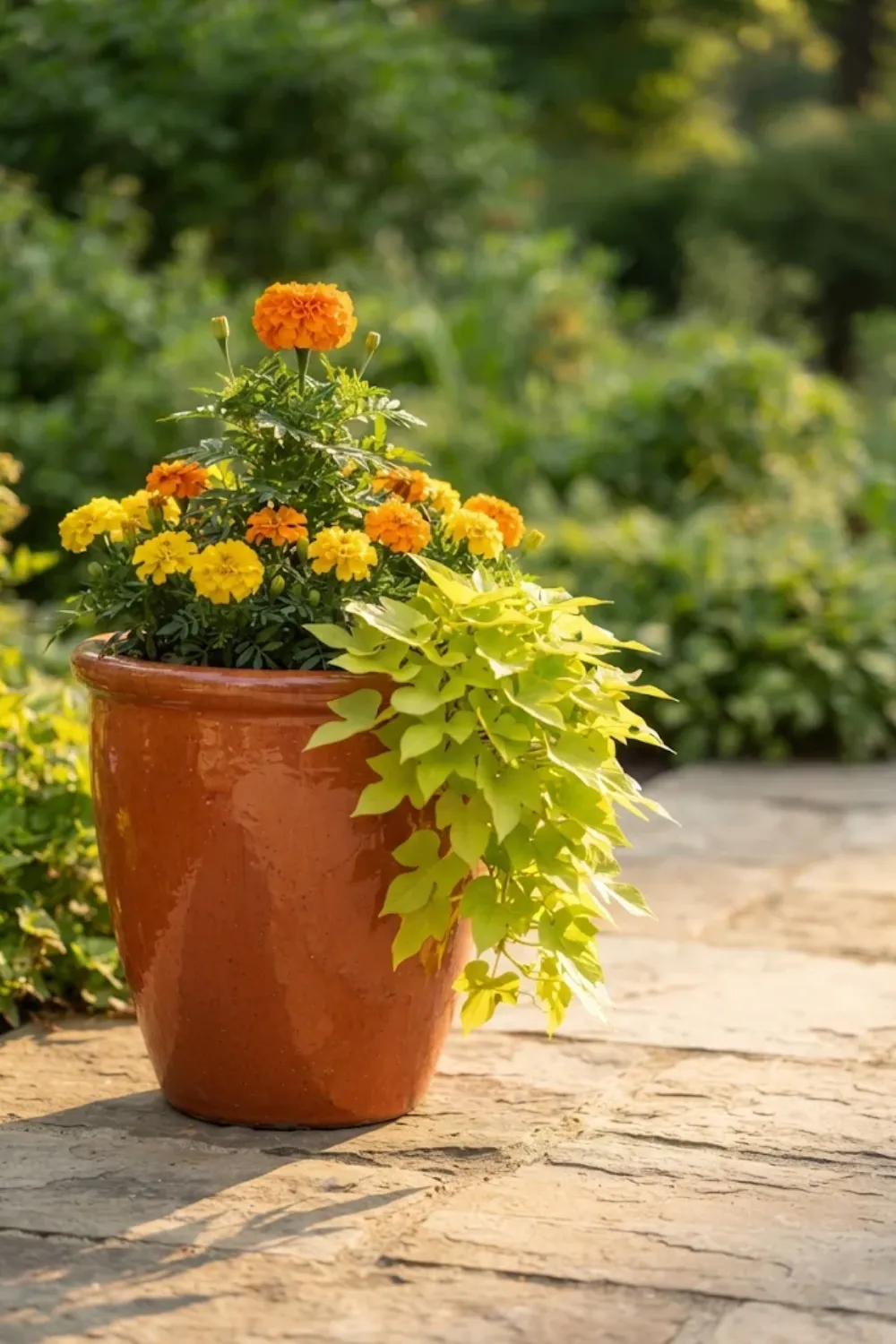
Try the thriller, filler, spiller formula in one big pot. Put a tall African marigold in the center, a few compact French marigolds around it, and a trailing sweet potato vine over the rim. Choose a pot at least 14 inches wide with drainage holes. Water when the surface dries, and feed lightly. Too much fertilizer gives you leaves instead of flowers.
8. Edible Herb Bed
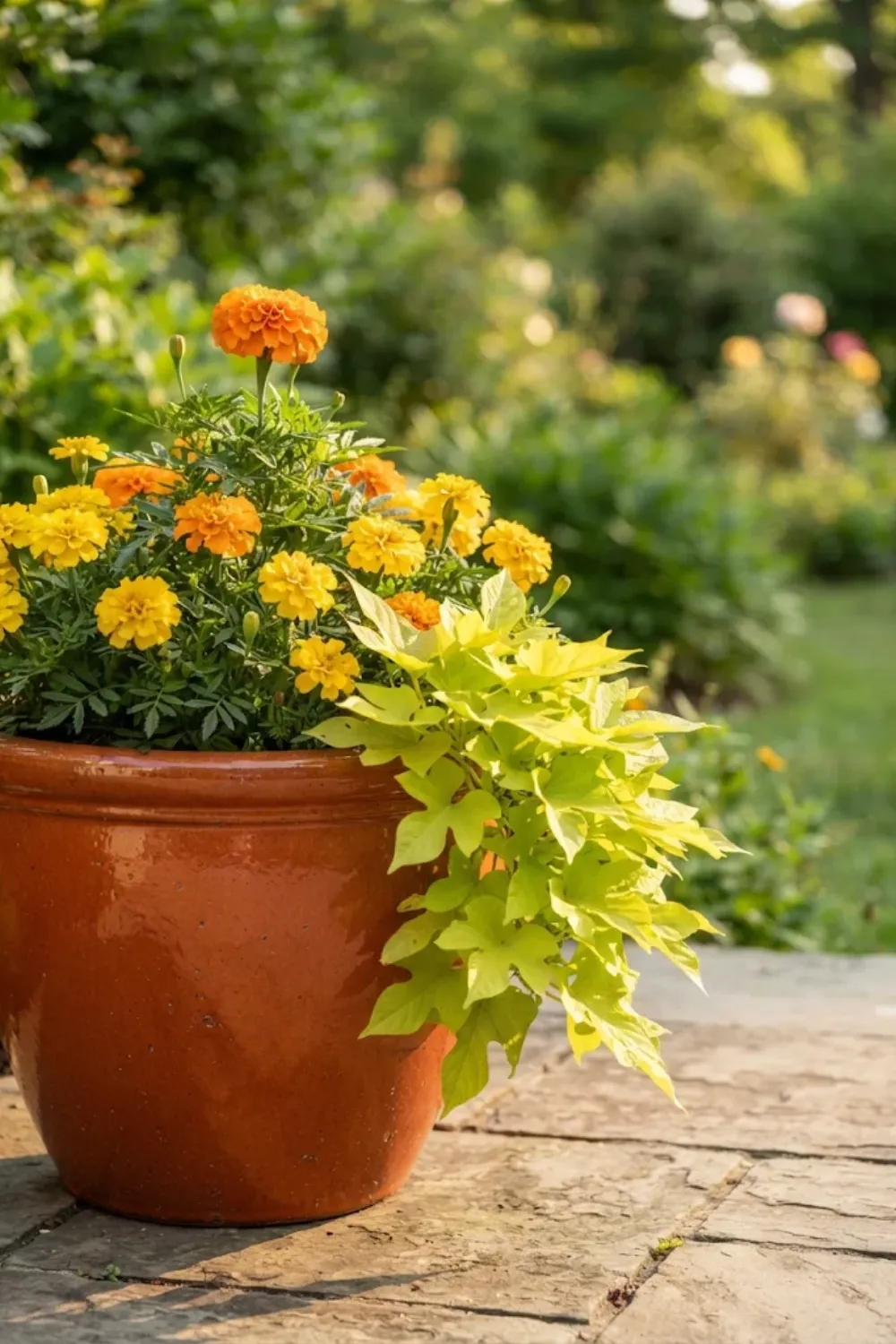
Signet marigolds belong in the kitchen garden. Their tiny petals taste citrusy and a little peppery, and they brighten salads, rice, and soft cheese. Plant them between basil, parsley, and chives so the bed looks planned. Grow them without sprays, harvest petals in the morning, and add a pinch just before serving. Make sure you’ve got the right type, since not every marigold is meant for eating.
9. Pollinator Patch

Single-flowered marigolds, with open centers, are easier for bees and hoverflies to reach than tightly packed double types. Plant a patch of them with cosmos, zinnias, and borage. Aim for at least a few square feet so insects can spot it. Skip pesticides, and leave a few spent flowers at season’s end for seed-eating birds like finches.
10. Golden Monochrome
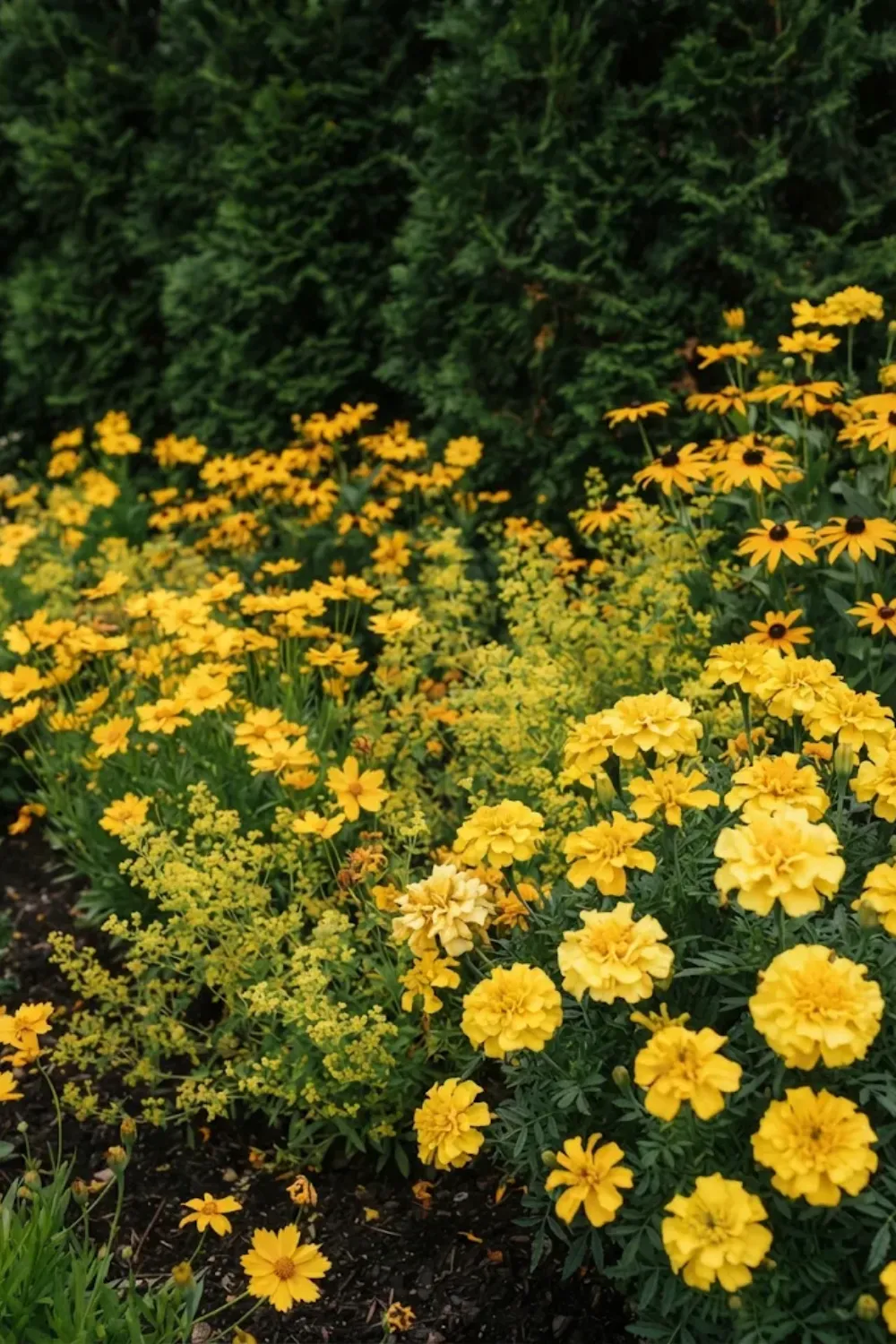
Go all in on yellow and gold. Combine lemon-yellow marigolds with golden coreopsis, black-eyed Susans, and a little chartreuse foliage like golden oregano. One color family feels calm, and the mix of shapes keeps it from looking flat. Add a dark green hedge or evergreen behind the bed, and the gold will glow like sunlight even on cloudy days.
11. Mexican Mint Marigold
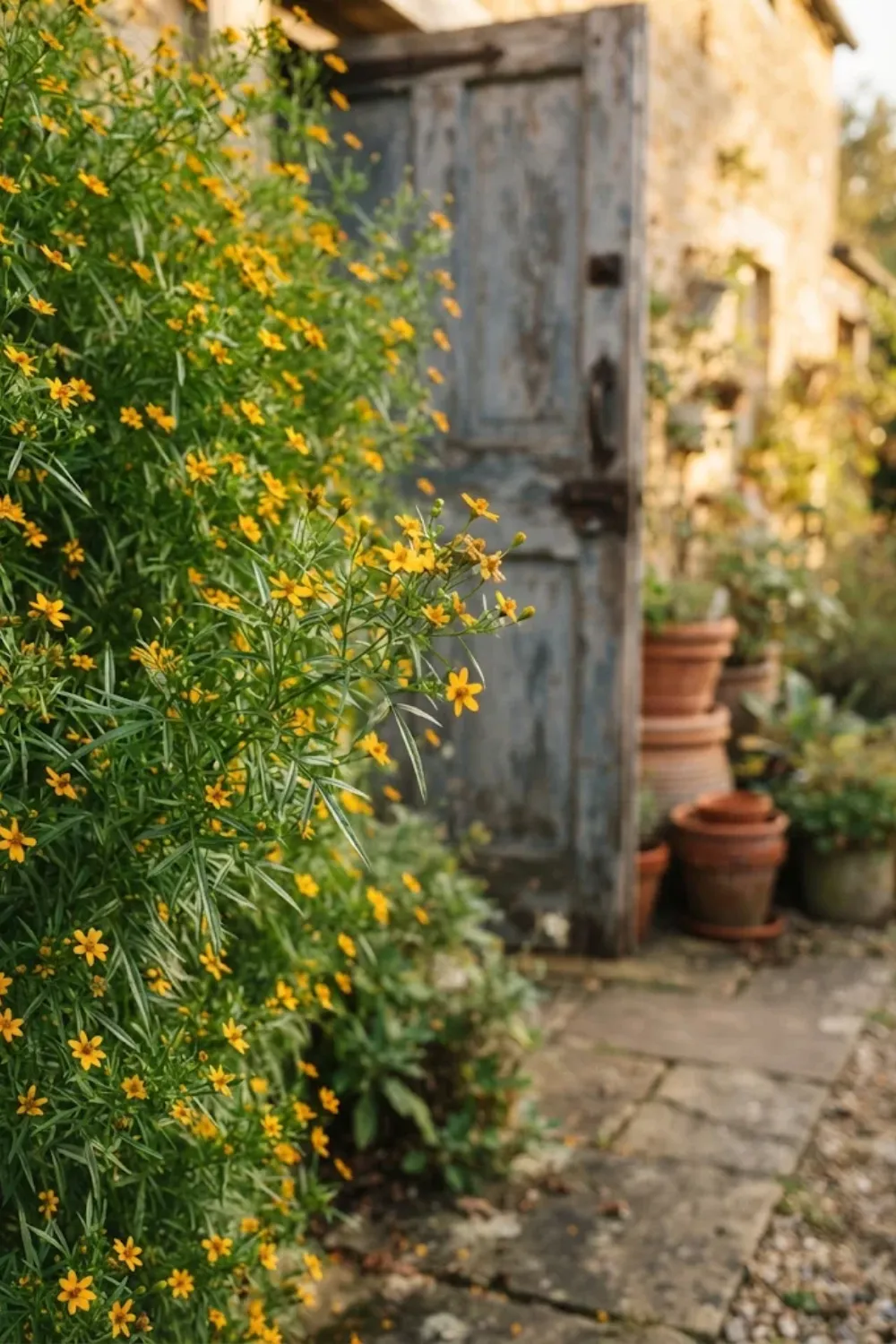
Not every marigold is an annual. Mexican mint marigold (Tagetes lucida) comes back year after year in warm climates, and its leaves taste like tarragon with a hint of anise. It grows two to three feet tall and bursts into small golden flowers in fall. Plant it as a tough edge near the kitchen door, and snip leaves for tea or chicken.
12. Festival Cutting Row

Grow a dedicated row for picking, especially if you string garlands for Diwali or Day of the Dead altars. Sow a new batch every three weeks so blooms keep coming. Cut in the morning and strip the lower leaves. Tall African types make the fullest garlands and hold up well. Their strong scent is nicest mixed with softer flowers in a vase.
13. Raised Bed Checkerboard
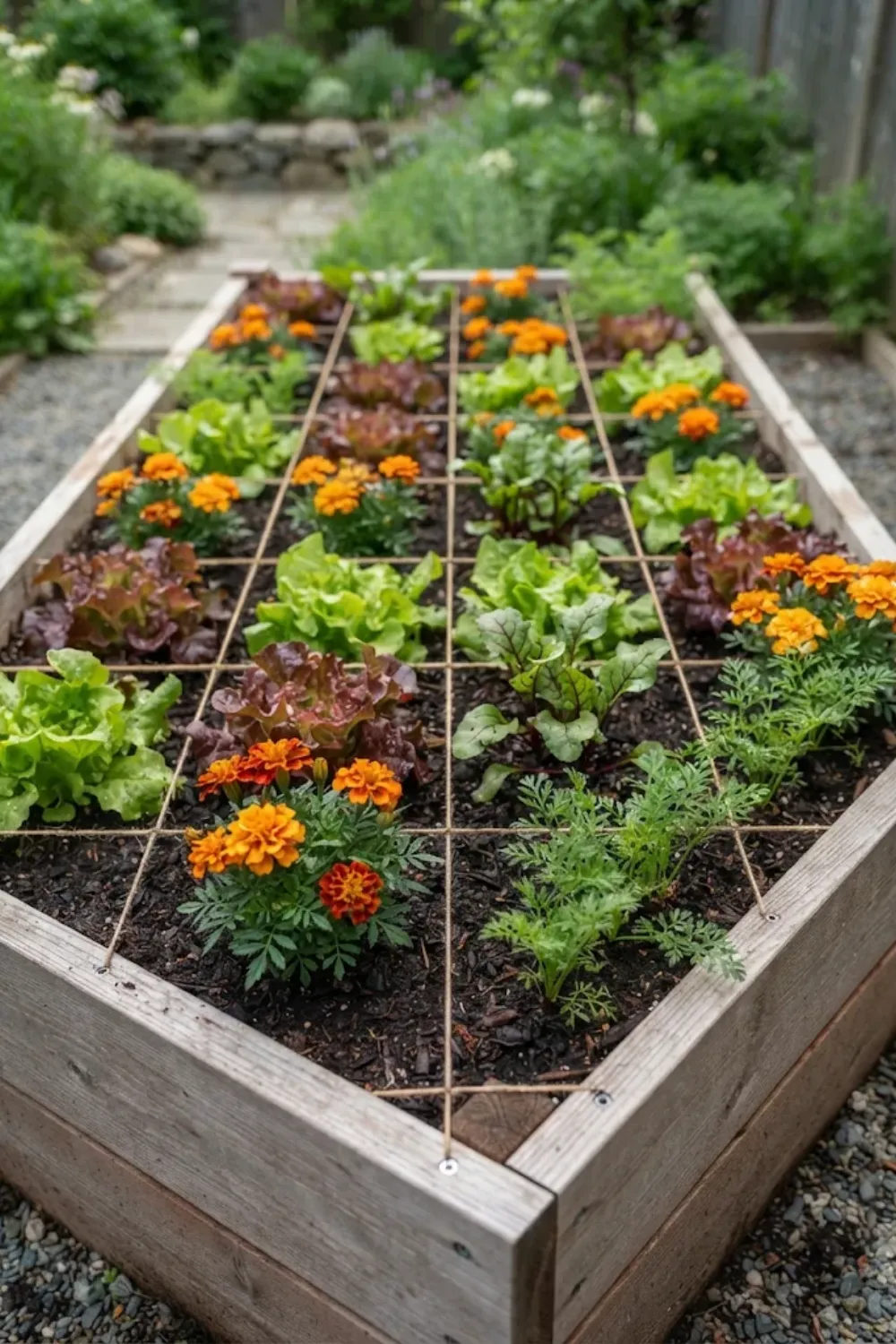
Divide a raised bed into 1-foot squares and alternate marigolds with lettuce, beets, or carrots. The pattern looks like a quilt, and every crop stays easy to reach. Mark the grid with garden string. Use compact French marigolds so they don’t shade their neighbors, and replant a square as soon as a crop finishes.
14. Rustic Wheelbarrow Planter
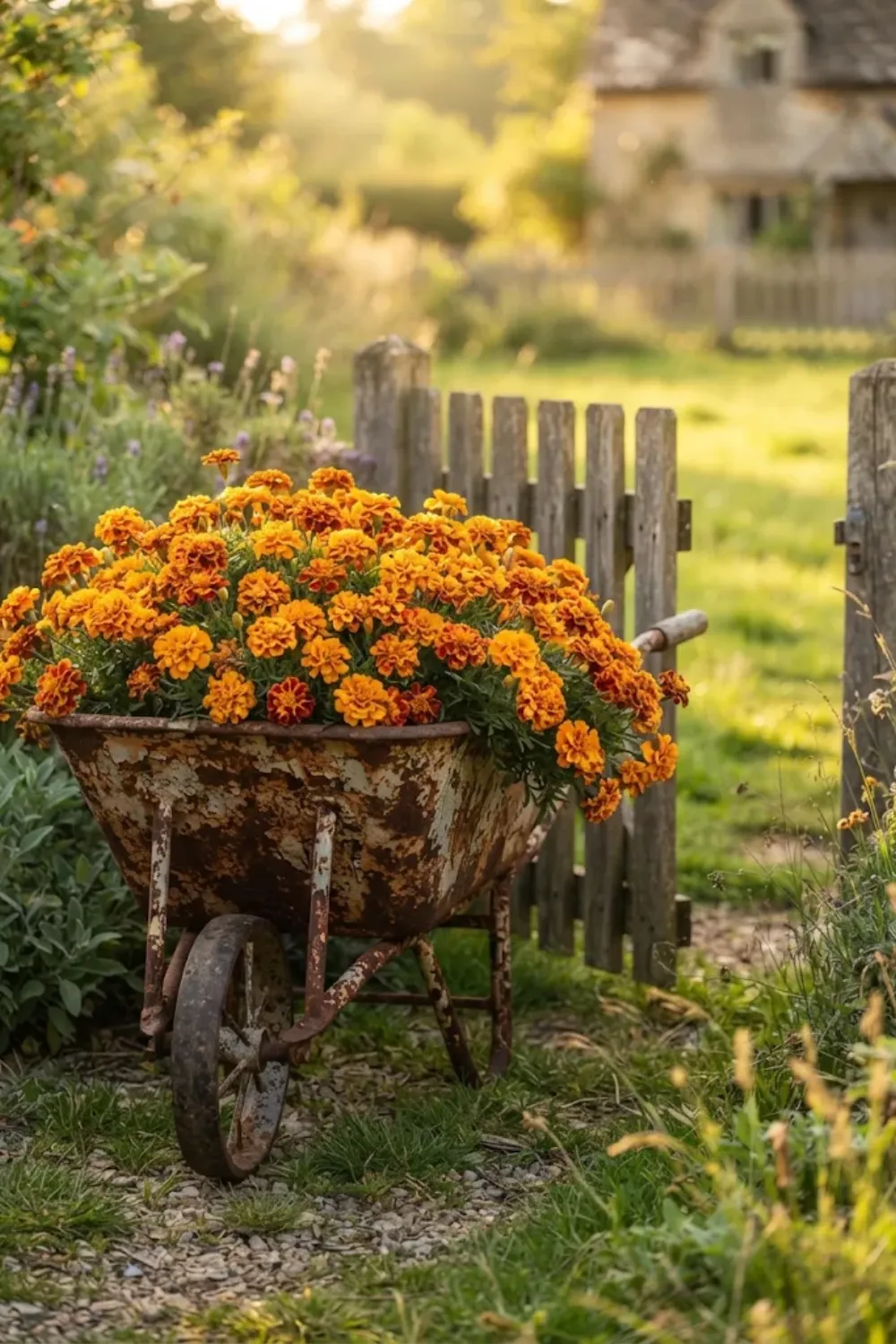
An old wheelbarrow packed with marigolds makes a cheerful focal point. Drill a few drainage holes, add a layer of gravel, and fill with potting mix. Plant dense French marigolds close together so the blooms spill over the sides. Park it by the gate or at the end of a path, and roll it to the sunniest spot as the season changes.
15. Sunny Window Box
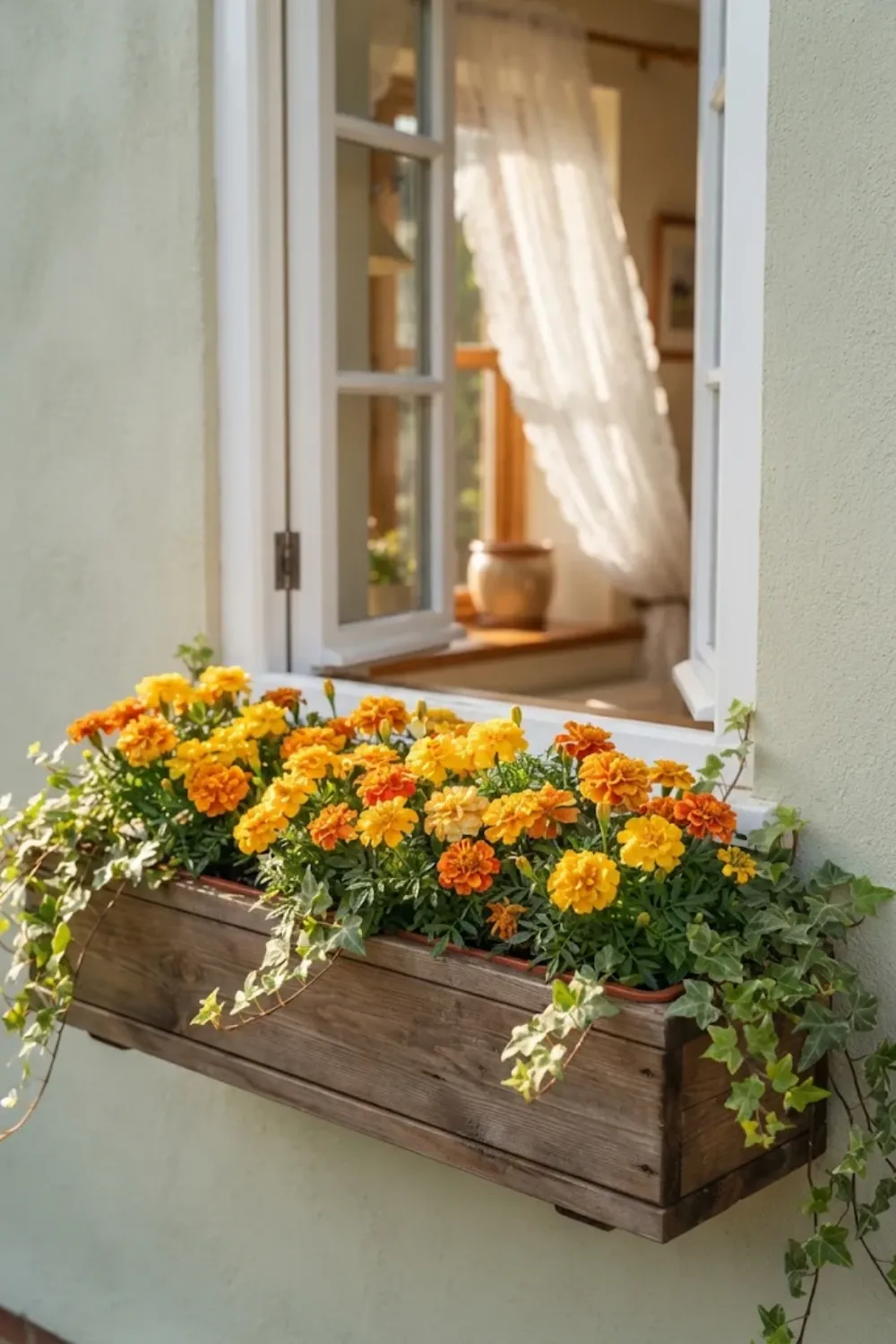
Fill a window box with dwarf marigolds up front and trailing ivy at the edges to soften the lines. Pick a box at least 8 inches deep so roots stay cool and moist. Mount it where it catches full sun. Here’s the best part: if it sits outside a window you can open, you can deadhead from indoors.
16. Gravel Heat Bed
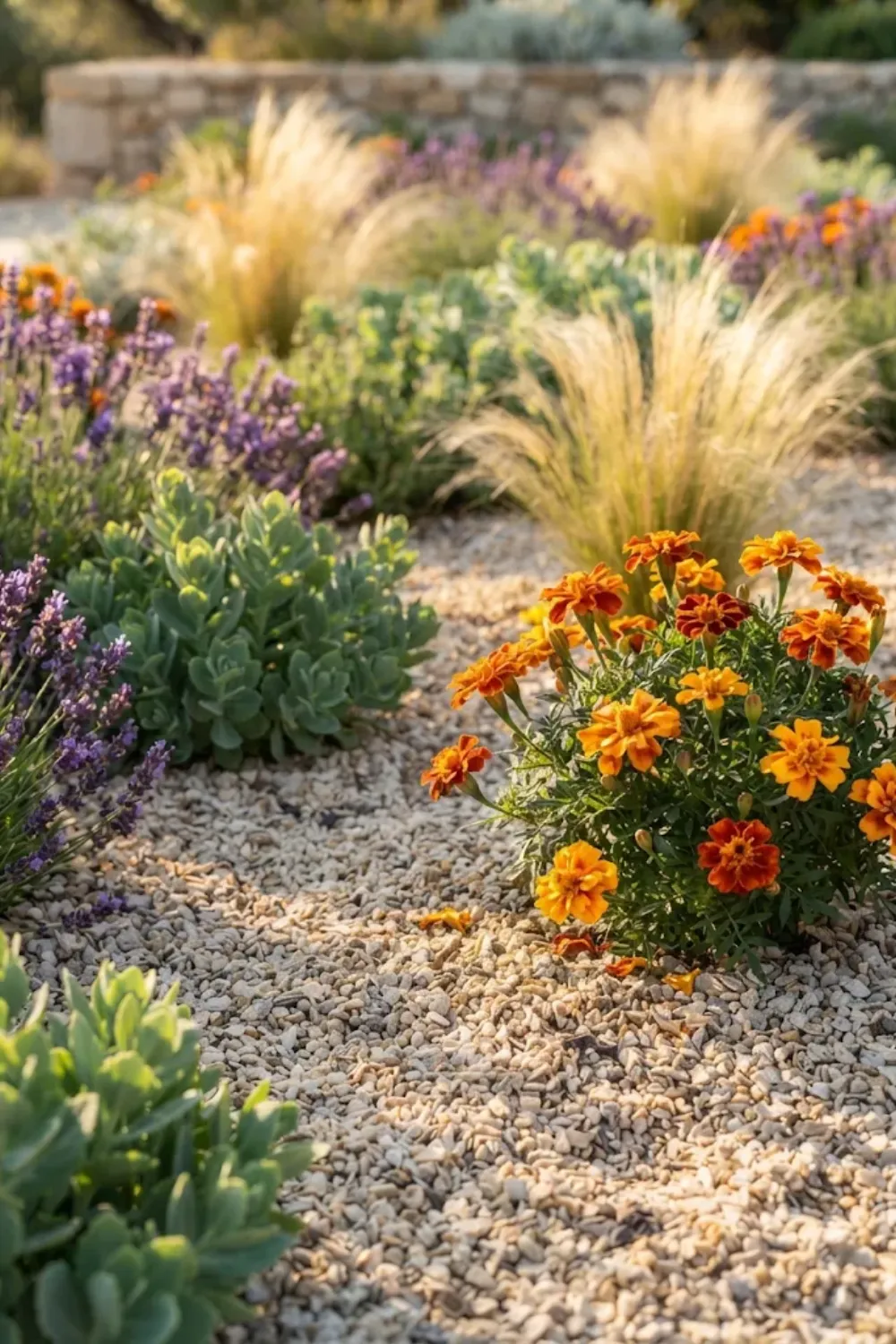
Marigolds love full sun and fast-draining soil, which makes them perfect for a gravel garden. Mix them with lavender, sedum, and feathery ornamental grasses. A gravel mulch keeps soil from splashing onto the leaves and helps the bed dry quickly after rain. Once established, these plants need less water, so this idea suits hot, dry corners where other flowers struggle.
17. Sunset Ombre
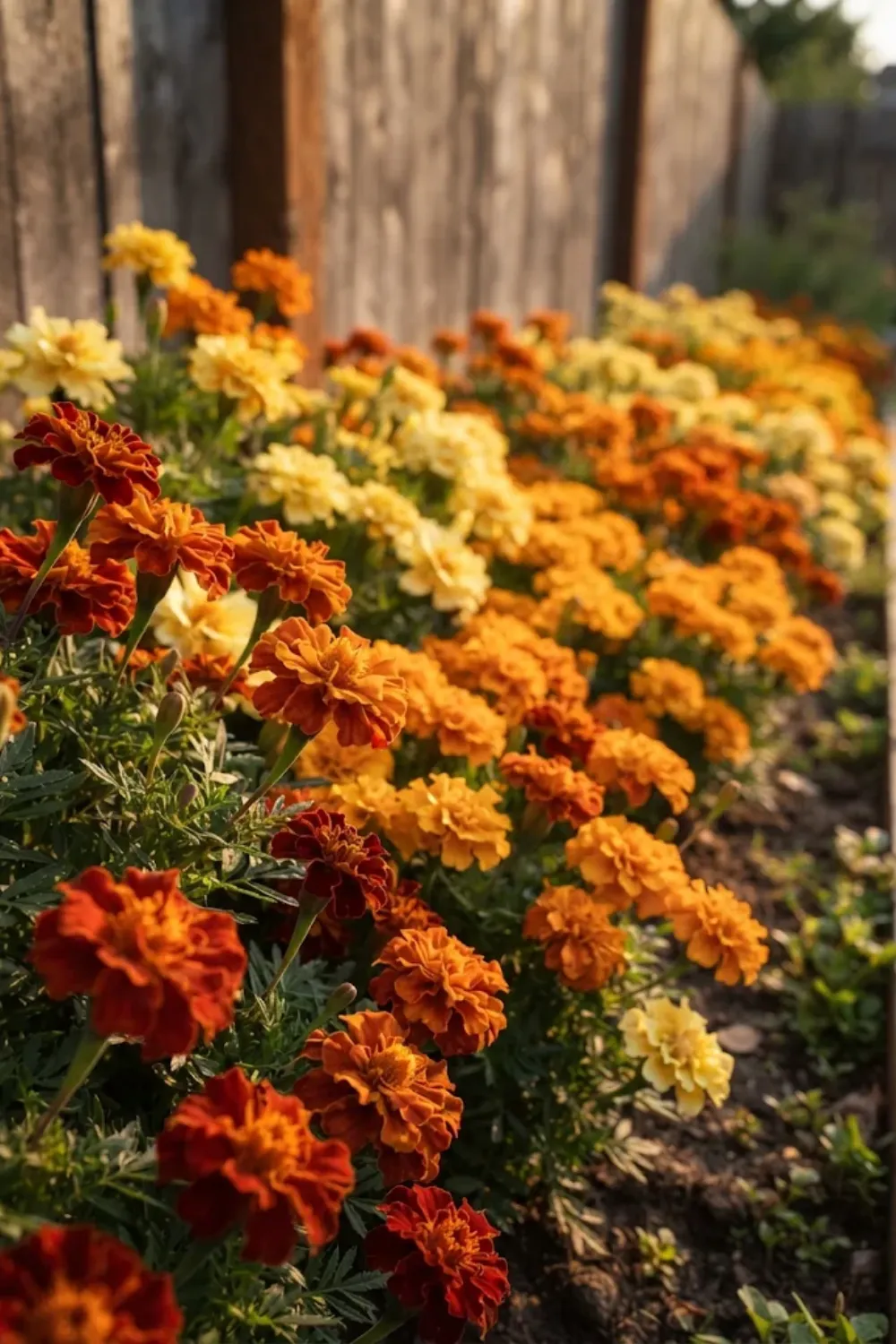
Plant marigolds in bands that fade from pale yellow to golden orange to deep rusty red. Choose varieties of similar height so the gradient looks smooth. Sow drifts on a gentle diagonal, and the color seems to flow across the bed. It’s striking along a long fence, and the warm tones glow in late-afternoon light.
18. Rose Underplanting
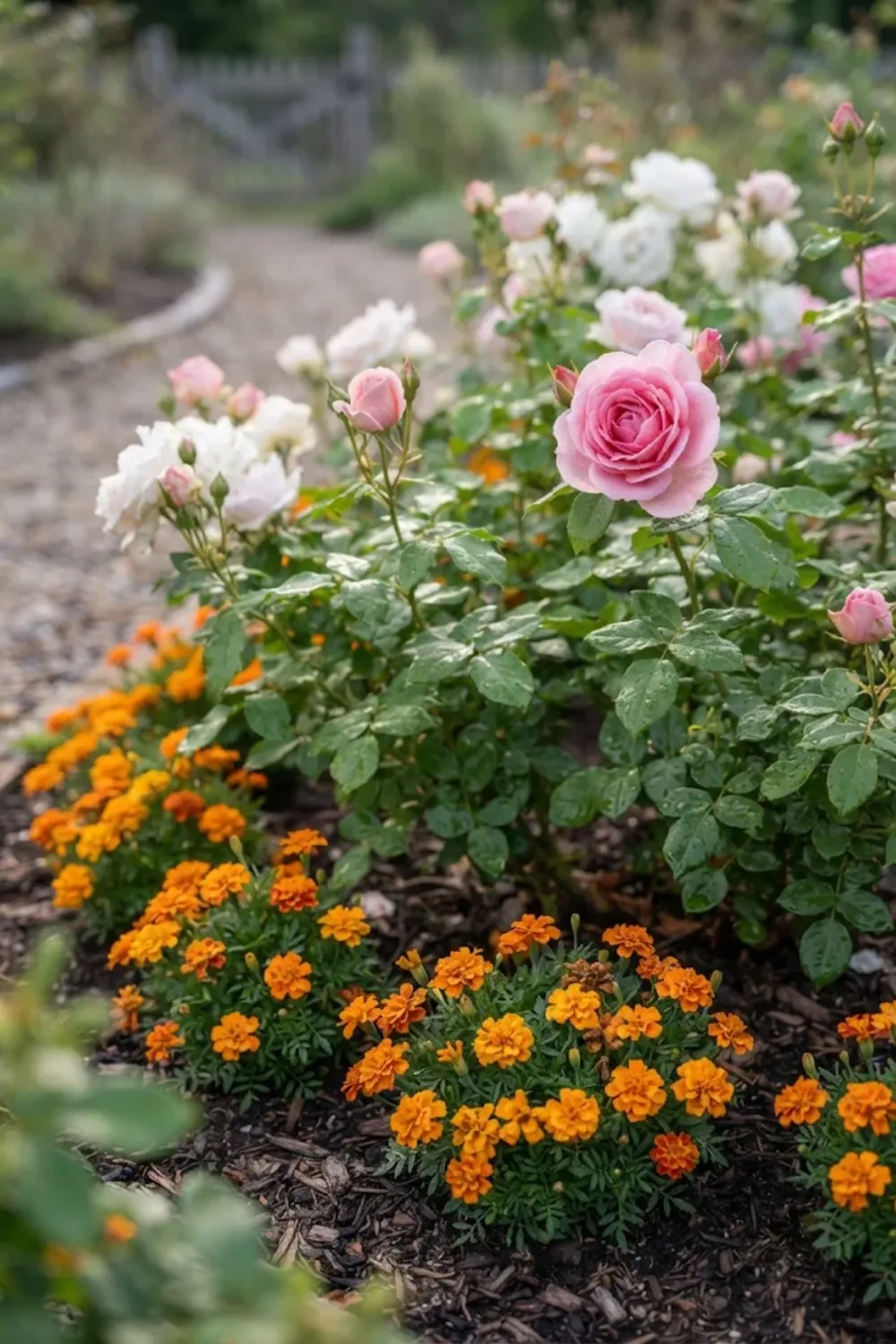
Low French marigolds make a bright skirt around rose bushes. They cover the bare lower stems that roses tend to develop and keep the soil shaded. Leave 6 to 8 inches around each rose’s base so air can circulate, which helps reduce black spot. The orange against pink, red, or white roses looks fresh and surprisingly modern.
Conclusion
The best marigold garden design ideas are the ones that match your space and your habits. Short on room? Start with a pot or window box. Got a sunny bed? Try a border or a color scheme. Whatever you pick, start small, plant a handful, and watch what happens. Marigolds forgive mistakes, so just start planting.
