
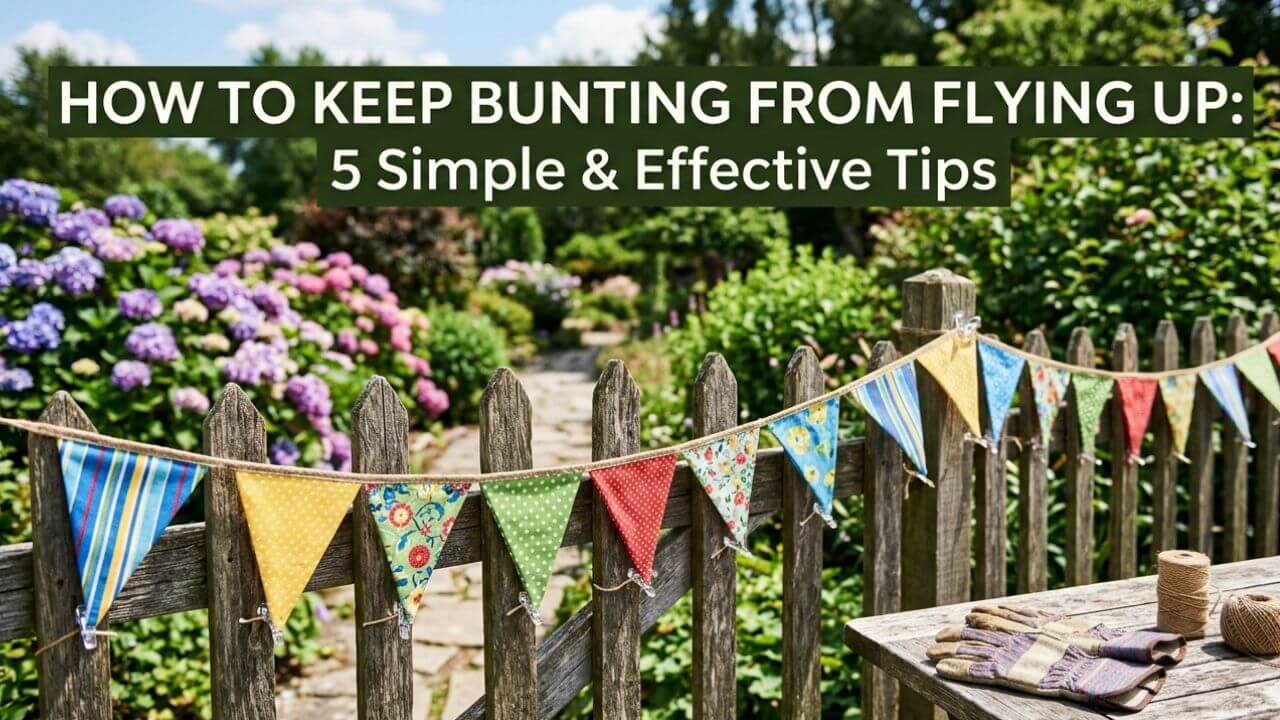
As an Amazon Associate, I earn from qualifying purchases.
Anchor points, tight lines, added weights, and wind gaps keep bunting down.
You came here to learn How To Keep Bunting From Flying Up, and you’re in the right place. I’ve set up miles of bunting for parades, weddings, and festivals. In this guide, I’ll share proven, field-tested methods, the tools that work, and mistakes to avoid. If you want neat lines, safe installs, and stress-free events, read on.

Why bunting flies up in the wind
Bunting acts like a small sail. When wind hits it, the air pushes it up and back. If the main line is loose, the lift wins and the flags flip.
Here’s the fix in simple terms. Reduce lift, add tension, spread force, and add a little weight. Do that, and the line behaves. This is the core of How To Keep Bunting From Flying Up.
Key ideas:
- Tension beats lift. A tight main line resists flip.
- Gaps spill wind. Skipping every third flag lowers sail area.
- Weights calm bounce. A little mass prevents sudden flips.
- Elastic parts save anchors. Shock cord absorbs gusts.

Tools and materials that make a difference
I keep a small kit that works for almost any venue. It makes How To Keep Bunting From Flying Up simple and fast.
Essentials:
- Paracord or braided rope. Low stretch holds tension.
- Shock cord loops. Absorb gusts, protect anchors.
- Zip ties and reusable cable ties. Quick, neat, secure.
- Carabiners and snap hooks. Fast connections you can trust.
- Bulldog clips or mini binder clips. Clip flags and weights.
- Fishing swivels. Stop twist and tangles.
- Fishing sinkers, washers, or curtain weights. Add discreet weight.
- Adhesive hooks and clear tape for indoor use. Choose paint-safe types.
- Gutter hooks, fence staples, and masonry anchors. Match the surface.
- Safety gear. Gloves, step ladder, and a small line level.
Outdoor setup: step-by-step plan that holds in wind
This is my go-to plan for parks, streets, and backyards. It keeps lines tidy and safe. It also nails the core of How To Keep Bunting From Flying Up.
- Choose anchor points
- Pick strong points like posts, trees, or buildings.
- Avoid power lines and sharp edges.
- Plan your span and sag
- Aim for a gentle curve, about 3 to 5 percent sag.
- Long runs need mid-span support or a second line.
- Pre-rig the main line
- Use low-stretch cord.
- Tie a bowline at one end and a trucker’s hitch at the other for easy tension.
- Add elastic at the ends
- Add a short shock-cord loop near each anchor.
- This helps during gusts and protects the line.
- Reduce sail area
- Skip every third pennant or use mesh bunting in windy zones.
- Leave small wind gaps near corners.
- Add discreet weights
- Clip a small washer or sinker to the tip of each end flag or every fourth flag.
- Add a small end-line weight at the lowest point of the curve.
- Secure contact points
- Use carabiners and swivels so the line can move a little without tangling.
- Protect rubbing points with a bit of tape or a fabric sleeve.
- Tension, test, and trim
- Pull the line tight. Give it a few tugs.
- If wind lifts a panel, add a bit more weight or increase tension.
Pro tip: On long streets, add a drop line to a sandbag every 15 to 20 feet. It stops big flips and keeps the line straight.

Indoor setup: clean, safe, and renter-friendly
Indoors is easier, but marks and fire rules matter. This plan shows How To Keep Bunting From Flying Up without ruining paint or trim.
- Use removable adhesive hooks or command strips on smooth walls.
- For drop ceilings, use ceiling clips that slide onto grid rails.
- Add a thin elastic section at one end to soften HVAC blasts.
- Use clear tape to tack the top edge of each flag to the line.
- Add tiny curtain weights to every third or fourth flag.
- Keep clear of sprinklers, exit signs, and vents.
Check airflow. If a vent hits the line, shift it a foot. Tiny moves make big changes.
Secure bunting by surface type
Match your fix to the surface. It is the fastest path to How To Keep Bunting From Flying Up.
-
Wood fences or pergolas
Use screw-in eye hooks or fence staples at posts. Add shock cord loops. -
Brick or masonry
Use masonry anchors with eye bolts. In rentals, use removable brick clips. -
Metal railings and poles
Use zip ties with a bit of rubber under the tie to prevent slip. -
Tents, gazebos, and marquees
Clip to frame points, not fabric. Add elastic to protect the frame. -
Gutters and eaves
Use plastic gutter hooks. Space them every 12 to 18 inches for long runs. -
Vehicles and floats
Use magnetic hooks on steel, or trunk-lid straps. Add extra weights to stop flutter at speed.

Weatherproofing and wind planning
A little planning beats a lot of repair. If you care about How To Keep Bunting From Flying Up, check wind first.
- Check the forecast gust speed, not just average wind.
- Light bunting often flips over 20 to 25 mph gusts.
- Use mesh or skip-pattern bunting for breezy days.
- Add mid-span drop lines or ground stakes on long runs.
- Keep spare weights and ties in your pocket for fast fixes.
Simple rule of thumb: If hats are flying, flags will too. Lower the line or increase weights.

Safety, rules, and event standards
Safe installs look better and last longer. It also builds trust with hosts and venues.
- Keep lines clear of doorways, exits, and walkways.
- Maintain headroom. Eight feet or more is ideal.
- Use flame-retardant bunting where codes require it.
- Avoid load on light fixtures or sprinkler pipes.
- Add caution tags on tensioned lines near staff areas.
- If wind exceeds your limit, take the bunting down. That is still How To Keep Bunting From Flying Up in a smart way.

Maintenance checklist and teardown
Fast checks save events. Ten minutes now beats an hour later.
Before guests arrive:
- Walk the line. Look for twists, sag, and rubbing spots.
- Add a clip or weight where you see lift.
- Retension trucker’s hitches. Check elastic loops.
During the event:
- Recheck after the first strong gust.
- Fix ends first, then the middle.
Teardown:
- Remove weights and store in a small pouch.
- Coil lines without twists.
- Note what worked. Next time will be even faster.
Troubleshooting and quick fixes in the field
You can fix most bunting issues in minutes if you carry clips, weights, and a short length of shock cord.
Common problems:
-
Flags flipping like kites
Add a small weight to each third flag and increase line tension. -
Mid-span sag
Shorten the span or add a mid-line drop to a sandbag. -
Anchor slip
Use a better knot, add a carabiner, or wrap the post with friction tape. -
Twists and tangles
Insert a fishing swivel near each end. It stops the whole line from twisting.
Here are quick PAA-style answers you might be searching for.
What is the fastest way to stop bunting from flipping?
Tighten the main line and add a small end-line weight. Then skip every third flag to spill wind.
How much weight should I add to each flag?
Start light, like a 0.5 to 1 ounce washer. Add more only if needed so the flags still move a bit.
Will elastic loops help indoors?
Yes. Elastic loops soften sudden air blasts from vents and keep adhesive hooks from popping off.
Frequently Asked Questions of How To Keep Bunting From Flying Up
How do I secure bunting without damaging walls?
Use removable adhesive hooks and clear painter’s tape. Keep elastic at one end to reduce peel-off from sudden pulls.
What knot should I use for strong, easy tension?
Use a trucker’s hitch to tension and a bowline for a fixed loop. They hold tight yet release fast during teardown.
Can I keep bunting steady on a windy balcony?
Yes. Add gutter hooks, use low-stretch cord, and clip small weights to every third flag. If gusts rise, add a mid-line drop to a railing post.
Is mesh bunting better in wind?
Mesh bunting spills air, so it flips less. It is ideal for open, breezy sites and long spans.
How To Keep Bunting From Flying Up on a tent without tearing fabric?
Clip to the frame, not the canvas. Add shock-cord loops and small weights. Keep edges clear of sharp corners.
Does the length of the run change the setup?
Yes. Long runs need mid-span supports or drop lines. Short runs can rely on tight tension and a couple of small weights.
How To Keep Bunting From Flying Up if I only have string and tape?
Tighten the string, tape the top edge of flags to the string, and add small makeshift weights like paper clips. It works in a pinch.
Conclusion
Keeping bunting neat is simple when you control tension, wind gaps, and weight. Choose solid anchors, add elastic where it counts, and use small, smart weights. That is the whole playbook behind How To Keep Bunting From Flying Up, whether you are indoors, outdoors, or on the move.
Try one run this week with the steps above. You will see the difference in minutes. Want more tips like this? Subscribe for field-tested event tricks, or drop a question in the comments and I’ll help you plan your next setup.

I enjoy sharing simple gardening ideas, lawn care tips, and honest product reviews that help make outdoor work easier. From home gardening guides to helpful tools and lawn care advice, I write easy-to-follow content to help readers create a healthier and better-looking outdoor space without wasting time or money.