
As an Amazon Associate, I earn from qualifying purchases.
Keep your cat in the yard with secure barriers, training, and daily enrichment.
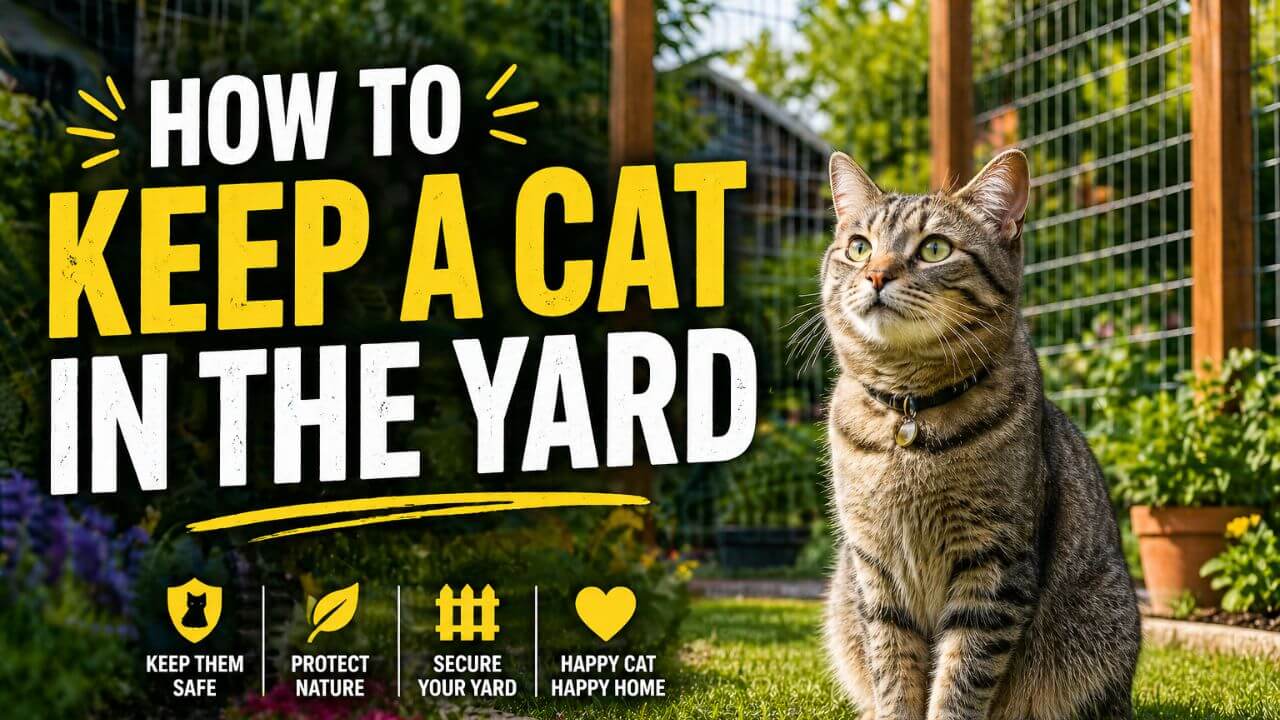
You want your cat safe and happy outside without roaming the block. I’ve helped many owners learn How To Keep A Cat In The Yard with simple steps that work. This guide blends expert methods, real-life fixes, and kind training. You will learn smart fencing, habits that reduce escapes, and tools that make yard time calm and fun. Stick with me, and you will feel clear and confident about How To Keep A Cat In The Yard.

Why Keeping Your Cat In The Yard Matters
A yard can give sun, grass, and fresh air. It can also bring cars, dogs, and disease. Studies show outdoor cats face higher risks of injury and illness. Good yard plans lower those risks while feeding a cat’s need to explore.
You may ask how to keep freedom without fear. The answer is a mix of barriers, routine, and training. When people ask How To Keep A Cat In The Yard, I stress that there is no single fix. You build layers that work together.
There is also a wildlife angle. Cats hunt by nature. Safe yards protect birds and small animals. This is kind to your cat and kind to the world. That is a win on every side.
Assess Your Yard and Your Cat
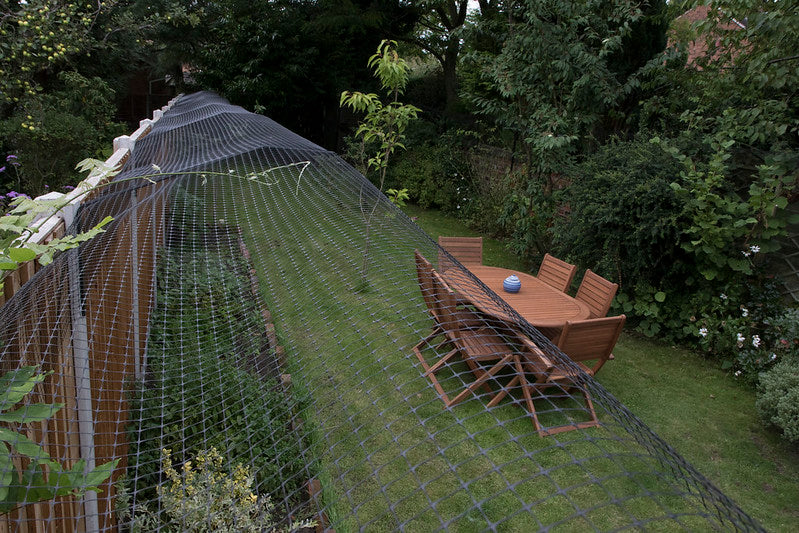
Start with a simple check. Walk the fence and look for gaps, low spots, or climb points. Note trees near the fence. Check gates that do not latch well. Take photos so you do not miss spots.
Now look at your cat. Is your cat bold or shy? Jump high or prefer to hide? Knowing this helps you choose the right plan for How To Keep A Cat In The Yard.
Make a quick map. Mark weak points and add notes. Plan fixes in order of risk. This will save time and money.

The Best Containment Options
There are many smart ways to block climbs and jumps. You may mix more than one. Choose what fits your space and budget.
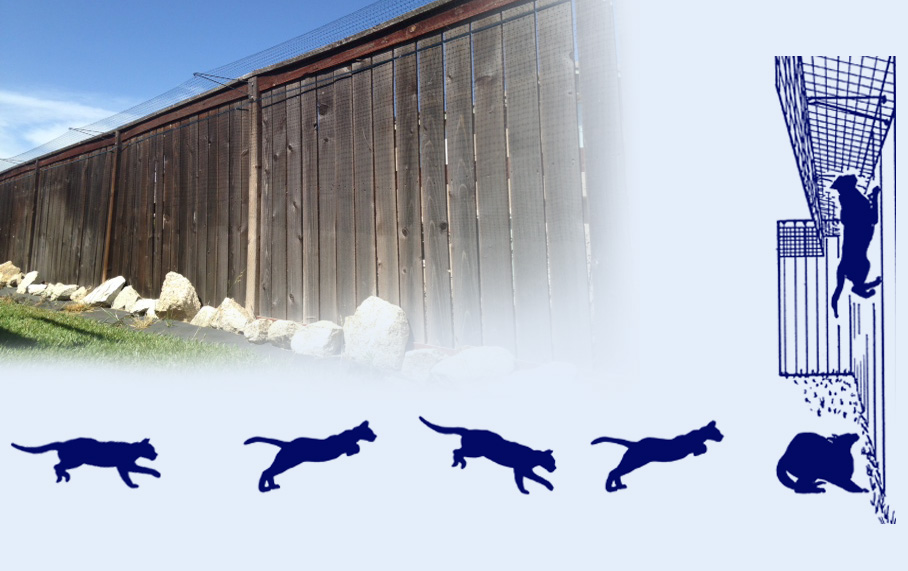
- Cat-proof fence toppers add angled panels or netting. These lean in so a cat cannot get over the top.
- Roller bars spin when a cat tries to grip. They are great on wood or vinyl fences.
- Flexible net barriers on posts create a soft, inward curve. Cats cannot get a firm hold.
- Catios and enclosures give a safe, fully enclosed spot. They attach to a door or window, or stand alone.
- Gate seals and brush strips close gaps under and around gates.
- Add dig guards. Use buried wire mesh or pavers along the fence line.
Do not use electric shock products. They risk harm and can backfire. The goal is safe, kind boundaries.
People also ask:
- Can a cat jump a six-foot fence? Many can. With toppers or inward netting, you can stop that leap and keep control.
- What if my fence is short? Combine a shorter fence with inward netting. Add plant barriers and remove launch pads.
When friends ask How To Keep A Cat In The Yard on a small lot, I suggest toppers plus a catio. It offers a quick win while you build longer-term fencing.

Training Your Cat To Stay In-Bounds
Training builds habits that make your yard rules stick. Use short, fun sessions. Use tiny, tasty treats. Keep stress low.
Try this simple plan:
- Teach name recognition and recall. Say the name, reward eye contact, then a few steps toward you.
- Add boundary cues. Walk the fence line on a leash. Reward calm interest near the edge.
- Use a release cue to go out and a return cue to come in. Reward both.
- Practice twice a day for five minutes. End before your cat loses focus.
Leash and harness time helps a lot. It gives safe practice in the space. If your search is How To Keep A Cat In The Yard without full fencing, leash work plus a catio is your best path.

Enrichment That Reduces Roaming
Cats roam when bored or when prey drive peaks. Fill the yard with fun to lower that urge.
- Add vertical spots like shelves, perches, and sturdy posts. Height makes cats feel safe.
- Create scent stations. Rub a little silver vine or catnip on posts once a week.
- Rotate toys. Use wand toys, kickers, and puzzle feeders outside under your eye.
- Build a dig box with sand or soft soil. Bury treats or toys to find.
- Offer fresh water and shade. Comfort keeps cats from wandering off to seek it.
I find that when owners pair enrichment with food play, escapes drop fast. This is the quiet power move in How To Keep A Cat In The Yard.
:max_bytes(150000):strip_icc()/Cat-repellents-to-keep-cats-out-of-your-yard-4f7bafea964a4442b3b35f22a8a36f87.jpg)
Routine, Supervision, and Seasonal Tips
Set yard hours when you can watch. Dawn and dusk bring wildlife and traffic. Choose calm parts of the day. Keep sessions short at first.
Use a check-in every few minutes. Call your cat, treat, then release again. Over time, stretch the gaps. This builds a strong recall habit.
Adjust for weather. Heat and cold change behavior. Add warm shelters in winter and cool shade in summer. Risk goes up with storms, loud events, or fireworks. Keep yard time tight on those days.

Tech and Tracking
Modern tools help but do not replace fences or training. Use them as support.
- GPS collars can show location and alert on fence breaks. Choose a light model made for cats.
- Bluetooth trackers help in yards but have limited range. Use only as a backup.
- Microchips are vital for ID. Keep your contact info current.
- Cameras help you spot weak points and times when escapes happen.
If your plan is How To Keep A Cat In The Yard with tech alone, rethink it. Tech finds a lost cat. It does not stop escapes.
Neighbor and Legal Considerations
Talk to neighbors before changes. Share your plan and your care for wildlife. Ask about past issues. Good will makes life easier.
Check local rules, HOA terms, and permits. Some areas have fence height limits. Some protect local species. Plan within those lines.
Offer value to the block. Add a small pollinator patch. Keep the yard clean and quiet. People will root for your project.
Troubleshooting: Escape Artists and Special Cases
Some cats are crafty. They jump from trees or sheds. They pry at gaps or dig.
Try these fixes:
- Remove launch pads near the fence. Move planters, benches, and bins.
- Cap or trim trees close to the fence. Add tree guards where needed.
- Lay pavers or mesh along the fence base. Block digs.
- Increase play before yard time. A tired cat explores less.
Newly adopted cats need a slow start. Keep them indoors for two to four weeks so they bond to home scent. Then start short, watched yard sessions. This is a key step in How To Keep A Cat In The Yard after a move or new adoption.
Budget and Time Planner
You can build a safe yard at many price points. Plan for both cash and time.
- Low budget. Gate seals, DIY netting, and leash training. Expect a few weekends of work.
- Mid budget. Fence toppers, better gates, and a small catio. Plan one to two weekends.
- Higher budget. Pro-installed cat fencing and a large catio with perches. Plan a month with some pro time.
Make a simple timeline. Week one for assessment and quick fixes. Week two for training start. Week three for topper install. Week four for enrichment build-out. This staged plan is a steady answer to How To Keep A Cat In The Yard without overwhelm.
Personal Lessons From The Yard
I learned fast with my own jumper, a lean gray rocket. He cleared my five-foot fence like it was nothing. The fix was an inward net and more play time before yard hours. Within a week, the leaps stopped.
I also learned to keep a pocket of treats. A strong recall saved me more than once. The big lesson in How To Keep A Cat In The Yard is this: small habits beat one big gadget. Layer the tools, keep sessions short, and praise often.
Frequently Asked Questions of How To Keep A Cat In The Yard
How high should a fence be to keep a cat in?
Six feet is a good start, but many cats can still clear it. Add inward toppers or netting to make jumping hard.
Is it cruel to keep a cat in the yard?
No, if you provide space, choice, and play. Safe yards protect cats and wildlife while meeting a cat’s need to explore.
What is the fastest fix for a yard escape artist?
Seal gate gaps and remove launch points today. Then add inward netting or toppers as soon as you can.
Can an indoor-only cat learn to enjoy a yard?
Yes, start with a harness and short sessions. Add perches and hiding spots to help your cat feel safe.
Do GPS collars keep cats safe?
They help you find a lost cat but do not prevent escapes. Use GPS with fencing, training, and supervision.
How long should I supervise at first?
Start with 10 to 15 minutes. Grow to longer sessions as your cat shows calm and strong recall.
Will a bell on the collar help wildlife?
A bell helps a little but not enough. Yard containment and supervised time are much more effective.
Conclusion
Keeping your cat in the yard is a kind, practical goal. Build layers of safety, training, and fun. Use smart fences, simple routines, and tools that support, not replace, good habits. Your cat stays safe. You relax.
Start this week. Map your yard, add one quick fix, and practice a short recall. Share your progress, ask questions, or subscribe for more step-by-step guides on How To Keep A Cat In The Yard.

I enjoy sharing simple gardening ideas, lawn care tips, and honest product reviews that help make outdoor work easier. From home gardening guides to helpful tools and lawn care advice, I write easy-to-follow content to help readers create a healthier and better-looking outdoor space without wasting time or money.