
As an Amazon Associate, I earn from qualifying purchases.
Test your soil, choose the right phosphorus source, and place it near roots.
If your plants look stunted or leaves turn purple, phosphorus may be the missing piece. In this guide, I show how to add phosphorus to soil the right way, with clear steps, real rates, and field-tested tricks. I have fixed low-P beds, seeded lawns, and fed fruit trees. I will help you avoid waste, runoff, and guesswork while you learn how to add phosphorus to soil with confidence.

What phosphorus does in soil and plants
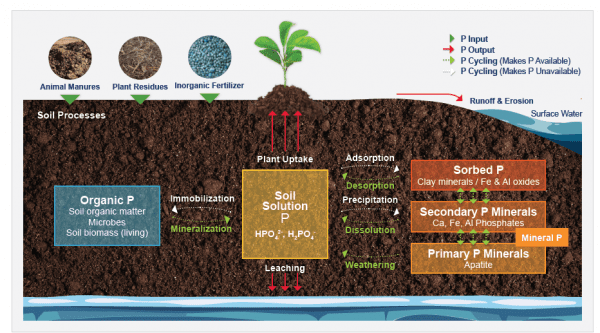
Phosphorus drives energy flow in plants. It powers roots, flowers, and seeds. It helps early growth and boosts yields. In soil, it binds to minerals and organic matter, so it moves slowly.
That slow movement is a gift and a challenge. It stays where you place it, but it can also lock up. That is why placement, pH, and organic matter matter as much as the source.
When people ask how to add phosphorus to soil, I start with this: make it easy for roots to reach, and make the soil hold it in a plant-ready form.
:max_bytes(150000):strip_icc()/how-to-add-nitrogen-to-soil-7101013._03-c109c473ad364aa8bbb8942e2a1742e0.jpg)
Signs your soil needs phosphorus
Phosphorus deficiency has a look. But it can mimic cold stress or compacted soil. Check for these clues.
- Purplish or reddish tint on older leaves, often on the underside.
- Slow, stunted growth with thin stems.
- Poor root growth and delayed flowering or fruiting.
- Dull, bluish-green leaves that yellow later.
Cold spring soils can hide phosphorus even when your levels are fine. Soil tests confirm the cause. If you want a sure plan on how to add phosphorus to soil, test first.

Test before you treat: soil testing basics
A soil test is your map. It shows phosphorus levels, pH, and more. It also tells you which extractant was used, because “low” and “high” depend on the method.
- Ask for phosphorus (often reported as ppm), pH, organic matter, and buffer pH.
- Aim for a pH near 6.0 to 7.0 for most crops. That keeps phosphorus most available.
- Your report will rank P as very low, low, medium, or high. Follow its rate table.
If you do not have a test and must act, use a light, one-time application and retest. That is the safest way to begin how to add phosphorus to soil without overdoing it.
:max_bytes(150000):strip_icc()/GettyImages-877505248-74e69b866b56495ab387fc90b8d05a12.jpg)
Phosphorus sources you can use
You have two main groups: mineral fertilizers and organic sources. Each has tradeoffs in speed, cost, and soil health.
Mineral fertilizers
- Triple superphosphate (0-45-0). Fast, concentrated P without nitrogen. Good for banding and starters.
- Monoammonium phosphate, MAP (11-52-0). Supplies P plus a bit of nitrogen. Slightly acidifying.
- Diammonium phosphate, DAP (18-46-0). More nitrogen than MAP. Can raise pH right where the granule dissolves.
Organic and recycled sources
- Bone meal (often 3-15-0). Slow to moderate release. Works best in soils near neutral pH.
- Rock phosphate (varies, often 0-3-0 to 0-13-0). Very slow. Best in acidic soils and long-term beds.
- Fish bone meal and feather blends. Moderate release and adds calcium or nitrogen.
- Composted manures and poultry litter. Low to moderate P. Adds organic matter and biology.
- Struvite (recovered P). Slow-release granules with low water solubility.
If you ask how to add phosphorus to soil for fast results, pick a soluble source and place it near roots. If your horizon is years, organic sources and compost build a steady bank.
How to add phosphorus to soil step-by-step
Here is a simple plan you can use in any bed or border.
- Test and set your target
- Read your soil test. Note the P category and pH.
- If pH is below 6.0, plan to lime. If above 7.5, consider sulfur to nudge it down over time.
- Choose your source
- Fast fix: triple superphosphate, MAP, or DAP.
- Long game: bone meal, composted manure, struvite, or rock phosphate for acidic beds.
- Calculate your rate
- Many garden beds do well with 0.25 to 0.5 lb of P2O5 per 100 sq ft as a light, test-free start. Always prefer test-based rates.
- Conversion: P2O5 equals P times 2.29. Elemental P equals P2O5 times 0.44.
- Place it where roots will find it
- Mix into the top 4 to 6 inches before planting, or band 2 inches to the side and 2 inches below seeds or transplants.
- For perennials and trees, place in shallow rings or narrow trenches around the drip line and cover.
- Water and watch
- Water in gently. Check growth over 3 to 6 weeks.
- Retest in the next season if you made a big change.
Quick example
- Goal: Add 0.5 lb P2O5 to a 100 sq ft bed.
- Triple superphosphate (0-45-0): 0.5 ÷ 0.45 = 1.1 lb product.
- Bone meal (3-15-0): 0.5 ÷ 0.15 = 3.3 lb product.
This is the calm, accurate way on how to add phosphorus to soil. Place it, do not guess, and let roots do the rest.

Application methods and timing
Phosphorus does not move far in soil. Placement and timing make or break results.
- Pre-plant incorporation. Best for beds and vegetable gardens. Mix evenly in the top layer.
- Banding or starter fertilizer. Place a narrow band near seeds or transplants. Great for cool springs.
- Side-dress for perennials. Scratch into the top inch around the drip line. Water in.
- Lawns. Use a starter fertilizer at seeding only if a soil test or local rules allow P. Many regions restrict P on turf.
Timing tips
- Early spring or pre-plant is ideal for annuals and vegetables.
- Late fall or early spring works for trees and shrubs when soil is not frozen.
- Do not apply before heavy rain. Keep it on site.
Knowing when and where is half of how to add phosphorus to soil. A small, well-placed dose beats a big broadcast every time.

pH, fixation, and making phosphorus available
Phosphorus can lock up fast. In acidic soils, iron and aluminum tie it up. In alkaline soils, calcium binds it. You can beat that with a few habits.
- Aim for pH near 6.2 to 6.8 for most crops. Lime acidic soils or use elemental sulfur for high pH over time.
- Add organic matter. Compost and cover crops bind metals and free up P.
- Encourage mycorrhizae. Avoid heavy tillage and excess phosphorus. Healthy fungi extend root reach.
- Keep soil warm and moist. Cold, dry soils make P look low even when it is there.
If you struggle with how to add phosphorus to soil and see no response, check pH first. Availability comes before more fertilizer.

Environmental safeguards and legal notes
Phosphorus runoff fuels algae blooms. Keep it on your site and follow rules.
- Keep fertilizer off hard surfaces. Sweep sidewalks and drives right away.
- Do not apply on frozen or saturated soil.
- Use buffer strips near streams and ponds.
- Follow local restrictions on lawn phosphorus. Many areas allow P only with a soil test or at seeding.
A clean plan for how to add phosphorus to soil always includes risk control. Healthy plants and clean water can go together.
:max_bytes(150000):strip_icc()/ways-to-add-nitrogen-to-soil-7099813-FINAL-333715a5c6c542c1833944a9dde06871.png)
Troubleshooting and mistakes to avoid
I have made these mistakes so you do not have to.
- Skipping the soil test. Fix: Test first, then fine-tune. It saves money and time.
- Broadcasting only. Fix: Band near roots or mix into the top layer.
- Chasing a pH problem with more P. Fix: Adjust pH so P you already have becomes available.
- Overusing manures. Fix: Rotate sources. Use compost and nitrogen sources with low P.
- Applying before rain. Fix: Watch the forecast. Keep P on site.
If you still wonder how to add phosphorus to soil with stubborn crops, try a small starter band and improve pH. The combo works.
Frequently Asked Questions of How to add phosphorus to soil
How much phosphorus should I add without a soil test?
Use a light rate only once, such as 0.25 to 0.5 lb P2O5 per 100 sq ft. Retest before adding more to avoid buildup and waste.
Is bone meal better than synthetic fertilizer?
Bone meal is slower but builds soil biology and is gentle. Synthetic P is fast and precise, which helps in cold soils or for quick fixes.
Can I add phosphorus to soil in the fall?
Yes, for perennials and beds, fall is fine if soil is not frozen and you can incorporate it. Avoid sloped sites before heavy winter rain.
Will compost add enough phosphorus by itself?
Compost adds small amounts of P and improves availability. It is great for maintenance, but low soils often need a targeted P source.
Can I foliar-feed phosphorus to fix a deficiency?
Foliar P is a short boost at best. Real gains come from getting P into the root zone and fixing pH or placement.
What is the best pH for phosphorus availability?
Most crops use P best between pH 6.0 and 7.0. Adjust pH first if your test shows it is far outside this range.
How do I add phosphorus to soil for fruit trees?
Apply in shallow rings near the drip line and cover. Use a light annual rate guided by a soil or leaf test to avoid buildup.
Is rock phosphate worth it?
Rock phosphate works in acidic soils and over the long term. In neutral to high pH soils, it releases too slowly to be useful.
What does “P2O5” mean on a label?
It is the oxide form used on fertilizer labels. To get elemental P, multiply P2O5 by 0.44.
Can high phosphorus hurt mycorrhizae?
Yes, very high soil P can reduce mycorrhizal colonization. Add only what tests suggest.
Conclusion
Phosphorus makes roots strong, flowers bold, and harvests full. You now know how to add phosphorus to soil with care: test first, choose a source that fits your goal, place it near roots, adjust pH, and protect nearby water. Start small, track what you apply, and let the plants tell you the rest.
Take one bed this week. Run a quick test, pick a source, and try a precise, well-placed dose. Share your results or questions, and subscribe for more simple, science-backed soil tips.

I enjoy sharing simple gardening ideas, lawn care tips, and honest product reviews that help make outdoor work easier. From home gardening guides to helpful tools and lawn care advice, I write easy-to-follow content to help readers create a healthier and better-looking outdoor space without wasting time or money.