
As an Amazon Associate, I earn from qualifying purchases.
Use a big pot, rich soil, bright shade, steady water, and prune smartly.
If you want lush blooms on a small porch or sunny balcony, this guide is for you. I’ll show you how to grow hydrangeas in pots with simple steps, smart tools, and real-world tips. I grow potted hydrangeas for clients and at home, and I’ve made (and fixed) most mistakes. Keep reading to learn how to grow hydrangeas in pots with confidence and joy.
Choose the right hydrangea for pots
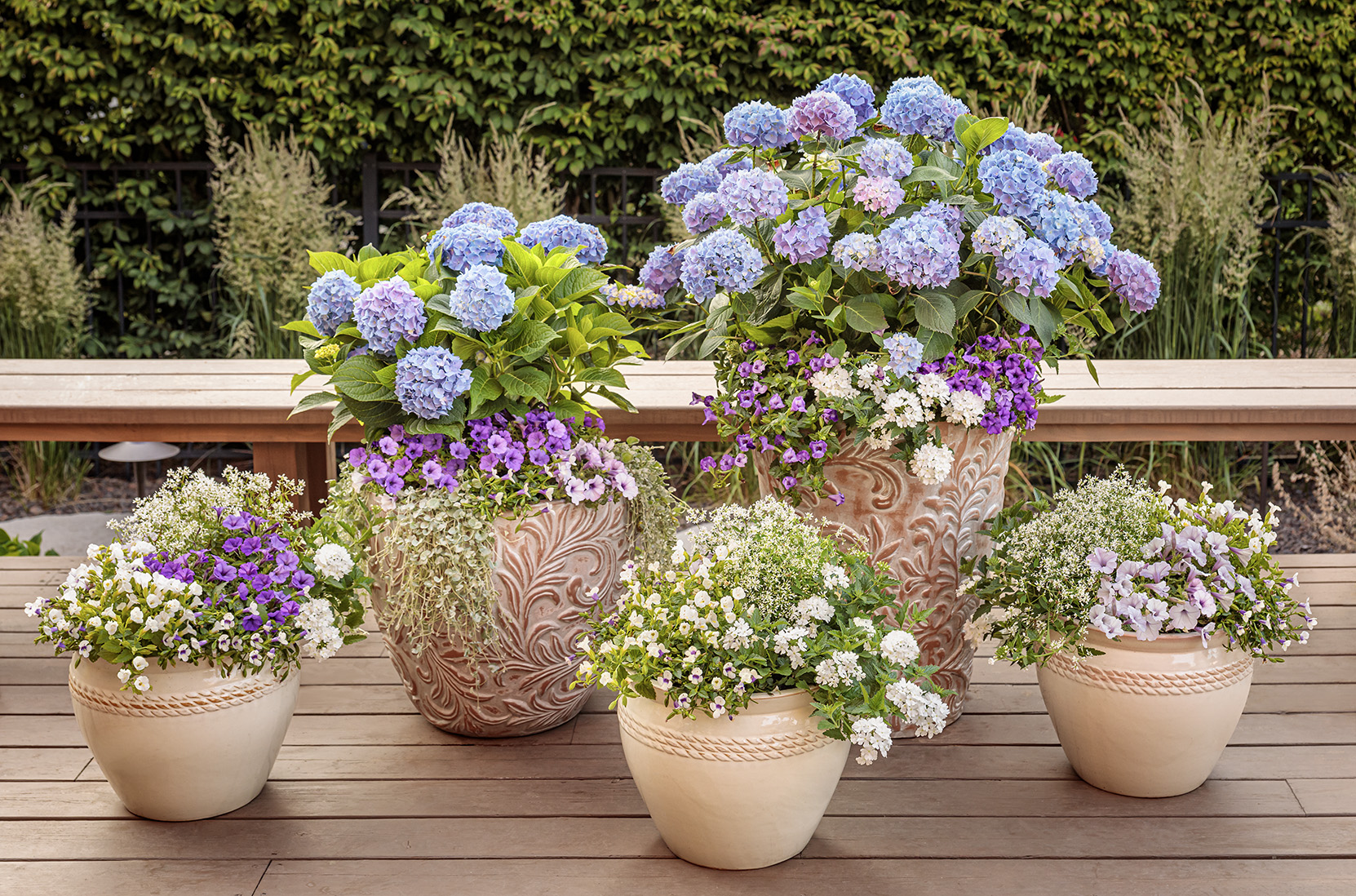
Picking the right type is half the win. Bigleaf hydrangea (Hydrangea macrophylla) and mountain hydrangea (H. serrata) thrive in containers. They like bright shade and steady water. Panicle hydrangea (H. paniculata) and smooth hydrangea (H. arborescens) also do well, and they handle more sun.
Look for compact or dwarf cultivars. I like Cityline series, Seaside Serenade, Endless Summer, Little Lime, and Bobo. These stay neater in a pot and bloom strong. Oakleaf hydrangea (H. quercifolia) looks great but can outgrow most pots.
Match plant to climate. In hot zones, choose heat-tolerant types and more shade. In cold zones, remember a pot is colder than ground. Aim for plants hardy at least two zones lower than yours, or plan for winter protection. This is a key step in how to grow hydrangeas in pots for long-term success.
Pot, soil, and planting setup
Size matters. Start with a pot at least 16 inches wide for young plants. Mature plants are happiest in 18–24 inches. The pot must have large drain holes. Add pot feet so water can escape.
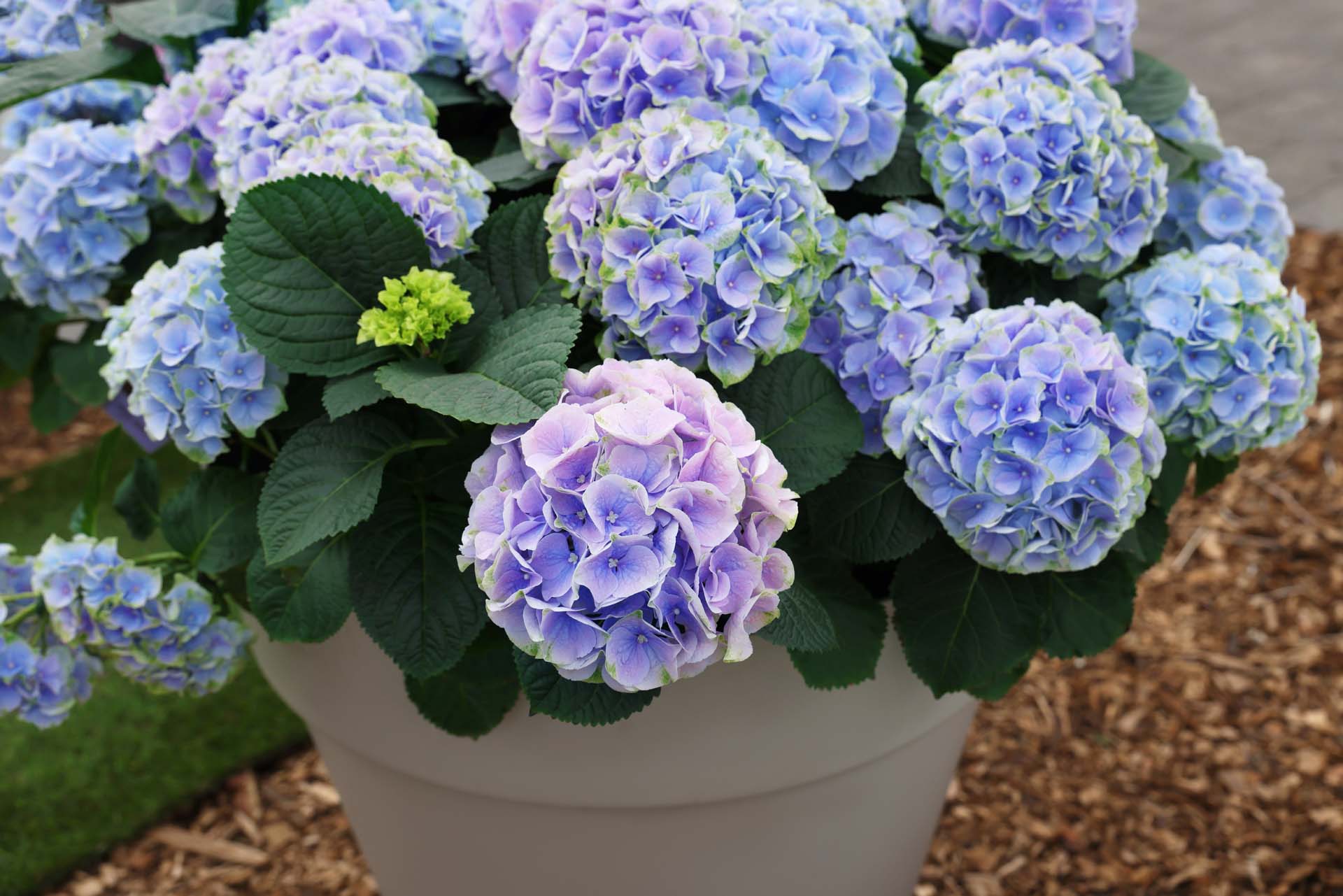
Use a high-quality, peat-free potting mix. I blend compost, fine pine bark, and perlite for air and drainage. Keep soil pH around 5.5 to 6.5. For blue flowers on mopheads, aim for 5.2–5.5 and add aluminum sulfate as directed. For pink, keep near 6.0–6.5 and use garden lime. Color control takes months, so be patient.
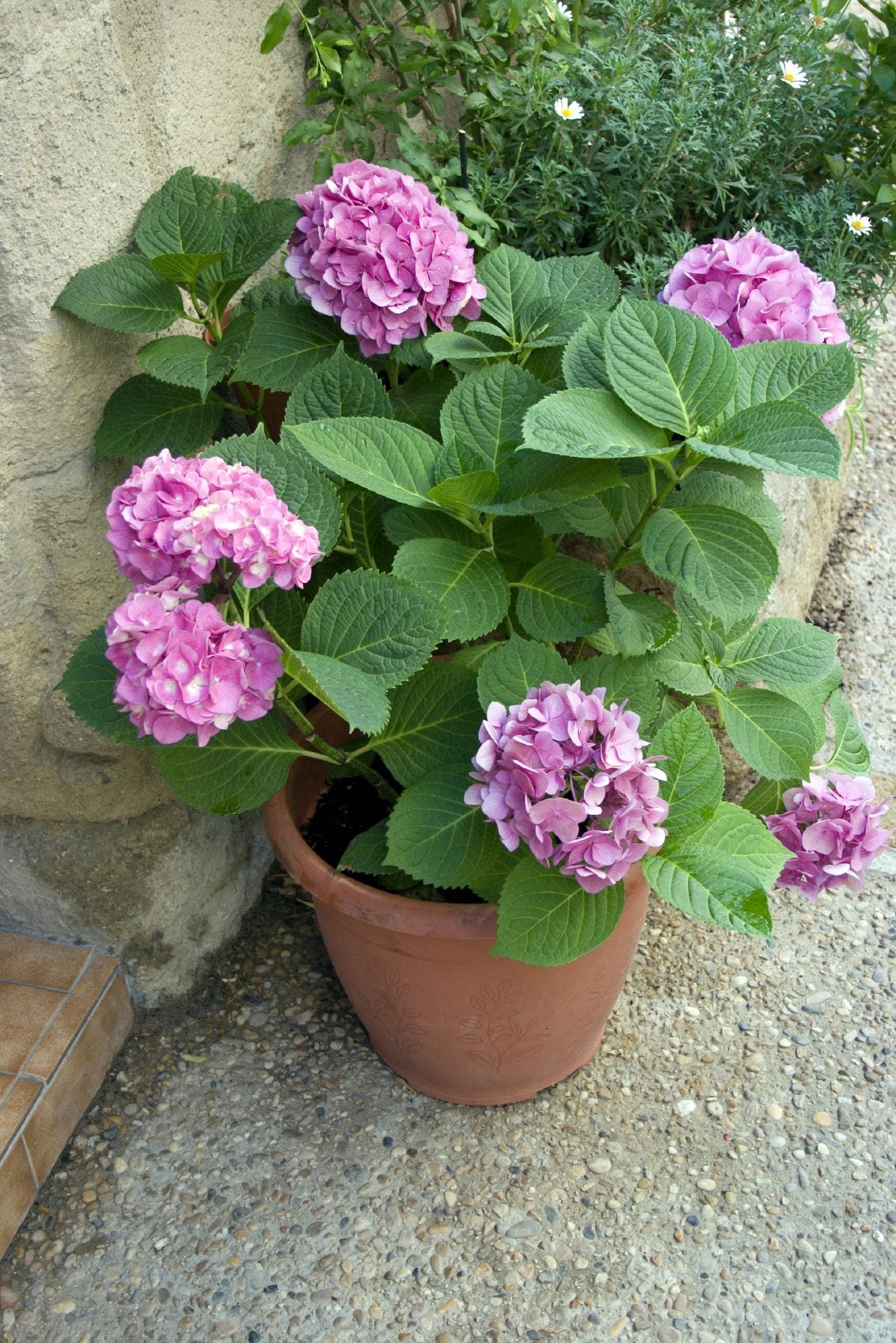
Plant at the same depth as in the nursery pot. Do not bury the crown. Water well to settle soil. Add a thin mulch layer to hold moisture but keep mulch off the stems. This careful start is central to how to grow hydrangeas in pots without stress.
:max_bytes(150000):strip_icc()/hydrangea-care-in-pots-7503324_Hero_01-68147aa069aa4efbac1484d6f723b9a4.jpg)
Light, water, and feeding schedule
Hydrangeas like morning sun and afternoon shade. In cool zones, 4–6 hours of sun works. In hot zones, 2–4 hours is safer. Panicle and smooth types can take more sun if water is steady.
Water deeply until you see flow from the drain holes. Then let the top inch of soil dry before you water again. In heat waves, check daily. In spring and fall, check every few days. A moisture meter helps, but the finger test still wins.
Feed lightly. In early spring, mix in a slow-release, balanced fertilizer made for flowering shrubs. In late spring and mid-summer, use a liquid bloom booster at half strength. Stop feeding by late summer to help plants harden off.
Week-by-week rhythm I use:
- Spring: Repot if rootbound. Add slow-release feed. Set plants where they get morning sun.
- Early summer: Deep water, mulch top up, light liquid feed during bud set.
- Midsummer: Shade during heat waves. Deadhead spent blooms.
- Fall: Reduce feed. Keep soil just moist. Start winter plan.
- Winter: Protect roots. Water lightly when the top few inches are dry.
Quick answers to common searches:
- How many hours of sun do potted hydrangeas need? Most do best with morning sun and afternoon shade, about 3–5 hours.
- How often should I water? In warm weather, often every 1–3 days. Always check soil first.
- What fertilizer works best? A slow-release, balanced type in spring plus light liquid bloom feed mid-season.
These habits form the backbone of how to grow hydrangeas in pots, season after season.

Pruning and bloom management
Know your wood. Bigleaf and mountain hydrangeas bloom mostly on old wood, which means stems set buds in late summer for next year. Prune right after flowering, and only to shape or remove dead wood. Many reblooming types also flower on new wood, so you still get a second flush.
Panicle and smooth hydrangeas bloom on new wood. Prune in late winter or early spring before growth starts. Cut back by about one-third to build a sturdy frame. Deadhead spent blooms anytime to keep plants tidy.
I pinch tender tips in spring on young plants to get bushier growth. I also stake heavy flower heads during summer storms. Timely cuts are a quiet secret in how to grow hydrangeas in pots with full, steady blooms.
Winter care and year-round maintenance
Containers get colder than garden beds. Protect roots once nights dip below freezing. Move pots into an unheated garage, shed, or near a sheltered wall. Group pots, wrap with burlap, and pack leaves or straw around them. Keep soil barely moist. Do not let it stay soggy.
If you must leave pots outside, choose a large, insulated container and lift it on feet. Wrap the pot, not the leaves. Use frost cloth on sudden cold snaps to save buds on old-wood types. In late winter, unwrap, water modestly, and ease plants back into light.
Refresh the top 2–3 inches of soil each spring. Repot every 2–3 years or when roots coil tight. When I repot, I trim circling roots and add fresh mix. This simple cycle is a core part of how to grow hydrangeas in pots for many years.
Troubleshooting pests and problems
Droop at midday can be heat wilt. If leaves perk up by evening, you are fine. If they stay limp, water more deeply and give more shade. Leaf scorch means too much sun or wind.
Yellow leaves with green veins point to iron chlorosis. Lower pH a bit and use a chelated iron drench. Fungal spots and powdery mildew ease with more air and less leaf wetting. Water soil, not leaves.
Watch for aphids, spider mites, and scale. A firm spray of water or insecticidal soap works on aphids. Use horticultural oil on scale in cool weather. For mites, raise humidity and use soap or oil with care in shade. Slugs chew lower leaves; hand-pick or use traps.
Late frosts can blast buds on old-wood types. Keep frost cloth handy in spring. Solving these issues fast is part of how to grow hydrangeas in pots like a pro.
Design ideas and container combinations
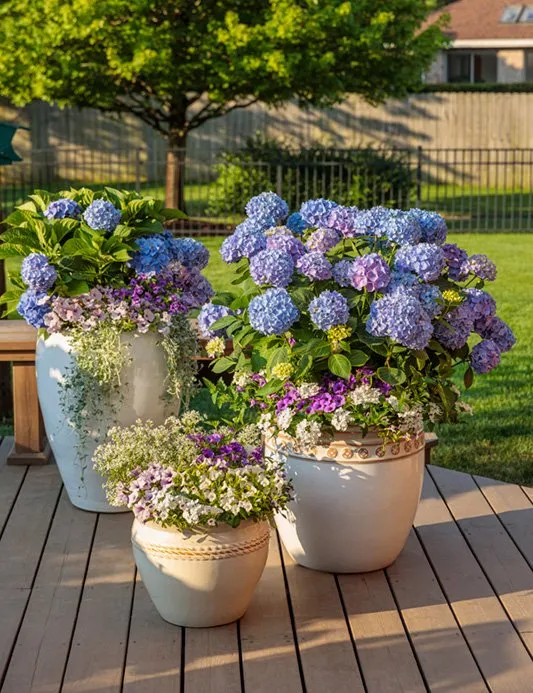
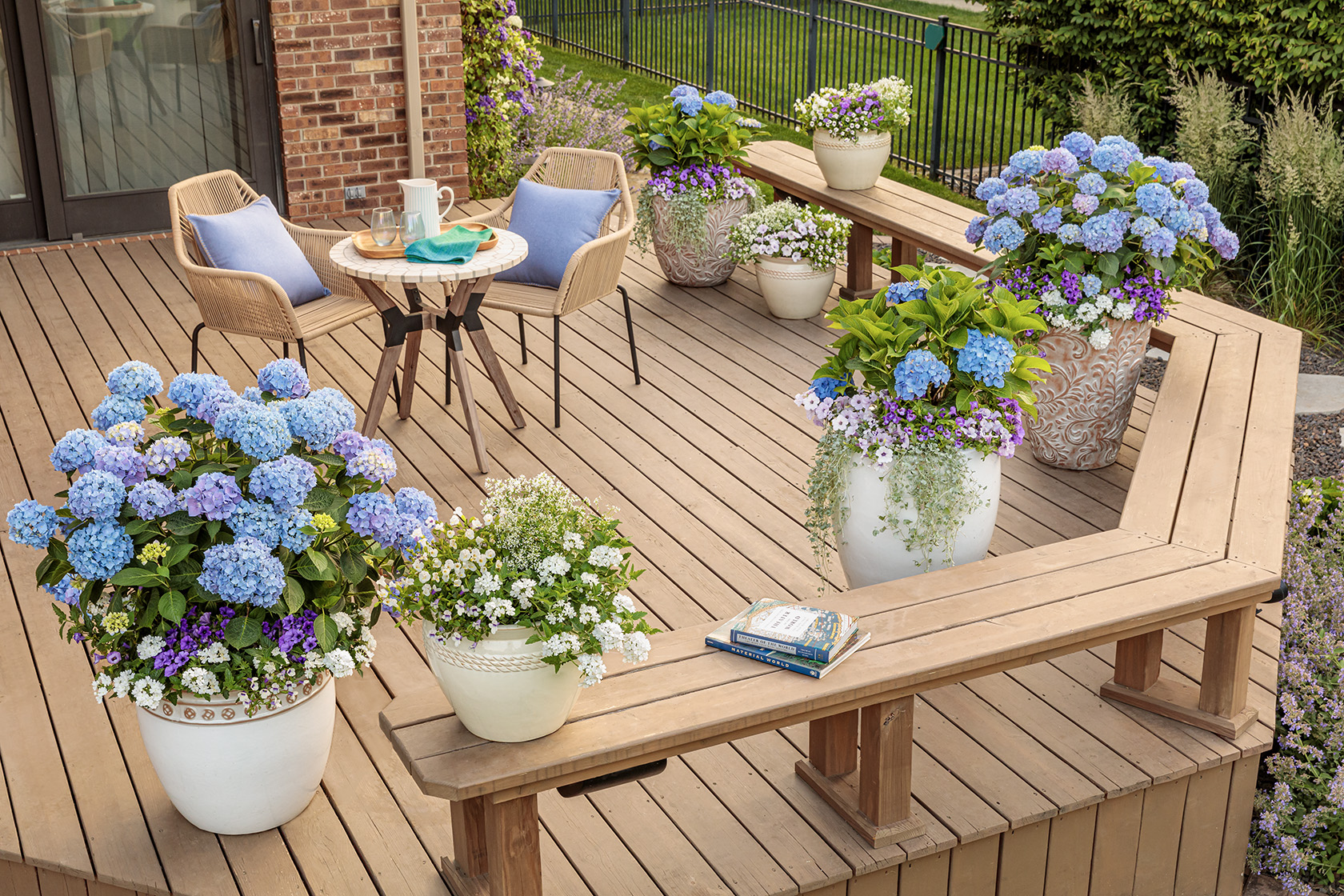
Treat your pot as a tiny garden. Use the thriller-filler-spiller idea. The hydrangea is the thriller. Fill with heuchera, dwarf hosta, ferns, or coleus. Let vinca, creeping jenny, or sweet potato vine spill over the edge.
Match color stories. Cool blues with silver foliage and white spillers feel calm. Pinks pop with chartreuse and deep purple leaves. Use sturdy, glazed, or resin pots on casters. This keeps roots cooler and helps you chase the best light.
Color control is fun in containers. For blue, acidify and use aluminum sulfate as labeled. For pink, add lime and avoid aluminum. Plan ahead, since color shifts take time. Good design keeps you excited about how to grow hydrangeas in pots for the long run.
Frequently Asked Questions of how to grow hydrangeas in pots
How big should a pot be for a hydrangea?
Start at 16 inches wide for a new plant and 18–24 inches for mature ones. Bigger pots buffer heat and cold and hold more even moisture.
Can I keep hydrangeas in pots year-round?
Yes, with winter protection. Move pots to a sheltered spot, wrap the container, and keep soil barely moist.
How often should I water potted hydrangeas?
Water when the top inch of soil is dry, then soak until excess drains. In summer heat, that can be every 1–3 days.
Do hydrangeas need full sun or shade in pots?
Most prefer morning sun and afternoon shade. Panicle and smooth types handle more sun if water is steady.
Why are my potted hydrangea leaves turning yellow?
It may be a watering issue or iron chlorosis from high pH. Check moisture, then adjust pH or add chelated iron.
How do I make blue or pink flowers in a pot?
For blue, lower pH to about 5.2–5.5 and add aluminum sulfate. For pink, raise pH to near 6.0–6.5 and avoid aluminum.
Can I grow hydrangeas from cuttings in a pot?
Yes. Take softwood cuttings in late spring, dip in rooting gel, and plant in a light mix. Keep warm, bright, and humid.
Conclusion
You now know how to grow hydrangeas in pots with a clear plan: right plant, roomy pot, rich mix, bright shade, deep water, light feed, and smart pruning. Add winter care and quick fixes, and your container blooms will shine.
Try one plant this weekend. Set it in the right spot, water well, and watch it thrive. If this helped, subscribe for more simple guides, or drop your questions and wins in the comments.

I enjoy sharing simple gardening ideas, lawn care tips, and honest product reviews that help make outdoor work easier. From home gardening guides to helpful tools and lawn care advice, I write easy-to-follow content to help readers create a healthier and better-looking outdoor space without wasting time or money.