As an Amazon Associate, I earn from qualifying purchases.
Radishes grow leaves but no large roots when they lack suitable growing conditions, receive too much nitrogen, grow too close together, or face heat and irregular watering. Loose, compacted, or shallow soil can also limit root growth. Correct the main problem early, and sow fresh seeds when the existing plants are too mature.
Across the United States, radishes are a popular choice for spring and fall vegetable gardens. They grow fast, take up little space, and can produce crisp roots in a small raised bed, a container, or a sunny patch of ground. Yet many home gardeners face the same problem: the plants look green and healthy, but the roots stay thin, long, or barely visible.
This problem often starts with a mismatch between leaf growth and root development. Radishes need cool weather, loose soil, enough room, steady moisture, and balanced nutrition to form the round or elongated roots that gardeners expect. When one of these needs is not met, a plant may put its energy into foliage without producing a useful root.
The best fix depends on what is happening in your garden. Check the soil, recent weather, fertilizer use, plant spacing, and watering before changing everything at once. This guide explains how to identify the likely cause, what you can correct now, and how to grow better radishes in your next planting.
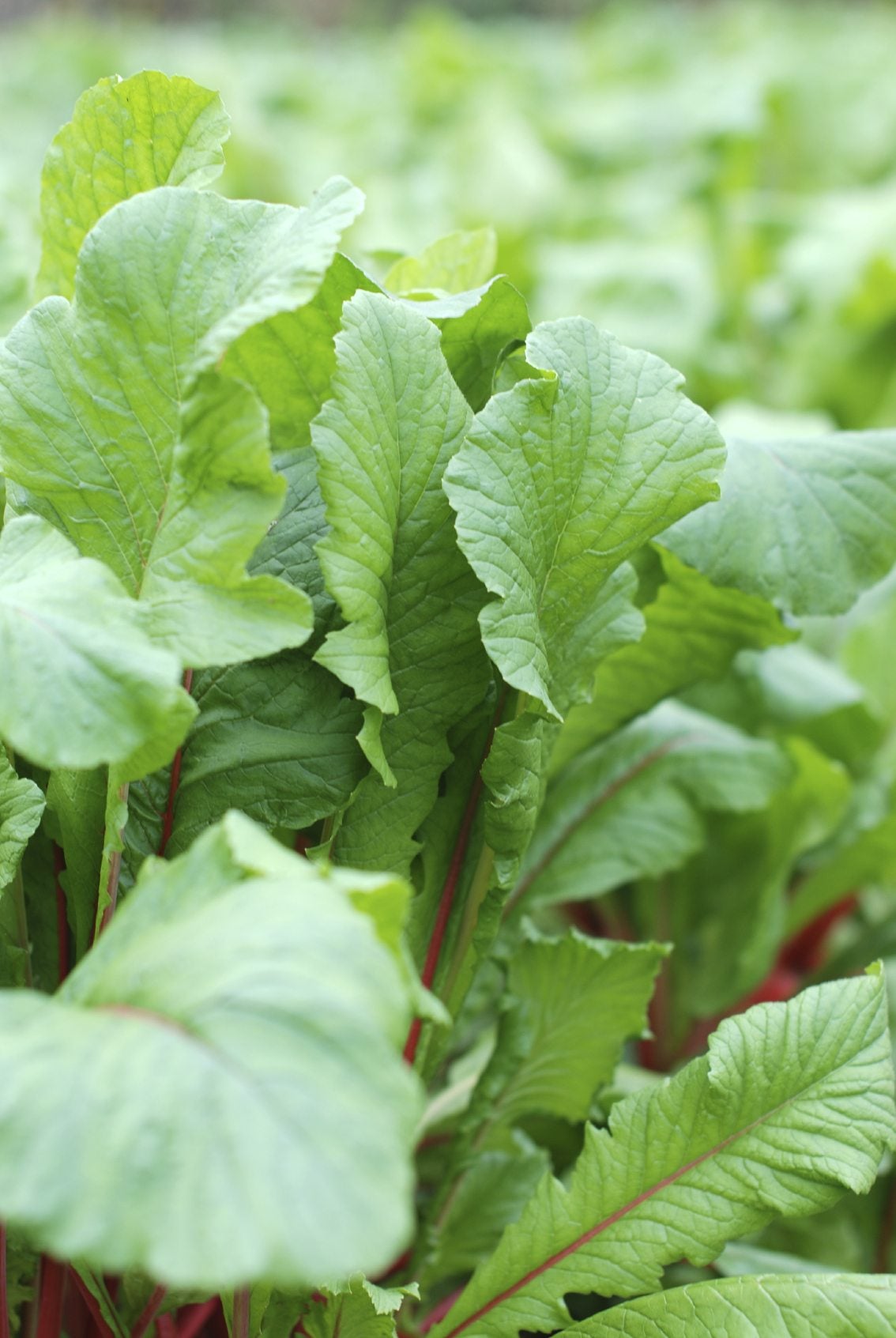
Radishes can grow plenty of foliage without developing a large edible root when growing conditions favor leaf growth or restrict root expansion. The edible part of a common garden radish is a swollen storage root, often with some contribution from the lower stem. It needs time and suitable conditions to enlarge.
A radish seedling first develops small roots and leaves. As it grows, the root begins to swell in varieties bred for round or elongated storage roots. If the plant faces heat, crowding, poor soil, or an unsuitable supply of nutrients, this swelling may remain limited.
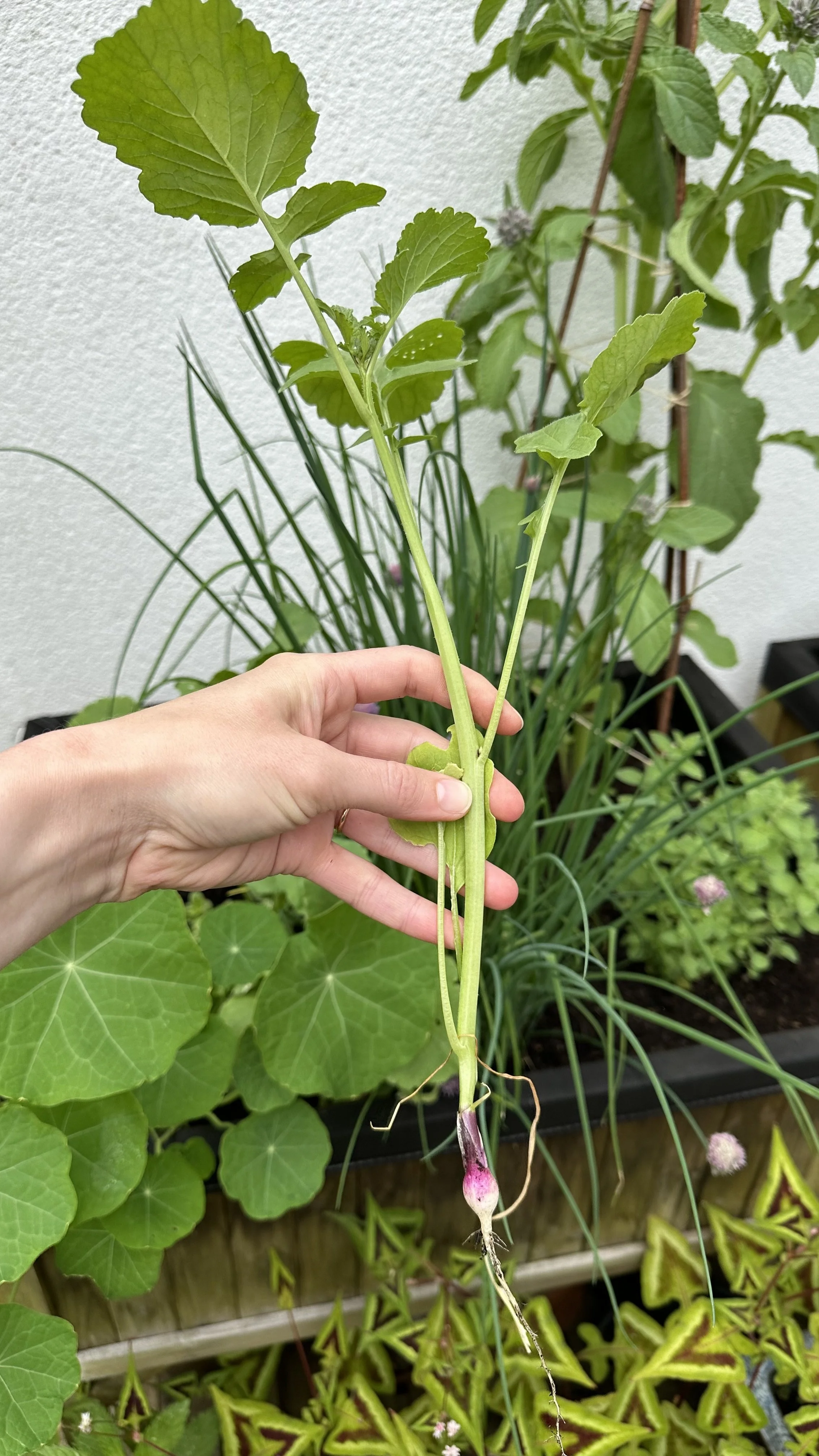
Start by looking at the plant itself. Long, thin roots may point to crowding, poor soil, or a variety that has not had enough time to mature. Large, dark green leaves combined with tiny roots may suggest excess nitrogen, although that sign alone cannot confirm the cause. Plants that flower early often point to heat, age, or other stress.
A healthy-looking top does not always mean a healthy crop below ground. Pull one representative plant to inspect its root, then compare it with nearby plants. This small check can help you choose the right correction instead of adding fertilizer or water without a clear reason.
Source: tinygardenhabit.com
Lots of leaves and tiny roots
Review nitrogen use, planting density, sunlight, and the variety’s expected maturity time.
Long, narrow roots
Check spacing, soil compaction, moisture, and whether the variety naturally produces long roots.
Plants that flower early
Check for warm weather, long days, and a planting date that does not suit the variety.
Slow or uneven growth
Look for dry soil, waterlogged soil, poor drainage, root damage, or uneven seedling spacing.
How to tell whether a radish root is developing
Look at the base of the stem, just above the soil line. In many common red radish varieties, the upper part of the swelling root becomes visible as the plant develops. Other varieties stay mostly below the soil, so the lack of a visible bulb is not proof that growth has failed.
Use the seed packet to identify the expected shape and maturity range. Some radishes mature in about three to five weeks under suitable conditions, while larger winter types need much longer. A plant that has grown for only a short time may need patience rather than a change in care.
Check one plant
Gently loosen the soil and inspect the root instead of repeatedly tugging at every seedling.
Compare plant size with age
Judge progress against the stated maturity range, recognizing that cold, heat, and other stresses can delay growth.
1. Too Much Nitrogen Encourages Leaf Growth
Excess nitrogen is a common reason radishes produce large leaves without a well-developed edible root. Nitrogen supports leafy growth, and too much available nitrogen can shift growth toward foliage rather than the balanced development needed for a good harvest.
This can happen when gardeners add a high-nitrogen lawn fertilizer, fresh manure, or repeated doses of a fertilizer designed for leafy crops. Rich soil is not automatically bad for radishes, but adding more nutrients than the crop needs can cause trouble.
Do not assume that every leafy radish has received too much nitrogen. Shade, heat, crowding, poor soil structure, and variety choice can create similar symptoms. Look at your fertilizer history and the condition of the soil before deciding that nitrogen is the main issue.
Source: tinygardenhabit.com
Avoid high-nitrogen feeding
Do not apply lawn food or frequent nitrogen-rich fertilizer to a radish bed unless a soil test and the product directions support that use.
Use mature compost with care
Mix in a modest amount of finished compost when soil improvement is needed, rather than loading the bed with fresh manure or concentrated fertilizer.
Test before adding nutrients
A soil test can help identify nutrient needs and pH problems, reducing the risk of adding a nutrient that is already plentiful.
Can fertilizer fix radishes that already have large leaves?
More fertilizer is rarely the right first response when radishes have healthy foliage but tiny roots. If nitrogen is excessive, adding another feed may worsen the imbalance. Stop unnecessary feeding and check the other growing conditions.
A radish that is still young may improve if you correct crowding, moisture, and temperature. However, a mature plant that has bolted or remained stunted for weeks may not develop a good edible root even after conditions improve. Sow a new crop if the current plants are past their useful stage.
For the current crop
Stop extra feeding, maintain steady moisture, and remove weeds that compete with the plants.
For the next crop
Prepare the bed based on soil-test results and use fertilizer only when the soil needs it.
2. Hard or Poorly Prepared Soil Restricts Root Growth
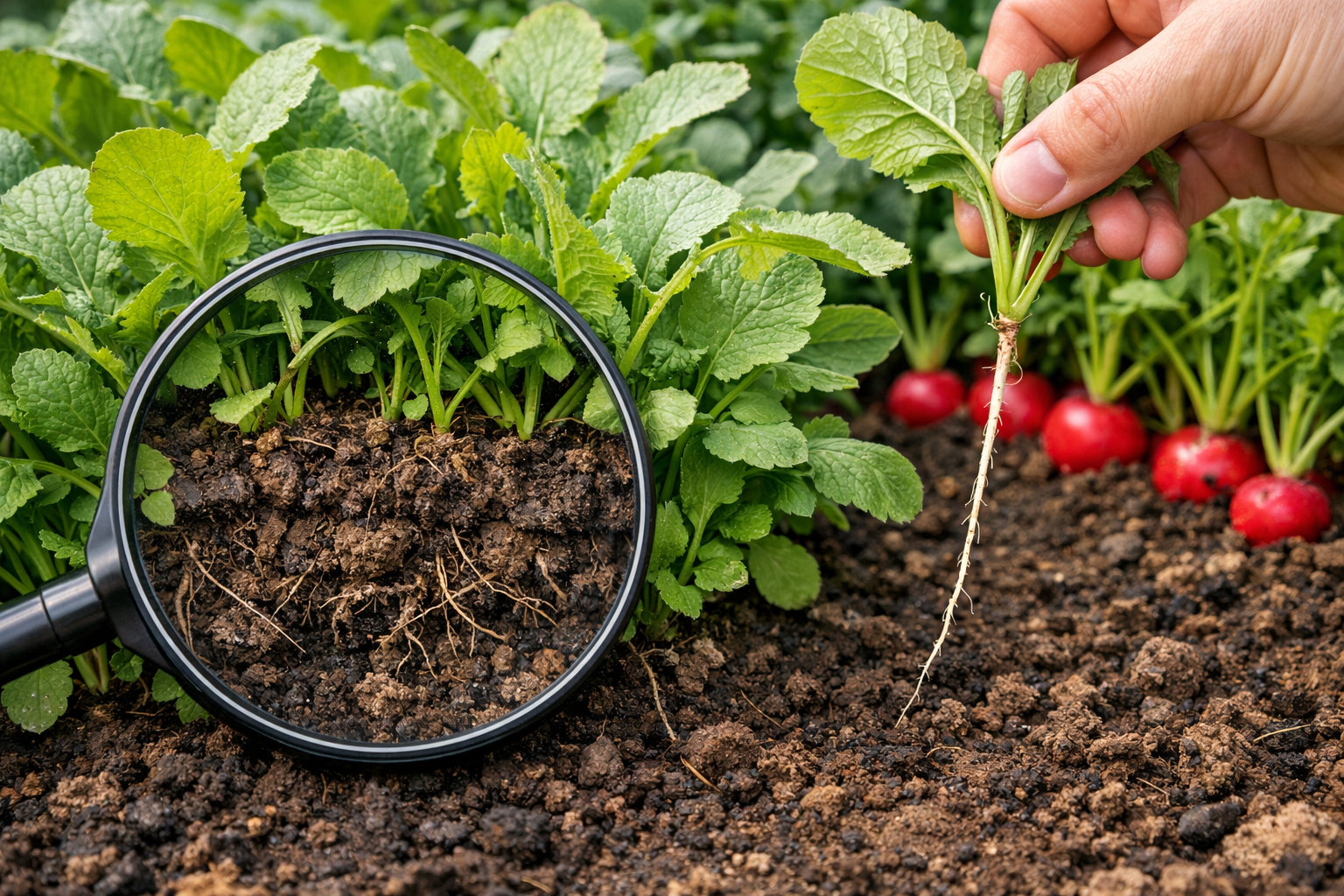
Radishes need soil that allows their roots to grow and swell without meeting hard layers, large stones, or dense clumps. Compacted soil can restrict root expansion and cause roots to become thin, forked, or misshapen. Heavy clay can also hold too much water when drainage is poor.
Before sowing, loosen the upper soil layer and remove stones, sticks, and hard clods. For many common radishes, preparing roughly 6 to 8 inches of loose soil is a useful starting point, though deeper-rooted types may need more. Avoid digging or tilling soil when it is very wet, because this can damage its structure.
A raised bed can help when the native ground drains poorly or stays compacted. Fill it with a well-drained garden soil blend that holds some moisture but does not remain soggy. Containers also work well if they provide enough depth for the selected variety and have open drainage holes.
Source: cdn.mos.cms.futurecdn.net
Break up compacted areas
Loosen the soil before planting and avoid stepping on the bed after it has been prepared.
Remove physical barriers
Clear stones and large clods from the root zone so the developing radish has room to expand.
Improve drainage
Use a suitable raised bed or container when the existing soil stays wet for long periods.
Avoid fresh manure
Use well-rotted organic matter rather than fresh manure, which can create nutrient imbalances and other growing problems.
How to grow radishes in clay soil
Clay soil can grow radishes, but its structure matters. When wet, clay is easy to compact, and when dry, some clay soils form hard clods. Work the bed when it is moist but not sticky, and add organic matter as part of a gradual soil improvement plan.
Do not try to solve every clay-soil problem by adding a small amount of sand. In some soil mixtures, too little sand combined with clay can create a dense material. Focus on organic matter, drainage, reduced foot traffic, and a suitable raised bed when needed.
Check soil moisture before digging
If the soil smears heavily or sticks to tools, wait until it is less wet.
Choose a suitable variety
Shorter-rooted spring radishes may be easier to grow in a shallow bed than long-rooted varieties.
3. Crowded Seedlings Compete for Space
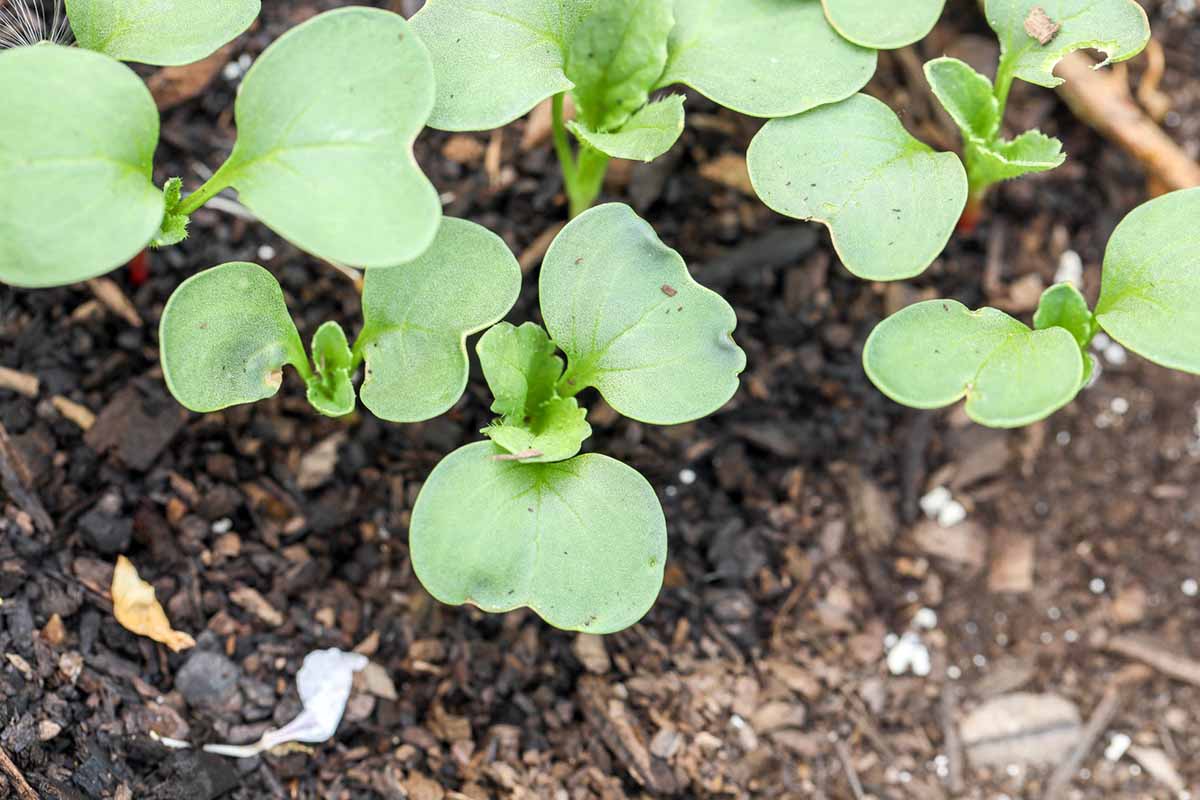
Radishes need enough space for their roots to expand. When seeds sprout too close together, the seedlings compete for light, water, nutrients, and room below ground. The result can be a bed full of leaves with small or uneven roots.
Small radish seeds are easy to sow too thickly. A continuous row of seedlings may look healthy at first, but plants that touch one another early can become crowded as their leaves grow. Thin the row while seedlings are young instead of waiting until the roots have become tangled.
Follow the spacing on the seed packet because varieties differ. Many common small radishes need about 1 to 2 inches between plants, with rows roughly 8 to 12 inches apart, but larger types may need more room. Treat these measurements as a guide, not a universal rule.
Source: images.squarespace-cdn.com
Thin early
Keep the strongest seedlings at the recommended spacing once they are large enough to handle.
Cut seedlings at soil level
Use clean scissors when pulling a nearby seedling might disturb the roots of the plant you want to keep.
Leave room between rows
Give plants enough space for air movement and access for watering and weeding.
Can crowded radishes be saved?
Young seedlings often benefit from thinning, and the remaining plants may continue to develop if the weather and soil are suitable. Remove excess seedlings carefully and avoid pulling hard on plants that will remain.
If the plants are already mature and their roots remain tiny, thinning may not restore the crop fully. Harvest usable small radishes, clear plants that have passed their best stage, and sow a fresh row with proper spacing.
Keep the strongest plants
Choose healthy seedlings that are well placed rather than favoring every plant in the row.
Use succession sowing
Sow small batches at intervals suitable for your season to spread the harvest and reduce waste.
4. Hot Weather Can Stop Good Root Formation
Radishes are cool-season crops, and many common spring varieties perform best in mild weather. Warm soil and hot days can speed up leaf growth, reduce root quality, and encourage the plant to flower before the edible root reaches a useful size.
The problem is common in parts of the United States where spring turns hot quickly. A planting that starts well in March or April may struggle when temperatures rise, while gardeners in cooler regions may have a longer spring window. Local conditions matter more than a fixed calendar date.
Many small radishes mature in roughly 20 to 35 days under favorable conditions, but the exact period depends on the variety and weather. Read the seed packet, check your local planting guidance, and aim to grow the crop during a cool stretch rather than forcing a spring variety through summer heat.
Source: tinygardenhabit.com
Plant in a suitable season
Grow spring radishes in early spring and use fall plantings where local conditions provide enough time before severe cold.
Watch for bolting
A tall flower stalk or visible flower buds means the plant is shifting toward seed production and may no longer form a quality root.
Use heat-tolerant choices when appropriate
Check variety descriptions for suitability to warmer conditions, while recognizing that no variety is immune to all heat stress.
Should radishes grow in shade during hot weather?
Radishes need adequate light for steady growth, so deep shade is not a good fix for heat. A site with several hours of direct sun and some protection from intense late-afternoon heat may help in a warm climate, provided the plants still receive enough light.
A better approach is usually to plant at the right time. In very hot regions, grow suitable varieties during the coolest practical part of the year, such as fall or winter where conditions permit. In colder areas, protect fall crops from hard freezes according to local guidance.
Choose the planting window first
Use local frost dates and current weather patterns rather than relying only on a national calendar.
Avoid deep shade
Give radishes enough sunlight to support healthy growth and root enlargement.
5. Uneven Watering Slows Root Development
Radishes grow best when the soil stays evenly moist but well drained. If the soil dries out repeatedly, growth can slow and roots may become tough or woody. If a very dry bed suddenly receives a large amount of water, some roots may crack as they expand.
Too much water can also cause trouble. Waterlogged soil contains less air for roots and can encourage root damage and disease. The goal is not to keep the bed soaked; it is to maintain steady moisture throughout the active root zone.
Check the soil with a finger instead of watering by the clock alone. If the upper inch begins to dry, check deeper before deciding whether to water. Sandy soil may need more frequent watering than moisture-retentive loam, and hot or windy weather can increase water loss.
Source: zsxkvszxbhpwnvzxdydv.supabase.co
Water deeply enough
Apply water so the root zone becomes moist rather than wetting only the soil surface.
Use mulch carefully
A thin layer of fine organic mulch can reduce moisture loss, but keep it from burying small seedlings.
Check container drainage
Make sure excess water can escape freely and that pots are not left standing in full saucers.
Adjust for the weather
Check soil more often during warm, windy periods and less often when rain has already kept the bed moist.
How much water do radishes need?
There is no single watering volume that fits every radish bed. Soil type, rainfall, temperature, plant density, and container size all affect water needs. A small container in warm weather may dry much faster than a deep garden bed.
Use the soil as your guide. Water when the root zone begins to dry, then check that the water has reached the growing depth. If the bed remains wet for days, improve drainage rather than adding more water.
For raised beds
Check moisture below the surface because raised beds can dry faster than surrounding ground.
For containers
Check daily in warm weather and confirm that drainage holes remain open.
6. The Variety or Planting Date May Be Wrong
Not every radish is bred to make the same kind of root. Some produce small, round red roots, while others form white, pink, purple, or elongated roots. Larger winter radishes generally take longer to mature than many small spring varieties.
If you planted a winter type and expect a round red root after a few weeks, the problem may be timing rather than poor care. Likewise, seeds saved from an unknown source may not match the shape, size, or maturity time you expect.
Check the variety name and maturity guidance before changing soil or fertilizer. The number of days listed on a seed packet is usually an estimate under suitable conditions, not a guarantee. Weather and growing conditions can delay harvest.
Source: minispacegarden.com
Read the seed packet
Confirm the root shape, expected size, preferred season, spacing, and estimated days to harvest.
Match variety to climate
Choose varieties suited to the cool-season window available in your region.
Buy fresh, properly stored seed
Use seed from a reliable source and store unused seed in a cool, dry place according to the package guidance.
When should you harvest radishes?
Begin checking roots as the estimated harvest window approaches. Gently brush soil away from the top of a few plants or pull one sample to judge size. Do not leave a fast-growing spring variety in the ground for too long just because the leaves still look fresh.
Overmature radishes can become pithy, woody, or sharply flavored. If a plant has already flowered, its root quality is often poor. Harvest roots that are usable and replace plants that have passed their best stage.
Sample before harvesting the whole row
Check a few roots so you can judge whether the crop is ready.
Follow the expected root size
Use the variety’s description rather than judging maturity by leaf height alone.
7. Low Light and Weed Competition Can Weaken Growth
Radishes need enough sunlight to make the energy required for steady growth. When plants grow in deep shade, they may produce thinner stems and leaves while root development remains poor. Nearby weeds can make the problem worse by taking up water, nutrients, and light.
Choose a site that receives several hours of direct sun, with more light generally helpful when temperatures remain cool. If the garden is shaded for much of the day by a building or tree, try a sunnier bed or a container that can be moved to a brighter spot.
Keep the planting area free of weeds, especially while radish seedlings are small. Remove weeds by hand or with shallow cultivation, taking care not to disturb the radish roots. Deep hoeing close to the row can damage the very roots you are trying to grow.
Source: gardenerspath.com
Check the sun pattern
Observe the bed at different times of day instead of estimating sunlight from a single glance.
Remove nearby weeds early
Pull small weeds before their roots compete heavily with the crop.
Avoid root disturbance
Use shallow tools or hand weeding close to the row.
Can radishes grow indoors?
Radishes can grow in containers indoors if they receive enough light, suitable temperatures, and sufficient root depth. A bright window may not provide enough light for compact, steady growth, especially during short winter days.
If indoor plants grow tall and thin, move them to a brighter location or use a suitable grow light. Keep the light at the distance recommended by its manufacturer and provide enough space between plants. A container with drainage and a loose growing mix is essential.
Use a suitable container
Choose a pot deep enough for the selected radish variety and make sure excess water can drain.
Provide adequate light
Use a bright location or an appropriate grow light when natural light is insufficient.
How to Fix Radishes That Have Leaves but No Roots
The fastest way to improve a struggling radish crop is to identify the likely cause before changing several conditions at once. Begin with plant age, spacing, soil moisture, and temperature. Then review fertilizer use and soil structure if the first checks do not explain the problem.
Not every problem can be reversed. Young plants may respond to better care, but radishes that are old, badly stunted, or already flowering often produce poor roots even after conditions improve. In that case, a fresh sowing can save time and give you a better chance of a useful harvest.
Source: tinygardenhabit.com
Step 1: Check maturity
Compare the plant’s age with the variety’s expected harvest window and inspect one root.
Step 2: Thin crowded seedlings
Keep the remaining plants at the spacing recommended on the seed packet.
Step 3: Check moisture
Keep the soil evenly moist while ensuring that excess water can drain.
Step 4: Review heat and light
Look for hot weather, flower stalks, deep shade, and a planting date that does not fit the variety.
Step 5: Review fertilizer and soil
Stop unnecessary feeding and check for compacted soil or a known nutrient problem.
Step 6: Decide whether to replant
Harvest usable roots and sow again if the existing plants have bolted or remained stunted past their likely harvest window.
Radish troubleshooting table
Use the symptoms below as a practical guide. Each symptom can have more than one cause, so treat the suggested checks as starting points rather than certain diagnoses.
Large leaves, tiny roots
Check excess nitrogen, crowding, heat, and variety maturity before adding any fertilizer.
Thin or forked roots
Check compaction, stones, root damage, and close spacing.
Dry, tough roots
Check for repeated soil drying, delayed harvest, and warm growing conditions.
Cracked roots
Look for sudden changes in soil moisture, especially after a dry period.
Yellow or weak leaves
Check drainage, moisture, light, root damage, and nutrient availability instead of assuming a nitrogen shortage.
Flower stalks with no good root
Check plant age, warm weather, and whether the variety suits the planting season.
A simple plan for your next radish crop
Choose a cool growing window, prepare loose soil, and sow fresh seed at the depth and spacing stated on the packet. Water gently so the seeds remain in place, and thin the seedlings as soon as they can be handled safely.
Keep the soil evenly moist, remove weeds, and avoid unnecessary fertilizer. Check a few roots as harvest time approaches, then pick them when they reach a useful size. If you sow small batches at suitable intervals, you can spread out the harvest rather than letting one large planting mature all at once.
Before sowing
Prepare the soil, check the season, and confirm the variety’s spacing and maturity range.
During early growth
Thin seedlings, monitor moisture, and keep the bed free of weeds.
Near harvest
Inspect sample roots and harvest promptly when they reach the expected size.
Frequently Asked Questions
Q
Why are my radishes growing only leaves?
Radishes may produce lots of leaves but tiny roots because of excess nitrogen, crowded seedlings, compacted soil, insufficient light, uneven moisture, or hot weather. Check the plant’s age and inspect one root before deciding which condition needs attention.
Q
Can radishes form roots after the leaves have grown large?
Yes, if the plants are still young and growing conditions become suitable. Thin crowded seedlings, maintain steady soil moisture, and stop unnecessary fertilizer. Plants that have bolted or passed their harvest stage may not recover enough to produce good roots.
Q
Does Epsom salt help radishes grow bigger roots?
Epsom salt supplies magnesium and sulfur, but it is not a general root-growth treatment. It will not correct heat stress, crowding, compacted soil, or excess nitrogen. Use a soil test to identify a nutrient need before adding magnesium or other supplements.
Q
How long does it take radishes to form edible roots?
Many common spring radishes can mature in about 20 to 35 days under favorable conditions, although some varieties need more time. Larger winter radishes often take longer. Check the seed packet and use the stated harvest range as a guide rather than a guarantee.
Q
Can I eat radishes that have small roots?
Small radish roots are generally edible if they are healthy and have no signs of decay. Wash them well and remove damaged parts. Roots that are woody, badly cracked, slimy, moldy, or rotten may have poor quality and should be assessed carefully rather than eaten automatically.
Q
Should I pull up radishes that have started flowering?
If a radish has bolted and the root remains small or has become tough, harvesting it or clearing it for a new sowing is often the practical choice. Flowering plants may still be useful for their flowers or seed, but they are less likely to provide the crisp roots expected from a typical spring crop.
Q
Can radishes grow well in pots?
Yes. Use a container with drainage holes, a loose potting mix, enough depth for the variety, and adequate sunlight. Sow seeds at the recommended spacing, keep the mix evenly moist, and check containers often because they can dry faster than garden beds.
✦ Wrapping Up
Conclusion
Radishes that grow leaves but no useful roots usually need a closer look at their growing conditions, not a stronger dose of fertilizer. Excess nitrogen, crowded seedlings, compacted soil, heat, poor light, and uneven watering can all limit root development. The same symptoms can have different causes, so check the plant, soil, weather, and care routine before making changes.
For the best chance of a healthy crop, sow a variety suited to your season, prepare loose and well-drained soil, thin seedlings early, maintain steady moisture, and avoid unnecessary feeding. Check the roots as the expected harvest window approaches. If the plants are already flowering or badly stunted, a fresh sowing under better conditions is often the most useful next step.
💡 Key Takeaway
Today, inspect one radish root, check the soil moisture, review your fertilizer use, and thin any crowded seedlings. If the plants are mature or flowering without forming good roots, choose a suitable cool-season window and sow fresh seed at the correct spacing.
I enjoy sharing simple gardening ideas, lawn care tips, and honest product reviews that help make outdoor work easier. From home gardening guides to helpful tools and lawn care advice, I write easy-to-follow content to help readers create a healthier and better-looking outdoor space without wasting time or money.