As an Amazon Associate, I earn from qualifying purchases.
The best indoor plants for bathrooms include pothos, snake plants, spider plants, peace lilies, Boston ferns, and heartleaf philodendrons. Choose a plant that fits your bathroom’s natural light, humidity, available space, and care needs. Even plants that tolerate shade need usable light to stay healthy.
In homes across the United States, bathrooms range from bright rooms with large windows to small apartment bathrooms with frosted glass and little natural light. These spaces can be good homes for houseplants because showers add moisture to the air, while warm indoor temperatures suit many tropical species. The key is to match each plant to the room rather than assume every plant will enjoy the steam.
Pothos is a useful starting point for beginners because it has trailing vines and tolerates a range of indoor light conditions. Snake plants suit people who want a bold, upright shape with little upkeep, while ferns offer soft, full leaves in bathrooms with better light and steady moisture. Each has different needs, so the best choice depends on your home and daily routine.
Before buying a plant, check how much daylight reaches the bathroom, how quickly the potting mix dries, and whether pets or young children could reach the leaves. A windowless bathroom needs special care because humidity cannot replace sunlight. With the right plant, suitable drainage, and a simple care routine, you can add greenery without making bathroom upkeep harder.
A good bathroom plant can handle the room’s light, changes in humidity, and normal indoor temperature shifts. Bathrooms often become warm and damp after a shower, then grow cooler and drier as the air changes. Plants that tolerate these shifts are often easier to maintain than species that need very steady conditions.
Humidity is helpful, but it is only one part of plant care. A plant may love moist air and still suffer if its roots sit in wet soil or its leaves receive too little light. Look at the whole growing space before you choose a species.
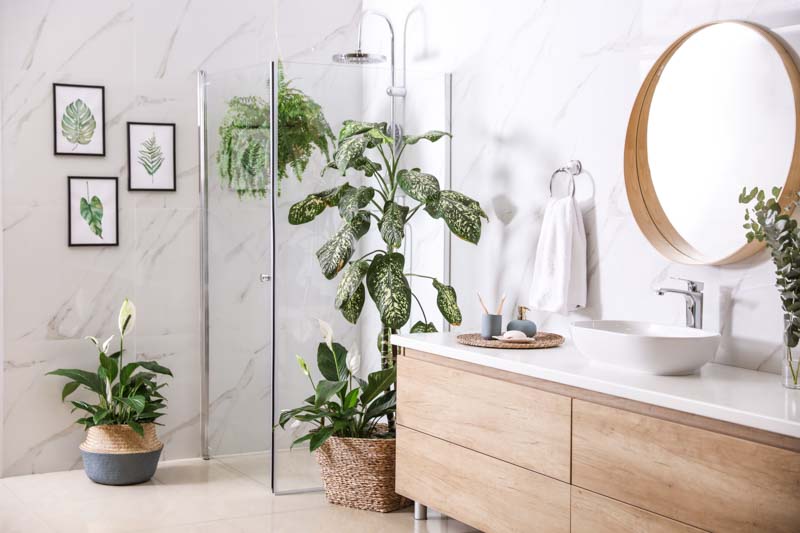
Source: storage.googleapis.com
Light tolerance
Choose a plant suited to the natural light your bathroom receives. Low-light tolerance means a plant can manage less light than many other species, not that it can grow in darkness.
Humidity needs
Tropical foliage plants and many ferns can benefit from moist air. The level of humidity varies after each shower, so do not assume your bathroom stays humid all day.
Water and drainage
A suitable potting mix and drainage holes help keep roots healthy. Humid air may slow evaporation, which can make frequent watering harmful.
Room and plant size
Trailing plants fit shelves and hanging planters, while upright plants work well in floor corners. Leave enough room to clean, open cabinets, and move safely around the bathroom.
How Much Light Does Your Bathroom Get?
A bathroom with a clear window and several hours of bright, indirect daylight can support a wider range of plants than one with a small frosted window. Place light-loving species near a bright window, but shield delicate leaves from harsh direct sun if they begin to scorch. Medium-light rooms are often better suited to pothos, philodendrons, and spider plants.
For a dim bathroom, consider a snake plant or ZZ plant, while remembering that slow growth and survival are not the same as vigorous growth. If there is no window, use a suitable plant grow light or rotate plants between the bathroom and a brighter room. An ordinary bathroom bulb may not provide enough usable light.
Bright, indirect light
Try a spider plant, Boston fern, or moth orchid if the room also meets its moisture and temperature needs.
Medium or filtered light
Pothos, heartleaf philodendron, and many Chinese evergreen varieties can be good options.
Low light
Snake plants and ZZ plants tolerate dimmer conditions, but still need some usable light.
No natural light
Provide a suitable grow light or rotate plants into a brighter room. Do not rely on shower steam or occasional use of a ceiling light.
The 10 Best Indoor Plants for Bathrooms
The following plants suit different bathroom conditions, from dim guest baths to bright rooms with generous window light. The list is not a universal ranking because no single plant works best in every home. Use the care notes to find a match for your light level, space, and daily routine.
Plant names can sometimes be confusing because familiar common names cover several species or varieties. When buying a plant, check its botanical name and care label, especially if pet safety matters.
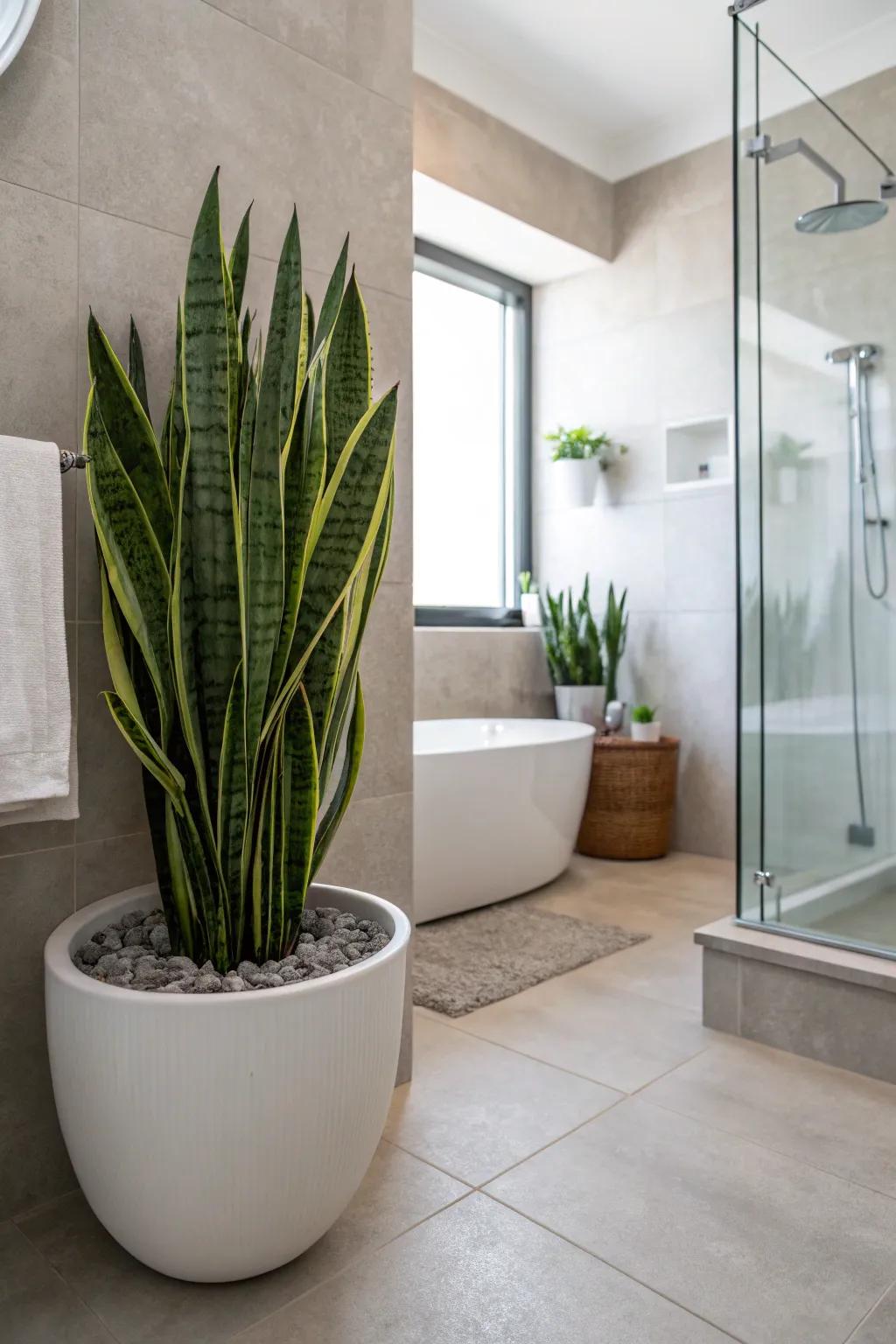
Source: storage.googleapis.com
Best for beginners
Pothos is a practical first choice because it is adaptable, easy to display, and simple to prune.
Best for upright growth
Snake plants add height and structure without trailing vines that spread across shelves.
Best for a lush look
Boston ferns offer dense, arching foliage when light, moisture, and watering conditions are suitable.
Best for hanging displays
Spider plants and trailing philodendrons make good use of vertical space.
1. Pothos: Best for Easy Care
Pothos (Epipremnum aureum) is one of the most useful bathroom plants for beginners. Its heart-shaped leaves grow along trailing vines, making it suitable for a shelf, a high plant stand, or a hanging pot. Green and variegated varieties add interest without taking up much floor space.
Pothos can tolerate lower light than many houseplants, but brighter indirect light usually supports stronger growth and more visible leaf patterns. Water when the top portion of the potting mix has begun to dry, then let excess water drain away. Do not leave the pot sitting in a full saucer.
One major limit matters for pet owners: pothos is toxic to cats and dogs if chewed. Place it well out of reach or choose a safer species if your pets can access the plant.
Light
Low to bright indirect light, with better growth often seen in brighter conditions.
Water
Allow the upper soil to dry somewhat before watering again.
Best placement
A shelf or hanging planter away from direct shower spray.
2. Snake Plant: Best for Low-Light Conditions
Snake plant (Dracaena trifasciata) has firm, upright leaves that may be plain green or marked with yellow or pale bands. Its narrow shape suits small bathrooms because it uses little horizontal space. It is also a practical option for people who prefer a plant that does not need frequent watering.
Snake plants tolerate a range of light levels, including lower light, but they still require usable light to live and grow. They store water in their thick leaves, so soggy soil is a greater concern than a short delay between waterings. Use a free-draining potting mix and wait until the soil has dried well before watering.
Do not mistake tolerance for a need for humidity. Snake plants can handle a bathroom environment, but they do not need constant moisture. They are toxic to cats and dogs if eaten, so keep them away from pets that chew leaves.
Light
Low to bright indirect light.
Water
Water sparingly after the soil has dried well.
Best placement
A stable floor corner or a sturdy vanity beside a bright wall.
3. Spider Plant: Best for Hanging Displays
Spider plant (Chlorophytum comosum) has long, arching leaves that often feature green and cream or white stripes. Mature plants can produce small plantlets on hanging stems, which makes them fun to grow and easy to propagate. Their shape looks especially good in a hanging basket or on a raised shelf.
Spider plants generally prefer bright, indirect light but can adapt to moderate indoor light. Water when the upper soil begins to dry, and avoid leaving the roots in standing water. A humid bathroom may help the leaves stay in good condition, but good airflow and suitable drainage still matter.
Spider plants are listed as non-toxic to cats and dogs by the ASPCA. Even so, place the pot where a pet cannot knock it down or chew it excessively.
Light
Bright, indirect light is best; moderate light can also work.
Water
Keep the mix lightly moist during active growth without leaving it waterlogged.
Best placement
A hanging basket or shelf with room for the leaves to arch.
4. Boston Fern: Best for a Lush, Green Look
Boston fern (Nephrolepis exaltata) produces soft, feathery fronds that can make a bathroom feel fuller and more natural. It generally appreciates humid air, making a frequently used bathroom a possible fit. It also needs more careful moisture management than many tougher houseplants.
Give a Boston fern bright, indirect light and keep its potting mix evenly moist without allowing it to sit in water. Check the soil often, especially when indoor heating or air conditioning changes the room’s conditions. Crispy frond edges may point to dry soil, low humidity, excess salts, or other care problems, so inspect the plant and its environment before changing several things at once.
This fern can struggle in a dark bathroom, even when the room becomes steamy. Choose another plant for a very dim space or provide suitable grow lighting. A bathroom with a bright window is a better home for this species.
Light
Bright, indirect light.
Water
Keep the soil evenly moist, with free drainage.
Best placement
A bright window area or a raised stand away from direct hot air.
5. Peace Lily: Best for Broad Leaves and Flowers
Peace lily (Spathiphyllum species) has broad green leaves and can produce white flower-like spathes under suitable conditions. It often adapts to medium or lower indoor light and appreciates humid air. This makes it a possible choice for a bathroom that receives daylight but does not get strong direct sun.
Peace lilies prefer evenly moist soil, not soil that stays saturated. Check the mix before watering and empty any saucer after excess water drains. A drooping plant may need water, but repeated wilting and soaking can harm its roots, so check the soil rather than following a fixed schedule.
Peace lilies are toxic to cats and dogs because they contain insoluble calcium oxalate crystals. Chewing can cause mouth pain, drooling, and vomiting. Keep the plant away from pets and children who may chew its leaves, or choose a non-toxic alternative.
Light
Low to medium indirect light, with brighter filtered light often helping flowering.
Water
Water when the upper soil starts to dry, then allow excess water to drain.
Best placement
A stable stand with indirect daylight and room for the leaves to spread.
6. Heartleaf Philodendron: Best for Trailing Vines
Heartleaf philodendron (Philodendron hederaceum) has slim stems and smooth, heart-shaped leaves. Its trailing growth suits narrow shelves, hanging baskets, and small bathroom corners. It is often forgiving of changes in indoor conditions when given suitable light and careful watering.
Place it in medium or bright indirect light if possible, although it can tolerate lower light. Water after the top layer of potting mix begins to dry and use a container with drainage. Very low light can slow growth and leave the stems stretched, while wet soil can cause root problems.
Heartleaf philodendron is toxic to cats and dogs if chewed. Avoid it in an accessible pet area, even if its vines are displayed high on a wall where they appear difficult to reach.
Light
Medium to bright indirect light; lower light may slow growth.
Water
Let the top layer dry before watering again.
Best placement
A hanging pot or shelf where trailing stems will not interfere with daily use.
7. ZZ Plant: Best for People Who Often Forget to Water
ZZ plant (Zamioculcas zamiifolia) has glossy, dark green leaves on sturdy stems. It grows from thick underground rhizomes that store water, which helps it cope with dry periods. Its upright form works well on a bathroom counter, a side table, or a floor stand.
A ZZ plant can tolerate low light, but brighter indirect light generally supports better growth. Allow the potting mix to dry well between waterings. A steamy bathroom does not mean the roots need extra water, and frequent watering can cause serious damage.
ZZ plants are toxic if chewed and should be kept away from pets and young children. They are best for homes where the plant can sit in a stable, protected spot.
Light
Low to bright indirect light.
Water
Let the potting mix dry well between waterings.
Best placement
A stable counter or floor stand away from splashes.
8. Chinese Evergreen: Best for Decorative Foliage
Chinese evergreen (Aglaonema species) offers broad leaves in green, silver, and, in some varieties, pink or red tones. Many types adapt to indoor light that is lower than what sun-loving plants require. Their compact growth can work well on a vanity, a shelf, or a small plant stand.
Provide indirect light suited to the variety, and let the upper soil begin to dry before watering again. Colorful cultivars may need brighter indirect light to maintain their patterns. Do not place the plant where it receives direct hot sunlight or repeated splashes of cleaning chemicals.
Chinese evergreen contains compounds that can irritate the mouth if eaten and is toxic to cats and dogs. Choose a different plant if pets can reach it, and check the exact variety before bringing it home.
Light
Low to medium indirect light, with brighter filtered light often benefiting colorful varieties.
Water
Allow the upper soil to dry slightly between waterings.
Best placement
A vanity corner or shelf with enough room for the leaves.
9. Bird’s Nest Fern: Best for Compact Tropical Style
Bird’s nest fern (Asplenium nidus) grows broad, rippled fronds from a central rosette. Unlike many ferns with fine, feathery leaves, it has a bold shape that suits modern and traditional bathrooms alike. It can appreciate the humidity of a bathroom when the room also offers suitable light.
Give it bright, indirect light and a well-draining mix that retains some moisture. Water the soil rather than pouring water into the central crown, where trapped water can encourage rot. Keep it away from direct sun, which may scorch its leaves.
A bird’s nest fern is not the best choice for a dark room simply because it likes humidity. It performs better where daylight is adequate and the plant can dry slightly between watering sessions without becoming parched.
Light
Medium to bright indirect light.
Water
Keep the mix lightly moist and avoid water collecting in the central crown.
Best placement
A bright vanity or a stand near a window, away from direct sun.
10. Moth Orchid: Best for a Bright Bathroom
Moth orchid (Phalaenopsis species) can bring long-lasting blooms and a neat, elegant shape to a bright bathroom. It is better suited to rooms with good indirect light than to dim spaces. Humidity can help, but orchids also need airflow and a growing medium designed for their roots.
Grow a moth orchid in an orchid bark mix or another suitable orchid medium rather than dense garden soil. Water when the medium approaches dryness, then drain the pot well. Do not let the roots remain in standing water, and avoid leaving water trapped in the crown of the leaves.
This plant is more demanding than pothos or a snake plant, so it is a better choice for someone who enjoys monitoring plant conditions. If your bathroom has no window or stays dark for most of the day, choose another species or add suitable grow lighting.
Light
Bright, indirect light.
Water
Water according to the moisture of the orchid medium, then drain thoroughly.
Best placement
A bright windowsill or vanity away from harsh direct sun.
Choose the Right Bathroom Plant for Your Space
The easiest way to choose a bathroom plant is to start with light, then consider watering habits, room size, and pet safety. A plant that fits your daily routine is more likely to stay healthy than one chosen only for its appearance. The table below compares common options by their practical strengths.
These light descriptions are broad care guides, not exact measurements. Window direction, nearby buildings, glass type, season, and distance from the window can all change how much light a plant receives.
Source: ro.pinterest.com
For a small bathroom
Choose a compact ZZ plant, small snake plant, or a trailing plant on a shelf that does not block the sink or mirror.
For a bright bathroom
Consider a spider plant, bird’s nest fern, Boston fern, or moth orchid, depending on the room’s moisture and airflow.
For low-maintenance care
A snake plant or ZZ plant can suit a person who prefers less frequent watering.
For a pet-friendly home
Spider plants are listed as non-toxic to cats and dogs by the ASPCA. Always check the exact species of any plant you buy.
Bathroom Plant Comparison Table
Use this table as a starting point, then check the specific plant’s care needs. Watering frequency is not fixed because pot size, soil mix, temperature, season, and light all affect how quickly the soil dries.
Pothos
Light: low to bright indirect. Water: when the top soil begins to dry. Main advantage: adaptable trailing growth. Pet safety: toxic to cats and dogs.
Snake plant
Light: low to bright indirect. Water: after the soil dries well. Main advantage: upright form and low water needs. Pet safety: toxic to cats and dogs.
Spider plant
Light: bright indirect to moderate. Water: when the top soil begins to dry. Main advantage: arching leaves and plantlets. Pet safety: listed as non-toxic to cats and dogs.
Boston fern
Light: bright indirect. Water: keep the soil evenly moist but not waterlogged. Main advantage: dense, feathery foliage. Pet safety: generally regarded as non-toxic to cats and dogs.
Peace lily
Light: low to medium indirect. Water: keep lightly and evenly moist. Main advantage: broad leaves and white spathes. Pet safety: toxic to cats and dogs.
Heartleaf philodendron
Light: medium to bright indirect, with some tolerance for lower light. Water: when the top soil begins to dry. Main advantage: trailing vines. Pet safety: toxic to cats and dogs.
ZZ plant
Light: low to bright indirect. Water: after the soil dries well. Main advantage: sturdy foliage and infrequent watering. Pet safety: keep away from animals and children who may chew it.
Chinese evergreen
Light: low to medium indirect, depending on variety. Water: after the upper soil dries slightly. Main advantage: patterned foliage. Pet safety: toxic to cats and dogs.
Bird’s nest fern
Light: medium to bright indirect. Water: keep the mix lightly moist without soaking the crown. Main advantage: broad, sculptural leaves. Pet safety: check the exact plant and household exposure needs.
Moth orchid
Light: bright indirect. Water: when the orchid medium approaches dryness. Main advantage: decorative flowers. Pet safety: check the exact plant and avoid access to the potting medium.
How to Care for Bathroom Plants
Bathroom plant care starts with a pot that drains well, light that matches the species, and watering based on the soil rather than the room’s humidity. A plant near a steamy shower may lose water more slowly than one in a dry room. Checking the soil is more reliable than watering every time you use the bathroom.
Start with a simple routine and change it only when the plant shows a clear need. This makes it easier to spot problems and prevents several care changes from causing more stress.
Source: interiorcompany.com
Check the soil before watering
Touch the upper soil or use a clean finger to check moisture. Water according to the plant’s needs, and let excess water drain completely.
Use the right potting mix
Choose a mix suited to the plant. Many foliage plants need a mix that holds some moisture while still allowing air and water to move through it.
Keep leaves clean
Gently wipe dust or residue from broad leaves with a damp cloth. Avoid spraying household cleaners or scented products on the plant.
Allow airflow
Use the bathroom’s ventilation system as intended and open the door when practical. Persistent dampness around pots and walls can encourage mold.
Feed during active growth
Use a suitable houseplant fertilizer according to its label during the growing season. Avoid excessive feeding, which can cause salt buildup in the potting mix.
A Simple Weekly Plant Check
Once a week, look at the leaves, check the soil, and inspect the pot’s drainage. Remove dead leaves and check for small insects, sticky residue, or unusual spots. Some plants need water more often than others, so the weekly check is a prompt to inspect rather than a fixed watering day.
After a shower, check whether water has splashed directly onto the plant or collected around the pot. Move the plant if it receives repeated direct spray, and empty any saucer that holds standing water. These small steps can prevent root damage and keep the bathroom easier to clean.
Healthy signs
New growth, firm leaves, and soil that dries at a suitable pace for the species.
Warning signs
Yellowing leaves, soft stems, persistently wet soil, visible pests, or a sour smell from the pot.
First response
Check light, soil moisture, drainage, and pests before changing fertilizer or adding extra water.
Where Should You Place Bathroom Plants?
A bright windowsill can work for plants that like indirect daylight, provided the leaves do not touch cold glass or receive harsh sun. A vanity or shelf can hold a smaller plant, while a hanging planter can display trailing vines without using counter space. Keep heavy pots on secure surfaces and leave enough room to reach taps, mirrors, and storage.
Avoid placing plants where they receive hot water, repeated soap spray, or cleaning chemicals. Keep them away from electrical outlets and appliances where water could create a hazard. If a plant makes it harder to clean the room or blocks a walkway, move it to a more practical location.
Near a window
Good for species that need bright or medium indirect light.
On a shelf
Useful for compact pots and trailing vines, provided the shelf is stable and the plant gets enough light.
On the floor
Works for taller snake plants or larger specimens when the pot will not obstruct movement.
Near the shower
Choose only a spot with suitable light and airflow, away from direct spray and cleaning products.
Can Plants Grow in a Bathroom With No Windows?
Most houseplants cannot grow indefinitely in a completely windowless bathroom without a suitable source of light. Plants need light for photosynthesis, the process that lets them make the sugars they use to grow. Humidity and warmth cannot replace this basic need.
Snake plants and ZZ plants tolerate lower light than many species, but they still need usable light. A bathroom used only for short visits may receive too little light from its ceiling fixture to support healthy long-term growth. If the room has no natural light, plan for artificial growing light or a rotation routine.
Source: thebrowngardener.com
Option 1: Use a grow light
Choose a plant grow light suitable for indoor foliage and follow its distance and timing instructions. Provide a regular light period rather than leaving a lamp on all day.
Option 2: Rotate plants
Keep a plant in the bathroom for display, then move it to a brighter room on a regular schedule. The right schedule depends on the species and how much light it receives.
Option 3: Use artificial greenery
If lighting and rotation are impractical, a realistic artificial plant offers a green look without the risk of a live plant slowly declining.
How to Tell Whether Light Is Enough
Watch the plant over several weeks. New growth that is weak, unusually stretched, pale, or much smaller than older leaves can signal inadequate light, although other issues may cause similar symptoms. A plant that survives without dying quickly may still lack enough light for strong growth.
Move the plant closer to a suitable light source or add a grow light if growth keeps declining. Make changes gradually when possible, and avoid moving a shade-adapted plant straight into intense direct sun. Check soil moisture again after changing the light because brighter conditions can increase water use.
Look for new growth
Healthy new leaves and normal stem growth are more useful signs than the condition of old leaves alone.
Check the distance from the light
Light levels fall as a plant moves farther from a window or lamp, so placement matters.
Recheck watering
Low light often slows growth and soil drying, which can make the usual watering routine too frequent.
Common Bathroom Plant Problems and How to Fix Them
Yellow leaves, brown tips, drooping stems, and mold on the soil can have several causes. Do not assume every problem means the plant needs more water. Start by checking soil moisture, drainage, light, and visible signs of pests before taking action.
Make one change at a time when possible and watch the plant’s response. Older leaves may naturally die as new growth appears, so look for a pattern rather than reacting to one damaged leaf.
Source: storage.googleapis.com
Yellow leaves
Possible causes include overwatering, poor drainage, insufficient light, or normal aging. Check the soil and roots before deciding what to change.
Brown or crispy edges
Possible causes include dry soil, low humidity, fertilizer salts, direct sun, or residue on leaves. Review the plant’s care needs and room conditions.
Soft stems or a sour smell
These can signal root rot from overly wet soil. Check the roots, remove dead material with clean tools, and repot into fresh, suitable mix if needed.
Mold on the soil surface
Surface mold can occur when soil stays damp and airflow is poor. Remove affected surface material, improve airflow, and allow the mix to dry as appropriate for the species.
Small insects or sticky leaves
Inspect the leaves and stems for pests. Isolate the plant from other houseplants and use a treatment labeled for the pest and plant if necessary.
Why Bathroom Plants Can Be Overwatered
A humid room slows evaporation from the potting mix in some conditions, so soil may remain wet longer than expected. Roots need both water and air, and waterlogged soil can limit the oxygen they need. This is why a plant that likes humidity can still develop root rot.
Use drainage holes, a suitable potting mix, and a watering routine based on soil moisture. Never add extra water simply because the bathroom feels warm or steamy. If the soil remains wet for a long time, review the light, pot size, drainage, and mix before watering again.
Do not water by calendar alone
Use a weekly inspection as a reminder, then water only when the plant’s soil and care needs call for it.
Do not leave water in the saucer
Empty collected water after drainage to prevent the roots from sitting in it.
Match the pot to the roots
An oversized pot can hold more wet mix than a small root system can use, increasing the time needed for the soil to dry.
Are Bathroom Plants Safe for Pets and Children?
Plant safety matters when cats, dogs, or young children can reach the leaves, stems, or potting mix. Several popular bathroom plants, including pothos, snake plants, peace lilies, heartleaf philodendrons, and Chinese evergreens, can cause harmful effects if chewed or swallowed. Keep these plants inaccessible or select a suitable alternative.
The ASPCA lists spider plants as non-toxic to cats and dogs, making them a useful option for many pet-owning homes. Even plants listed as non-toxic can cause stomach upset if an animal eats a large amount, and fertilizers or other products used around the plant may pose separate risks. Check the exact plant species rather than relying on a common name alone.
Source: gardenia.net
Check the botanical name
Common names can refer to different plants, so confirm the species on the plant label or with a reliable plant safety reference.
Keep toxic plants out of reach
A high shelf may not be enough for a climbing cat or a trailing plant with hanging leaves. Choose a location your pets cannot access.
Store care products safely
Keep fertilizers, pest treatments, and other garden products away from children and animals, and follow all label directions.
Act quickly after ingestion
If a pet chews a plant of concern, contact a veterinarian or an animal poison control service. If a child may have swallowed a toxic plant, seek guidance from a medical professional or poison control service.
A Practical Pet-Friendly Choice
For a home with cats or dogs, a spider plant is often a better starting point than pothos or peace lily. It has attractive arching leaves and can be displayed in a hanging pot or on a shelf. Make sure the planter is secure, since even a non-toxic plant can create a mess if knocked over.
Before bringing home any plant, verify its identity and safety profile. Do not assume that a plant is safe just because it is common in homes or sold in a garden center. If a household member has a known sensitivity to a plant, consider that when choosing its location or selecting another species.
Useful choice
Spider plant, when correctly identified and kept in a secure pot.
Use extra caution
Pothos, snake plants, peace lilies, philodendrons, and Chinese evergreens can be harmful if chewed.
Frequently Asked Questions
Q
What is the easiest plant to keep in a bathroom?
Pothos is a useful choice for beginners because it tolerates a range of indoor light conditions and grows well as a trailing plant. Snake plants and ZZ plants are also good options for people who prefer less frequent watering. All three still need suitable light, drainage, and care.
Q
What plants are best for a bathroom with no windows?
Snake plants and ZZ plants tolerate low light, but neither can live indefinitely in total darkness. Use a suitable grow light or rotate the plant into a brighter room on a regular schedule. If you cannot provide light, an artificial plant is a more reliable decorative choice.
Q
Do bathroom plants absorb moisture from the air?
Some plants can take up small amounts of moisture through their leaves or roots, depending on the species and conditions. However, ordinary houseplants cannot be relied on to remove enough moisture to control a damp bathroom. Use an exhaust fan, open the door when practical, and address leaks or persistent condensation.
Q
How often should I water indoor plants in a bathroom?
There is no single watering schedule for all bathroom plants. Check the soil and follow the needs of the species, since a fern generally needs more consistent moisture than a snake plant or ZZ plant. Humid air may slow soil drying, so avoid watering simply because it is shower day.
Q
Can I put a plant directly beside the shower?
You can place a suitable plant near the shower if it receives enough light and has good airflow, but avoid repeated direct spray, hot water, and cleaning chemicals. A plant that stays wet for long periods may develop leaf or root problems. Choose a stable spot where the pot can drain safely.
Q
Which bathroom plants are safe for cats and dogs?
Spider plants are listed as non-toxic to cats and dogs by the ASPCA. Many other popular bathroom plants, including pothos, peace lilies, snake plants, and philodendrons, can cause harmful effects if eaten. Verify the exact species and contact a veterinarian if a pet chews a plant of concern.
Q
Can bathroom plants prevent mold?
No. Houseplants are not a dependable way to prevent bathroom mold, and damp potting mix can add another source of moisture. Control moisture with working ventilation, prompt repairs to leaks, and suitable cleaning practices. Do not use plants as a replacement for fixing a persistent dampness problem.
✦ Wrapping Up
Conclusion
The best indoor plants for bathrooms are the ones that fit the light, moisture, and space you have. Pothos and heartleaf philodendron suit trailing displays, snake plants and ZZ plants work well for people who prefer less frequent watering, and ferns can add a lush look to brighter, humid rooms. Spider plants offer another flexible choice, especially for households that need to consider pet safety.
Before you buy, check the room’s daylight and choose a plant with matching needs. Use a pot with drainage holes, inspect the soil before watering, and make sure the plant does not obstruct bathroom use. If your bathroom has no window, provide a grow light or rotate the plant into a brighter room rather than expecting humidity to do all the work.
💡 Key Takeaway
Start with one plant that matches your bathroom’s light. Choose pothos for a trailing display, a snake plant for an upright and low-water option, or a spider plant if pet safety is a priority. Check its botanical name, place it in a pot with drainage, and inspect the soil before each watering.
I enjoy sharing simple gardening ideas, lawn care tips, and honest product reviews that help make outdoor work easier. From home gardening guides to helpful tools and lawn care advice, I write easy-to-follow content to help readers create a healthier and better-looking outdoor space without wasting time or money.