As an Amazon Associate, I earn from qualifying purchases.
An outdoor seating area with a roof creates a shaded, sheltered place to relax, eat, and spend time outside. Choose a roof style that fits your yard, local climate, budget, and the amount of sunlight or rain you want to block.
An outdoor seating area can make a backyard feel like another room of your home. In the United States, it might be a covered porch for summer cookouts in Georgia, a shaded deck in California, or a cozy patio for cool evenings in Pennsylvania. A roof helps protect the space from direct sun and light rain, so you can enjoy fresh air without sitting fully exposed to the weather.
The best design starts with your daily needs, not the furniture or decorations. Think about whether you want a quiet reading spot, a dining area for family meals, or a lounge where friends can gather on weekends. Then consider the size of your yard, the direction of the sun, drainage, wind, and the rules that apply to structures on your property.
You do not need a large yard or a costly addition to create a comfortable covered seating space. A small awning, a simple pergola with suitable shade panels, or a freestanding gazebo can work well when the design matches the site. The key is to balance shelter, airflow, safe construction, and easy care.
1. Choose the Right Roof Style for Your Outdoor Seating Area
The roof is the main feature that shapes how your seating area looks and works. Some roofs create a solid barrier against rain, while others filter sunlight or let you adjust the amount of shade. Start by deciding how much shelter you need throughout the year.
A permanent roof usually offers more reliable protection than an open frame with a fabric cover. However, a permanent structure may cost more, require stronger supports, and trigger local permit or zoning requirements. A lighter shade system may be easier to install, but it can offer less protection in rough weather.
Source: garden.eco
Solid patio roof
A solid roof made from suitable roofing materials provides dependable shade and can direct rain away from the seating area. It works well for dining tables and lounge furniture, but its supports and drainage must be designed for local weather.
Pergola with shade panels
A pergola has an open or partly open roof frame. Add suitable shade cloth, slats, or approved roofing panels if you need more protection. An uncovered pergola does not provide full rain shelter.
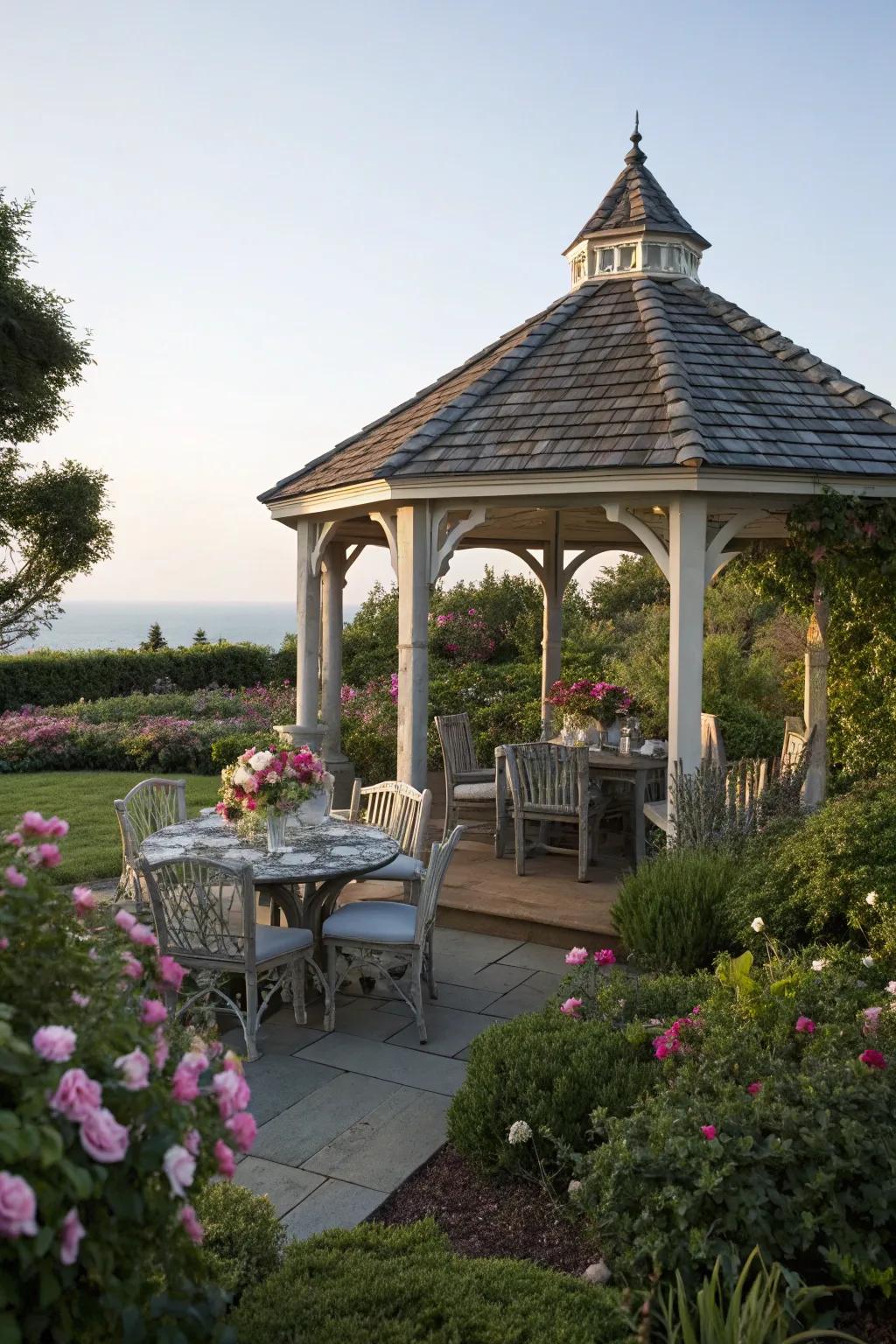
Freestanding gazebo
A gazebo creates a distinct destination in the yard. It suits garden seating, outdoor meals, and quiet retreats, provided the base, roof, and anchors are suitable for the site’s conditions.
Retractable canopy
A retractable canopy lets you adjust shade as the sun moves. It is useful for flexible patios, though the fabric and frame may need to be retracted or secured during strong winds.
Wall-mounted awning
An awning extends shade from the house without adding a separate structure across the yard. It can save space, but the wall, fasteners, and installation method must support the intended loads.
How to Decide Between a Pergola and a Solid Roof
Choose a pergola when filtered sunlight, airflow, and an open garden feel matter most. Choose a solid roof when you want stronger protection from sun and ordinary rainfall. If you enjoy both, consider a properly designed roof system that combines fixed shelter with adjustable side shade.
Think about the room below the roof as well. A dark, enclosed structure may feel hot or dim, while a roof with suitable light transmission can make the seating area feel more open. Transparent roofing can still cause glare and heat buildup, so consider orientation, ventilation, and how the space will be used.
For frequent outdoor meals
A solid roof with good drainage is often the more practical choice because it protects the table and chairs from ordinary rain.
For a garden lounge
A pergola with shade panels can create a softer connection between the seating area and nearby plants.
For changing sunlight
A retractable canopy offers flexibility, but follow the manufacturer’s wind and weather limits.
2. Plan the Layout Before You Build
A good layout makes a covered seating area feel comfortable rather than cramped. Measure the available space, mark the roof footprint, and sketch where each chair, table, planter, and walkway will go. This simple step can prevent costly changes once the structure is built.
Start with the main activity. A dining area needs room for chairs to move in and out, while a lounge needs space for people to walk around sofas and side tables. If the space serves several purposes, divide it into clear zones instead of filling every corner with furniture.
Check the relationship between the seating area and the house. A spot near the kitchen may be convenient for meals, while a quiet corner beside a garden may be better for reading. Keep doors, gates, utility access, and emergency routes clear.
Source: storage.googleapis.com
Measure the usable floor area
Record the length and width of the proposed seating area, then subtract space occupied by posts, fixed planters, stairs, or other permanent features.
Keep walking paths open
Plan a clear route between the house, the seating area, and the yard. Avoid placing table corners or heavy planters where people naturally walk.
Allow chairs to move
Leave enough space behind dining chairs for people to sit down and stand up without hitting a wall, railing, or another chair.
Consider the view
Face seats toward a garden bed, tree, water feature, or open part of the yard instead of directing every chair toward a fence.
Simple Layouts for Different Yard Sizes
In a small yard, use a compact loveseat, two chairs, and one small table. Keep the roof shape simple and choose furniture with slim frames so the area remains easy to move through. Wall-mounted lighting and narrow planters can add function without taking up much floor space.
A medium backyard can often support a dining table or a larger lounge group. Place the main seating under the deepest part of the roof and keep the edges open for plants or circulation. A larger yard may have separate dining and relaxation zones beneath one connected roof, as long as the structure can span the space safely.
Small patio
Use a two-seat bench, folding chairs, and a compact side table beneath an awning or small canopy.
Medium backyard
Combine a loveseat, two lounge chairs, and a low table beneath a pergola or roofed patio.
Large garden
Create a dining zone and a separate lounge zone, with clear paths connecting both areas.
3. Pick Materials That Suit Your Climate
Roofing and frame materials affect the look, cost, maintenance, and life of an outdoor seating area. A material that works well in a dry inland climate may need more care in a humid coastal region. Consider local rain, snow, heat, salt air, and wind before settling on a design.
Wood creates a warm, natural appearance and can blend into a garden. It may need cleaning, sealing, staining, or painting, depending on the species and finish. Metal frames can offer a clean modern look, but their protective coatings and connection details matter, especially where moisture or salt is common.
Roofing can range from shingles and metal panels to suitable polycarbonate panels or outdoor fabric. Each option handles light, heat, noise, and upkeep differently. Choose a complete system designed for the intended use rather than combining materials without checking their compatibility.
Source: autopatiodsgn.blogspot.com
Wood
Wood suits traditional and rustic designs. Use an appropriate grade and finish for outdoor exposure, and inspect it for moisture damage, rot, loose joints, and insect activity.
Aluminum
Aluminum can be light and corrosion-resistant when properly finished. Check the frame’s rated capacity, anchoring method, and suitability for local wind conditions.
Steel
Steel can provide strong support when properly engineered and protected from corrosion. Its weight and connection details must be considered during installation.
Metal roofing
Metal roofing can provide durable weather cover, but it may create noise during rain and transfer heat unless the design addresses those issues.
Polycarbonate panels
These panels can admit daylight while providing a roof over the seating area. Check their heat, glare, impact, drainage, and installation requirements.
Outdoor fabric
Fabric can provide soft shade and a light appearance. It needs suitable UV resistance, secure fastening, cleaning, and storage or retraction when conditions exceed its rating.
Material Choices for Hot, Wet, and Cold Regions
In hot parts of the southern United States, shade depth and airflow are key design factors. A roof that blocks the strongest afternoon sun can make the space more comfortable, while open sides help warm air escape. Light-colored surfaces may reflect more sunlight than dark ones, though glare and the surrounding landscape also affect comfort.
In wet regions, focus on roof slope, gutters, flashing, and the route rainwater will take after it leaves the roof. In snowy regions, the structure must be designed for local snow loads. Do not assume a lightweight kit or a flat-looking roof can safely carry heavy snow without verified specifications.
Coastal locations need materials and fasteners suitable for salt exposure, along with careful attention to wind. In cold climates, plan for freeze-thaw cycles, snow removal where required, and storage of cushions during the off-season. Local conditions should guide the final choice.
Hot and sunny areas
Prioritize useful shade, airflow, and roof materials that limit unwanted heat buildup.
Rainy areas
Plan for water runoff, durable finishes, and furniture fabrics designed for outdoor exposure.
Snowy areas
Confirm that the roof, frame, footings, and connections are designed for local snow and wind loads.
Coastal areas
Choose suitable corrosion-resistant finishes and inspect metal connections on a regular schedule.
4. Create a Cozy Seating Area With the Right Furniture
Comfortable furniture turns a covered patio from an empty platform into a useful outdoor room. Choose pieces that fit the floor area and match how you plan to spend time there. A dining table works for meals and games, while deep seats and a low table create a relaxed place to talk.
Outdoor furniture should tolerate the conditions it will face. Rain, humidity, UV exposure, dust, and temperature changes can wear down materials over time. Even under a roof, wind-driven rain and indirect sunlight can reach chairs and cushions.
Avoid buying a full matching set before checking the measurements. A mix of two chairs, a bench, and a small table can make a compact space feel more open. In a larger area, a sofa, lounge chairs, and a dining table can work together if each zone has enough room.
Source: storage.googleapis.com
Dining furniture
Choose a table size that allows people to sit comfortably and move around it. A compact rectangular table can fit along a wall or railing, while a round table can soften a square patio.
Lounge seating
Use a loveseat, outdoor sofa, or lounge chairs for a relaxed setting. Check seat depth and cushion support before committing to a layout.
Weather-resistant cushions
Look for outdoor-rated fabric and cushion construction suited to your exposure. Store cushions in a dry place during prolonged wet weather when recommended by the manufacturer.
Flexible pieces
Folding chairs, lightweight stools, and nesting tables help the area adapt to guests without leaving the space crowded every day.
How to Make a Small Covered Patio Feel Larger
Use fewer, well-sized pieces instead of many small objects. A bench along one edge can free the center of the patio, while a narrow side table can replace a large coffee table. Keep bulky storage and tall planters near the perimeter when doing so does not block airflow or access.
Use a simple color scheme to make the seating area feel calm. Neutral furniture with two or three accent colors can tie together cushions, pots, and outdoor rugs. A mirror designed and installed for outdoor use may add visual depth in a sheltered spot, but avoid placing fragile glass where it could fall or break.
Choose visual balance
Pair a compact sofa with two smaller chairs rather than crowding the area with several oversized seats.
Keep the floor visible
Furniture with open legs can make the floor appear less crowded than bulky pieces that sit close to the ground.
Limit clutter
Use one tray or storage box for small items instead of spreading decorations across every table.
5. Add Plants and Natural Details
Plants can soften the edges of a roofed seating area and connect it to the rest of the yard. Use pots, raised planters, or nearby garden beds to bring in color and texture without blocking the main walking route. Select plants according to the light, heat, and moisture levels they will receive.
A covered area may receive far less rain than the surrounding garden, even when the sides are open. Pots beneath a deep roof can dry out at a different rate from pots in full sun, while plants close to the edge may receive uneven rainfall. Check soil moisture rather than watering every container on the same schedule.
Choose plants that match your maintenance needs. Evergreen shrubs can provide structure, seasonal flowers can add color, and herbs can make a dining area feel useful. Avoid species that spread aggressively, have sharp thorns beside walkways, or require more light than the site offers.
Source: garden.eco
Potted greenery
Use containers with drainage holes and saucers or suitable drainage arrangements. Do not let excess water damage a wood deck or collect around structural posts.
Climbing plants
Climbers can soften posts and nearby trellises. Provide separate, suitable supports unless the roof structure is specifically designed to carry the plant’s weight.
Herb planters
Place herbs such as basil, thyme, or mint where their light needs can be met. Mint is often easier to manage in its own container because it spreads readily.
Seasonal flowers
Use flowering annuals or perennials suited to your region and available sunlight. Remove spent blooms or damaged leaves when needed to keep the area tidy.
Use Greenery Without Damaging the Roof
Do not let climbing vines enter gutters, block roof drainage, or cover areas that need inspection. Heavy mature growth can add weight, retain moisture, and make maintenance harder. Train plants on suitable trellises or supports instead of assuming any pergola or roof frame can bear their load.
Keep branches away from roofing and gutters, and inspect plants after storms. Remove dead growth that could fall onto furniture or people. If the structure includes wood, allow airflow around posts and connections to reduce prolonged moisture exposure.
Keep gutters clear
Trim nearby growth before leaves and stems clog roof drainage.
Use stable containers
Choose pots that will not tip easily in wind, and place heavy containers where the floor can support them.
Match plants to the light
Observe how much direct sun the seating area receives before choosing shade-loving or sun-loving species.
6. Use Lighting to Make the Space Useful After Sunset
Good lighting makes a covered seating area more useful in the evening and helps people move around safely. Combine soft ambient light with brighter task lighting where you eat, prepare food, or read. Avoid lighting that shines directly into nearby windows or creates harsh glare.
Solar lights can work well along garden paths and in sunny locations, but a shaded roof may limit the sunlight available for charging. Low-voltage outdoor lighting can provide a more consistent option when installed with compatible equipment. Permanent wiring, outlets, and fixtures exposed to weather should be installed in accordance with applicable electrical codes by a qualified professional when required.
Use fixtures rated for their actual exposure. A fixture suitable for a dry interior room is not automatically suitable for a damp or wet outdoor area. Keep cords out of walkways and away from water, hot surfaces, and moving furniture.
Source: dwell.com
String lights
Outdoor-rated string lights can add a soft glow. Use suitable support points and follow the product’s installation and weather limits.
Wall lights
Wall-mounted fixtures work well beside doors or along a house wall. Select a rating suitable for the fixture’s location and exposure.
Path lights
Low-level lights can mark the route to the seating area and help people see changes in the ground.
Table lighting
Battery-powered or outdoor-rated portable lamps can provide focused light without adding permanent wiring.
Plan Lighting Before Adding Decorations
Place lights where they serve a clear purpose before adding decorative features. A dining table needs enough light to see food and dishes, while a lounge can use softer light near the edges. Keep steps and changes in floor level visible.
Never use indoor extension cords, damaged cables, or improvised electrical connections outdoors. Do not mount lights to a fabric canopy unless its instructions allow it. For permanent electrical work, check local requirements and use properly rated equipment.
Light the walking route
Make steps, thresholds, and path edges easy to see after dark.
Reduce glare
Aim lights toward seating surfaces or the ground instead of directly toward people’s eyes.
Protect connections
Keep electrical connections and equipment suitable for their location and away from standing water.
7. Make Rain Protection and Drainage Part of the Design
A roof is only useful in wet weather when water can drain away without creating new problems. Before construction, identify where roof runoff will go and how the ground slopes around the seating area. Water should not collect beside posts, undermine a foundation, or flow toward the house.
A roof may need gutters, downspouts, flashing, and a suitable outlet for rainwater. The exact arrangement depends on roof type, size, local rainfall, and site conditions. Never direct runoff onto a neighbor‘s property or toward a public walkway in a way that creates a hazard.
Consider the flooring as well. Pavers, concrete, decking, and compacted gravel each behave differently when wet. Use a surface appropriate for outdoor use, provide suitable drainage, and avoid smooth finishes that become slippery when damp.
Source: storage.googleapis.com
Check the roof slope
Use a roof design that directs water toward the intended drainage point and follows the roofing system’s specifications.
Plan downspouts
Carry water to a suitable drainage area without washing out soil or flooding the patio.
Inspect the ground
Look for low spots, erosion, and water that moves toward the foundation after rain.
Choose suitable flooring
Use outdoor surfaces that provide stable footing and can handle the expected moisture and weather.
Can a Covered Seating Area Stay Dry During Heavy Rain?
A well-designed solid roof can keep much of the seating area dry during ordinary rain, but no open-sided structure guarantees a dry space in every storm. Wind can push rain under the roof, and water can splash onto the floor from nearby surfaces. A roof’s size, height, overhang, and orientation all affect how well it shelters the furniture.
For greater protection, consider a suitable overhang and well-planned drainage, while preserving enough airflow. Fixed side panels can reduce wind-driven rain but may affect ventilation and local permit requirements. Retractable screens or curtains should be rated for their intended use and secured according to the manufacturer’s instructions.
Protect furniture
Move cushions indoors during severe weather and use suitable covers when the furniture maker recommends them.
Watch water flow
Check the patio during rain to find splash zones, puddles, and runoff problems.
Avoid enclosed damp spaces
Maintain airflow so moisture does not remain trapped around furniture, walls, and stored items.
8. Add Privacy and Protection From Insects
Privacy features can make a covered seating area feel calm and separate from nearby homes. Use a slatted screen, trellis, tall planters, or an outdoor curtain to block unwanted views without closing off every side. The right option depends on the wind, the amount of light you want, and local rules about fences and structures.
Screens and curtains can also reduce the impact of light breezes and low-angle sunlight. However, a solid side panel may catch wind, so its supports and fasteners must be suitable for the added force. Do not attach heavy or wind-catching items to a structure that was not designed to carry them.
Insect screens can help reduce mosquitoes and other flying pests when installed with suitable openings and secure edges. They are most effective when the screened area is kept in good repair and standing water nearby is removed. A roof alone does not stop insects from entering the seating space.
Source: freepik.com
Slatted screens
These provide partial privacy while allowing some airflow and daylight to pass through.
Outdoor curtains
Curtains can soften the space and block views when needed. Use outdoor-rated fabric and secure it when wind conditions require.
Trellises and plants
A trellis with suitable plants can create a natural screen, though it may take time to fill in and needs regular care.
Insect mesh
Properly fitted screens can reduce insect entry. Repair gaps and avoid blocking essential ventilation.
Improve Comfort Without Blocking Airflow
Start with partial screening rather than enclosing the entire space. A screen on the side facing a neighbor or the strongest low sun may provide enough privacy while leaving other sides open. This approach can help the space feel airy during warm weather.
If mosquitoes are a concern, remove standing water from plant saucers and containers where practical. Keep gutters clear and maintain any screens. Use insect-control products only according to their labels and local guidance, particularly around children, pets, and food.
Screen only where needed
Use targeted panels to preserve daylight and airflow across the rest of the seating area.
Maintain plant health
Trim dense growth where it blocks circulation or hides damage to the structure.
Check screen openings
Inspect doors, corners, and edges for gaps that let insects enter.
9. Understand Costs and Set a Realistic Budget
The cost of a roofed outdoor seating area depends on its size, materials, foundation, labor, roof design, and local requirements. A basic portable canopy is generally a different financial commitment from a permanent attached patio roof. A custom structure with electrical work, finished flooring, drainage, and screens can add several separate costs.
Do not compare projects by roof price alone. A low-cost frame may need additional anchors, a prepared base, or replacement covers, while a permanent roof may require footings, professional installation, permits, and gutters. Ask for a complete scope that explains what is included and what remains your responsibility.
A phased approach can help control spending. Build the essential safe structure and usable floor first, then add furniture, plants, lighting, and privacy features as your budget allows. Do not save money by skipping structural design, suitable anchoring, or required permits.
Source: storage.googleapis.com
Structure and roof
Include the frame, roof panels or fabric, fasteners, anchors, and any required structural connections.
Site preparation
Allow for grading, drainage, a base, footings, or repairs to an existing deck or patio.
Installation and approvals
Check labor costs, permit fees, inspections, and any required design work before committing.
Furniture and finishing
Budget for seating, a table, cushions, lighting, plants, and any outdoor screens or storage.
Long-term upkeep
Plan for cleaning, fabric replacement, wood finishing, corrosion checks, and repairs over time.
A Simple Budget Planning Example
Consider a hypothetical 10-by-12-foot seating area, which has a floor footprint of 120 square feet. The actual roof may need a different size to provide the desired overhang, and the final footprint must follow the structure’s design. Instead of relying on a generic national price, collect local estimates for the exact roof type, base, and installation method.
Ask each contractor to quote the same scope. One estimate might include drainage and electrical work while another includes only the roof and frame. Comparing matching items makes it easier to see where the real differences lie.
List the essentials
Write down the roof, supports, base, drainage, permits, and installation work required for the project.
Add the furnishings
Choose the seating and table sizes before setting a final furniture budget.
Keep a contingency
Reserve funds for site conditions or required work that becomes clear during a professional assessment.
10. Follow Building Rules and Structural Safety Requirements
A permanent roof needs more than an attractive design. Its posts, beams, roof connections, footings, and anchors must be suitable for the loads expected at the site. Wind, snow, rain, soil conditions, and the way the structure attaches to the house can all affect the design.
In the United States, permit and setback rules vary by city, county, and state. A small freestanding canopy may be treated differently from an attached roof or a permanent gazebo. Check with the local building department before purchasing materials or starting work, and confirm whether zoning, property-line, fire, or homeowners association rules apply.
Do not assume that an existing deck can support a new roof simply because it supports people and furniture. Roof posts may need their own footings or a verified load path to suitable foundations. A qualified contractor or structural professional can assess the site and determine what support is required.
Source: garden.eco
Verify local permits
Ask the building department which approvals, drawings, inspections, and setbacks apply to the proposed structure.
Locate underground utilities
Before digging for footings or posts, contact the appropriate utility-location service and follow its instructions.
Use suitable anchoring
Select anchors and connections designed for the structure, foundation, and expected wind forces.
Check overhead hazards
Keep the structure clear of unsafe tree limbs and maintain required clearance from overhead electrical lines.
Inspect after storms
Look for loose fasteners, damaged roofing, shifted posts, corrosion, and signs of movement before using the area again.
When Professional Help Is Needed
Get qualified help when the project involves an attached roof, large spans, heavy roofing, uncertain foundations, significant wind exposure, or snow loads. Professional review is also wise when an existing deck or porch will carry new structural loads. The appropriate professional may be a licensed contractor, structural engineer, or other qualified building specialist, depending on local rules.
Stop using the area if a post shifts, a beam sags, a connection pulls loose, or the roof shows signs of structural damage. Keep people clear and arrange an assessment before making repairs. Do not try to stabilize a damaged roof with improvised braces while people remain underneath it.
Before construction
Confirm the design, footing requirements, load ratings, permits, and utility locations.
During construction
Follow the approved plans and product instructions instead of changing support spacing or fasteners without review.
After damage
Keep people away from unstable components and seek a qualified inspection before reuse.
11. Common Mistakes to Avoid
Most problems with covered seating areas begin when the design focuses on appearance but overlooks the site’s practical needs. A roof may look attractive yet offer little shade at the time you use the patio. Furniture may fit on paper but block the door or leave no room to pull out chairs.
Avoid choosing a structure before checking drainage, wind exposure, and local requirements. A lightweight canopy that works for occasional summer shade may not suit a permanent installation. Likewise, a solid roof that blocks rain can also reduce daylight entering nearby rooms if its position is not planned carefully.
Source: dwell.com
Ignoring the sun’s direction
Observe the site in the morning and afternoon. Choose the roof depth and orientation based on the times when you want to use the space.
Buying furniture too early
Measure the finished layout first, then choose pieces that leave clear routes and enough space for everyday use.
Forgetting water runoff
Plan gutters and drainage before construction so roof water does not collect beside the house or wash away the soil.
Using indoor furnishings outside
Choose materials and fabrics rated for the exposure. A roof does not eliminate humidity, UV exposure, or wind-driven rain.
Overloading the roof frame
Do not hang heavy swings, large planters, heaters, or other equipment from a structure unless its design permits the load.
Ignoring wind limits
Secure, retract, or remove shade fabric as directed by the manufacturer when wind conditions approach the system’s limits.
Blocking ventilation
Avoid enclosing a warm seating area without considering airflow, moisture, and heat buildup.
A Quick Check Before You Finish
Walk through the seating area as if you were carrying a meal from the house. Check whether doors open fully, chairs move freely, and the path remains clear. Look up to make sure lights, fans, and decorations do not interfere with the roof or create hazards.
Then check the space during different weather conditions. Observe afternoon shade, rain runoff, and airflow on a warm day. These simple checks can reveal issues that are difficult to spot from a drawing or product photograph.
Comfort
Confirm that the roof shades the main seats during the hours you plan to use them.
Movement
Make sure people can enter, sit, stand, and leave without moving several pieces of furniture.
Weather
Check runoff, wind exposure, and the care needs of the roof and furnishings.
Safety
Verify that the structure is stable, the walking surface is suitable, and all installed electrical items are rated for their location.
12. Maintain the Roof and Seating Area Throughout the Year
Regular care helps keep a covered outdoor seating area clean, comfortable, and ready to use. The exact schedule depends on the materials, local climate, and manufacturer’s instructions. A quick inspection after severe weather is especially useful because loose parts and damaged fabric can become more serious problems if left alone.
Clear leaves and debris from gutters and roof edges when it is safe to do so. Wash outdoor furniture using methods approved for its material, and check cushions for mildew or trapped moisture. Inspect wood finishes, metal coatings, fasteners, and the base around posts for signs of wear.
Seasonal preparation also matters. In areas with cold winters, store or secure removable furniture and prepare the structure for snow according to its design requirements. In hurricane-prone regions, follow local storm guidance and the manufacturer’s instructions for retractable covers, loose furniture, and other movable items.
Source: garden.eco
Spring
Inspect the roof and frame, clean drainage paths, wash furniture, and check for winter damage before regular use.
Summer
Watch for fading, loose fabric, dry planters, corrosion, and signs of excessive heat under the roof.
Fall
Remove fallen leaves from gutters and roof edges, clean furniture, and prepare removable items for wet or cold weather.
Winter
Follow local guidance for snow and ice, secure or store items as directed, and avoid climbing onto an icy or damaged roof.
Signs That Repairs Are Needed
Look for water stains, recurring puddles, cracked roofing panels, torn fabric, rusted connections, and movement in the posts. These signs can point to a drainage issue, worn materials, or a structural problem. The correct repair depends on the cause, so do not simply cover a leak or tighten a damaged connection without checking the surrounding components.
For a small, nonstructural problem, follow the manufacturer’s approved repair method. For sagging beams, shifting footings, damaged roof supports, or widespread corrosion, keep people away and arrange professional assessment. A clean appearance does not prove that a structure is safe.
Water leaks
Check the roof covering, flashing, and drainage system to find the source before repairing the affected surface.
Replace or repair the fabric as approved by the manufacturer and check the support points for damage.
Loose or corroded connections
Have damaged structural connections assessed rather than relying on improvised fasteners.
Unstable posts or beams
Stop using the seating area beneath the affected section and seek qualified help.
Frequently Asked Questions
Q
What is the best roof for an outdoor seating area?
The best roof depends on how you use the space and what weather it must handle. A solid roof is often practical for dining and frequent use in rainy conditions, while a pergola suits people who prefer filtered sunlight and an open feel. A retractable canopy offers flexibility, but it needs suitable anchoring and must be used within its weather limits.
Q
How can I cover an outdoor seating area on a small budget?
Start with a compact seating layout and compare suitable shade options, such as a properly anchored canopy or a wall-mounted awning. Add a small table, weather-resistant chairs, and a few plants rather than furnishing the entire space at once. Include anchoring, drainage, installation, and maintenance in the budget, and do not skip safety requirements to lower costs.
Q
Can I build a roof over an existing patio or deck?
Possibly, but the existing surface must be suitable for the proposed structure. A deck that supports people and furniture may not be designed to carry roof posts or resist the extra wind forces. Check the foundation, framing, attachment details, and local permit rules with a qualified professional before building.
Q
How big should a roofed outdoor seating area be?
The right size depends on the number of people, furniture dimensions, and the activities you plan to support. A compact area may fit two chairs and a small table, while dining or entertaining requires more room for chairs and circulation. Measure the furniture and mark its footprint on the ground before deciding on the roof dimensions.
Q
Does a roofed outdoor seating area need a permit in the United States?
Permit requirements vary by local jurisdiction and by the type, size, and location of the structure. An attached roof, a permanent gazebo, and a portable shade canopy may be treated differently. Contact your local building department before starting work, and ask about zoning, setbacks, structural plans, inspections, and any homeowners association rules.
Q
How do I keep a covered patio cool in summer?
Choose a roof that blocks the strongest sun while allowing air to move through the seating area. Open sides, suitable roof height, light-colored surfaces, and well-placed shade screens can help reduce heat buildup. A fan may help when installed with equipment rated for its location, but it does not replace shade or safe ventilation.
Q
Will a roof keep outdoor furniture dry?
A well-designed solid roof can protect furniture from much of the rain that falls directly above it. Wind-driven rain, splashes, humidity, and runoff can still reach the seating area. Choose outdoor-rated furniture and fabrics, provide effective drainage, and store cushions during prolonged wet weather when appropriate.
Q
Can I use a fire pit under a covered seating area?
Only if the specific fire feature, roof structure, clearances, and local rules allow it. Combustion appliances can create fire, heat, and carbon monoxide hazards, especially beneath low roofs or in enclosed spaces. Never use a charcoal grill or outdoor fuel-burning appliance in an enclosed area, and do not assume that an open-sided roof makes every fire feature safe. Follow the appliance instructions and obtain qualified advice when needed.
✦ Wrapping Up
Conclusion
An outdoor seating area with a roof can make a backyard more useful by providing shade, shelter, and a comfortable place to gather. The strongest design begins with a clear purpose, a measured layout, and a roof that suits the local climate. Furniture, plants, lighting, and privacy features can then add comfort without making the area crowded.
Take time to plan drainage, anchoring, structural support, and local approvals before building a permanent roof. These details may not be the most visible parts of the project, but they have a direct effect on safety and long-term upkeep. If the structure is attached to the home or exposed to heavy wind or snow, seek qualified help with the design and installation.
You can create the space in stages. Begin with a safe, suitable roof and a small set of comfortable seats, then add lighting, greenery, and finishing touches as needed. A thoughtful layout will serve you better than a crowded patio filled with features you rarely use.
💡 Key Takeaway
Measure your available space, note the direction of the sun and the path of rainwater, and decide whether you need full rain cover or partial shade. Then check local building rules and compare suitable roof options before purchasing materials or arranging installation.
I enjoy sharing simple gardening ideas, lawn care tips, and honest product reviews that help make outdoor work easier. From home gardening guides to helpful tools and lawn care advice, I write easy-to-follow content to help readers create a healthier and better-looking outdoor space without wasting time or money.