

As an Amazon Associate, I earn from qualifying purchases.
The best soil amendments for raised beds include quality planting mix, worm castings, finished compost, and soil boosters suited to your soil’s needs.
You fill a raised bed in spring, plant tomatoes and peppers, and look forward to fresh food all summer. Then the soil dries too fast, water pools on top, or your plants grow slowly. It can feel like your garden needs a complete restart. Often, the real fix is to improve the soil you already have. The Best Soil Amendments For Raised Beds can help add organic matter, support soil life, and improve plant growth when you choose the right product. Whether you garden in a small suburban yard, a sunny patio, or a backyard vegetable plot, the goal is simple: build healthy soil without wasting money on products your bed does not need.
Page Contents
Toggle🏆 Top 3 Products

FoxFarm Raised Bed Planting Mix
This ready-to-use planting mix offers a simple starting point for gardeners who need a prepared blend for raised beds.

Brut Organic Worm Castings
Worm castings are a useful choice for gardeners who want to add organic matter and support a healthy soil environment.

Brut Cow Compost
This composted manure is a practical option for gardeners who want to add organic matter and nutrients in a small package.
FoxFarm Raised Bed Planting Mix Review
FoxFarm Raised Bed Planting Mix is a ready-to-use blend made for raised beds and general garden planting. Its listed ingredients include earthworm castings and oyster shell, which set it apart from plain topsoil. The product is intended for vegetables, flowers, fruits, and herbs. It may suit gardeners who want a prepared growing medium instead of mixing several ingredients from scratch.
I would consider this product when filling a new raised bed or refreshing a bed that has lost some soil. A prepared mix can save time during a busy spring planting season. Still, the bag size matters: one 1.5-cubic-foot bag will not fill a large bed on its own. Check the label for planting directions and any fertilizer guidance, then decide whether you need extra compost or another soil ingredient.
✅ Pros
- ✔ Made for raised bed gardening.
- ✔ Ready to use without blending several ingredients first.
- ✔ Includes earthworm castings in the listed blend.
- ✔ Contains oyster shell as a listed ingredient.
- ✔ Suitable for a range of garden plants, including vegetables and herbs.
- ✔ Can help simplify the setup of a new raised bed.
- ✔ Useful for small soil refresh projects when a full bed replacement is unnecessary.
⚠️ Cons
- ✖ A 1.5-cubic-foot bag may be too small for a large raised bed.
- ✖ A prepared mix may cost more per volume than buying bulk soil ingredients.
- ✖ The product may not fix every soil issue, such as poor drainage caused by the bed’s location.
- ✖ Gardeners with existing healthy soil may not need a full replacement mix.
My Recommendation
I would choose FoxFarm Raised Bed Planting Mix when convenience matters most and you need a ready-made growing medium. It is a practical starting point for new beds, container-style raised planters, and small garden refreshes. For a large vegetable bed, calculate the required volume first and compare the cost of several bags with a bulk blend. If your existing soil is already sound, add only the amount needed rather than replacing everything.
| Best For | Why |
|---|---|
| New raised beds | A prepared blend can make initial filling easier. |
| Small vegetable gardens | The bag format suits modest planting areas and spot refreshes. |
| Busy home gardeners | It reduces the need to source and mix several separate ingredients. |
Farmer’s Secret Soil Revitalizer Review

Farmer’s Secret Soil Revitalizer is a liquid soil amendment made with activated humic acid. Its product description presents it as an organic soil health booster and identifies it as OMRI Listed. Liquid products can appeal to gardeners who want to apply an amendment with water rather than spread dry material over the bed. The listed 32-ounce size is compact and easier to store than a large bag of soil.
I would view this product as a targeted addition, not a replacement for compost or a complete growing medium. Humic substances may help soil processes and nutrient interactions, but results depend on the existing soil, the crop, and the way the product is used. Follow the label for dilution and timing, especially when applying during spring or fall. Do not assume that a liquid booster will correct low organic matter, compaction, or a major drainage problem by itself.
✅ Pros
- ✔ Liquid format is easy to measure and apply when used as directed.
- ✔ Contains activated humic acid, according to the product description.
- ✔ The 32-ounce container is relatively compact for storage.
- ✔ May complement a wider soil improvement plan.
- ✔ Can be useful for gardeners who prefer liquid amendments over bulky bags.
- ✔ Product information identifies it as OMRI Listed.
- ✔ Suitable for planned seasonal soil care when label directions support the timing.
⚠️ Cons
- ✖ It does not replace the bulk organic matter supplied by compost.
- ✖ The effect may be subtle or hard to measure in already healthy soil.
- ✖ Application requires careful attention to dilution and label directions.
- ✖ A liquid amendment will not solve every drainage or compaction problem.
- ✖ The cost per treated area should be checked before using it across a large garden.
My Recommendation
I would consider Farmer’s Secret Soil Revitalizer if your raised bed already has a suitable soil mix and you want a supplemental amendment. It is less suitable as the only treatment for a bed filled with poor topsoil or low-organic-matter material. Start with the label rate, keep notes on plant growth, and avoid adding several products at once. That approach makes it easier to judge whether this liquid soil booster adds value in your garden.
| Best For | Why |
|---|---|
| Established raised beds | It can serve as a supplement to an existing soil care routine. |
| Gardeners who prefer liquid products | It avoids spreading and mixing another dry amendment. |
| Seasonal soil care | The product is marketed for spring and fall use, subject to its label directions. |
Brut Organic Worm Castings Review
Brut Organic Worm Castings come in a 5-pound package for indoor and outdoor plants. Worm castings are the material left behind by earthworms after they process organic matter. Gardeners often use them as a gentle soil amendment to add organic material and support a diverse soil environment. This product may suit small raised beds, planters, and gardeners who want to try castings without buying a large quantity.
I like the idea of using worm castings as one part of a balanced soil plan rather than expecting them to do every job. They can complement compost and a suitable base mix, but a small bag will not supply much volume for a deep or wide bed. Check the label for application guidance and work the material into the upper soil when appropriate. If you need to improve the structure of a whole bed, bulk compost may be the more practical first step.
✅ Pros
- ✔ The 5-pound package is manageable for small gardens.
- ✔ Suitable for both indoor and outdoor plants, according to the product description.
- ✔ Can add organic material to existing garden soil.
- ✔ Works as a supplement to compost and a suitable raised bed mix.
- ✔ Can be used for selected planting areas rather than treating the entire bed.
- ✔ Useful for gardeners who want to try worm castings before buying in bulk.
- ✔ The dry material is easy to store when kept sealed and protected from excess moisture.
⚠️ Cons
- ✖ Five pounds may not cover a large raised bed at a useful rate.
- ✖ It does not replace a complete soil mix or large amounts of finished compost.
- ✖ The nutrient content and quality can vary by source, so check the label.
- ✖ It may cost more per volume than buying bulk compost.
- ✖ It will not correct serious soil compaction or poor drainage on its own.
My Recommendation
I would choose Brut Organic Worm Castings for a small raised bed, a few planters, or targeted soil enrichment around selected plants. It is a good fit for gardeners who want to add a modest amount of organic material without hauling heavy bags of compost. For large vegetable beds, compare the total amount required with the price of bulk castings or compost. Use it as one tool in a wider soil plan, and do not treat it as a cure for every plant problem.
| Best For | Why |
|---|---|
| Small raised beds | The 5-pound package is easier to use in a limited area. |
| Container and patio gardens | The product is described for indoor and outdoor plant use. |
| Targeted soil enrichment | You can apply a modest amount where extra organic material is useful. |
All Purpose Topsoil Review
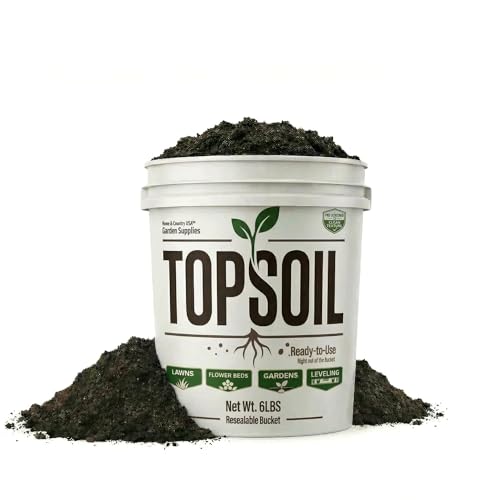
This all-purpose topsoil comes in a 6-pound pail and is described for indoor and outdoor plants, flowers, vegetables, shrubs, containers, raised beds, and landscaping. Its main role is to provide soil material for small planting jobs. A pail can be handy when you need to top up a planter or fill a small gap without opening a large bag. The product description does not provide enough detail to assume that it has a specific nutrient balance or a full raised bed mix formula.
I would treat this item as a small-volume soil product rather than a main amendment for a full raised bed. Topsoil can add volume, but it does not always contain enough organic matter or offer the drainage that vegetables need. Before using it, check the ingredients and any stated soil properties. If the goal is to improve a whole bed, a blend with compost or other suitable organic material may offer more value than a small pail of topsoil alone.
✅ Pros
- ✔ The pail is convenient for small planting tasks.
- ✔ The listed uses include raised beds and containers.
- ✔ Can help top up soil that has settled in a planter.
- ✔ Suitable for small landscaping touch-ups when the soil type fits the job.
- ✔ Easy to store compared with a large open bag.
- ✔ Can be combined with compost or other suitable materials when needed.
- ✔ The compact size may help reduce unused material in very small gardens.
⚠️ Cons
- ✖ A 6-pound pail is far too small to fill a typical raised bed.
- ✖ Topsoil alone may not provide enough organic matter for productive vegetables.
- ✖ The product description does not establish its exact texture or nutrient content.
- ✖ It may be costly per volume compared with bulk topsoil.
- ✖ Adding unsuitable topsoil can change the texture of an existing mix without solving its main problems.
My Recommendation
I would consider this topsoil pail for small repairs, a few container plants, or a minor top-up in a raised planter. I would not choose it as the main soil amendment for a large vegetable bed. Check the product label and match the soil texture to the material already in your bed. If you need to improve soil structure and organic matter, use a suitable finished compost or a balanced raised bed blend as well.
| Best For | Why |
|---|---|
| Small planter repairs | The pail provides a manageable amount for topping up a small area. |
| Minor soil top-ups | It can replace a small amount of soil lost through settling. |
| Small landscaping jobs | The compact package is practical when only a little material is needed. |
Brut Cow Compost Review
Brut Cow Compost is a 10-quart product made from composted cow manure. Its description presents it as an additive-free compost for vegetable gardens, flowers, lawns, and other plants. Properly finished manure compost can add organic matter and some nutrients to garden soil. The smaller package may be useful for raised bed gardeners who need a modest amount for a new planting or a seasonal soil refresh.
I would choose composted cow manure when the main goal is to add organic material to a suitable soil mix. The word composted matters because fresh manure can damage plants and may carry harmful germs. Check that the product is fully composted and follow the package directions for how much to apply. For leafy greens and root crops, avoid direct contact between edible plant parts and compost, and use safe handling practices when working with any manure-based material.
✅ Pros
- ✔ Made from composted cow manure, according to the product description.
- ✔ Can add organic matter to an existing raised bed mix.
- ✔ May contribute nutrients as part of a balanced soil plan.
- ✔ Useful for vegetable gardens and flower beds when applied as directed.
- ✔ The 10-quart size is manageable for smaller soil improvement jobs.
- ✔ Can be mixed into the upper layer of soil before planting when the label allows.
- ✔ Provides a practical option for gardeners who do not make their own compost.
⚠️ Cons
- ✖ The 10-quart package may be too small for large raised beds.
- ✖ Manure-based compost can vary in nutrient levels and salt content.
- ✖ It is not a substitute for testing soil pH or correcting a specific nutrient shortage.
- ✖ Overapplication may create nutrient imbalances or harm plants.
- ✖ Safe handling and proper composting matter, especially in vegetable gardens.
My Recommendation
I would choose Brut Cow Compost if you need a modest amount of composted manure to enrich an established raised bed or prepare a small planting area. It is most useful when the existing soil needs more organic matter and the product label confirms suitable use for your crops. For a large bed, compare the cost of several containers with bulk finished compost. Apply only the recommended amount, and do not assume that more compost always means better growth.
| Best For | Why |
|---|---|
| Small vegetable beds | The 10-quart size can suit a modest soil refresh. |
| Flower beds and mixed gardens | The product is listed for a range of garden plants. |
| Gardeners without a compost pile | It offers a ready-made source of composted manure. |
Final Verdict: Which Should You Buy?
For most gardeners who want a simple starting point, FoxFarm Raised Bed Planting Mix is my top choice because it offers a ready-to-use blend for raised bed planting. Brut Organic Worm Castings are a strong option for small-scale soil enrichment, while Brut Cow Compost suits gardeners who want composted manure. Farmer’s Secret Soil Revitalizer may work as a supplement, and the small topsoil pail is best for minor jobs. Check package sizes and label directions before buying.
The Best Soil Amendments For Raised Beds depend on what your soil lacks. Start with a sound base mix, add finished compost when needed, and avoid applying several products without a clear reason. A soil test can help prevent waste and nutrient problems. Choose the right amendment, use it in the right amount, and build healthier raised bed soil one season at a time.
FAQs Of Best Soil Amendments For Raised Beds
Q What are the best soil amendments for raised beds?
Q How much compost should I add to a raised bed?
Q Are worm castings better than compost for raised beds?
Q Can I use topsoil alone in a raised bed?
Q When should I amend soil in a raised bed?

I enjoy sharing simple gardening ideas, lawn care tips, and honest product reviews that help make outdoor work easier. From home gardening guides to helpful tools and lawn care advice, I write easy-to-follow content to help readers create a healthier and better-looking outdoor space without wasting time or money.