As an Amazon Associate, I earn from qualifying purchases.
To remove excess oil from a lawn mower, switch off the engine, let it cool, disconnect the spark plug wire, and drain or extract a small amount of oil until the dipstick shows the correct level. Keep the mower level, follow the manufacturer’s instructions, and never run an engine with too much oil.
In American backyards, a lawn mower often works hard through spring growth, humid summer days, and the last cuts of fall. A routine oil change helps protect the engine, but adding too much oil can cause a new problem just as quickly as running with too little. If your mower smokes, runs poorly, or shows oil above the dipstick’s full mark, check the oil level before starting it again.
The fix is usually simple. You can remove excess oil through the engine’s drain port or use a suitable oil extractor through the fill tube if the mower‘s design allows it. The key is to remove oil in small amounts, check the level correctly, and avoid spilling oil onto the deck, tires, soil, or storm drains.
This guide explains how to correct an overfilled lawn mower, which method to use, what to do if the engine has already started smoking, and how to prevent the problem next time. The steps mainly apply to four-stroke gasoline mowers. Two-stroke engines use a different lubrication system, so check your owner’s manual before making any changes.
Why You Need to Remove Excess Oil From a Lawn Mower
A lawn mower engine needs the right amount of oil to reduce friction, carry heat away from moving parts, and limit wear. Too little oil can damage engine parts because the lubrication system cannot protect them properly. Too much oil can also cause trouble, so the goal is to keep the level within the range specified by the manufacturer.
In many four-stroke mower engines, the crankshaft and connecting rod move close to the oil stored in the crankcase. If the oil level is too high, moving parts may churn the oil and mix it with air. This can create foam and interfere with proper lubrication. Excess oil may also enter the crankcase ventilation system and reach the air filter or intake.
The effects depend on the engine design, the amount of extra oil, and whether the mower has been running. A small overfill caught before startup is usually easier to correct than a severe overfill followed by heavy smoke or engine trouble.
Do not assume every smoking mower has too much oil. A tilted mower, a dirty air filter, fuel entering the crankcase, or an engine problem can create similar symptoms. Check the oil level first, then investigate other causes if the level is correct.
Source: slashgear.com
White or blue-gray exhaust smoke
Excess oil can enter the combustion chamber and burn. Smoke can also appear after a mower has been tipped incorrectly or when oil reaches the intake.
Oil around the air filter
Oil in the air filter housing can indicate overfilling, incorrect tipping, or a crankcase ventilation problem. Inspect the filter and housing before restarting.
Oil leaks
Too much oil may contribute to leakage through seals or ventilation paths, although worn seals and loose components can also be responsible.
Rough running or a hard start
Oil-contaminated spark plugs or an oil-soaked air filter may affect engine operation. Mechanical damage or other faults can produce similar symptoms.
Can Too Much Oil Damage a Lawn Mower Engine?
Yes. Severe overfilling or continued operation with an incorrect oil level can contribute to poor lubrication, oil entering the intake, overheating, and engine damage. The risk increases when the engine runs with heavily aerated oil or when oil reaches parts that should remain free of liquid oil.
A mower that was filled slightly above the full mark and has not been started may need only a small correction. A mower that has been running with a large excess, knocking, locking up, or leaking heavily needs more careful inspection. Correcting the level is essential, but it does not automatically reverse damage that has already occurred.
Correct the level before running the engine
Do not use the engine to burn off extra oil. Drain or extract the excess first.
Investigate unusual behavior
If smoke or rough running continues after the level is corrected, check the air filter, spark plug, and other possible causes.
Tools and Supplies You Need Before Starting
Gather your supplies before opening the oil fill tube or drain port. Having a stable container ready helps prevent spills and makes it easier to measure how much oil you remove. You do not need a complete engine service kit to correct a minor overfill.
Your mower’s design determines which tools you need. Some push mowers have a drain plug underneath or on the side of the engine. Others allow oil to drain through the fill opening when the mower is tilted in the direction specified by the manual. Certain models work well with a dedicated oil extractor.
Never choose a tipping direction based only on convenience. Tilting a mower toward the air filter, carburetor, or other sensitive components can allow oil or fuel to enter places where it does not belong.
Source: i.ytimg.com
Owner’s manual
Use it to find the correct oil capacity, dipstick procedure, drain location, permitted mower orientation, and recommended oil type.
Oil drain pan or clean container
Choose a stable, leakproof container large enough to catch the oil without overflowing.
Suitable oil extractor
A hand-operated extractor designed for engine oil can remove small amounts through a compatible fill tube. Check that the tube fits the mower and will not damage internal parts.
Wrench or socket
Use the correct tool if your mower has a drain plug. Do not force a plug with an ill-fitting wrench.
Gloves, rags, and absorbent material
These help protect your hands and clean up drips. Used oil should not be allowed to soak into the lawn or soil.
Safety Checks Before Removing Oil
Park the mower outdoors on firm, level ground. Switch the engine off and wait until it is cool enough to handle safely. Keep the mower away from open flames, sparks, and smoking materials because gasoline and its vapors can ignite.
For a gasoline mower, disconnect the spark plug wire and keep it away from the spark plug while you work. Follow the manufacturer’s procedure for electric-start and battery-powered starting systems as well. Never place your hands near the blade or underside of the deck while the mower is connected to a starting source.
If the mower has a damaged fuel line, a strong gasoline smell, or a visible fuel leak, address that problem before proceeding. Do not operate a mower indoors or in an enclosed garage, even with the door open, because engine exhaust contains carbon monoxide.
Avoid hot oil and hot parts
Warm oil flows more easily, but the engine and exhaust must be cool enough to handle safely. Follow the manual’s procedure for draining oil.
Keep the mower stable
Do not balance a mower precariously on blocks or lift it in a way that could allow it to fall.
Step-by-Step: How To Remove Excess Oil From Lawn Mower
The safest approach is to verify the level first, remove a small amount, and check again. Do not drain a large quantity just because the mower seems to have too much oil. The correct fill level and checking method vary by engine model.
Source: lawn.com.au
Step 1: Park the Mower on Level Ground
Move the mower to a flat, stable outdoor surface. Uneven ground can make the dipstick reading inaccurate, causing you to remove too much or too little oil.
Turn the engine off, allow it to cool, disconnect the spark plug wire on a gasoline model, and secure the mower against movement. If the mower has been running, give the oil time to settle according to the manual before checking the level.
Why level ground matters
The dipstick measures oil height relative to the crankcase. Tilting the engine changes that height and can give a false reading.
Step 2: Check the Oil Level Correctly
Remove the dipstick, wipe it clean with a lint-free rag, and insert it again using the method stated in the owner’s manual. Some engines require the dipstick to be fully threaded into the fill opening. Others require it to rest in the opening without being screwed in.
Remove the dipstick again and inspect the oil mark. The oil should sit within the specified safe range, usually between the low and full marks. If it is above the full mark, remove some oil. If it is below the safe range, do not run the engine until the level is corrected.
If the dipstick is dry or the oil reading is unclear, repeat the check on level ground. Do not estimate the correct level from the amount of oil you remember adding. Oil may have spilled, remained in a measuring container, or already entered another part of the engine.
Use the correct reference marks
Follow the engine maker’s markings rather than a generic fill amount from another mower.
Check the oil condition
Oil that smells strongly of gasoline, looks milky, or contains visible metal particles may indicate a separate problem that needs investigation.
Step 3: Choose a Removal Method
For a small excess, an oil extractor may be the cleanest option if the mower’s fill tube allows it. Insert the extractor tube only as far as the tool and engine instructions permit, then remove a small amount into a suitable container. Never force a tube past an obstruction or allow it to break off inside the engine.
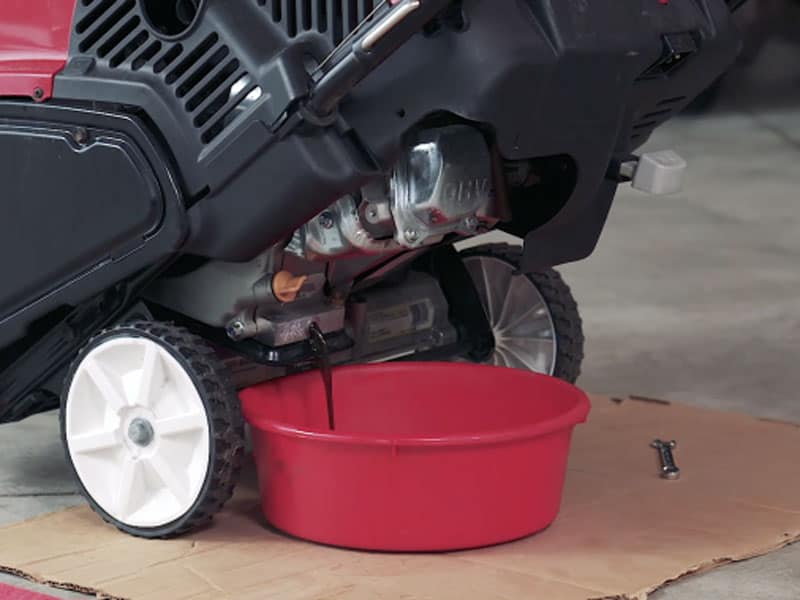
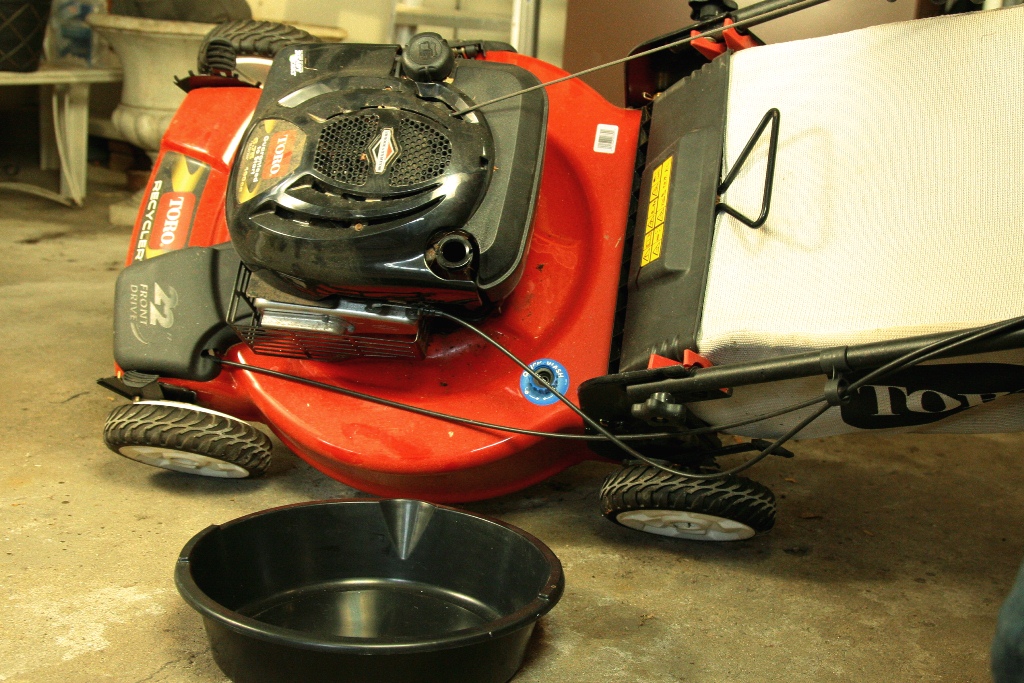
If extraction is not suitable, use the engine’s approved drain port. Position a drain pan under the outlet, remove the plug according to the manual, and allow a controlled amount of oil to flow into the pan. Some designs drain quickly, so be ready to close the outlet before the level drops too far.
Certain walk-behind mowers require oil to be drained through the fill opening by carefully tilting the machine. Use this method only if the manufacturer permits it and specifies the safe direction. Keep the air filter and carburetor side positioned as instructed, and never tip a mower with fuel leaking or with a hot engine.
Oil extractor
Useful for gradual removal and small corrections when the engine design supports extraction through the fill tube.
Drain plug
Suitable when the mower has an accessible drain point and the correct tools are available.
Fill-opening drainage
An option on some walk-behind models, but only when the manual gives a safe procedure and direction.
Step 4: Remove Oil in Small Amounts
Start by removing a modest amount of oil rather than emptying the crankcase. For a minor overfill, a small extraction followed by another dipstick check is often enough. There is no universal quantity to remove because engine capacities and the amount of overfill differ.
If using an extractor, stop the pump and check the level after each small removal. If draining through a plug, control the flow carefully and close the outlet once you have removed enough to recheck. Do not leave the drain plug loose or allow the container to tip over.
If you accidentally drain too much, add the correct engine oil in small amounts until the level reaches the specified range. Use the oil grade recommended for your engine and avoid mixing unknown oils merely to use up a container.
Measure what you remove
Recording the approximate amount helps you understand the correction, but the final dipstick reading is the key check.
Avoid repeated overcorrection
Do not alternate between draining large amounts and adding oil. Make small adjustments and check the level each time.
Step 5: Recheck the Level and Close Everything
Wipe away oil around the fill tube or drain plug. Reinstall the dipstick and tighten the drain plug to the manufacturer’s specification if you used one. Replace any seals or washers that the manual says must be renewed, and make sure the fill cap is secure.
Check the oil level again using the correct dipstick method. The reading should be within the marked range, not above the full line or below the low mark. If the level remains too high, remove a little more and repeat the check.
Look around the drain plug, fill tube, and engine housing for signs of leakage. Keep the spark plug wire disconnected until the inspection is complete and all tools and rags have been removed from the mower.
Signs of a successful correction
The oil level is within the specified range, the fill cap and drain plug are secure, and there are no visible leaks or loose parts.
Do not start if something seems wrong
A stuck engine, severe fuel smell in the oil, major leaks, or evidence of internal contamination calls for further inspection before restarting.
Oil Extractor or Drain Plug: Which Method Is Better?
The best method depends on the mower’s design and how much oil you need to remove. An extractor gives you fine control over a small correction, while a drain plug may be more practical when the engine has no suitable extraction path or the oil needs to be changed completely.
A complete oil change may be sensible if the mower has been severely overfilled, the oil is contaminated, or the recommended maintenance interval has arrived. However, changing all the oil is not automatically necessary for every small overfill. Avoid creating extra work if a careful correction is all the engine needs.
Source: i.ytimg.com
Choose an extractor when
The manufacturer permits extraction through the fill tube, the oil is otherwise in good condition, and you need to remove only a small excess.
Choose the drain plug when
The engine has an approved drain port and you can control the flow safely without tipping the mower.
Consider a full oil change when
The oil is contaminated, its service interval has arrived, or a repair procedure calls for draining and refilling with the specified amount.
Can You Use a Syringe or Hand Pump?
A clean hand-operated fluid extractor may work if it is designed for engine oil and compatible with the fill tube. A large syringe may remove a little oil, but its size, material, and reach can limit its usefulness. Do not use a pump that previously handled fuel, solvents, pesticides, or other fluids unless the manufacturer confirms that it can be cleaned safely for this purpose.
Avoid makeshift devices that shed plastic, leak, or allow debris into the crankcase. A proper extractor is easier to control, but it still must be used according to its instructions. Never use your mouth to start a siphon.
Keep the tool clean
Dirt entering the engine can contribute to wear, so clean the equipment and protect the fill opening.
What to Do If Your Lawn Mower Is Already Smoking
If the mower is smoking after an oil overfill, switch it off and let the engine cool. Do not keep running it in the hope that the smoke will disappear. First correct the oil level, then inspect for signs that oil entered the air filter, intake, or cylinder.
A small amount of oil may burn off after an earlier accidental tip, but heavy or persistent smoke deserves attention. The color of the smoke can offer a clue, yet it cannot confirm the cause on its own. A fuel-rich mixture, a damaged engine, or other faults may look similar.
Once the oil level is correct, inspect the air filter housing according to the manual. If the filter is soaked with oil, replace or clean it as directed for that filter type. Paper filters generally should not be washed with water or oil unless the manufacturer explicitly allows it.
If the engine was tipped onto its side, check the manual for the correct recovery procedure. Oil may have reached the intake or cylinder, and repeated starting attempts can worsen the problem. If the engine will not turn normally, do not force it with the starter cord or electric starter.
Source: nurserylady.com
When Smoke Means You Should Stop Troubleshooting
Stop and arrange qualified repair if the engine knocks, locks up, leaks heavily, or continues to produce dense smoke after the oil level is corrected. The same applies if oil has entered the cylinder in an amount that may prevent the piston from moving normally. A technician can inspect the spark plug, intake, cylinder, and internal components as needed.
Do not remove a spark plug or crank the engine to expel liquid from the cylinder unless you understand the engine-specific procedure and can follow the required precautions. Ejected oil can create a mess or injury, and the correct method varies by model. When in doubt, leave this step to a small-engine repair professional.
Persistent blue-gray smoke
Possible causes include oil entering the combustion chamber, damaged engine components, or an incorrect oil level that has not yet been corrected.
Engine will not turn
Do not force it. Liquid in the cylinder or internal mechanical trouble may prevent normal movement.
Oil-soaked intake parts
Clean or replace affected parts only as the service manual permits, and check why oil reached the intake.
Troubleshooting Common Oil-Level Problems
If the oil level still looks wrong after you remove some oil, repeat the check under the correct conditions before making another adjustment. A bad reading can lead to underfilling, which can be just as harmful as overfilling. If the level rises again after correction, investigate contamination instead of continuing to drain oil without finding the cause.
Source: thespruce.com
The dipstick still shows too much oil
Confirm that the mower is level, the oil has settled, and you are using the correct dipstick insertion method. Remove another small amount and check again.
The oil level keeps rising
Fuel may be leaking into the crankcase on some gasoline engines. A strong gasoline smell, unusually thin oil, or a rising level calls for stopping use and investigating the fuel system.
The oil looks milky
Water contamination may be present. Do not assume a simple overfill correction will solve it. Find the source of contamination and follow the engine maker’s service guidance.
The mower leaks after draining
Check that the drain plug is installed correctly and that its washer or seal is in good condition. Do not overtighten it, as damaged threads can make the leak worse.
The mower still runs poorly
Inspect the air filter and spark plug according to the manual. If symptoms persist, arrange a repair inspection rather than repeatedly starting the engine.
How Much Oil Should You Remove?
There is no single amount that fits every lawn mower. Small walk-behind engines and larger riding mower engines have different oil capacities, and even similar models can use different engines. The proper correction depends on the difference between the current level and the specified range.
For example, imagine a hypothetical mower whose manual specifies a full level of 20 fluid ounces under the stated checking conditions. If the crankcase contains 22 fluid ounces, the apparent excess is about 2 fluid ounces, assuming the quantity estimates are accurate and no oil has entered another part of the engine. Removing a little at a time and checking the dipstick is still more reliable than draining exactly 2 fluid ounces based on an estimate.
Use the manufacturer’s stated capacity as a guide for a refill, not as a substitute for the dipstick procedure where one is provided. If the level does not match the expected result, check whether the engine is level, whether oil has settled, and whether the manual specifies a different checking method.
Prioritize the dipstick
Use the specified level range as the final check on engines equipped with a dipstick.
Avoid guessing from bottle size
A partly used oil bottle cannot show how much oil remains in the engine or whether the level is correct.
How to Dispose of Excess Lawn Mower Oil
Used engine oil must be collected and handled properly. Pour it into a clean, leakproof container with a secure lid, and keep it separate from gasoline, coolant, solvents, and other chemicals. Mixing fluids can make recycling harder or prevent a collection facility from accepting them.
Many communities in the United States offer used-oil collection through recycling centers, household hazardous waste programs, or participating automotive service locations. Contact the facility before you go because accepted materials and drop-off rules vary by location. Do not assume every auto parts store accepts oil from every source.
Never pour used oil onto the ground, into a storm drain, down a household drain, or into a waterway. Do not burn it in an ordinary fire pit or dispose of it with regular trash unless your local authority specifically provides an approved route for that material.
Wipe small spills with an appropriate absorbent material and collect the waste for disposal according to local rules. Keep oil away from children, pets, and food-preparation areas, and clean your tools before storing them.
Source: i.pinimg.com
Use a sealed container
A clean container designed to hold oil helps prevent leaks during transport.
Check local collection rules
Call the receiving site to confirm its hours, container requirements, and whether it accepts used small-engine oil.
Prevent soil and water pollution
Even a small spill can contaminate the area, so use a drain pan and absorbent material during removal.
What If the Excess Oil Is Fresh?
Fresh oil that has never been used may be clean enough to store separately if it was collected in a clean container and has not been contaminated. Keep it clearly labeled and sealed. Do not pour it back into a bottle of new oil if its cleanliness is uncertain.
If the oil has been exposed to dirt, fuel, water, or engine residue, treat it according to the local rules for used or contaminated oil. When unsure, ask the collection facility how it classifies the material.
Keep fresh and used oil separate
Separate storage makes it easier to determine whether the oil can be reused or must be recycled.
How to Prevent Overfilling Your Lawn Mower Again
Preventing an oil overfill starts with knowing the engine’s capacity and following the correct fill and dipstick procedure. Do not rely on a generic quantity printed in an online guide for a different mower. The engine model and the owner’s manual provide the most useful reference.
Add oil gradually and stop to check the level before you reach the full mark. If you are changing the oil, let the old oil drain according to the manual, reinstall the drain plug correctly, and add the recommended oil in stages. Check the level again before starting the engine.
Keep a note of the oil type, service date, and approximate quantity used. This simple record can help you spot an unexpected change in oil level later. If the level rises without additional oil being added, investigate possible fuel contamination or another engine problem.
Source: tips.acehardware.com
Read the manual before an oil change
Find the correct oil grade, capacity, dipstick procedure, drain method, and any special instructions for the engine.
Use a measured container
A marked measuring container helps you add oil in controlled amounts, although the dipstick remains the final reference where applicable.
Check before each use
Inspect the oil level before mowing, especially after maintenance or when the mower has been stored for a long period.
Keep the mower level during checks
A sloped driveway or uneven lawn can produce a misleading reading. Move the mower to a flat surface first.
Investigate changes in oil condition
A rising level, strong fuel odor, or unusual discoloration can signal a problem that adding or removing oil alone will not fix.
Does Every Lawn Mower Use the Same Oil Level?
No. Oil capacity and lubrication design vary among walk-behind mowers, riding mowers, zero-turn mowers, and other machines. Even engines from the same manufacturer may have different requirements.
Four-stroke gasoline engines generally have a separate crankcase oil supply. Many two-stroke engines instead use oil mixed with fuel or another manufacturer-specified lubrication system. Do not add crankcase oil to a two-stroke engine unless its design calls for it.
Battery-powered electric mowers usually do not have a gasoline engine crankcase to fill. If your electric mower has a sealed gearbox or another lubricated component, follow its specific maintenance instructions rather than applying gasoline-mower oil procedures.
Identify the engine
Use the engine model number and mower manual to confirm the correct service procedure.
Do not transfer capacities between models
An oil quantity that is correct for one mower may overfill or underfill another.
Frequently Asked Questions
Q
Can I Run My Lawn Mower With Too Much Oil?
No. Correct the oil level before running the engine. Excess oil can become aerated or enter the intake and combustion chamber, which may cause smoke, poor operation, leaks, or engine damage. A mower that has already been run while severely overfilled may need further inspection even after the level is corrected.
Q
How Do I Remove Excess Oil Without a Drain Plug?
If the engine design permits it, use a clean oil extractor through the fill tube. Another option on some walk-behind mowers is to drain through the fill opening by tilting the mower in the direction specified by the manufacturer. Never tip a mower in an unapproved direction or force a tube into the engine.
Q
How Much Oil Should I Remove From an Overfilled Mower?
Remove only enough to bring the level into the manufacturer’s specified range. The amount depends on the engine’s capacity and how far the oil level exceeds the full mark. Remove oil gradually, recheck the dipstick using the correct procedure, and avoid draining the crankcase completely unless you intend to perform a full oil change.
Q
Will a Lawn Mower Stop Smoking After I Remove the Excess Oil?
It may, if excess oil was the cause and no other problem remains. Oil that has reached the air filter or cylinder can continue to cause smoke for a time, and a contaminated filter or spark plug may need attention. If smoke is heavy or persistent, the engine knocks, or the mower runs poorly, stop using it and arrange an inspection.
Q
Can Too Much Oil Make a Lawn Mower Hard to Start?
Yes. Overfilling can contribute to oil entering the intake or fouling the spark plug, which may make starting difficult. However, a weak battery, stale fuel, a dirty air filter, or other faults can cause similar symptoms. Correct the oil level first and investigate further if the mower still will not start.
Q
What If the Oil Level Rises Again After I Remove the Excess?
A rising level may mean fuel is entering the crankcase or another fault is affecting the oil supply. Check whether the oil smells strongly of gasoline or appears unusually thin. Stop operating the mower and have the fuel system and engine checked, because simply draining oil again will not fix the underlying cause.
Q
Should I Change All the Oil After Overfilling the Mower?
Not always. A small overfill with clean oil can often be corrected by removing the excess and checking the level. A complete oil change may be appropriate if the oil is contaminated, the maintenance interval has arrived, or the manufacturer’s troubleshooting instructions call for it. Follow the engine manual rather than changing oil unnecessarily.
✦ Wrapping Up
Conclusion
Removing excess oil from a lawn mower is usually a manageable maintenance task when you work slowly and follow the correct procedure. Park the mower on level ground, turn it off, let it cool, disconnect the spark plug wire on a gasoline model, and confirm the oil level with the correct dipstick method.
Use an approved extractor, drain plug, or manufacturer-approved fill-opening method to remove a small amount of oil at a time. Recheck the level after each adjustment, secure all caps and plugs, and inspect for leaks before considering a restart. If the mower has heavy smoke, a rising oil level, fuel-contaminated oil, unusual engine noises, or a locked engine, stop and seek qualified help.
Good oil care is about balance. Too little oil can damage an engine, but too much can cause trouble as well. A careful level check before mowing and after every oil change is a simple way to protect your mower and keep routine yard work on track.
💡 Key Takeaway
Before starting your mower again, check the owner’s manual, remove excess oil in small amounts, and confirm that the dipstick shows the correct level on flat ground. Clean any spills, secure the drain plug and fill cap, and arrange a repair inspection if smoke or other warning signs persist.
I enjoy sharing simple gardening ideas, lawn care tips, and honest product reviews that help make outdoor work easier. From home gardening guides to helpful tools and lawn care advice, I write easy-to-follow content to help readers create a healthier and better-looking outdoor space without wasting time or money.