As an Amazon Associate, I earn from qualifying purchases.
Winter container gardening works best when you match cold-hardy plants, suitable pots, and seasonal care to your local US climate. Combine evergreen foliage, winter flowers, hardy herbs, or leafy greens to keep patios, porches, balconies, and small yards useful and attractive through the colder months.
Winter in the United States can mean very different things from one backyard to the next. A gardener in Minnesota may face frozen soil and weeks of snow, while someone in Georgia may still grow greens outdoors, and a gardener in Florida may enjoy flowers and herbs through much of the season. Your local winter lows, wind, sunlight, and freeze patterns should guide every container you plant.
The good news is that a cold-weather garden does not need a large yard or a greenhouse. A few well-placed pots can bring color to a front step, fresh leaves to the kitchen, and evergreen texture to a bare patio. Choose plants that fit your climate, group containers where you can protect them, and treat winter watering as a task that changes with the weather.
This guide covers flower displays, evergreen planters, edible containers, creative designs, and practical ways to protect roots from freezing. It also explains which ideas work best in mild regions and which need extra care in colder parts of the country. With a simple plan, even a small porch can offer a welcome patch of life during winter.
An evergreen planter is one of the easiest ways to keep a porch or patio looking alive through winter. It relies on branches and foliage that stay attractive after annual flowers fade. You can make the display with fresh-cut greenery, living evergreen plants, or a mix of both.
For a traditional look, combine upright branches with softer foliage and a few colorful accents. Place the tallest material near the back of a pot beside a wall, or near the center if the planter will be viewed from all sides. Add lower branches around the rim so the arrangement looks full without hiding its shape.
Fresh-cut greenery is often the simplest choice for a seasonal display because it does not need roots or regular feeding. Living evergreens require a container large enough for their root systems and care that suits their species. If you plan to keep a living shrub after winter, choose a plant rated for your local climate and provide a plan for its long-term growth.
Source: thegardenglove.com
Fir and pine branches
Use them for a familiar winter look, lasting foliage, and a strong base for other materials.
Juniper branches
Add blue-green or green tones and a fine texture that works well around the edges.
Red twig dogwood
Insert cut stems for bright red or orange-red lines that stand out against evergreen foliage.
Pinecones and seed heads
Add natural texture without relying on flowers that may wilt in cold weather.
How to Arrange an Evergreen Container
Start with a stable pot filled with damp potting mix or another firm base that holds branches upright. Insert the tallest pieces first, then add medium branches at an angle and shorter pieces around the rim. Turn the planter as you work so the arrangement looks balanced from the main viewing angle.
Use natural materials that are free from visible pests or disease. If you collect branches from your own property, avoid cutting protected plants or taking material from public land without permission. Keep arrangements away from open flames, heaters, and other ignition sources when the foliage is dry.
Design tip
Limit the display to two or three main foliage colors, then use one accent such as red stems, white berries, or a simple ribbon.
2. Add Winter Flowers for Color
Winter flowers can brighten containers when many garden beds look bare, but the best choices depend on your region. In areas with mild winters, seasonal flowers may bloom for months. In colder regions, flowers in pots need more protection because their roots are more exposed to freezing air than roots in the ground.
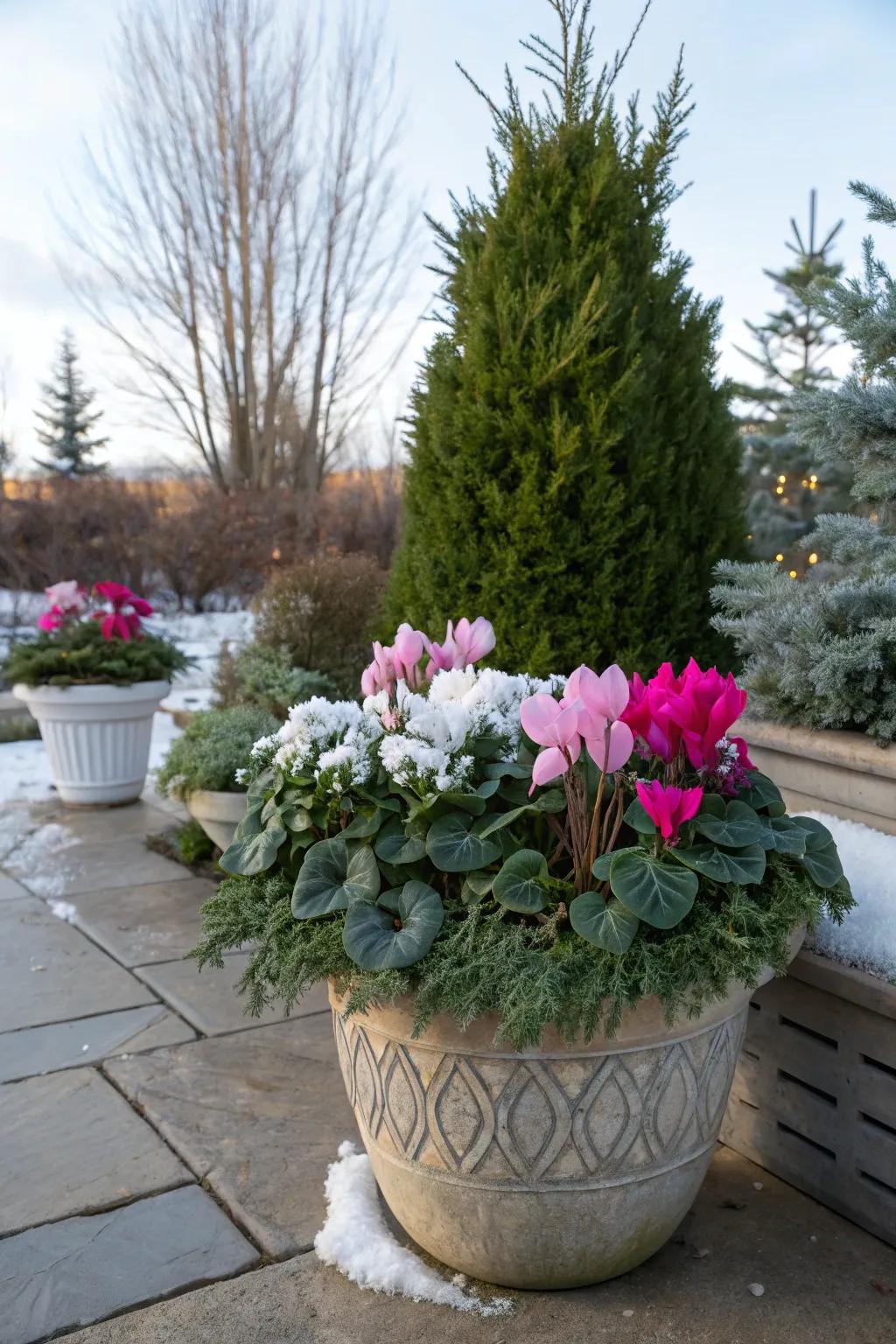
Pansies and violas are useful choices for cool-season displays in many parts of the United States. They often handle chilly weather well, although severe freezes can damage blooms and prolonged cold can injure plants. Hellebores can provide winter or early spring flowers in suitable climates, while cyclamen can add vivid color in protected locations with mild conditions.
Do not assume that a flower sold as winter-hardy will survive every winter in a container. A plant may tolerate cold in garden soil but struggle in a small pot that freezes through. Read the plant label, check the expected minimum temperatures, and consider whether you can move the container to shelter during severe weather.
Source: midwestliving.com
Pansies and violas
Use them for purple, yellow, white, and mixed-color blooms during cool weather in suitable regions.
Hellebores
Choose them for long-lasting foliage and flowers where the species and local winter conditions are a good match.
Cyclamen
Use these for vivid flowers in mild climates or protected spots, while guarding them against temperatures below their tolerance.
Flowering kale
Plant it for textured leaves in pink, cream, purple, or green tones rather than expecting it to produce showy flowers.
Create a Three-Plant Flower Combination
Choose one plant with an upright form, one that fills the middle, and one that spreads over the pot edge. For example, combine a compact evergreen or flowering kale with pansies and a trailing plant suited to your local conditions. In a very cold region, keep the arrangement simple and use hardy foliage as the main feature.
Leave enough space between plants for air movement and growth. A crowded container may look full on planting day, but tight spacing can increase moisture problems and leave little room for roots. Water the mix after planting and let excess water drain before moving the pot to its final spot.
Best for
Front steps, sheltered patios, balcony corners, and other places where winter color can be seen from indoors.
3. Grow Fresh Winter Greens in Pots
Leafy greens are a practical winter container gardening idea for people who want to harvest food as well as decorate their outdoor space. In regions with mild winters, containers can support repeated harvests of lettuce, spinach, arugula, and other cool-season crops. In colder areas, growth slows as daylight drops and temperatures fall, so the harvest may be small or stop during hard freezes.
Use a wide pot or planter box with drainage holes and enough depth for healthy roots. Fill it with potting mix made for containers rather than dense garden soil, which can compact and drain poorly in a pot. Sow seeds at the depth shown on the packet, then thin seedlings to the spacing listed for the crop.
Place the container where it receives as much winter sun as the crop needs. A sunny southern exposure may help in many locations, but buildings, trees, and winter shadows can change the available light. Keep an eye on the forecast and be ready to move pots into shelter or cover plants with a suitable frost cloth when a freeze threatens.
Source: ogden_images.s3.amazonaws.com
Spinach
A cool-season crop that can tolerate chilly weather once established, although growth slows in low light and hard freezes may damage container plants.
Leaf lettuce
A useful choice for mild winter areas and protected spaces; choose varieties suited to cool weather and harvest outer leaves as needed.
Arugula
Grows well in cool conditions and adds a peppery taste to salads, though severe cold can pause growth.
Kale
Provides edible leaves and a strong leafy form, with cold tolerance that varies by variety and growing conditions.
Make a Small Salad Garden
A single wide container can hold a small mix of greens if each crop has enough room. Plant slower-growing crops at their recommended spacing and sow a short row or patch of quick-growing greens nearby. If you want a steady supply, sow small amounts at intervals rather than planting every seed at once.
Harvest only what you need, using clean scissors or garden snips. Remove damaged leaves and inspect the undersides for pests. If growth becomes pale or weak, check sunlight, crowding, moisture, and nutrition before adding fertilizer.
Simple setup
Use one wide planter, fresh container mix, cool-season seeds, a watering can, and a frost cloth suited to your forecast.
4. Plant a Winter Herb Container
A pot of herbs can keep a kitchen door or sunny balcony useful throughout winter. The best plants depend on how cold your area gets and whether the pot stays outside, sits in a sheltered spot, or moves indoors. Some perennial herbs handle cool weather well in suitable climates, while tender herbs need warmer conditions.
Parsley can tolerate cool weather and may remain productive in mild regions. Chives often return in spring after winter dormancy where they are hardy, while thyme and sage can survive outdoors in many areas if their roots have good drainage and the variety suits the local climate. Rosemary is less reliable in severe cold and often needs protection or an indoor winter spot.
Avoid planting every herb in one pot just because they are all used in cooking. Mint spreads aggressively and often does best in its own container. Mediterranean herbs such as rosemary, thyme, and sage generally prefer good drainage, while parsley may need more consistent moisture.
Source: themiddlesizedgarden.co.uk
Parsley
Grow it for fresh leaves in mild winters or protected spaces, with regular checks for moisture and cold injury.
Chives
Use them for a compact edible clump that can go dormant in cold weather and resume growth when conditions improve.
Thyme
Choose a suitable hardy variety and provide a free-draining mix to help reduce winter root problems.
Rosemary
Keep it in a movable pot if your winters bring temperatures below the plant’s tolerance.
Decide Whether Herbs Should Stay Outside
Check the expected low temperatures before leaving herbs outdoors. If a tender herb is at risk, move it to a bright, cool location that suits its needs, or bring it indoors before a severe freeze. Indoor plants may need a gradual adjustment to lower light and should be checked for insects before joining other houseplants.
Keep indoor herbs away from cold drafts and direct blasts of hot air from heating vents. Give them as much bright light as possible and water only when the potting mix needs it. A sunny window may work for some herbs, but short winter days can limit growth.
Key rule
Group herbs with similar light, moisture, and temperature needs rather than using one care routine for every plant.
5. Design a Container With Evergreen and Colorful Foliage
A winter planter does not need flowers to look interesting. Leaf shape, texture, and color can carry the whole design when blooms are scarce. Combine dark green foliage with silver, blue-green, burgundy, or cream tones to make a container stand out against a gray winter landscape.
For living plants, consider small evergreen shrubs or compact conifers that are suited to your local climate and can grow in a pot. Heuchera varieties may add colorful leaves in regions where they can handle the winter conditions, while some sedges and ornamental grasses provide fine texture. Their performance depends on the exact plant, pot size, exposure, and severity of the winter.
Use a simple design rule: one main plant, one contrasting foliage plant, and one lower plant if the container has enough room. This keeps the display easy to maintain and prevents a small pot from becoming crowded. In a large container, add more plants only when their mature size and care needs make sense together.
Source: i.pinimg.com
Blue-green foliage
Use suitable junipers or compact conifers to create a cool, calm look that pairs well with pale stems and natural decorations.
Burgundy leaves
Choose a hardy foliage plant, such as an appropriate heuchera variety, for contrast against green branches.
Fine textures
Add a suitable sedge or ornamental grass to soften the edge of a planter and create movement in light wind.
Use the Thriller, Filler, and Spiller Method Carefully
The thriller, filler, and spiller method places one focal plant in the center or rear, fuller plants around it, and trailing plants near the rim. It can work in winter containers, but the plants must share compatible cold tolerance and moisture needs. A trailing plant that thrives in summer may fail when frost arrives, so choose winter-suitable species rather than copying a summer arrangement.
For a low-maintenance winter pot, the focal point could be a compact evergreen, the filler could be flowering kale or a hardy foliage plant, and the spiller could be a cold-tolerant trailing species suited to your region. If you cannot find three compatible plants, use just one or two. A balanced, healthy arrangement is better than a crowded one.
Design priority
Match plants for climate and care first, then arrange them by height, texture, and color.
6. Make a Mini Winter Vegetable Garden
A winter vegetable container can be productive if you choose crops that fit your local growing conditions. Cool-season vegetables often perform best when they establish before the coldest weather arrives. In mild parts of the South and along much of the Pacific Coast, outdoor containers may support winter crops, while northern gardeners may need a cold frame, sheltered space, or indoor growing setup.
Try compact varieties of kale, spinach, lettuce, radishes, or Asian greens where the expected temperatures allow them to grow. Check seed packets for days to maturity and temperature guidance, but remember that short days and cold soil can slow growth. A crop that matures quickly in fall may take much longer in December or January.
Choose containers large enough to hold moisture without becoming waterlogged. A deeper pot gives roots more room and can help buffer temperature changes, although it cannot prevent freezing during prolonged severe cold. Use a well-drained potting mix and ensure that drainage holes remain open.
Source: i2.wp.com
Radishes
Grow compact varieties during suitable cool weather, using loose mix and following the recommended spacing for root development.
Asian greens
Try suitable varieties of mustard greens or bok choy in mild or protected conditions, with extra attention to frost risk.
Kale
Use compact plants for edible leaves and ornamental texture, while allowing enough space for airflow.
Spinach
Sow it during an appropriate planting window and expect slow growth when days are short and temperatures stay low.
Protect Edible Plants From Frost
Use a frost cloth or a suitable low tunnel when cold weather threatens. Secure the cover so wind cannot lift it, and avoid allowing the material to crush tender plants. A cover offers limited protection rather than a guarantee against extreme cold, especially when the container itself is exposed to freezing air.
Remove or vent covers when conditions warm enough to prevent excess heat and trapped moisture. Check the forecast each day during unstable weather. If a severe freeze is expected, move small containers to a sheltered area when practical.
Harvest safely
Pick healthy leaves with clean tools and discard produce that has become slimy, rotten, or otherwise spoiled.
7. Create a Winter Container for a Small Balcony
A small balcony can support a winter garden with just one or two well-chosen containers. Focus on compact plants, upright shapes, and pots that fit the space without blocking a walkway or creating a hazard. A narrow rectangular planter may use space better than several large round pots.
Before adding soil, check the balcony’s weight limits and any building rules about planters, railings, and water runoff. Wet potting mix and large containers can be heavy. Secure containers so wind cannot knock them over, and never hang a planter where a falling pot could injure someone below.
Wind often causes more trouble on exposed balconies than gardeners expect. It can dry foliage, chill roots, and tip light pots. Move containers close to a sheltered wall when safe, use stable bases, and choose plants that can handle the exposure.
Use vertical space
Place compact containers on a stable plant stand or use a properly secured vertical planter where building rules allow.
Choose a limited palette
Repeat two foliage colors and one accent color to make a small space feel orderly rather than crowded.
Keep access clear
Leave doors, drains, railings, and walking areas unobstructed.
Pick Containers That Suit Exposed Spaces
Heavy, stable pots may resist wind better than very light ones, but material and placement still matter. Choose a pot with adequate drainage and a shape that does not become top-heavy when plants grow. If you use a railing planter, follow the manufacturer’s installation instructions and check that it remains secure after storms.
A small evergreen, a hardy foliage plant, or a compact edible crop can be enough to create a useful display. Avoid filling every available corner with plants that require different care. A few healthy pots are easier to water, protect, and move when the weather changes.
Best approach
Start with one sheltered container, observe how the balcony handles wind and sun, and add more only if the first pot thrives.
8. Use Rustic Materials for a Natural Winter Display
Natural materials can make a winter container feel warm and seasonal even when little is growing. Twigs, pinecones, dried seed heads, and fallen leaves can add texture without requiring a large collection of plants. They are useful for gardeners who want a display that remains attractive during very cold spells.
Begin with a sturdy pot and a base that holds your chosen branches upright. Arrange long stems first, then fill gaps with evergreen cuttings and smaller natural accents. Keep the design open enough that the main forms remain visible rather than packing every space with decorations.
Use clean, sound materials and avoid anything that may carry pests, disease, or invasive plant seeds. Do not collect protected plants or remove branches from public spaces without permission. If you use berries or seed heads, check whether they may attract children or pets to parts of the display that should not be eaten.
Birch or other decorative twigs
Use straight stems for height and a clean vertical shape, provided the material is suitable and collected legally.
Pinecones
Place them near the surface for texture and a woodland feel.
Dried grasses
Add soft movement and fine texture, while keeping dry material away from heat sources.
Natural ribbon or twine
Tie branches together or add a simple accent that fits the overall design.
Keep the Arrangement Safe Outdoors
Secure tall stems so gusts cannot send them flying. Place the container where it will not block an exit, and avoid sharp branches at eye level near a walkway. If the pot sits on a wooden deck, use a suitable base that protects the surface from trapped moisture.
Dry foliage can become brittle over time, especially in windy or sunny locations. Check the arrangement after storms and remove broken pieces before they fall. Replace any materials that become moldy or decay in a way that affects nearby living plants.
Maintenance tip
A quick weekly check is usually enough to spot loose branches, standing water, or damaged decorations.
9. Choose the Right Container for Winter Conditions
The pot matters because winter roots face cold, wet soil and repeated changes in temperature. A plant in the ground benefits from the surrounding soil, while a plant in a pot is exposed to cold from the sides and bottom as well as from above. This makes container choice and placement especially important in regions with freezing winters.
Plastic, resin, and some composite pots can tolerate temperature changes better than many porous or brittle materials, although quality varies. Terracotta absorbs moisture and can crack when wet soil freezes and expands. Ceramic pots may also crack unless they are specifically suitable for outdoor freezing conditions.
Every living-plant container needs drainage holes unless it is being used only as an outer decorative cover with a separate draining pot inside. Water left around roots can reduce oxygen and increase the risk of root rot. Keep holes clear of compacted soil, ice, and debris.
Plastic and resin
Often lightweight and practical, but may need a stable position in windy locations.
Frost-resistant ceramic
Can provide a decorative, sturdy option when the pot is specifically rated for outdoor winter use.
Terracotta
Works well in many settings but may crack when wet and exposed to freezing temperatures.
Wooden planters
Can insulate roots to some degree, but need sound construction, drainage, and suitable weather protection.
Should You Use Garden Soil in Winter Pots?
Use a suitable potting mix for most container plants rather than digging soil from the yard. Garden soil can compact in a pot, restrict drainage, and leave roots with too little air. A container mix is designed to provide a more suitable balance of moisture retention and air space.
Choose a mix that fits the plants. Most flowering annuals and vegetables do well in a general-purpose container mix, while some herbs and succulents need a mix that drains more freely. Do not add gravel to the bottom as a substitute for drainage holes; use an appropriate mix and a container that lets excess water escape.
Before planting
Check the pot for cracks, confirm that drainage holes work, and use fresh mix suited to the plant’s needs.
10. Protect Roots During Hard Freezes
Root protection is often the deciding factor in winter container gardening. A plant may be hardy in the ground but struggle when its roots freeze inside a small pot. The smaller the container and the more exposed the location, the faster the root zone may respond to cold weather.
Move pots to a sheltered place when a hard freeze is forecast, if you can do so safely. An unheated garage, protected porch, or other suitable cool space may help some dormant plants avoid severe temperature swings. The correct location depends on whether the plant needs winter dormancy, light, or active growth.
For containers that must remain outdoors, grouping pots together near a protected wall can reduce exposure to wind. Insulating the outside of the pot may help buffer temperature swings, but do not block drainage or wrap foliage so tightly that air cannot move. During prolonged cold, these steps may not prevent all damage.
Group containers
Place pots close together in a sheltered spot, while keeping enough room to inspect and water each one.
Insulate the pot
Use suitable insulating material around the outside of the container when needed, keeping drainage holes open.
Move small pots
Bring vulnerable plants into an appropriate protected space before severe cold arrives.
Check plant hardiness
Use the exact species or cultivar information and remember that container roots may need more protection than roots in the ground.
How to Prepare for a Freeze
Check the forecast and identify which plants are most vulnerable. Water dry root balls before a freeze only when the potting mix is not already wet and the water can drain freely. Avoid leaving a container saturated in cold weather, since waterlogged roots can suffer even when the plant is cold tolerant.
Move vulnerable pots first, then cover plants that must stay outside. Remove saucers that collect water if they could freeze around the base. After the cold passes, inspect foliage and stems before pruning, because some damage may become clearer over several days.
Important limit
No simple covering method can guarantee survival during every prolonged or extreme freeze.
11. Water Winter Containers the Right Way
Winter watering should follow soil moisture and weather rather than a fixed calendar. Plants may use less water when growth slows, but wind, bright sun, and dry indoor heat can still pull moisture from pots. Evergreen foliage can also lose water in winter, even when the soil is cold.
Check the potting mix with a finger or a suitable moisture tool. If the root zone is dry and the container can drain, water slowly until the mix is evenly moist. If the soil is already wet or frozen, wait until conditions allow proper drainage and root uptake.
Water during the warmer part of the day when practical, especially in cold regions. This gives excess moisture time to drain before temperatures fall. Avoid splashing water onto foliage late in the day when freezing temperatures are expected soon.
Dry potting mix
Water when the plant needs it and allow excess water to drain away.
Wet, cold mix
Do not add more water simply because the plant looks droopy; check roots, drainage, and temperature first.
Frozen mix
Do not force water into frozen soil. Wait for a suitable thaw and reassess moisture.
Signs of Winter Water Stress
Wilting, curled leaves, or dry leaf edges can indicate a lack of water, but they can also result from cold injury or damaged roots. Feel the mix before deciding what to do. If it is wet and the plant continues to wilt, inspect drainage and look for other signs of stress rather than adding more water.
If a container repeatedly dries out during mild, windy weather, move it to a less exposed location or add an appropriate layer of mulch over the potting mix. Keep mulch away from stems and crowns, and do not use a thick layer that traps excessive moisture around plants that need drier conditions.
Good habit
Check containers after strong winds, rain-free cold spells, and sudden warm-ups.
12. Match Winter Container Ideas to Your US Region
Your region should determine which winter container ideas you use and how much protection you plan for. The same plant may thrive on a sheltered porch in one state and fail in an exposed pot elsewhere. Local winter lows, wind, rainfall, humidity, and daylight all affect the result.
Use your USDA plant hardiness zone as a starting point for perennial plant selection, not as a complete forecast of winter survival. The map is based on average annual extreme minimum winter temperatures, and it does not account for every factor that affects container roots. A pot in a windy location may face greater stress than a plant of the same type growing in sheltered ground.
Local extension services can help you identify suitable crops and ornamental plants for your county or region. Seed packets, nursery labels, and reliable plant references can also help you narrow your choices. When in doubt, start with a small trial container before filling a patio with plants that may not tolerate your winter.
Cold northern states
Use hardy evergreen branches, seasonal cut foliage, and well-protected containers. Try dormant hardy perennials only when their root systems can withstand the expected conditions.
Mid-Atlantic and Midwest
Combine winter foliage with suitable pansies or other cool-season plants during mild periods, and prepare for hard freezes and wet weather.
Southern states
Cool-season greens, herbs, pansies, and other suitable flowers may grow through much of winter, although occasional freezes can still require protection.
Pacific Coast
Mild coastal locations may support many winter flowers and greens, while colder inland and mountainous areas need a different plan.
Desert Southwest
Use plants that tolerate local winter conditions and manage containers carefully because dry air and sunny days can dry potting mix quickly.
Florida and other subtropical areas
Focus on plants that handle mild winter conditions and local humidity, while keeping tender species ready for occasional cold snaps.
A Simple Regional Planning Method
First, identify your typical winter lows and the coldest conditions you reasonably expect in your location. Next, check each plant’s cold tolerance and whether it can survive in a pot. Finally, decide where you can move containers or add protection before buying plants.
If you garden in a region with mild winters, plan for occasional frost rather than assuming every day will be warm. If you garden in a region with prolonged freezing weather, prioritize seasonal arrangements and protected growing spaces instead of expecting every outdoor pot to stay productive. This approach reduces plant loss and makes winter care easier.
Best first step
Choose one winter container idea that matches your local climate and observe how it performs before expanding.
13. Common Winter Container Gardening Mistakes
Most winter container problems come from a mismatch between plant needs, weather, and pot conditions. A plant may appear suitable at the nursery but struggle when its roots sit in cold, wet mix or when winter winds dry its foliage. A few checks before planting can prevent many of these problems.
Avoid treating all winter plants alike. Some need regular moisture, while others suffer in wet soil; some tolerate frost, while others need shelter. Choose plants for the conditions you can provide rather than trying to force a summer garden routine through winter.
Choosing plants by appearance alone
A beautiful nursery display does not prove a plant can survive your outdoor winter. Check its exact cold tolerance and container requirements.
Using pots without drainage
Standing water can damage roots and may freeze in cold weather. Use drainage holes or keep the planted pot inside a decorative outer container that can be emptied.
Watering on a summer schedule
Cold weather often slows plant growth, so check soil moisture before watering instead of following a rigid routine.
Leaving fragile pots outdoors
Wet terracotta and some ceramic containers can crack in freezing conditions. Move vulnerable pots to a suitable protected place.
Overcrowding plants
Too many plants can restrict airflow, compete for limited root space, and make watering harder to manage.
Applying fertilizer without a need
Many plants grow slowly in winter. Avoid encouraging tender new growth before cold weather, and follow the requirements of the species and the potting mix.
Ignoring wind exposure
Strong wind can dry foliage, chill roots, and topple containers. Use stable pots and sheltered locations.
How to Troubleshoot a Struggling Winter Planter
Start by checking the weather exposure, soil moisture, and drainage. If the potting mix is saturated, stop watering and make sure water can escape. If the mix is dry, water only when the plant and temperature conditions allow it.
Next, check for cold injury, pests, and damaged stems. Move vulnerable plants to a more suitable location if possible, and wait until the extent of cold damage becomes clear before making major cuts. If a plant continues to decline despite better conditions, compare its actual needs with the light, temperature, and moisture your site can provide.
Drooping leaves
Check moisture first, then consider cold injury, root damage, and sudden changes in light or temperature.
Yellow leaves
Look for waterlogged roots, poor light, normal seasonal leaf loss, or a mismatch between plant needs and site conditions.
Cracked pot
Move the plant carefully to a suitable container if the root ball can be transferred safely, and avoid reusing a pot that may fail.
Little new growth
Remember that many plants slow down during short, cold days. Check whether the species should be growing at that time before adding fertilizer.
14. Easy Winter Container Designs to Try This Season
The easiest way to begin is to choose one clear purpose for each pot. A porch planter might focus on evergreen texture, while a sunny patio container could hold salad greens or herbs. Keeping each design simple makes it easier to care for plants with similar needs.
Use the ideas below as starting points, then change the plant choices to match your region. If the plants in a combination do not share cold tolerance or watering needs, use separate pots and arrange them together for a coordinated display.
Source: midwestliving.com
The evergreen entry pot
Arrange pine or fir branches with red twig dogwood stems and pinecones in a sturdy outdoor planter. This is a useful choice for very cold regions because it relies on seasonal materials rather than exposed living roots.
The cool-season flower pot
Combine suitable pansies or violas with flowering kale and a compact evergreen accent. Use this design where winter temperatures fit the plants’ needs, and protect the pot during severe freezes.
The kitchen salad planter
Grow spinach, lettuce, or arugula in a wide container in a mild or protected location. Harvest leaves as they mature and cover the plants when frost protection is needed.
The winter herb pot
Plant parsley with compatible herbs in a container that drains well. Keep tender herbs such as rosemary protected when the forecast falls below their tolerance.
The woodland-style planter
Use evergreen foliage, decorative twigs, pinecones, and dried seed heads to create a natural display with varied heights and textures.
The small balcony garden
Place one stable rectangular planter in a sheltered location and grow a compact evergreen, hardy foliage plant, or suitable cool-season crop.
A Simple Weekend Planting Plan
Begin by measuring the space and deciding whether your main goal is flowers, foliage, food, or a decorative arrangement. Check your forecast, inspect the pots you already own, and choose plants that match the expected winter conditions. Buy only enough plants to fill the container without crowding them.
Set up the pot, check drainage, and add the correct potting mix. Arrange plants while they are still in their nursery pots so you can test the layout before planting. Water as needed, place the container in its final location, and write down any special protection steps for the next cold spell.
Before you finish
Make sure the pot is stable, drainage is clear, plants are watered appropriately, and any required frost protection is ready.
Frequently Asked Questions
Q
What plants are best for winter containers?
Good choices depend on your local winter temperatures. Pansies, violas, flowering kale, suitable evergreens, and some hardy foliage plants work in many cool-season displays. Spinach, lettuce, parsley, and other edible crops may also grow in mild or protected locations.
Check the cold tolerance of the exact plant and remember that roots in pots are more exposed to freezing temperatures than roots in the ground. If you live in a region with severe winters, use fresh-cut evergreen branches for outdoor displays and keep vulnerable living plants in a suitable protected space.
Q
Can you grow vegetables in containers during winter?
Yes, in many locations. Cool-season crops such as spinach, lettuce, kale, arugula, and some Asian greens can grow outdoors in mild winter regions. In colder areas, growth may slow or stop, and plants may need a cold frame, frost cloth, or another suitable protected setup.
Use a container with drainage holes, a suitable potting mix, and enough root space. Check your local planting calendar and the forecast before sowing, because low temperatures and short days can delay harvest.
Q
How often should I water outdoor winter planters?
Water when the potting mix needs it, not according to a fixed weekly schedule. Check moisture before watering because cool weather often slows plant growth, while sun and wind can still dry the container.
If the mix is frozen or saturated, wait until conditions allow water to drain and roots to use it. Water during a milder part of the day when possible, especially if temperatures will fall again overnight.
Q
Do I need to bring winter container plants indoors?
Not always. Plants suited to your local winter can remain outdoors if their roots and containers can handle the conditions. Tender plants and small pots may need protection during hard freezes or prolonged cold.
Use a sheltered porch, suitable cool room, or other location that matches the plant’s light and temperature needs. Do not move dormant outdoor plants into a hot room without checking whether the change will disrupt their seasonal cycle.
Q
Can terracotta pots stay outside in winter?
Some terracotta pots can crack when they absorb water and then freeze. The risk depends on the clay, pot construction, moisture, and local weather, so ordinary terracotta should not be assumed safe for freezing conditions.
Move vulnerable pots to a protected location or use containers rated for outdoor freezing weather. Always keep drainage holes clear so water does not collect around the roots.
Q
How can I protect container roots from freezing?
Choose plants suited to your climate, use a container large enough for the root system, and move vulnerable pots to a sheltered location before a hard freeze. Grouping containers together and insulating their outer walls may help reduce temperature swings.
Keep drainage open and avoid leaving the potting mix saturated. These steps can reduce cold stress, but they cannot guarantee survival during every severe or prolonged freeze.
Q
What can I put in a winter planter if nothing will grow outdoors?
Use fresh-cut evergreen branches, decorative twigs, pinecones, and dried seed heads to create a seasonal display. These materials can provide height, texture, and color without relying on living roots to survive frozen soil.
Secure the materials against wind and keep dry foliage away from heat sources. Inspect the arrangement after storms and replace any broken or decaying pieces.
✦ Wrapping Up
Conclusion
Winter container gardening can bring color, fresh food, and natural texture to porches, patios, balconies, and small yards across the United States. The most reliable results come from matching plants to local winter conditions and choosing pots that can handle cold, wet weather. Evergreen branches and decorative stems offer a low-maintenance option, while hardy flowers, herbs, and greens provide living growth when the climate allows.
Start with one container that suits your space and your main goal. Check drainage, use the right potting mix, and keep an eye on moisture and the forecast. As you learn how your plants respond to winter, you can add more containers and build a display that works with your climate instead of fighting it.
💡 Key Takeaway
This weekend, choose one winter container idea, check your local winter lows, select climate-appropriate plants or fresh evergreen materials, and prepare a well-drained pot in a sheltered location. Keep frost protection ready and check the soil before each watering.
I enjoy sharing simple gardening ideas, lawn care tips, and honest product reviews that help make outdoor work easier. From home gardening guides to helpful tools and lawn care advice, I write easy-to-follow content to help readers create a healthier and better-looking outdoor space without wasting time or money.