As an Amazon Associate, I earn from qualifying purchases.
The best indoor christmas plants include poinsettias, Christmas cactus, amaryllis, paperwhites, cyclamen, Norfolk Island pine, and holiday ferns. Choose plants that suit your home’s light, room temperature, available space, and pet safety needs.
Across the United States, Christmas decorating often begins when the weather turns cold and families bring out lights, wreaths, and favorite holiday keepsakes. Live plants add a fresh touch to this seasonal decor. A red poinsettia on a windowsill, a Christmas cactus on a side table, or a small evergreen near the entry can make a room feel warm and festive without filling every corner with decorations.
The right plant depends on where it will grow. Many American homes have dry indoor air during winter because furnaces and heating systems run for long periods. Some rooms also receive little sunlight, while sunny windows may become cold at night. A plant that thrives in a bright Florida home may need different care in a heated house in Minnesota, so light, temperature, and watering habits matter more than holiday color alone.
This guide covers popular Christmas plants, how to choose and care for them, and ways to use them in different rooms. It also explains which plants need extra care around children and pets. The goal is to help you enjoy living holiday decor while keeping your plants healthy beyond Christmas Day.
The Best Indoor Christmas Plants for a Festive Home
The best Christmas plants offer a mix of bright flowers, rich green leaves, interesting shapes, and manageable care needs. Some are grown mainly for their colorful leaves, while others produce flowers or look like miniature trees. Before choosing one, consider whether you want a short-term centerpiece or a plant that can live in your home throughout the year.
These plants are widely used for holiday decorating, but they do not all need the same growing conditions. Poinsettias prefer bright, indirect light, while a Christmas cactus can handle a little less direct sun. Amaryllis grows from a bulb and produces large blooms, and a Norfolk Island pine provides an evergreen look without needing outdoor winter conditions.
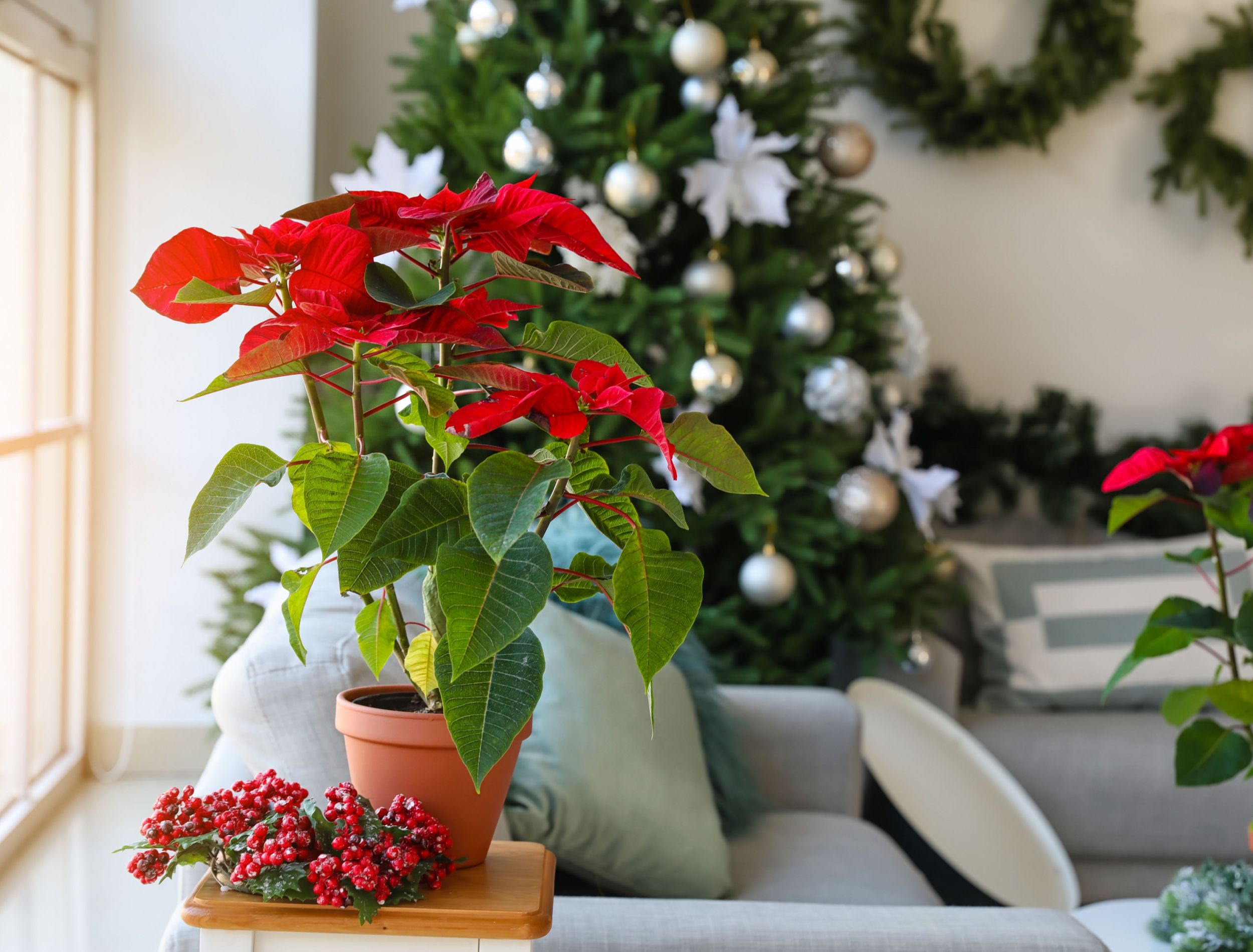
Poinsettias are known for red, white, pink, and cream-colored bracts. The bracts are modified leaves, while the tiny yellow structures at the center are the true flowers. Place the plant in bright, indirect light and water when the top layer of potting mix begins to dry.
Christmas cactus
This tropical cactus has flat, jointed stems and flowers that may be pink, red, white, or purple. It generally prefers bright, indirect light and evenly moist but well-drained potting mix. It can flower around the holidays when its light and temperature conditions support bud formation.
Amaryllis
Amaryllis produces tall flower stalks with large, trumpet-shaped blooms. It is often sold as a bulb kit for winter growing. Give it bright light, a stable pot, and careful watering so the bulb does not sit in wet soil.
Paperwhites
Paperwhites are fragrant narcissus flowers that can bloom indoors in winter. They are often grown in a shallow container with pebbles and water or in a suitable potting mix. Their scent can be strong, so they may not suit small rooms or people sensitive to fragrance.
Cyclamen
Cyclamen offers swept-back flowers and patterned leaves. It generally prefers bright light, cool indoor conditions, and careful watering. A hot room near a heating vent can shorten its display.
Norfolk Island pine
This small evergreen tree has soft-looking, tiered branches that can hold lightweight ornaments. It needs bright light and a well-drained potting mix. Indoors, it can grow as a houseplant, but it is not the same species as a cold-hardy outdoor pine.
Christmas fern and other leafy plants
A suitable indoor fern or leafy houseplant can add texture beside flowering holiday plants. Choose a species that tolerates your room’s humidity and light. Many ferns need more moisture in the air than a heated room naturally provides.
Which Christmas plant is easiest for beginners?
A beginner who has a bright room and can check soil moisture regularly may find a poinsettia or Christmas cactus manageable. A Norfolk Island pine is another option for someone who wants lasting green foliage rather than flowers. Neither plant is care-free, but both can do well when their basic needs are met.
If you prefer flowers without a long-term care commitment, an amaryllis bulb is worth considering. Its bloom period is limited, and later flowering depends on proper growth and seasonal care. Paperwhites can also bloom indoors, although their strong fragrance and tendency to lean as they grow may be drawbacks.
For bright color
Choose poinsettias or amaryllis for bold holiday displays.
For a lasting green accent
Choose a Norfolk Island pine or a suitable foliage houseplant.
For winter flowers
Choose Christmas cactus, cyclamen, or paperwhites based on your room’s light and temperature.
How to Choose Indoor Christmas Plants for Your Space
Start by checking the growing conditions in the room where the plant will stay. A sunny window, a shaded hallway, and a warm dining room can have very different light and temperature levels. Choosing a plant for the actual space helps prevent problems that may appear after the decorations come down.
Look for plants with firm stems, healthy leaves, and no obvious signs of pests. Avoid specimens with widespread yellowing, mushy stems, mold on the potting mix, or insects gathered beneath the leaves. A few damaged leaves do not always mean a plant is unhealthy, but widespread damage calls for a closer look.
If you are buying plants for gifts, consider the recipient’s home and daily routine. Someone who travels often may prefer a more forgiving houseplant over a plant that needs close attention. A person with cats or dogs should also check toxicity before bringing home a new holiday favorite.
Source: images.news18.com
Check natural light
Bright, indirect light works well for many flowering holiday plants. A dim room may need a plant suited to lower light or a suitable grow light.
Measure the available space
Check the plant’s height and width before setting it on a shelf or table. Keep enough room for watering and airflow around the foliage.
Think about the room temperature
Keep tropical holiday plants away from icy window glass, exterior doors, and hot air from heaters. Follow the needs of the chosen species rather than using one temperature rule for every plant.
Inspect the pot
Look for drainage holes and a stable base. Decorative foil or an outer pot should not trap excess water around the roots.
How to match plants with winter light
A bright east-facing window often provides gentle morning sun, while a south-facing window in the United States may deliver stronger light during winter. West-facing windows can also be bright, especially later in the day. North-facing windows usually provide less direct sunlight, so flowering plants may need a spot closer to the glass or added light.
Window direction is only a starting point. Trees, neighboring buildings, curtains, and the distance between a plant and the glass all affect the amount of light it receives. If a plant becomes leggy, loses its normal leaf color, or stops growing well, check its light before adding fertilizer.
Bright window
A good starting point for poinsettias, amaryllis, and many flowering houseplants, with protection from harsh direct sun when needed.
Moderate indirect light
Often suitable for Christmas cactus and many leafy houseplants.
Dim interior space
Better suited to plants that tolerate lower light, though low light does not mean no light.
Indoor Christmas Plant Care: Water, Light, and Temperature
Good plant care in winter comes down to a few simple habits: check the soil, provide enough light, protect roots from excess water, and avoid sudden temperature changes. Indoor plants may use water more slowly during cool, dim periods than they do in summer. However, a heated room can dry out potting mix faster than expected.
Do not water every plant on the same schedule. A poinsettia, Christmas cactus, amaryllis, and Norfolk Island pine have different needs. Check each plant’s potting mix and follow its species-specific care requirements instead of watering all the plants every Sunday.
When watering is needed, moisten the root zone thoroughly and allow excess water to drain away. Empty the saucer or decorative outer pot after watering. Roots need air as well as moisture, and a pot that remains waterlogged can lead to root damage.
Source: katalay.net
Water based on soil moisture
Feel the potting mix before watering. Some plants need the surface to dry slightly, while others prefer more even moisture. Do not rely only on a fixed calendar.
Use pots with drainage
Drainage holes allow extra water to escape. If the plant sits inside a decorative container, remove the inner pot for watering or empty trapped water afterward.
Avoid temperature extremes
Keep plants away from heating vents, fireplaces, cold drafts, and repeated contact with chilly window glass.
Provide suitable humidity
Dry winter air can affect some tropical plants. Grouping plants or using a clean humidifier may help, provided the foliage has enough airflow and surfaces do not stay wet.
Hold back on fertilizer
Newly purchased flowering plants usually do not need an immediate dose of fertilizer. Follow the care instructions for the species and resume feeding when active growth and the growing season call for it.
Why Christmas plants wilt or drop leaves
Wilting does not always mean a plant needs more water. Both dry roots and waterlogged roots can cause leaves and stems to droop. Check the potting mix first, then inspect the drainage holes and roots if the problem continues.
Poinsettias may drop leaves after exposure to cold air or a sudden change in conditions. Christmas cactus buds can fall when the plant is moved repeatedly or experiences abrupt changes in light, moisture, or temperature. Correct the likely cause and keep conditions stable instead of making several changes at once.
Dry potting mix
Water according to the plant’s needs, then let excess water drain. Recheck the soil before watering again.
Wet potting mix
Stop adding water until the mix reaches the appropriate moisture level. Check that the pot drains freely.
Yellow leaves
Review watering, light, temperature, and possible pests before assuming the plant needs fertilizer.
Falling buds
Keep the plant in a stable spot and avoid sudden changes in temperature or watering.
Can indoor Christmas plants survive after the holidays?
Many can. Christmas cactus and Norfolk Island pine can remain houseplants for years when their growing needs are met. Poinsettias can also survive beyond the holiday season, although getting them to develop colorful bracts again takes careful control of their light and dark periods in fall.
Amaryllis bulbs may be kept for future growth with appropriate light, watering, and a rest period suited to the bulb’s growth cycle. Paperwhites are often treated as seasonal indoor bulbs, especially when grown without soil, and may not rebloom reliably indoors under the same conditions. Keep the plant’s label so you can follow the right care plan.
Keep healthy foliage
Do not cut back green leaves without a reason. Leaves help the plant produce energy for future growth.
Adjust care as growth changes
Water and feed based on active growth, light, and the needs of the species rather than the holiday calendar.
Plan for reblooming
Research the specific plant’s seasonal needs before expecting flowers again.
Creative Ways to Decorate With Indoor Christmas Plants
Plants look most effective when they have room to show their shape. Rather than lining every surface with pots, choose a few focal points and repeat colors or textures across the room. A tall plant can anchor one corner, while smaller flowering plants bring color to a table or windowsill.
Use plant size as a guide. A large poinsettia can stand alone in a simple basket cover, while a small Christmas cactus may look better on a raised stand. A Norfolk Island pine can take the place of a miniature tree in a small apartment or office, as long as its branches are not weighed down by heavy ornaments.
The container matters too, but the plant’s drainage needs come first. Use a decorative cachepot, tray, or basket cover around the growing pot rather than sealing the roots inside a container that holds water. Keep paper, fabric, and other flammable decorations away from candles, bulbs that grow hot, and heating equipment.
Source: ruralsprout.com
Create a holiday centerpiece
Set a small poinsettia or Christmas cactus in the center of a dining table. Keep it low enough for people to see across the table, and remove it before serving food if the plant or its soil could be disturbed.
Dress up a windowsill
Arrange a few small pots in different heights. Leave enough space for light to reach the leaves and avoid placing tropical plants against cold glass.
Build a green entry display
Use a Norfolk Island pine or another suitable foliage plant near an entry where it will not be hit by cold outdoor air every time the door opens.
Use a plant stand
Raise a smaller plant to eye level and keep its pot stable. Check that the stand can support the full weight of the pot and wet potting mix.
Repeat a simple color scheme
Pair green foliage with red, white, gold, or natural wood accents. A limited palette keeps the display calm rather than crowded.
How to make a holiday plant arrangement
Choose plants with similar light and temperature needs if you plan to group them closely. This makes care easier and reduces the risk of keeping one plant too wet or too dry for the sake of the others. If their needs differ, arrange separate pots together instead of planting them in one shared container.
Place the tallest plant at the back or in the center, depending on the viewing angle. Add medium plants next, then use a small plant or a safe decorative accent to fill a gap. Keep foliage clear of candles, hot lights, and electrical cords, and do not allow ornaments to block airflow around the leaves.
Step 1: Pick a focal plant
Choose the main plant by its color, height, or flower shape.
Step 2: Add contrast
Use a second plant with a different leaf shape or height, while keeping its growing needs in mind.
Step 3: Add simple accents
Use a clean tray, a decorative pot cover, or a few non-toxic ornaments that do not touch the soil or damage the foliage.
Step 4: Check the display
Make sure each pot drains, the arrangement is stable, and the plants receive enough light.
Indoor Christmas Plants and Pet Safety
Before buying a holiday plant, check whether it can harm cats, dogs, or small children if eaten or handled. A plant can be beautiful and still pose a risk when curious pets chew leaves, dig in soil, or knock over pots. Plant placement helps, but a high shelf is not a guarantee that a pet cannot reach it.
Poinsettias have a reputation for being deadly, but their toxicity is often overstated. Their milky sap can irritate the mouth and stomach, and eating the plant may cause drooling, nausea, or vomiting. Even so, it is sensible to prevent pets and children from chewing the leaves and to seek veterinary advice if symptoms occur.
Other holiday plants require greater caution. Amaryllis contains compounds that can cause illness, with the bulb being a particular concern. Holly berries and mistletoe can also be toxic if swallowed, and cyclamen tubers may cause serious signs after ingestion. Do not assume that a plant is safe because it is sold widely during the holidays.
Source: rhs.org.uk
Amaryllis
Keep bulbs and plant parts out of reach of pets and children. Ingestion can cause vomiting, stomach upset, and other signs of poisoning.
Holly
The berries can cause gastrointestinal upset when eaten. Use decorative alternatives if children or pets may reach the plant.
Mistletoe
Some mistletoe species and their berries can cause poisoning. Keep fresh sprigs and fallen berries well away from pets and children.
Cyclamen
The tubers contain toxic compounds and may cause more severe illness if eaten. Keep the plant in a place that cannot be accessed by pets.
Christmas cactus
It is generally considered non-toxic to cats and dogs, but eating large amounts of plant material may still upset the stomach.
Norfolk Island pine
It is generally regarded as non-toxic to cats and dogs, but chewing branches or swallowing needles can still cause irritation or digestive upset.
What to do if a pet eats a holiday plant
Remove any remaining plant material from the pet’s reach and identify the plant as clearly as possible. Save its label or take a photograph so a veterinarian can identify the species. Do not induce vomiting or give home remedies unless a veterinary professional directs you to do so.
Contact a veterinarian or an animal poison control service promptly if your pet eats a potentially toxic plant. Seek urgent veterinary care for serious symptoms such as repeated vomiting, marked weakness, breathing difficulty, collapse, or seizures. The risk depends on the plant, the amount eaten, and the animal, so a general online list cannot replace case-specific advice.
Prevent access
Use stable placement and barriers that pets cannot easily bypass. Remove fallen leaves, berries, bulbs, and plant trimmings.
Keep labels
Retain plant names and care tags so you can identify a plant quickly if ingestion occurs.
Choose safer alternatives
For homes with pets that chew plants, consider non-toxic options and keep even those plants from becoming chew toys.
Common Mistakes When Growing Christmas Plants Indoors
Many holiday plant problems begin with good intentions. A plant is watered because its leaves droop, moved to a warmer spot because it looks cold, or fed because it has stopped blooming. Yet each action can make the problem worse if the real cause is different.
The best approach is to check the plant before changing its care. Look at the soil, drainage, light, temperature, and leaves. Make one sensible adjustment at a time, then watch for a response rather than changing several conditions in a single day.
Source: hips.hearstapps.com
Overwatering
Watering too often can deprive roots of oxygen and encourage root rot. Check the soil first and empty water from the saucer or outer pot.
Leaving decorative foil in place
Foil wrappers can hide standing water and block drainage if they are not managed properly. Remove the inner pot to water, then allow it to drain before returning it to the wrapper.
Placing plants beside heaters
Hot, dry air can stress leaves and dry the potting mix unevenly. Move the plant to a spot with stable conditions and suitable light.
Putting tropical plants outdoors in freezing weather
Many holiday houseplants cannot tolerate frost. Keep them indoors when outdoor conditions fall below the species’ safe temperature range.
Expecting every plant to rebloom
Flowering again depends on the species and its seasonal needs. Some plants need specific light and dark periods, while others may be easier to enjoy as seasonal displays.
Using heavy decorations
Large ornaments can bend branches or damage stems. Use lightweight decorations on a suitable plant and remove them if the branches show strain.
A simple weekly plant check
A short weekly check helps you spot changes before they become serious. Examine the leaves, stems, and soil, and look for insects or webbing under the foliage. Check that each pot drains freely and that the plant has not been pushed into a dark corner by holiday decorations.
Adjust the frequency of care to the plant rather than following a rigid schedule. During active growth, a plant may need more water and light. After flowering or during slower growth, its needs may change.
Inspect the foliage
Look for spots, yellowing, drooping, insects, or unusual leaf loss.
Check the soil
Feel below the surface and water only when the plant’s needs call for it.
Review the location
Make sure the plant still receives suitable light and is not exposed to cold drafts or hot air.
Clean the area
Remove fallen leaves and standing water, and wipe dust from nearby surfaces.
How to Keep Holiday Plants Looking Good After Christmas
When the holiday decorations come down, decide which plants you want to keep and which are best treated as seasonal displays. Healthy foliage plants can often stay in place with routine care, while flowering plants may need time to rest or grow before their next bloom. Keep the care label so you know the plant’s name and can check its needs later.
Do not rush to repot a healthy plant simply because Christmas is over. Repotting can stress roots, especially when a plant is flowering or adjusting to a new home. Repot when the roots or potting mix show a clear need, and choose a container only slightly larger than the root ball with suitable drainage.
As daylight increases in spring, watch for signs of new growth. Resume fertilizer only when appropriate for the species and growth stage. If a plant becomes crowded, leggy, or unhealthy, review its light and growing conditions before deciding whether to prune, repot, or replace it.
Source: modandmint.com
Keep the plant label
The exact plant name makes it easier to find correct care and reblooming instructions.
Prune with care
Remove dead or damaged growth with clean tools, but avoid cutting healthy leaves without a reason.
Repot only when needed
Check for crowded roots, poor drainage, or deteriorated potting mix before moving the plant to a new container.
Plan ahead for flowers
Research the plant’s light, temperature, and seasonal requirements well before the next holiday season.
Can poinsettias turn red again next Christmas?
Yes, poinsettias can develop colorful bracts again, but the process takes planning. They are short-day plants, meaning that long, uninterrupted nights help trigger the seasonal color response. Indoor light from lamps, televisions, or other sources at night can interfere with the dark period they need.
A healthy plant also needs suitable daytime light, watering, and growth care during the rest of the year. The exact schedule depends on the plant and growing conditions, so follow a reliable poinsettia care plan as fall approaches. If you mainly want a simple seasonal display, buying a fresh poinsettia may be easier than managing the reblooming process.
Keep it healthy first
Provide suitable light, water, and warmth after the holiday season.
Protect the dark period
Follow a consistent fall light and darkness schedule designed for poinsettias.
Be patient
Color development takes time and may vary with growing conditions.
Frequently Asked Questions
Q
What are the most popular indoor Christmas plants?
Poinsettias, Christmas cactus, amaryllis, paperwhites, cyclamen, and Norfolk Island pine are popular choices. Poinsettias provide colorful bracts, while Christmas cactus and amaryllis offer flowers. Paperwhites add fragrance, cyclamen brings cool-season blooms, and Norfolk Island pine provides an evergreen look.
Q
Which indoor Christmas plants are easiest to care for?
Christmas cactus, poinsettias, and Norfolk Island pine can be manageable choices when their basic needs are met. Christmas cactus needs careful watering and bright, indirect light, while poinsettias need stable warmth and suitable light. No houseplant is completely care-free, so choose one that fits your room and routine.
Q
Can I keep Christmas plants in a room without a sunny window?
Some foliage plants tolerate lower light, but flowering holiday plants often need brighter conditions to remain healthy. Move a plant closer to a suitable window or use a grow light when natural light is too weak. Avoid assuming that a plant can thrive in a dark room just because it survives there for a few days.
Q
Are poinsettias poisonous to cats and dogs?
Poinsettias are less toxic than their reputation suggests, but their milky sap can irritate the mouth and digestive tract. Eating the leaves may cause drooling, nausea, or vomiting. Keep the plant out of reach, and contact a veterinarian if a pet eats it and develops symptoms.
Q
Which Christmas plants should pet owners avoid?
Amaryllis, holly, mistletoe, and cyclamen deserve particular caution around pets. Some parts of these plants can cause poisoning if eaten, and the level of risk depends on the species and amount consumed. Check the exact plant before buying it, keep toxic parts out of reach, and contact a veterinarian promptly after suspected ingestion.
Q
How often should I water indoor Christmas plants?
There is no single watering schedule that works for every Christmas plant. Check the potting mix and follow the needs of the species. Water when appropriate, let excess water drain, and empty the saucer or outer pot so the roots do not remain in standing water.
Q
Can I decorate a Norfolk Island pine like a Christmas tree?
Yes. A Norfolk Island pine can serve as a small indoor holiday tree. Use lightweight ornaments, avoid bending the branches, and keep lights and decorations from heating or damaging the foliage. Give the plant suitable light and water after the decorations come down.
Q
Can indoor Christmas plants bloom again next year?
Some can. Christmas cactus may flower again with suitable seasonal conditions, and amaryllis bulbs can often be grown for future blooms with the right care. Poinsettias can regain their colorful bracts when their fall light and dark periods are managed. Paperwhites grown indoors may be less reliable for reblooming, especially when forced without soil.
✦ Wrapping Up
Conclusion
Indoor Christmas plants bring color, texture, fragrance, and living greenery to holiday spaces across the United States. Poinsettias make a bright seasonal statement, Christmas cactus offers graceful blooms, amaryllis creates a bold focal point, and Norfolk Island pine gives small rooms an evergreen accent. The best choice is the one that fits your home’s light, temperature, available space, and care routine.
Healthy plants need more than a festive pot. Check soil moisture, provide suitable light, use containers with drainage, and keep plants away from temperature extremes. If children or pets live in your home, check plant toxicity before buying and place any risky species where they cannot be reached.
A few well-chosen plants can create a warm holiday display without cluttering the room. With steady care and realistic expectations, some of those plants can continue growing long after the lights, ribbons, and other Christmas decorations are packed away.
💡 Key Takeaway
Choose one or two plants that match your home’s light and temperature, check their pet safety, and set them in pots that drain well. Then follow each plant’s watering needs and keep it away from drafts, heating vents, and standing water.
I enjoy sharing simple gardening ideas, lawn care tips, and honest product reviews that help make outdoor work easier. From home gardening guides to helpful tools and lawn care advice, I write easy-to-follow content to help readers create a healthier and better-looking outdoor space without wasting time or money.