
As an Amazon Associate, I earn from qualifying purchases.
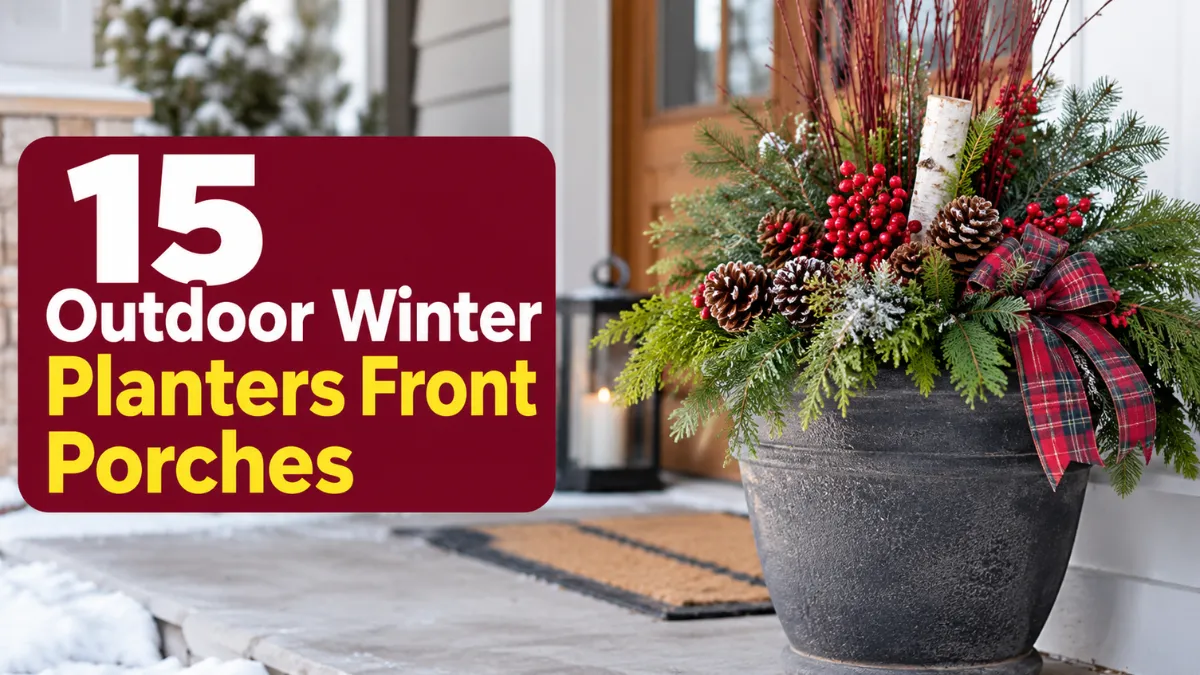
A bare porch in January feels a little sad. Good news: outdoor winter planters front porches can fix that fast, and you don’t need a green thumb. These 15 ideas mix evergreens, berries, bark, lights, and cozy touches that hold up in cold weather. Some take ten minutes. Others take an afternoon. Pick one, and your front door will look welcome again.
1. Spruce Tips
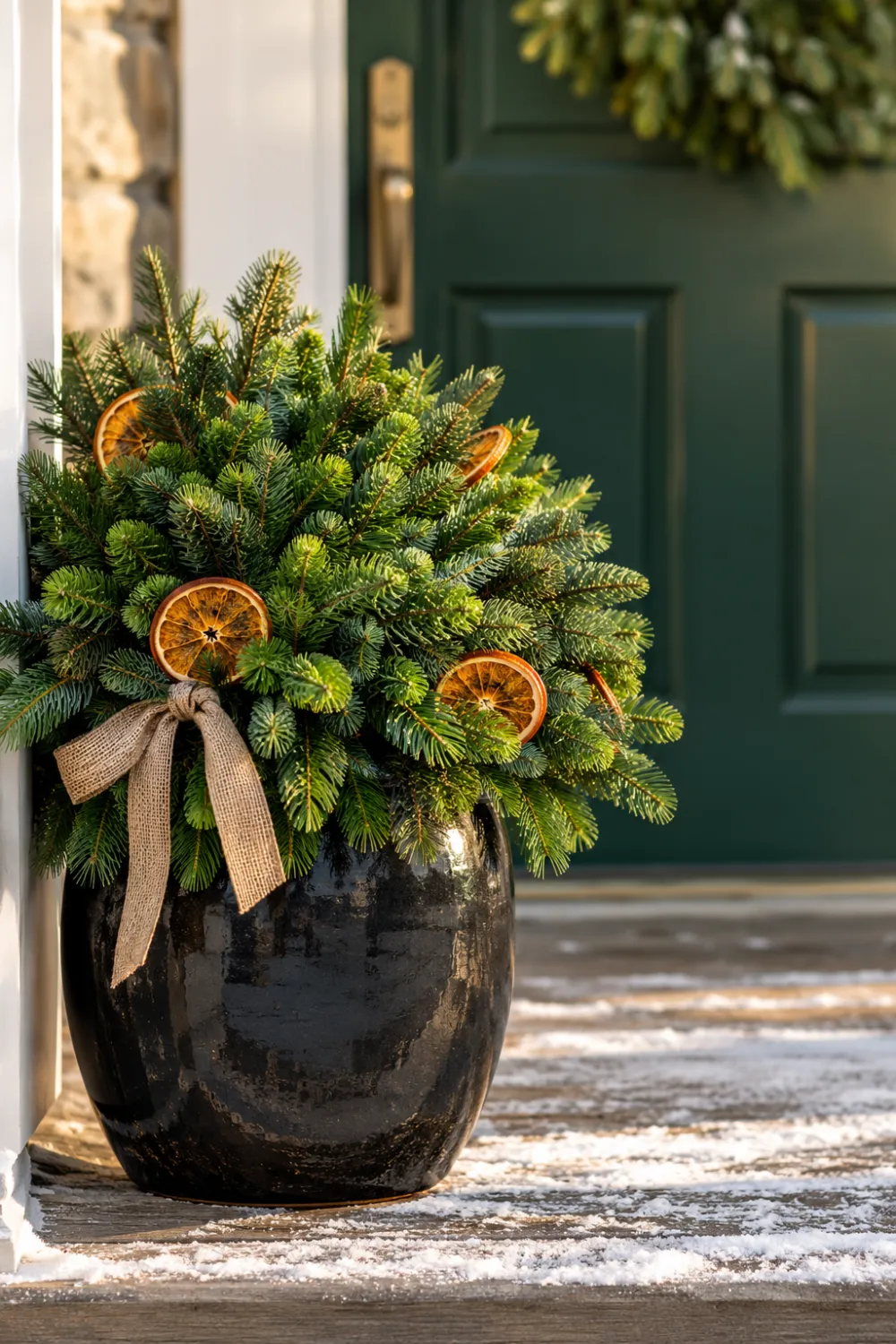
Spruce tips are the easiest win. Buy a bundle from a garden center or Christmas tree lot, then push the cut ends deep into moist soil. Pack them tightly, so the pot looks full and round. Frozen soil holds the stems in place all winter. Add a few dried orange slices or a ribbon for color, and you’re done in ten minutes.
2. Red Twig Dogwood
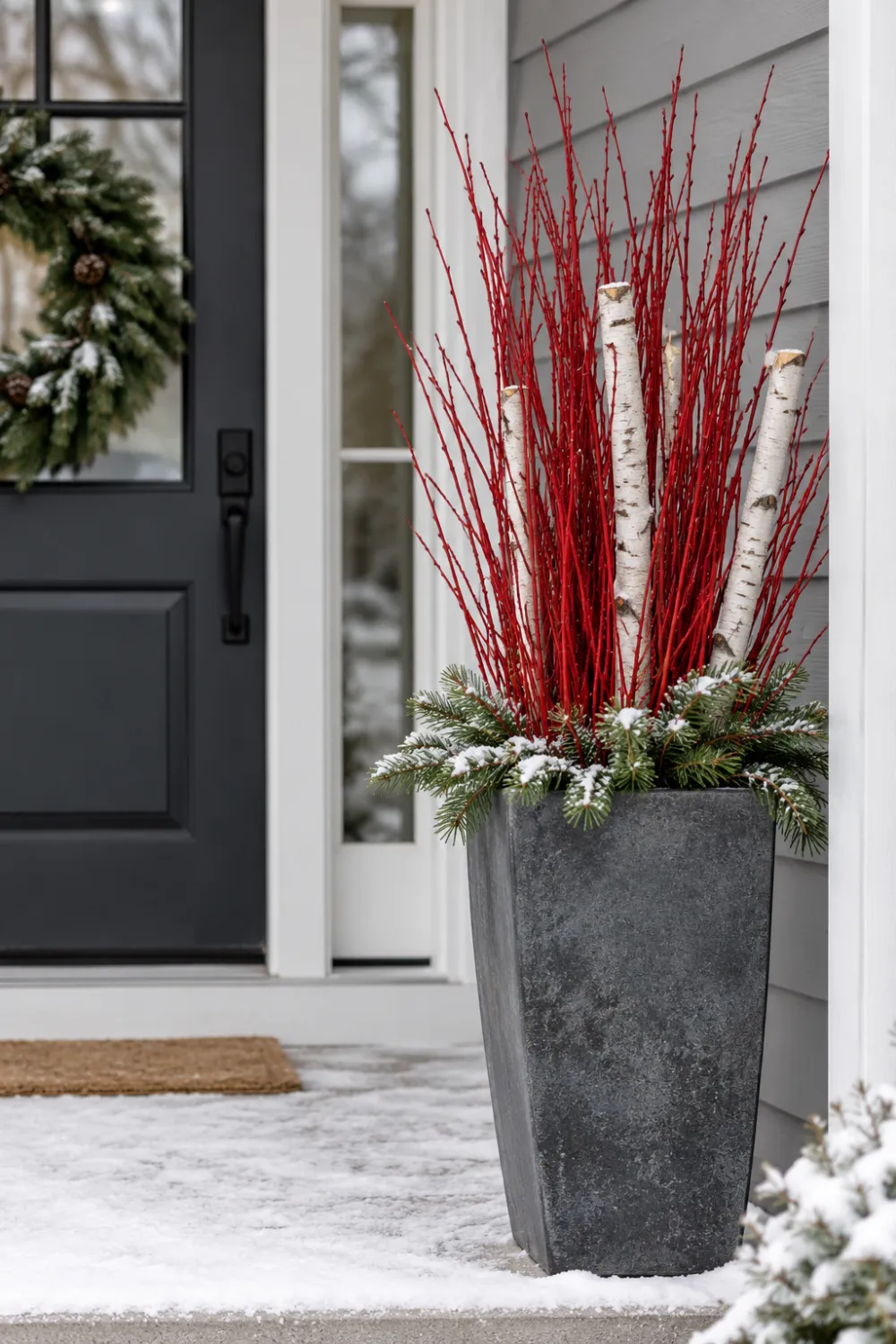
Nothing wakes up a snowy porch like bright red stems. Cut dogwood branches in late fall, or buy them from a florist, and stand them upright in a tall pot filled with soil. Their color pops against white snow and gray siding. Mix in a few white birch sticks for contrast. Pick a dark, simple container so the stems get all the attention.
3. Birch Branches
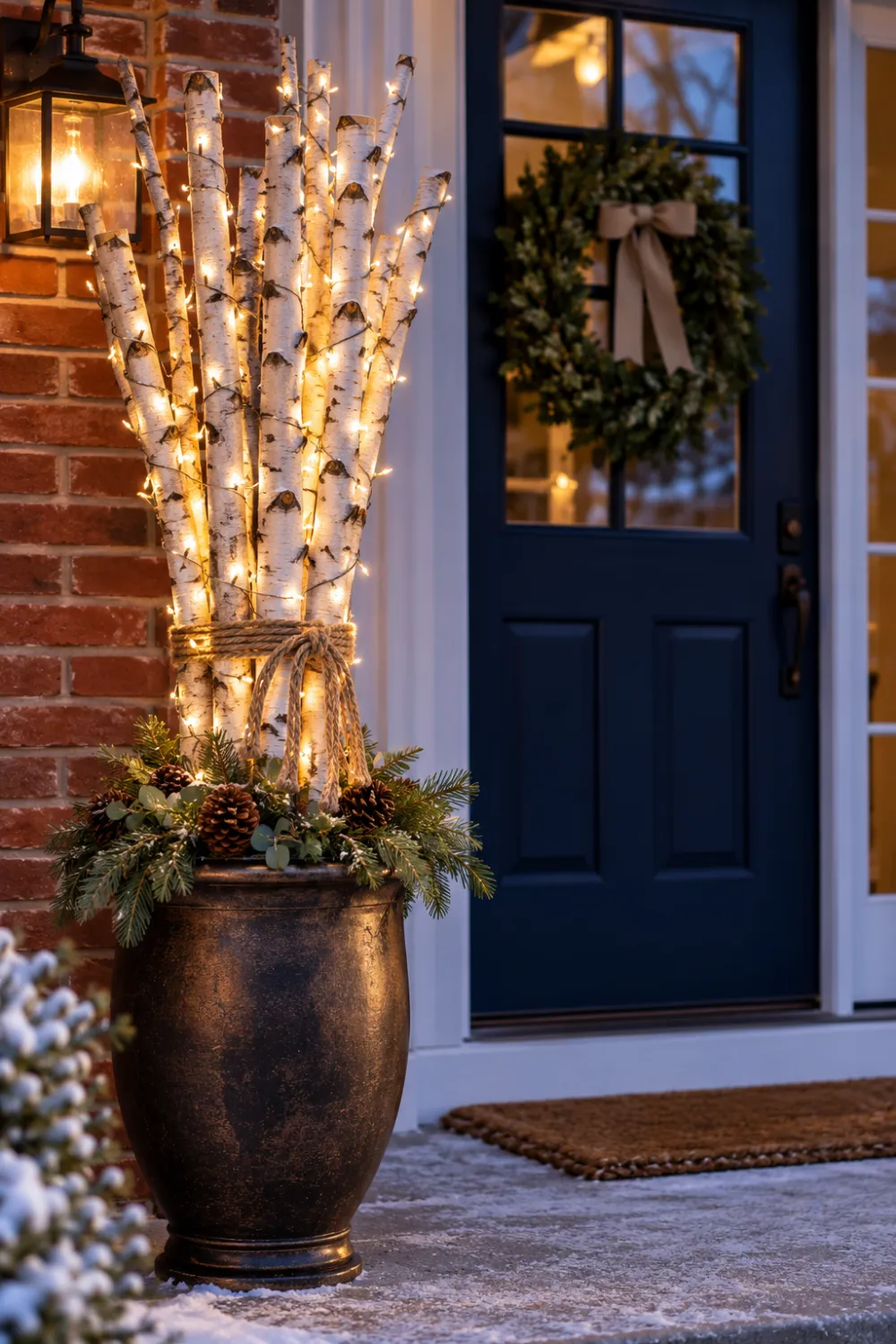
Tall birch branches add height without any fuss. Bundle five to seven, tie them with twine, and sink them into a heavy pot, so wind can’t tip them over. The white bark looks crisp on dark doors and brick. Wrap a strand of warm white lights around them for evening glow. This one suits modern or farmhouse porches especially well.
4. Winter Pansies
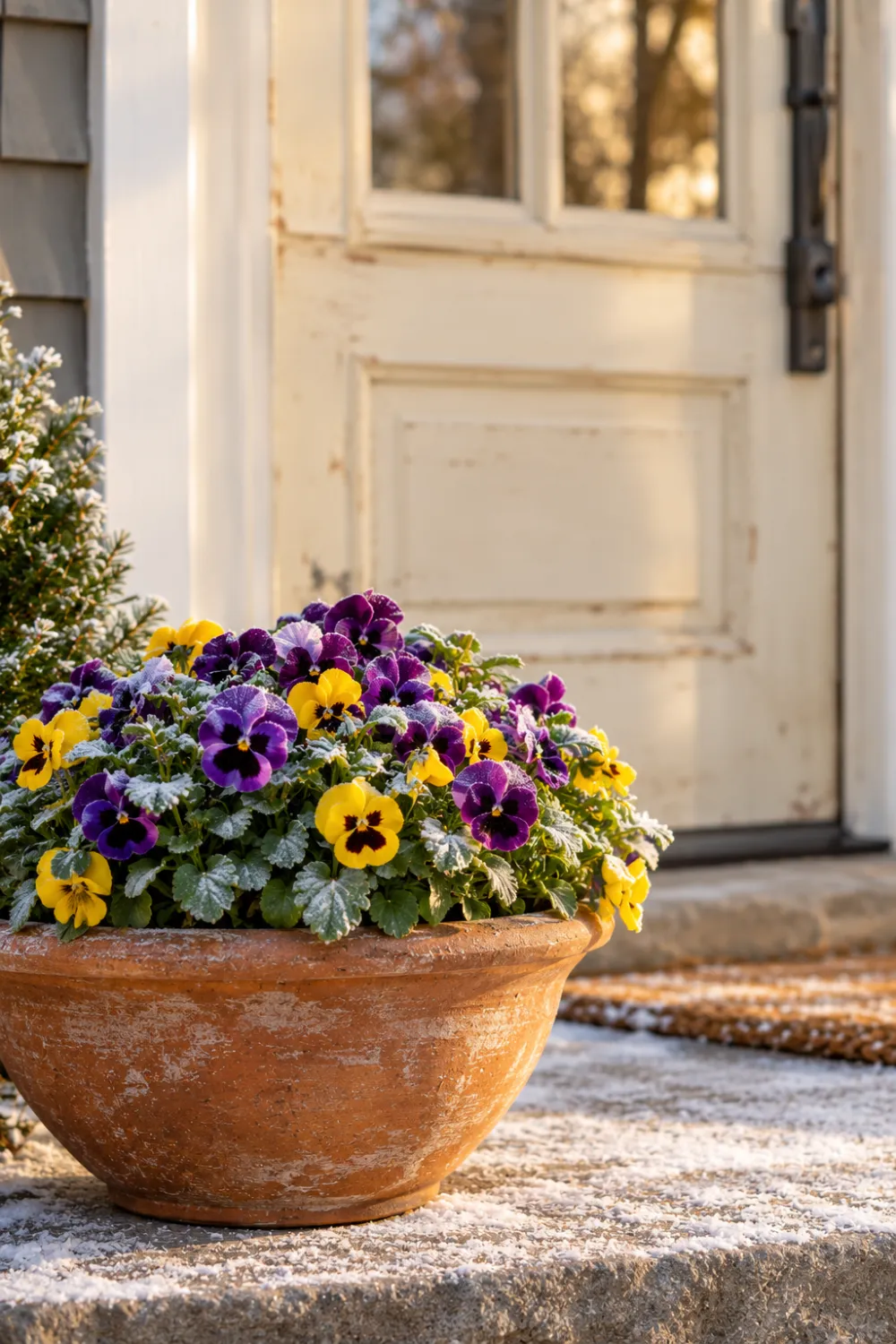
Pansies are tougher than they look. They shrug off light frost and bounce back after a cold snap, so they work best in milder winters. Plant them close together in a wide, shallow bowl for a full, cheerful look. Purple and yellow together feel bold, while soft whites feel calm. Water them lightly on warm days, and pinch off faded blooms to keep flowers coming.
5. Frosted Pinecones
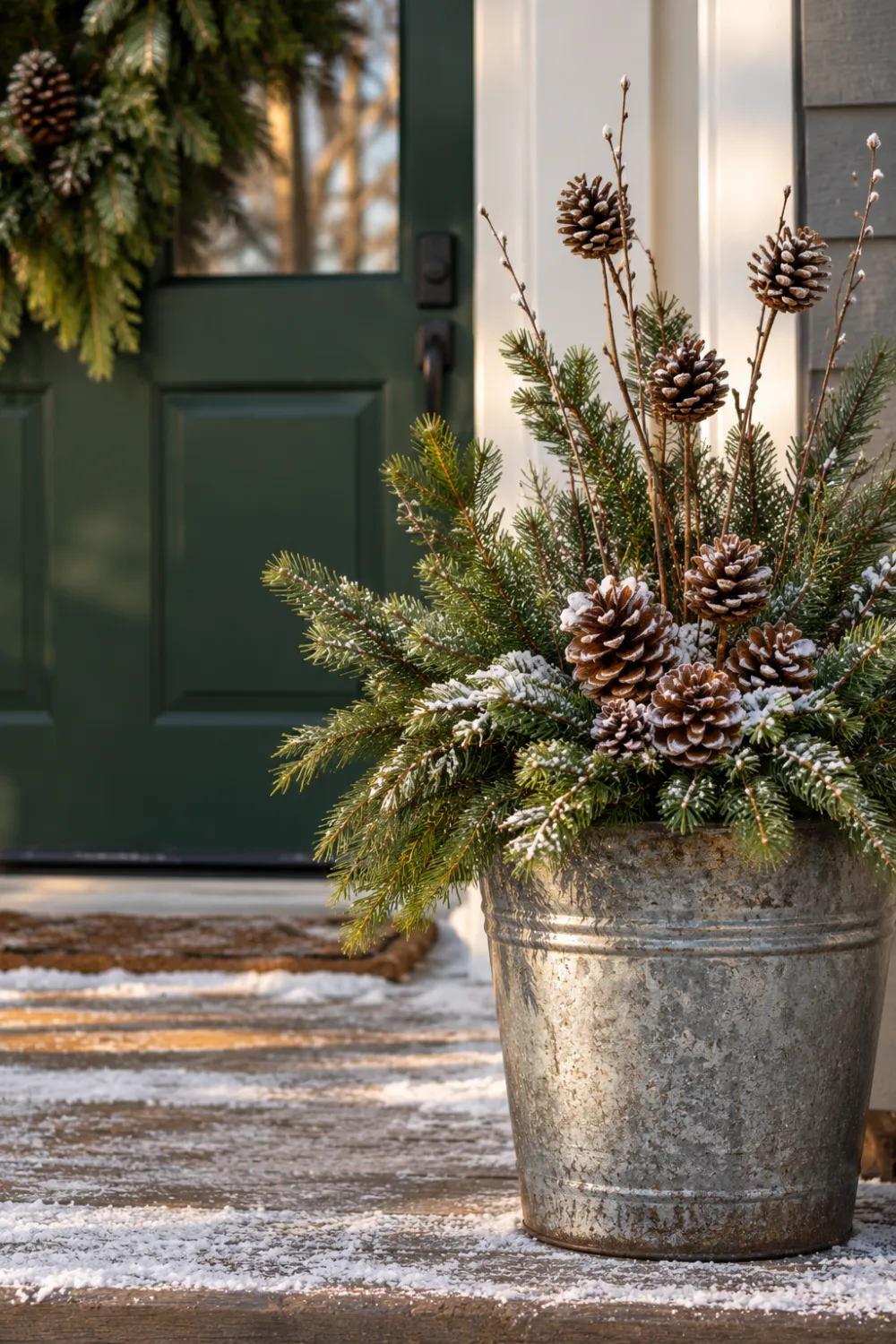
Pinecones bring a woodsy feel and cost almost nothing. Gather a basketful, brush the tips with white craft paint, and let them dry. Nestle them into a planter among pine boughs, with a few clustered at the front like a little forest floor. Wire a few onto picks, and they’ll stand up tall. They shrug off snow and last for months.
6. Cedar and Berries
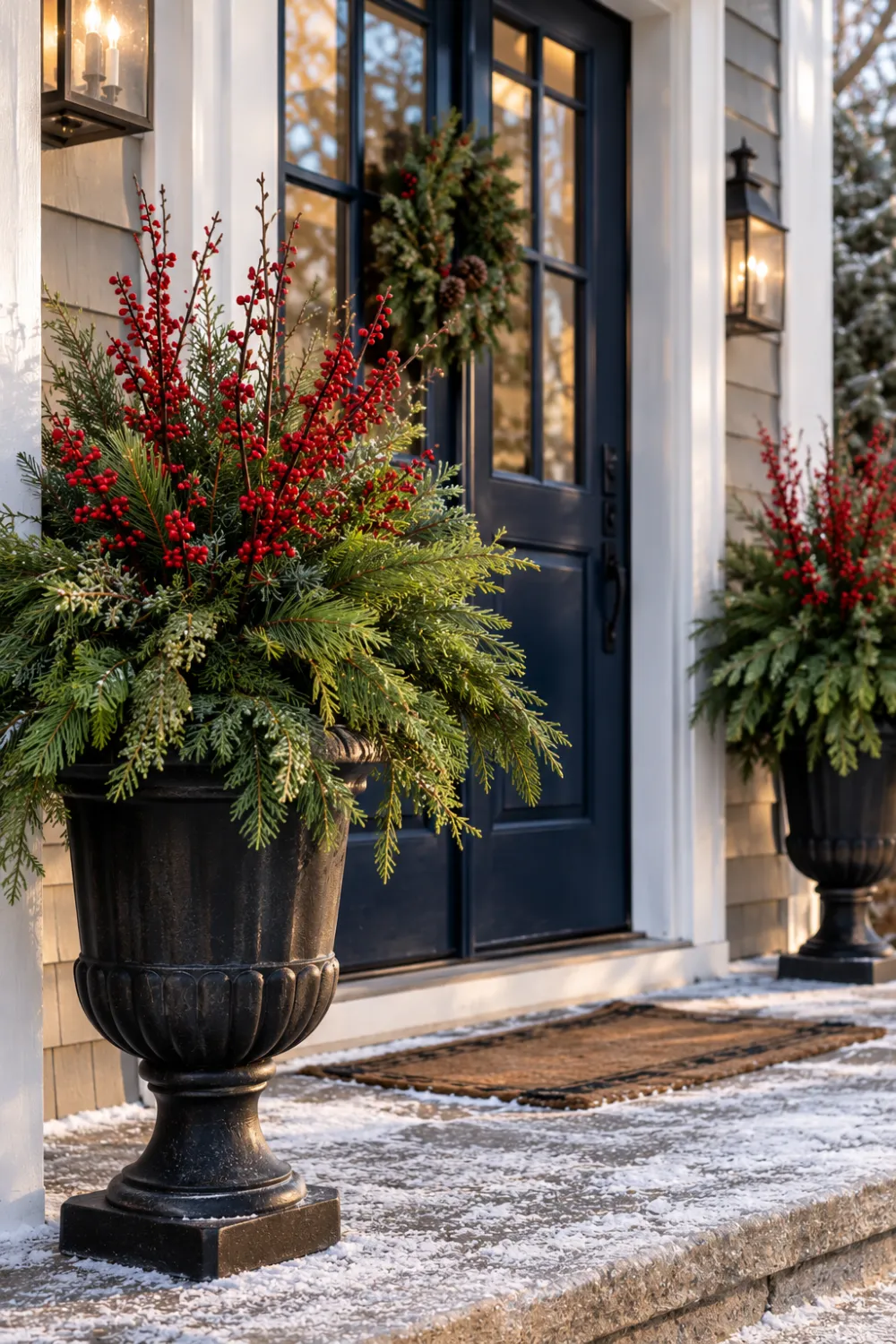
Cedar boughs smell wonderful and keep their color well in cold air. Fill a pot with them, then poke in faux red berry stems for a pop of holiday-style color that doesn’t wilt. Real juniper berries work too. This mix looks lovely beside a red or navy door. Keep it simple and symmetrical, and it will look put together from the street.
7. Ornamental Kale
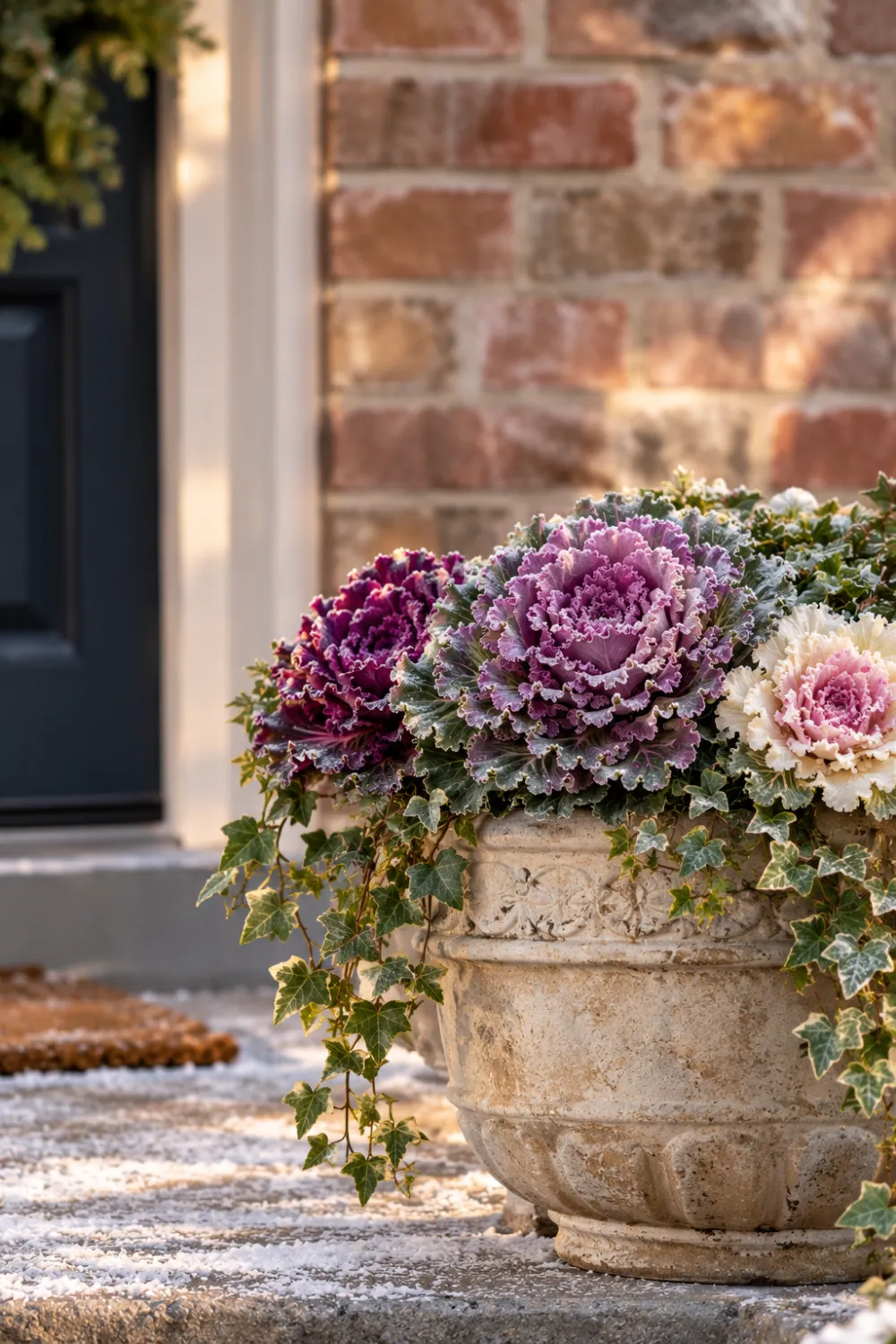
Ornamental kale and cabbage actually like the cold. Their ruffled leaves in purple, pink, and cream often look better after a frost. Plant three heads in a wide container, with the biggest in the center. Tuck trailing ivy around the edge, so the rim looks softer. They’re pretty to look at, but they aren’t meant for eating, so skip the salad plans.
8. Dwarf Alberta Spruce
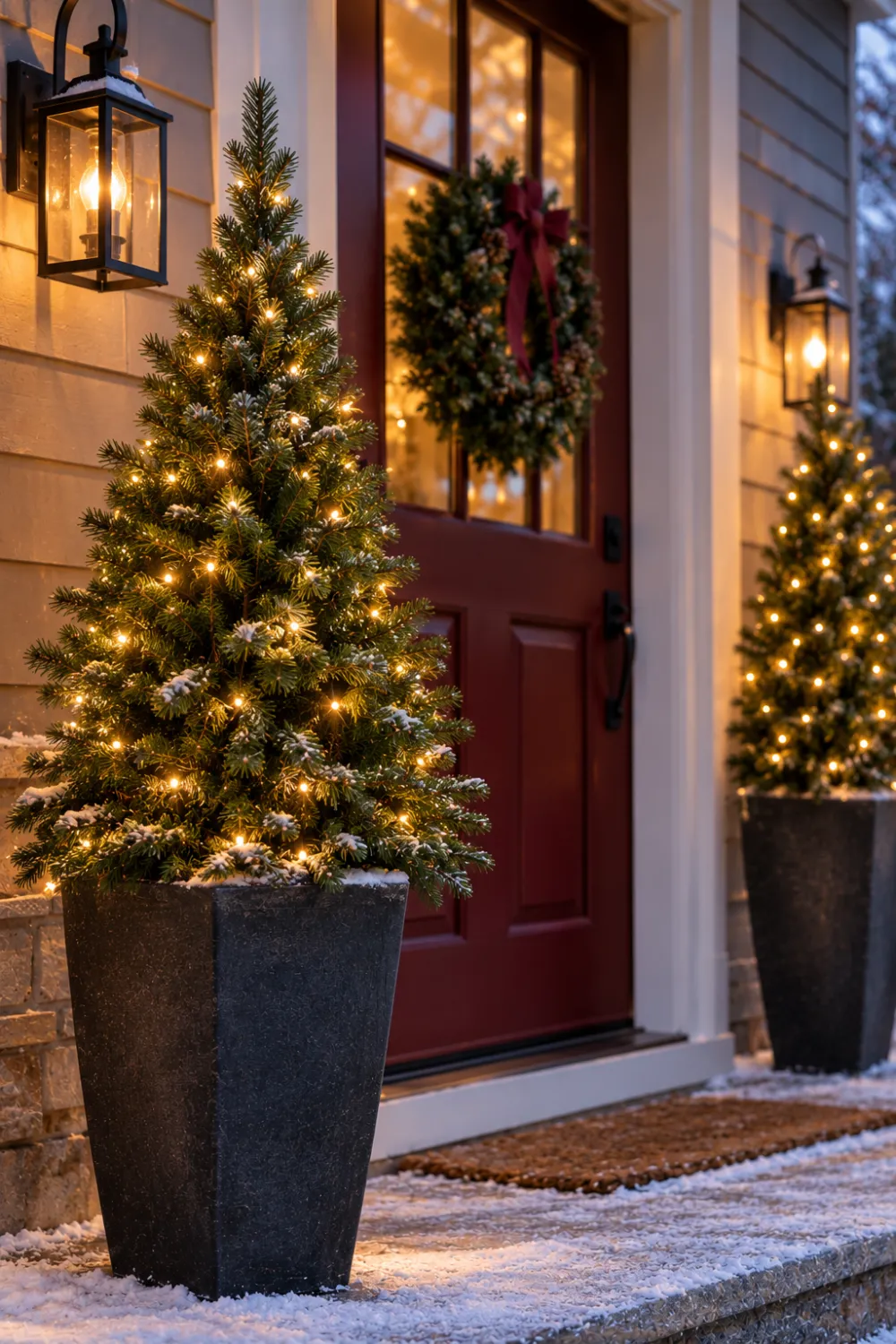
If you want something that looks neat without much effort, try a dwarf Alberta spruce. This small, cone-shaped evergreen stays green all winter and needs very little care. Plant one on each side of your door for a classic look. Water it when the soil thaws, and keep it out of harsh wind. Wrap it with lights and it doubles as a mini tree.
9. Lighted Branches
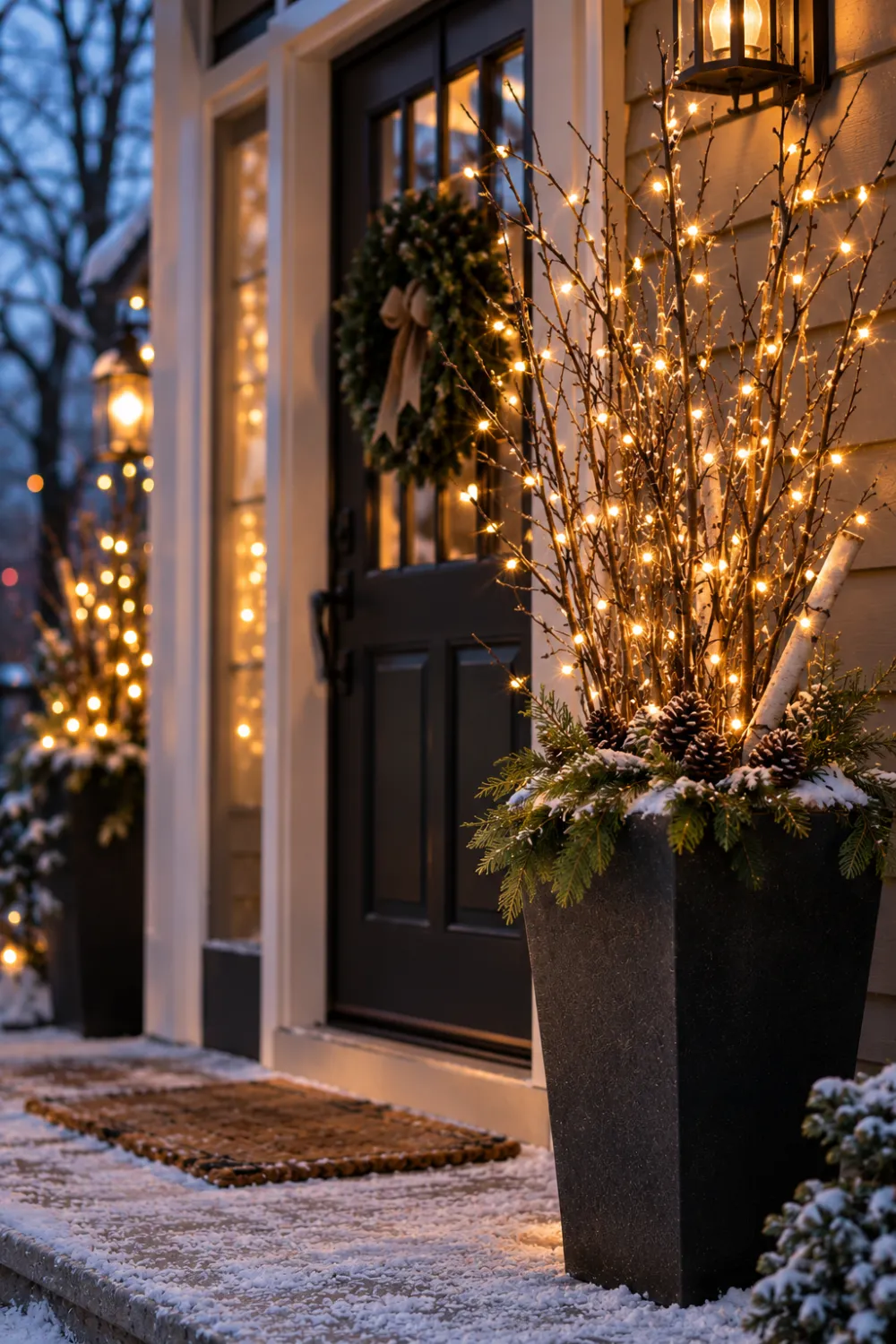
Long winter nights call for a little glow. Fill a tall planter with bare branches, then wrap them in battery-operated string lights with a timer. You won’t need an outlet, and the timer turns them on at dusk. Warm white looks softer than cool white. Choose weatherproof lights, and check the batteries every few weeks. It looks elegant with almost no cost.
10. Magnolia Leaves
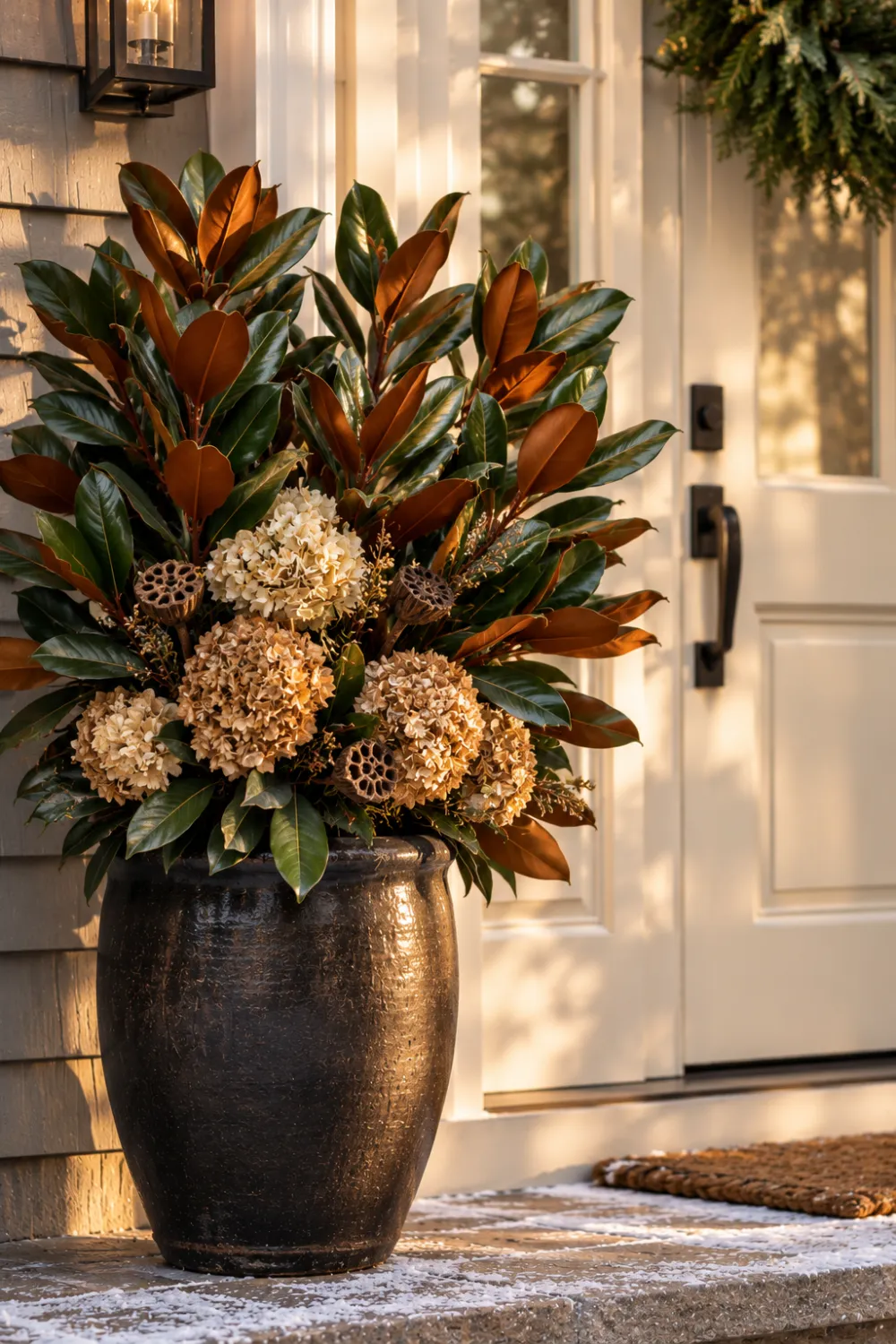
Magnolia leaves are glossy green on top and rusty brown underneath, which gives your pot some depth. Cut a few branches, if you have a tree, or buy them by the bunch. Arrange them in a fan shape, with the brown undersides showing here and there. Add a few seed pods or dried hydrangea heads for texture. This look feels rich and a little Southern.
11. Hellebores
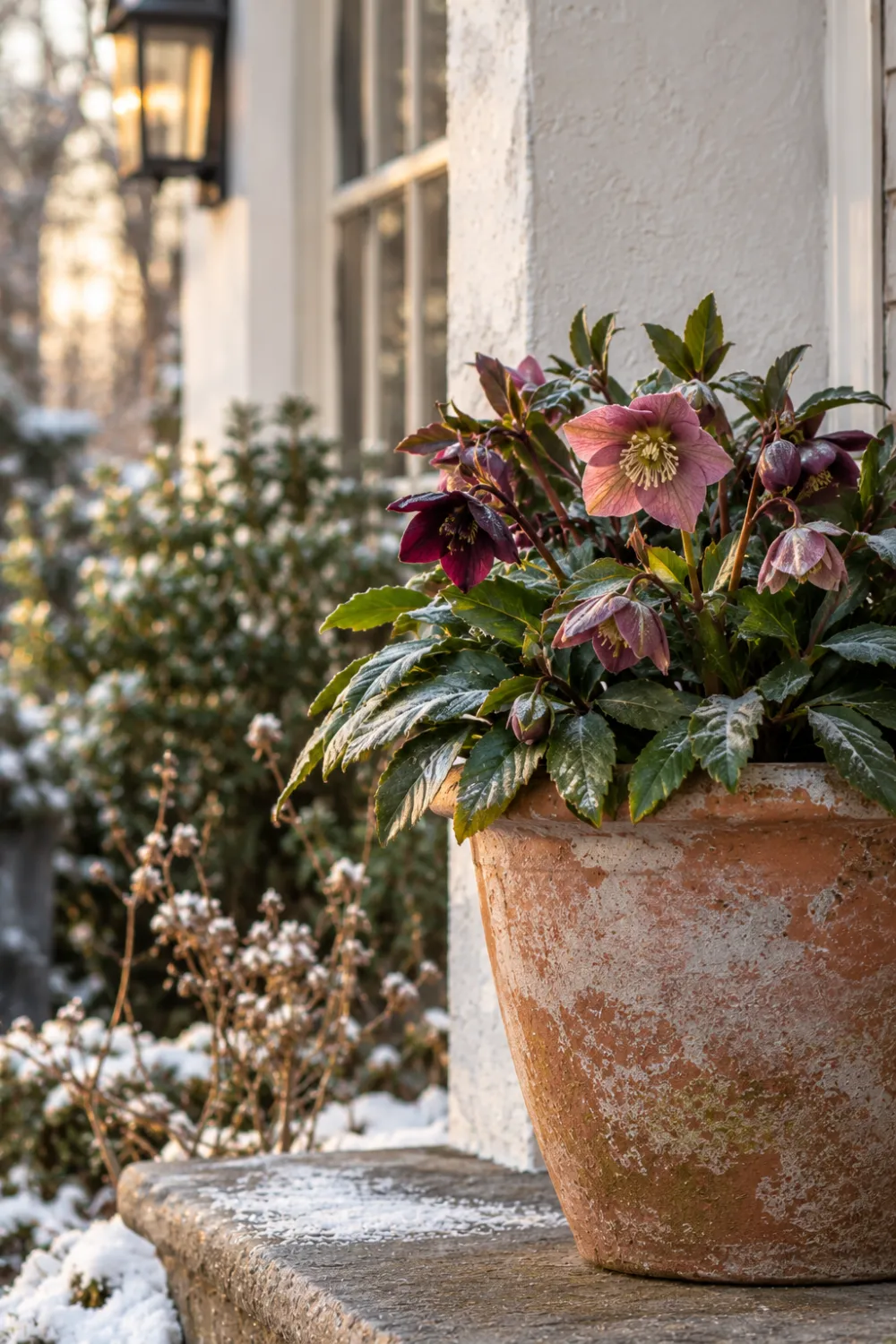
Hellebores, sometimes called Lenten roses, bloom when almost nothing else does. Their nodding flowers come in dusty pink, cream, and deep plum, and the leaves stay green through winter. Plant one or two in a large pot with good drainage. In colder areas, set the pot near the house wall for extra shelter. They’re a lovely choice for late winter and early spring.
12. Winterberry Holly
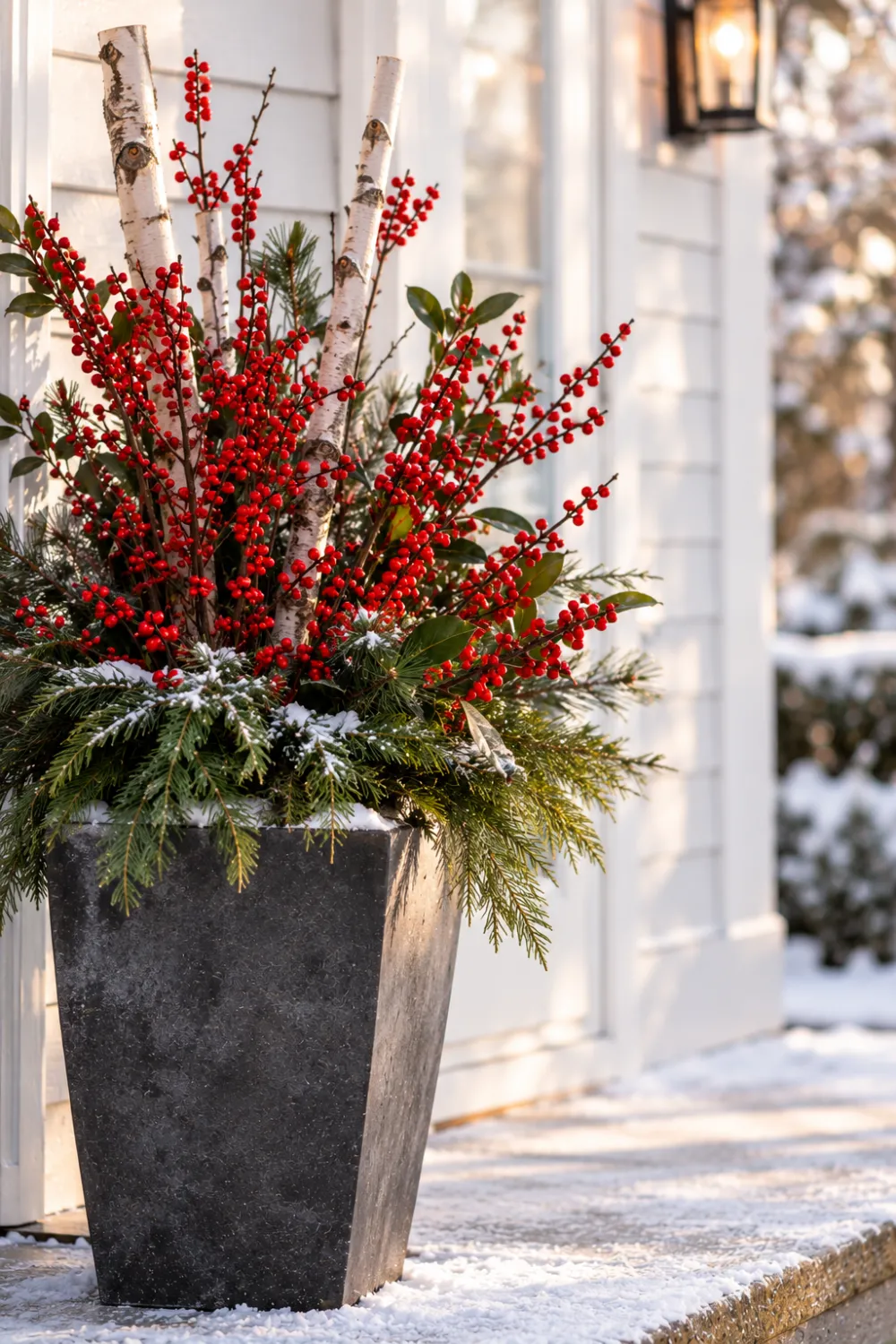
Winterberry holly gives you loads of bright red berries on bare branches. Buy cut stems and set them in a deep pot of soil, since cut branches won’t root. Pair them with white birch or pine for a classic red-and-white look. Birds may snack on the berries, which is part of the fun. Keep the pot where you can watch from a window.
13. Boxwood Pair
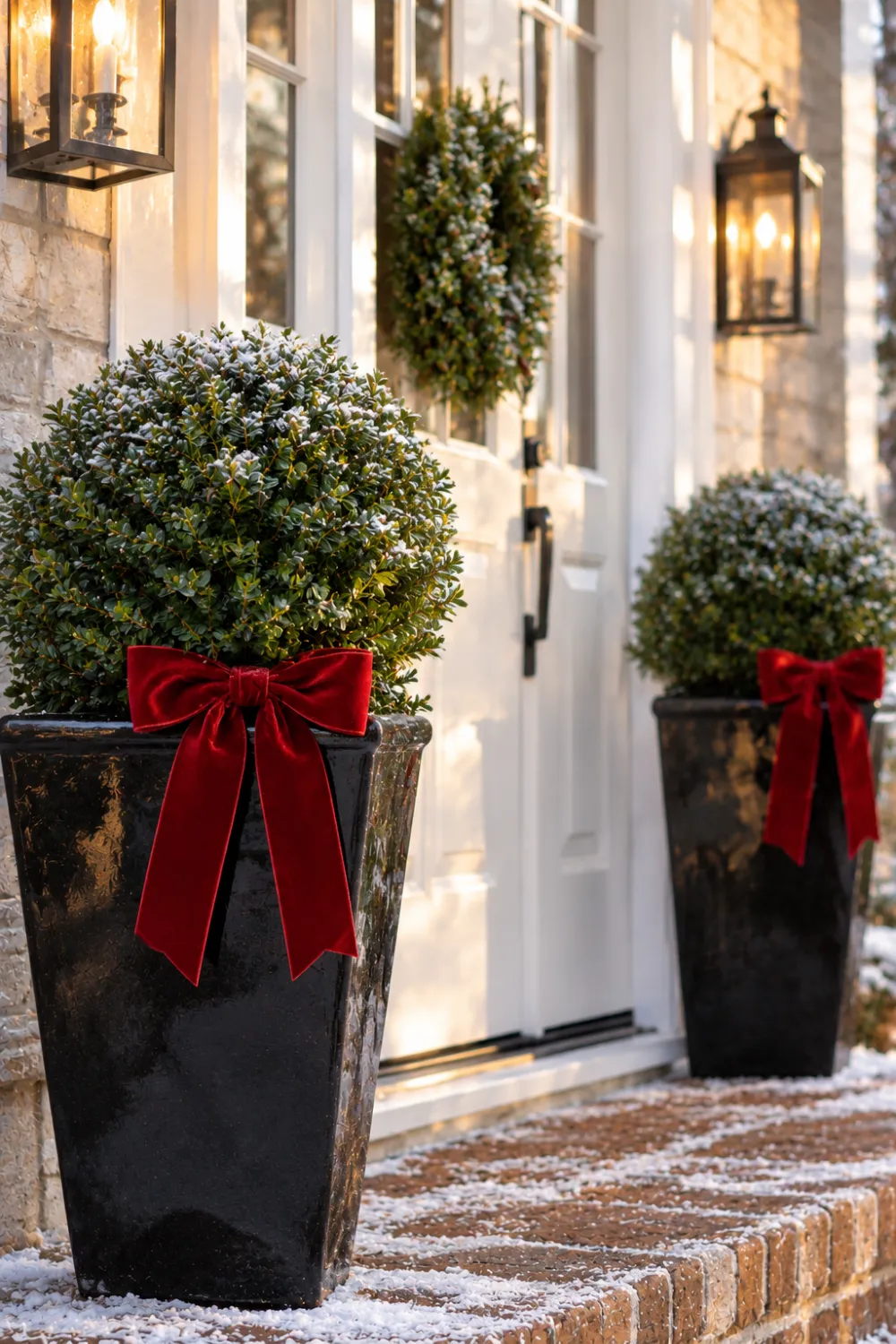
A matching pair of boxwoods says tidy and welcoming. Pot them in tall black or stone-colored planters and flank your door. Boxwoods hold their green all winter, and they look sharp with a simple red bow or a bit of frosty lights. Protect them from drying winds with burlap if you live somewhere very cold. Water on mild days, so roots don’t dry out.
14. Heather and Heuchera
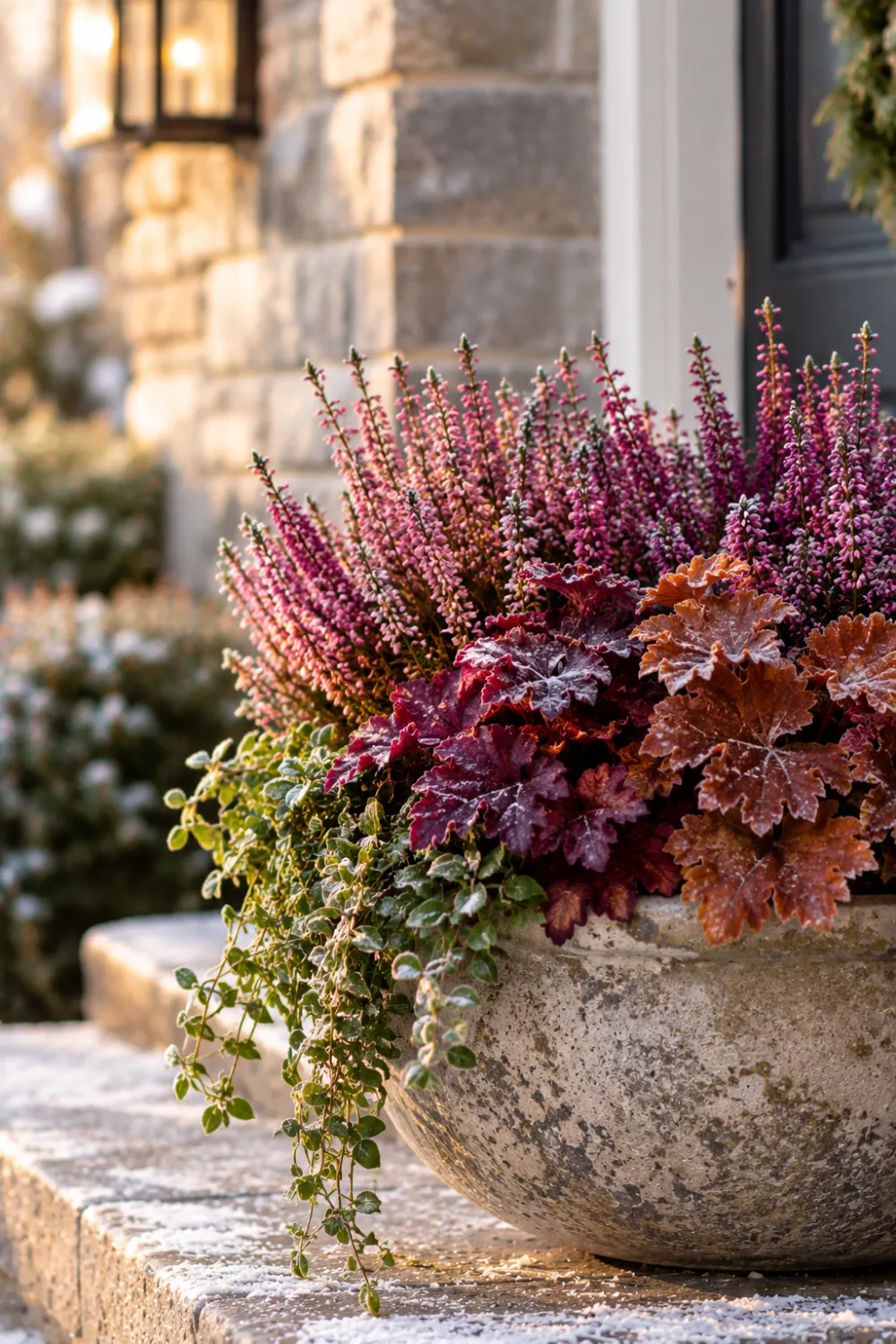
For a softer, textured look, combine winter heather with heuchera. Heather brings tiny pink or purple blooms, while heuchera offers burgundy and bronze leaves that hold their color. Plant them together in a wide, shallow pot, and add a trailing vine over the edge. Both handle chill well. Check that the soil drains well, so roots don’t sit in icy water.
15. Faux Greenery Mix
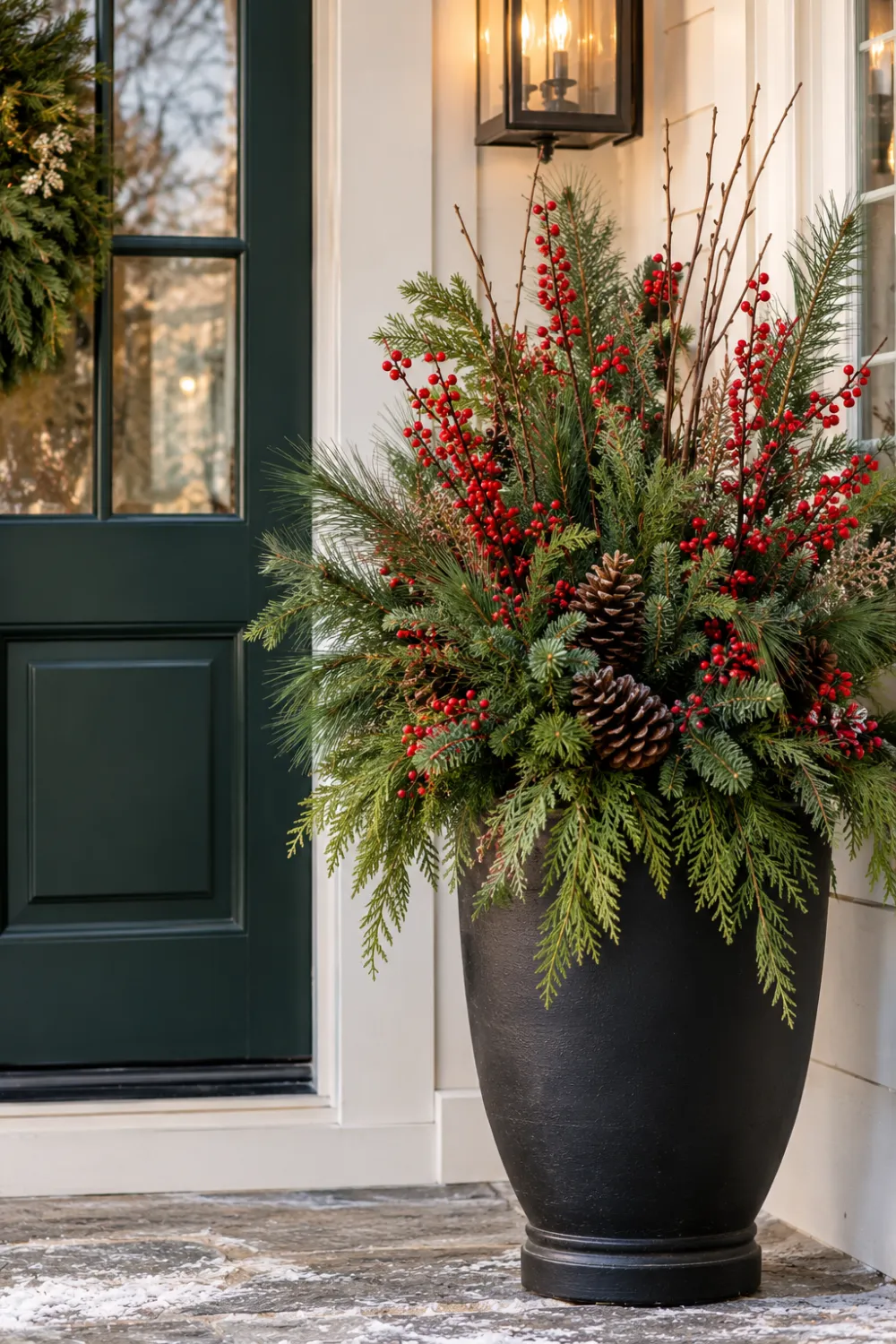
Some porches are shaded, windy, or hard to water, and faux greenery solves that. Pick realistic pine, cedar, and berry stems, then mix lengths to avoid a stiff look. Weigh the pot down with stones or sand so it won’t tip. Tuck in real pinecones or twigs for a natural touch. Store the stems in a box, and you can reuse them each year.
Conclusion
The best outdoor winter planters front porches can have are the ones that fit your life. Short on time? Go with spruce tips or faux greenery. Want color? Try pansies or red twigs. Start with one pair of pots, then add pieces as you go. A warm, welcoming porch makes every cold walk to the door feel a little better.
Last Updated on October 30, 2026 by Anwer Rajib
