
As an Amazon Associate, I earn from qualifying purchases.
The best indoor grow lights for vegetables offer full-spectrum light, adjustable coverage, reliable timers, and suitable intensity.
Growing fresh vegetables at home sounds great until your seedlings become tall, thin, and weak. Maybe your kitchen window gets only a few hours of sunlight. Or perhaps cold winters and short days make it hard to keep your indoor garden growing. I understand why this can be frustrating. A good grow light can help solve that problem by giving plants extra light when natural sunlight falls short. Whether you want fresh lettuce, herbs, tomatoes, or healthy seedlings, the right setup can make indoor gardening much easier. I looked at five popular options and compared their designs, features, strengths, and limits to help you find the best indoor grow lights for vegetables.
Page Contents
Toggle🏆 Top 3 Products

Barrina 4FT Full Spectrum LED Grow Light Strips
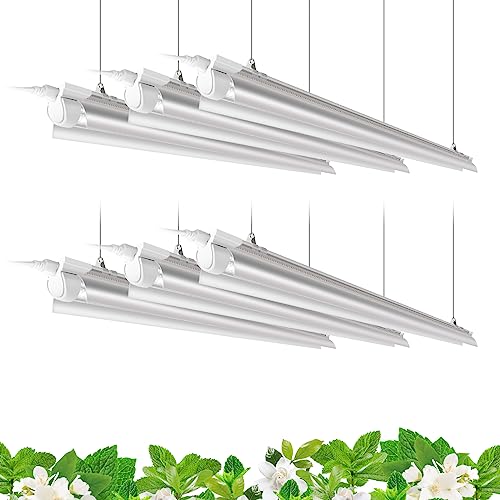
The six-strip design offers the most practical coverage for vegetable shelves, seed trays, and larger indoor growing spaces.
bseah Full Spectrum Adjustable Grow Light
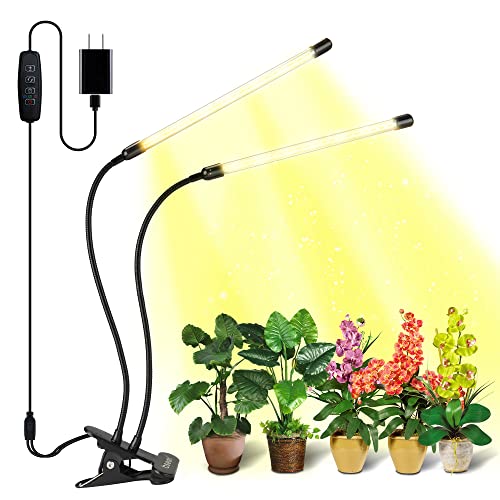
Its dimming levels and automatic timer make it a convenient choice for small indoor vegetable gardens.
LEOTER 80 LED Full Spectrum Grow Light
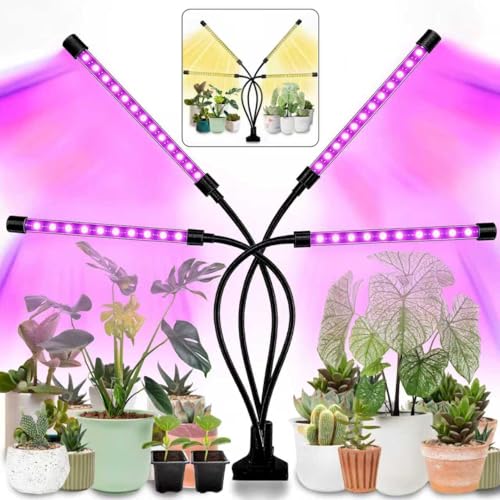
Its adjustable gooseneck, multiple light modes, and timer offer useful control for a modest indoor growing setup.
bseah Full Spectrum Indoor Grow Light
The bseah Grow Light Plant Lights for Indoor Plants is a compact option for people who want extra light without building a large growing station. It offers full-spectrum lighting and 10 dimmable levels. This gives you room to adjust the light as your plants grow or as their needs change. I like the idea of having several brightness settings because young seedlings and larger plants may need different light levels. Its simple design also makes it easier to add supplemental light to a small indoor garden.
One useful feature is its automatic timer, with 3, 9, and 12-hour settings. You can set a daily lighting period instead of switching the light on and off by hand. This can help keep a more regular routine when your workday gets busy. Still, the product title does not provide a PPFD reading, coverage area, or detailed power output. I would treat it as a small-space supplemental light rather than assume it can support a large group of fruiting vegetables on its own.
✅ Pros
- ✔ Full-spectrum light is suitable for a range of indoor plant growth stages.
- ✔ Ten dimming levels give you useful control over brightness.
- ✔ The 3, 9, and 12-hour timer settings help create a regular lighting schedule.
- ✔ Automatic on and off operation can reduce daily manual work.
- ✔ The compact design suits small indoor growing areas.
- ✔ Adjustable brightness can help when plants sit at different stages of growth.
- ✔ A practical option for herbs, leafy greens, and young vegetable seedlings.
- ✔ The timer can make indoor gardening easier for people with busy schedules.
⚠️ Cons
- ✖ The listed product details do not provide a PPFD reading for judging growing strength.
- ✖ The stated information does not confirm coverage for large vegetable trays.
- ✖ A small grow light may not provide enough intensity for mature fruiting plants.
- ✖ The timer offers only three preset durations.
- ✖ You may need additional lights as your indoor garden expands.
My Recommendation
I would consider the bseah grow light for a small indoor vegetable garden where convenience matters more than wide coverage. Its 10 brightness levels and automatic timer are useful features for beginners. You can use it to supplement natural window light for herbs, lettuce, spinach, and young vegetable plants. It may also help with seed starting when outdoor weather is still too cold. However, I would not choose it as my only light for a large tomato or pepper growing setup without checking its actual output and coverage. The best indoor grow lights for vegetables should match the size and growth needs of your plants. This model makes the most sense when you have a limited growing space and want simple controls.
| Best For | Why |
|---|---|
| Beginner gardeners | The timer and dimming controls make daily light management simple. |
| Small herb gardens | Its compact design suits a limited indoor growing area. |
| Seed starting | Adjustable brightness and scheduled lighting offer useful control for young plants. |
LEOTER 80 LED Full Spectrum Plant Light
The LEOTER Grow Light is designed for indoor plants that need extra light throughout the day. It has 80 LED lamps and offers both full-spectrum and red-blue spectrum options. This gives you more than one lighting mode to work with as you care for different plants. Its adjustable gooseneck is another useful feature. You can move the light head toward the plants instead of keeping every pot in one fixed position. For a small vegetable garden on a desk, shelf, or counter, that flexibility can be helpful.
The light also includes 10 dimming levels and a timer with 3, 9, and 12-hour settings. These controls can help you keep a steady routine without having to remember every lighting session. The three switch modes add another layer of flexibility. I would consider it for herbs, leafy greens, and seedlings that need extra light near a window. However, the number of LEDs alone does not tell you how much usable light reaches the leaves. Check the actual growing coverage and light output before relying on it for mature tomatoes, peppers, or other fruiting vegetables.
✅ Pros
- ✔ Uses 80 LED lamps for indoor plant lighting.
- ✔ Offers full-spectrum and red-blue spectrum lighting options.
- ✔ Ten brightness levels allow flexible light adjustment.
- ✔ The adjustable gooseneck helps direct light toward individual plants.
- ✔ Three switch modes provide additional control.
- ✔ The 3, 9, and 12-hour timer supports scheduled lighting.
- ✔ Works well as supplemental lighting for small plant collections.
- ✔ Can be useful for starting vegetable seeds indoors.
- ✔ The flexible head makes it easier to adjust the light as plants grow.
⚠️ Cons
- ✖ The listed specifications do not include a verified PPFD measurement.
- ✖ The product details do not establish its effective vegetable-growing coverage.
- ✖ The gooseneck design may be less suitable for lighting a wide shelf evenly.
- ✖ One small fixture may not provide enough light for several mature fruiting plants.
- ✖ The red-blue mode may look less natural in a living space than white full-spectrum light.
My Recommendation
I like the flexibility of the LEOTER light for a small indoor garden. The adjustable gooseneck lets you aim the light where it is needed, while the 10 dimming levels provide control over brightness. Its different spectrum modes and automatic timer are useful extras. I would place it on a shortlist if you grow a few pots of lettuce, basil, spinach, or other leafy vegetables. It can also help young seedlings when a sunny window does not provide enough light. For larger plants, I would check the manufacturer’s coverage and measured light output first. A flexible lamp is convenient, but good vegetable growth still depends on enough light reaching the whole plant canopy. Among the best indoor grow lights for vegetables, this is a sensible option for people who value easy positioning and simple controls.
| Best For | Why |
|---|---|
| Small indoor gardens | The adjustable gooseneck makes it easy to direct light toward a few pots. |
| Herb growers | The different light modes and dimming settings provide flexible control. |
| New gardeners | The automatic timer helps maintain a regular lighting schedule. |
Barrina 4FT Full Spectrum LED Grow Lights
The Barrina Plant Grow Lights are the most substantial option in this group for people who want to build an indoor vegetable growing area. This package includes six 4-foot T8 LED grow light strips. Each strip has a listed power rating of 42 watts, giving a stated combined rating of 252 watts. The product also lists 5000K daylight white lighting and full-spectrum output. That white light can make it easier to inspect leaf color and spot changes in plant health. The long strip design also suits growing shelves, seed-starting stations, and greenhouse setups.
What makes this option stand out is its multi-strip format. Rather than relying on one small lamp, you can arrange several strips over a growing area to spread light across more plants. This can be useful when starting lettuce, kale, spinach, and other vegetables in trays. The listed 1400W equivalent refers to an advertised comparison, not the actual electrical draw, which is listed as 252 watts for the six lights. I would still check the recommended mounting distance, coverage, and PPFD before setting up a large crop. Those details matter more than an equivalent-wattage claim when you want healthy vegetable growth.
✅ Pros
- ✔ Includes six separate 4-foot LED grow light strips.
- ✔ Each strip has a listed 42-watt rating.
- ✔ The combined listed power rating is 252 watts.
- ✔ 5000K daylight white light gives a natural-looking appearance.
- ✔ Full-spectrum lighting suits a range of plant growth stages.
- ✔ The long strips can cover a wider growing shelf than a single compact lamp.
- ✔ A useful layout for seed-starting trays and leafy vegetable production.
- ✔ Multiple strips allow flexible placement over a growing area.
- ✔ The six-pack format can support a more organized indoor growing station.
- ✔ Suitable for gardeners who want to expand beyond a few small pots.
⚠️ Cons
- ✖ The six-strip setup needs more installation space than a compact grow lamp.
- ✖ The listed combined rating of 252 watts may use more electricity than a single small light.
- ✖ The product title does not provide a PPFD map or measured coverage area.
- ✖ Installation may require planning and suitable mounting points.
- ✖ The long fixtures may be less convenient for moving between individual houseplants.
- ✖ You should not treat the advertised 1400W equivalent as actual power consumption.
My Recommendation
The Barrina six-pack is my first choice from this product list for a dedicated indoor vegetable growing space. Its six long strips offer a more practical layout for shelves and seed trays than a single small lamp. I also like the 5000K daylight white appearance because it makes it easier to inspect plants during daily care. You could use this setup for lettuce, spinach, kale, basil, and other compact crops. It may also work for starting tomatoes and peppers before moving them outdoors. However, the listed wattage and color temperature do not prove that every plant will receive enough light. I would check actual PPFD readings, mounting height, and coverage before using it for fruiting crops. If you want the best indoor grow lights for vegetables for a larger shelf setup, this product deserves the closest look.
| Best For | Why |
|---|---|
| Vegetable growing shelves | Six long strips can spread light across a larger shelf area. |
| Seed starting | The multi-strip layout suits trays with several rows of young plants. |
| Leafy greens | The daylight white full-spectrum design is a practical choice for indoor greens. |
Five-Head Adjustable Full Spectrum Grow Light

This five-head grow light offers a different approach to indoor plant lighting. Instead of using one long fixture, it has five separate light heads and an adjustable tripod stand. The stand can be adjusted from 15 to 60 inches, according to the product title. That gives you room to position the lights around different plant heights. The red, blue, and white full-spectrum lighting design also offers several color options. For someone who keeps vegetable pots in different spots around a room, the multi-head setup may be worth considering.
The automatic timer is another practical feature because it helps keep lighting sessions consistent. You can position the heads toward different plants rather than moving one lamp every time you water. I would consider this style for a small indoor collection of herbs, leafy greens, and young seedlings. The adjustable stand can also make it easier to work with plants as they get taller. Still, the product title does not give a verified PPFD value, electrical power rating, or exact growing coverage. I would not assume that five heads automatically mean strong light for mature tomatoes or peppers.
✅ Pros
- ✔ Five separate light heads provide flexible positioning.
- ✔ The adjustable tripod stand ranges from 15 to 60 inches.
- ✔ Red, blue, and white full-spectrum lighting options offer flexibility.
- ✔ The stand can accommodate plants of different heights.
- ✔ An automatic timer helps create a regular lighting schedule.
- ✔ Multiple heads can be aimed toward different pots.
- ✔ Useful for small indoor vegetable and herb collections.
- ✔ The tripod format does not require a permanent shelf installation.
- ✔ The adjustable height can help as plants grow.
⚠️ Cons
- ✖ The tripod takes up floor space around the plants.
- ✖ The listed details do not confirm the total light output.
- ✖ The five heads may not provide even coverage across a wide growing shelf.
- ✖ The product title does not list a measured PPFD value.
- ✖ The setup may be less convenient in tight rooms with limited floor space.
- ✖ Mature fruiting vegetables may need a stronger lighting system.
My Recommendation
I would choose this five-head model if you want flexibility when positioning lights around several small plants. Its adjustable tripod can be useful in a room where shelves are not available. You can aim the heads toward separate pots and adjust the stand as the plants grow. It may suit herbs, lettuce, and seedling collections, especially when you need supplemental light during darker months. I would be more cautious about using it as the only light for fruiting vegetables. Before buying, check the actual power rating, coverage, and PPFD at the distance where you plan to grow. The best indoor grow lights for vegetables should provide enough usable light across the full growing area, not just several adjustable light heads.
| Best For | Why |
|---|---|
| Flexible plant placement | The five heads can point toward plants in different positions. |
| Indoor herb collections | The adjustable tripod can sit near several small herb pots. |
| Temporary growing areas | The stand offers a flexible alternative to permanently mounted strip lights. |
Felibeaco Adjustable Stand Full Spectrum Grow Light

The Felibeaco Plant Grow Light is another stand-based option for indoor gardeners. Its adjustable stand ranges from 14 to 63 inches, giving you room to work with plants at different heights. The product title lists full-spectrum LED lighting, three modes, and an automatic on and off timer. This combination makes it a flexible choice for a living room, spare room, or indoor growing corner. I like the adjustable height because a fixed lamp can become less useful as plants grow taller. With a stand-based design, you can change the light position without rebuilding your growing space.
The three lighting modes give you some control over the type of light you use. Its automatic timer can also help maintain a consistent daily schedule. This may be useful for herbs, leafy vegetables, and young plants that need extra light during shorter days. However, the listed product details do not state a verified PPFD reading, total electrical wattage, or exact coverage area. These are important details when choosing a light for vegetables. I would see this model as a flexible supplemental light for a modest indoor setup rather than assume it can replace a dedicated high-output vegetable growing system.
✅ Pros
- ✔ The stand adjusts from 14 to 63 inches.
- ✔ Full-spectrum LED lighting suits general indoor plant care.
- ✔ Three light modes offer additional flexibility.
- ✔ The automatic timer supports a consistent lighting routine.
- ✔ The stand can be adjusted for plants at different heights.
- ✔ A floor-standing format works without permanent shelf mounting.
- ✔ Useful for small indoor vegetable gardens and herb pots.
- ✔ The adjustable design can accommodate growing plants.
- ✔ A practical option for rooms where a fixed light fixture is not convenient.
⚠️ Cons
- ✖ The stand needs floor space near the growing area.
- ✖ The listed specifications do not include a verified PPFD measurement.
- ✖ The exact vegetable-growing coverage is not stated in the product title.
- ✖ The total electrical power rating is not provided in the supplied details.
- ✖ A single stand may not light a large vegetable shelf evenly.
- ✖ The product may need support from natural sunlight or additional grow lights for demanding crops.
My Recommendation
The Felibeaco is worth considering if you prefer a floor-standing grow light with adjustable height. Its 14-to-63-inch range offers flexibility for plants of different sizes. The three modes and automatic timer also make it a convenient choice for people who want a simple indoor growing routine. I would use it as supplemental lighting for herbs, lettuce, spinach, and young vegetable plants. It could also work near a bright window where plants receive some natural sunlight. However, I would check its measured light output before using it for vegetables that flower and produce fruit indoors. A taller stand does not always mean stronger light at the leaves. When comparing the best indoor grow lights for vegetables, pay attention to coverage and intensity as well as height adjustment.
| Best For | Why |
|---|---|
| Floor-standing setups | The adjustable stand provides a flexible option without permanent mounting. |
| Mixed-height plants | The 14-to-63-inch height range can accommodate different plant sizes. |
| Supplemental lighting | Full-spectrum modes and a timer can support plants that also receive window light. |
Final Verdict: Which Should You Buy?
After comparing these five options, I would choose the Barrina 4FT Full Spectrum LED Grow Lights for a dedicated indoor vegetable shelf. Its six long strips offer a more useful layout for trays and several rows of leafy greens. The bseah is a good alternative for small gardens, while the LEOTER offers flexible positioning and useful timer settings. Before buying any model, check its actual PPFD, coverage, and power requirements.
The best indoor grow lights for vegetables can help you grow fresh greens, herbs, and healthy seedlings at home. Match the light to your available space and crop needs. With the right setup, you can enjoy a more reliable indoor vegetable garden throughout the year.
FAQs Of best indoor grow lights for vegetables
Q What are the best indoor grow lights for vegetables?
Q Can I grow vegetables indoors with LED grow lights?
Q How many hours should I leave grow lights on for vegetables?
Q Are full-spectrum grow lights better for vegetables?
Q How far should an indoor grow light be from vegetable plants?
Last Updated on November 7, 2026 by Saad Abdullah

I enjoy sharing simple gardening ideas, lawn care tips, and honest product reviews that help make outdoor work easier. From home gardening guides to helpful tools and lawn care advice, I write easy-to-follow content to help readers create a healthier and better-looking outdoor space without wasting time or money.