
As an Amazon Associate, I earn from qualifying purchases.
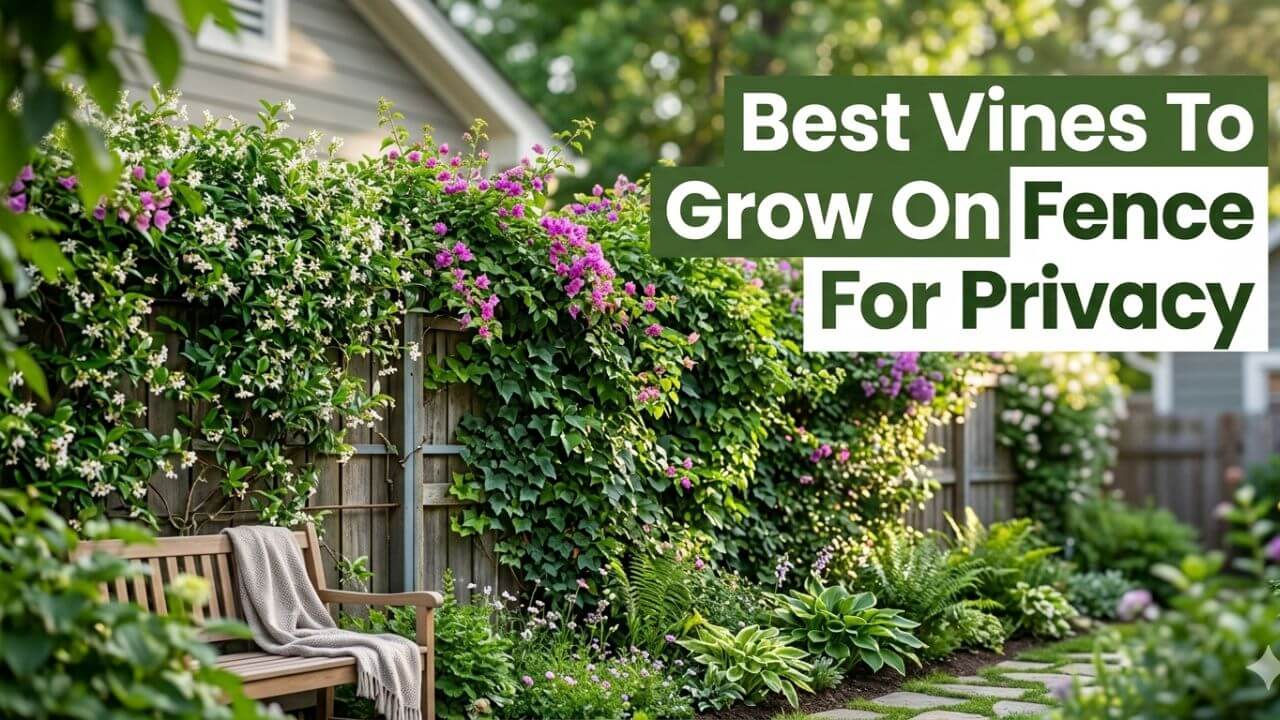
Best fence privacy vines are star jasmine, crossvine, honeysuckle, clematis, and Virginia creeper.
Looking for a living screen that grows fast, looks lush, and softens a hard fence? I’ve planted, trained, and pruned vines for clients and in my own yard for years. In this guide, I break down the best vines to grow on fence for privacy, how to pick the right one for your space, and the steps to get a dense green wall that lasts.

Why vines make the best living fence for privacy
Vines turn a plain fence into a green backdrop. They block views, dampen noise, and cool the yard. Many bloom and feed pollinators too.
You can choose evergreen for year-round cover or go with fast growers that fill in by summer. Some cling on their own. Others need ties or a trellis. Pick what matches your fence and your time.
With the right match, vines give steady cover at a low cost. They also add scent, birds, and color. That is why many gardeners ask about the best vines to grow on fence for privacy.
:max_bytes(150000):strip_icc()/climbing-plants-fences-pergolas-wisteria-lead-getty-0823-2ea8cec8c54e47d1978739f33571e9de.jpg)
Source: marthastewart.com
How to choose the right vine for your fence and climate
Start with your site and your fence. A smart match saves work later.
Key factors to weigh:
- Climate and USDA zone. Check cold hardiness and heat tolerance.
- Sun or shade. Full sun fuels blooms. Shade limits choices.
- Evergreen vs deciduous. Evergreen screens all year. Deciduous may thin in winter.
- Growth habit. Twining vines need wires. Vines with tendrils grab mesh. Clingers with pads or roots can mark surfaces.
- Fence material. Wood and chain-link fit most vines. Vinyl needs added wires. Stucco and mortar can stain with clinging types.
- Speed and size. Some explode to 30 feet. Others stay modest. Plan your space.
- Water and soil. Good drainage is key. Mulch helps roots stay cool and moist.
- Safety and invasiveness. Avoid banned plants in your state. Be mindful of pets and kids.
- Maintenance. Pruning times vary by species. Some bleed sap if cut at the wrong time.
- HOA and neighbor rules. Height and overhang can be a problem. Keep it tidy.
Tip from my installs: match vine type to fence style first. Twining vines on a slick vinyl fence will flop. Tendril vines on open mesh will fly. This small step makes the best vines to grow on fence for privacy much easier to manage.
The best vines to grow on fence for privacy: top picks by goal
Below are proven choices I have used in zones 5–10. I list what each does best, plus care notes and limits. This section highlights many of the best vines to grow on fence for privacy, across climates and fence types.
Evergreen workhorses for year-round cover
Star jasmine (Trachelospermum jasminoides)
- Zones 8–11. Sun to part shade.
- Evergreen, glossy leaves. Fragrant white blooms.
- Twining vine; needs wires on vinyl or smooth wood.
- Dense screen in 1–2 seasons with good sun and drip.
Carolina jessamine (Gelsemium sempervirens)
- Zones 7–10. Sun to light shade.
- Evergreen to semi-evergreen. Yellow spring flowers.
- Twining. Great on wood or wire. Low pest issues.
Crossvine (Bignonia capreolata)
- Zones 6–9. Sun to part shade.
- Semi-evergreen. Trumpet flowers in spring. Hummingbird magnet.
- Tendrils with pads. Grips wood and masonry. Fast and tough.
Evergreen clematis (Clematis armandii)
- Zones 7–9. Sun with cool roots.
- Evergreen, early white blooms with scent.
- Twining. Add a wire grid. Prune after bloom.
Creeping fig (Ficus pumila)
- Zones 9–11. Shade to part sun.
- Evergreen. Fine-textured. Clings hard.
- Can mark or pry surfaces. Best on walls meant for it, not vinyl.
Note: English ivy can be evergreen and fast. But it is invasive in many areas. It can damage mortar and trees. I avoid it in most jobs.
Flowering and fragrant screens
Climbing roses (many varieties)
- Zones vary. Full sun.
- Big color and scent. Thorny stems add security.
- Tie canes along fence for a solid wall. Winter thin in cold zones.
Honeysuckle, native trumpet (Lonicera sempervirens)
- Zones 4–9. Sun to part shade.
- Red or coral blooms. Hummingbirds love it.
- Twining. Less invasive than Japanese types.
Clematis hybrids (Clematis spp.)
- Zones 4–9. Sun, cool roots.
- Huge flowers in many colors.
- Pair with a partner vine or wire mesh. Prune by group.
Native and wildlife-friendly options
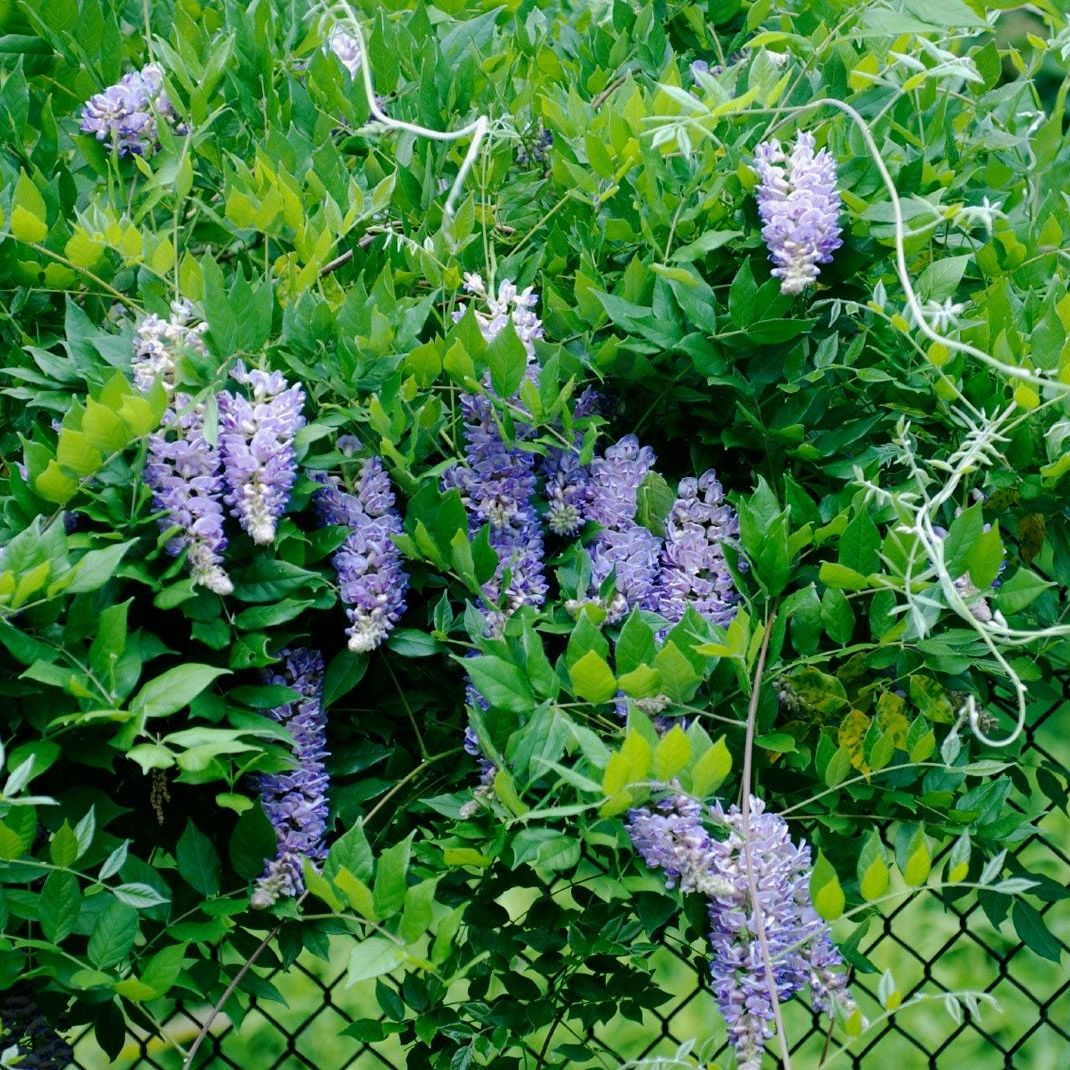
American wisteria (Wisteria frutescens)
- Zones 5–9. Sun.
- Later bloom than Asian types. Less invasive.
- Twining. Strong support needed. Prune to control size.
Virginia creeper (Parthenocissus quinquefolia)
- Zones 3–9. Sun to shade.
- Fast cover. Red fall color. Berries for birds.
- Adhesive pads. Deciduous, so winter screen is light.
Passionflower (Passiflora incarnata)
- Zones 6–10 with mulch. Sun.
- Exotic blooms. Host plant for Gulf fritillary.
- Spreads by runners. Good for natural zones.
Crossvine and native honeysuckle often give the fastest wildlife-friendly cover. For many yards, they are the best vines to grow on fence for privacy with pollinator value.
Fast annual screens for one-season privacy
Hyacinth bean (Lablab purpureus)
- Full sun. Purple pods and flowers.
- Twining. Covers a fence in one summer.
Scarlet runner bean (Phaseolus coccineus)
- Full sun. Red blooms, edible young pods.
- Great for a summer privacy wall and extra food.
Black-eyed Susan vine (Thunbergia alata)
- Sun to part shade. Orange, yellow, or white blooms.
- Loves warm weather. Easy to train on wire.
Cup-and-saucer vine (Cobaea scandens)
- Full sun. Big bell flowers.
- Fast in heat. Good for party-season privacy.
Annuals shine in rentals or new builds. You can sow now and get quick cover while perennials fill in. They pair well with the best vines to grow on fence for privacy that need a year to bulk up.
Shade-tolerant choices
Climbing hydrangea (Hydrangea anomala subsp. petiolaris)
- Zones 5–8. Shade to part shade.
- Slow to start. Then forms a bold, woody screen.
- Clings with aerial roots. Needs sturdy fence or wall.
Boston ivy (Parthenocissus tricuspidata)
- Zones 4–8. Sun to shade.
- Deciduous. Brilliant fall color. Fast cover.
- Clings with pads. Watch for stains on some surfaces.
Clematis armandii can also work in bright shade. In deep shade, growth slows. Combine with a lattice to help fill gaps.
In many mixed yards, I pair a fast annual like hyacinth bean with a young evergreen like star jasmine. The annual covers the first summer. By year two, the jasmine takes over. That blend creates one of the best vines to grow on fence for privacy in a short time.

Source: lifehacker.com
Planting, training, and pruning for a dense, private wall
Setup matters more than speed. Do these steps and you will see thick, even growth.
Planting steps
- Loosen soil 12–18 inches wide along the fence line.
- Mix in compost for drainage and steady feed.
- Plant 12–24 inches from the fence to keep roots cool.
- Space vines based on mature width. Crowding slows growth.
Support and training
- Add wires or a grid on vinyl or smooth wood.
- Start with soft ties. Train new shoots sideways first.
- Weave in long canes to fill gaps.
- Pinch tips in spring to force side shoots.
Water and feed
- Deep water 1–2 times a week in the first year.
- Mulch 2–3 inches. Keep mulch off stems.
- Feed a balanced slow-release in spring. Go light to avoid lanky growth.
Pruning for privacy
- Spring bloomers: prune after flowering.
- Summer bloomers: prune in late winter.
- Evergreen screens: light trim a few times each season to thicken.
- Remove dead or weak stems. Open the base for air flow.
Fence care and safety
- Keep vines off gutters and roof lines.
- Do not let clingers on painted or brittle vinyl.
- Add edge guards if vines could creep to a neighbor’s side.
What I learned the hard way
- I once overwatered star jasmine on clay soil. Growth stalled. After I added compost and cut back water, it took off.
- I skipped wires on a vinyl fence. The vine slid down. A simple 8-inch wire grid fixed it.
- I pruned clematis at the wrong time. No blooms that year. Now I label pruning groups at planting.
Follow these tips and even tough spots can host the best vines to grow on fence for privacy that look clean and full.
:strip_icc()/clematis-climbing-trellis-8c6f8c88-150967778d104724a5324ad08269c637.jpg)
Source: bhg.com
Real-world design recipes that work
Small patio, instant calm
- Zone 9. Full sun afternoon.
- Two star jasmine spaced 6 feet apart on a 6-foot fence.
- Add a 10-inch wire grid. Drip line at the base. Pinch tips monthly.
- Result: full cover in 18 months, sweet scent in late spring.
Side yard chill zone
- Zone 6. Part shade.
- Virginia creeper on chain-link for fast cover.
- Winter screen was thin. We added a cedar panel near the patio set.
- Result: four-season function. Birds nest each year.
Budget summer shield
- Zone 8. Full sun.
- Hyacinth bean and scarlet runner bean, direct-sown.
- Jute twine lattice on fence. Weekly deep water.
- Result: solid green wall by July. Fresh beans on the grill.
These simple plans show how the best vines to grow on fence for privacy can fit any yard, budget, or season.
:max_bytes(150000):strip_icc()/climbing-plants-fences-pergolas-clematis-getty-0823-a33a6777d39647568af7937444717b90.jpg)
Source: marthastewart.com
Quick answers to common searches
Here are short answers people ask when planning a living fence. They help you pick and plant the best vines to grow on fence for privacy fast.
What is the fastest vine for privacy on a fence?
Hyacinth bean and scarlet runner bean are the fastest annuals. For perennials, crossvine and star jasmine grow fast in warm zones.
What vines stay green all year?
Star jasmine, Carolina jessamine, evergreen clematis, and creeping fig can stay green in mild climates. Check your USDA zone to be sure.
Will vines damage my fence?
Clingers with pads or roots can stain or pry weak surfaces. Twining vines are safer on wood, metal, or vinyl with added wires.
Source: gardeningknowhow.com
Frequently Asked Questions of Best vines to grow on fence for privacy
How many vines do I need per fence panel?
Most medium vines need one plant every 4–8 feet. Faster types can stretch farther, but tight spacing fills sooner.
How long until I have full privacy?
Annuals cover in one season. Perennial evergreens may need 1–2 years with good sun, soil, and regular training.
Can I grow vines in pots against a fence?
Yes, but use large containers and drip irrigation. Choose compact vines, feed lightly, and secure a trellis to handle wind.
What is a safe vine for pets?
Native trumpet honeysuckle and crossvine are common picks. Always confirm plant safety for your pet before you plant.
Are wisteria vines good for privacy?
American wisteria can work on strong fences. It needs firm pruning and a sturdy support to handle the weight.
Conclusion
A living fence can be fast, lush, and low stress when you match plant to place. Choose a vine that fits your sun, fence, and time. Train early, water deep, and prune with a plan. In a season or two, you will have shade, scent, and a green wall that feels like home.
Pick one vine from this list and set it in the ground this weekend. Your future self will thank you. If this guide helped, share it with a friend, subscribe for more yard tips, or drop a comment with your fence goals.