
As an Amazon Associate, I earn from qualifying purchases.
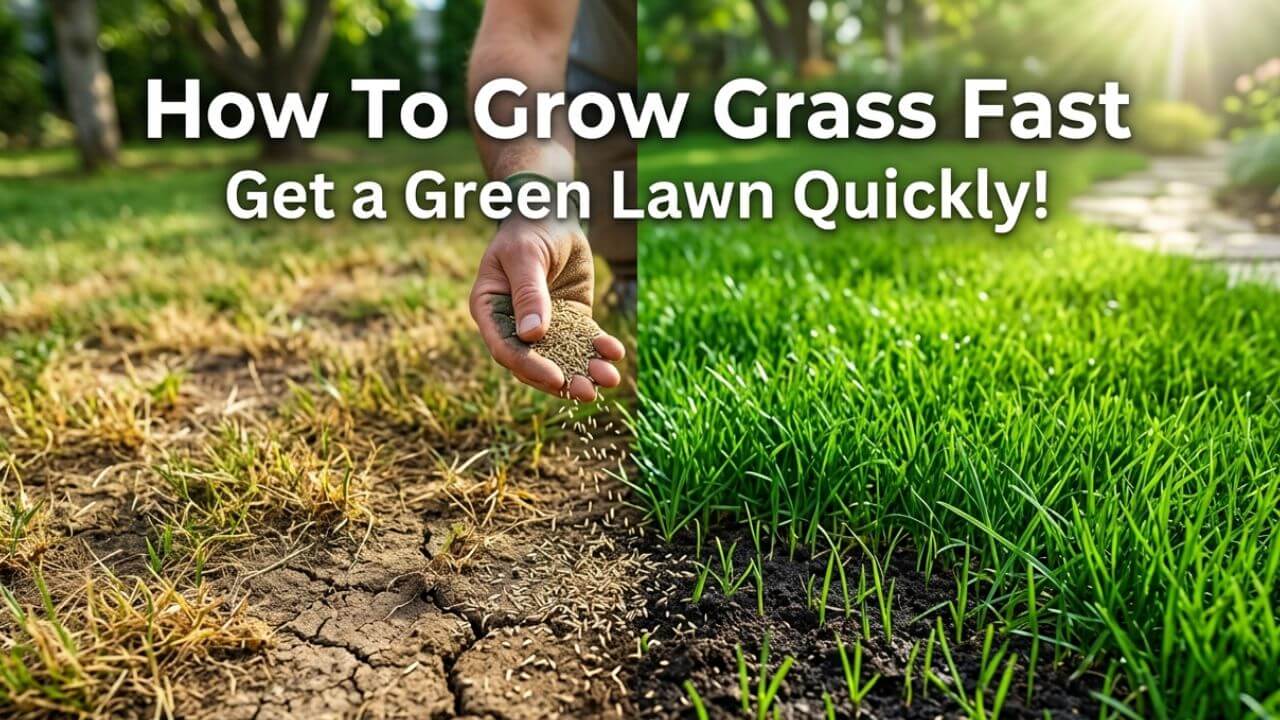
Rake, test, seed, water lightly, and feed—most lawns green up within 2–3 weeks.
If you want to know how to grow grass fast without wasting money or water, you’re in the right place. I’ve renovated many tired lawns, from small front yards to full fields. In this guide, I’ll show you what works, what fails, and how to grow grass fast with simple steps you can trust.

What Makes Grass Grow Fast: The Core Factors
Fast growth is not a mystery. It is a match between seed type, soil, temperature, water, and nutrients. When these parts line up, grass takes off.
- Seed type must match your climate and sun.
- Soil needs air, the right pH, and enough nutrients.
- Soil temperature drives germination speed.
- Water should be light and even, not deep or rare.
- Nitrogen helps new blades push growth fast.
Think of grass like a sprinter. It needs the right shoes (seed), a smooth track (soil), and a good warm-up (temperature). Add the right fuel (fertilizer) and a steady pace (watering), and you win. This is the heart of how to grow grass fast.
Quick timelines many yards see with good prep:
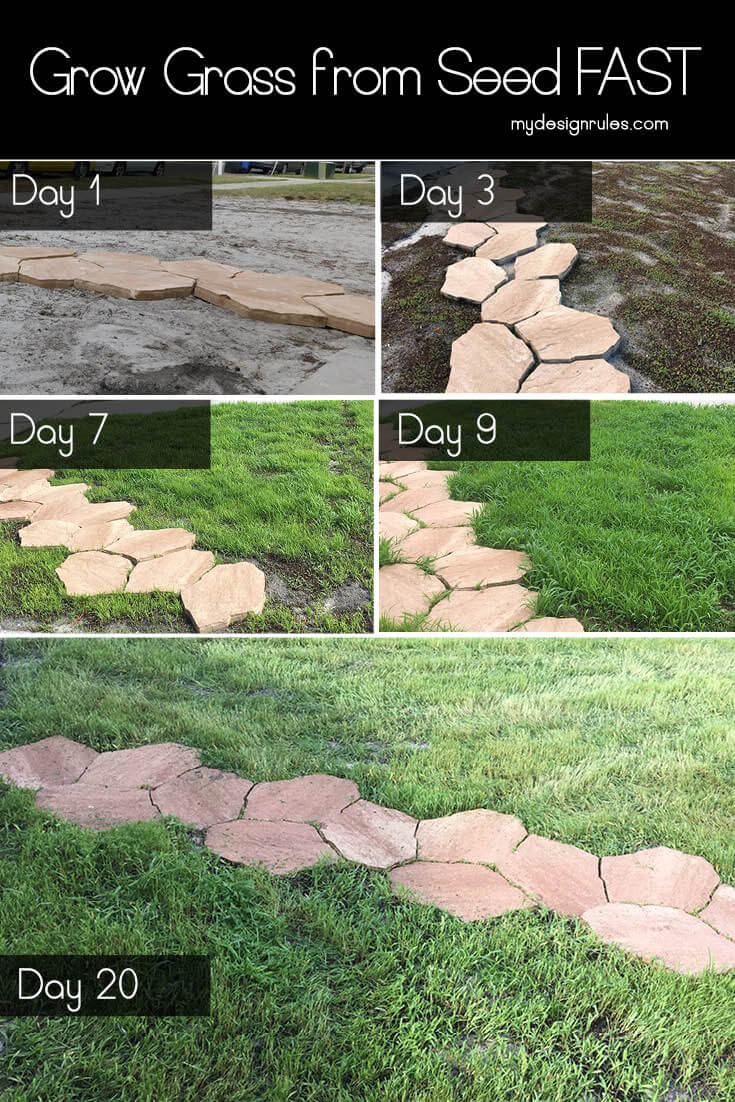
- Perennial ryegrass: 3–7 days to sprout in warm soil.
- Tall fescue: 7–14 days.
- Kentucky bluegrass: 10–21 days.
- Bermuda: 7–14 days in warm soil.
- Zoysia: 14–28 days, often slower.
PAA-style quick answers:
How warm should the soil be for fast germination?
Cool-season grass likes 50–65°F soil. Warm-season grass likes 65–75°F soil.
Does more seed mean faster grass?
No. Too much seed slows growth due to crowding. Follow the bag rate.
Choose the Right Grass for Your Yard
To learn how to grow grass fast, pick seed that fits your site.
- Cool-season (North): Kentucky bluegrass, tall fescue, perennial ryegrass.
- Warm-season (South): Bermuda, zoysia, St. Augustine (sod), centipede.
Match to sun and use:
- Full sun and high traffic: Tall fescue, perennial ryegrass, or Bermuda.
- Shade: Fine fescue mixes or shade-tolerant tall fescue. St. Augustine tolerates some shade when sodded.
- Want very fast green? Perennial ryegrass pops fast but may need overseeding later.
Pro tip from the field: I mix 80% tall fescue with 20% Kentucky bluegrass for a fast start and dense fill-in. It balances speed and long-term quality.
Soil Test and Prep for Speed
Faster growth starts below the surface.
- Test the soil pH and nutrients. Aim for pH 6.0–7.0.
- Rake out thatch and debris. You want seed-to-soil contact.
- Loosen the top 1–2 inches with a rake or cultivator.
- Level low spots. Fill with a 50/50 compost and sand or compost and topsoil.
- Add 0.25–0.5 inch of screened compost to boost organic matter.
- If the test shows low phosphorus and it is legal in your area, use a starter fertilizer. Many states restrict phosphorus unless a test shows need.
This prep is the core of how to grow grass fast. Good contact and air in the soil make roots sprint.

Seed, Sod, or Plugs: Fastest Options
Different paths fit different goals.
Seed
- Cheapest. Best for large areas.
- Perennial ryegrass is fastest to sprout. Fescue is close.
- Needs steady moisture.
Sod
- Instant cover and erosion control.
- Higher cost but great when you need a quick, clean look.
- Roots in 10–14 days with good care.
Plugs or sprigs (zoysia, Bermuda)
- Good for warm-season lawns.
- Slower fill but can be cost-effective.
- Works best in warm months.
If a client asks me how to grow grass fast for a party in two weeks, I suggest sod. If they want fast, affordable growth in fall or spring, I suggest a rye and fescue seed blend.
PAA-style quick answers:
Is sod always the fastest choice?
Yes for instant cover, but seed can match sod color in 2–3 weeks if the weather is ideal.
Can I mix seed and sod?
You can, but blend types that match. Do not seed over fresh sod for the first few weeks.

Step-by-Step Plan: 14-Day Fast-Germination Method
Follow this plan if you want to know how to grow grass fast with seed.
- Mow and clear
- Mow low. Bag clippings. Remove leaves and sticks.
- Loosen and level
- Rake hard. Break crust. Level humps and dips.
- Test and feed
- Use a home test for pH. Apply a starter fertilizer per label.
- Spread seed
- Follow the bag rate. Use a spreader for even coverage.
- Improve contact
- Rake very light. The seed should touch soil, not sit on top.
- Roll with a lawn roller or walk on a board to press seed in.
- Mulch thin
- Use clean straw or a seed mulch to hold moisture. Aim for 30–50% soil cover.
- Water right
- Mist 2–4 times a day to keep the top 0.5 inch damp.
- Do not flood. Water should not pool.
- Watch and adjust
- When 50% has sprouted, ease to 1–2 light waterings per day.
- At first mow height, shift to deeper, less frequent watering.
- First mow
- Mow when blades reach 3–4 inches. Cut to 3 inches for cool-season, 2 inches for Bermuda. Keep blades sharp.
- Feed again
- Apply 0.5–0.75 lb nitrogen per 1,000 sq ft at 3–4 weeks if growth is pale and slow. Use a starter or a slow-release N.
I have used this exact plan to take a patchy front yard to a green, even lawn in 16 days in early fall. Timing and moisture made the difference.

Watering Plan for Fast Growth Without Waste
Water can make or break how to grow grass fast. New seeds need light, even moisture.
- Days 1–7: Mist 2–4 times daily. Keep the top layer moist, not soggy.
- Days 8–14: Water once or twice daily, a bit deeper.
- After first mow: Water 2–3 times per week, 0.5–0.75 inch each time.
- Use a tuna can or rain gauge to track inches.
- Adjust for rain, wind, and heat.
Tip: Early morning is best. Midday heat wastes water. Night watering can invite disease.
Fertilizer and Amendments That Speed Results
Feeding right is key to how to grow grass fast, but be safe and legal.
- Starter fertilizer: Often 0.5–1.0 lb N per 1,000 sq ft at seeding.
- Phosphorus: Only if a soil test says you need it and it is allowed.
- Potassium: Helps roots and stress tolerance.
- Slow-release nitrogen: Steady growth with fewer burns.
- Iron: Deepens green without pushing soft growth.
Organic options work too:
- Compost topdressing at 0.25–0.5 inch.
- Organic fertilizers with feather meal, bone meal, or sulfate of potash.
- Humic substances can help soil structure.
Evidence-backed note: New seedlings rely on phosphorus near the seed. If soil P is low, a starter with P helps early roots grow faster. If soil P is fine, extra P does not help.

Mowing, Foot Traffic, and Care in the First 8 Weeks
Treat your new lawn like a new sidewalk. Gentle steps only at first.
- First mow: When grass hits 3–4 inches. Do not remove more than one-third of the blade.
- Keep the mower blade sharp. Dull blades tear and slow growth.
- Limit traffic for 3–4 weeks. Use planks if you must cross.
- Remove leaves fast. Shade slows young grass.
- At 4–6 weeks, feed light if color fades.
This care window is often skipped. If you want how to grow grass fast to work, protect your early gains.

Overseeding and Bare Spot Repair
Bare spots slow your full-lawn look. Fill them fast.
- Rake and loosen the top inch.
- Mix seed with a little compost or peat.
- Press in, water light and often, and cover with straw.
- For pet spots, flush with water first to dilute salts.
Pro tip: I keep a small tub with seed and compost ready. After the mail run, I spot-fix. Ten minutes a week keeps a lawn full.
Best Seasonal Timing by Region
When you plant is as key as what you plant.
Cool-season regions
- Best: Early fall. Warm soil, cool air, fewer weeds.
- Second best: Early spring. Watch for late frost and weeds.
Warm-season regions
- Best: Late spring into early summer when soil is warm.
- For overseeding winter color: Ryegrass in fall.
If you must plant off-season, expect slower results and more care. It is still possible to learn how to grow grass fast, but timing gives you free speed.
Common Mistakes That Slow Growth
Avoid these and you are halfway there.
- Skipping the soil test.
- Using the wrong grass for your sun and climate.
- Burying seed too deep or leaving it dry.
- Watering heavy and rare instead of light and often at first.
- Over-seeding and crowding seedlings.
- Mowing too soon or too low.
- Feeding too much nitrogen in heat.
Tools and Supplies Checklist
Have these on hand before you start.
- Broadcast or drop spreader.
- Steel rake and leaf rake.
- Lawn roller or a flat board to press seed.
- Starter fertilizer matched to your soil test.
- Quality grass seed fit to your region.
- Clean straw or seed mulch.
- Hose, sprinkler, and a timer.
- Soil test kit and pH adjusters if needed.
- Sharp mower blade.
Real-World Case Study: My Weekend Lawn Rescue
A client needed a fast green-up for a backyard wedding in 18 days. Here is how we handled how to grow grass fast under pressure.
- Day 1: Scalped old weeds, raked hard, and topdressed with 0.25 inch compost.
- Seeded a 70% tall fescue and 30% perennial rye blend. Rolled it in.
- Used starter fertilizer at 0.75 lb N per 1,000 sq ft. No phosphorus needed per test.
- Misted 3–4 times daily. Skipped on rainy days.
- First sprouts at day 4. Full color by day 12. First mow at day 14.
- Light feed at day 15. Wedding went off with a lush green lawn.
Lesson learned: Keep it simple. Moisture control and seed-to-soil contact did the heavy lifting.
Frequently Asked Questions of How to Grow Grass Fast
How long does it take to grow grass from seed?
With ideal prep and weather, you can see a green cast in 7–10 days. Full cover often takes 3–6 weeks.
What is the fastest grass to grow from seed?
Perennial ryegrass sprouts the fastest in many regions. It is great for quick cover and early color.
Can I grow grass fast in shade?
Yes, with fine fescue or shade-tolerant tall fescue. Reduce traffic and water with care.
Do I need topsoil to grow grass fast?
Not always. You need loose, clean soil on top. Compost topdressing can beat poor topsoil for speed.
How often should I water new seed for fast growth?
Mist 2–4 times a day at first to keep the surface moist. Shift to deeper, less frequent watering after the first mow.
Conclusion
You now know how to grow grass fast the right way: match the seed to your site, prep the soil, water light and often at first, and feed with care. Small steps, done well, beat big fixes done late. Start this weekend and you can see green shoots in days, not months.
Ready to put it into action? Try the 14-day plan, track your results, and share your before-and-after. Subscribe for more lawn guides, or leave a comment with your location and goals for a custom plan.