As an Amazon Associate, I earn from qualifying purchases.
The best way to landscape around a large front yard tree is to create a broad, natural-looking garden bed with mulch, shade-loving plants, and a clear border. Work with the tree’s existing roots, canopy, and soil rather than trying to change them.
Across the United States, large trees are a familiar part of many front yards. A mature oak in a Texas neighborhood, a maple beside a New England home, or a magnolia near a Southern porch can give a house shade and a strong sense of place. Yet the ground beneath these trees can be hard to landscape. Deep shade, dry soil, exposed roots, and falling leaves can make ordinary flower beds difficult to maintain.
The good news is that a large tree can become the main feature of your front yard instead of a problem you need to hide. A simple mulch ring, a curved flower bed, a few shade-friendly plants, or a natural stone border can make the space look planned and inviting. The right design depends on the tree species, local climate, available light, and the condition of its roots.
Before choosing plants or adding hardscape, think about the tree’s health. Many tree roots grow close to the soil surface and spread well beyond the trunk. Heavy digging, thick soil layers, and compacted ground can cause lasting harm. A thoughtful design keeps the root zone intact while adding color, texture, and structure around it.
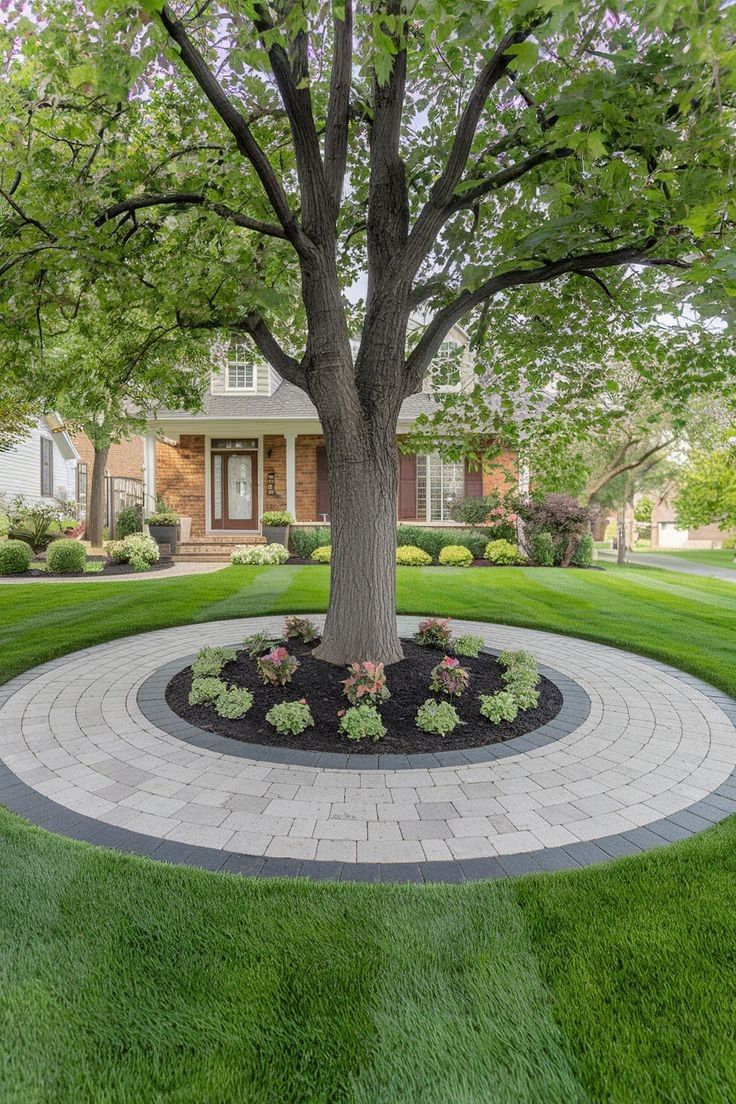
A wide mulch ring is one of the simplest ways to improve the look of a large front yard tree. It gives the trunk a clean setting and makes the space beneath the canopy look more organized. It can also reduce the need to mow close to surface roots.
Instead of making a tiny circle around the trunk, consider a broad bed that follows the tree’s natural canopy. A rounded or slightly irregular shape often looks more natural than a narrow, perfectly straight ring. The bed can blend into the lawn or connect with nearby garden borders.
Use shredded bark, wood chips, or another suitable organic mulch. A layer around 2 to 4 inches deep is a common recommendation for tree beds. Keep the mulch several inches away from the trunk so the root flare stays visible and the bark remains dry.
This design works well for mature trees that have shallow roots or areas where grass struggles to grow. It also gives you a clear base for adding small plants along the outer edge without disturbing the soil close to the trunk.
Source: pinterest.com
Choose a natural shape
Make the bed wide enough to cover the problem area beneath the tree. A curved outline can soften the look of a large trunk.
Use the right mulch depth
Spread about 2 to 4 inches of suitable mulch over the soil. Do not build a deep mound around the base.
Leave the trunk clear
Keep mulch away from the bark and visible root flare. A flat, donut-shaped layer is better than a volcano-shaped pile.
How to Make a Mulch Ring Look Finished
A mulch bed does not need an expensive border to look attractive. You can use a shallow natural edge, a clean cut between the mulch and lawn, or a few low plants around the outer curve. The main goal is to create a smooth transition between the tree and the rest of the yard.
Keep the outline simple
Avoid sharp corners and tight curves that are hard to mow around.
Refresh as needed
Check the mulch each season and add only enough material to maintain a suitable depth.
2. Build a Shade-Loving Flower Garden
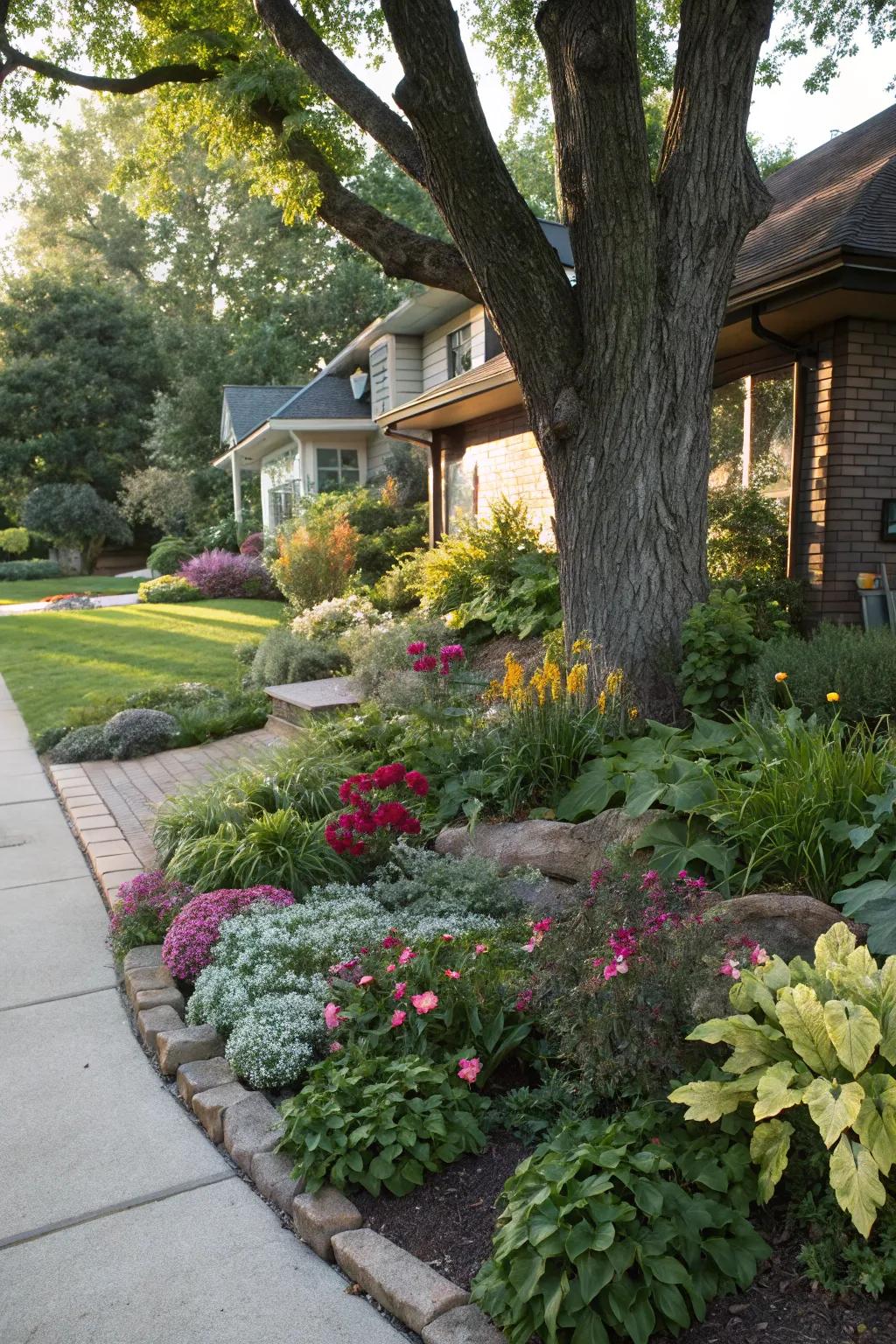
A shade garden can turn the empty ground beneath a large tree into a colorful front yard feature. It works best when you choose plants that suit the actual light and soil conditions instead of planting flowers simply because they look good at a garden center.
Start by watching the area during the day. Some trees create dense shade, while others allow filtered sunlight to reach the ground. A spot beneath a high, open canopy may support more flowering plants than the ground beneath a thick evergreen tree.
For suitable climates, hostas, ferns, woodland phlox, wild ginger, and barrenwort are possible choices. These plants offer different leaf shapes and heights, which can make a garden look interesting even when flowers are not in bloom. Check each plant’s mature size and water needs before buying it.
You do not need to fill every inch of soil with flowers. A few groups of plants with space between them can look more natural and are often easier to maintain. Leave room for the tree’s roots and avoid deep planting holes where major roots are present.
Source: pinterest.com
Hostas
Hostas offer broad leaves and several foliage colors. They suit many shaded garden settings, but slugs and dry soil can be issues.
Ferns
Ferns add soft texture and woodland character. Choose a variety that matches your local climate and soil moisture.
Woodland phlox
This plant can provide spring flowers and low growth in suitable regions. Check its light and moisture requirements.
Barrenwort
Barrenwort is a useful groundcover option for some shaded sites and can add attractive foliage.
Arrange Flowers in Small Groups
Place plants in loose groups rather than a straight row. Put taller foliage toward the back of the bed and lower plants near the lawn edge. Repeat a few plant types to create a connected look instead of mixing too many unrelated colors.
Use foliage as a base
Combine plants with different leaf shapes and shades of green for interest throughout the growing season.
Add seasonal color
Use suitable flowering plants to provide color without crowding the tree’s root zone.
3. Use a Curved Stone Border for a Clean Finish
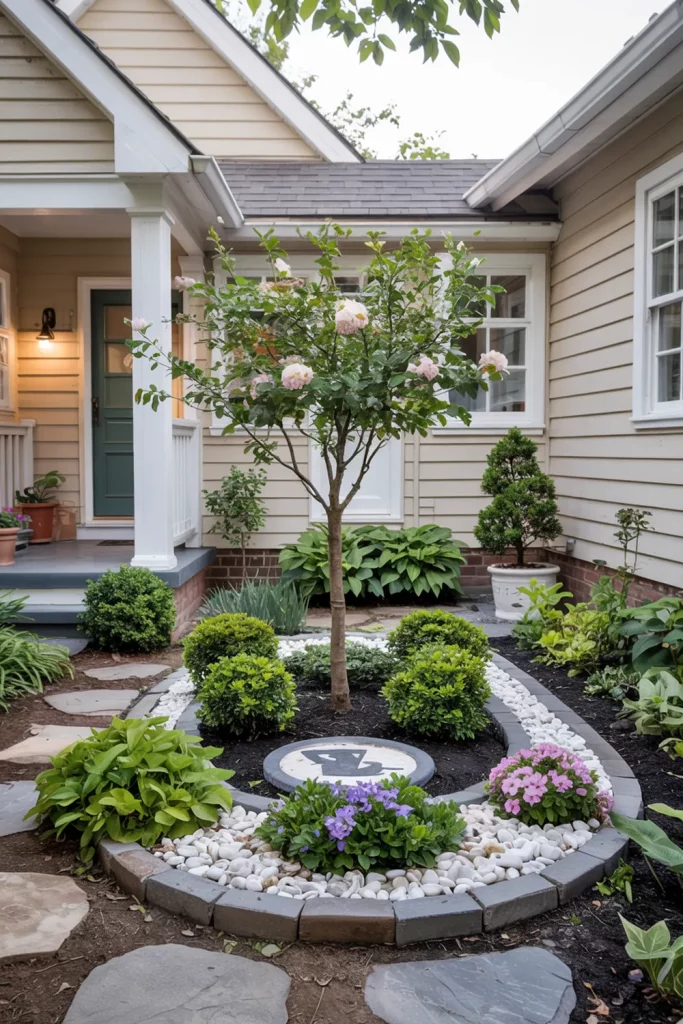
A curved stone border can give a large tree a defined place in the front yard. It works especially well when the tree sits in an open lawn and the rest of the landscape has a simple design. The stones create a visual edge without making the planting bed feel too formal.
Natural fieldstone, flat landscape rocks, and suitable edging stones can all work. Choose a material that matches the home’s exterior, nearby paths, or existing garden beds. For example, warm natural stone can complement a brick home, while simple gray stone may suit a more modern exterior.
Keep the border outside the trunk and major surface roots. Do not dig a deep trench or cut roots to create a perfect circle. If roots cross the proposed border, change the shape or use a shallow edging method that does not harm them.
A stone border is also useful for separating mulch from grass. However, a border should not become a wall that traps water against the trunk. Make sure the finished bed allows normal water movement and does not change the original soil level.
Source: garden.eco
Natural stone
Creates a relaxed look and works well with woodland-style planting.
Flat stone edging
Provides a low visual boundary without making the bed look bulky.
Matching materials
Repeating a stone color used near the front walk can help the whole yard feel connected.
Should You Build a Raised Stone Ring?
A raised stone ring may look attractive, but it is not a safe default around an established tree. Filling the inside with soil can cover important roots and reduce their access to oxygen. If the design needs a raised wall or a major change in grade, ask a qualified arborist to assess the tree and site before construction.
Prefer low edging
A shallow border is often easier to install without major excavation.
Respect existing roots
Move the proposed edge when roots appear instead of cutting them to fit the design.
4. Add Low-Growing Groundcover Beneath the Canopy
Groundcover can create a soft green carpet beneath a large tree where lawn grass does not grow well. It can also reduce the amount of exposed soil and make the area look more finished. The best choice depends on the amount of shade, soil moisture, local winter temperatures, and how much foot traffic the area receives.
Look for plants that stay low and spread without becoming invasive. Native groundcovers are worth considering because they may be better suited to local soil and climate conditions. Your state extension service or local native plant society can help you find suitable options.
Before planting, remember that even small plants need some space and water. Avoid digging large holes around visible roots. Small starter plants are often easier to fit into existing gaps than large nursery pots that require extensive excavation.
Groundcover is not always the right answer for every tree. Very dense shade, dry soil, and heavy root competition can limit plant growth. In those cases, a well-maintained mulch bed may be healthier and easier to manage.
Source: storage.googleapis.com
Choose a suitable spread
Select a plant that will not quickly invade the lawn, path, or neighboring beds.
Check moisture needs
Large trees can use much of the available soil moisture, so drought-tolerant choices may be more practical in dry shade.
Avoid invasive plants
Check local invasive plant lists before adding a fast-spreading groundcover.
Mix Groundcover With Mulch
A mixed design can look more natural than a bed filled entirely with one plant. Keep a mulch zone around the trunk and use small groups of groundcover farther out. This gives the tree a clear root area while adding a living border near the lawn.
Start small
Plant a few groups first and see how they respond to the shade and moisture before filling the entire bed.
Leave room to grow
Follow the plant’s mature spacing needs instead of placing every starter plant close together.
5. Create a Natural Woodland-Style Landscape
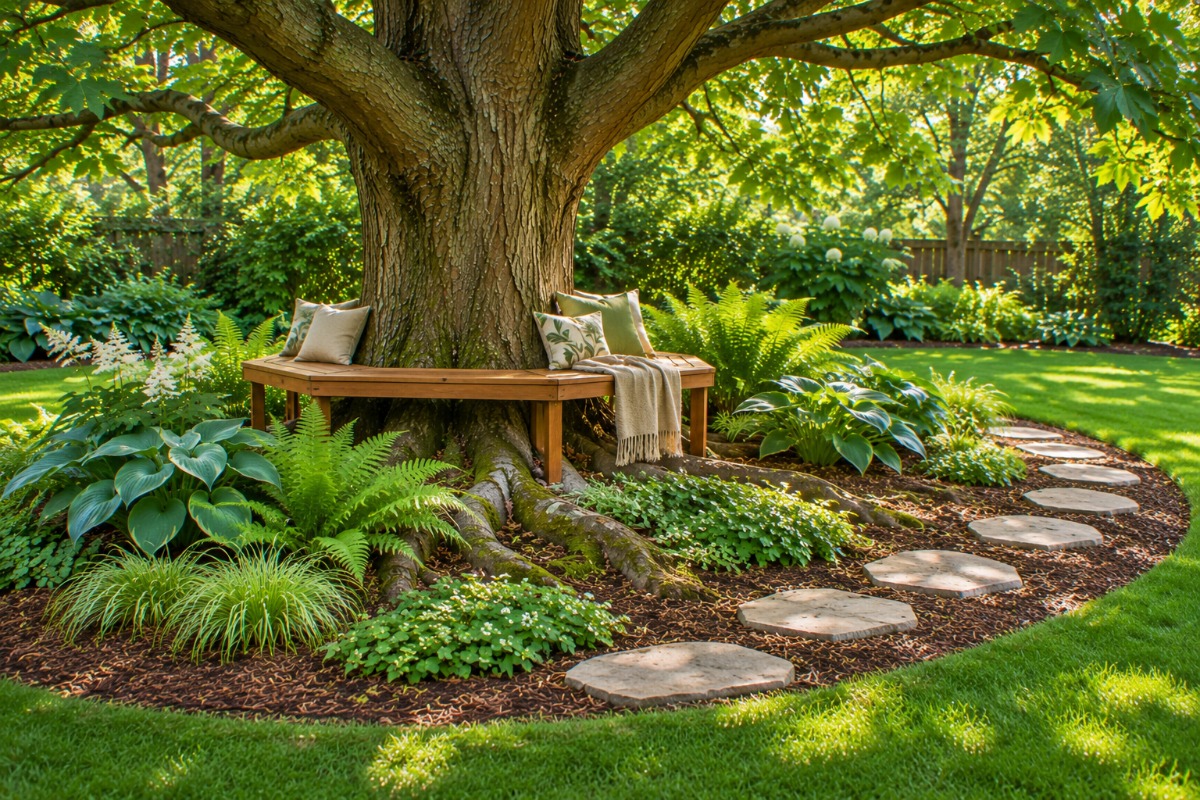
A woodland-style garden is a natural fit for a large mature tree. Instead of forcing a formal flower bed beneath the canopy, use layers of foliage, organic mulch, and a few carefully chosen plants to create a relaxed setting. This style works especially well with mature oaks, maples, and other trees that already have a strong woodland character.
Begin with the existing tree and keep its trunk visible. Add a broad mulch area, then place small shade-tolerant plants around the outer portion of the bed where light and moisture allow. A mix of leaf shapes can make the garden interesting without needing many bright flowers.
You can also allow suitable fallen leaves to remain in parts of the bed. Leaf litter can form a natural surface layer and help the landscape feel less artificial. Remove diseased plant material or excessive leaves when they create a practical problem, but avoid stripping the entire area bare every time leaves fall.
For a more complete look, use a few native woodland plants that suit your region. In the eastern United States, certain woodland perennials may be suitable, while western landscapes may need different native species adapted to local conditions. Always confirm the plant’s regional range before planting.
Source: top10decor.com
Use natural textures
Combine wood mulch, leaf litter, ferns, and low foliage for a soft woodland effect.
Repeat plant groups
Use the same plant in a few small clusters to create visual order.
Keep the design open
Avoid filling every gap. Open areas help the tree remain the clear focal point.
Add a Small Woodland Path
A short path along the outer edge of the tree bed can help connect the front walk with another part of the yard. Use a route that avoids large roots and does not require deep excavation. Keep the path narrow and simple so it does not compete with the tree.
Use a natural route
Follow the existing shape of the landscape instead of forcing a straight line through the root zone.
Choose permeable materials
Where appropriate, use a surface that allows water to pass through rather than sealing large areas with solid concrete.
6. Design a Layered Garden Around the Tree
Layered planting gives a large tree bed more depth and makes the front yard look carefully planned. The idea is to combine plants of different heights and shapes while keeping the main trunk and root flare visible. It is especially useful when the tree sits in a wide front lawn with enough room for a larger garden bed.
Start by treating the large tree as the tallest layer. Add medium-sized shade-tolerant shrubs farther from the trunk, then use smaller perennials or groundcovers near the outer edge. This creates a gradual transition from the tree to the lawn.
Choose shrubs with mature sizes that fit the space. A plant that looks small at the nursery may become wide and dense after a few years. Avoid shrubs that need frequent digging, heavy pruning, or large amounts of water if those needs conflict with the tree’s growing conditions.
For a balanced design, repeat a few plant types rather than choosing a different species for every section. A repeated pattern makes the bed feel calm and helps connect the tree with nearby foundation planting.
Source: florgeous.com
Upper layer
The existing tree canopy provides the main height, shade, and visual structure.
Middle layer
Suitable compact shrubs can add structure and seasonal interest where enough light and space are available.
Lower layer
Small perennials and groundcovers soften the edge and fill selected open areas.
Keep the Tree Larger Than the Supporting Plants
The large tree should remain the main feature. If nearby shrubs become too tall or dense, they can hide the trunk and make the front yard look crowded. Keep enough open space around the tree to show its shape and allow easy access for inspection and care.
Check mature width
Use the expected spread of each shrub when planning its location.
Avoid excessive density
Allow airflow and leave room for normal plant growth and maintenance.
7. Add a Small Seating Area Outside the Root Zone
A large front yard tree can provide a pleasant place to sit, especially during warm summer days. If the yard has enough room, a small seating area can turn an unused lawn corner into a useful outdoor feature. The key is to place it where it will not damage the tree or block normal access.
A simple bench outside the main root zone may be a better option than building a large circular deck around the trunk. You can face the bench toward the front garden, driveway, or street while keeping the tree as a natural backdrop.
Consider a permeable surface or an existing paved area rather than adding a large concrete slab beneath the canopy. Solid surfaces can reduce water and air movement into the soil. Heavy construction can also compact the root zone.
Think about comfort and safety before adding furniture. Keep the path clear, avoid placing seating beneath branches that may be damaged or unsafe, and arrange the area so visitors do not need to step over exposed roots.
Source: pinterest.com
Choose a simple bench
A small outdoor bench can create a useful resting spot without taking over the front yard.
Keep access open
Leave room for walking, mowing, and tree inspections.
Use suitable surfaces
Choose permeable materials where practical and avoid major excavation around roots.
When a Seating Area Is Not a Good Fit
Skip the seating area if the tree has low, damaged, or potentially hazardous branches. It may also be unsuitable in a very small yard where furniture would block the sidewalk or driveway. Have a qualified arborist inspect concerning branches before placing a permanent seating area beneath the canopy.
Check overhead branches
Do not place seating below branches that show signs of decay, cracks, or instability.
Protect the root zone
Avoid heavy foundations and repeated foot traffic over exposed roots.
8. Use a Simple Rock and Gravel Garden
A rock garden can give the area around a large tree a clean, low-key look. It may suit a front yard where grass struggles, especially when the homeowner prefers a simple landscape with fewer plants. However, rocks should be used with care because they do not replace the benefits of a healthy soil surface and organic mulch.
Start with a few natural stones placed outside the trunk area. Use them as visual accents rather than building a thick layer of rock over the entire root zone. Large stones should not be moved into place by heavy machinery beneath the canopy, since the weight and traffic can compact the soil.
If you want a gravel section, keep it small and make sure the site drains well. Gravel can become hot in sunny areas and may not be suitable for plants that need cool, moist soil. It can also make leaf cleanup more difficult beneath deciduous trees.
A mixed design often gives better results. Use organic mulch near the trunk and around sensitive roots, then add a few decorative stones near the outer edge of the bed. This keeps the natural character of the tree while adding a little structure.
Source: The Spruce
Use a few large accents
Place decorative stones in small groups rather than covering the entire bed with rock.
Check drainage
Avoid creating a low area where rainwater collects against the trunk.
Consider leaf cleanup
Think about how leaves will be removed from gravel before choosing this surface.
Combine Stone With Small Plants
A few low plants between suitable stones can soften a rock garden. Choose plants that tolerate the available light and moisture. Keep planting holes small and avoid moving or cutting large roots to fit the stones.
Repeat stone colors
Match the stone to nearby walkways or exterior materials.
Leave breathing room
Keep the trunk and root flare free from stones, soil piles, and decorative objects.
9. Connect the Tree Bed With the Rest of the Front Yard
A large tree looks best when its garden bed feels connected to the rest of the property. Rather than treating it as a separate circle in the middle of the lawn, use the same colors, curves, and materials in nearby landscape features. This can make the whole front yard feel like one planned space.
For example, a curved mulch bed can continue toward the front porch or meet a foundation planting bed. A small group of matching plants near the walkway can repeat the colors beneath the tree. If the home has brick steps or a stone path, use similar tones in the garden edging.
Keep the design balanced. A large tree already has a strong visual presence, so the surrounding plants and decorations should support it rather than compete with it. Too many colors, borders, and garden ornaments can make the space feel crowded.
Also consider how the yard looks throughout the year. Deciduous trees may have a full canopy in summer and a bare branch structure in winter. Evergreen shrubs, suitable groundcovers, and simple stone details can help maintain interest during different seasons.
Source: materialsix.com
Repeat materials
Use similar stone, brick, or mulch tones in different parts of the front yard.
Link garden beds
A curved bed can connect the tree area with foundation planting or the front walk.
Plan for every season
Combine plants with different seasonal features and keep the basic structure attractive during winter.
Keep the Tree as the Main Focal Point
Stand at the street and look at the entire front yard before adding more features. The tree should remain easy to see, and its shape should help frame the house. If the new planting hides the trunk or makes the entry feel crowded, reduce the number of plants or widen the open space around the tree.
Use fewer design elements
A simple mix of mulch, a few plants, and one border material often looks more balanced.
Check the view from the street
Make sure the tree bed improves the overall appearance of the home rather than drawing attention away from the entry.
How to Choose Plants and Materials for a Large Tree
The right landscaping choice depends on the conditions beneath the tree. Two large trees in the same neighborhood can have very different planting needs. One may allow filtered sunlight and hold moisture, while another may create dry, dense shade with several exposed roots.
Use the following comparison as a starting point. It is a planning guide, not a universal plant list. Check local growing conditions and plant requirements before making a final choice.
Dense shade
Consider a mulch bed or shade-tolerant foliage plants that suit the local climate.
Filtered shade
Consider suitable woodland perennials and plants that tolerate partial sun.
Dry soil
Use mulch and plants that can handle dry conditions once established. Do not assume all shade plants need the same amount of water.
Visible surface roots
Favor a mulch bed and avoid adding soil or building deep planting holes.
Small front yard
Use a simple curved bed and a limited number of compact plants.
Large front yard
Consider a wider woodland bed, layered planting, or a small seating area outside the sensitive root zone.
Match Plants to Your US Growing Region
The United States has many climate zones, so a plant that thrives beneath a tree in Maine may struggle in Arizona. Southern yards may need plants that tolerate heat and periods of dry weather. Northern yards may need plants that can handle cold winters and seasonal frost.
Homeowners in the Pacific Northwest may have different shade and moisture conditions from those in the dry Southwest. Coastal areas can also face salt exposure and sandy soil. Use your USDA plant hardiness zone as one planning tool, but also check local rainfall, soil type, shade, and summer heat.
Check plant hardiness
Choose plants that can survive the winter temperatures in your area.
Check summer tolerance
Make sure plants can handle local heat and the amount of water available beneath the tree.
Prefer suitable native plants
Look for locally appropriate native species that fit the site’s shade, soil, and moisture conditions.
How to Landscape Around a Large Tree Without Damaging It
Protecting the tree should come before installing the decorative features. Roots absorb water and nutrients, provide stability, and need access to air in the soil. Many roots grow close to the surface and may extend beyond the visible canopy.
Start by identifying the trunk flare, visible roots, and the general canopy spread. Avoid assuming that all roots sit close to the trunk. A large tree can have important roots well beyond the edge of its branches.
Do not add several inches of soil to level the area or hide exposed roots. Iowa State University Extension explains that most tree roots are in the upper 12 to 18 inches of soil and that adding 4 or more inches of soil around a tree may cause serious harm. Even a thin layer of soil over roots may provide only temporary relief from surface-root problems.
When working near the tree, use hand tools carefully and stop if you find large roots. Do not cut major roots to install edging, a path, or a new planting bed. Cutting important roots can affect tree health and stability. Ask a qualified arborist to assess the situation if root work cannot be avoided.
Avoid deep digging
Use small planting holes and change the planting layout when roots are in the way.
Protect the soil
Do not park vehicles, store heavy materials, or repeatedly move heavy equipment beneath the canopy.
Keep mulch away from bark
Maintain a clear area around the trunk and visible root flare.
Preserve the original grade
Avoid adding or removing soil beneath the canopy without professional guidance.
Check tree safety
Have an arborist inspect trees with major cracks, dead branches, decay, or signs of instability.
Signs That Your Landscaping Plan Needs to Change
A design may look attractive on paper but prove unsuitable once you begin working. Stop and review the plan if the planting holes repeatedly expose large roots, water collects near the trunk, or the proposed border requires major excavation. These are signs that the design needs to adapt to the existing tree rather than force the tree to fit the design.
Roots keep appearing
Use a surface mulch design instead of digging more planting holes.
Plants keep drying out
Check the soil and plant moisture needs. Choose more suitable plants or use a simpler mulch bed.
The soil becomes compacted
Stop heavy traffic and material storage in the area. Ask a qualified professional about appropriate soil care.
The tree shows signs of decline
Pause landscaping work and arrange a tree health assessment.
Common Landscaping Mistakes to Avoid Around Large Trees
Some front yard designs can harm a tree even when the finished garden looks attractive. Most problems come from changing the soil, damaging roots, or choosing plants that cannot survive beneath the canopy. Avoiding these mistakes can save time and protect a valuable mature tree.
Piling mulch against the trunk
A deep mound holds moisture against the bark and can hide the root flare. Keep mulch flat and several inches away from the trunk.
Covering exposed roots with soil
Adding soil can reduce oxygen access and damage roots. Use suitable mulch instead of trying to bury them.
Installing a deep flower bed
Deep excavation can cut important roots. Use smaller plants and shallow planting methods where appropriate.
Planting sun-loving flowers in dense shade
Flowers that need direct sunlight may grow poorly beneath a thick canopy. Match plants to the available light.
Using too many decorative rocks
Large quantities of rock can create a crowded appearance and make leaf cleanup difficult. Use stones as accents.
Building a raised bed around the trunk
A raised bed can bury the root flare and alter the soil level. Do not use one without a professional assessment.
Ignoring mature plant size
Shrubs and groundcovers can spread beyond the planned bed. Check their mature height and width before planting.
Using too much water
Plants beneath the tree may need water, but constant saturation can create problems. Match irrigation to the soil and the needs of both the tree and the new plants.
A Simple Step-by-Step Plan for Your Front Yard Tree
You do not need to complete the entire landscape in one weekend. A gradual approach makes it easier to see how the site responds and reduces the chance of unnecessary damage. Start with the tree and build the design around the conditions you find.
Step 1: Inspect the tree
Look at the trunk, root flare, visible roots, canopy, and nearby branches. If you notice major defects or possible hazards, contact a qualified arborist.
Step 2: Study the light
Observe the area at different times of day. Note where direct sun, filtered light, and deep shade occur.
Step 3: Check the soil
Look at drainage, moisture, and visible root competition. Avoid digging large holes just to test the soil.
Step 4: Draw the bed outline
Mark a simple curved shape that fits the tree and the front yard. Adjust it to avoid major surface roots.
Step 5: Choose the main material
Decide whether the design will use organic mulch, a few natural stones, or a combination of both.
Step 6: Select suitable plants
Choose a small group of shade-tolerant plants based on local climate, moisture, and mature size.
Step 7: Install carefully
Avoid deep excavation, root cutting, soil piling, and heavy equipment beneath the canopy.
Step 8: Monitor the garden
Check plant growth, soil moisture, mulch depth, drainage, and the tree’s condition during the first growing season.
Questions Worth Considering Before You Start
A few decisions can make the difference between a garden that looks good for one season and a landscape that remains useful for years. The following questions address practical needs that are often overlooked when planning a tree bed.
The research basis for these questions includes published university extension guidance on root protection and under-tree planting. The questions about long-term maintenance and design choices are inferred from the steps involved in the landscaping project, rather than verified search-demand measurements.
Can I landscape around a tree with exposed roots?
Reader stage: Before installation. Basis: Observed question in Iowa State University Extension’s published surface-root guidance. Reviewed coverage: Answered in its technical guidance, but decorative design choices need more explanation. Reader benefit: Helps homeowners choose mulch and avoid harmful soil additions. Priority: High. Placement: Tree protection section.
Which plants can survive beneath a large tree?
Reader stage: Plant selection. Basis: Inferred next need from the under-tree planting task. Reviewed coverage: UF/IFAS provides a planting scenario, while Iowa State lists suitable shade plants. Reader benefit: Encourages selection based on actual light and moisture. Priority: High. Placement: Plant selection section.
Should I use mulch or decorative rocks?
Reader stage: Material selection. Basis: Inferred next need from choosing a tree-bed surface. Reviewed coverage: Shallow in the reviewed root-care guidance, which focuses more on mulch than decorative appearance. Reader benefit: Explains the practical trade-offs of both materials. Priority: Medium. Placement: Rock and mulch sections.
Can I build a raised flower bed around a mature tree?
Reader stage: Before construction. Basis: Inferred next need from common tree-bed designs. Reviewed coverage: Addressed indirectly by university guidance on soil depth and grade changes. Reader benefit: Prevents potentially harmful construction. Priority: High. Placement: Tree protection section.
How can I keep the area attractive during winter?
Reader stage: Long-term maintenance. Basis: Inferred next need from seasonal landscape planning. Reviewed coverage: Not checked as a separate seasonal design question in the reviewed sources. Reader benefit: Encourages evergreen structure, natural textures, and year-round planning. Priority: Medium. Placement: Front yard design section.
Frequently Asked Questions
Q
What is the best thing to put around a large tree in the front yard?
Organic wood mulch is a practical choice for many large front yard trees. It helps create a neat bed, reduces the need to mow near surface roots, and helps retain soil moisture. Apply about 2 to 4 inches and keep it away from the trunk. You can add suitable shade plants around the outer edge if the conditions allow.
Q
Can I plant flowers around the base of a large tree?
Yes, but choose flowers and foliage plants that suit the available light, soil moisture, and local climate. Shade-tolerant perennials may work in suitable areas. Avoid deep planting holes and do not cut large roots to make room for flowers. If the tree has very dense shade or dry soil, mulch may be a better option.
Q
How wide should a mulch ring be around a large tree?
There is no single width that works for every tree. A wider mulch area can protect more of the soil beneath the canopy, especially where surface roots make mowing difficult. When possible, consider the area beneath the canopy rather than using a small ring around the trunk. Keep the mulch at a suitable depth and leave the root flare clear.
Q
Is it safe to cover exposed tree roots with mulch?
A shallow layer of suitable organic mulch is generally a better option than adding soil over exposed roots. Spread it evenly and avoid burying the trunk or root flare. Do not pile mulch deeply over large roots. If roots are damaged, unstable, or causing a serious landscape problem, ask an arborist for advice.
Q
Can I put landscape rocks around a large tree?
You can use a few landscape rocks as decorative accents, provided you do not damage roots or change the soil level. Avoid heavy equipment and deep digging beneath the canopy. Covering the entire root zone with thick rock is not always a good choice, especially where leaf cleanup, drainage, and soil care are concerns.
Q
What grows well under a large shade tree?
Depending on the region and site conditions, hostas, ferns, woodland phlox, wild ginger, and barrenwort may work. These are examples, not universal choices. Check local hardiness, moisture needs, mature size, and invasive plant guidance before buying them. Some trees create dry shade, so a plant that needs moist soil may still struggle.
Q
Should I remove grass from beneath a large tree?
You can replace struggling turf with a mulch bed or suitable groundcover. Grass often has trouble beneath dense shade and competes for available moisture. A broad mulch area can also reduce mower and trimmer damage near the trunk. Remove turf carefully and avoid cutting into major roots.
Q
Is a raised flower bed safe around an old tree?
A raised flower bed is not automatically safe. Adding soil around an established tree can reduce oxygen access to its roots and bury the root flare. A raised stone ring can also change drainage and soil conditions. Have a qualified arborist assess the design before changing the grade around a mature tree.
✦ Wrapping Up
Conclusion
A large tree can be the most attractive feature in your front yard when the surrounding landscape works with its natural shape. A broad mulch bed, shade-loving flowers, low groundcover, natural stones, or layered planting can all help create a neat and welcoming space. You can also connect the tree bed with nearby walkways and foundation gardens for a more complete design.
The most important part is to protect the tree while improving the ground around it. Avoid deep digging, thick soil additions, excessive mulch, and damage to major roots. Choose plants that fit your local climate and the actual conditions beneath the canopy. A simple design that respects the tree will often be easier to maintain than a crowded garden filled with too many features.
Start with the tree’s health, mark a suitable bed shape, and select one or two materials that fit your home. Add plants only where they have a reasonable chance to grow. With careful planning, your mature tree can provide shade, character, and lasting beauty while making the entire front yard feel more welcoming.
💡 Key Takeaway
Before buying plants or stones, inspect the tree and its exposed roots. Mark a broad, natural bed around the area, use a shallow layer of organic mulch, and add a few climate-appropriate shade plants without disturbing major roots.
I enjoy sharing simple gardening ideas, lawn care tips, and honest product reviews that help make outdoor work easier. From home gardening guides to helpful tools and lawn care advice, I write easy-to-follow content to help readers create a healthier and better-looking outdoor space without wasting time or money.