As an Amazon Associate, I earn from qualifying purchases.
The best way to landscape a steep slope without retaining walls is to keep the soil covered, guide water safely downhill, and use plants with roots that help hold the soil in place. Ground covers, native grasses, shrubs, mulch, and erosion-control blankets can create an attractive hillside without building a wall.
Across the United States, sloped yards can be a challenge in places ranging from the rainy Pacific Northwest to the clay soils of the Southeast and the dry hillsides of the Southwest. Water may rush down a bare bank, carry soil onto a driveway, or leave patches that are hard to mow. A good landscape plan works with the slope instead of trying to make the whole yard flat.
Start by checking how steep the bank is, where rainwater flows, how much sun it gets, and whether the soil already shows signs of slipping. Then choose plants and surface protection that suit your USDA growing zone and local conditions. A planted slope can look natural and need little care once established, but a bank with active movement or serious drainage problems may need a qualified professional before planting begins.
A successful hillside garden begins with a close look at the land. Walk around the top and bottom of the slope from safe, level ground, and note where water enters, where it flows, and where soil collects after rain. Look for bare patches, exposed roots, deep grooves, leaning trees, and areas that stay wet long after nearby ground has dried.
Do not dig into a steep bank just to test the soil if the ground seems loose or unstable. For a simple planting area, check the soil texture and drainage in a few safe spots. Sandy soil may drain fast, while clay can hold water and become slick; both can erode when runoff is not managed.
Estimate the slope before deciding on paths, lawn, or planting methods. A rise of 4 feet over a horizontal distance of 12 feet is a one-third grade, or about 33 percent. This is a steep bank for routine mowing and may need a planting-focused design rather than a lawn. The calculation describes the grade, not whether the hillside is structurally safe.
If the slope is changing shape, has cracks, bulges, flowing soil, or water emerging from the bank, pause the landscaping work. These signs may point to drainage or stability problems that plants alone cannot fix.
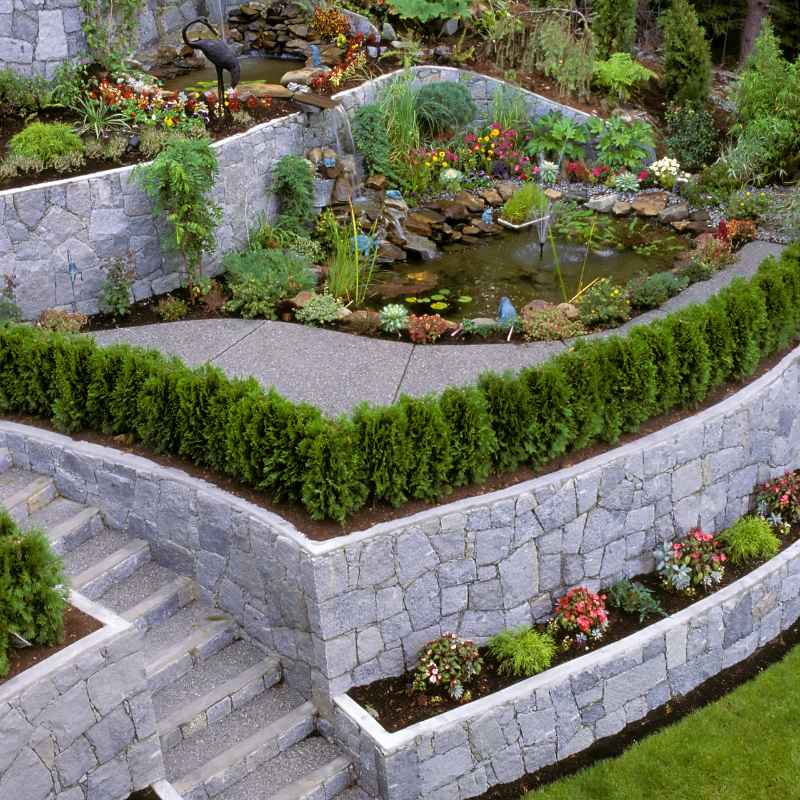
Source: id.pinterest.com
Sunlight
Record whether the area gets full sun, partial shade, or deep shade. Plants that thrive in a sunny, dry bank may fail beneath large trees.
Water flow
Note whether runoff comes from a roof, driveway, upper lawn, or neighboring land. The source matters as much as the slope itself.
Access
Decide whether the hillside must be walked on or can be maintained from the top and bottom. Avoid planning regular mowing on ground that is too steep to cross safely.
When a Slope Needs Professional Assessment
A steep slope is not automatically unstable, but some warning signs call for more than routine gardening. Seek a qualified geotechnical or civil engineer, or a landscape professional with relevant slope and drainage experience, if soil is slipping, a nearby foundation is affected, a large tree is leaning suddenly, or a drainage outlet is washing out the bank.
Before digging, check for underground utilities and local rules for grading, stormwater, and work near property lines. Avoid cutting into the base of a hillside or adding heavy soil and rock near its top without understanding the effect on stability.
Stop if the ground is moving
Fresh cracks, bulges, sudden muddy seepage, or repeated small slides should be assessed before planting or installing surface materials.
Protect nearby structures
Do not redirect runoff toward foundations, septic systems, roads, or neighboring properties.
2. Use Ground Covers to Hold the Soil and Fill Bare Areas
Ground covers are among the most useful choices for a slope because they spread across the soil and reduce the amount of bare ground exposed to rain. Their leaves soften the look of the bank, while their roots help bind soil near the surface. The best plant depends on the region, moisture, sun, and whether the area needs to support occasional foot traffic.
Plant ground covers in staggered groups rather than straight rows that leave long channels between plants. Space them according to their expected mature width and the slope’s erosion risk. Closer planting can help fill gaps sooner, but even dense plants need time to establish roots.
In the United States, suitable choices may include native sedges, low-growing native grasses, creeping phlox, or other regionally appropriate spreading plants. Some commonly sold ground covers can spread beyond garden beds or become invasive. Check local extension guidance and invasive-plant lists before choosing a fast-growing species.
Source: storage.googleapis.com
For sunny, dry slopes
Consider locally native, drought-tolerant ground covers and low grasses that can handle the site’s summer heat once established.
For partly shaded slopes
Look at shade-tolerant native sedges and other low plants suited to the soil moisture. Test whether tree roots make the area too dry for moisture-loving choices.
For moist slopes
Select plants that tolerate the site’s moisture level, but first check whether the wetness is caused by an unresolved drainage problem.
How to Plant Ground Covers on a Steep Bank
Remove invasive weeds by hand where practical, keeping soil disturbance to a minimum. Set each plant in a small pocket that fits its root ball, firm the soil gently around it, and water it in. Avoid creating a continuous trench across the slope, since a trench can collect or channel water.
Use temporary biodegradable erosion-control netting or a suitable erosion blanket where rain could wash soil away before roots develop. Follow the manufacturer’s installation instructions, including anchoring and ground contact. Do not use loose plastic sheeting as a substitute for erosion control because it can shed water and increase runoff.
Close the gaps
Use the plant’s mature spread to set a sensible spacing. If the soil is exposed and erosion risk is high, combine planting with temporary surface protection.
Water gently
Use a slow flow or suitable drip system so water can soak in instead of running down the face of the bank.
3. Plant Native Grasses and Perennials for a Natural Hillside
Native grasses and perennials can turn a difficult bank into a natural-looking garden with changing color and texture through the seasons. Many well-matched native plants tolerate local weather and support local wildlife. Their usefulness for erosion control still depends on the species, the depth and spread of its roots, and the condition of the soil.
Choose a mix of plants with different heights and bloom times instead of covering the whole slope with one species. Short grasses can fill broad areas, flowering perennials can add seasonal color, and a few sturdy shrubs can give the design structure. Leave enough space around each plant for its mature size and airflow.
For example, a sunny Midwestern slope might suit a mix of regionally native prairie grasses and flowering perennials. A dry Western hillside may need plants adapted to low rainfall, while a humid Southeastern bank may call for species that handle heat and summer rain. These are starting points, not universal plant lists; local native-plant guides can narrow the choices.
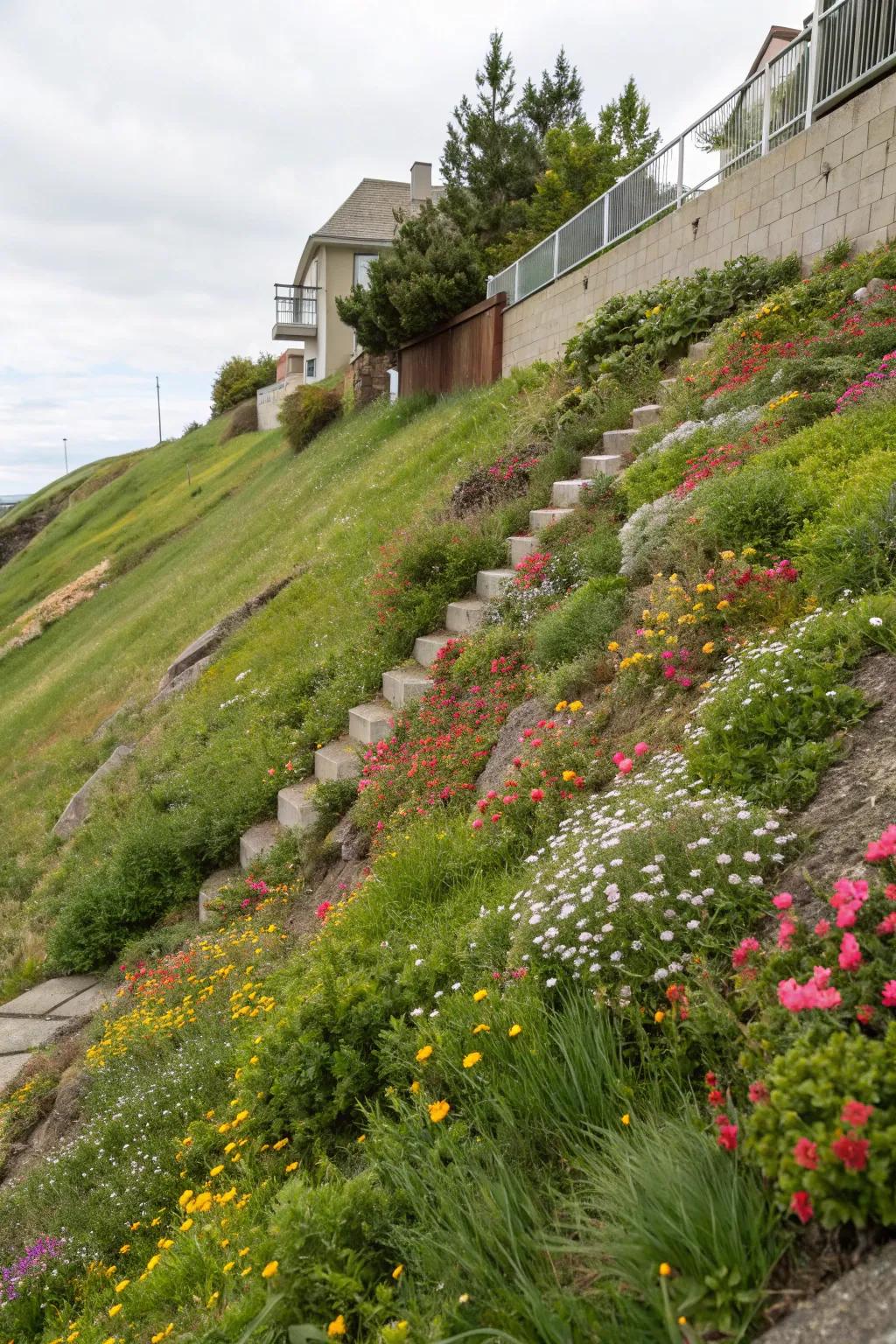
Source: brizscapes.com.au
Mix plant forms
Combine grasses, low flowering plants, and selected shrubs to create a varied cover that is easier to adapt to changing light and moisture.
Keep maintenance realistic
Choose plants that need little pruning, do not require frequent division, and can be reached safely for occasional care.
Check mature size
A shrub that looks small in a nursery pot may become wide enough to block a path or shade out neighboring plants.
Should You Use Ornamental Grasses?
Ornamental grasses can work well where the soil drains well and the plants suit the climate. Their foliage adds movement and texture, and established root systems may help protect surface soil. Pick species that stay upright enough for the space and will not spread beyond the intended planting area.
Avoid choosing a grass only because its label says drought-tolerant. Young plants still need water while roots establish, and some grasses become invasive in certain regions. Check the mature height, spread, winter appearance, and local status before planting.
Group by water needs
Place plants with similar moisture needs together so watering can be managed without overwatering dry-site species.
Plan seasonal care
Find out when each grass should be cut back, and leave safe access for that work.
4. Add Shrubs and Small Trees Where They Fit
Well-placed shrubs add height and structure to a hillside, while suitable trees can provide shade and help the garden blend into the wider landscape. A varied root system can support the soil at different depths, but no plant should be treated as a guaranteed fix for a failing slope. Species, root depth, soil, and drainage all affect the result.
Place shrubs in irregular groups that follow the natural shape of the bank. Use low shrubs near paths and viewing areas so they do not block sightlines, and reserve taller plants for locations where their mature size will not interfere with buildings, overhead wires, or utilities.
Do not plant large trees at the top or bottom of an unstable bank without advice. Tree weight, wind exposure, root conditions, and changes in soil moisture can matter on a steep site. Keep existing healthy vegetation where possible, since removing it can expose soil and alter the way water moves.
Source: mcleodlandscaping.com
Use local species
Choose shrubs and trees adapted to your USDA zone, local rainfall, soil type, and sun exposure. Native species can also support local birds and pollinators.
Respect mature size
Allow room for the full width and height of each plant instead of relying on frequent cutting to keep it in bounds.
Protect the root zone
Avoid deep tilling and heavy excavation around established trees. Both can damage roots and expose soil to erosion.
How to Arrange Plants on a Slope
Start with a few anchor shrubs, then fill the spaces between them with ground covers, grasses, and perennials. Use uneven groups and repeat selected plants to make the design feel connected rather than scattered. Leave open access points where inspection and maintenance will be needed.
Think about the view from the house, the street, and the lower part of the yard. A hillside may look full from above but appear bare from below, so check the design from more than one angle before buying all the plants.
Build visual layers
Place taller plants toward the back or upper area where suitable, medium plants through the center, and low ground covers along visible edges.
Avoid a rigid grid
Stagger plants to follow the natural landform and reduce the appearance of long bare rows.
5. Control Erosion with Mulch and Temporary Ground Protection
Mulch can help reduce the impact of raindrops, limit soil crusting, and hold moisture while new plants establish. On a steep slope, however, loose mulch can wash downhill if the material is too light or the surface is too steep. Use a suitable erosion-control approach rather than spreading a deep layer of loose bark and hoping it stays in place.
Shredded wood mulch may hold together better than very light chips, but performance depends on the slope, rainfall, and how the material is installed. In high-flow areas, plants combined with an erosion-control blanket or professionally designed surface protection may be more appropriate. Keep mulch away from tree trunks and plant crowns, and do not cover drainage inlets.
Avoid scraping the entire bank bare at once. Work in small areas when practical, keep existing plants that are not causing a problem, and cover disturbed soil promptly. If rain is forecast, delay work that would leave a large area exposed.
Source: artofit.org
Use erosion-control blankets
Biodegradable blankets made for slopes can help protect exposed soil until plants take hold. Select a product rated for the site and install it with the required overlap and anchors.
Keep soil covered
Combine mulch with living plants instead of relying on a permanent layer of loose material on a steep bank.
Avoid plastic sheets
Impermeable plastic can send water over the surface, trap moisture in unwanted places, and worsen runoff rather than solve erosion.
How to Tell Whether Erosion Control Is Working
After ordinary rain, look for fewer muddy streaks, less soil collecting at the foot of the slope, and no new channels cutting through planted areas. The surface should remain in place while plants grow and spread. Check again after heavy rain, but do so from a safe location.
If rills deepen, mulch repeatedly washes away, or water begins to emerge from the bank, do not keep adding surface material as the only response. Find the runoff source and seek help if the problem is more than minor surface erosion.
Watch the low point
Check whether soil or mulch is collecting at the bottom, blocking a drain, or spilling onto a walkway.
Inspect the anchors
After storms, check accessible erosion blankets for lifted edges, exposed soil, or failed anchors without climbing onto an unsafe slope.
6. Manage Rainwater Without Creating a New Problem
Water management is often the most important part of landscaping a steep slope without retaining walls. Plants can slow surface runoff and protect soil, but they cannot correct every drainage problem. Water from roofs, paved areas, upper lawns, and neighboring land may need a planned route that will not damage the hillside.
Begin by tracing where water enters and leaves the area during rain. Keep roof downspouts from discharging directly onto an eroding bank, and never direct runoff toward a foundation or a neighbor’s property. A stable outlet is essential if water must be carried through a pipe, swale, or drain.
A shallow vegetated swale may work on suitable ground to guide modest surface flow, but its shape, grade, soil, and outlet must fit the site. A swale that is too steep can turn into an erosion channel. If a large volume of water crosses the slope, ask a drainage professional to design the route rather than improvising a ditch.
Source: storage.googleapis.com
Keep water away from buildings
Make sure downspouts and surface drainage do not send water toward foundations, basement walls, or areas where it could pool.
Protect the outlet
Where water leaves a drain or swale, use an appropriate stable outlet so the discharge does not scour soil or damage another property.
Avoid random rock channels
Decorative stones alone do not guarantee safe drainage. Fast flow can still move soil beneath them or escape at the edges.
Can a Dry Creek Bed Replace a Retaining Wall?
A dry creek bed can be a useful landscape feature where it follows a suitable drainage route and the site needs a place for occasional runoff. It can combine rounded stones, larger edge rocks, and plants that tolerate changing moisture. It is not a substitute for slope stabilization when the bank is moving or when water flows too fast.
Before adding stones, consider their weight, how they will be placed, and whether digging the channel could weaken the bank. Do not create a creek bed that collects water beside a house or sends it onto a sidewalk or adjoining lot. For substantial runoff, have the drainage plan checked before installation.
Use it for a clear purpose
A dry creek bed should guide occasional water safely, not simply hide an active erosion problem.
Match the plants to the route
Use plants that suit the wetness near the channel and those that tolerate drier soil farther away.
7. Create a Natural Stone Garden Without Building a Wall
Natural stone can give a steep garden a finished look without forming a retaining wall. Use stone as a surface accent, a border around a planting pocket, or a small stepping area where the ground is stable. Keep the design low and open so the stones do not become an unsupported stack holding back soil.
Place stones with their broad faces resting securely on the ground. Do not pile heavy rocks on loose soil near the top of a bank, and avoid creating rows of stones that trap water behind them. A large rock may look permanent, but its stability depends on the ground beneath it and how it is set.
Combine a few well-placed rocks with grasses, ground covers, and low shrubs. This approach can make a slope look like a natural hillside rather than a bare construction site. Leave enough space to inspect the soil and reach plants without climbing over unstable stones.
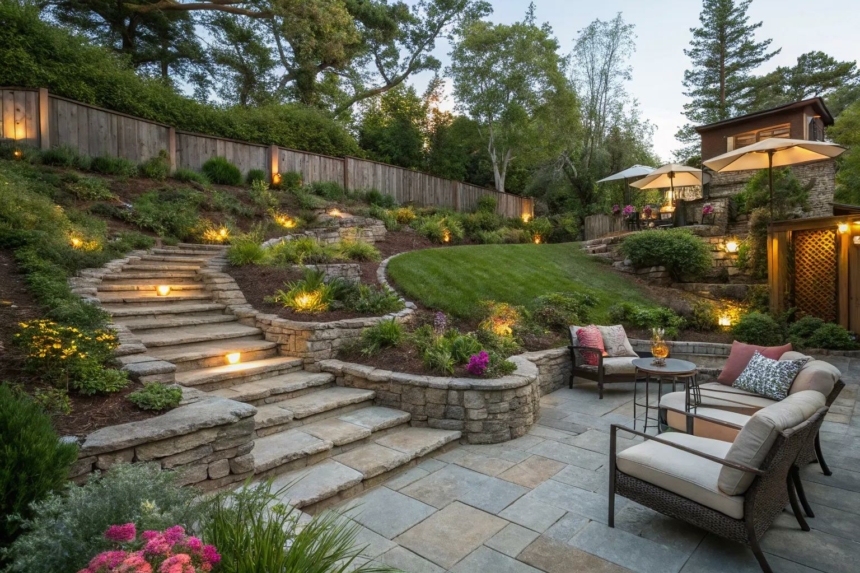
Source: brizscapes.com.au
Choose stable placements
Set stones on firm ground and avoid placing heavy pieces where erosion could undermine them.
Keep the layout simple
Use small clusters and natural spacing instead of a continuous stack that could act as an unsafe makeshift wall.
Leave room for plants
Use soil pockets suited to each plant, and avoid burying crowns or roots under decorative rock.
Are Stepping Stones Safe on a Steep Slope?
Stepping stones can provide access on a gentle, stable incline when they sit level and do not rock underfoot. On a steep bank, loose stones can shift, collect water, or become slippery with moss and leaves. Do not assume that placing stones in a line creates a safe stairway.
For regular access, steep paths, or routes used by children or older adults, consider a professionally planned path or stair system with stable footing and suitable drainage. If you cannot move safely across the slope now, avoid climbing it to install a path without proper access and support.
Test each stone
A stone should not wobble or tilt when used. Recheck it after heavy rain and freeze-thaw weather where applicable.
Keep the route clear
Remove leaves and loose material from walking areas so the surface remains easier to see and use.
8. Reduce Lawn and Choose a Design That Needs Less Care
A steep bank does not need to be lawn to look tidy. In fact, removing the need to mow a hard-to-reach hillside can be one of the most useful design changes. A planted slope with ground covers, grasses, shrubs, and a few open accents can reduce routine cutting while keeping soil protected.
If you want some grass, limit it to sections that are safe to mow and can be watered without runoff. Avoid using a standard push mower on an incline that feels difficult to cross on foot. Riding mowers can tip on slopes, and operating instructions differ by model, so follow the exact manufacturer’s slope limits and safety rules.
Design the bank around maintenance you can actually do. Plants that require frequent shearing, repeated division, or regular access may become a burden. A well-planned hillside should be easy to inspect from safe positions and should not depend on constant pruning to keep pathways open.
Source: mcleodlandscaping.com
Replace hard-to-mow patches
Use suitable ground covers or native grasses where lawn care is difficult and the plants can establish without frequent disturbance.
Group plants by needs
Place plants with similar sun and water requirements together to simplify irrigation and seasonal care.
Plan for fallen leaves
Keep paths, drains, and access points clear. Choose planting layouts that do not make every autumn cleanup a climb across the bank.
A Simple Low-Maintenance Slope Layout
For a hypothetical residential bank, use a broad planting zone of native ground covers, several repeated grass groups, and a few shrubs at stable points. Add mulch or a suitable erosion blanket while plants establish, and leave a clear inspection route at the bottom if the site allows. Keep drainage features visible and easy to maintain.
The goal is not to fill every inch with decorative objects. Repeated plant groups and broad sweeps of greenery can look calm and intentional while leaving fewer awkward corners to weed. Let the shape of the land guide the design instead of forcing a straight line across it.
Keep the palette limited
Choose a manageable set of plants that suit the same site conditions, then repeat them to create a unified look.
Make access part of the plan
Leave safe places to inspect drainage, remove invasive weeds, and replace plants that fail.
9. Choose Plants Based on Region, Sun, and Water
The right plants for a steep slope in one part of the United States may struggle in another. USDA hardiness zones describe average annual extreme minimum winter temperatures, but they do not tell the whole story. Summer heat, rainfall, soil type, humidity, wind, and exposure also affect plant success.
Use your zone as a starting point, then check local university extension guidance, native plant societies, and regional conservation resources. Confirm whether a plant is suited to your soil and whether it spreads aggressively. A plant that thrives in a moist woodland may fail on a sunny bank that dries out between storms.
The table below gives broad planning directions rather than a universal plant prescription. Local conditions can differ even within one yard, especially where a bank has both sunny and shaded areas or where water collects at its base.
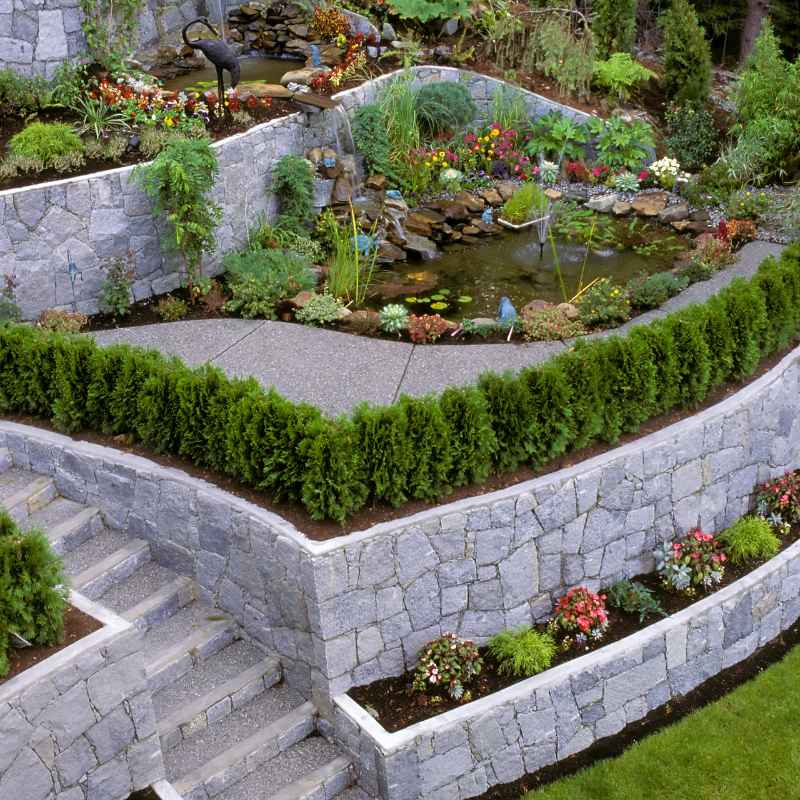
Source: id.pinterest.com
Cold and snowy regions
Look for plants that tolerate winter cold, freeze-thaw cycles, and spring runoff. Check whether the slope loses mulch or soil during snowmelt.
Hot and humid regions
Select plants that handle summer heat and local rainfall patterns, and watch for poor airflow or overly wet soil.
Dry Western regions
Prioritize plants adapted to local rainfall and water restrictions. Establishment watering may still be needed even for drought-tolerant plants.
A Regional Planning Table
Use this comparison to decide what to research locally before buying plants. It is not a guarantee that any one species will work in every state or site.
Cooler northern areas
Research cold-hardy native grasses, sedges, and low perennials that can tolerate local winter conditions and spring runoff.
Southeast and Gulf Coast
Research heat- and humidity-tolerant plants suited to local rainfall, clay soils where present, and the site’s sun exposure.
Southwest and arid areas
Research drought-adapted regional plants and ways to protect soil during sudden heavy rain without wasting irrigation water.
Pacific Northwest
Research plants for the site’s summer dryness or winter wetness, and pay special attention to how runoff moves during rainy months.
10. A Step-by-Step Plan for Landscaping Without a Retaining Wall
The safest approach is to work from assessment to drainage, then soil cover, planting, and follow-up care. Do not begin by digging terraces or moving large amounts of earth just to create a level planting bed. The aim is to protect the existing landform and improve its surface cover without making the slope less stable.
Source: insidegrown.com
Step 1: Map the site
Record the slope’s shape, sun exposure, existing plants, water sources, erosion marks, and safe access points.
Step 2: Address runoff
Identify where water enters and exits. Correct simple downspout issues safely, and get professional advice for concentrated or high-volume flow.
Step 3: Keep useful vegetation
Retain healthy plants that are not invasive or creating a hazard. Avoid stripping the whole bank at once.
Step 4: Prepare small planting pockets
Use limited, careful soil disturbance and plant at suitable depths. Avoid trenches that could carry water downhill.
Step 5: Add erosion protection
Use appropriate mulch or a slope-rated erosion-control blanket where bare soil needs temporary protection.
Step 6: Plant in staggered groups
Mix suitable ground covers, grasses, perennials, and shrubs according to their needs and mature size.
Step 7: Water and inspect
Water slowly during establishment, inspect after storms, replace failed plants, and correct new erosion before it grows.
What to Do If Plants Keep Dying
Repeated plant failure often means the site conditions do not match the plant, or a problem remains unresolved. Check whether the soil is too dry, stays saturated, or washes away around the roots. Also look for excessive shade, heat reflected from nearby pavement, poor planting depth, and competition from established tree roots.
Do not solve every failure by adding fertilizer or more water. Too much water can increase runoff or cause root problems, and fertilizer cannot correct an unstable bank. Try a small planting test with locally suitable species after the cause has been identified.
If leaves wilt in dry weather
Check soil moisture near the root zone and adjust slow watering if the soil is dry. Avoid creating runoff while watering.
If roots sit in wet soil
Confirm whether the plant tolerates the moisture level and investigate persistent drainage issues before replanting.
If soil washes away
Restore surface cover and identify the water source. Seek professional advice if erosion is deepening or the bank is moving.
11. Common Mistakes to Avoid
The most common mistake is treating a steep slope as a flat garden with a different angle. Water behaves differently on a bank, soil is easier to disturb, and ordinary lawn care can become unsafe. A good design accounts for these differences before the first plant goes in.
Another mistake is choosing plants based only on appearance or fast growth. Plants that spread aggressively may become hard to control, while shallow-rooted choices may not provide the surface cover the site needs. Check local suitability, mature size, and maintenance needs before committing to a large planting.
Source: storage.googleapis.com
Do not remove all plants at once
Clearing a whole bank can leave soil exposed to rain and reduce existing root support. Remove unwanted vegetation in stages when safe.
Do not make unplanned terraces
Cutting benches into a steep bank can change drainage and stability. Earthwork may need a qualified design even when no retaining wall is planned.
Do not pile soil at the top
Added soil increases the load on the upper slope and may bury existing roots or redirect runoff.
Do not ignore property drainage
Water should not be discharged in a way that harms a house, public walkway, road, or neighboring yard.
Do not assume plants fix every failure
Vegetation can protect surface soil, but it cannot replace engineered stabilization where a slope is sliding or structurally unsafe.
When a Retaining Wall-Free Design Is Not Enough
A wall-free landscape may be unsuitable where the bank is actively failing, the available space is too narrow to manage runoff, or a structure sits at risk. A steep slope may also need engineered drainage, soil reinforcement, or other stabilization even if a retaining wall is not the preferred look.
A qualified professional can assess whether planting and surface protection are enough or whether a more substantial solution is needed. This assessment does not commit you to a retaining wall; it helps establish which options are safe for the site.
Ask for a site-specific plan
Explain that you prefer no retaining walls and ask which planting, drainage, and stabilization methods are suitable under local conditions.
Check local requirements
Before grading, digging, or changing drainage, confirm applicable permits, utility locations, and stormwater rules.
Frequently Asked Questions
Q
What is the best ground cover for a steep slope?
There is no single best ground cover for every slope. Choose a plant that fits the local climate, soil, sunlight, and moisture, and check its mature spread and invasive status. Regionally native ground covers, sedges, and low grasses can be useful where they suit the site.
Q
How do you stop soil from washing down a steep slope?
Keep the soil covered with suitable plants, mulch that can stay in place, or a slope-rated erosion-control blanket while plants establish. Also find out where runoff starts and where it goes. If water cuts deep channels or the ground moves, surface cover alone may not solve the problem.
Q
Can you landscape a steep slope without digging terraces?
Yes. Many slopes can be planted in their existing shape using staggered ground covers, grasses, perennials, and shrubs. This limits soil disturbance and avoids the need to create level benches. The approach works only if drainage and slope stability are suitable.
Q
What is the lowest-maintenance way to landscape a hillside?
A mix of well-matched ground covers, native grasses, and selected shrubs is often easier to maintain than lawn on a difficult bank. Choose plants that suit the site and require little trimming, and plan access for inspections. New plantings still need care and watering while roots establish.
Q
Can mulch alone prevent erosion on a steep bank?
Not reliably. Loose mulch can move during heavy rain, especially on a steep or exposed slope. Combine suitable mulch with living plants and, where needed, a properly installed erosion-control blanket. If concentrated runoff crosses the bank, address the water source as well.
Q
When should I hire a professional to landscape a steep slope?
Seek professional help if you see fresh cracks, bulges, soil movement, deep erosion channels, persistent seepage, or damage near a building or driveway. Professional input is also wise before substantial grading, cutting into the slope, or routing large amounts of runoff. A site assessment can determine whether a wall-free planting design is suitable.
✦ Wrapping Up
Conclusion
You can landscape many steep slopes without retaining walls by working with the existing landform, protecting exposed soil, and choosing plants suited to the site. Ground covers help fill bare areas, native grasses and perennials add texture, and well-placed shrubs create structure. Mulch and erosion-control blankets can protect new plantings while they establish.
Drainage must remain part of the plan. Watch where rainwater enters and leaves, avoid unplanned digging, and do not rely on plants to correct a slope that is already moving. A simple, well-matched planting design can make a difficult hillside look natural and reduce the need for mowing, but safety and soil stability come first.
💡 Key Takeaway
Start by mapping sunlight, soil moisture, runoff, and erosion signs from safe ground. Then choose locally suitable plants, protect bare soil, and check the slope after rain. If the bank is moving or water is causing deep erosion, get a site-specific assessment before landscaping.
I enjoy sharing simple gardening ideas, lawn care tips, and honest product reviews that help make outdoor work easier. From home gardening guides to helpful tools and lawn care advice, I write easy-to-follow content to help readers create a healthier and better-looking outdoor space without wasting time or money.