
As an Amazon Associate, I earn from qualifying purchases.
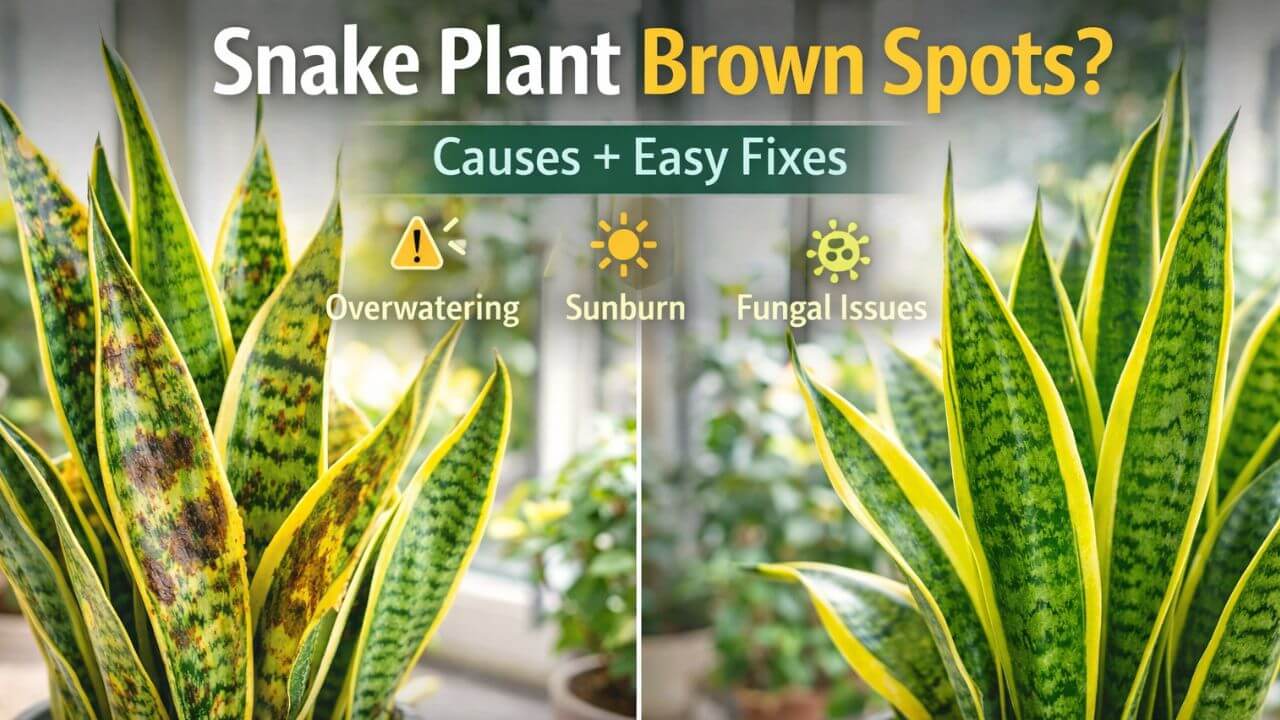
Brown spots on snake plants come from water stress, rot, sunburn, pests, or disease.
If you are seeing Snake Plant Brown Spots, you are not alone. I have treated hundreds of Sansevieria, and the fixes are clear once you know the cause. In this guide, I break down every reason for Snake Plant Brown Spots, how to diagnose each one in minutes, and the exact steps to fix and prevent them for good.

What Snake Plant Brown Spots Really Mean
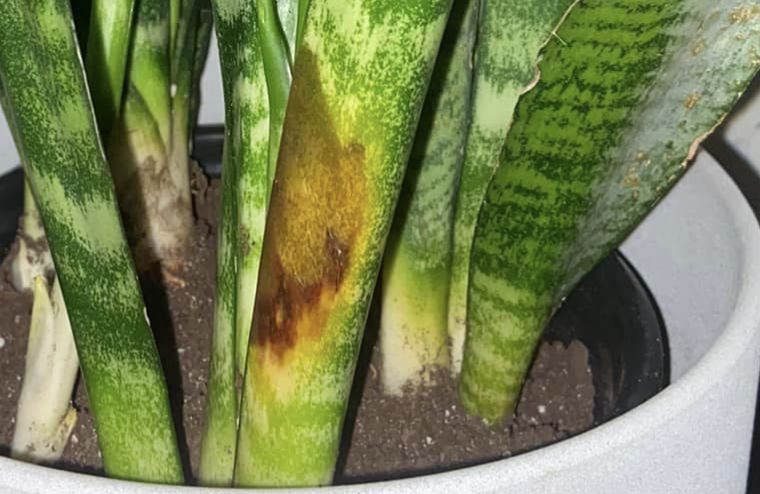
Snake Plant Brown Spots are warning signs. They can be soft and wet from rot, or dry and crisp from heat or sun. They may start small and spread, or stay as tiny freckles.
Look for these quick visual cues:
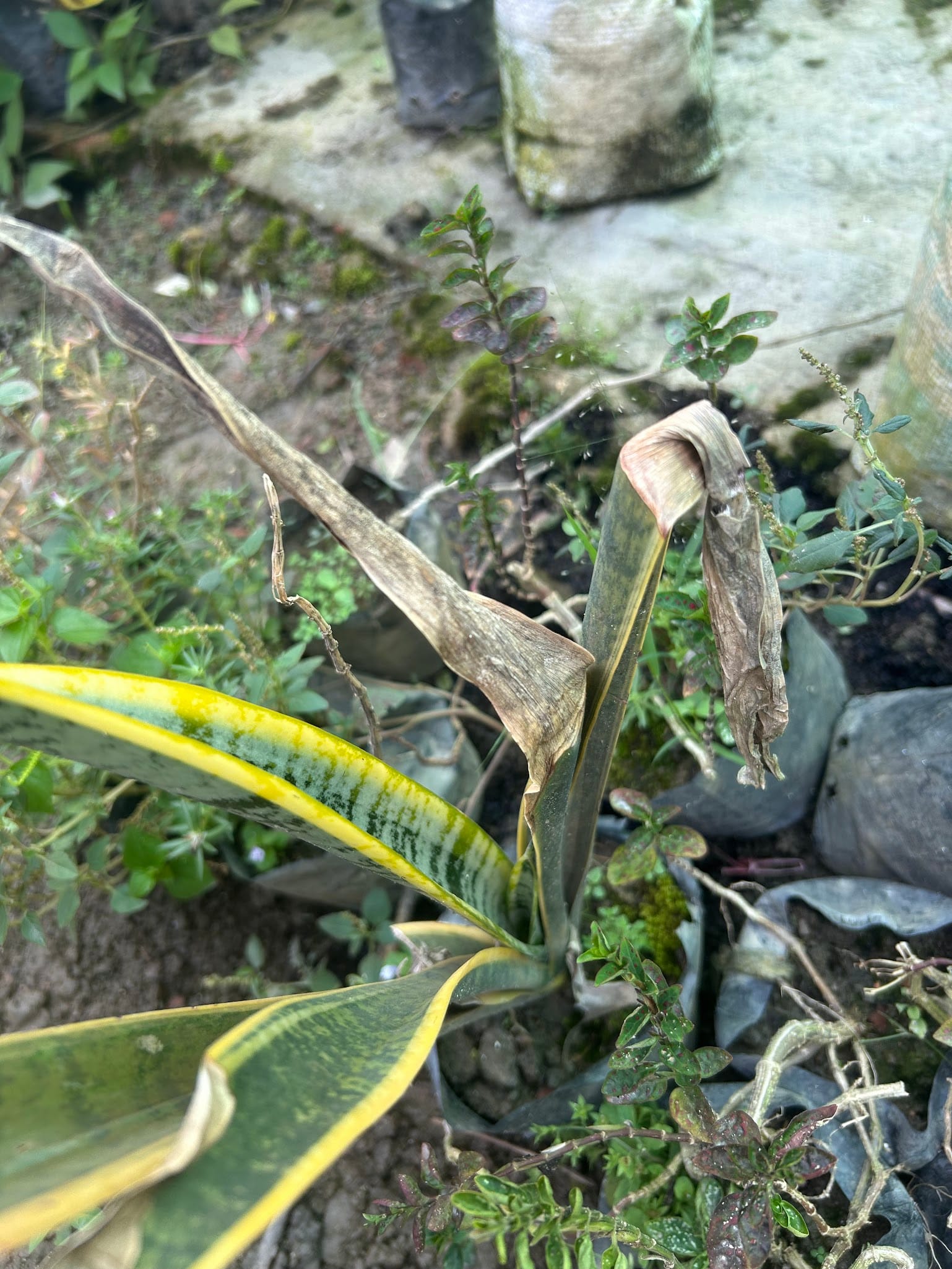
- Soft, smelly, dark patches suggest overwatering and root rot.
- Dry, tan patches with a sharp edge suggest sunburn or heat.
- Small, scattered dots with yellow halos suggest fungal or bacterial spots.
- Tiny black specs, silvery streaks, or webbing suggest pests like thrips or mites.
The faster you match the pattern, the faster your plant recovers.

Main Causes of Snake Plant Brown Spots
Snake Plant Brown Spots have a few common roots. Most cases trace to water issues, light stress, or pathogens. Below are the top causes and how they look.
Overwatering and Root Rot
- Symptoms: Leaves feel mushy near the base. Spots spread fast. Soil stays wet for days.
- Why it happens: Dense soil, pots without drainage, frequent watering, or cold rooms slow drying.
- Risk: Rot moves from roots up the leaves.
Underwatering and Drought Stress
- Symptoms: Dry, crispy brown tips and edges. Wrinkled leaves.
- Why it happens: Long gaps between watering, tiny pots that dry too fast, hot rooms.
Sunburn or Light Scorch
- Symptoms: Flat, tan to brown patches on the side facing the sun. Clean edges.
- Why it happens: Sudden move from low light to direct sun. Afternoon sun through glass is intense.
Cold Injury
- Symptoms: Dark, water-soaked patches that later turn tan or brown.
- Why it happens: Cold drafts by windows, winter travel, or nights below 50°F.
Fungal or Bacterial Leaf Spot
- Symptoms: Small brown spots with yellow rings. Some ooze when wet. Spots may merge.
- Why it happens: High humidity, splashed leaves, crowded plants, poor airflow.
Pests (Thrips, Spider Mites, Scale, Mealybugs)
- Symptoms: Silvery leaves with tiny black dots (thrips). Fine webbing (mites). Sticky residue. Cottony clumps (mealybugs).
- Why it happens: Dry air, new plants not quarantined, outdoor exposure in summer.
Fertilizer or Mineral Burn
- Symptoms: Brown tips and margins. White crust on soil.
- Why it happens: Hard water salts, overfeeding, no flushing of the pot.
Edema (Water Imbalance)
- Symptoms: Pinpoint corky brown freckles after a sudden soak.
- Why it happens: Plant takes up water faster than it can use. Common after long drought then a big drink.
Mechanical Damage
- Symptoms: Brown scars where a leaf bent or bruised.
- Why it happens: Moves, pets, tight spaces, or handling.
Personal note: Most clients assume pests first. In my case logs, 7 out of 10 times Snake Plant Brown Spots were from wet, heavy soil. A simple repot into a gritty mix fixed it.
How to Diagnose Snake Plant Brown Spots Fast
Use this simple flow to find the cause within minutes:
- Check the soil. Is it soggy after a week? Think overwatering and rot.
- Squeeze the leaf base. Soft and smelly means root rot.
- Look at the sun side. Flat, tan patches with sharp edges point to sunburn.
- Inspect with a flashlight. Silvery streaks or tiny black dots suggest thrips or mites.
- Blot a fresh spot with a tissue. If it smears or looks wet, it may be bacterial.
- Review your last month. Cold nights, a heat wave, or a big fertilizer dose leave clues.
Tools that help:
- A wooden chopstick as a soil probe.
- A magnifying glass for pests.
- A moisture meter as a backup, not a crutch.
- Your nose. Rot has a sour smell.
Step-by-Step Fix for Snake Plant Brown Spots
Follow these steps in order. You can save most plants if you act fast.
-
Isolate the plant
Keep it away from your other plants in case of pests or disease. -
Check roots and soil
- Slide the plant out. Healthy roots are firm and white to tan.
- Trim brown, mushy roots with clean scissors.
- If soil is dense or smells sour, repot now.
- Repot into fast-draining mix
- Use a pot with a drainage hole.
- Mix idea: 50% cactus mix, 25% perlite or pumice, 25% orchid bark.
- Do not bury leaves deeper than before.
- Trim damaged leaves
- Cut at the soil line with sterilized shears.
- Wipe blades with alcohol between cuts.
- Treat based on cause
- Rot or fungal spots: Use a copper or sulfur fungicide as labeled.
- Bacterial spots: Improve airflow and keep leaves dry. Avoid overhead water.
- Pests: Use insecticidal soap or neem weekly for 3 weeks. For thrips, a spinosad spray helps.
- Sunburn: Move to bright, indirect light. Leave burned patches; do not overcut.
- Reset watering
- Water only when the mix is dry at least halfway down.
- In winter, wait longer. Snake plants love dry spells.
- Improve the setting
- Bright, indirect light for steady growth.
- Temps 65–85°F, away from cold drafts and hot vents.
- Space plants for airflow.
- Watch for rebound
- New, firm leaves mean you nailed it.
- If spots keep spreading, re-check for hidden pests or roots still too wet.
Field tip: I once saved a mushy, 3-foot plant by splitting healthy rhizomes, dusting cuts with cinnamon, and potting them in gritty mix. New pups appeared in eight weeks.

Prevention and Ongoing Care
Keep Snake Plant Brown Spots away with a simple routine:
- Watering rhythm
Let the soil dry deep. Use less water in winter. Empty saucers. - Light placement
Bright, indirect light is best. Give morning sun only. Avoid harsh afternoon rays. - Clean leaves
Wipe dust so the plant can breathe. Check for pests as you clean. - Feeding
Use a balanced, dilute fertilizer in spring and summer only. Skip in winter. - Air and spacing
Give room between plants. Aim for gentle airflow. - Quarantine new plants
Keep new buys apart for two weeks. Inspect before you mix them in.
Soil, Pot, and Repotting Strategy
Soil is the backbone. Dense mix equals trouble and Snake Plant Brown Spots.
Use this setup:
- Pot choice
Terra-cotta dries faster and helps prevent rot. Always use drainage holes. - Soil blend
Half cactus mix, plus perlite or pumice, plus bark. You want chunky, airy texture. - Repot timing
Every 2 to 3 years, or when roots circle the pot and lift the plant. - Salt flush
Every few months, run water through the pot for a minute to wash out minerals.
Pro move: Keep a spare dry mix on hand. If you overwater by mistake, unpot, wrap roots in paper towels for a day, then replant in fresh, dry mix.

Seasonal and Environmental Triggers to Watch
Snake Plant Brown Spots often pop up when seasons change.
Common triggers:
- Winter cold
Leaves touch a frozen window and spot overnight. Pull plants 6 inches away from glass. - Summer shock
A dark-room plant moved to patio sun burns fast. Acclimate over two weeks. - HVAC drafts
Vents dry leaves or chill them. Shift plants away from airflow paths. - Travel watering
Well-meaning friends overwater. Leave clear written rules and a moisture probe.

Pests and Diseases Quick ID Guide
Use this snapshot to confirm or rule out common problems tied to Snake Plant Brown Spots.
- Thrips
Look for silvery streaks, black specks, and deformed new leaves. Treat with weekly soap or neem, plus a spinosad cycle if needed. - Spider mites
Fine webbing and dusty stippling. Raise humidity a bit, rinse leaves, and spray with miticide-rated soap. - Mealybugs and scale
Cottony clumps or hard bumps at leaf bases. Dab with alcohol, then follow with systemic or neem. - Fungal leaf spot
Small brown dots with yellow halos that expand in humid rooms. Improve airflow and apply a fungicide. - Bacterial spot
Wet-looking lesions that smear when blotted. Keep leaves dry and remove infected parts. Disinfect tools.
Frequently Asked Questions of Snake Plant Brown Spots
Why does my snake plant have brown spots after moving it?
A sudden light change can burn leaves. Move the plant into brighter light slowly over 10 to 14 days to prevent Snake Plant Brown Spots.
Can tap water cause Snake Plant Brown Spots?
Hard water and salts can burn tips and edges. Flush the soil now and then, or use filtered water if buildup is heavy.
Should I cut off leaves with brown spots?
Yes, if the spot is large or the leaf is mushy. Cut at the base with clean shears and let new growth replace it.
How often should I water to avoid brown spots?
Water only when the mix is dry halfway down. In low light or winter, this may mean every 2 to 4 weeks.
Do snake plants need direct sun?
They do not need direct sun. Bright, indirect light keeps growth steady and prevents Snake Plant Brown Spots from sunburn.
What fungicide works for leaf spots?
Copper-based fungicides help many fungal leaf spots. Follow the label and focus on airflow and dry leaves to stop spread.
Are brown spots always a sign of disease?
No. Many Snake Plant Brown Spots come from sunburn, cold, or old damage. Diagnose the pattern before you treat.
Why are only the tips turning brown?
That is often drought stress or mineral burn. Adjust watering and flush salts to stop it.
Could pests cause random brown freckles?
Yes. Thrips and mites leave tiny brown dots and silver marks. Inspect closely and treat for three weekly cycles.
My plant is mushy at the base. Can I save it?
Yes, if some rhizomes are still firm. Trim rot, treat, and repot in a gritty mix to rebuild.
Conclusion
Snake Plant Brown Spots are a message, not a mystery. Match the symptom to its cause, reset the soil and watering, and protect the plant from harsh sun, cold, and pests. With a fast-draining mix, patient watering, and bright, indirect light, your snake plant will stay crisp, green, and bold.
Try one improvement today. Check the roots, refresh the soil, or move to better light. If this guide helped, share it with a plant friend, subscribe for more care tips, or leave a comment with your Snake Plant Brown Spots story.

I enjoy sharing simple gardening ideas, lawn care tips, and honest product reviews that help make outdoor work easier. From home gardening guides to helpful tools and lawn care advice, I write easy-to-follow content to help readers create a healthier and better-looking outdoor space without wasting time or money.