
As an Amazon Associate, I earn from qualifying purchases.
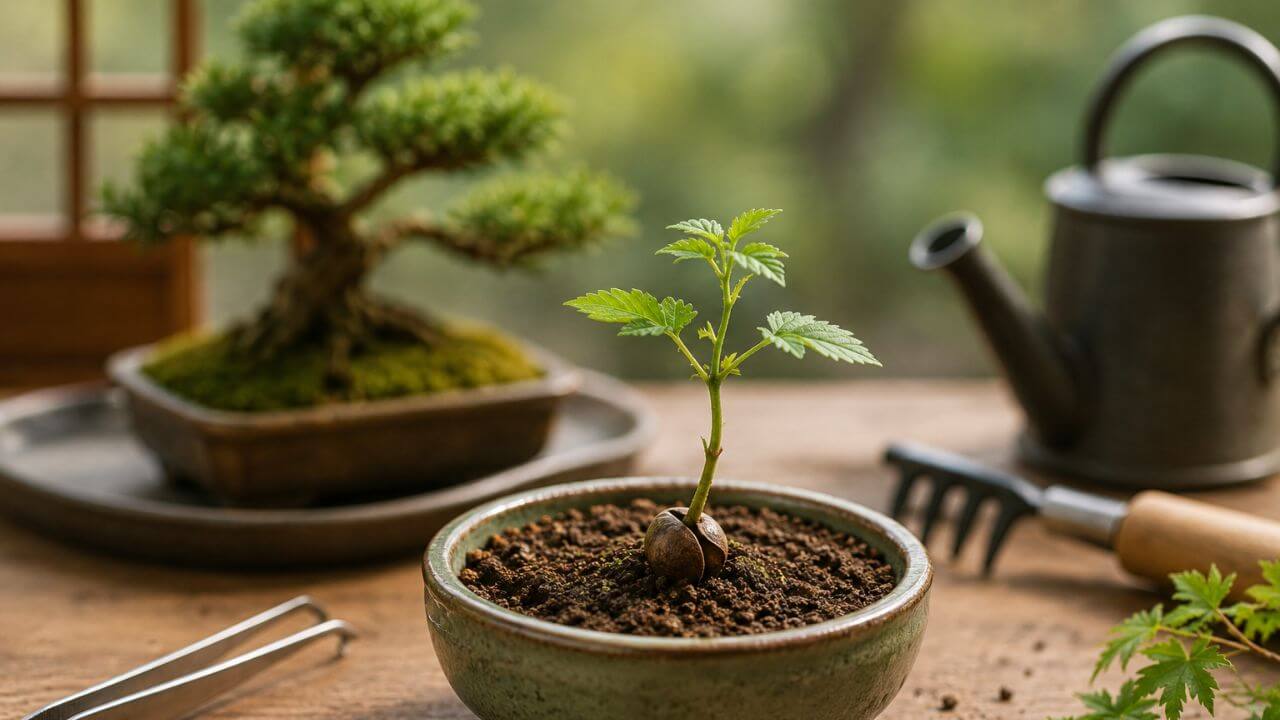
To grow a bonsai tree from seed, stratify, sow shallow, keep moist, and train patiently.
If you want real control over design, health, and history, learn how to grow a bonsai tree from seed. I have raised maples, elms, and pines from tiny seeds to show trees. In this guide, I share clear steps, exact timelines, and the small tricks that make the big difference. You will leave with a complete plan that works.

What growing bonsai from seed really means
Growing bonsai from seed is slow art. You do not rush it. You guide it. You shape roots, build a trunk, and set the tree’s future from day one.
Here is the big idea. Seeds give you full control. You set the nebari, or root flare. You choose the front. You choose style. You also get strong health and a long life span. The trade-off is time. Most species need three to five years before they look like pre-bonsai. Some pines take longer.
You should expect phases. Germination. Seedling care. Early training. First wiring. Root work. Each step is simple when you follow a plan. This is how to grow a bonsai tree from seed the right way.

Choose the right species and seeds for your climate
The best species for beginners are hardy, fast, and forgiving. Match the tree to your local weather. Outdoor trees do best outdoors.
Good beginner species:
- Chinese elm, Ulmus parvifolia. Fast, tough, small leaves.
- Japanese maple, Acer palmatum. Fine ramification. Needs cool rest in winter.
- Trident maple, Acer buergerianum. Great for root flare. Grows fast.
- Juniper, Juniperus procumbens or J. chinensis. Classic look. Needs sun.
- Black pine, Pinus thunbergii. Iconic bark. Slow but worth it.
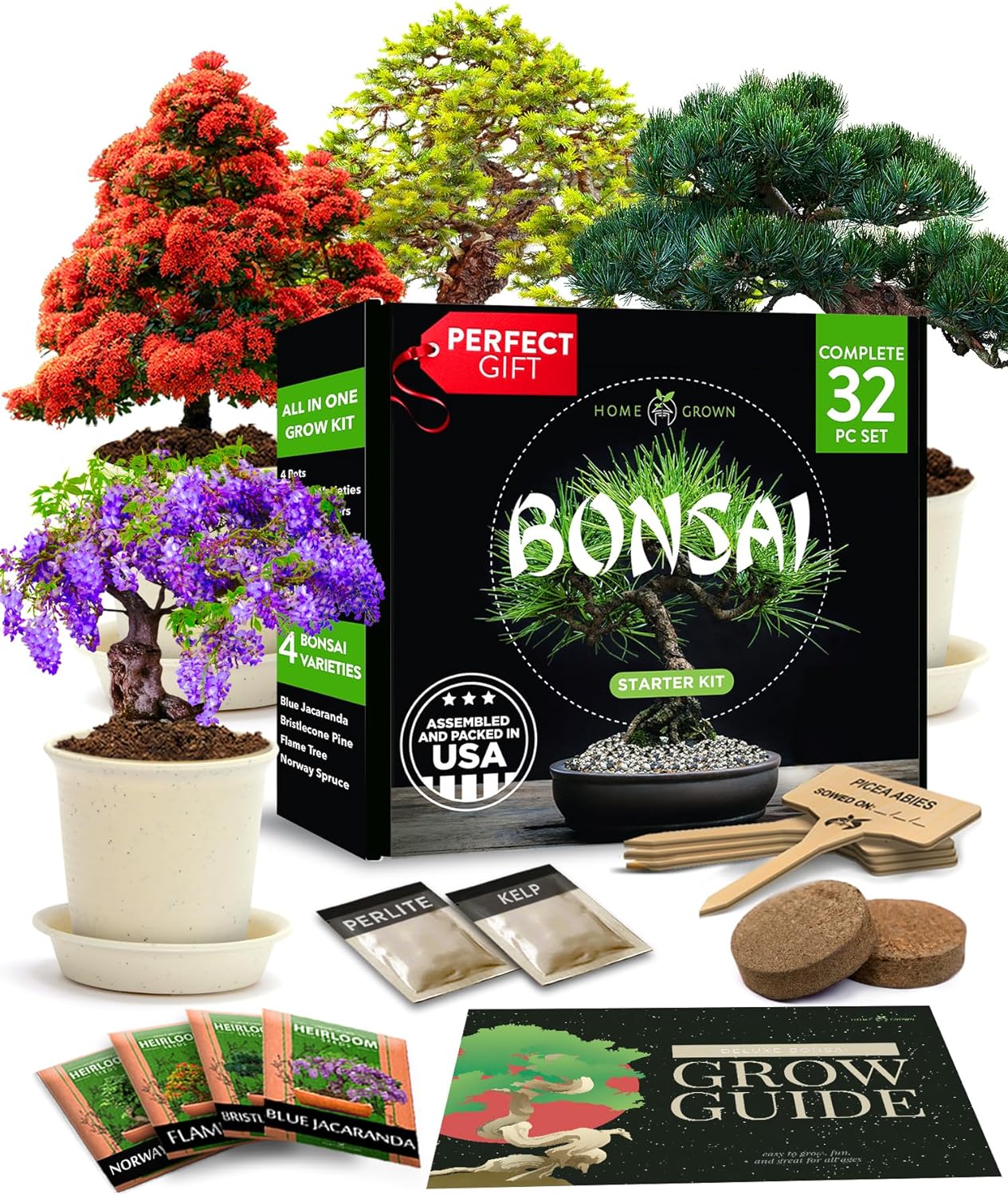
Pick fresh, viable seeds from a reliable source. Fresh seed has higher germination. For temperate trees, plan on cold stratification. For some legumes, plan on scarification.
My tip from years of shopping: buy a small test lot first. If germination is poor, change vendors. Do not waste time on old stock.

Pre-treat seeds: stratification, scarification, and viability checks
Many temperate species have dormancy. They need a fake winter to wake up. This is called cold stratification. Some hard-coated seeds need scarification to let water in.
Cold stratification basics:
- Soak seeds 12–24 hours in room-temp water.
- Place seeds in a zip bag with damp sphagnum or paper towel.
- Chill at 34–41°F for 30–120 days, based on species.
- Check weekly for mold and early sprout tails.
Scarification basics:
- For hard coats, nick the coat with a file. Or dip in hot water and let cool.
- Do not damage the embryo. A tiny scratch is enough.
Viability tests:
- Float test works for some species. Full seeds tend to sink.
- Cut a few dud seeds open. Look for a white, firm embryo.
These steps raise germination rates a lot. They are key to how to grow a bonsai tree from seed with success.

Tools, soil mix, and containers
Simple tools are fine. You do not need fancy gear to start well.
You will need:
- Seed trays or shallow nursery pots with many holes.
- A humidity dome or clear cover. A zip bag can work.
- Fine mesh or window screen to line pots.
- Chopsticks and tweezers for moving tiny seedlings.
- Labels and a pencil. Date every step.
Soil mix for seedlings:
- Use a fine, fast-draining mix.
- A good blend is 50% pumice, 25% akadama or calcined clay, 25% fine bark.
- For very tiny seeds, sift fines to avoid air gaps.
- Avoid heavy peat-only mixes. They stay wet and cause rot.
Watering tools:
- Use a fine rose watering can or spray bottle.
- Aim for even moisture. Avoid washouts.

How to Grow a Bonsai Tree from Seed: Step-by-Step
Follow these steps to start strong. This flow works for most maples, elms, and many junipers.
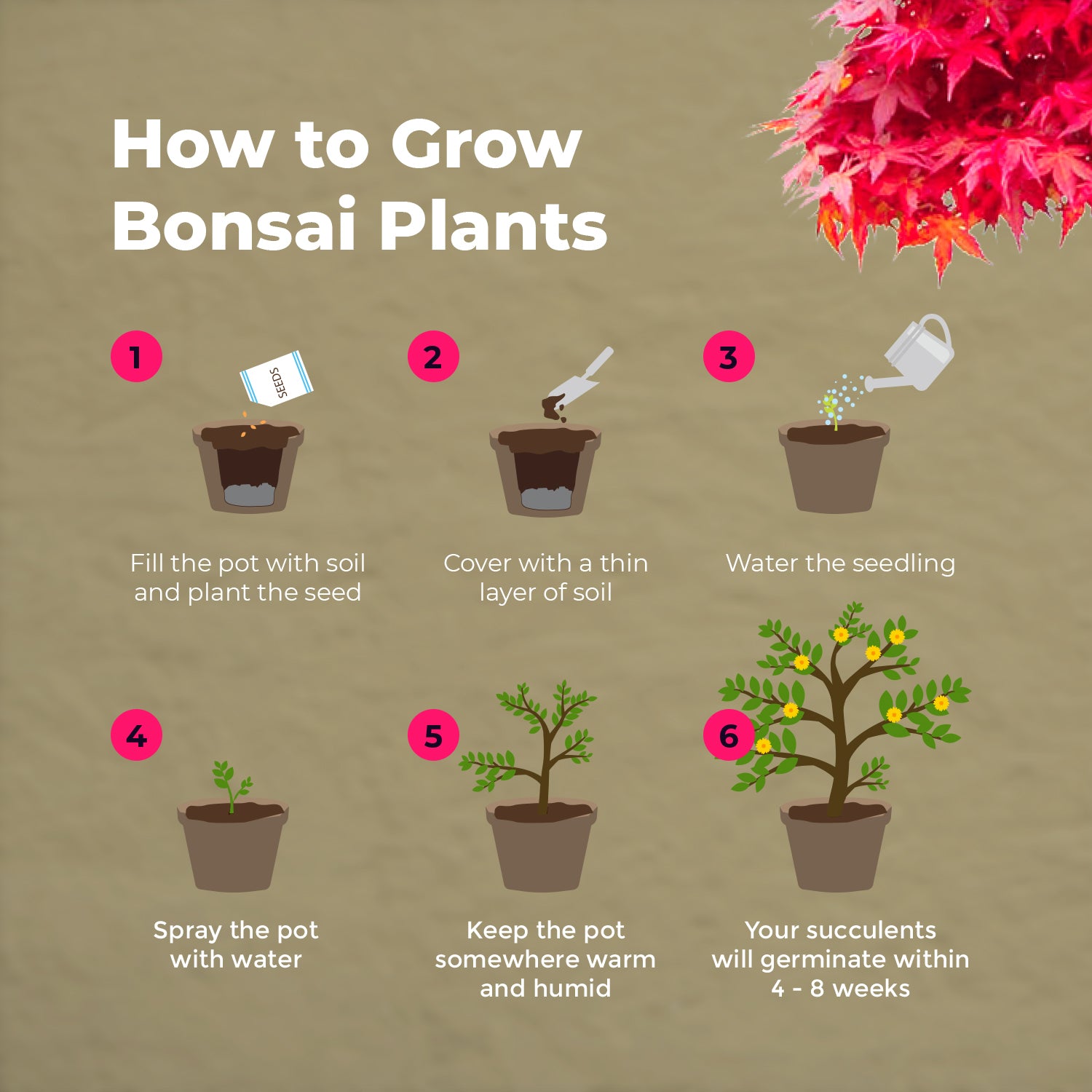
Sowing steps:
- Fill pots with your sifted mix. Tap to settle.
- Pre-wet the mix until water runs from the holes. Let it drain.
- Place seeds on the surface. Space them so roots do not tangle.
- Cover with a thin layer of sifted mix. Depth is about two seed widths.
- Mist well. Label with species and date.
- Cover with a dome or clear cover to hold humidity.
- Place in bright, indirect light at 65–75°F. Avoid harsh sun until sprouted.
Germination care:
- Vent the dome daily to reduce fungus.
- Keep the mix damp, not soaked.
- When cotyledons open, start to remove the cover over a few days.
- Give bright light. A small LED grow light helps in winter.
This is the core of how to grow a bonsai tree from seed. Keep it simple. Be steady. Small, steady care beats big moves.
Early seedling care: light, water, air, and gentle feeding
The first month sets the tone. Weak light makes tall, thin stems. Too much water rots roots. Balance is key.
Light:
- Give 12–16 hours of bright light. Use a timer if you can.
- Keep lights 6–12 inches above seedlings. Watch leaf color and internode length.
Water:
- Water when the top looks dry. Use a gentle spray.
- Good drainage matters more than strict schedules.
Air and humidity:
- Aim for 50–70% humidity with airflow.
- Use a small fan on low to strengthen stems.
Feeding:
- Start at two to three weeks with a weak fertilizer.
- Use 1/4 strength balanced liquid feed every two weeks.
- Skip feeding if growth looks pale due to low light. Fix light first.
Year-by-year roadmap: from seedling to pre-bonsai
Here is a simple, proven timeline. It is how to grow a bonsai tree from seed without guesswork.
Year 0–1:
- Let seedlings grow and build roots.
- Do not wire early unless stems are flexible and healthy.
- When roots fill the container, up-pot to a training pot.
Year 1–2:
- Choose the strongest leader. Begin light shape work.
- Start trunk thickening by growing long and cutting back.
- Begin gentle root work at repot time in late winter.
Year 2–3:
- Select your front. Start forming the nebari.
- Do the first real structural cuts at the right season.
- Wire primary branches when wood is still green.
Year 3–5:
- Move to a colander or large training pot to thicken.
- Repeat grow-and-cut cycles to build taper.
- Refine root spread every repot. Aim for a flat, radial base.
Patience pays here. The best trees come from many small, right steps.
Training basics: pruning, wiring, trunk thickening, and root pruning
This is where you guide style. Each move has a right time and a light touch.
Pruning:
- Cut to outward-facing buds to set branch direction.
- On maples, prune in late winter or mid-summer to reduce bleed.
- Leave sacrifice branches low on the trunk to thicken, then remove later.
Wiring:
- Wire only healthy growth. Use aluminum wire for beginners.
- Check wire every two weeks. Remove before it bites.
- Guide curves early. Old wood fights back.
Trunk thickening:
- Use the grow-and-chop method.
- Let a leader run to add girth. Cut back to a side shoot to make taper.
- Plant in a larger training pot or colander to speed growth.
Root pruning and repotting:
- Best time is late winter or early spring, just before bud break.
- Remove circling roots. Keep a flat, radial spread.
- Do not remove more than one-third of roots on young trees.
These are the core moves in how to grow a bonsai tree from seed into a strong pre-bonsai.

Seasonal care and environment: indoor vs outdoor, pests, and disease
Most bonsai species are outdoor trees. They need seasons. Give them sun, wind, and winter rest.
Outdoor care:
- Spring: Protect from late frost after buds swell.
- Summer: Full sun for pines and junipers. Light shade for maples in heat.
- Fall: Ease off nitrogen. Prepare for dormancy.
- Winter: Protect roots from deep freeze with mulch or a cold frame.
- True indoor bonsai are few. Consider ficus or tropicals if you must grow inside.
- Use strong light, stable temps, and a fan.
- Watch for spider mites in dry rooms.
Pests and disease:
- Common pests: aphids, spider mites, scale, fungus gnats.
- Use neem oil, insecticidal soap, or horticultural oil as needed.
- Root rot comes from poor drainage. Fix soil and watering first.
Common mistakes and easy fixes
These are the errors I see most. I also made them when I began. Learn from my early pain.
Overwatering:
- Symptom: yellow leaves, slow growth, algae on soil.
- Fix: better drainage, fewer waterings, more airflow.
Weak light:
- Symptom: long internodes, pale leaves, weak stems.
- Fix: more sun or add a grow light.
Skipping stratification:
- Symptom: low germination with temperate species.
- Fix: follow the cold strat steps for the right length.
Root neglect:
- Symptom: tall, weak trees with poor root flare.
- Fix: early root work and radial spread at each repot.
Impatience:
- Symptom: heavy pruning too soon, broken seedlings.
- Fix: let seedlings grow strong before hard moves.
These fixes are part of how to grow a bonsai tree from seed with fewer losses.
Timeline, costs, and expectations
Time:
- Germination: 1–12 weeks by species.
- Pre-bonsai shape: 3–5 years for many deciduous trees.
- Show-worthy: 7–15+ years, faster with good technique.
Costs:
- Seeds: low cost.
- Soil and trays: modest.
- Tools and lights: invest as you grow.
Benefits:
- Full control of design and roots.
- Strong, adapted trees.
- Deep joy in the process.
Limits:
- Time and space needs.
- Losses happen. Plan for extras.
This honest view helps set a calm pace. It also frames how to grow a bonsai tree from seed as a craft, not a rush.
Seeds vs other paths: cuttings, air layers, and nursery stock
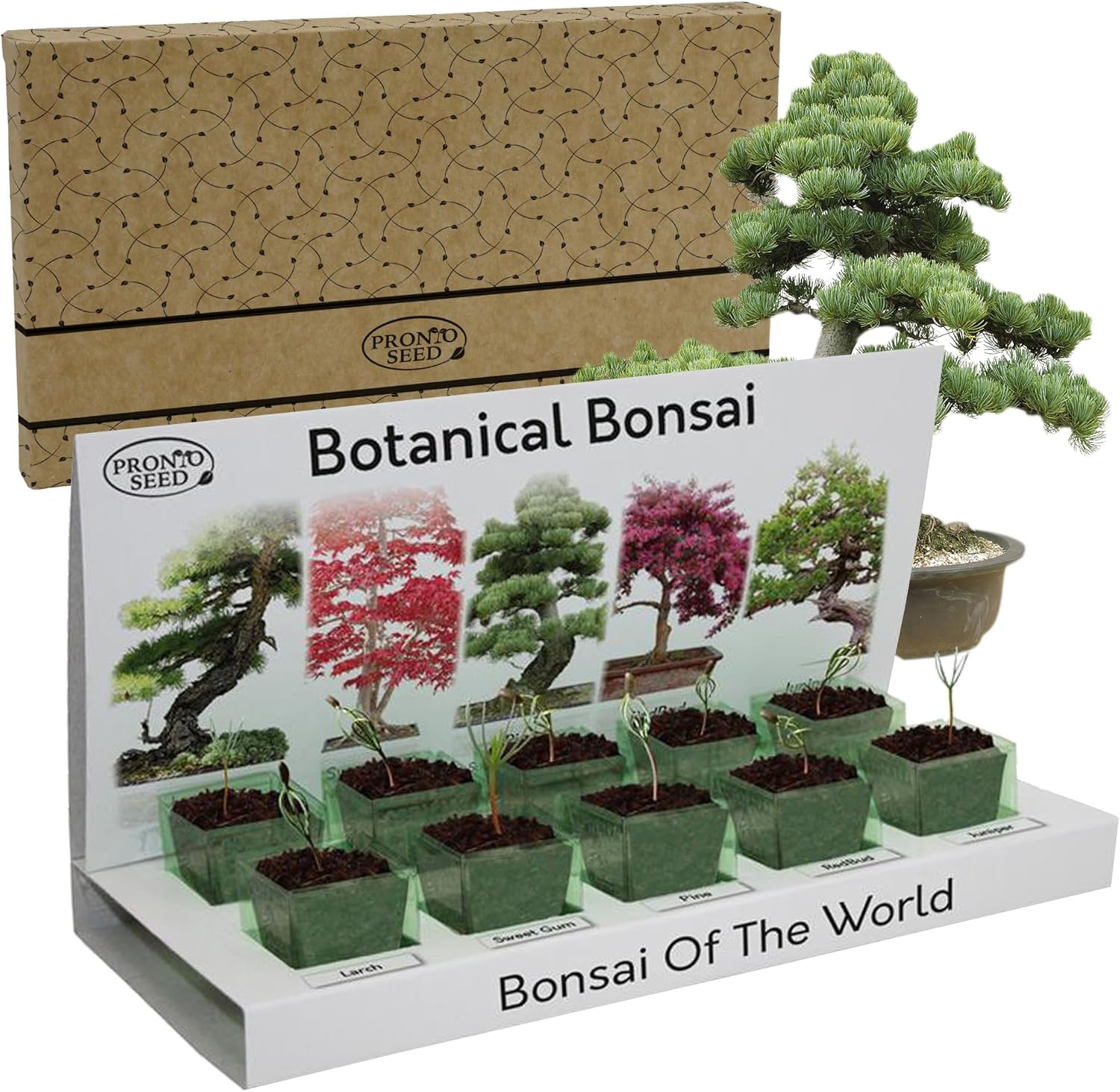
Seeds are not the only path. Compare options to choose your mix.
Seeds:
- Max control. Longest time. Best for learning root work.
Cuttings:
- Faster than seeds. You clone a known plant. No taproot.
Air layers:
- Medium speed. You get instant taper and fine roots.
Nursery stock:
- Fastest start. Needs heavy cuts to fix roots and structure.
All methods are valid. Many artists use all four. I still use seeds to build roots I love. That is why I learned how to grow a bonsai tree from seed and kept at it.
My field notes: real examples and lessons learned
Japanese maple from seed:
- Stratified 90 days at 37°F. Germinated in two weeks.
- Best growth came under a 5000K LED at 12 inches.
- Lesson: do early root work in year one for a flat base.
Black pine from seed:
- No cold strat. Soaked 24 hours. Germinated in 10 days at 70°F.
- Used the seedling-cut method at the first whorl to improve roots.
- Lesson: full sun makes short needles. Do not baby pines indoors.
Chinese elm from seed:
- Fast sprout in warm room. No strat needed.
- Forgiving with water. Great for a first try.
- Lesson: wire early shoots for elegant movement.
My biggest mistake was loving water too much. I lost a tray to rot. Now I lift pots to feel weight. It is a simple hack that saves trees. Little habits like this define how to grow a bonsai tree from seed without drama.
Safety, sanitation, and record keeping
Clean gear and notes help a lot. They reduce disease and guesswork.
Sanitation:
- Soak tools in isopropyl alcohol before use.
- Rinse trays with a mild bleach solution. Air dry.
Handling:
- Wash hands before touching seedlings.
- Do not handle wet stems. They bruise and invite fungus.
Records:
- Log sow dates, strat days, germination rates, and feed dates.
- Take monthly photos. You will see patterns and improve faster.
Good habits compound. They raise your success rate more than any trick.
SEO-friendly recap: key steps you must remember
Here is the short list I teach my students. It is the heart of how to grow a bonsai tree from seed.
Key steps:
- Choose the right species for your climate.
- Stratify or scarify when needed.
- Sow shallow in a fast-draining, fine mix.
- Give bright light, steady moisture, and airflow.
- Train roots early. Build trunk with grow-and-chop.
- Wire and prune at the right season.
- Repot on time and maintain a radial root spread.
- Be patient. Let time do the heavy lifting.
Frequently Asked Questions of how to grow a bonsai tree from seed
How long does it take to grow bonsai from seed?
It usually takes three to five years to reach pre-bonsai. A show-worthy tree can take seven to fifteen years, depending on species and care.
Do I need to stratify all bonsai seeds?
No. Many temperate trees need cold stratification, but tropicals often do not. Check species needs before you start.
What soil is best for bonsai seedlings?
Use a fine, fast-draining mix with pumice, akadama or calcined clay, and fine bark. Avoid heavy peat mixes that hold water and cause rot.
Can I grow bonsai from seed indoors?
You can start seeds indoors with strong light and airflow. Most species should move outdoors to get sun and seasonal rest once they are sturdy.
When should I start pruning and wiring?
Wait until seedlings are healthy and growing well. Do light pruning in the first year and gentle wiring once stems are flexible.
How often should I water bonsai seedlings?
Water when the top layer looks dry. Keep the soil evenly moist but never soggy to prevent root rot.
What is the ideal light for seedlings?
Bright, indirect light or a quality LED grow light works well. Aim for 12–16 hours per day for strong, compact growth.
Conclusion
You now have a clear, proven plan to take a seed to a future bonsai. Start with the right species, prep the seeds well, sow in a gritty mix, and guide growth with small, smart steps. The craft rewards patience and steady care.
Pick one species today and set up your first tray. Track your steps, learn from each season, and enjoy the slow magic. If this guide on how to grow a bonsai tree from seed helped you, subscribe for more deep-dive bonsai lessons or leave a question below so I can help you get growing.

I enjoy sharing simple gardening ideas, lawn care tips, and honest product reviews that help make outdoor work easier. From home gardening guides to helpful tools and lawn care advice, I write easy-to-follow content to help readers create a healthier and better-looking outdoor space without wasting time or money.