
As an Amazon Associate, I earn from qualifying purchases.
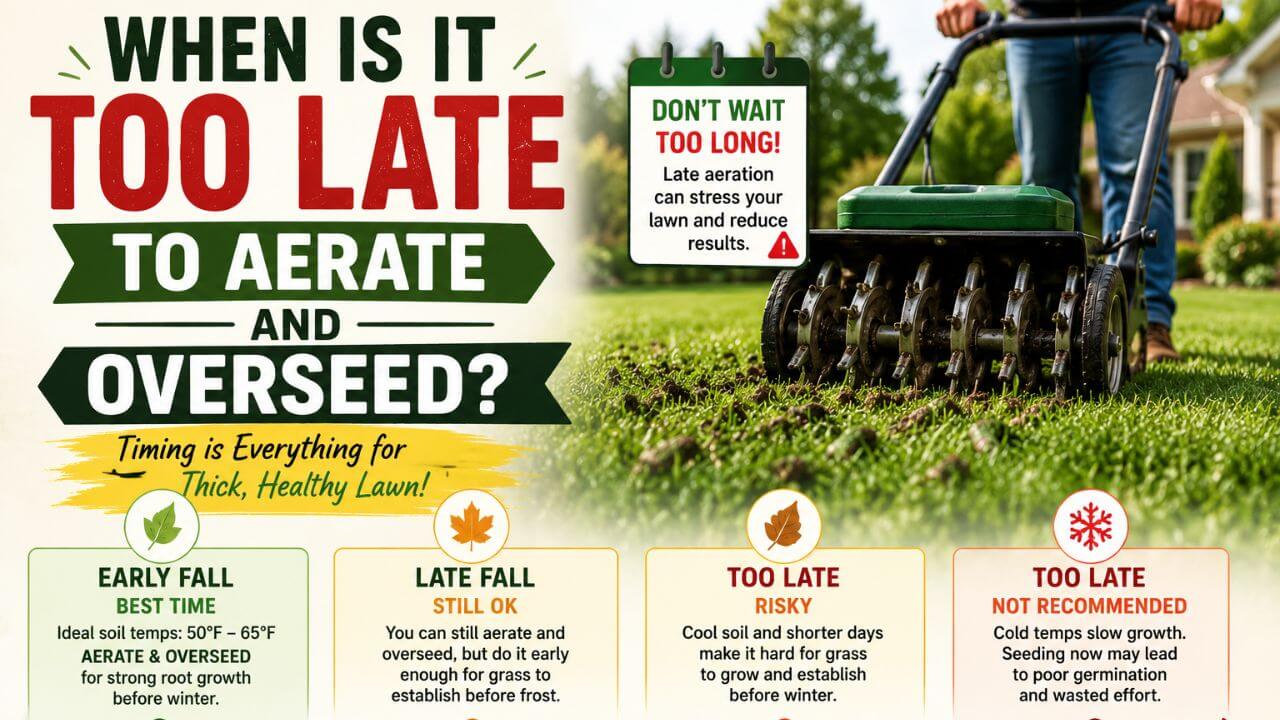
It’s too late once soil stays below 55°F or frost is 2–4 weeks away.
Curious about when is it too late to aerate and overseed? You’re in the right place. I’ve spent years helping homeowners and pros time this job right. In this guide, I’ll break down the exact climate cues, grass types, and soil temps that decide your window. By the end, you’ll know when is it too late to aerate and overseed in your yard, and what to do if you missed it.

What Aeration and Overseeding Actually Do
Core aeration pulls small plugs from the soil. This reduces compaction and gets air, water, and nutrients to the roots. Overseeding drops new seed into that improved seedbed.
Both steps help fill bare spots and boost density. They also crowd out weeds. The result is a thicker, greener lawn with stronger roots.
Why timing matters: seedlings need warm soil and steady growth. If you go late, germination slows. New grass can be weak before winter or summer heat. That is why when is it too late to aerate and overseed is such a key question.

Best Timing By Grass Type and Climate
Grass type sets your main season. Local weather fine-tunes the exact week.
Cool-season grasses include Kentucky bluegrass, tall fescue, and perennial ryegrass. The best time is early fall. Soil is warm, air is cool, and weeds slow down. Spring can work, but you fight crabgrass and heat later.
Warm-season grasses include Bermuda, zoysia, and centipede. The best time is late spring to early summer. Soil must be warm. Many warm-season lawns are sodded or plugged, not seeded. St. Augustine is almost never seeded.
Use soil temperature as your guide:
- Cool-season seeding is ideal when soil is 55–70°F.
- Warm-season seeding is ideal when soil is 65–75°F.
If nights are cold and soil drops below target, your window is closing.

When Is It Too Late to Aerate and Overseed?
Here is the clear rule for when is it too late to aerate and overseed.
Cool-season lawns:
- It is too late when soil holds below 55°F most days.
- It is too late if you have less than 4–6 weeks before your average first hard frost.
- Kentucky bluegrass needs the longest runway. Tall fescue needs a bit less.
- If your forecast shows several nights in the 30s, pause the plan.
Warm-season lawns:
- It is too late when soil is below 65°F.
- It is too late once nights drop below 60°F often.
- Overseeding Bermuda with rye for winter color must be done early fall. If soil cools too fast, rye won’t take.
Aeration without seed:
- You can aerate a bit later than seeding if the grass is still growing.
- But do not aerate frozen or dormant turf. It will not heal.
Practical cues I trust:
- I stop cool-season seeding 45 days before our average first frost.
- I stop warm-season seeding once soil slides below 65°F and days get short.

Signs You Should Wait Until Spring or Next Season
- Soil temp is below your grass type’s target.
- The 10-day forecast shows frost or a hard cold snap.
- Your sprinkler system is shut down for winter.
- You cannot water new seed two to three times a day for 2–3 weeks.
- Leaves are heavy and constant, and you cannot keep the lawn clear.
If these hit, it is likely too late. This is exactly when is it too late to aerate and overseed becomes a yes.

What If You Missed the Window? Smart Workarounds
You still have options if you are past when is it too late to aerate and overseed.
- Try dormant seeding for cool-season lawns. Spread seed after soil is below 50°F, before the ground freezes. The seed sleeps and sprouts in spring. Use more seed to offset loss. Expect mixed results.
- Focus on soil health. Topdress with compost, correct pH, and plan irrigation. Strong spring growth will follow.
- Book an early spring aeration for cool-season turf. Overseeding then is a backup, though weeds compete more.
- For warm-season lawns, plan late spring seeding or sod. Do not seed late fall; it will fail.
- If you must push late fall, use fast-germinating seed blends, a starter fertilizer with phosphorus if legal, and a light straw blanket. Water often. Know it is still risky.

Step-by-Step If You Are Close To The Cutoff
This is how I handle tight timing jobs.
- Check soil temperature with a probe. If it is 55–60°F for cool-season, you still have a chance.
- Study your 14-day forecast. You want mild days and no deep frost.
- Mow low. Bag clippings. Rake leaves. You need seed-to-soil contact.
- Core aerate. Make two passes in compacted zones.
- Overseed with the right blend. Use high-quality tall fescue or a KBG/rye mix.
- Apply a starter fertilizer. Follow the label. Water right after.
- Water lightly, 2–3 times a day, until germination. Then shift to deeper, less frequent watering.
- Keep leaves off the lawn. Shade kills sprouts fast.
- Pause weed control. Most pre-emergents stop seed from sprouting.
If any step above is not possible, it may be too late to aerate and overseed for your site.

Regional Timing Guide (United States)
These are broad windows for seeding and a sense of when is it too late to aerate and overseed. Always check local soil temps.
Upper Midwest and Northeast:
- Best: late August to late September.
- Too late: mid to late October, or within 4 weeks of your first frost.
Mid-Atlantic and lower New England:
- Best: early September to mid October.
- Too late: late October to early November, or soil under 55°F.
Southeast transition zone:
- Cool-season lawns: mid September to mid October. Too late after late October.
- Warm-season lawns: seed or sod late spring to midsummer.
Upper South and lower Midwest:
- Best: early September to early October.
- Too late: late October if nights are cold.
Mountain West and high plains:
- Best: late August to mid September.
- Too late: early October at altitude due to early frost.
Pacific Northwest:
- Best: September to early October.
- Too late: late October if rains turn cold and soil cools.
Southwest deserts:
- Cool-season rye overseed for winter color: late September to mid October.
- Too late: late October if nights cool fast.
Gulf Coast and deep South:
- Warm-season work: late spring to midsummer.
- Too late for cool-season fall overseed once soil dips below 65°F.

Common Mistakes To Avoid And Pro Tips
From my own jobs, these are the pitfalls that waste time and seed.
- Seeding before solving drainage. Puddles drown seedlings fast.
- Aerating dry, hard soil. Water the lawn a day before for deeper cores.
- Throwing seed on thatch. Use a rake or slit seeder for contact with soil.
- Ignoring soil pH. Many lawns sit at 5.0–5.5. Lime, if needed, helps roots.
- Skipping water. New seed needs frequent light sessions at first.
- Using the wrong mix. Tall fescue is great for sun and wear. Add a bit of rye for speed.
- Pushing too late. I have lost whole sections to an early cold snap. If your gut says wait, wait.
Pro tips I use:
- Blend fast and slow seeds. Rye pops fast. Bluegrass fills long term.
- Roll lightly after seeding to press seed in.
- Track soil temps, not just air temps. This is the key to when is it too late to aerate and overseed.
:strip_icc()/102337754_preview-bdddcddf02cc48689a1596f3c6c19da8.jpg)
Cost-Benefit: Is Late Overseeding Worth It?
Late overseeding can work in mild falls, but risk is high. You may buy seed twice if winter wins. Labor and water add up too.
Do a quick check:
- If you have 4–6 weeks of growing weather left, try it.
- If not, invest in soil fixes now and seed early next window.
- In many cases, waiting saves money and gives better results.
That is the honest call I make for clients. It protects your budget and your lawn.
Frequently Asked Questions
How do I know when is it too late to aerate and overseed in my area?
Watch soil temperature and frost dates. If soil is under 55°F for cool-season or frost is close, it is too late.
Is it OK to aerate without overseeding late in the year?
Yes, if grass is still growing and can heal. Avoid aerating once turf is dormant or soil is frozen.
Can I overseed tall fescue two weeks before first frost?
It is risky. Tall fescue can sprout fast, but it still needs time to root before hard freezes.
What if the seed sprouts and then we get frost?
Light frost is often fine. A hard freeze with tender sprouts can cause loss, thinning, or winterkill.
Is dormant seeding as good as fall seeding?
No, fall seeding is best. Dormant seeding is a backup that can work with the right spring weather.
Do I need starter fertilizer when seeding late?
It helps root growth. Use it as labeled and water well to avoid burn.
Should I cover seed with straw or a blanket?
A light mulch helps hold moisture and warmth. Use clean straw or a seed blanket for slopes.
How many times should I water new seed?
Water 2–3 times a day at first, keeping the top 0.5 inch moist. Shift to deeper, less frequent watering after germination.
Conclusion
Timing decides your results. For cool-season lawns, stop about 4–6 weeks before your average first frost or when soil dips below 55°F. For warm-season lawns, stop once soil cools below 65°F. If you are past that point, plan for dormant seeding or focus on a strong spring start.
Set a reminder for next season. Check soil temps, watch the forecast, and act within the best window. If this helped, subscribe for more turf tips or drop a comment with your city and grass type. I am happy to help you nail the next overseed window.

I enjoy sharing simple gardening ideas, lawn care tips, and honest product reviews that help make outdoor work easier. From home gardening guides to helpful tools and lawn care advice, I write easy-to-follow content to help readers create a healthier and better-looking outdoor space without wasting time or money.