
As an Amazon Associate, I earn from qualifying purchases.
The first time I planted a privacy screen, I made the mistake many homeowners make. I bought plants based on how they looked in the nursery. They were small, affordable, and looked perfect. Three years later, I had shrubs fighting for space, gaps where I expected privacy, and one plant that clearly hated my soil and climate. That experience completely changed how I choose Plants For Privacy Fence projects today.
The best privacy plants do more than block a view. They fit the space, match the climate, stay manageable, and improve the look of the yard for years. If you want to hide a neighbour’s window, soften a fence line, reduce road noise, or create a more private backyard, choosing the right plants from the beginning makes all the difference.
Why Privacy Plants Can Work Better Than a Fence Alone
A fence creates privacy immediately.
Plants improve privacy every year.
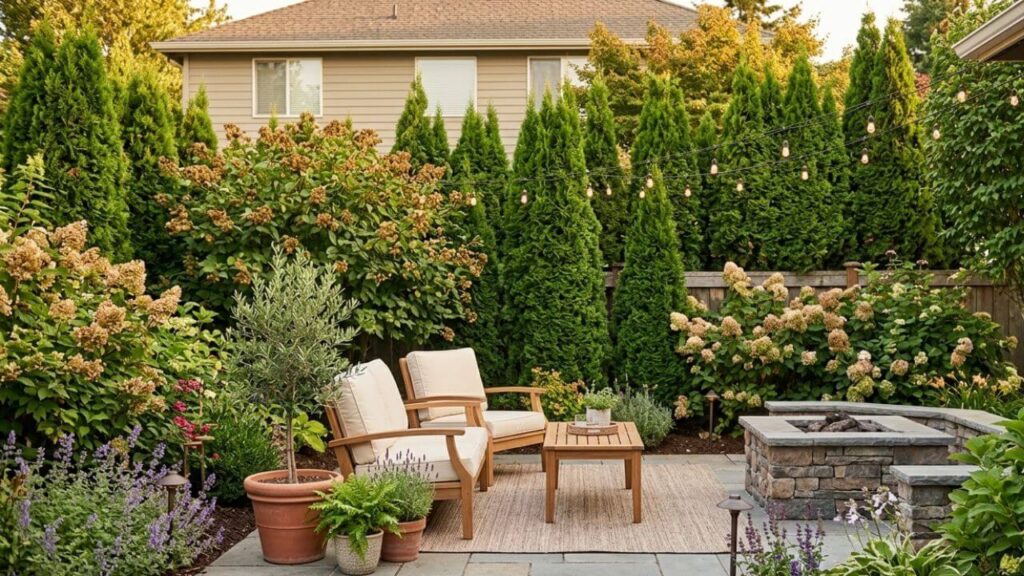
They soften hard lines, reduce noise, cool the yard, attract birds, and make outdoor spaces feel more natural.
The combination of fencing and plants usually creates the best result.
| Privacy Option | Biggest Benefit |
| Fence only | Instant screening |
| Plants only | Natural appearance |
| Fence and plants | Best long-term privacy |
Some of the most attractive backyards I have seen use both.
The fence provides structure while the plants add life and softness.
What Makes a Great Privacy Plant?
Not every shrub belongs beside a fence. Some grow too wide. Some lose leaves during winter. Others require constant trimming just to stay under control.
The best privacy plants share a few important traits.
| Feature | Why It Matters |
| Dense growth | Blocks views better |
| Evergreen foliage | Provides year-round privacy |
| Disease resistance | Reduces maintenance |
| Climate tolerance | Improves survival |
| Manageable size | Prevents overcrowding |
The goal is simple.
Choose plants that solve problems instead of creating new ones.
Best Evergreen Plants For Privacy Fence
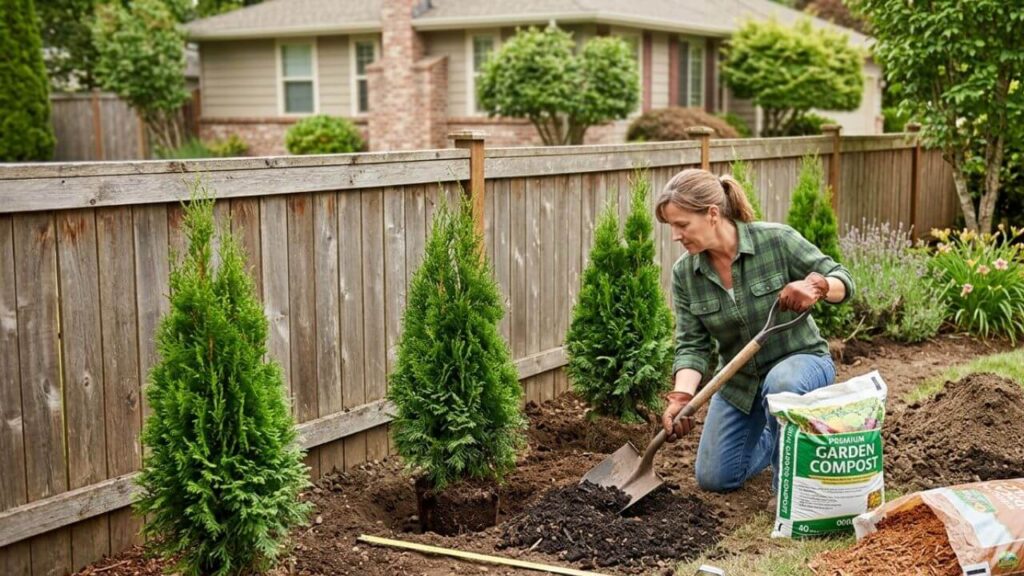
Evergreens remain the most popular choice for privacy screening.
Once winter arrives, homeowners quickly understand why.
A hedge that disappears in December no longer provides much privacy.
Arborvitae Remains the Classic Choice
Arborvitae has earned its reputation.
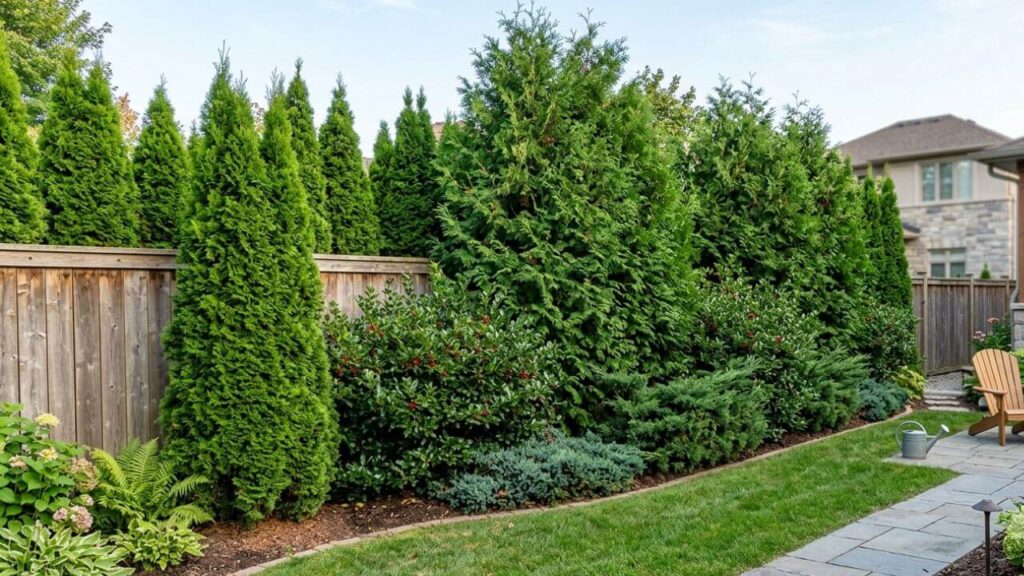
It grows quickly, stays green throughout the year, and naturally forms a living wall.
Two varieties stand out.
| Variety | Best For |
| Emerald Green Arborvitae | Smaller yards |
| Green Giant Arborvitae | Larger properties |
Emerald Green stays narrow and tidy.
Green Giant grows much faster but eventually becomes much larger than many homeowners expect.
Holly Creates Privacy and Wildlife Habitat
Holly provides thick screening and colorful berries during winter.
Birds love it.
The spiny leaves also discourage people and pets from cutting through planting beds.
Skip Laurel Creates a Softer Appearance
Some homeowners dislike the formal look of arborvitae rows.
Skip laurel offers a more relaxed and natural appearance.
Its glossy leaves also hold up well through winter.
Juniper Handles Tough Conditions
Juniper performs well where other privacy plants struggle.
It tolerates drought, poor soil, and harsh sun surprisingly well.
That makes it useful in western states and low-maintenance landscapes.
Fast Growing Plants For Privacy Fence Projects
Sometimes homeowners need privacy quickly.
Fast-growing plants can help, but they come with trade-offs.
Rapid growth usually means larger mature size and more pruning.
Green Giant Arborvitae
This may be the most popular fast-growing privacy tree in America.
In good conditions, growth can exceed two feet per year.
That speed is impressive.
Its mature size surprises people even more.
Wax Myrtle
Southern gardeners appreciate wax myrtle for several reasons.
It handles heat.
It tolerates humidity.
It survives poor soil better than many alternatives.
Clumping Bamboo
Bamboo creates strong opinions among gardeners.
My advice stays simple.
Choose clumping bamboo whenever possible.
Avoid running bamboo unless you enjoy chasing underground shoots around the yard.
| Plant | Growth Speed |
| Green Giant Arborvitae | Fast |
| Wax Myrtle | Fast |
| Clumping Bamboo | Very Fast |
Fast growth sounds exciting.
Manageable growth matters more in the long run.
Flowering Privacy Plants Bring More Than Privacy
Privacy screens do not need to look boring.
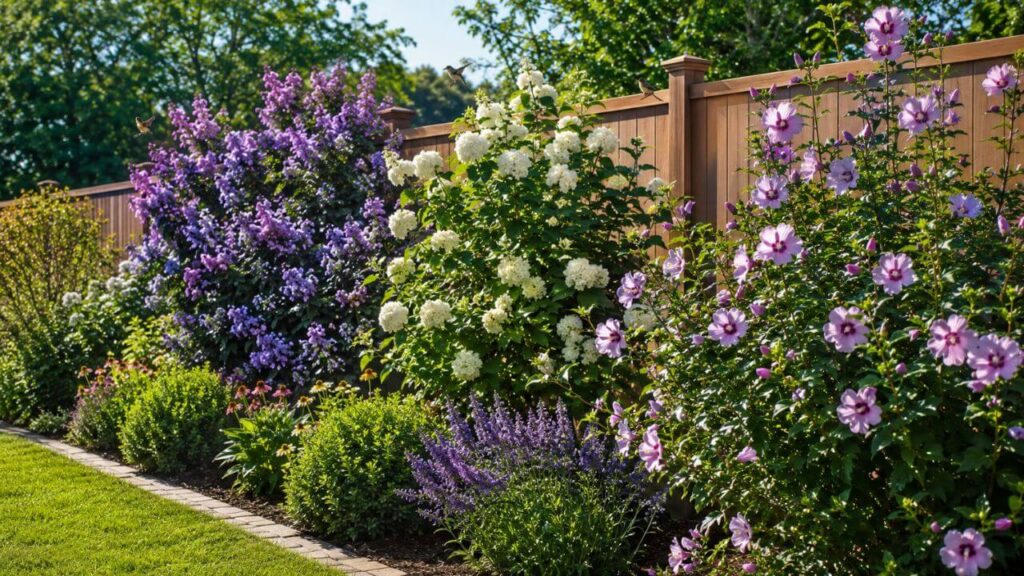
Several shrubs provide flowers, fragrance, and wildlife benefits along with screening.
Viburnum Was My Biggest Surprise
I underestimated viburnum for years.
That turned out to be a mistake.
Many varieties grow quickly, provide excellent coverage, and produce attractive flowers followed by berries.
Birds appreciate them as much as homeowners do.
Lilac Offers Seasonal Beauty
Lilacs create one of the best spring displays in the garden.
The fragrance alone makes them worth considering.
Their weakness is winter privacy.
Rose of Sharon Handles Difficult Conditions
Few flowering shrubs tolerate heat and poor soil as well as Rose of Sharon.
That makes it useful near fences, driveways, and hot foundations.
| Flowering Plant | Biggest Advantage |
| Viburnum | Dense coverage |
| Lilac | Fragrance |
| Rose of Sharon | Heat tolerance |
Climbing Plants Can Transform an Existing Fence
Sometimes the fence already exists.
The problem is appearance rather than privacy.
Vines can completely change the look of an ordinary fence.
Clematis Adds Flowers Without Taking Over
Many clematis varieties behave well and stay manageable.
They provide vertical color without overwhelming nearby plants.
Star Jasmine Creates a Living Wall
The fragrance alone makes star jasmine worth considering.
In warmer regions, it can turn a plain fence into a beautiful green backdrop.
Climbing Roses Reward Patience
Climbing roses require more work than most vines.
They also provide one of the most impressive displays in the garden.
| Vine | Maintenance Level |
| Clematis | Low |
| Star Jasmine | Moderate |
| Climbing Roses | Moderate |
Choosing Privacy Plants for Your Climate
Climate matters more than almost anything else.
A plant that thrives in Florida may fail in Minnesota.
Ignoring hardiness zones creates disappointment and wasted money.
Best Choices for Northern States
Homeowners in colder regions should consider:
- Arborvitae
- Spruce
- Juniper
- Viburnum
Best Choices for Southern States
Warmer climates support:
- Wax Myrtle
- Podocarpus
- Cherry Laurel
- Southern Magnolia
Best Choices for Dry Western Climates
Water-efficient options include:
- Juniper
- Desert Willow
- Native shrubs
- Drought-tolerant evergreens
Local extension offices remain one of the best sources of plant advice.
The Spacing Mistake Almost Everyone Makes
I made this mistake myself.
Small plants look tiny during planting day.
The temptation is to place them closer together for instant privacy.
That decision creates future problems.
Overcrowded plants compete for light, water, and airflow.
Disease problems increase quickly.
| Common Mistake | Better Approach |
| Planting too close | Follow mature width |
| Ignoring sunlight | Match plant needs |
| Mixing growth rates | Use similar plants |
| Choosing by appearance only | Research mature size |
Patience saves years of pruning later.
How Far Should Plants Sit From the Fence?
This question comes up constantly.
Most privacy plants need space for roots, airflow, and maintenance access.
| Plant Size | Distance From Fence |
| Small shrubs | 2 feet |
| Medium shrubs | 3 feet |
| Large shrubs | 4 to 6 feet |
Planting too close may create conflicts with fences, foundations, and neighbors.
Step-by-Step Guide to Planting a Privacy Screen
A little planning prevents many future problems.
Step 1: Measure the Space
Know the length of the fence and the available planting width.
Step 2: Check Sunlight Conditions
Full-sun plants struggle in shade.
Shade plants struggle in full sun.
Step 3: Choose Plants Based on Mature Size
Ignore the size of the nursery pot.
Focus on the size the plant reaches in ten years.
Step 4: Space Plants Correctly
Resist the temptation to crowd them together.
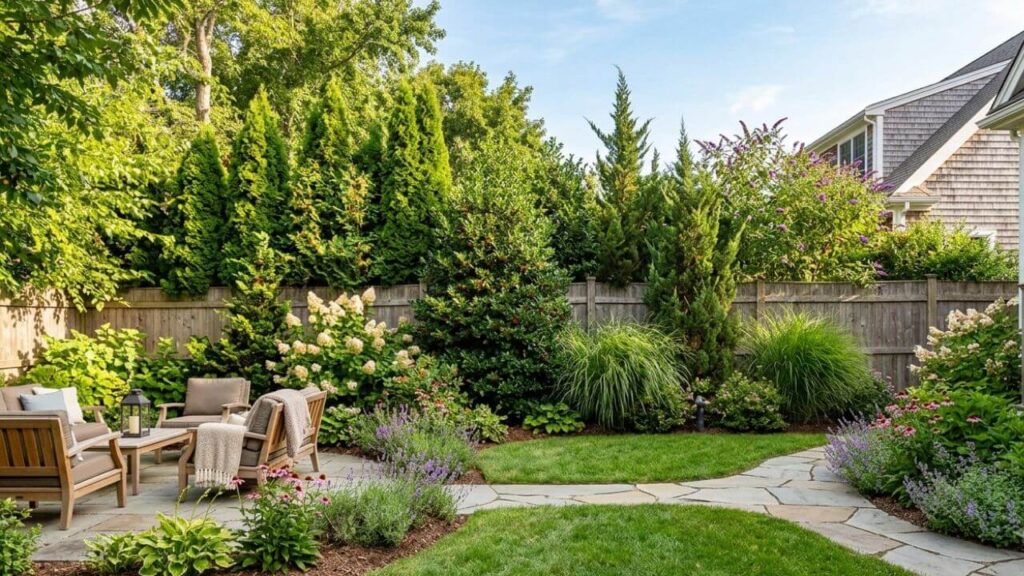
Step 5: Improve the Soil
Adding compost during planting helps roots establish faster.
Step 6: Water Deeply During the First Year
The first growing season determines long-term success.
Tools and Materials You’ll Need
Privacy planting does not require expensive equipment.
Basic tools include:
- Shovel
- Tape measure
- Garden hose
- Compost
- Mulch
- Stakes and string
- Slow-release fertilizer
Good soil preparation matters more than expensive tools.
Problems Nobody Talks About
Privacy planting sounds simple.
Reality can be more complicated.
Roots compete with fences and nearby trees for moisture.
Snow can split narrow evergreens.
Neighbors sometimes trim branches that cross property lines.
None of these issues are serious.
They simply deserve attention during planning.
Expert Tips That Made the Biggest Difference
After several privacy projects, these habits consistently improved results:
- Buy smaller plants when possible.
- Mulch immediately after planting.
- Water deeply instead of lightly.
- Choose native plants whenever possible.
- Leave room for future maintenance.
- Mix species instead of planting a single variety.
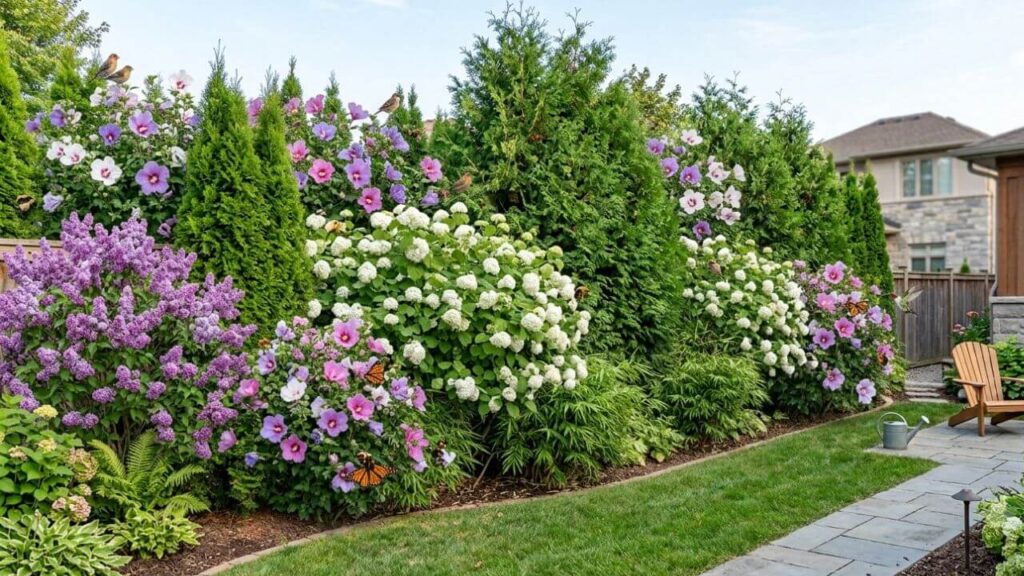
Mixed plantings look more natural and reduce disease risk.
Maintenance and Long-Term Care
Privacy plants continue growing long after planting day.
Annual care keeps them healthy and attractive.
Important tasks include:
- Refreshing mulch
- Deep watering during drought
- Light pruning
- Monitoring pests
- Removing damaged branches
The goal is steady growth rather than constant trimming.
Frequently Asked Questions
What are the fastest growing plants for privacy fence areas?
Green Giant arborvitae, wax myrtle, and clumping bamboo grow quickly and provide screening in a relatively short time.
Which plants stay green all year?
Arborvitae, holly, juniper, laurel, and many magnolias remain evergreen.
What is the best privacy plant for small backyards?
Emerald Green arborvitae works well because it stays narrow while still providing dense coverage.
Can I plant directly against a fence?
No.
Most plants need room for roots, airflow, and maintenance access.
How long does it take privacy plants to fill in?
Many privacy shrubs provide good screening within three to five years.
Are flowering shrubs good privacy plants?
Yes.
Viburnum and Rose of Sharon provide both beauty and useful screening.
Should I mix different plant species?
Yes.
Mixed hedges improve resilience and create a more natural appearance.
Do privacy plants increase home value?
Healthy landscaping and attractive screening can improve curb appeal and buyer interest.
Conclusion
The biggest lesson I learned from privacy planting was simple.
The fastest-growing plant is rarely the best choice.
The right plant is the one that fits your climate, your space, and your maintenance goals.
If I started over tomorrow, I would spend less time looking at young plants in containers and more time studying their mature size.
That single decision prevents many of the problems homeowners face later.
A privacy screen is a long-term investment.
Choose carefully now, and your backyard can become quieter, greener, and more private every year.

I enjoy sharing simple gardening ideas, lawn care tips, and honest product reviews that help make outdoor work easier. From home gardening guides to helpful tools and lawn care advice, I write easy-to-follow content to help readers create a healthier and better-looking outdoor space without wasting time or money.