As an Amazon Associate, I earn from qualifying purchases.
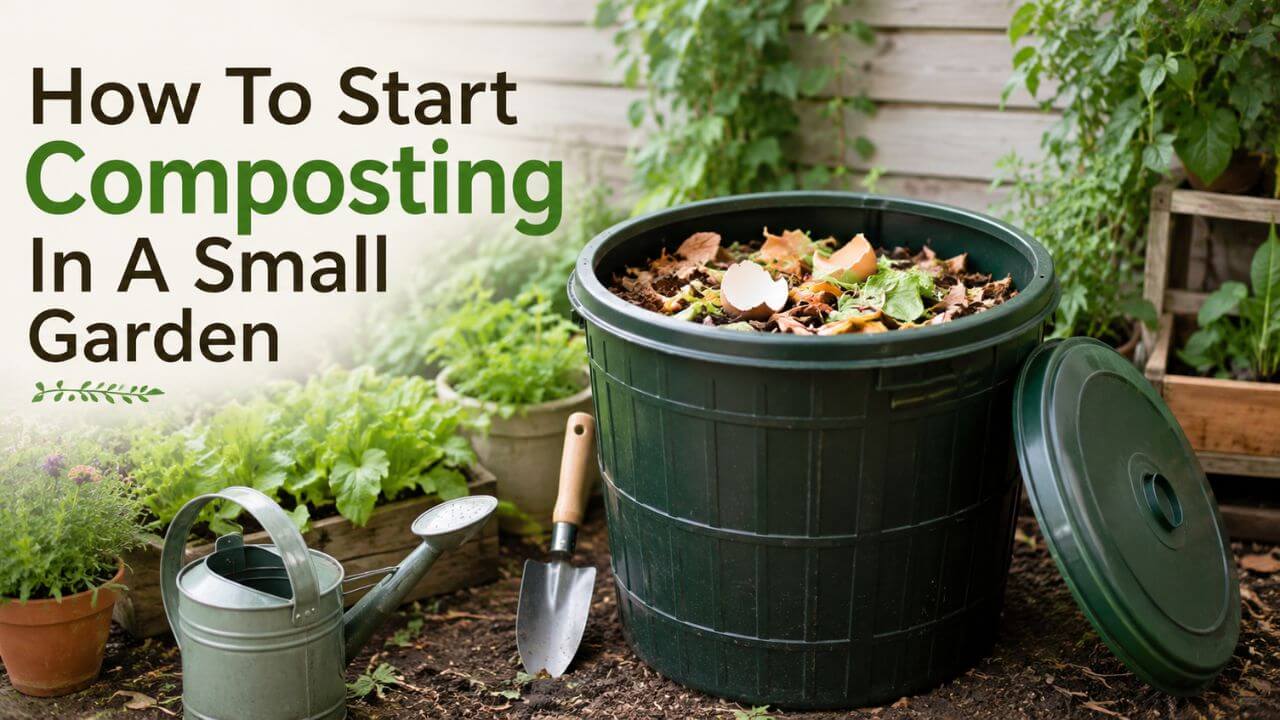
A small garden can produce valuable compost with the right setup and a simple routine. How To Start Composting In A Small Garden begins with choosing a suitable compost bin, balancing green and brown materials, and maintaining proper moisture and airflow.
Composting turns everyday kitchen scraps and garden waste into a natural soil booster. Vegetable peels, coffee grounds, leaves, and grass clippings can become rich organic matter instead of ending up in the trash.
I recommend starting with a compact compost system that fits your available space. A small bin or tumbler is easier to manage and helps beginners build confidence before expanding their setup.
For homeowners with limited outdoor space, composting offers a practical way to improve soil, reduce household waste, and create homemade compost for vegetables, flowers, and lawn areas.
What Is Small Garden Composting and How Does It Work?
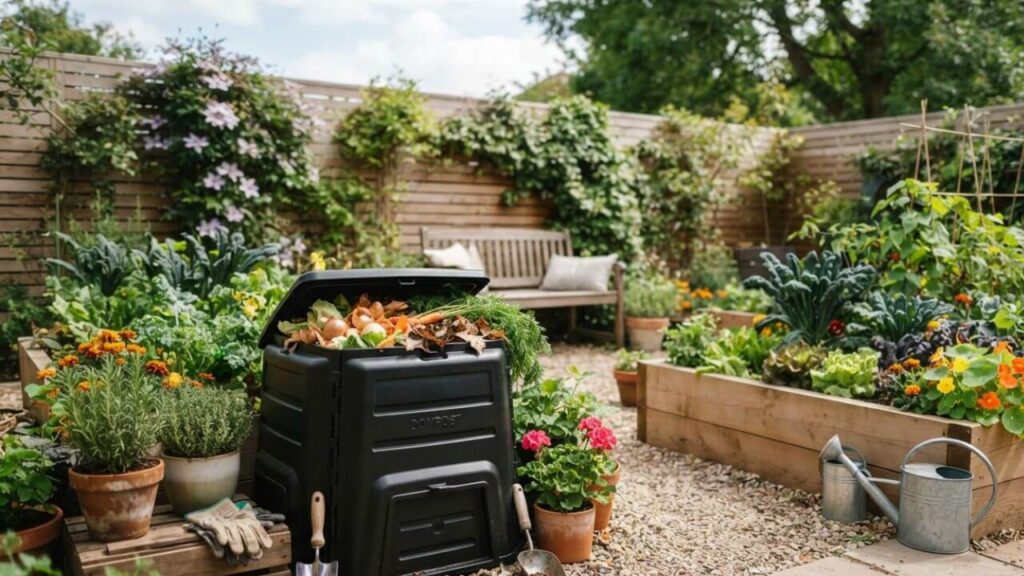
Small garden composting is the process of breaking down organic materials in a limited space to create nutrient-rich compost. Natural microorganisms, insects, oxygen, and moisture work together to transform waste materials into dark, crumbly compost.
The process depends on four important elements:
- Organic materials
- Oxygen
- Moisture
- Time
When these elements stay balanced, microorganisms break down materials and create compost that improves soil quality.
Unlike traditional backyard compost piles, small garden composting focuses on compact solutions. Gardeners can use compost tumblers, plastic bins, worm bins, or DIY containers depending on their available space.
The purpose is not only to reduce waste. Compost adds organic matter to soil, which helps improve moisture retention, drainage, and nutrient availability.
Small garden compost can be used for:
- Vegetable gardens
- Raised garden beds
- Container plants
- Flower gardens
- Lawn improvement
- Trees and shrubs
In my experience, beginners get better results when they start with a simple compost system. A small, well-maintained bin usually performs better than a large pile that becomes difficult to manage.
How To Start Composting In A Small Garden Step By Step
Starting a compost system does not require advanced gardening skills. With the right location, materials, and simple maintenance, beginners can create useful compost at home.
Step 1: Choose the Right Composting Location
The location of your compost bin affects how easy it will be to maintain.
Choose an area with:
- Partial shade
- Good airflow
- Easy access from your kitchen
- Good drainage
For composting in a small backyard, a corner near your garden works well. Keeping the bin nearby makes it easier to add kitchen scraps and yard waste regularly.
Avoid placing your compost bin in an area where rainwater collects. Excess moisture can slow decomposition and create unpleasant odors.
A spot with morning sunlight and afternoon shade works well in many U.S. climates. However, compost can work in different conditions as long as moisture and airflow are managed properly.
If you live in an apartment or have very limited outdoor space, consider compact apartment composting methods such as worm bins or small sealed compost containers.
Step 2: Choose the Best Compost Bin for Small Spaces
The best compost bin for small garden areas depends on your space, budget, and maintenance preference.
A good compost bin should:
- Fit your available area
- Allow airflow
- Hold moisture properly
- Be easy to maintain
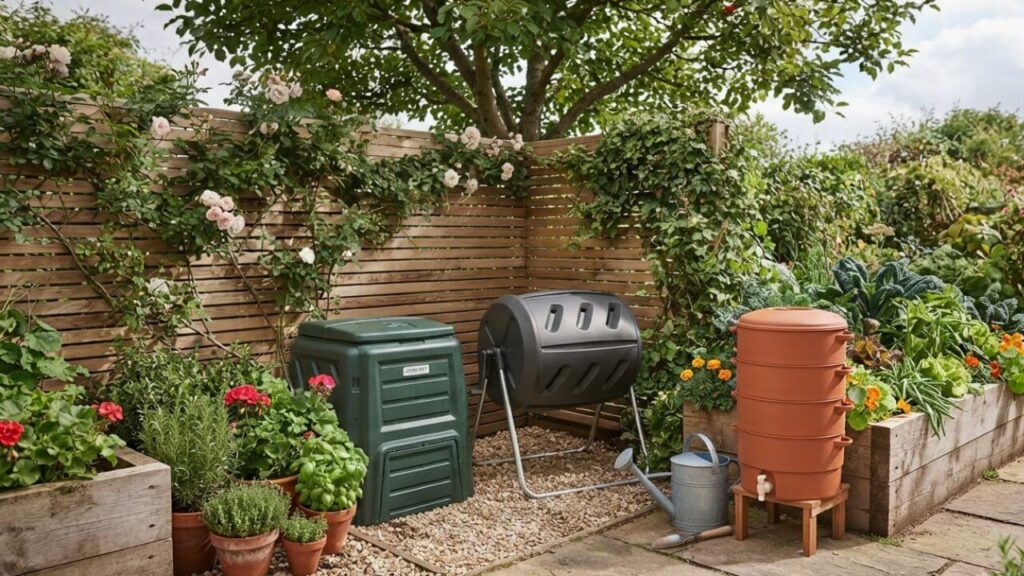
Compost Tumblers
Compost tumblers are one of the best choices for composting for beginners. They are designed to make turning easier because you can rotate the entire container.
They work well for homeowners who want a clean-looking compost system. Tumblers also help keep materials contained and reduce problems with animals.
The main limitation is capacity. A tumbler may not hold as much material as a large compost pile, but it works very well for small gardens.
Plastic Compost Bins
Plastic bins are affordable and simple. They work well for homeowners who want a basic compost system without frequent maintenance.
They help protect compost from heavy rain and keep moisture levels more stable.
Place the bin directly on soil when possible. This allows beneficial organisms from the ground to enter the compost system.
Worm Composting Bins
Worm bins are excellent for composting without a large yard.
They work well for apartments, balconies, and small patios. Red wigglers help break down food scraps quickly and produce nutrient-rich compost.
However, worm bins need careful management. Temperature, moisture, and feeding habits must stay balanced.
DIY Compost Bin Ideas
Creating your own compost bin can save money and allow you to design a system that fits your space.
Popular DIY compost bin ideas include:
- Wooden pallet bins
- Wire mesh containers
- Plastic storage container bins
- Recycled wooden boxes
I recommend choosing the simplest option that matches your routine. A compost system only works when you use and maintain it consistently.
Step 3: Add Green and Brown Materials
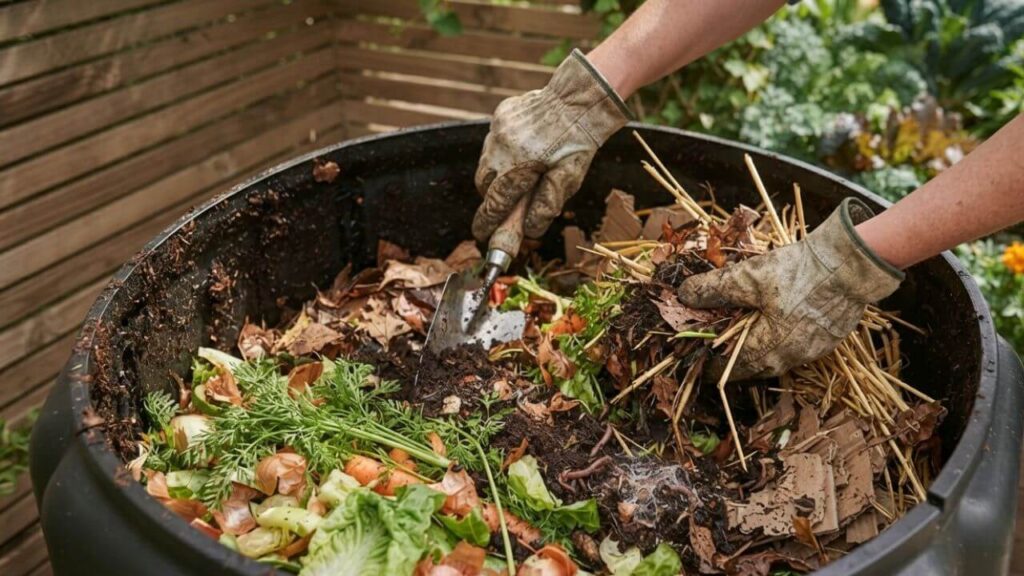
A healthy compost pile needs a balance of green and brown materials.
Green materials provide nitrogen. They help microorganisms grow and speed up decomposition.
Examples include:
- Vegetable scraps
- Fruit peels
- Coffee grounds
- Tea leaves
- Fresh grass clippings
- Garden trimmings
Brown materials provide carbon. They add structure and improve airflow inside the compost pile.
Examples include:
- Dry leaves
- Shredded cardboard
- Paper
- Straw
- Small branches
A balanced compost materials list should always include both groups.
Avoid adding only kitchen waste. Composting food scraps works best when wet materials are mixed with dry materials.
I recommend keeping extra dry leaves or shredded cardboard nearby. Adding a layer of brown material after food scraps helps control odors and keeps the compost balanced.
Step 4: Maintain Proper Moisture and Airflow
Compost needs moisture and oxygen to break down efficiently.
The ideal moisture level feels similar to a damp sponge. The pile should feel moist but should not release water when squeezed.
If your compost becomes too dry:
- Add a small amount of water
- Mix the materials
- Add more green materials if needed
If your compost becomes too wet:
- Add dry leaves
- Add shredded cardboard
- Turn the pile more frequently
Turning the compost every one to two weeks improves airflow and helps microorganisms work faster.
Climate also affects compost maintenance. Hot summer weather can dry compost quickly, especially in southern U.S. states. Cold winter temperatures slow decomposition, but the process continues once temperatures rise again.
What Can You Compost?
Choosing the right materials is one of the most important parts of successful small garden composting. A balanced compost pile breaks down faster, creates fewer problems, and produces better-quality compost for your plants.
The easiest way to manage compost is to combine green materials and brown materials. Green materials provide nitrogen, which helps microorganisms grow. Brown materials provide carbon, which keeps the pile structured and improves airflow.
Compost Materials List
Green Materials (Nitrogen-Rich)
Green materials are usually moist and break down quickly.
Examples include:
- Fruit scraps
- Vegetable peels
- Coffee grounds
- Tea leaves
- Fresh grass clippings
- Plant trimmings
- Fresh garden waste
Brown Materials (Carbon-Rich)
Brown materials add structure and help prevent the compost from becoming too wet.
Examples include:
- Dry leaves
- Shredded cardboard
- Newspaper
- Paper bags
- Straw
- Small twigs
- Untreated wood sawdust
For kitchen waste composting, I recommend keeping a small collection container in your kitchen. Add scraps regularly and cover them with dry leaves or cardboard when they go into the compost bin.
This simple habit helps reduce odors and keeps the compost pile balanced.
Materials You Should Avoid Adding
Not every organic item belongs in a home compost system.
Avoid adding:
- Meat
- Fish scraps
- Dairy products
- Cooking oil
- Greasy food
- Pet waste
- Diseased plants
- Weeds with mature seeds
These materials can attract pests, create unpleasant smells, or introduce problems into your garden.
A common beginner mistake is assuming that anything natural can go into compost. Some organic materials break down slowly or create problems in a small compost system.
For small gardens, keeping compost simple is usually the best approach. Plant-based materials are easier to manage and produce cleaner compost.
Best Compost Bin Options For Small Gardens
The right compost bin can make composting easier and more enjoyable. Your choice depends on your available space, budget, and how much maintenance you prefer.
| Compost Bin Type | Best For | Main Benefit |
| Compost tumbler | Beginners and small yards | Easy turning |
| Plastic compost bin | Simple backyard composting | Affordable and low maintenance |
| Worm bin | Apartments and tiny spaces | Works in limited areas |
Compost Tumblers
Compost tumblers are one of the easiest options for beginners. Instead of using a garden fork to turn the compost, you simply rotate the container.
This design makes mixing easier and improves airflow. Tumblers also keep compost materials contained, which makes them a good choice for patios and small yards.
The main drawback is limited capacity. A tumbler may not work for gardeners producing large amounts of yard waste.
For most small gardens, however, a compost tumbler provides an excellent balance between convenience and performance.
Plastic Compost Bins
Plastic compost bins are affordable and practical. They work well for homeowners who want a simple compost setup without spending much money.
These bins help protect compost from heavy rain and help maintain moisture levels. Many models include ventilation holes to improve airflow.
Place the bin directly on soil if possible. This allows worms and beneficial organisms to naturally enter the compost.
Plastic bins are a good choice for homeowners who want a low-maintenance solution.
Worm Composting Systems
Worm composting is useful for gardeners with very limited space.
Red wigglers are commonly used because they consume food scraps efficiently. These systems work well for apartments, balconies, and small patios.
However, worm bins require more attention than outdoor compost bins. They need proper moisture and temperature control.
For people using apartment composting methods, worm bins can be one of the most effective ways to recycle kitchen scraps.
Composting Without A Large Yard
A large backyard is not required to create compost. Many homeowners successfully compost in small spaces using compact systems.
Composting without a large yard works well with:
- Small compost tumblers
- Worm bins
- Balcony compost containers
- Indoor food scrap collection systems
For apartment gardeners, space is the biggest challenge. A small worm bin or countertop collection container can help manage kitchen waste before transferring materials to a community compost program.
For homeowners with tiny backyards, vertical compost bins and compact tumblers provide a practical solution.
I recommend focusing on consistency rather than size. A small compost system that receives regular attention will produce better results than a large neglected pile.
Small space gardening tips like saving dry leaves, shredding cardboard, and managing moisture can make a big difference in limited areas.
How To Make Compost At Home Faster
Composting naturally takes time, but a few simple improvements can speed up decomposition.
The fastest compost systems maintain a good balance of materials, moisture, and oxygen.
Chop Materials Into Smaller Pieces
Large pieces take longer to break down.
Cut vegetable scraps into smaller pieces before adding them to your compost bin. Shred cardboard and break larger garden materials apart.
Smaller pieces give microorganisms more surface area to work on.
Maintain A Balanced Compost Mix
Too many food scraps can make compost wet and slow. Too many dry materials can slow decomposition.
I recommend adding brown materials whenever you add kitchen scraps. This keeps the pile balanced and reduces odor problems.
Turn The Compost Regularly
Turning mixes materials and adds oxygen.
For faster results, turn your compost every one to two weeks.
You do not need to turn compost every day. Too much handling can make maintenance harder without improving results.
Keep The Right Moisture Level
Dry compost breaks down slowly. Overly wet compost can develop odor problems.
Check moisture regularly and adjust by adding water or dry materials when needed.
How Long Does Compost Take?
One of the most common beginner questions is: How long does compost take?
The answer depends on several factors:
- Material size
- Temperature
- Moisture level
- Oxygen supply
- How often the pile is turned
A small compost system may produce finished compost in:
| Maintenance Level | Time Needed |
| Regular turning and balanced materials | 2–4 months |
| Moderate maintenance | 4–6 months |
| Minimal maintenance | 6–12 months |
Warm weather speeds up decomposition. Gardeners in warmer U.S. regions may see faster results during spring and summer.
Cold climates slow microbial activity during winter. This is normal and does not mean the compost has failed.
Finished compost has:
- Dark brown color
- Earthy smell
- Crumbly texture
- Few recognizable materials
Common Beginner Composting Mistakes
Composting is simple, but beginners often make small mistakes that slow the process.
Adding Too Many Food Scraps
Kitchen scraps are useful, but too many at once create excess moisture.
Mix food waste with dry leaves, cardboard, or other brown materials.
Forgetting Brown Materials
A compost pile made mostly of food waste becomes wet and may smell bad.
Always balance green materials with carbon-rich browns.
Not Turning The Compost
Without airflow, materials break down slowly.
Turning helps oxygen reach microorganisms and keeps decomposition active.
Expecting Instant Results
Compost is a natural process. It requires time.
Trying to speed up compost too aggressively can create imbalance.
Adding The Wrong Materials
Avoid meat, dairy, oils, and pet waste.
A simple plant-based compost system is easier for beginners.
Expert Tips For Better Small Garden Composting
Small garden composting tips can help beginners create better compost with less effort.
Keep Brown Materials Ready
I recommend storing dry leaves, shredded cardboard, or paper near your compost bin.
Having these materials nearby makes it easy to balance fresh food scraps.
Check Your Compost Weekly
A quick weekly check helps prevent problems.
Look for:
- Proper moisture
- Bad smells
- Slow breakdown
- Excess food waste
Small adjustments prevent bigger problems later.
Use Finished Compost Correctly
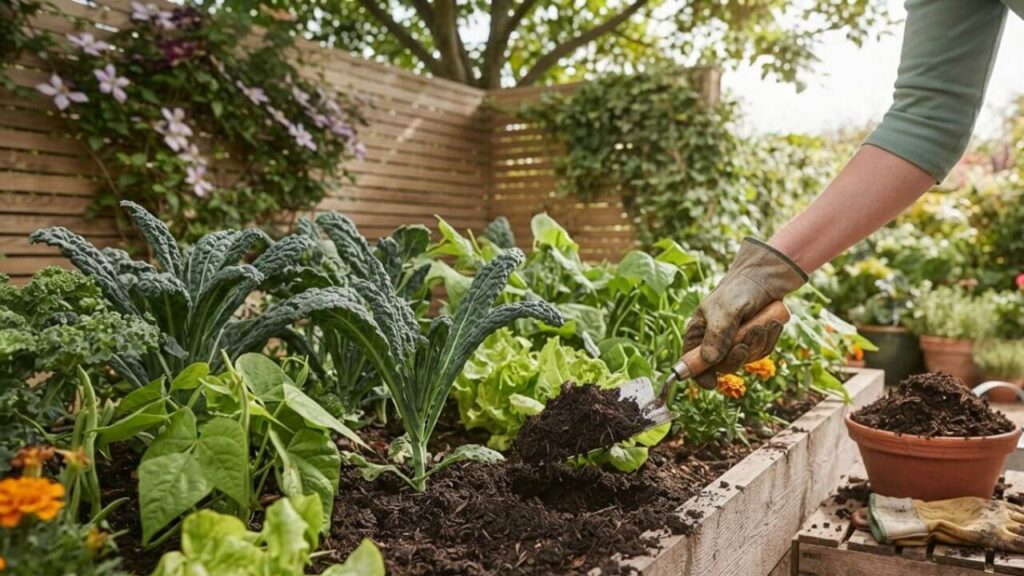
Finished compost can be mixed into garden soil, added around plants, or used in raised beds.
Avoid creating a thick layer directly around plant stems because too much organic material can hold excess moisture.
Start Small And Expand Later
Beginners often try to create a large compost system immediately.
A smaller setup is easier to learn and maintain. Once you understand the process, you can increase your composting capacity.
Maintenance Tips For Long-Term Compost Success
A healthy compost system needs simple but regular care.
Check your compost every week and adjust when needed.
A healthy pile should:
- Smell like fresh soil
- Stay slightly moist
- Have good airflow
- Slowly reduce in size
During hot weather, add water if the compost becomes dry.
During rainy seasons, add more brown materials if the pile becomes too wet.
For gardeners using composting in a small backyard, regular maintenance prevents most common issues.
A few minutes of weekly care can keep your compost productive throughout the year.
Frequently Asked Questions
Can I compost in a very small garden?
Yes. Small gardens can use compost tumblers, worm bins, or compact compost containers. You do not need a large backyard to create useful compost.
What is the best compost bin for small spaces?
Compost tumblers, plastic bins, and worm bins are excellent options. The best choice depends on your available space and how much maintenance you want.
How do I start a compost bin in a small garden?
Choose a suitable location, add green and brown materials, maintain moisture, and turn the compost regularly.
How long does compost take to become ready?
Most compost takes between two and six months depending on temperature, materials, moisture, and maintenance.
Can I compost kitchen scraps?
Yes. Vegetable scraps, fruit peels, coffee grounds, and tea leaves are excellent compost materials. Avoid meat, dairy, and oily foods.
Conclusion
Learning How To Start Composting In A Small Garden is a practical way to improve soil health and reduce household waste. A small compost bin, balanced materials, and simple maintenance are enough to create valuable compost at home.
Start with a system that fits your space. Add kitchen scraps, balance them with brown materials, and maintain proper moisture and airflow.
With time, your compost bin will transform everyday waste into nutrient-rich organic matter that helps create healthier plants and a more sustainable garden.

I enjoy sharing simple gardening ideas, lawn care tips, and honest product reviews that help make outdoor work easier. From home gardening guides to helpful tools and lawn care advice, I write easy-to-follow content to help readers create a healthier and better-looking outdoor space without wasting time or money.