
As an Amazon Associate, I earn from qualifying purchases.
Black pepper may be one of the world’s most common spices, but many gardeners are surprised to learn they can grow it at home. Learning How To Grow Black Pepper starts with understanding that it is a tropical climbing vine rather than a traditional vegetable crop. Give it warmth, humidity, and support to climb, and it can thrive for many years.
The reward is worth the wait. A healthy black pepper vine can produce fresh peppercorns while adding attractive green foliage to patios, greenhouses, and bright indoor spaces.
What Is Black Pepper?
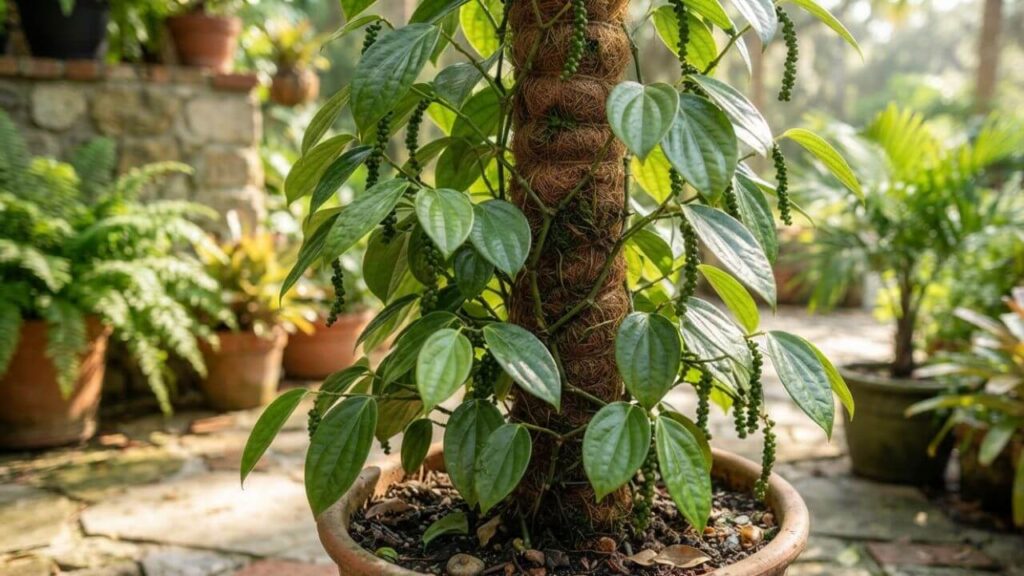
Black pepper comes from Piper nigrum, a tropical flowering vine native to southern India. The plant climbs trees and supports in humid forests where temperatures remain warm year-round.
The green berries produced by the vine become peppercorns after harvesting and drying. Depending on harvest timing and processing, the same plant can produce black, white, green, and red peppercorns.
Home gardeners grow black pepper for several reasons:
- Fresh homegrown peppercorns
- Attractive climbing foliage
- Indoor tropical plants
- Edible container gardening
- Unique conversation plants
Unlike annual vegetables, black pepper is a long-term gardening project.
Black Pepper Plant Growing Conditions
Success starts with recreating tropical conditions.
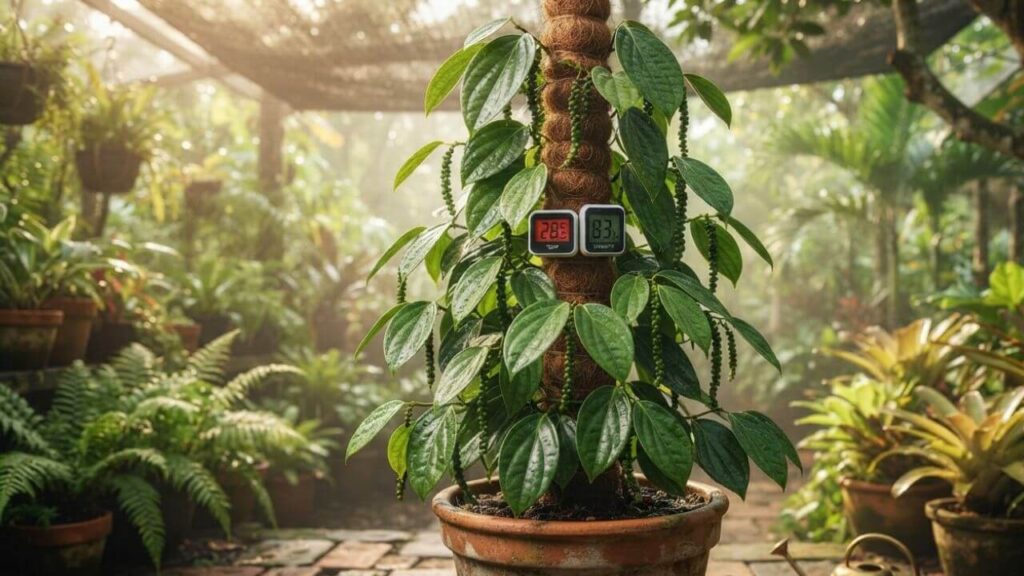
Many failed plants come from gardeners trying to grow black pepper like herbs or peppers. Black pepper thrives in environments that feel closer to a rainforest than a vegetable garden.
Ideal growing conditions include:
| Factor | Ideal Range |
| Temperature | 70°F to 90°F |
| Humidity | 60% to 80% |
| Soil pH | 5.5 to 6.5 |
Frost damages vines quickly. Temperatures below 55°F slow growth and may stress the plant.
The best climate for growing black pepper in the United States is found in parts of Florida, Hawaii, southern Texas, and southern California. Gardeners elsewhere have better results growing black pepper in pots.
How To Grow Black Pepper at Home
Most homeowners grow black pepper indoors or in containers because the plant moves easily during cold weather.
Start by choosing one of three planting methods:
- Nursery plants
- Stem cuttings
- Seeds
Young plants provide the fastest path to harvest. Growing black pepper from seeds works but requires more patience and careful temperature control.
If your goal is fresh peppercorns as quickly as possible, purchase an established plant from a tropical nursery.
Growing Black Pepper From Seeds
Growing black pepper from seeds sounds simple but creates challenges for beginners.
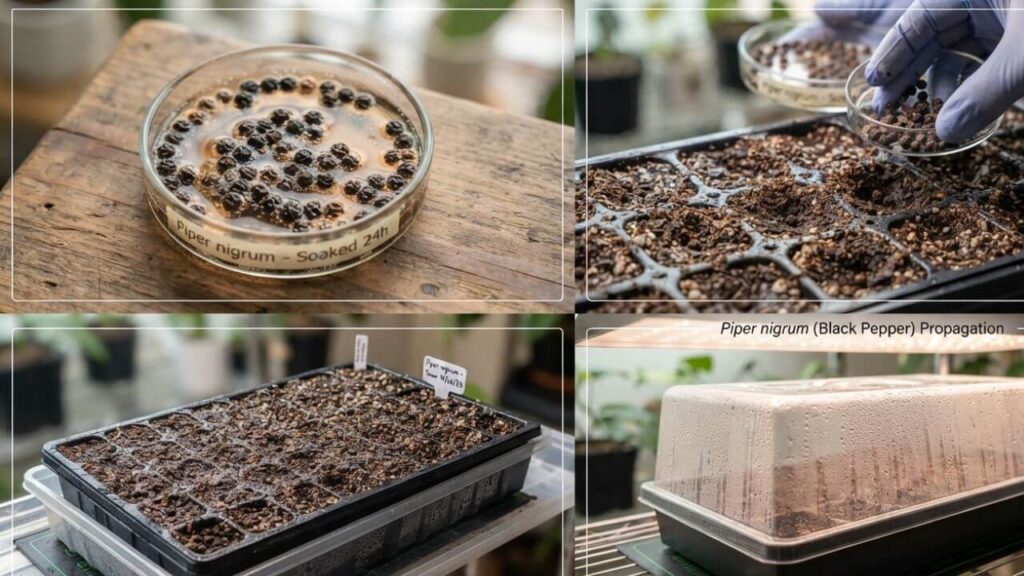
Kitchen peppercorns rarely germinate because processors dry and heat them before packaging. Purchase fresh seeds from a garden supplier instead.
To start seeds:
- Soak seeds in warm water for 24 hours.
- Fill containers with seed-starting mix.
- Plant seeds about one-quarter inch deep.
- Keep soil moist but not saturated.
- Maintain temperatures above 75°F.
- Cover trays to increase humidity.
Germination may take several weeks.
One mistake I made early was allowing temperatures to drop at night. Warmth matters just as much as moisture during germination.
How To Plant Black Pepper
Black pepper vines need support from the beginning.
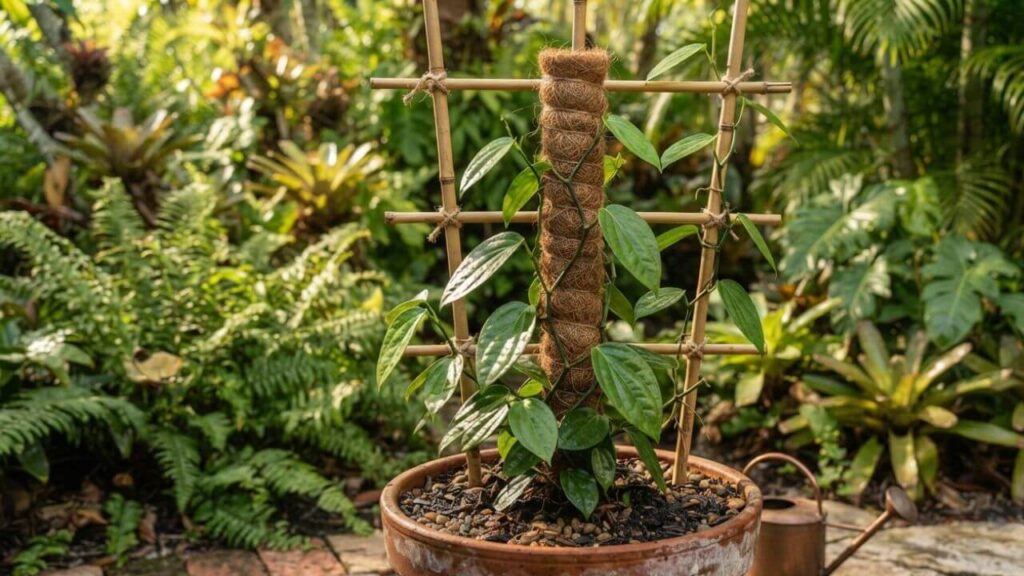
Plant the vine at the same depth as its nursery container and install a support structure immediately. Waiting too long can damage roots later.
Good support options include:
- Trellises
- Bamboo poles
- Moss poles
- Wire frames
- Pergolas
Growing peppercorn plants without support produces weak growth and tangled stems.
Choose a location with filtered sunlight and good airflow. Avoid windy locations because young vines break easily.
Black Pepper Soil Requirements
Soil quality determines long-term success.
Black pepper soil requirements include moisture retention, good drainage, and plenty of organic matter. Roots enjoy moisture but decline quickly in compacted soil.
A good mix contains:
- Compost
- Coco coir
- Pine bark fines
- Perlite
Heavy clay soil creates drainage problems and increases disease risk.
When growing black pepper in pots, use premium potting mix rather than garden soil. Container roots need extra airflow to stay healthy.
Black Pepper Sunlight Requirements
Sunlight confuses many beginners.
Black pepper evolved under forest canopies where sunlight filters through taller trees. Full afternoon sun may burn leaves and slow growth.
The best black pepper sunlight requirements include:
- Morning sun
- Bright indirect light
- Afternoon shade
Indoor plants perform well near east-facing windows.
Signs of excessive sunlight include:
- Brown leaf edges
- Curled foliage
- Faded green color
Weak growth and stretched stems usually indicate insufficient light.
Black Pepper Watering Needs
Watering mistakes cause more failures than pests or fertilizer problems.
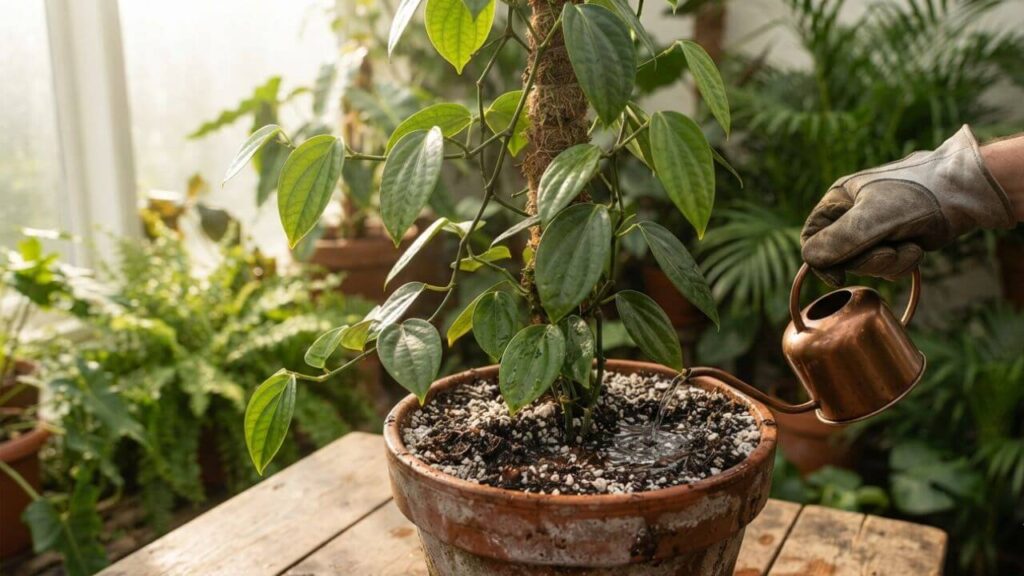
Black pepper watering needs remain fairly simple once the plant establishes. The soil should stay evenly moist without becoming soggy.
Check soil every few days.
If the top inch feels dry, water deeply until moisture reaches the root zone. If soil remains damp, wait another day before watering.
Container plants dry faster during summer.
One lesson I learned the hard way was that drooping leaves do not always mean thirst. Overwatered roots can create the same symptoms as dry soil.
Growing Black Pepper in Pots
Container gardening gives most US homeowners the best chance of success.
Choose a container that provides:
- Drainage holes
- At least 12 inches of width
- Space for support structures
Large decorative containers look attractive but may hold too much moisture.
Growing black pepper in pots also allows you to:
- Move plants indoors during winter
- Control soil quality
- Reduce disease problems
- Adjust sunlight exposure
Repot every two to three years as roots expand.
Black Pepper Plant Indoors
Indoor growing requires a few extra adjustments.
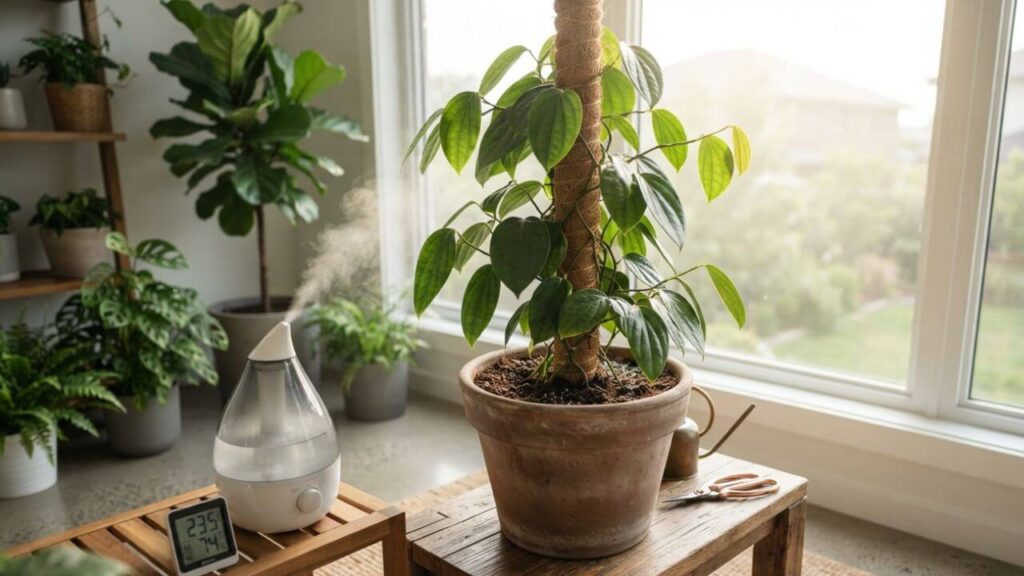
Heating and air conditioning reduce humidity quickly. Low humidity becomes one of the biggest challenges for black pepper plant indoors success.
Increase moisture levels by:
- Using humidifiers
- Grouping plants together
- Using pebble trays
- Growing plants near other tropical plants
Brown leaf tips often signal dry air rather than watering problems.
Bathrooms with bright windows sometimes create excellent environments because showers naturally increase humidity.
Black Pepper Propagation Methods
Propagation allows gardeners to expand their collection without buying more plants.
Stem cuttings produce the best results.
To propagate:
- Select healthy vines with several nodes.
- Cut below a leaf node.
- Remove lower leaves.
- Place cuttings into moist potting mix.
- Maintain warmth and humidity.
Roots usually appear within several weeks.
Many gardeners prefer this method because black pepper propagation methods using cuttings produce mature plants faster than seeds.
Fertilizing Black Pepper Plants
Black pepper vines benefit from regular but light feeding.
Apply balanced liquid fertilizer every four to six weeks during active growth. Compost also works well for outdoor plants.
Avoid heavy fertilizer use.
Too much fertilizer creates lush foliage but fewer peppercorns.
Reduce feeding during winter when growth slows.
Healthy soil contributes more to long-term success than aggressive feeding schedules.
How Long Does Black Pepper Take To Grow?
This remains one of the most searched questions about black pepper cultivation.
Young nursery plants may produce peppercorns in three years under ideal conditions.
Plants grown from seed often require:
- Three years for early production
- Four years for reliable harvests
- Longer in cooler climates
The waiting period surprises many gardeners.
The advantage is longevity. Mature vines continue producing for many years once established.
Black Pepper Harvesting Guide
Harvest timing affects flavor and quality.
Peppercorn clusters begin green and slowly change color as they mature. Harvest spikes when some berries begin turning yellow or orange.
To make black pepper:
- Harvest mature spikes.
- Wash the berries.
- Briefly blanch in hot water.
- Dry for several days.
The skin wrinkles and darkens during drying, creating familiar black peppercorns.
Fresh homegrown pepper has a stronger aroma than store-bought products.
Common Problems and Solutions
Even healthy vines encounter challenges.
| Problem | Likely Cause | Solution |
| Yellow leaves | Overwatering | Reduce watering |
| Brown tips | Low humidity | Increase moisture |
| Slow growth | Poor light | Move to brighter area |
Spider mites occasionally appear indoors.
Inspect leaves regularly and wash foliage if pests appear.
Early action prevents major infestations.
Common Mistakes To Avoid
Most beginner mistakes repeat themselves across almost every failed black pepper vine growing guide.
Avoid these problems:
- Planting in heavy soil
- Growing without support
- Using full afternoon sun
- Overwatering containers
- Expecting harvests in year one
Another mistake involves moving plants constantly.
Black pepper responds best to stable conditions.
Expert Black Pepper Farming Tips
After several seasons growing tropical plants, a few habits consistently improve results.
- Rotate container plants monthly.
- Prune lightly after harvest.
- Use mulch to protect roots.
- Monitor humidity levels regularly.
- Inspect for pests every week.
Consistency matters more than perfection.
Healthy vines recover from occasional mistakes when their basic needs remain stable.
Frequently Asked Questions
Can black pepper grow in the United States?
Yes. Outdoor growing works in USDA zones 10 and 11, while container growing works almost anywhere.
How long does black pepper take to grow?
Most plants produce peppercorns after three to four years.
Can I grow black pepper indoors?
Yes. Bright indirect light and high humidity support indoor growth.
Does black pepper need full sun?
No. Black pepper grows best in filtered sunlight or partial shade.
Can I grow black pepper from grocery store peppercorns?
No. Store-bought peppercorns rarely germinate because processing damages viability.
Conclusion
Learning how to grow black pepper becomes much easier once you understand its tropical roots.
Focus on warmth, humidity, rich soil, steady moisture, and climbing support. Start with a healthy young plant if possible and avoid rushing the process.
A black pepper vine rewards patience. Give it the right conditions and it can provide fresh peppercorns and attractive foliage for many years.

I enjoy sharing simple gardening ideas, lawn care tips, and honest product reviews that help make outdoor work easier. From home gardening guides to helpful tools and lawn care advice, I write easy-to-follow content to help readers create a healthier and better-looking outdoor space without wasting time or money.