
As an Amazon Associate, I earn from qualifying purchases.
Fresh basil, mint, and parsley do not require a backyard. Balcony Herb Garden Ideas can turn a small apartment balcony into a productive growing space that supplies herbs for cooking year-round. Even a balcony with room for only a few containers can support several useful plants.
Herbs are perfect for urban gardening because they grow well in pots, recover quickly after harvesting, and require very little space. With a smart layout and the right plants, even beginners can create an attractive and productive herb garden.
Why Start a Balcony Herb Garden?
A balcony herb garden offers benefits beyond fresh ingredients. Herbs add greenery, fragrance, and color to outdoor living spaces while making better use of unused square footage.
I recommend herbs to new gardeners because they provide quick rewards. Harvesting basil for pasta or mint for tea just weeks after planting keeps people excited about gardening.
Some of the biggest benefits include:
- Fresh herbs close to the kitchen
- Lower grocery bills
- Better use of small outdoor spaces
- Easy maintenance
- Attractive balcony decoration
- A relaxing gardening hobby
For apartment residents, herbs provide one of the easiest ways to start gardening without needing a yard.
Balcony Herb Garden Setup Tips for Better Results
A successful garden starts with understanding your space.
Sunlight Requirements
Most herbs need six to eight hours of sunlight each day. South-facing balconies provide the best growing conditions in most parts of the United States.
If your balcony receives only morning sun, choose shade-tolerant herbs such as mint, parsley, and chives.
Balcony Weight Limits
Large containers filled with wet soil become surprisingly heavy. Most modern balconies handle container gardens easily, but avoid clustering many large pots in one area.
Wind Exposure
High-rise balconies can experience strong winds that dry plants quickly and damage stems.
Heavy containers, windbreak panels, and grouping plants help reduce this problem.
Water Drainage
Good drainage protects both plants and balcony surfaces.
Use saucers under containers and avoid allowing water to pool around roots.
Best Herbs for Balcony Gardens
Choosing the right herbs makes gardening easier and more rewarding.
| Herb | Sun Requirement | Difficulty |
| Basil | Full Sun | Easy |
| Mint | Partial Sun | Very Easy |
| Parsley | Partial Sun | Easy |
| Chives | Full Sun | Easy |
| Oregano | Full Sun | Easy |
| Thyme | Full Sun | Easy |
These remain some of the best herbs for balcony gardens because they adapt well to containers and frequent harvesting.
Easy Herbs to Grow on a Balcony
For beginners, I recommend starting with:
- Basil
- Mint
- Parsley
- Chives
- Oregano
These herbs forgive mistakes and grow well in most climates.
1. Balcony Railing Planters
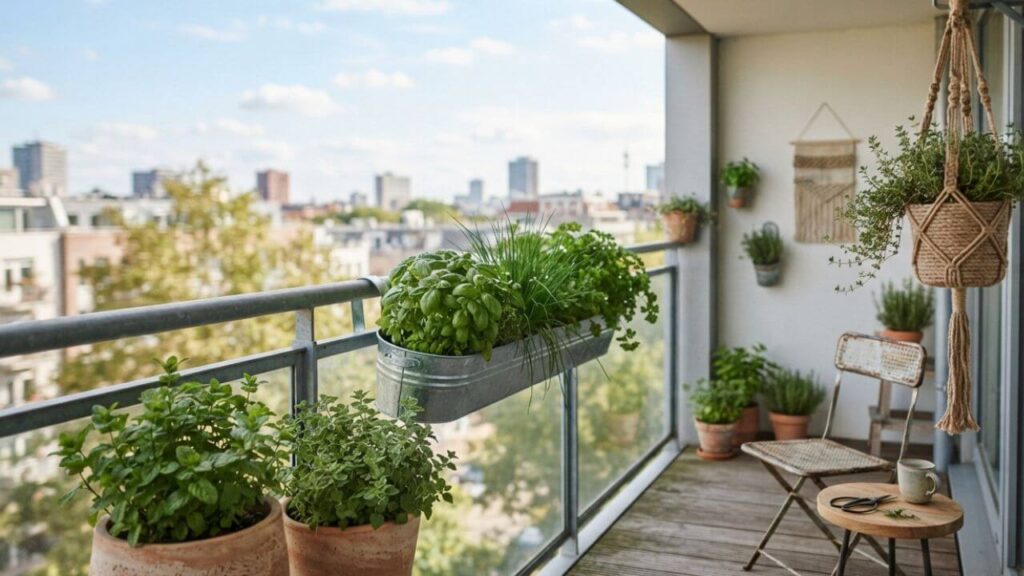
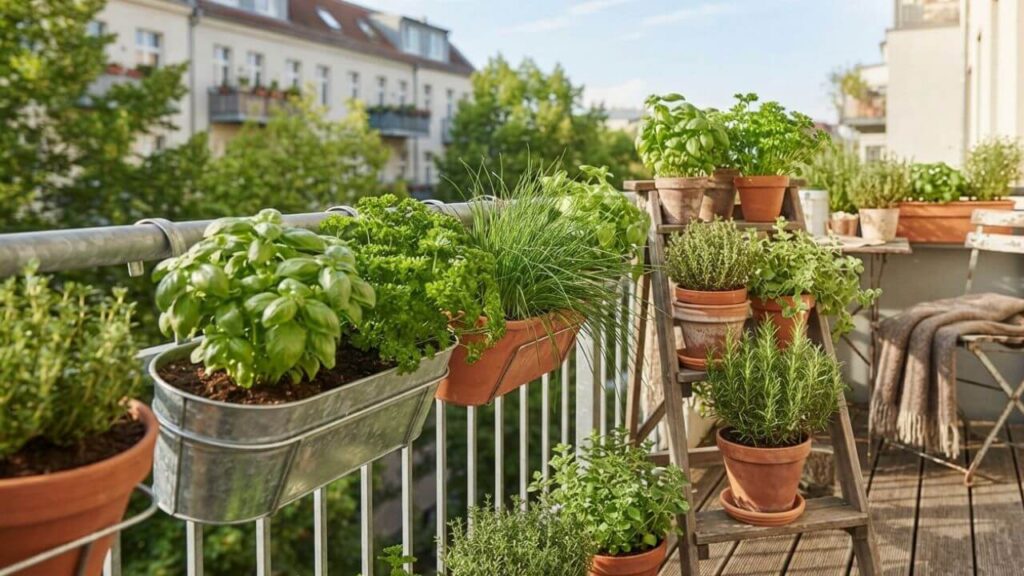
Railing planters are one of the easiest ways to add growing space without sacrificing valuable floor area. They attach directly to balcony railings and turn unused edges into productive herb gardens.
These planters work especially well for basil, parsley, cilantro, and chives because these herbs stay compact and benefit from the extra sunlight available near balcony edges. Keeping herbs at eye level also makes harvesting faster and encourages more frequent use in cooking.
For a cleaner appearance, plant herbs with similar water requirements together. Basil and parsley pair well in the same planter, while rosemary and thyme prefer their own drier container.
2. Corner Herb Gardens
Corners are one of the most underused areas in small balconies. A simple group of stacked pots or a tiered stand can transform an empty corner into a productive growing space.
I recommend placing taller herbs such as rosemary or dill in the back and shorter herbs like thyme and oregano in front. This arrangement improves sunlight access and creates a layered appearance that feels larger than the actual footprint.
Corner gardens also work well for renters because they require no drilling or permanent installation.
3. Window Box Herb Gardens
Window boxes create one of the neatest and most organized balcony herb gardens. Instead of managing many small pots, you can grow several herbs in a single long container.
The key is grouping herbs according to their watering needs. Basil, parsley, and chives enjoy slightly more moisture and grow well together. Rosemary, sage, and thyme prefer drier soil and should share a separate box.
Window boxes also create a lush appearance quickly because the plants grow close together and fill the container within a few weeks.
4. Narrow Shelf Gardens
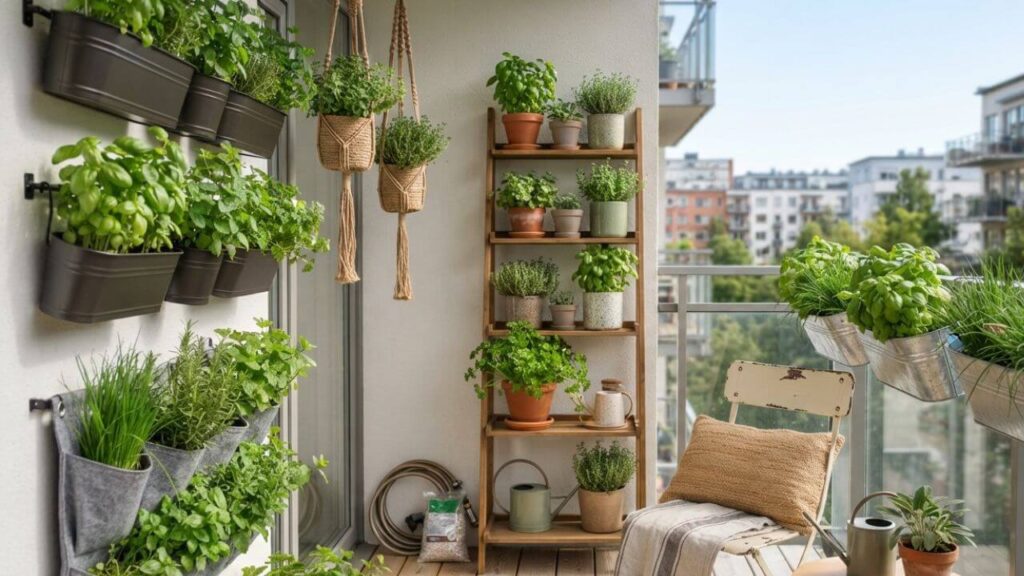
Narrow shelving units are ideal for balconies where floor space is limited but vertical room is available.
A three-tier shelf can hold ten or more herb containers while using less than four square feet of space. The upper shelves can support sun-loving herbs such as basil and oregano, while lower levels provide a better environment for mint and parsley.
This arrangement keeps herbs organized and makes watering much easier than moving individual pots around the balcony.
Vertical Herb Garden for Balcony Spaces
A vertical herb garden can double or even triple production without requiring additional floor space. These systems work especially well for apartments where every square foot matters.
5. Wall-Mounted Planters
Wall-mounted planters turn unused walls into productive growing areas. They create a modern appearance while freeing floor space for furniture or larger containers.
Basil, thyme, oregano, and parsley perform especially well in these systems because they have relatively shallow root systems.
6. Hanging Basket Herb Gardens
Hanging baskets bring herbs closer to sunlight while keeping walkways clear.
Mint performs exceptionally well in hanging containers because its trailing stems naturally spill over the sides. Nasturtiums and trailing strawberries can also be mixed with herbs for a more decorative appearance.
7. Pocket Planters
Fabric pocket planters allow dozens of herbs to grow in a surprisingly small area.
Individual pockets make it easier to separate herbs with different watering needs. This setup also improves airflow and reduces disease problems during humid summers.
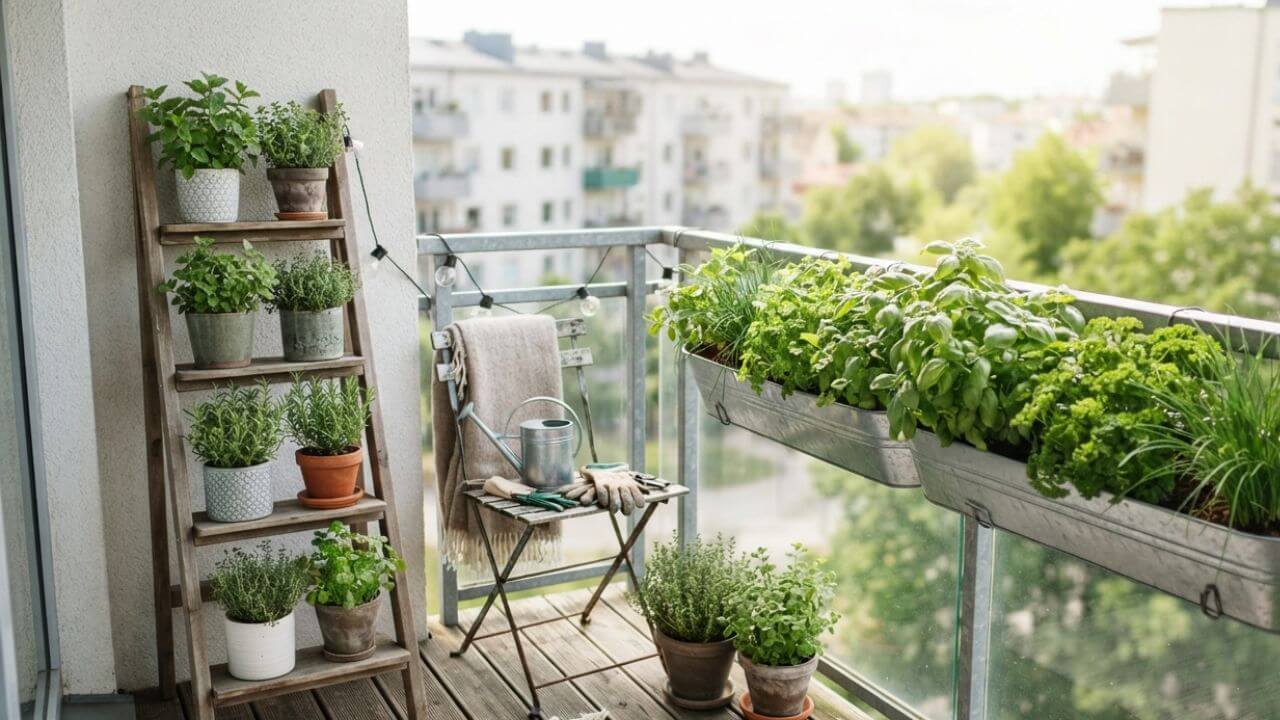
8. Ladder Shelf Gardens
Old ladders create attractive vertical herb displays with very little effort.
Each shelf receives slightly different amounts of sunlight, making it easy to match herbs with their preferred conditions. In my experience, ladder gardens provide one of the best combinations of productivity, accessibility, and appearance.
DIY Balcony Herb Garden Ideas
DIY projects reduce costs and make balcony gardens feel more personal.
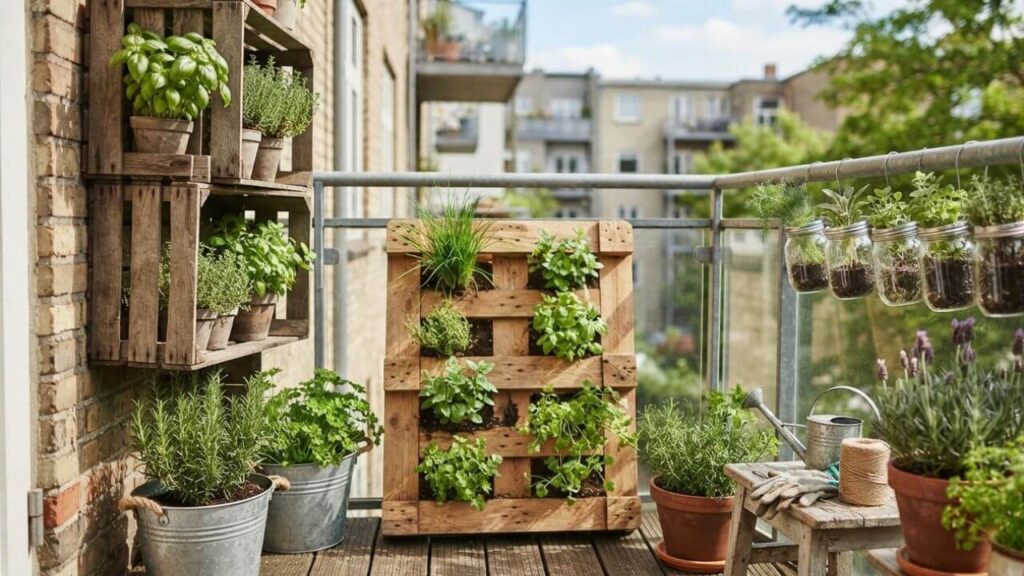
9. Wooden Crate Herb Gardens
Wooden crates create a rustic farmhouse look that works well with outdoor spaces. They can be stacked vertically or arranged horizontally depending on available room.
10. Repurposed Bucket Planters
Old buckets become excellent herb containers once drainage holes are added.
Because buckets hold more soil than small decorative pots, they dry out more slowly during summer heat. This makes them especially useful for thirsty herbs like mint and basil.
11. Pallet Herb Gardens
Pallet gardens remain one of the most popular apartment gardening projects.
Mounted against a wall, a pallet creates multiple growing pockets while occupying very little floor space. Renters appreciate them because they can move easily during relocation.
12. Mason Jar Herb Displays
Mason jars add decorative appeal and work well for seedlings or small herbs placed near outdoor dining areas.
I recommend using jars as accent planters rather than primary growing containers because mature herbs quickly outgrow them.
Apartment Balcony Herb Garden Layout Ideas
The best layout balances plant production with comfortable living space.
Small Balcony Setup
For balconies under 40 square feet, simplicity works best:
- One railing planter
- Two floor containers
- One hanging basket
This setup comfortably grows basil, parsley, mint, chives, and oregano while leaving room for seating.
Medium Balcony Setup
Medium balconies provide more flexibility and can support:
- Tiered shelves
- Vertical gardens
- Hanging baskets
- Multiple floor pots
This arrangement can supply enough herbs for an entire family during the growing season.
Large Balcony Setup
Larger balconies allow gardeners to combine raised planters, seating areas, and decorative displays.
At this point, the space begins to feel less like a balcony and more like a small outdoor room filled with edible plants.
Container Herb Garden Ideas
Choosing the right container affects both appearance and maintenance requirements.
13. Terracotta Pots
Terracotta dries quickly, reducing the risk of overwatering. These containers work especially well for Mediterranean herbs such as rosemary, thyme, and oregano.
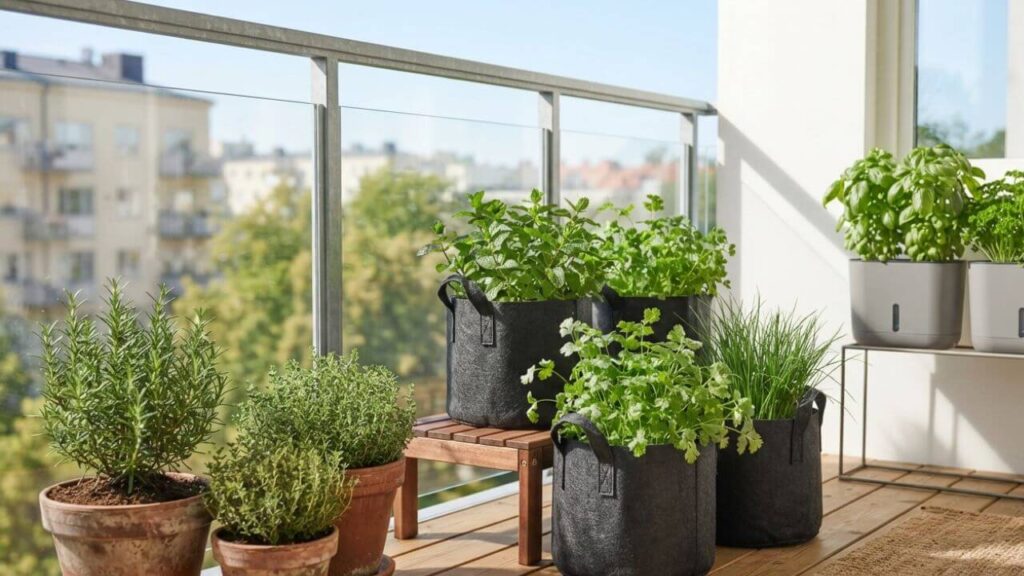
14. Grow Bags
Grow bags improve airflow around roots and prevent soil compaction. They are lightweight and easy to move when sunlight changes throughout the season.
15. Self-Watering Containers
Self-watering containers provide a reserve of moisture beneath the soil surface. They are ideal for busy homeowners and reduce stress during summer heat waves or vacations.
For beginners, I recommend combining self-watering containers with basil and parsley because these herbs appreciate consistent moisture.
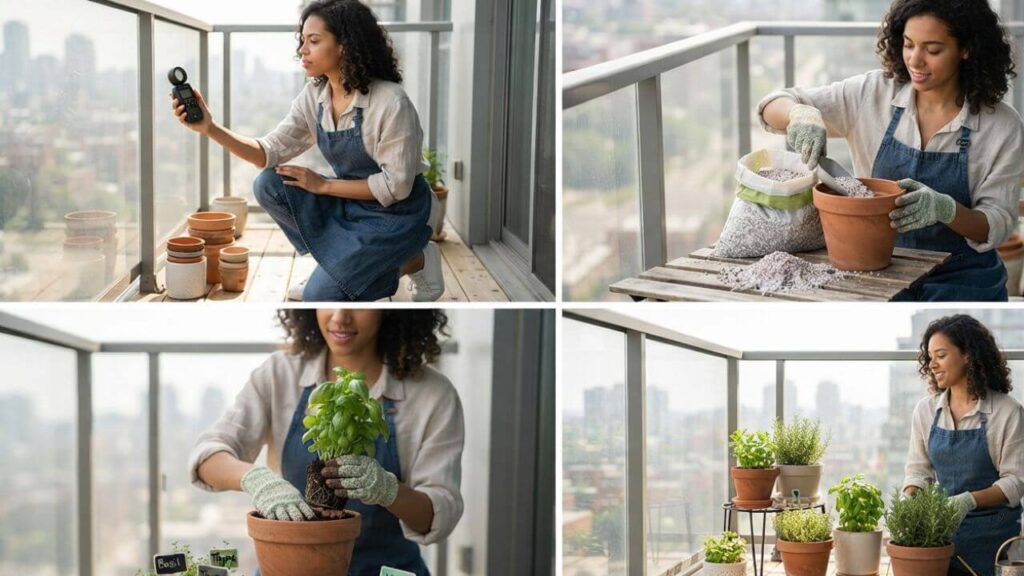
Balcony Herb Garden Setup Step by Step
Starting a garden becomes easier when broken into simple steps.
Step 1: Measure Sunlight
Track how many hours of sun your balcony receives each day.
Step 2: Choose Containers
Select containers with drainage holes and enough room for mature roots.
Step 3: Select Herbs
Match herbs to your available sunlight conditions.
Step 4: Fill Containers
Use a lightweight potting mix designed for containers.
Step 5: Arrange the Layout
Place taller plants toward walls and shorter plants near railings.
Step 6: Water Thoroughly
Water deeply after planting and monitor moisture carefully during the first few weeks.
Common Balcony Herb Garden Mistakes
Most beginner problems come from a few common mistakes.
- Overcrowding containers
- Ignoring sunlight needs
- Using heavy garden soil
- Overwatering herbs
- Allowing herbs to flower too early
- Forgetting about wind exposure
Avoiding these issues dramatically improves results.
Expert Balcony Gardening Tips
These balcony gardening tips consistently improve harvests.
- Group herbs by water needs.
- Rotate containers weekly.
- Harvest regularly to encourage growth.
- Use mulch to reduce evaporation.
- Feed herbs monthly during active growth.
I also recommend keeping one empty container available for replacement plants during summer heat waves.
Indoor and Outdoor Herb Garden Ideas
Combining indoor and outdoor growing extends the harvest season.
For example:
- Basil can move indoors before frost.
- Mint grows indoors all year.
- Parsley transitions easily between seasons.
This approach keeps fresh herbs available regardless of weather conditions.
Frequently Asked Questions
What herbs grow best on balconies?
Basil, mint, parsley, chives, oregano, and thyme are excellent choices.
Can herbs grow on shaded balconies?
Yes. Mint, parsley, and chives tolerate partial shade well.
How often should balcony herbs be watered?
Check containers daily during summer and water when the top inch becomes dry.
What is the best container for herbs?
Containers with drainage holes and a width of at least 8 inches work best.
Can renters create balcony herb gardens?
Absolutely. Containers, shelves, and hanging baskets require no permanent installation.
Conclusion
A productive herb garden does not require a backyard. The right balcony herb garden ideas can transform even the smallest apartment balcony into a useful growing space filled with fresh ingredients and attractive greenery.
Start with a few easy herbs, pay attention to sunlight, and keep the layout simple during the first season. Once your garden begins producing fresh basil, mint, or parsley, expanding the collection becomes hard to resist.

I enjoy sharing simple gardening ideas, lawn care tips, and honest product reviews that help make outdoor work easier. From home gardening guides to helpful tools and lawn care advice, I write easy-to-follow content to help readers create a healthier and better-looking outdoor space without wasting time or money.