
As an Amazon Associate, I earn from qualifying purchases.
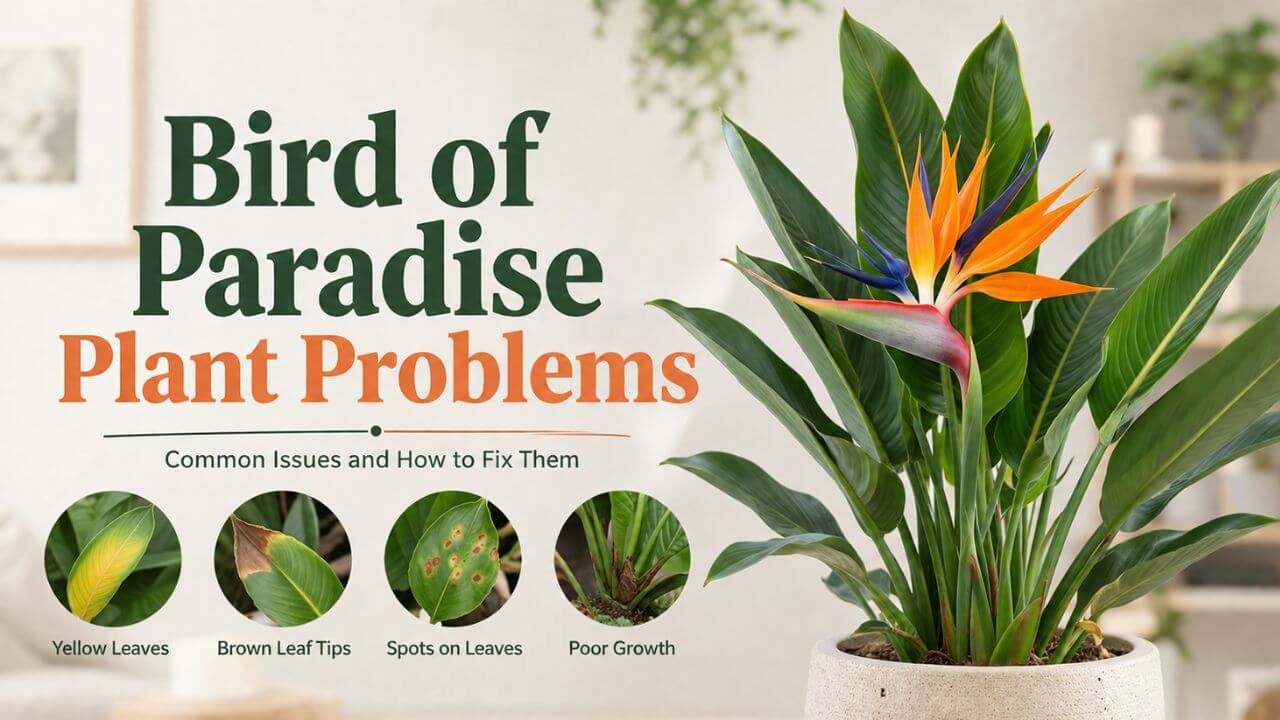
The most common bird of paradise plant problems include brown or yellow leaves, curling, drooping, root rot, pests, and slow growth caused by improper watering, poor light, or low humidity.
Bird of paradise plants are loved for their large tropical leaves and bold look, but several issues can affect their health. Brown edges, yellow leaves, curling foliage, and slow growth are common concerns for indoor gardeners. The good news is that most problems have a clear cause. Once you identify the issue, you can adjust watering, light, humidity, soil, or pest control to help your plant recover.
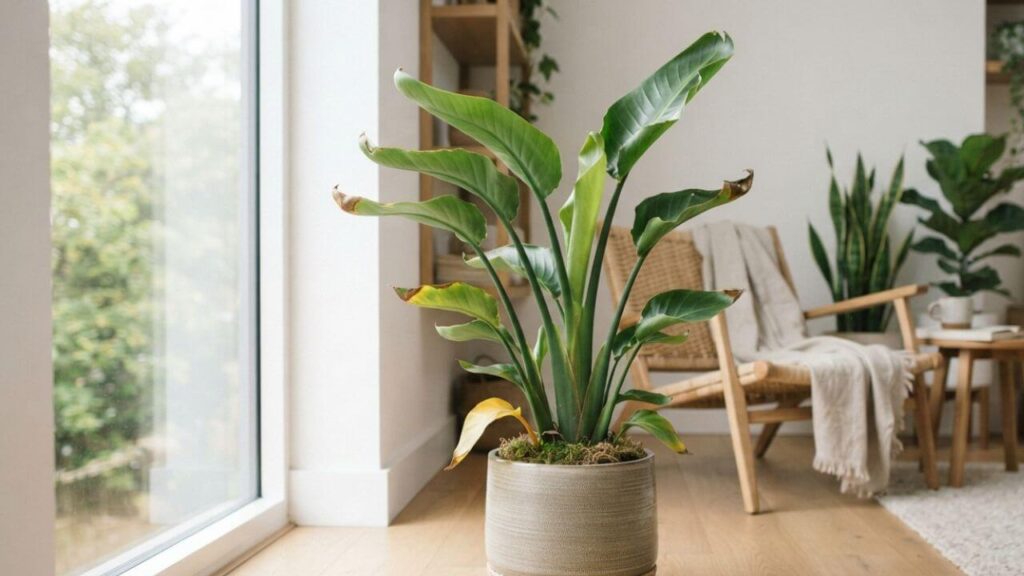
Bird of Paradise Plant Problems and Solutions at a Glance
Most bird of paradise plant issues are linked to a few basic care mistakes. Before changing several things at once, inspect the plant and its growing conditions.
| Problem | Likely cause | What to do |
|---|---|---|
| Brown leaves | Dry soil, low humidity, salt buildup | Improve watering and humidity |
| Yellow leaves | Overwatering or poor drainage | Check roots and soil moisture |
| Curling leaves | Water stress, heat, pests | Check moisture and leaf undersides |
| Drooping leaves | Underwatering or root damage | Check soil and roots |
| Black leaves | Cold, rot, or severe damage | Remove damaged tissue and fix cause |
| No new growth | Low light, stress, season | Increase light and improve care |
| Pests | Spider mites, scale, mealybugs | Isolate and treat early |
The key is to look at the whole plant. A single brown leaf may not mean your plant has a serious disease. Several symptoms appearing together provide much more useful information.
1. Bird of Paradise Leaves Turning Brown
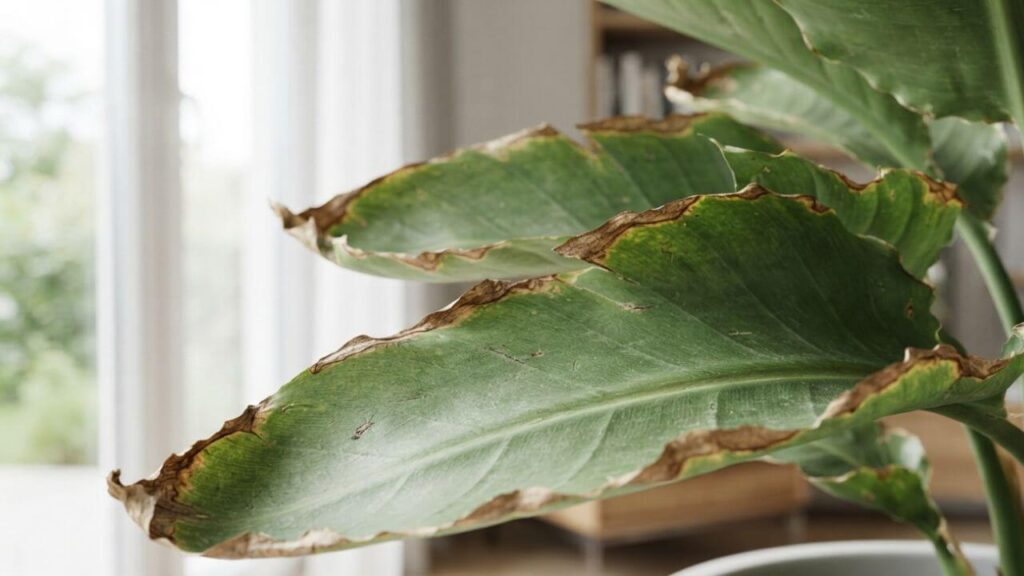
Bird of paradise leaves turning brown is one of the most common problems indoor gardeners face. Brown edges or tips usually point to environmental stress rather than a single disease.
Dry soil is a common cause. Large leaves lose moisture through transpiration, especially in heated homes or rooms with air conditioning. If the soil stays dry for too long, the leaf edges may turn brown and crispy.
Low humidity can also contribute, particularly during winter. However, increasing humidity alone will not fix a plant that has inconsistent watering or damaged roots.
Other possible causes include:
- Direct exposure to hot, dry air
- Salt buildup from fertilizer or hard water
- Underwatering
- Root damage
- Sudden changes in temperature
Check the soil before watering. If the top few inches feel dry and the pot feels unusually light, water deeply until excess water drains from the bottom.
I recommend trimming completely brown sections with clean, sharp scissors. The damaged tissue will not turn green again, but removing it improves the plant’s appearance.
2. Bird of Paradise Leaves Turning Yellow
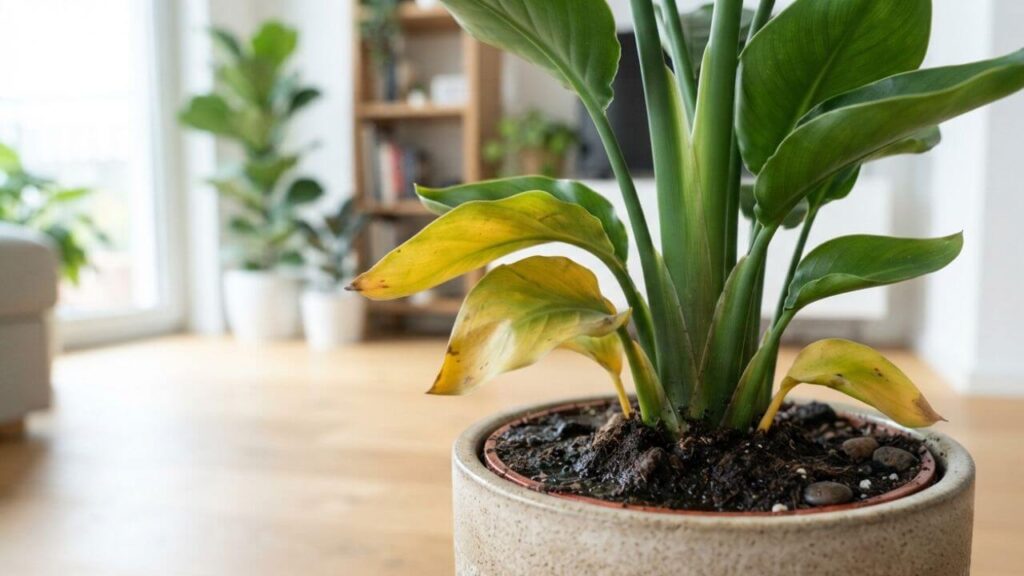
Bird of paradise leaves turning yellow can indicate too much moisture around the roots. Overwatering is especially common when gardeners follow a strict watering schedule instead of checking the soil.
Poor drainage makes the problem worse. If the pot has blocked drainage holes or the soil holds too much water, roots may struggle to get enough oxygen.
Yellow leaves can also appear when older leaves naturally age. One older leaf turning yellow while new growth looks healthy is less concerning than several leaves changing color at once.
Check these factors:
- Is the soil still wet several days after watering?
- Does the container have drainage holes?
- Is water collecting in the saucer?
- Does the plant receive enough bright light?
- Are the roots firm and light-colored?
If the soil remains soggy, allow it to dry to an appropriate level before watering again. If you suspect root rot, inspect the roots and remove soft, mushy sections with sterilized tools.
3. Bird of Paradise Leaves Curling
Bird of paradise leaves curling often means the plant is under stress. The leaves may curl inward to reduce moisture loss.
Underwatering is one possible cause. Heat, dry indoor air, strong drafts, and intense afternoon sunlight can also contribute.
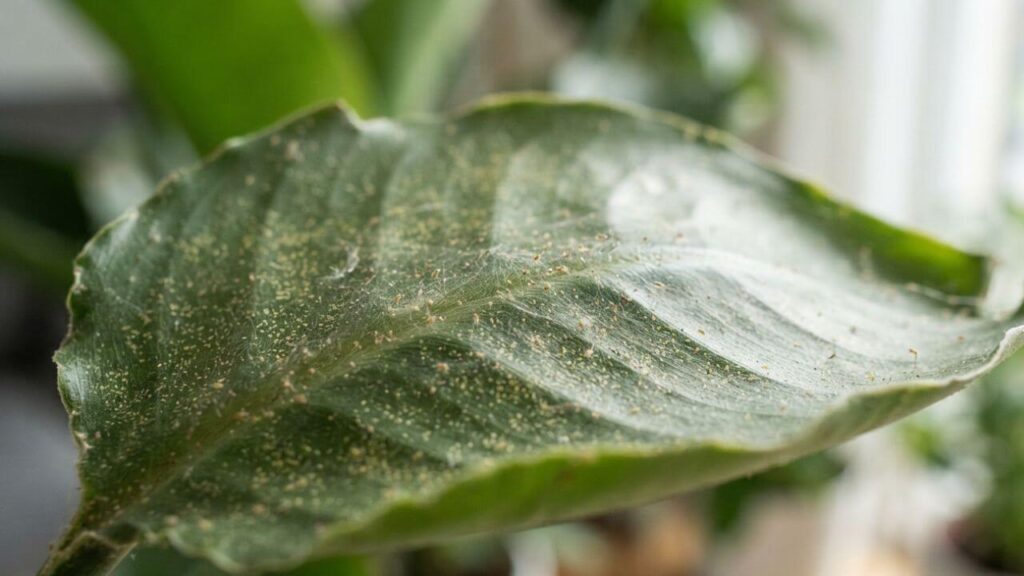
Pests deserve special attention. Spider mites can cause leaf curling, stippling, and a dull appearance. Check the undersides of leaves closely, especially if the plant sits in a warm, dry room.
Start by checking soil moisture. If the soil is very dry, water thoroughly and monitor the plant over the next few days.
Avoid moving a stressed plant directly from low light into harsh, hot sunlight. Make changes gradually when possible. A bright location with filtered or indirect light can help reduce stress while the plant adjusts.
4. Bird of Paradise Leaves Splitting
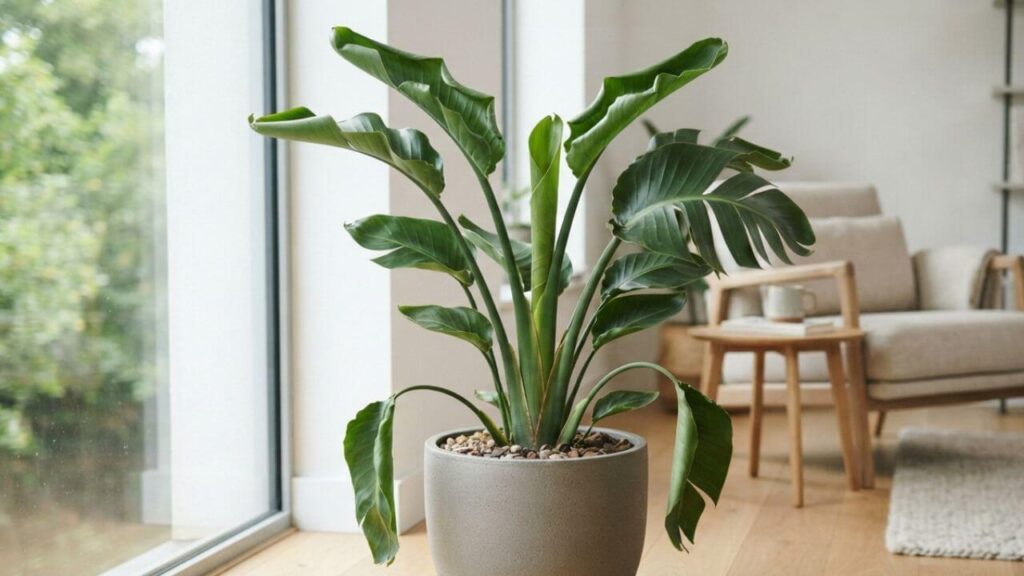
Leaf splitting is not always a sign of poor health. In fact, mature bird of paradise plants naturally develop splits and tears in their large leaves.
In their native environment, this adaptation allows wind to pass through the foliage. Indoor plants can also develop splits from mechanical damage, dry conditions, or rubbing against furniture and walls.
If new leaves split as they unfurl, check the plant’s moisture levels. Very dry conditions may make emerging leaves less flexible.
You cannot repair an existing split. However, you can reduce future damage by providing stable moisture, adequate humidity, and enough space for the leaves to expand.
Do not cut every split leaf. If the leaf remains mostly green and healthy, it still contributes to photosynthesis.
5. Bird of Paradise Leaves Drooping or Wilting
Bird of paradise leaves drooping can result from either too little water or problems with the roots. These causes look similar but require opposite solutions.
If the soil is very dry, the plant likely needs water. Water slowly and deeply until excess water drains from the pot.
If the soil is already wet, do not add more water. Persistent moisture can damage roots and prevent them from taking up water properly.
Check the base of the plant and the root system if drooping continues. A plant with root rot may wilt even though the soil remains damp.
Other causes include:
- Sudden temperature changes
- Cold drafts
- Excessive heat
- Recent repotting
- Severe pest infestations
Give the plant stable conditions and avoid making several major changes at once.
6. Bird of Paradise Leaves Turning Black
Bird of paradise leaves turning black can signal serious stress, especially when the damage spreads quickly.
Cold injury is one possible cause. Bird of paradise plants are tropical and can suffer damage from cold temperatures or exposure to freezing conditions.
Black, soft tissue near the base may point to severe overwatering and root or crown rot. Fungal or bacterial problems can also create dark spots, especially when foliage stays wet for long periods.
Remove severely damaged leaves with clean tools. Then inspect the soil, roots, drainage, and recent temperature history.
If the plant experienced cold damage, move it to a warmer location away from drafts. Avoid placing it directly beside a heater, since hot dry air can create another problem.
7. Bird of Paradise Root Rot
Root rot is one of the more serious common bird of paradise plant problems. It develops when roots remain too wet for extended periods and begin to decay.
Symptoms can include yellow leaves, wilting despite wet soil, slow growth, and a foul smell from the potting mix.
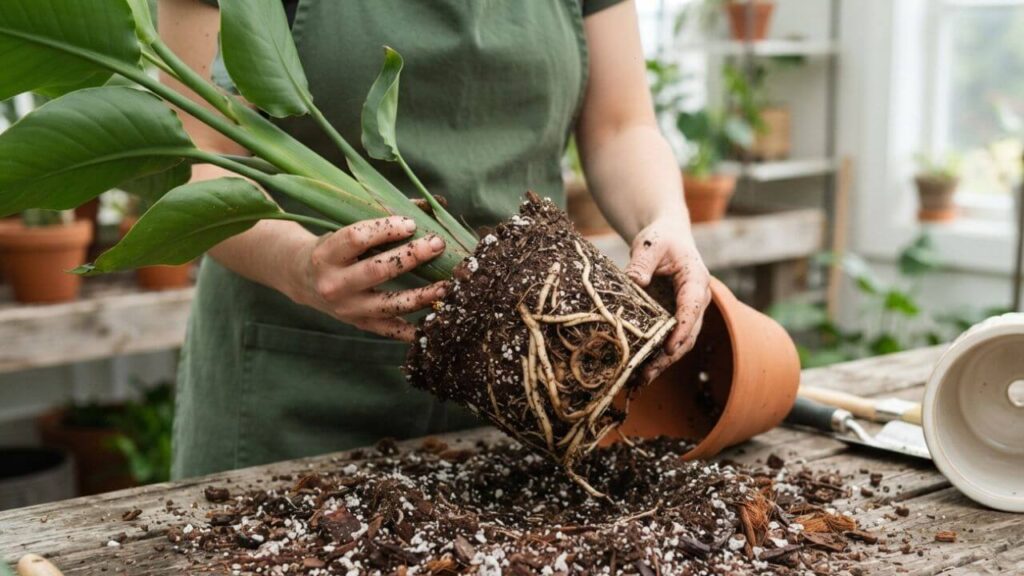
To check the roots, carefully remove the plant from its container. Healthy roots should feel firm. Rotten roots may look brown or black and feel soft or mushy.
If you find root rot:
- Remove affected roots with clean, sterilized scissors.
- Discard heavily contaminated soil.
- Repot into fresh, well-draining mix.
- Use a container with drainage holes.
- Water only when the soil has dried to the appropriate depth.
Do not automatically move the plant into a much larger pot. An oversized container holds more moisture and can increase the risk of future root problems.
8. Bird of Paradise Overwatering and Underwatering
Both bird of paradise overwatering and underwatering can cause similar symptoms. This is why checking the soil is more useful than diagnosing the plant from leaf appearance alone.
| Sign | Overwatering | Underwatering |
|---|---|---|
| Soil | Stays wet | Very dry |
| Leaves | Yellow, soft, droopy | Dry, curled, crispy |
| Roots | Soft or mushy | Dry or brittle |
| Growth | Slow | Stunted |
| Main risk | Root rot | Severe dehydration |
Large plants in bright light may use water faster than small plants in dim rooms. Pot size also changes the watering schedule.
Instead of watering every Sunday, check the soil first. Use your finger or a moisture meter to assess the root zone. Then water based on actual conditions.
9. Bird of Paradise Soil Problems
Good soil is essential for preventing bird of paradise plant care problems. The plant needs a mix that holds some moisture but drains excess water quickly.
A heavy, compacted mix can suffocate roots and increase the risk of rot. On the other hand, an extremely fast-draining mix may dry out too quickly in a hot, sunny location.
A quality indoor potting mix amended with materials that improve drainage can work well. Perlite, pine bark, or similar components may help create a more open root environment.
Repotting is worth considering when the soil has broken down, drainage has slowed, or roots have filled the container. Spring and early summer are good times for major repotting because the plant can recover during active growth.
10. Bird of Paradise Sunlight Problems
Bird of paradise plants need bright light to support strong growth. Insufficient light is a major cause of slow growth and poor leaf development indoors.
Place the plant near a bright window where it receives plenty of natural light. A few hours of gentle direct sunlight can be beneficial, but plants that have been grown in low light may need gradual adjustment.
Signs of inadequate light can include:
- Slow or weak growth
- Small new leaves
- Long gaps between leaves
- Poor flowering
- Soil staying wet for too long
Flowering requires strong light and a mature plant. If your main goal is flowers, light becomes especially important.
Avoid moving a plant from a dim room directly into intense summer sun. Gradually increase exposure to reduce the risk of leaf scorch.
11. Bird of Paradise Plant Not Growing
A bird of paradise plant not growing may simply be responding to the season. Growth naturally slows during shorter, darker winter days.
Indoor plants can also stop producing new leaves when light levels are too low. Root problems, nutrient shortages, or recent repotting can create additional stress.
Start with light. If the plant receives insufficient brightness, improve its location before adding more fertilizer.
Then check the roots and soil. A plant with damaged roots cannot use water and nutrients effectively.
Avoid the common mistake of adding fertilizer every time growth slows. More fertilizer will not solve low light or root rot. Correct the growing conditions first.
12. Bird of Paradise Not Growing New Leaves
If your bird of paradise is not growing new leaves, inspect the plant’s growing point and overall condition.
A healthy plant may produce new leaves slowly, especially in winter. Mature plants also have different growth rates depending on light, temperature, and root health.
If the plant looks healthy but remains stagnant, increase bright light and maintain consistent watering. Avoid constantly moving the plant between rooms.
If new leaves begin to emerge but fail to open, dry air or inconsistent moisture may be contributing. Check the soil and provide stable conditions.
Patience matters here. A bird of paradise does not need to produce a new leaf every week to be healthy.
13. Bird of Paradise Not Blooming
Bird of paradise not blooming is a common frustration for indoor gardeners. The plant may be healthy but simply not mature enough to flower.
Strong light is essential. Outdoor plants in suitable warm climates often have better flowering conditions than indoor plants.
Other factors include:
- Plant maturity
- Insufficient light
- Root stress
- Poor nutrition
- Cool temperatures
- Seasonal growth patterns
Do not force flowering by adding excessive fertilizer. Too much nitrogen can encourage foliage rather than flowers.
If your plant is mature and receives excellent light but still does not bloom, check whether your indoor conditions provide enough intensity and warmth. Flowering may take time, even with good care.
14. Bird of Paradise Pests
Common bird of paradise pests include spider mites, scale insects, and mealybugs. These pests can weaken the plant and create leaf discoloration.
Spider mites prefer warm, dry conditions. Look for fine webbing, tiny speckles, or a dusty appearance on leaves.
Scale insects appear as small bumps attached to stems or leaves. Mealybugs look like small cottony clusters, often hiding in leaf joints.
Inspect new plants before bringing them indoors. If you find pests, isolate the affected plant from other houseplants.
For light infestations, physically remove pests and wash foliage with water. Follow the label carefully if you use an insecticidal soap or another appropriate product. Repeat treatment as directed because one application may not control every life stage.
15. Bird of Paradise Plant Diseases
Bird of paradise plant diseases can cause leaf spots, discoloration, and declining growth. However, not every brown or yellow leaf indicates disease.
Poor airflow and prolonged leaf wetness can encourage fungal or bacterial problems. Avoid routinely misting the foliage, especially when air circulation is poor.
Water the soil rather than keeping the leaves wet. Remove badly affected leaves and clean pruning tools between plants.
If spots continue to spread despite improved care, consider getting a diagnosis from your local university extension service. Disease identification is more accurate when you can examine the actual symptoms and growing conditions.
How to Save a Bird of Paradise With Serious Problems
When several symptoms appear together, focus on the plant’s roots and growing environment first. A systematic approach is more effective than trying random treatments.
Follow these steps:
- Check the soil moisture. Determine whether the plant is too wet or too dry.
- Inspect the roots if necessary. Look for signs of rot or severe root binding.
- Check the drainage. Make sure water can escape freely.
- Evaluate light. Move the plant to a brighter location if needed.
- Inspect for pests. Check leaf undersides and stem joints.
- Remove badly damaged leaves. Use clean, sharp tools.
- Stabilize care. Avoid frequent changes in location and watering habits.
Do not expect damaged leaves to recover their original appearance. Focus on new growth. Healthy new leaves are one of the best signs that your care changes are working.
Beginner Mistakes That Cause Bird of Paradise Problems
The most common mistake is watering based on a calendar. A plant does not use the same amount of water every week. Light, temperature, humidity, season, and pot size all affect moisture needs.
Another mistake is keeping the plant too far from a window. A bright-looking room may still provide insufficient light for a tropical plant with high light needs.
Over-fertilizing is another problem. Fertilizer cannot replace sunlight, healthy roots, or proper watering.
Finally, do not panic over every split leaf. Some leaf splitting is natural for bird of paradise plants. Focus on overall plant health rather than trying to keep every leaf perfectly intact.
FAQ
Why are my bird of paradise leaves turning brown?
Brown leaves can result from underwatering, dry air, salt buildup, root problems, or environmental stress. Check soil moisture and drainage first.
Why are my bird of paradise leaves turning yellow?
Yellow leaves often indicate overwatering or poor drainage, but an older leaf may also turn yellow naturally. Check whether the soil stays wet for too long.
Why are my bird of paradise leaves curling?
Curling leaves may result from underwatering, heat, dry air, or pests such as spider mites. Inspect both the soil and the undersides of leaves.
Why is my bird of paradise drooping?
Drooping can occur because of underwatering, overwatering, root rot, temperature stress, or recent repotting. Check soil moisture before adding more water.
Why is my bird of paradise not growing new leaves?
Low light is a common reason. Seasonal slowdown, root problems, or recent stress can also delay new growth.
Conclusion
Most Bird of paradise plant problems are easier to solve when you identify the cause early. Brown tips often point to moisture or environmental stress, while yellow leaves may signal excess water or poor drainage. Curling and drooping leaves require a closer look at both soil moisture and root health.
Start by checking the basics: light, water, drainage, soil, temperature, and pests. Avoid changing everything at once. Make one or two practical adjustments, then watch the plant’s new growth.
If you are trying to revive a struggling plant, focus on healthy roots and stable growing conditions. Damaged leaves may never look perfect again, but strong new leaves are a clear sign that your bird of paradise is moving in the right direction.
Last Updated on July 31, 2026 by Saad Abdullah

I enjoy sharing simple gardening ideas, lawn care tips, and honest product reviews that help make outdoor work easier. From home gardening guides to helpful tools and lawn care advice, I write easy-to-follow content to help readers create a healthier and better-looking outdoor space without wasting time or money.