As an Amazon Associate, I earn from qualifying purchases.
Most vegetable seeds should be planted about two to three times as deep as the seed is wide. Tiny seeds often need little or no soil cover, while large seeds, such as beans and peas, can go deeper. Always check the directions for your crop and seed variety.
Across the United States, vegetable gardeners plant seeds in many settings, from raised beds in Texas and backyard plots in Ohio to containers on apartment balconies in California. The right planting depth helps seeds take in water while leaving enough room for young shoots to reach the soil surface. A seed planted too deep may run out of stored energy before it emerges, while one planted too close to the surface may dry out or wash away.
The good news is that you do not need special tools or advanced skills to get this right. A simple seed-depth rule, a ruler, and a little care can help you start vegetables such as carrots, lettuce, tomatoes, squash, and cucumbers. Your soil, local climate, and the needs of each crop also matter, so use general depth ranges as a guide rather than a fixed rule for every seed.
This guide explains how deep to plant common vegetable seeds, how to measure the depth, and how to care for them after sowing. It also covers shallow planting, direct sowing outdoors, indoor seed starting, and common problems that can prevent seedlings from emerging. With the right depth and steady moisture, you can give your vegetable garden a better start.
A useful starting point is to plant a seed two to three times as deep as its width. For example, a seed that measures about 1/8 inch wide might need a covering close to 1/4 inch, depending on the crop. A large seed that is 1/4 inch wide might be planted about 1/2 to 3/4 inch deep if its growing instructions support that range.
This rule helps because larger seeds usually contain more stored food than tiny seeds. A seed uses that stored energy as its root and shoot begin to grow. If the soil layer above it is too thick, the young shoot may struggle to reach the surface before its reserves run low.
However, seed size alone does not determine the correct depth. Some seeds respond to light, some need darkness, and others have specific depth requirements linked to their shape and growth habit. A seed packet or trusted growing guide should take priority over a general formula.
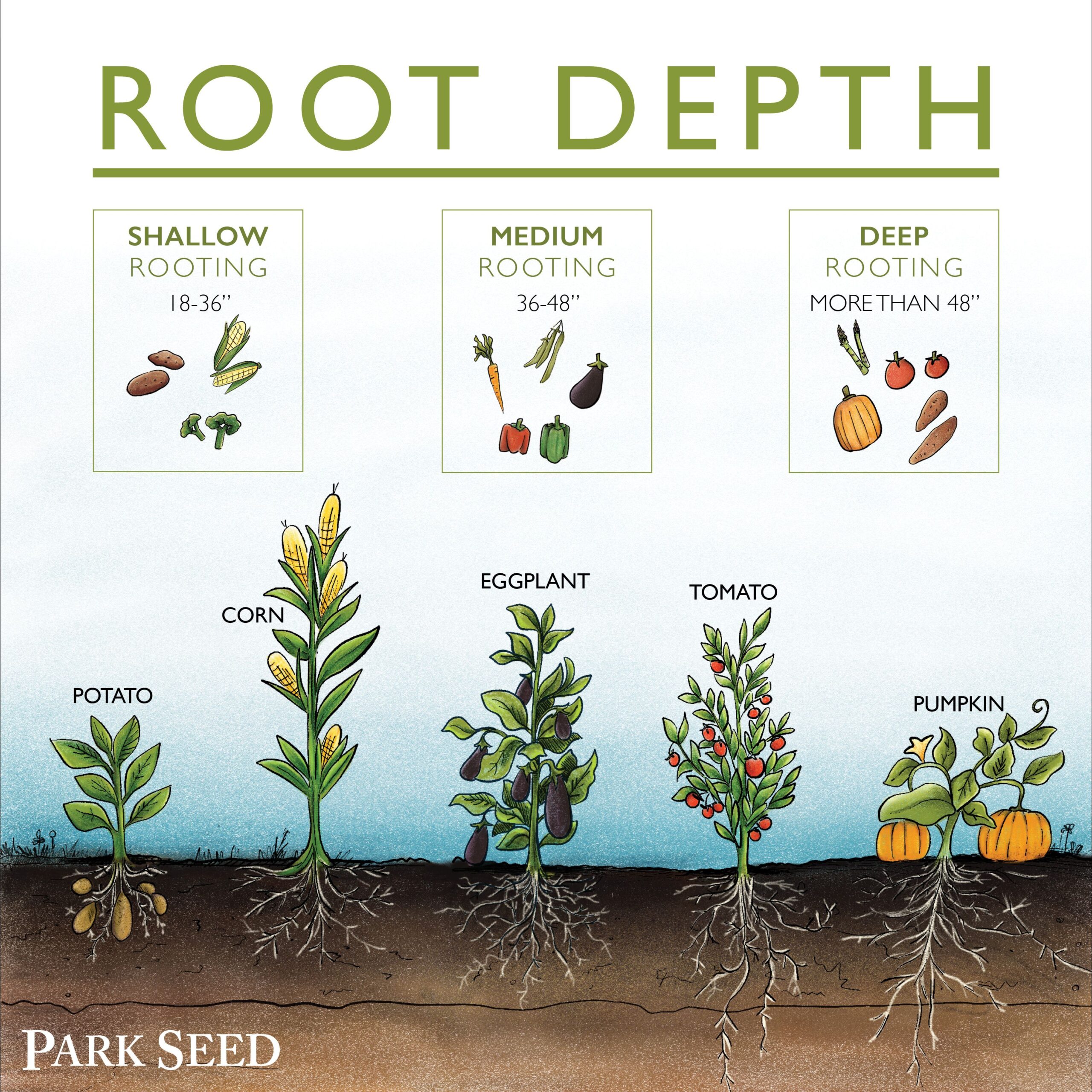
Source: cdn.shopify.com
Tiny seeds
Seeds such as many lettuce varieties need a very shallow sowing depth. Some are pressed onto the soil surface rather than covered with a thick layer.
Medium seeds
Many tomato, pepper, and brassica seeds need a shallow covering. A light layer of seed-starting mix is often enough for indoor sowing.
Large seeds
Beans, peas, corn, and squash seeds are generally planted deeper than tiny seeds. Their individual depth ranges still vary by crop.
Why Planting Depth Matters
Planting depth affects moisture, air, temperature, and the distance a shoot must travel before it reaches sunlight. Seeds placed too close to the surface can dry out quickly, especially in windy weather or warm, exposed beds. Seeds placed too deep may germinate but fail to emerge.
The goal is to place each seed where it can absorb water and begin growing without facing an unnecessary barrier. A suitable depth also helps protect the seed from minor disturbances caused by watering, rain, and wind.
Too shallow
The seed may dry out, become exposed, or be displaced by heavy watering.
Too deep
The shoot may use too much stored energy before reaching the surface, delaying or preventing emergence.
Just right
The seed has enough moisture and soil contact to germinate while remaining close enough to the surface for the shoot to emerge.
When the Two-to-Three-Times Rule Does Not Apply
The general rule is a starting point, not a universal law. Some tiny seeds require light for good germination, while certain large seeds have specific depth needs that should not be calculated from width alone. Seeds sold in pellets or coatings may also behave differently from untreated seeds.
Read the packet before covering seeds. If it says to surface-sow, press the seeds gently onto moist growing mix and follow the stated light requirements rather than burying them.
Light-sensitive seeds
Follow instructions that call for surface sowing or only a very thin dusting of growing mix.
Pelleted seeds
Keep the coating moist enough to break down and use the supplier’s stated planting depth.
Vegetable Seed Planting Depth Chart
The chart below gives practical starting ranges for common vegetables grown in home gardens across the United States. Depths are measured from the soil surface to the top of the seed, unless a crop-specific instruction indicates otherwise. Use the packet for the exact variety whenever possible.
These ranges are intended for typical garden soil or a suitable seed-starting mix. Soil texture, temperature, moisture, and local growing conditions can affect the best method, so avoid treating every number as exact for every garden.
Source: media.licdn.com
Lettuce
About 1/8 inch deep, or surface-sown when the variety’s instructions call for light to aid germination.
Carrots
About 1/4 inch deep in fine, loose soil.
Radishes
About 1/2 inch deep for many common varieties.
Spinach
About 1/2 inch deep, with adjustments based on soil and the packet directions.
Tomatoes
About 1/4 inch deep when starting seeds indoors.
Peppers
About 1/4 inch deep in a seed-starting mix.
Cucumbers
About 1/2 to 1 inch deep, depending on the seed packet and soil conditions.
Squash
About 1 inch deep for many common summer and winter squash varieties.
Green beans
About 1 to 1 1/2 inches deep in suitable garden soil.
Peas
About 1 to 1 1/2 inches deep, with the packet guiding adjustments for the variety.
Sweet corn
About 1 to 1 1/2 inches deep in warm, well-drained soil.
Beets
About 1/2 inch deep for many varieties. Each beet seed unit may contain more than one embryo.
Swiss chard
About 1/2 inch deep for many varieties.
Kale
About 1/4 inch deep when starting seeds in trays or sowing in prepared soil.
Broccoli
About 1/4 inch deep for indoor or outdoor sowing, subject to the variety’s directions.
Turnips
About 1/2 inch deep in loose, prepared soil.
Onions
About 1/4 inch deep when growing from seed.
Okra
About 1/2 to 1 inch deep, with warm soil supporting reliable germination.
How to Read the Chart
Choose the crop first, then compare the listed range with the seed packet. If the packet says 1/4 inch, do not bury the seed 1 inch simply because it looks large. Crop-specific guidance is more useful than a general seed-size estimate.
Depth also differs from spacing. Planting depth describes how far below the soil surface a seed sits, while spacing describes the distance between seeds or plants. A seed can be planted at the correct depth and still need thinning if several seedlings emerge too close together.
Measure from the surface
Make a shallow furrow or hole of the stated depth, place the seed, and cover it with loose soil or growing mix.
Check more than one instruction
If the packet and a general chart disagree, favor the packet for that variety and check the seed supplier’s growing guidance.
Use a ruler for tiny seeds
A ruler can help when learning, but a simple finger mark or a prepared shallow furrow is often enough once you become familiar with the crop.
How Deep to Plant Small Vegetable Seeds
Small vegetable seeds generally need a shallow covering because their young shoots have limited stored energy. A thick layer of soil can delay emergence or prevent seedlings from reaching the surface. Lettuce, carrots, onions, and many brassicas are common examples, although their exact needs differ.
Prepare the soil well before sowing small seeds. Break up large clods, remove stones, and create a fine, level surface so the seeds make even contact with moist soil. Large gaps and hard lumps can leave seeds suspended in air pockets or covered unevenly.
Source: i.pinimg.com
Use a fine soil surface
Rake garden soil until it is loose and crumbly near the surface. This is especially helpful for carrots and other small seeds.
Cover lightly
Use a thin layer of fine soil or seed-starting mix when the crop needs covering. Avoid heavy clods that block young shoots.
Water gently
Use a fine spray or a gentle watering can to avoid moving seeds out of place.
Planting Lettuce Seeds
Lettuce seeds are small and often need only a very thin layer of soil. Many varieties can be pressed gently into moist growing mix or covered with about 1/8 inch of fine material. Some varieties germinate better with light, so follow the packet if it calls for surface sowing.
Lettuce grows best when the seed zone stays moist but not waterlogged. If the surface dries out before germination, seeds may fail to sprout evenly. Use a fine mist for indoor trays and gentle watering outdoors.
Avoid deep furrows
A shallow groove is enough for most lettuce seeds. Deep trenches can make emergence harder.
Protect the surface
In warm or windy weather, monitor moisture closely because shallowly planted seeds can dry out quickly.
Planting Carrot Seeds
Carrot seeds are usually sown about 1/4 inch deep in loose, fine soil. Sow them in a shallow furrow, cover lightly, and water gently so the seeds remain in place. Avoid thick crusts of compacted soil that can interfere with emergence.
Carrots are usually direct-sown because their roots can become forked or misshapen when disturbed during transplanting. Keep the upper soil layer evenly moist while waiting for seedlings to appear, and thin them according to the variety’s spacing needs.
Keep the seedbed fine
Remove stones and break up clumps to give young roots a clear path through the soil.
Do not let the surface dry out
Check the bed regularly after sowing. Gentle, frequent checks help you maintain moisture without flooding the furrow.
How Deep to Plant Large Vegetable Seeds
Large vegetable seeds often need a deeper covering than tiny seeds. Beans, peas, corn, cucumbers, and squash are common examples. Many of these crops are direct-sown outdoors once the soil is suitable for the crop, though their depth ranges and temperature needs differ.
Do not use seed size as the only guide. Some large seeds need only moderate depth, and planting them too deep can delay emergence. Make a hole or furrow that matches the packet’s directions, place the seed carefully, and cover it with loose soil.
Source: lifeonladyslipperlane.com
Beans
Many green beans are planted about 1 to 1 1/2 inches deep. Soil should be warm enough for reliable germination and well drained.
Peas
Many peas are planted about 1 to 1 1/2 inches deep. Sow them when conditions suit the crop rather than waiting for hot summer soil.
Corn
Sweet corn is often planted about 1 to 1 1/2 inches deep. Avoid sowing into cold, waterlogged soil.
Cucumbers and squash
These crops are often planted about 1/2 to 1 inch deep for cucumbers and about 1 inch deep for many squash varieties.
Planting Beans and Peas
Beans and peas are usually large enough to handle easily, making depth control simple for beginners. Use your finger or a dibber to create a hole of the recommended depth, then cover the seed and firm the soil gently. Do not press so hard that you compact the area around the seed.
Beans generally prefer warmer soil than peas. Peas can often be planted earlier in spring, while beans are usually sown after the danger of cold conditions has passed and the soil has warmed. Correct depth cannot make up for soil that is too cold or too wet.
Check soil moisture
Aim for moist, well-drained soil rather than a hole filled with water.
Avoid repeated digging
If the expected emergence time has not passed, wait and monitor conditions before uncovering seeds.
Planting Cucumbers and Squash
Cucumber and squash seeds are often planted in warm garden soil after frost risk has passed for the crop and location. Use the packet depth, cover the seed with loose soil, and water the area thoroughly but gently. These crops need warmth as well as suitable depth to germinate well.
Gardeners may start cucumbers and squash indoors in individual cells or small pots. If you do, use a well-drained seed-starting mix and avoid disturbing the roots during transplanting. Large seeds can be easier to sow directly when outdoor conditions are suitable.
Give seeds room
Follow the packet’s spacing guidance so seedlings have enough room to grow and receive light.
Wait for suitable warmth
Cold, wet soil can slow germination and increase the risk of seed decay.
How to Plant Vegetable Seeds at the Correct Depth
Planting at the right depth starts with good preparation, not just digging a hole. Choose a suitable location, check the seed packet, and prepare the soil or growing mix before opening the seed packet. This makes it easier to place seeds at a consistent depth and maintain the right moisture afterward.
The steps below work for many common vegetable seeds, both outdoors and in containers. Adjust them for crops that require surface sowing, special light conditions, or a particular planting method.
Check planting depth, spacing, temperature, light needs, and expected germination time before sowing.
Step 2: Prepare the growing area
Remove weeds and stones, loosen the soil, and break up clumps. For indoor sowing, fill clean containers with suitable seed-starting mix.
Step 3: Make a hole or furrow
Create a shallow hole or straight furrow at the depth stated for the crop. Use a ruler if you are unsure.
Step 4: Place the seed
Put each seed in the hole without forcing it into hard soil. Follow any special orientation instructions given for the crop.
Step 5: Cover the seed
Add loose soil or growing mix to the recommended depth. Do not pack the covering tightly.
Step 6: Water gently
Moisten the seed zone without washing seeds away. Use a fine spray for tiny seeds and a gentle stream for larger seeds.
Step 7: Label and monitor
Write down the crop and sowing date. Check the moisture and watch for seedlings within the expected germination period.
Tools That Make Depth Easier to Control
You do not need a full set of gardening tools to sow seeds correctly. A ruler, a small trowel, a finger, or a simple dibber can help you make holes at a consistent depth. For indoor sowing, clean seed trays or small pots with drainage holes and a suitable growing mix are often enough.
The most useful tool is one that helps you avoid guesswork. A ruler can be especially helpful when sowing tiny seeds or when you are learning the difference between 1/4 inch and 1 inch. Once you become familiar with each crop, you may find that prepared furrows and finger marks work just as well.
Ruler
Measures planting depth and helps you learn the scale of common seed-depth ranges.
Dibber or pencil
Makes holes for seeds in trays or loose garden soil. Clean the tool before using it in seed-starting containers.
Fine watering nozzle
Helps water small seeds without moving them from their intended position.
How to Check Your Work
After sowing, inspect the soil surface. It should be level enough to prevent water from pooling and should not contain large clods over the seeds. The soil should feel moist, but it should not be muddy or saturated.
Do not dig up every seed to check its depth. Instead, measure the first few holes before placing seeds, then repeat the same method along the row. This avoids disturbing seeds that are already in place.
Even covering
Look for a smooth, light covering of soil without exposed seeds or deep depressions.
Gentle watering
Check that water reaches the seed zone without forming channels or washing soil away.
Does Soil Type Change Planting Depth?
Soil type can affect how a seed should be planted because different soils hold water and air in different ways. Sandy soil drains quickly, while clay soil holds more water and can become compacted. A depth that works well in loose, well-drained soil may be less suitable in heavy, wet ground.
The goal is to keep the seed moist without cutting off the air needed for germination. In most cases, follow the crop’s recommended depth and improve the soil structure rather than making large, untested changes to the planting depth.
Source: i.pinimg.com
Sandy soil
Because sandy soil dries quickly, check moisture often after shallow sowing. Do not automatically plant seeds deeper than the packet recommends.
Clay soil
Clay can hold water and form a hard crust. Improve drainage and soil structure, and avoid sowing into saturated ground.
Loamy soil
Loose, crumbly loam is often well suited to vegetable seed sowing because it can hold moisture while allowing air to reach seeds.
Seed-starting mix
A suitable mix provides a fine, consistent texture for indoor sowing. Follow the crop’s depth and moisture needs even when using a commercial mix.
Prevent Soil Crusts and Compaction
A soil crust is a hard surface layer that can form when fine soil particles settle and dry after rain or heavy watering. Tiny seedlings may struggle to break through it, even when their seeds were planted at the right depth. This is one reason gentle watering and a fine but well-structured seedbed matter.
Avoid walking on freshly prepared seedbeds, especially when the soil is wet. If crusting is a regular problem, improve the soil with suitable organic matter over time and use a gentle watering method. Do not dig directly over germinating rows to loosen the surface, because this can damage seedlings.
Use gentle water
A fine spray helps reduce soil displacement and the formation of hard, compacted patches.
Keep beds loose
Prepare the upper soil layer carefully and avoid pressing it down hard after sowing.
Indoor Seed Starting Versus Direct Sowing Outdoors
The best planting method depends on the crop, your climate, and the growing season. Some vegetables are commonly started indoors to gain time in regions with short growing seasons. Others grow best when their seeds are sown directly where the plants will mature.
Planting depth is usually similar for the same crop, but the growing environment changes how you prepare and water the seed. Indoor containers have limited space and can dry out quickly, while outdoor beds face rain, wind, temperature swings, and changes in soil moisture.
Source: growinginthegarden.com
Indoor sowing
Use clean containers with drainage holes and a suitable seed-starting mix. Follow the packet’s depth and provide the light and temperature conditions the crop needs.
Outdoor direct sowing
Prepare a fine seedbed, wait for suitable soil conditions, and water gently. Protect the area from heavy rain or other disturbances when needed.
Transplanting
Move suitable seedlings outdoors after they are ready and conditions allow. Handle roots gently and follow crop-specific hardening-off and planting guidance.
Starting Seeds in Trays and Pots
For indoor seed starting, fill the container with moist seed-starting mix and level the surface without compressing it. Make holes at the recommended depth, place the seeds, cover lightly, and water gently. Label each container so you can track the crop and sowing date.
Place the containers where the seeds receive the temperature and light conditions required for germination. Some seeds need warmth to sprout, while others prefer cooler conditions. Once seedlings emerge, provide adequate light and avoid keeping the mix constantly wet.
Use containers with drainage
Excess water should be able to escape so the growing mix does not remain saturated.
Avoid heavy covering
Small seeds can be buried too deeply in loose mix just as easily as in garden soil.
Sowing Seeds Directly in the Garden
Outdoor sowing works well for many root crops, peas, beans, corn, and other vegetables that can grow from seed in place. Wait until the soil conditions suit the crop, then make furrows or holes at the recommended depth. Cover the seeds and water the bed gently.
In the United States, planting dates vary widely. A gardener in a cool northern region may sow peas early in spring, while a gardener in a warm southern region may face a different schedule. Use local frost dates, soil conditions, and regional planting guidance rather than relying on a single nationwide calendar.
Check local conditions
Use local extension guidance and the seed packet to judge when the soil and weather are suitable.
Watch for heavy rain
Rain can uncover seeds or move them into deeper soil. Check the bed after severe weather without disturbing emerging seedlings.
Common Seed Planting Mistakes and How to Fix Them
Many seed-starting problems come from a few basic errors: planting too deep, allowing the soil to dry out, using waterlogged soil, or sowing before temperatures are suitable. Correcting these issues early can improve the next sowing and help you avoid wasting seeds.
If seedlings do not appear, resist the urge to dig up the whole row at once. First check the expected germination period, moisture, and temperature. Different crops germinate at different rates, and cool conditions can slow some seeds considerably.
Source: shuncy.com
Mistake: planting too deep
Use the packet’s depth, and make shallow holes or furrows before sowing. For the next batch, measure the covering rather than estimating it by eye.
Mistake: letting seeds dry out
Check the upper soil layer regularly, especially after hot or windy weather. Water gently whenever needed to maintain even moisture.
Mistake: keeping soil saturated
Improve drainage, empty standing water from trays, and allow the growing mix to drain between watering sessions.
Mistake: sowing into cold soil
Check the crop’s temperature needs and wait for suitable conditions rather than changing the depth to compensate.
Mistake: watering too forcefully
Use a fine spray or gentle stream so seeds remain at their intended depth.
What to Do When Seeds Do Not Sprout
Start by comparing the elapsed time with the expected germination range on the packet. Check whether the soil has been consistently moist, whether the temperature suits the crop, and whether the seedbed has become crusted. Old or poorly stored seeds may also have reduced viability.
If the expected germination period has passed and conditions appear suitable, carefully inspect one seed from a small test area. If it is soft, rotten, or damaged, excess moisture or other unfavorable conditions may be involved. If it remains hard and unchanged, it may not have absorbed enough water or may need more time.
When a second sowing is needed, correct the likely cause first. Adjust the depth to the packet’s instructions, improve drainage if needed, and use fresh seed if seed viability is doubtful. Repeating the same method under the same conditions may lead to the same result.
Seeds have not emerged
Check germination time, temperature, moisture, and planting depth before deciding to resow.
Seedlings emerge unevenly
Uneven depth, patchy moisture, and differences in soil texture may be responsible. Improve seedbed preparation for the next sowing.
Seedlings collapse after emerging
Excess moisture, poor airflow, or seedling disease may be involved. Improve drainage and airflow, and avoid keeping indoor growing mix saturated.
When Should You Replant?
Replant when the expected germination period has passed, the conditions have been checked, and there is good reason to think the original seeds failed. Before sowing again, make sure the soil temperature and moisture are suitable and the new seeds will not be placed in the same unfavorable conditions.
For fast-growing crops such as radishes, a delayed or failed sowing may be easy to replace. For crops with longer growing seasons, check the remaining local growing window before replanting. A fresh sowing should still match the crop’s recommended depth and spacing.
Check the remaining season
Use local planting guidance to decide whether there is enough time for the crop to mature.
Correct the cause first
Improve soil moisture, depth, drainage, or temperature conditions before sowing again.
How Moisture and Temperature Affect Seed Germination
Seeds need water, oxygen, and a suitable temperature to germinate. Water starts the process by allowing the seed to absorb moisture and activate growth. Oxygen supports respiration, which supplies energy for the developing root and shoot.
Too little water can stop the process before a seedling emerges, while too much water can reduce the oxygen available in the soil. Temperature also affects the speed and reliability of germination, and each vegetable has its own preferred range. Correct planting depth works best when these other conditions are right.
Source: plantopiahub.com
Keep moisture steady
Maintain evenly moist soil around the seeds. The surface may need frequent checks when the weather is hot or the seeds are planted very shallowly.
Provide suitable warmth or coolness
Use the temperature guidance for the crop. Warm-season vegetables and cool-season vegetables do not all germinate best under the same conditions.
Allow air into the soil
Avoid compacting the seedbed or leaving seeds in saturated soil for long periods.
Should You Soak Seeds Before Planting?
Some large seeds, including certain beans and peas, may benefit from soaking when the seed supplier recommends it, but soaking is not necessary for every vegetable. Tiny seeds and seeds with specific treatment instructions should generally be handled according to the packet. Long soaking can damage some seeds or increase the risk of decay.
Soaking also does not change the recommended planting depth. After any approved soaking treatment, plant the seed at the stated depth and maintain suitable moisture in the soil. Do not soak treated seeds unless the supplier specifically says it is appropriate.
Follow the seed supplier
Check whether soaking is recommended for the exact crop and variety before trying it.
Do not soak coated seeds without guidance
Seed treatments or coatings may be affected by soaking, so follow the package directions.
How to Choose the Right Seed Depth for Your Garden
The best seed depth is the one that suits the crop, seed condition, soil, and planting method. Start with the seed packet, then consider whether the soil is loose and well drained, whether the seedbed dries quickly, and whether the crop needs light to germinate. These checks help you make a sound choice without guessing.
For beginners, the easiest approach is to group seeds by their recommended depth and sow each group separately. This reduces errors when moving between tiny lettuce seeds and larger beans or squash seeds. It also makes labeling, watering, and tracking emergence easier.
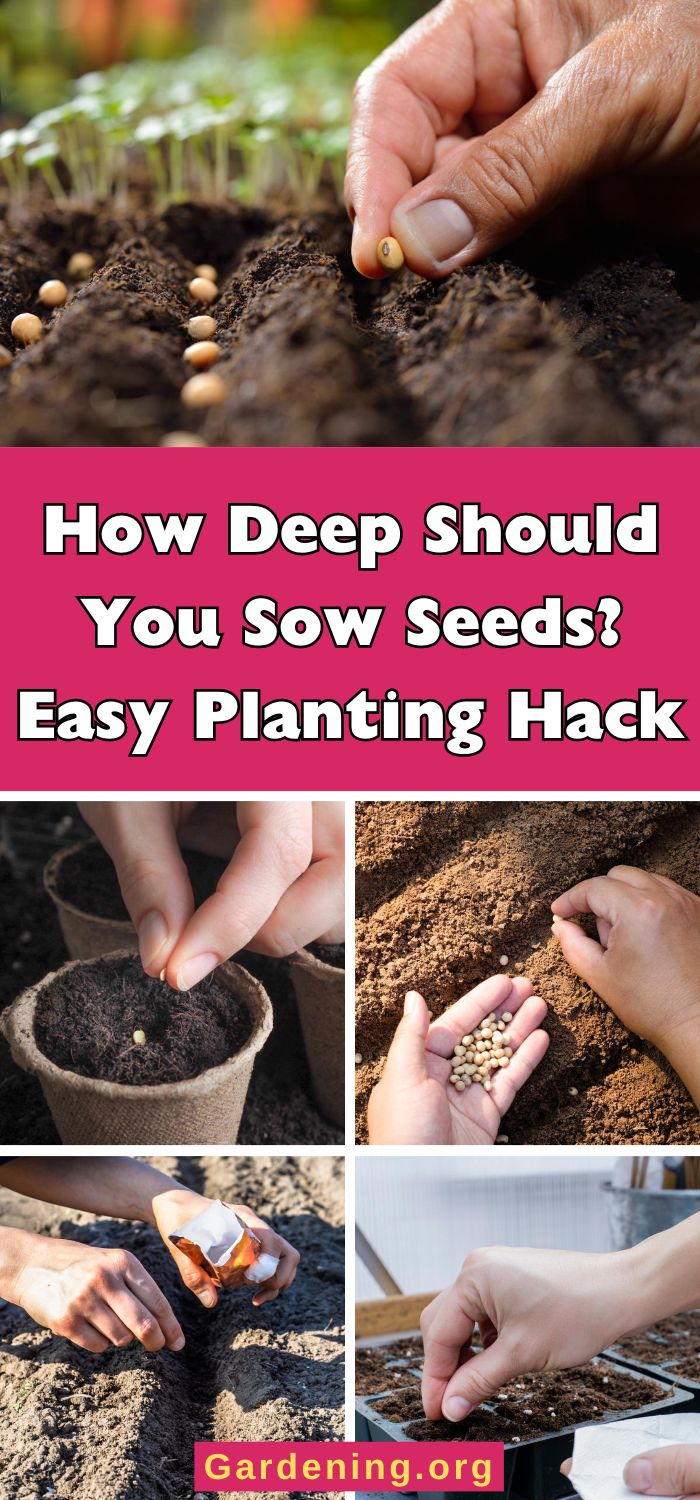
Source: gardening.org
Choose depth before opening the packet
Write down the recommended depth and spacing so you can prepare the holes or furrows before sowing.
Adapt the seedbed, not the rule
Improve drainage, soil texture, and watering where needed instead of burying seeds much deeper to keep them moist.
Track what works
Record the crop, variety, sowing date, depth, and emergence. Notes from your own garden can help refine future sowings without replacing reliable crop guidance.
A Simple Example for a Mixed Vegetable Bed
Imagine planting carrots, lettuce, beans, and squash in one backyard bed. You would prepare a fine, shallow furrow for carrots, use very shallow sowing for lettuce, make deeper holes for beans, and follow the packet depth for squash. Each crop would receive the same careful attention but a different planting method.
After sowing, label each row, water gently, and check moisture as the seeds germinate. Keep an eye on local weather, especially heavy rain or hot, dry conditions. The main goal is not to make every row look identical; it is to give each crop the conditions it needs.
Before sowing
Check the seed packet and prepare the soil texture each crop needs.
During sowing
Use the right depth for each crop and cover seeds with loose soil.
After sowing
Water gently, label the rows, and monitor germination without disturbing the seeds.
Frequently Asked Questions
Q
What is the general rule for planting vegetable seeds?
A common starting rule is to plant a seed about two to three times as deep as its width. This works for many seeds, but it is not universal. Follow the seed packet when it gives a different depth or says the seed should be surface-sown.
Q
Can vegetable seeds be planted too deep?
Yes. Seeds planted too deep may germinate but fail to send a shoot through the soil. The shoot may use up its stored energy before reaching the surface. Tiny seeds are especially vulnerable because they have less stored food.
Q
Should I cover all vegetable seeds with soil?
No. Most vegetable seeds need some soil covering, but some small seeds germinate better when exposed to light. Follow the packet’s instructions for surface sowing, pressing seeds into the soil, or applying a thin covering.
Q
How deep should I plant tomato seeds?
Tomato seeds are commonly started about 1/4 inch deep in moist seed-starting mix. Cover them lightly, water gently, and provide suitable warmth. Check the packet for variety-specific instructions and keep the mix moist without making it waterlogged.
Q
How deep should I plant carrot seeds?
Carrot seeds are commonly planted about 1/4 inch deep in fine, loose soil. Cover them lightly and water gently so they stay in place. Keep the upper soil layer evenly moist while waiting for germination.
Q
How deep should I plant bean seeds?
Many green bean seeds are planted about 1 to 1 1/2 inches deep. Use the seed packet for the exact variety, and sow in warm, well-drained soil. Avoid placing beans in cold, saturated ground, which can slow germination or cause seed decay.
Q
How long does it take for vegetable seeds to sprout?
Germination time varies by crop, variety, soil temperature, moisture, and seed age. Some seeds emerge within a few days, while others may take a couple of weeks or longer under certain conditions. Check the expected germination range on the packet before deciding that a sowing has failed.
Q
Is it better to plant seeds deeper in hot weather?
Not automatically. Deeper soil may retain moisture, but planting below the recommended depth can prevent seedlings from emerging. Instead, sow at the correct depth, water as needed, and use suitable surface protection where appropriate without smothering the seeds.
Q
Can I plant several seeds in one hole?
You can sow several seeds in one spot when the crop’s instructions allow it, but the recommended method varies. Some gardeners sow extra seeds to account for poor germination and thin the seedlings later. Follow the packet’s spacing guidance and avoid overcrowding the young plants.
Q
Do vegetable seeds need fertilizer when they are planted?
Seeds generally do not need a concentrated fertilizer dose in the planting hole to begin germinating. Many seed-starting mixes contain enough nutrients for early growth, while garden beds should be managed according to soil conditions and crop needs. Avoid placing concentrated fertilizer in direct contact with seeds because it may injure them.
✦ Wrapping Up
Conclusion
Knowing how deep to plant vegetable seeds can make gardening simpler and more reliable. A depth of two to three times the seed’s width is a useful starting point, but the crop’s instructions should always guide the final decision. Tiny seeds usually need a shallow covering, while larger seeds such as beans, peas, and corn often need more depth.
Good sowing also depends on loose soil, suitable temperature, steady moisture, and gentle watering. If seeds fail to emerge, check the depth, moisture, temperature, drainage, and expected germination period before planting again. Small changes to these conditions can help you learn what works in your garden.
💡 Key Takeaway
Before planting, read the seed packet, measure the recommended depth, prepare loose soil, and cover each seed lightly. Water gently and keep the seed zone evenly moist. Label the rows and record the sowing date so you can track germination and improve your next planting.
I enjoy sharing simple gardening ideas, lawn care tips, and honest product reviews that help make outdoor work easier. From home gardening guides to helpful tools and lawn care advice, I write easy-to-follow content to help readers create a healthier and better-looking outdoor space without wasting time or money.