As an Amazon Associate, I earn from qualifying purchases.
Vegetable plants usually stop growing because of poor sunlight, incorrect watering, weak soil, a lack of nutrients, unsuitable temperatures, crowded roots, or pests. Check the soil, weather, leaves, and roots before adding fertilizer or changing your care routine.
Across the United States, home vegetable gardens face very different growing conditions. A backyard garden in Florida may struggle with heavy rain and heat, while a spring garden in Minnesota may sit in cold soil for weeks. In Texas, summer heat can slow tomato growth, and in the Pacific Northwest, cloudy weather and wet soil can hold back young plants. The right fix depends on what your garden is experiencing, not just how long your plants have been in the ground.
When vegetable plants stop growing, it is tempting to water more, add plant food, or dig around the roots. Those steps can make things worse if the real problem is soggy soil, root damage, or cold weather. Start with simple checks that do not harm the plant, then make one change at a time. Healthy growth often returns when the main problem is corrected and the plant has suitable conditions.
Before treating your vegetable plants, look at the whole growing area. Note how much sun reaches the bed, whether water drains after rain, and whether temperatures have changed recently. Also check if the plants have grown at all over the past week or two.
A plant that looks small but has healthy green leaves may simply be developing at its normal pace. A plant that has stopped producing leaves, developed pale foliage, or begun to wilt needs closer attention. Compare plants of the same type and age when possible, because a young pepper plant naturally grows at a different rate from a mature zucchini plant.
Source: americanfarmsteadhers.com
Look at the leaves
Yellowing, curling, pale new growth, holes, and brown edges can help identify water stress, nutrient problems, pests, or temperature damage.
Feel the soil
Check a few inches below the surface instead of judging moisture by the dry top layer alone.
Review recent weather
Cold nights, heat waves, heavy rain, and strong winds can slow growth even when your usual care routine has not changed.
Check for new growth
Look at the growing tips and the newest leaves. Healthy new growth is often a better sign of recovery than older leaves that were already damaged.
How long should vegetables take to grow?
There is no single growth rate for all vegetables. Radishes can develop quickly in suitable weather, while peppers, eggplants, and some tomatoes take longer to establish. Seed packets and variety descriptions can give you a useful starting point, but temperature, sunlight, soil, and water can change the actual pace.
If you started seeds indoors, remember that seedlings may pause briefly after transplanting. Moving from a protected indoor space to an outdoor garden can stress roots and leaves. Give healthy transplants time to settle, keep the soil evenly moist, and avoid feeding them heavily while they recover.
Compare plants of the same age
A similar plant growing in the same bed can help show whether the problem affects one plant or the whole growing area.
Check the variety information
Use the expected days to maturity and temperature guidance as a reference, not a guarantee of a harvest date.
2. Your Vegetable Plants May Not Get Enough Sunlight
Insufficient sunlight is a common reason vegetable plants grow slowly, develop weak stems, or produce few flowers. Many vegetables need at least six hours of direct sunlight each day, and fruiting crops often do better with eight hours or more. Leafy greens may tolerate partial shade better than tomatoes, peppers, cucumbers, and squash.
A garden that looked sunny in early spring may become shaded when nearby trees fill out or when a fence casts a longer shadow. Buildings can block morning or afternoon sun, too. Watch the bed throughout the day rather than judging its light from one quick visit.
Source: soilcommander.com
Signs of low light
Plants may have long, thin stems, wide gaps between leaves, slow leaf growth, or few flowers and fruits.
Measure direct sun
Record the hours when sunlight falls directly on the plants. Bright shade is not the same as direct sunlight.
Improve light exposure
Move portable containers to a sunnier spot or consider a sunnier bed for future plantings. Avoid damaging established roots by moving large plants unnecessarily.
Which vegetables can grow with less sun?
Lettuce, spinach, arugula, and some other leafy greens can often grow with less direct sunlight than fruiting vegetables. They still need enough light to support steady growth. Root crops such as carrots and beets may grow in partial sun, but lower light can affect their size and development.
If your only garden space receives a few hours of direct sun, choose crops that fit those conditions instead of forcing sun-loving vegetables to grow there. For a bed that is shaded most of the day, a change in crop selection may work better than extra fertilizer.
Better choices for partial sun
Try leafy greens and other crops suited to your local season and available light.
Avoid overfeeding shaded plants
Extra nitrogen cannot replace sunlight and may cause soft, leafy growth without improving overall plant health.
3. Incorrect Watering Can Stop Plant Growth
Vegetable roots need both moisture and oxygen. If the soil dries out too much, roots cannot take up enough water to support new leaves and stems. If the soil stays saturated, roots may struggle to get oxygen and can begin to rot.
Do not water on a fixed schedule without checking the soil. Raised beds, sandy soils, small containers, and hot, windy locations may dry out quickly. Heavy clay, deep containers with poor drainage, and cool rainy weather may keep soil wet for much longer.
Source: yourbackyardfarmer.com
Underwatering
Dry soil, drooping leaves, crispy edges, and wilting during hot afternoons can indicate a shortage of water. Check whether the soil is dry below the surface.
Overwatering
Persistently wet soil, yellow lower leaves, weak growth, and soft or dark roots may point to excess water or poor drainage.
Uneven watering
Repeated dry and wet cycles can stress plants and contribute to problems such as blossom-end rot in tomatoes and peppers.
Poor drainage
Water that remains pooled long after irrigation or rain may mean the soil structure or container drainage needs attention.
How to water vegetables correctly
Push a finger into the soil or use a small trowel to check moisture a few inches below the surface. If the root zone feels dry, water slowly near the base of the plant so moisture can soak in. If the soil is still wet, wait and check again rather than adding more water.
Water deeply enough to moisten the active root zone, then allow the soil to drain. The exact amount and frequency depend on soil texture, plant size, weather, and bed depth. Containers need particular attention because they can dry out much faster than in-ground beds.
Whenever possible, water near the soil rather than spraying foliage late in the day. A layer of suitable organic mulch can help reduce moisture loss, but keep it a short distance from stems to limit excess moisture around the plant crown.
For dry soil
Apply water slowly, check how deeply it penetrates, and repeat if the root zone remains dry.
For soggy soil
Pause irrigation, clear blocked drainage holes in containers, and correct drainage problems before resuming normal watering.
For container vegetables
Make sure each pot has open drainage holes and never leave roots standing in a full saucer of water for long periods.
4. Poor Soil or Low Nutrient Levels May Be the Problem
Vegetables need a suitable root zone and a balanced supply of nutrients to grow well. Compacted soil can limit root growth, while soil with very little organic matter may drain too quickly or hold too much water, depending on its texture. A soil that is too acidic or too alkaline can also make some nutrients harder for plants to absorb.
Nutrient shortages can cause slow growth, but the symptoms are not always easy to identify by sight. Yellow leaves may result from low nitrogen, waterlogged roots, cold soil, or other problems. Adding fertilizer without finding the cause can waste money and may damage plants or upset the soil nutrient balance.
Source: americanfarmsteadhers.com
Low nitrogen
A shortage can cause slow growth and pale or yellow older leaves, although several other problems can produce similar symptoms.
Poor phosphorus availability
Plants may grow slowly, and some may develop dark green or purplish leaves. Cold soil and other stresses can produce similar signs.
Potassium problems
A shortage can contribute to yellowing or browning along leaf edges, but drought, salt buildup, and root damage may look similar.
Unsuitable soil pH
The wrong pH can limit nutrient uptake even when the soil contains enough of a nutrient.
How to improve soil without guessing
A soil test is the most useful first step when nutrient problems are suspected. In the United States, many state university extension services offer soil testing or explain how to submit a sample to a suitable laboratory. Follow the lab’s sampling directions so the results represent the area you want to improve.
A report may include soil pH, phosphorus, potassium, and recommendations for amendments. Apply lime, sulfur, or fertilizer only when the results and crop needs support the change. Too much of one nutrient can interfere with the uptake of another.
For many home vegetable beds, mature compost can help improve soil structure and add organic matter. Use well-finished compost rather than fresh manure, which can injure plants and may carry harmful pathogens. Compost is helpful, but it does not replace every nutrient or correct every soil problem.
Test before adding amendments
Use the soil test to guide fertilizer and pH changes instead of applying several products at once.
Avoid heavy fertilizer doses
Excess fertilizer can burn roots, increase salt levels, or encourage leafy growth at the expense of flowers and fruit.
Mix in suitable organic matter
Use mature compost as part of a soil improvement plan and keep the root zone loose enough for water and air to move through it.
5. Cold Soil or Extreme Heat Can Slow Growth
Vegetable plants grow best within a suitable temperature range. Seeds may fail to sprout quickly in cold soil, and young transplants may sit nearly still after a chilly night. Warm-season crops such as tomatoes, peppers, cucumbers, beans, and squash usually struggle when conditions are too cold for active growth.
Heat can be just as limiting. During a hot summer in states such as Arizona, Texas, and Georgia, plants may lose water faster than their roots can replace it. Some crops slow down, flowers may drop, and pollen may become less effective during extreme heat.
Air temperature is only part of the picture. A container sitting on a hot patio can develop a much warmer root zone than a bed with mulch and good soil moisture. Cold, wet soil can also remain unsuitable for root growth even after the air feels pleasant.
Source: epicgardening.com
Cold-weather stress
Watch for stalled growth after cool nights, pale foliage, and soil that stays cold and wet. Check the crop’s recommended planting temperatures.
Heat stress
Look for wilting during the hottest part of the day, leaf scorch, flower drop, or reduced growth during a heat wave.
Large day-to-night swings
Sudden temperature changes can stress newly transplanted seedlings and other tender plants.
What to do when temperatures are too low
Avoid rushing warm-season vegetables into cold ground just because the calendar says it is planting time. Check local frost dates, current forecasts, and soil temperatures when relevant. A sunny afternoon does not mean the root zone has warmed enough for fast growth.
If cold weather threatens, use an appropriate row cover or other crop protection and secure it so wind cannot damage plants. Follow the product’s temperature and ventilation guidance, and remove or open covers as needed to prevent overheating.
Check local planting guidance
Use your state extension service or local gardening guidance to match planting dates to your climate and crop.
Reduce cold, wet stress
Do not add extra water to already saturated soil, and wait for suitable conditions before transplanting sensitive crops.
What to do during extreme heat
Check soil moisture in the morning and water the root zone when it needs moisture. Mulch can help keep the soil cooler and reduce evaporation. In especially hot areas, temporary shade during the harshest afternoon hours may help sensitive plants, although too much shade can limit growth.
Do not assume a wilted plant needs water without checking the soil. A plant in saturated soil may wilt because its roots cannot function properly. Correct the underlying moisture problem before adding more water.
Protect the root zone
Use suitable mulch and avoid placing dark containers on surfaces that become extremely hot.
Plan around local heat
Choose heat-tolerant varieties when appropriate and use local planting calendars to avoid the worst conditions for sensitive crops.
6. Crowded Plants and Restricted Roots Limit Growth
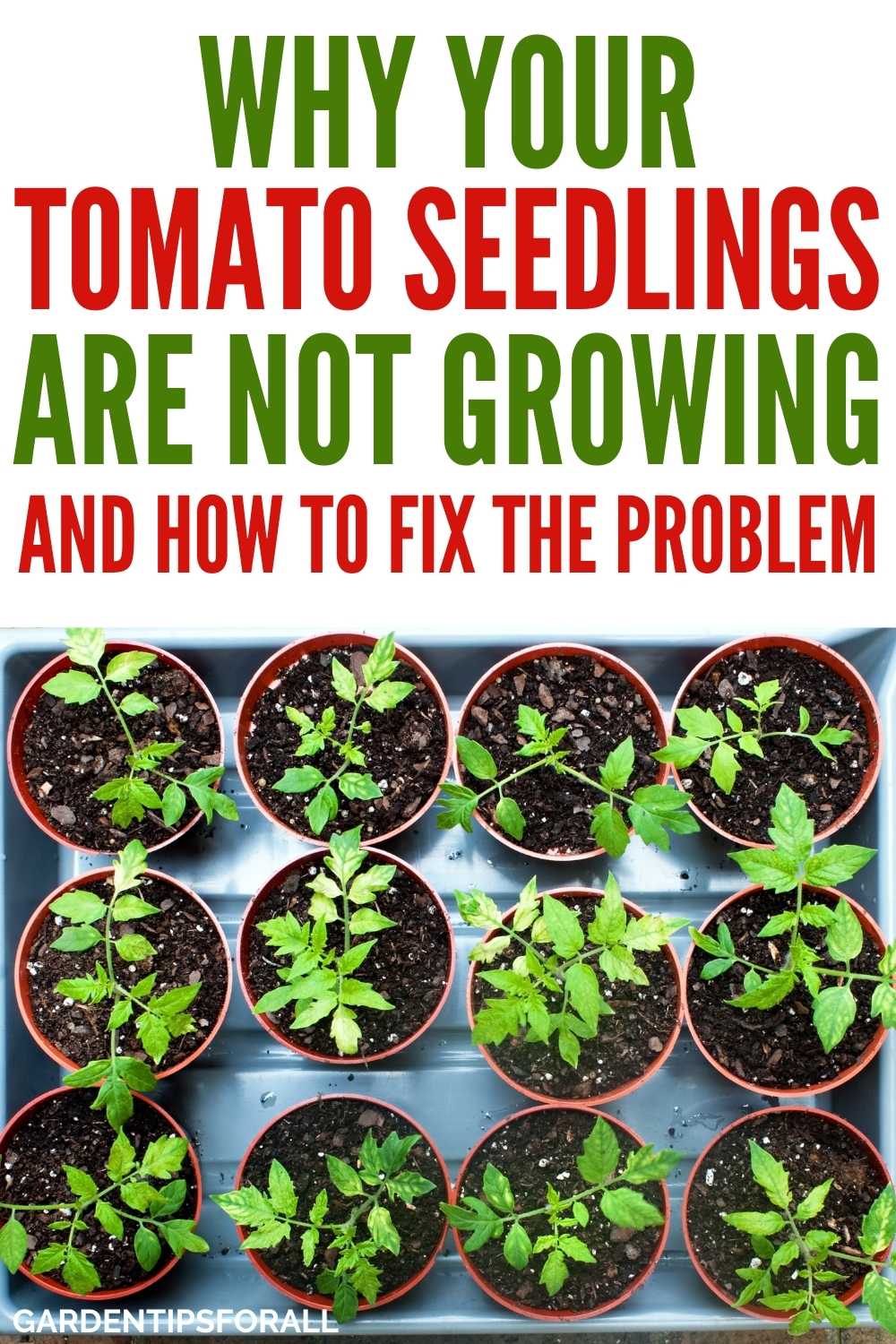
Vegetables need room for roots, leaves, and airflow. When plants grow too close together, they compete for water, nutrients, and sunlight. Crowded foliage can also stay damp longer, creating conditions that favor some plant diseases.
Root restriction is especially common in container gardens. A tomato plant in a pot that is too small may dry out quickly and struggle to support its expanding leaves. A seedling left in a small starter cell for too long may become root-bound, with roots circling the inside of the container.
Check the spacing instructions on the seed packet or plant label. The right distance depends on the crop, variety, support system, and growing method. Plants grown vertically may need less ground space than sprawling varieties, but their roots still need adequate room.
Source: gardentipsforall.com
Thin seedlings
Remove excess seedlings when the first true leaves appear or at the stage recommended for the crop. Cut unwanted seedlings at soil level when pulling them could disturb nearby roots.
Provide suitable container space
Use a pot that can support the mature plant and has enough drainage. Check crop-specific guidance instead of relying on one pot size for all vegetables.
Avoid damaging roots
Loosen soil gently when transplanting and handle seedlings by their leaves or root ball rather than squeezing their stems.
How to tell whether a plant needs a bigger pot
Roots growing out of drainage holes, a root ball packed with circling roots, and a container that dries out unusually fast can suggest that a plant needs more space. One root emerging from a drainage hole is not enough by itself to prove that the pot is too small.
If a plant is healthy enough to transplant, move it into a suitably larger container with drainage holes and fresh potting mix. Water it in, protect it from sudden temperature stress, and give it time to settle. Avoid breaking apart the root ball aggressively, especially with crops that dislike root disturbance.
Inspect the root ball carefully
Slide the plant from its pot only when necessary, and check whether roots have filled most of the available space.
Use potting mix for containers
Garden soil can compact in pots and restrict drainage, so choose a suitable container mix for most potted vegetables.
7. Pests and Diseases May Be Damaging Your Plants
Pests and plant diseases can slow vegetable growth by damaging leaves, stems, roots, or the tissues that move water and nutrients. Aphids may gather on new growth, flea beetles can leave small holes in leaves, and caterpillars may chew through foliage. Root-feeding insects can cause a plant to wilt or decline even when the soil appears moist.
Diseases may cause spots, yellowing, wilting, soft stems, or root decay. However, these signs can overlap with damage from watering mistakes, heat, and nutrient problems. Look for clear evidence such as insects, webbing, expanding leaf spots, or soft, discolored roots before choosing a treatment.
Check both the upper and lower sides of leaves, the growing tips, and the base of the stems. If only one plant is affected, compare it with nearby healthy plants. If several plants of the same crop decline together, investigate shared conditions such as drainage, weather, or a common pest.
Source: gardenweb.com
Inspect leaf surfaces
Look for insects, eggs, sticky residue, webbing, holes, and spots that spread over time.
Check stems and the soil line
Dark, soft, or damaged tissue near the base can indicate rot, stem injury, or another problem that needs closer inspection.
Examine roots when necessary
Healthy roots are generally firm. Mushy, dark roots with a foul smell can indicate severe root damage, although root color varies by crop and growing medium.
Remove severely affected material
Dispose of diseased plant material appropriately and clean tools between plants when spreading a disease is a concern.
Should you use a pesticide?
Do not spray a pesticide simply because a vegetable plant is growing slowly. First identify the pest or disease and decide whether the damage is serious enough to require treatment. Some insects are beneficial, and minor leaf damage may not affect the harvest.
If treatment is needed, select a product labeled for the specific crop and target pest. Follow the label directions for application, protective equipment, harvest intervals, and re-entry. Never assume that a product is safe for edible crops just because it is described as natural or organic.
Start with identification
Use clear photographs and local university extension resources to help identify an unfamiliar pest or disease.
Use nonchemical controls when suitable
Hand-remove larger pests, protect young plants with appropriate covers, or remove badly affected leaves when doing so will not harm the plant.
Follow product labels
Observe all crop restrictions, protective measures, and preharvest intervals when a pesticide is used.
8. Planting Depth and Transplant Shock Can Delay Growth
Seeds planted too deeply may take longer to emerge or may fail to reach the soil surface. Seeds planted too shallowly can dry out before germination, especially in hot or windy weather. Follow the depth guidance on the seed packet because seed size and germination needs vary by crop.
Small seeds often need only a light covering of soil, while larger seeds can usually be planted more deeply. Some seeds need light to germinate and should be pressed onto the surface or covered only lightly. Do not use the same planting depth for every vegetable.
Transplants may also pause after being moved outdoors. Their roots need to adjust to the new soil, moisture, sunlight, and temperature. A short pause can be normal, but ongoing wilting, a soft stem, or steadily worsening yellow leaves suggests that another problem may be present.
Source: plantrabit.com
Check seed depth
Compare the actual planting depth with the seed packet instructions before digging up a seed that has not emerged.
Harden off indoor seedlings
Gradually expose seedlings to outdoor light, wind, and temperature changes before planting them outside.
Water transplants carefully
Moisten the root ball and surrounding soil, then keep the root zone from drying out while avoiding saturation.
When should you worry about seedlings that have not emerged?
Check the expected germination period on the packet and compare it with the actual soil temperature and moisture. Some seeds emerge within days, while others need longer. Cold soil, dry conditions, excessive moisture, old seed, and planting too deeply can all delay emergence.
If the expected period has passed, inspect a small area carefully rather than disturbing the entire row. A seed that is firm may still be viable, while a soft or rotten seed may have failed. Correct the conditions before sowing more seed.
Keep seed-starting mix evenly moist
Do not allow the mix to dry out completely, but avoid keeping it waterlogged.
Check temperature requirements
Use the crop’s recommended soil temperature range when deciding whether conditions are suitable for germination.
9. Use the Symptoms to Narrow Down the Cause
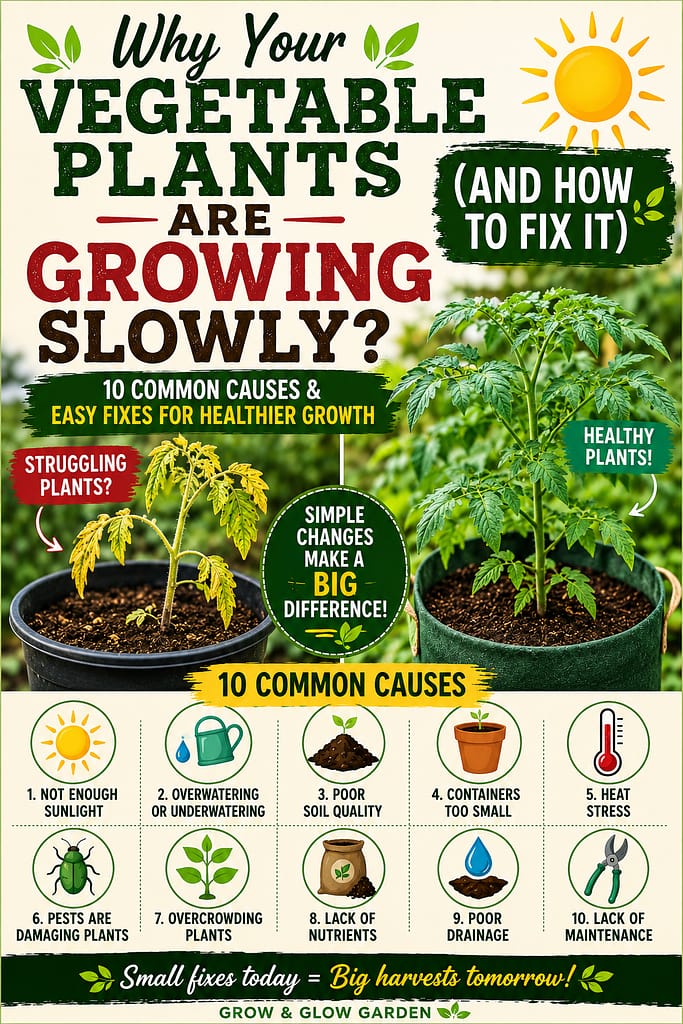
The pattern of damage can help you decide what to check first. A whole bed of small plants may point to a shared problem such as poor light, cold soil, or incorrect watering. One struggling plant among several healthy neighbors may have damaged roots, a localized pest problem, or a planting issue.
Use the following table as a starting point, not as a final diagnosis. Several problems can cause the same symptom, so confirm the likely cause before treating the plants.
Source: growglowgarden.com
Check the whole plant
Look at new leaves, older leaves, stems, and the soil around the roots instead of relying on one symptom.
Check the pattern
Decide whether one plant, one crop, or the entire bed is affected. This can help separate local damage from shared growing conditions.
Common symptoms and practical first checks
When leaves turn yellow, start by checking soil moisture and root health. If older leaves yellow while the rest of the plant grows well, a nutrient shortage may be involved, but it should not be assumed without checking other causes.
When plants wilt, check the soil before watering. Dry soil supports the possibility of underwatering, while wet soil suggests drainage or root problems. When plants stay small but remain green, check sunlight, temperature, spacing, and the expected growth rate before adding fertilizer.
Yellow older leaves
Check watering, drainage, and nutrient availability. Nitrogen shortage is one possible cause, not the only one.
Yellow new leaves
Check root health, soil pH, and whether nutrients are available to the plant. Several deficiencies and root problems can produce pale new growth.
Wilting in wet soil
Check drainage and roots. More water may worsen the problem.
Tall, thin, weak stems
Check whether plants receive enough direct light and whether they are crowded.
Brown leaf edges
Check heat, watering, fertilizer concentration, and salt buildup before assuming a specific nutrient deficiency.
Slow growth across the entire bed
Review weather, sunlight, soil moisture, soil condition, and planting dates because a shared environmental issue may affect many plants.
10. A Simple Seven-Day Plan to Help Vegetable Plants Recover
A practical recovery plan starts with observation and makes changes in a sensible order. Avoid changing the watering schedule, fertilizer, soil pH, and plant location all at once. If the plant improves, you will have a better idea of which change helped.
Seven days is a useful period for checking whether conditions are improving, but it is not a promise that every plant will recover in a week. Damaged roots, severe nutrient problems, cool weather, and slow-growing crops may need much longer.
Source: americanfarmsteadhers.com
Day 1: Record the symptoms
Photograph the plant, note its size, check the leaves, and compare it with a healthy plant of the same crop if available.
Day 2: Check moisture and drainage
Feel the soil below the surface. Water if the root zone is dry, or pause irrigation and address drainage if it is saturated.
Day 3: Review sunlight and temperature
Estimate direct sunlight and review recent weather. Protect plants from extreme conditions when practical.
Day 4: Check spacing and roots
Look for crowding, restricted containers, or clear root damage. Avoid digging up a plant without a good reason.
Day 5: Inspect for pests and disease
Check leaf undersides, stems, and the soil line. Identify the problem before choosing a treatment.
Day 6: Review soil needs
If conditions still suggest a nutrient or pH problem, collect a soil sample or review an existing soil test before applying amendments.
Day 7: Compare new growth
Take another photograph and look for healthy new leaves, firmer stems, or less wilting. Continue the correction that fits the evidence and reassess if the plant keeps declining.
When is it time to seek local gardening help?
Contact your county or state university extension service if several plants decline quickly, an unfamiliar disease spreads, or you cannot identify the cause after checking the main growing conditions. Extension staff may offer diagnostic resources or explain how to submit plant or soil samples.
If a plant has severe stem damage, extensive root rot, or a rapidly spreading disease, it may not recover even after conditions improve. Removing a badly affected plant can sometimes help protect nearby plants, depending on the cause. Confirm the likely problem before composting diseased material or applying a treatment.
Get a diagnosis when symptoms are unclear
Provide clear photos of the whole plant, affected leaves, stem base, and roots if they can be inspected safely.
Keep notes
Record watering, recent weather, fertilizer applications, planting dates, and when the symptoms first appeared.
11. Common Mistakes That Make Slow Growth Worse
Trying too many fixes at once can make a small problem harder to solve. A plant with wet roots may decline faster after another watering, while a plant with adequate nutrients may suffer after a heavy dose of fertilizer. Match the action to the evidence you can see.
Avoid assuming that every small plant is unhealthy. Some vegetables grow slowly in cool weather or spend time building roots before producing much top growth. If the plant has healthy color, firm stems, and suitable growing conditions, it may need more time rather than another treatment.
Source: yourbackyardfarmer.com
Watering every day without checking soil
A fixed schedule ignores differences in weather, soil texture, plant size, and drainage. Check the root zone first.
Adding fertilizer as a first response
Fertilizer cannot correct poor drainage, low light, cold soil, or damaged roots. Test the soil when possible.
Ignoring the crop’s temperature needs
A warm-season crop planted in cold soil may remain small even when watered and fed correctly.
Moving plants repeatedly
Frequent transplanting can injure roots and increase stress. Move a plant only when there is a clear benefit.
Applying several pest treatments together
Unneeded treatments may harm beneficial insects or plants and make it harder to tell what caused a change.
Expecting damaged leaves to turn green again
Older leaves may remain yellow or scarred after the cause is fixed. Judge recovery by healthy new growth and the plant’s overall condition.
How can you tell whether a plant is recovering?
Look for new leaves that develop with normal color and shape, stems that remain firm, and less wilting under ordinary conditions. A plant may take several days or longer to show clear improvement, depending on the crop and the severity of the stress.
Do not judge recovery by height alone. A plant can put on a little new growth while its roots remain weak. Continue to check soil moisture and watch for returning symptoms rather than assuming one good day means the problem is gone.
Positive signs
New leaves look healthier, stems stay firm, and the plant resumes steady growth.
Warning signs
Wilting worsens, new leaves emerge badly distorted, stems soften, or damage spreads to nearby plants.
12. Match the Fix to the Vegetable You Are Growing
Different vegetables respond to different conditions, so crop type matters when diagnosing slow growth. Tomatoes and peppers need suitable warmth and light, while lettuce and spinach are better suited to cooler conditions. Root vegetables may struggle in compacted soil, and climbing or sprawling crops need enough room for their roots and foliage.
Use the crop-specific clues below alongside the general checks for light, water, soil, and temperature. These are starting points rather than definitive diagnoses because the same crop can struggle for several different reasons.
Source: epicgardening.com
Tomatoes
Check sunlight, cold nights, water consistency, root space, and excessive nitrogen. Healthy foliage with few flowers may require a different diagnosis from a small plant with yellow leaves.
Peppers
Check warmth, sunlight, moisture, and root health. Peppers often establish slowly in cool conditions and may pause after transplanting.
Cucumbers and squash
Check soil warmth, moisture, available space, and leaf damage. These crops can grow rapidly in suitable conditions but may struggle in cold soil.
Lettuce and spinach
Check moisture, light, and temperature. Hot weather can cause stress and premature flowering, while cold conditions may slow early growth.
Carrots and beets
Check soil texture, compaction, planting depth, and spacing. Dense or stony soil can restrict root development.
Beans and peas
Check planting conditions, soil moisture, temperature, and root health. Cool or waterlogged soil can delay growth, while heat can stress cool-season peas.
What if only one vegetable species is struggling?
If tomatoes are growing well but peppers in the same bed remain small, consider the different temperature needs and growth rates of those crops. If carrots are stunted while leafy greens look healthy, investigate the soil structure and depth available for root growth.
When one species struggles across several beds, check its planting dates, variety requirements, and susceptibility to local pests or diseases. When all crops struggle in one location, shared factors such as shade, drainage, or soil conditions are more likely to deserve attention first.
Compare crops, not just plant size
Use the expected growth pattern of each crop to decide whether the problem is unusual.
Use local planting guidance
Match varieties and planting times to your regional climate and the conditions in your garden.
Frequently Asked Questions
Q
Why are my vegetable plants not growing but still green?
Green leaves can mean that a plant is still healthy even when growth is slow. Check sunlight, temperature, root space, and the crop’s normal growth rate first. Cold soil, crowded roots, or a recent transplant can delay growth without causing obvious yellowing.
Q
Should I add fertilizer to vegetable plants that are not growing?
Not before checking soil moisture, drainage, sunlight, temperature, and root health. Fertilizer helps when a nutrient shortage is limiting growth, but it will not fix poor drainage or insufficient light. A soil test can help you choose the right amendment and avoid overfertilizing.
Q
Why are my vegetable plants small after transplanting?
Transplants may pause while their roots adjust to the new soil and outdoor conditions. This is more likely after a sudden change in sunlight, temperature, wind, or moisture. Keep the root zone appropriately moist, protect plants from severe stress, and watch for healthy new growth.
Q
Can too much water stop vegetable plants from growing?
Yes. Waterlogged soil has less air available to roots, which can limit root function and encourage root rot. Check below the surface before watering, make sure containers drain freely, and correct persistent drainage problems rather than adding more water.
Q
How long does it take for a vegetable plant to recover?
The time varies with the crop, the cause, and the severity of the damage. Some plants show healthier growth within several days after a watering problem is corrected, while root damage or nutrient issues may take weeks to improve. Look for healthier new leaves and firmer growth rather than expecting damaged leaves to repair themselves.
Q
Why are my vegetable plants growing slowly in summer?
Extreme heat can slow growth, increase water loss, damage leaves, and interfere with flowering in some vegetables. Check soil moisture in the root zone, use suitable mulch, and provide temporary shade when needed for heat-sensitive plants. Make sure the soil is not waterlogged before increasing irrigation.
Q
Why are all the vegetables in my garden growing poorly?
When many crops struggle in the same area, look first for a shared problem. Common causes include inadequate sunlight, poor drainage, unsuitable soil pH, compacted soil, extreme temperatures, and incorrect watering. Review recent weather and consider a soil test if the basic checks do not explain the problem.
✦ Wrapping Up
Conclusion
When vegetable plants stop growing, the cause is often a mismatch between their needs and the conditions in the garden. Too little sunlight, uneven watering, poor drainage, cold soil, extreme heat, restricted roots, and nutrient problems can all slow growth. Pests and diseases may also play a role, especially when leaves, stems, or roots show visible damage.
Start with the simplest checks. Feel the soil, review the light and weather, look for signs of pests, and compare affected plants with healthy ones. Use a soil test when nutrient or pH problems are likely, and avoid adding fertilizer or other treatments without a clear reason.
Give plants time to respond after you correct the main problem. Healthy new leaves, firm stems, and steady growth are better signs of recovery than the condition of old, damaged foliage. If the plants continue to decline or the cause remains unclear, seek help from a local university extension service.
💡 Key Takeaway
Today, check the soil a few inches below the surface, estimate the hours of direct sunlight, and inspect the newest leaves. Write down the most likely cause, correct one clear problem at a time, and compare new growth over the next week.
I enjoy sharing simple gardening ideas, lawn care tips, and honest product reviews that help make outdoor work easier. From home gardening guides to helpful tools and lawn care advice, I write easy-to-follow content to help readers create a healthier and better-looking outdoor space without wasting time or money.