As an Amazon Associate, I earn from qualifying purchases.
Plant dahlia tubers outdoors after your area’s last spring frost, when the soil has warmed to about 60°F. In most of the United States, this means spring, but the exact date depends on your USDA zone, local climate, and weather.
Dahlias bring bold color to American gardens from summer into fall. They grow well in sunny flower beds, raised beds, and patio containers. Yet planting them too early can cause trouble. Cold, wet soil can rot a tuber before it has a chance to grow.
The best planting date depends on more than your USDA hardiness zone. A gardener in Zone 6 in the Mid-Atlantic may face different spring weather from someone in the same zone in the Mountain West. Your last expected spring frost, soil temperature, and local forecast give you a better guide than the zone number alone.
This guide explains when to plant dahlias across USDA Zones 3 through 11, how to start them indoors, and what to do in warm regions where summers can be very hot. It also covers frost protection, container growing, and fall storage so you can plan for healthy plants and a long season of blooms.
For most American gardeners, the safest time to plant dahlia tubers outdoors is spring, after frost risk has passed and the soil has warmed. In colder regions, planting may need to wait until June. In milder regions, the window can begin in March or April.
The table below gives broad planting windows for Zones 3 through 11. These are planning estimates, not fixed dates. Use your local frost records and current weather to choose the right week for your garden.
The USDA zone system groups locations by average annual extreme minimum winter temperature. It helps gardeners judge winter hardiness, but it does not account for every spring freeze, heat wave, or difference in soil conditions.
Source: evergreenseeds.com
The main planting rule
Wait until the risk of frost has passed and the soil is warm enough for active growth. In many gardens, soil temperatures around 60°F provide a useful target.
The warm-climate exception
In hot southern areas, spring planting may expose dahlias to intense summer heat. A fall or late-winter planting window may work better where winters are mild.
Dahlia planting calendar by USDA zone
Use this table as a starting point for planning. The dates refer to typical outdoor planting windows for tubers, not guaranteed dates for every town in a zone. Coastal areas, mountains, deserts, and urban neighborhoods can have very different conditions.
Zones 3 and 4
Late May through June is a common planning window. Some colder locations need to wait until early summer. Start tubers indoors several weeks earlier if you want to extend the growing season.
Zones 5 and 6
Mid-April through May is common in many locations, but colder areas may need to wait until late May or early June. Plant after frost risk has passed and the soil has warmed.
Zones 7 and 8
March through May can work, depending on the local climate. Mild areas may allow early planting, while places with late frosts should wait.
Zones 9 and 10
Late winter through spring may work in some areas, but fall planting is often worth considering where summer heat is intense and winters are mild.
Zone 11
Choose a cooler growing period based on local temperatures, rainfall, and humidity. In frost-free tropical areas, the main challenge may be excessive heat or wet soil rather than spring frost.
How to Find the Right Planting Date for Your Garden
Your local weather is more useful than a calendar date alone. Two gardeners in the same USDA zone may need to plant weeks apart because of elevation, nearby lakes, coastal influence, or the amount of shade in their yards.
Before planting, check your area’s typical last spring frost date through a local cooperative extension office or trusted weather records. Then look at the forecast and inspect the soil. A single warm afternoon does not mean the ground has warmed enough for dahlia tubers.
Dahlias are tender plants. A late frost can damage new shoots, while cold, soggy soil can cause tubers to rot. Waiting a little longer is often safer than putting them into ground that is still cold.
Source: evergreenseeds.com
Check the last frost date
Use local records as a guide, then check the short-term forecast before planting. A typical frost date is an estimate, not a promise that frost cannot occur afterward.
Check soil temperature
Aim for soil around 60°F. A soil thermometer gives a more useful reading than judging the weather by how warm the air feels.
Check soil moisture
The soil should be moist but not waterlogged. Heavy clay that stays wet can be risky even when the temperature seems right.
Check the forecast
If a cold snap is expected, delay planting or prepare suitable protection. Do not rely on a cover to make frozen ground safe for planting.
Should you plant by zone or frost date?
Use both, but give more weight to local frost conditions and soil temperature. Your USDA zone helps explain winter survival and whether tubers might remain in the ground. Your frost date helps determine when new growth can safely begin outdoors.
For example, a gardener in Zone 6 may be ready to plant in early May in a sheltered southern location, while another gardener in Zone 6 at higher elevation may need to wait until late May or June. The zone label alone cannot settle the decision.
Best practical approach
Use your zone to plan winter care, your local frost date to plan spring planting, and soil temperature to confirm that the ground is ready.
When to Plant Dahlias in Zones 3 and 4
Gardeners in Zones 3 and 4 usually need to plant dahlias later than gardeners in warmer regions. Winters are severe in many of these areas, and spring soil can remain cold well after the snow melts. Late May or June is often a sensible target, depending on the local frost date.
A short growing season does not mean you cannot grow dahlias. Starting tubers indoors can give the plants a head start without exposing them to spring frost. The goal is to produce sturdy shoots before moving the plants outside, not to grow long, weak stems in a dark room.
Choose a sunny site and make sure water drains away after rain. Raised beds can warm sooner than heavy ground soil, but they still need to reach a suitable temperature before planting.
Source: evergreenseeds.com
Start indoors
Pot tubers in a container with drainage about four to six weeks before your expected outdoor planting date. Keep the potting mix lightly moist, not soaked.
Harden off young plants
Move indoor-grown plants outdoors gradually over about a week. Begin in a sheltered, partly shaded spot and increase their exposure to sun and wind.
Protect tender shoots
If frost threatens after planting, cover plants with suitable frost fabric or a breathable cover that reaches the ground. Remove the cover when conditions improve.
Can you plant dahlias in June?
Yes. June planting is often practical in colder regions, especially when the ground has only recently warmed. Dahlias can still flower later in summer and into fall if they receive enough sun, water, and care.
Choose varieties suited to your growing season and avoid delaying planting without a reason once the soil is ready. The later the tubers go into the ground, the less time the plants have to grow and bloom before fall frost.
Watch the season length
If your area gets early fall frost, start indoors and plant promptly once conditions are suitable. This gives the plants more time to develop before cool weather returns.
When to Plant Dahlias in Zones 5 and 6
Zones 5 and 6 cover a wide range of American climates, from parts of the Midwest and Northeast to inland mountain areas. In many locations, dahlias can go outdoors in April or May, but cold pockets may need to wait until late May or June.
Use the weather rather than a fixed date to make the final call. If the soil is cold and rain has left it saturated, give it more time. A few extra days can help reduce the risk of tuber rot.
These zones often offer a useful balance between a long summer growing season and enough cool weather for late-season blooms. With a sunny site and steady care, many dahlias can produce flowers from summer until the first killing frost.
Source: evergreenseeds.com
Choose a sunny location
Aim for at least six to eight hours of direct sunlight each day where practical. In places with intense summer heat, some afternoon shade may help reduce stress.
Space plants for airflow
Follow the variety’s spacing guidance. Large plants need more room than compact bedding types, and good airflow can help leaves dry after rain.
Support tall varieties
Install stakes or other supports at planting time when possible. This reduces the chance of damaging tubers later while trying to push supports into the soil.
When to plant dahlias in Zone 5
Zone 5 gardeners often plant from May into early June, depending on the last frost and soil warmth. A warm spring may allow earlier planting, while a cold, wet spring can delay it.
If you have a short season, start tubers indoors in pots. Keep the plants in bright light and avoid overwatering. Plant them outside after frost risk has passed and the soil is suitable.
A useful check
If the soil feels cold and clings to your tools in wet clumps, wait for better conditions instead of planting by the calendar.
When to plant dahlias in Zone 6
Many Zone 6 gardens can plant dahlias during May, although the best date varies across the zone. Southern or sheltered locations may be ready earlier than northern or elevated sites.
Planting too early can lead to slow growth or rot. Planting too late can shorten the flowering period. The best compromise is to plant as soon as frost risk has passed and the soil has warmed.
Avoid soggy beds
Improve drainage before planting if water stands after rain. Organic matter can help soil structure, but it does not replace proper drainage in a persistently waterlogged site.
When to Plant Dahlias in Zones 7 and 8
Zones 7 and 8 often allow an earlier start than colder zones, but planting dates still depend on local frost risk. Many gardens can plant in April or May. In warmer parts of these zones, early spring planting may work, while colder inland locations may need to wait.
These zones include places with very different summer weather. Some have humid summers with frequent rain, while others have dry spells and intense sun. Choose a planting site that balances sunlight, drainage, and access to water.
In areas with hot summers, early planting may give dahlias time to establish before the hottest weather arrives. However, do not plant into cold, wet soil just to get an early start.
Source: easytogrowbulbs.com
Plant after local frost risk
A mild winter does not rule out a late spring freeze. Keep an eye on local forecasts before setting out tender shoots.
Prepare for summer heat
Water deeply when needed, mulch the soil to help retain moisture, and monitor plants during hot, dry spells.
Prevent disease pressure
Avoid crowding plants and water near the soil rather than repeatedly wetting the leaves late in the day.
When to plant dahlias in Zone 7
Many Zone 7 gardeners can plant in April or May, but the local frost date should guide the final choice. The same zone includes both warmer southern locations and cooler inland areas.
If your garden has a history of late frost, wait until the danger has passed. If you start tubers indoors, harden off the plants before moving them outside.
For Zone 7b
The warmer half of Zone 7 may support an earlier spring planting than Zone 7a, but the difference is not a guarantee. Use local conditions to choose the date.
When to plant dahlias in Zone 8
Zone 8 gardeners often have a longer growing season and can plant in early or mid-spring after the risk of frost has passed. In very mild locations, some gardeners also grow dahlias during fall and winter, depending on the variety and local conditions.
Summer heat can still interrupt flowering. Where temperatures climb for long periods, consider an earlier spring crop or a fall crop rather than expecting steady bloom through the hottest months.
Use a seasonal plan
In cooler parts of Zone 8, spring planting may be enough. In hot-summer areas, compare spring and fall growing windows and choose the period with the most favorable temperatures.
When to Plant Dahlias in Zones 9 and 10
Zones 9 and 10 include many areas with mild winters and long, hot summers. In these climates, the challenge may be finding a cool enough growing window rather than avoiding a long spring frost. Dahlias often grow well during cooler months, with spring or fall planting depending on local conditions.
In places with hot summers, tubers planted in spring may produce strong growth before flowering slows during the hottest weeks. A fall planting can sometimes provide better conditions for flowering, especially where the soil stays warm and winters remain mild.
Do not assume every location in these zones follows the same schedule. Dry inland areas, humid coastal regions, and elevated neighborhoods can differ in summer heat, winter cold, and rainfall.
Source: homesandgardens.com
Choose a cooler season
Compare local spring and fall temperatures. Plant when the soil is warm enough for growth but the plants are less likely to face prolonged extreme heat.
Manage irrigation carefully
Water deeply when the soil begins to dry, but avoid keeping the tubers constantly wet. Good drainage is essential in areas with heavy seasonal rain.
Protect plants from harsh afternoon sun
Morning sun with some afternoon shade may help in extremely hot locations. Balance shade with enough light to support healthy stems and flowers.
When to plant dahlias in Zone 9
Zone 9 gardeners may be able to plant dahlias in late winter or spring after any local frost risk has passed. In hot-summer areas, fall planting can be more productive if temperatures become milder and the soil remains warm enough for root growth.
Where winters are mild, some tubers may survive in the ground, but this depends on soil drainage, local winter lows, and the variety. Wet winter soil can cause rot even when temperatures do not drop very far.
Plan for the local heat pattern
If spring-planted dahlias struggle during summer, try a fall growing window in a later season rather than assuming the variety cannot grow in your area.
When to plant dahlias in Zone 10
Zone 10 often supports planting during a cooler part of the year. In many subtropical locations, gardeners grow dahlias from fall through spring, but the ideal month depends on local heat, rainfall, and occasional cold snaps.
In humid regions, allow space between plants and avoid planting in low spots that hold water. In dry regions, plan regular irrigation during establishment and protect young plants from drying winds.
Avoid the hottest months when possible
Long periods of high heat can reduce flower production. Schedule planting so plants can establish and bloom during a milder season.
When to Plant Dahlias in Zone 11
Zone 11 includes very warm areas where frost is uncommon or absent. In these locations, the best dahlia planting time usually depends on heat, humidity, rainfall, and the length of the cooler season rather than a standard last-frost date.
Dahlias prefer moderate growing conditions and can struggle during prolonged tropical heat. If your area has a distinct cooler or drier season, use that period as your starting point. Plant when the soil drains well and the weather is not excessively hot.
In tropical climates with heavy seasonal rain, drainage is especially important. Tubers left in constantly wet soil may rot. Raised beds or containers with drainage holes can help when the native soil stays saturated.
Source: homesandgardens.com
Use local seasonal patterns
Check local gardening guidance to identify the cooler growing season. Do not rely on a temperate-climate spring planting calendar in a tropical location.
Prioritize airflow
Give plants enough space for air to move through the foliage. This is useful in humid weather when leaves dry slowly.
Consider container growing
Containers can improve drainage and make it easier to move plants to a sheltered location, provided they are large enough and do not dry out too quickly.
Can dahlias grow in frost-free areas?
Yes, but frost-free weather alone does not guarantee good results. Dahlias may flower less during extended heat, and some varieties perform better under milder conditions.
If plants grow well but fail to bloom during the hottest months, review the planting season, sunlight, and watering pattern. Moving the growing period to a cooler part of the year may help more than adding fertilizer.
Look for a mild growing window
Aim for a season with warm soil, manageable temperatures, and enough time for plants to develop before the next period of extreme heat or rain.
How to Plant Dahlia Tubers Correctly
Once the planting window is right, proper planting helps dahlias establish strong roots and stems. Choose firm, healthy tubers with an intact crown or growing point. A loose tuber without a viable eye may not grow, even if it looks healthy.
Dahlias grow best in well-drained soil with plenty of sunlight. Loosen the soil before planting and mix in mature compost if needed to improve soil structure. Avoid adding large amounts of fresh manure or high-nitrogen fertilizer, which can encourage leafy growth at the expense of flowers.
Source: easytogrowbulbs.com
Step 1: Choose a site
Select a sunny area with good drainage. In hot climates, light afternoon shade may help plants handle extreme heat.
Step 2: Prepare the soil
Loosen the soil and remove large stones and weeds. If water pools after rain, correct the drainage or choose a raised bed.
Step 3: Place the tuber
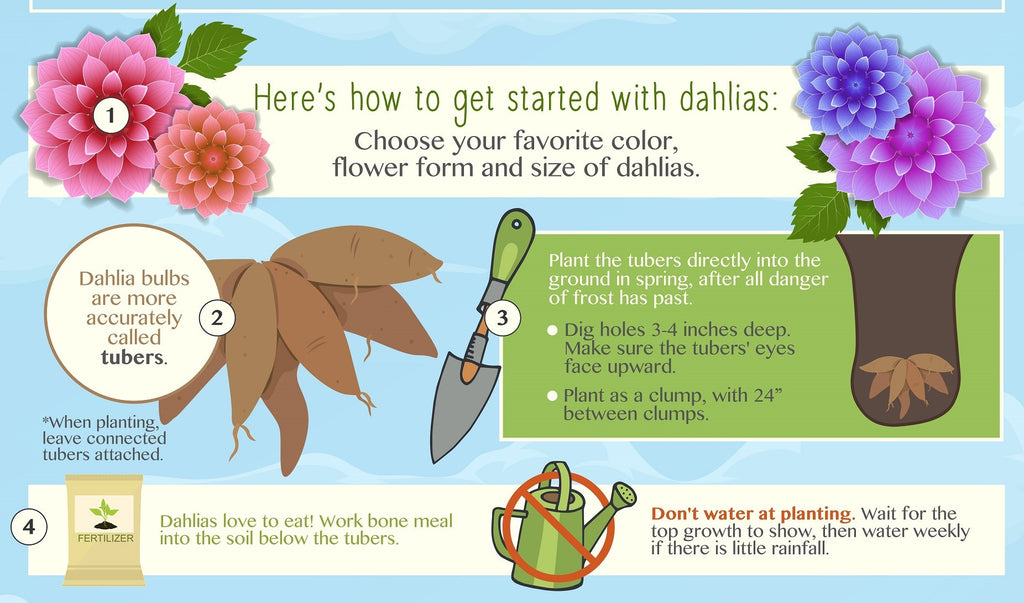
Set the tuber horizontally with the eye or crown facing upward. Follow the variety’s planting instructions for depth, often around four to six inches in suitable garden soil.
Step 4: Cover lightly
Cover the tuber with soil and firm it gently. Leave room to add soil if needed, but do not pack the bed hard.
Step 5: Water with care
If the soil is already moist, avoid soaking it at planting. Once growth begins, water as needed to keep the root zone evenly moist without leaving it waterlogged.
Step 6: Add support
Place a stake near the tuber for tall varieties. Mark the planting location so you do not accidentally damage the tuber when weeding.
How deep should you plant dahlias?
A planting depth of about four to six inches works for many dahlia tubers, but the exact depth depends on tuber size, soil type, and the variety’s growing instructions. Heavy soil that stays wet calls for extra attention to drainage rather than simply burying the tuber deeper.
Do not plant too shallow in a way that leaves the tuber exposed to drying or temperature swings. At the same time, avoid placing it in a deep, waterlogged hole. Aim for stable soil conditions and good drainage.
Heavy clay soil
Improve the bed or use a raised bed if drainage is poor. Planting depth cannot make persistently wet soil safe for dahlias.
Containers
Use a pot with drainage holes and a suitable potting mix. Follow the variety’s guidance for tuber depth and leave enough room for root and stem growth.
Should you water dahlia tubers right after planting?
Watering needs depend on soil moisture. In cool, damp soil, heavy watering can increase the risk of rot before roots and shoots begin to grow. In dry soil, a modest watering may help settle the soil around the tuber.
After shoots emerge, increase watering as the plant grows and begins to use more moisture. Check the soil before watering rather than following a rigid daily schedule.
A simple moisture check
Feel the soil a short distance below the surface. If it is still wet, wait. If it has begun to dry and the plant is actively growing, water deeply enough to reach the root zone.
Starting Dahlias Indoors Before Outdoor Planting
Starting dahlia tubers indoors is useful in cold regions and for gardeners who want to extend the growing season. It lets the tubers begin growing while outdoor soil is still cold. However, the plants still need to be hardened off before they move outdoors.
Begin about four to six weeks before the expected outdoor planting date. Use a pot with drainage holes and a free-draining potting mix. Keep the container in a bright location and water sparingly until growth is active.
Source: homesandgardens.com
Use a suitable container
Choose a pot large enough to hold the tuber without crowding it. Make sure excess water can drain freely.
Provide bright light
Place growing plants near a bright window or use a suitable grow light. Insufficient light can produce weak, stretched stems.
Avoid excess water
Keep the mix lightly moist rather than soaked. A tuber with little active growth uses less water than a mature plant.
Harden off gradually
Over about a week, increase the time plants spend outdoors in sheltered conditions. Bring them inside or protect them if frost threatens.
Can you plant dahlias before the last frost?
You can start dahlias indoors before the last frost, but planting them outdoors too early carries a risk. A tuber may remain dormant or rot in cold, wet ground, while tender new shoots can be damaged by frost.
If you want an early start, use pots indoors and wait for suitable outdoor conditions. Do not confuse a head start under protection with permission to plant directly into cold garden soil.
Best option for cold regions
Start indoors, harden off the plants, and transplant after the local frost risk has passed and the soil has warmed.
When to Plant Dahlias in Pots
Dahlias in pots follow much the same seasonal rules as dahlias in garden beds, but containers can warm faster in spring. This may allow earlier planting when the weather is suitable. Containers also make it easier to move plants under cover if a cold snap arrives.
Choose a pot with drainage holes and enough capacity for the mature plant. Small pots can dry out quickly during summer, while oversized containers filled with wet mix may stay damp around a dormant tuber for too long.
Use a free-draining potting mix rather than dense garden soil. Place the container where the plant receives enough light, and monitor moisture more often during hot, windy weather.
Source: homesandgardens.com
Choose the right pot
Match the container to the variety’s mature size. Larger decorative varieties need more root space and often require sturdier support.
Watch container temperature
Dark pots in direct summer sun can become very hot. In extreme heat, move the pot to a spot with some afternoon shade.
Check moisture frequently
Container mix can dry faster than garden soil. Water when the root zone begins to dry, while making sure excess water can escape.
Are pots better for warm climates?
Pots can be useful in warm regions because they allow gardeners to move dahlias away from harsh afternoon sun or shelter them from heavy rain. They also provide more control over soil drainage.
However, pots do not remove the effects of extreme heat. Roots may overheat, and small containers may dry out quickly. Choose a generous pot, monitor the mix, and use the coolest suitable growing period for your area.
Use mobility wisely
Move containers when needed, but avoid shifting tall plants repeatedly if doing so risks breaking stems or damaging the root system.
How to Care for Dahlias After Planting
Once dahlias begin to grow, steady care helps them develop strong stems and a long flowering season. They need enough sunlight, water, and nutrients, but more is not always better. Excess fertilizer and constant wet soil can create problems instead of healthier plants.
New shoots may take time to appear, especially when soil temperatures are marginal. Avoid digging up the tuber to check it every few days. Give it suitable conditions and watch for gradual signs of growth.
Source: homesandgardens.com
Water deeply
As plants grow, water when the soil begins to dry. Aim to moisten the root zone rather than giving frequent, shallow splashes.
Mulch after growth begins
A light layer of organic mulch can help conserve soil moisture and reduce weeds. Keep the mulch from pressing tightly against tender stems.
Feed in moderation
Use a balanced or lower-nitrogen fertilizer only when needed and according to its label. Too much nitrogen can encourage foliage while reducing flowering.
Deadhead spent blooms
Remove faded flowers to encourage continued flowering and keep plants tidy. Cut back to a suitable leaf joint or branching point.
Provide support
Tie tall stems loosely to stakes as they grow. Secure ties without pinching the stems.
What if your dahlias do not sprout?
Slow sprouting can result from cold soil, excessive moisture, a damaged tuber, or a tuber without a viable growing eye. Check the growing conditions before assuming the tuber has failed.
If the soil is cold and wet, improve drainage and allow it to warm. If the tuber becomes soft, mushy, or foul-smelling, rot may have set in. A firm tuber with a viable eye may still sprout when conditions improve.
Avoid repeated digging
Do not pull up the tuber every few days to inspect it. Disturbing the soil can damage emerging roots and shoots.
Review the planting conditions
Check soil warmth, drainage, and the tuber’s condition. Correct the conditions before deciding whether to replace it.
Why are dahlias growing leaves but not flowers?
Too much nitrogen, insufficient sunlight, prolonged heat, or a late planting date can delay flowering. Some varieties also need more time to reach maturity.
Review the plant’s light exposure and feeding routine first. Avoid adding more fertilizer without a clear need. In hot climates, a cooler growing season may improve flowering more than extra feeding.
Start with light and feeding
Provide sufficient sun, reduce excessive nitrogen, and keep water levels steady. Allow the plant time to mature before changing several care practices at once.
When to Dig Up and Store Dahlia Tubers
In areas with freezing winters, most gardeners need to lift and store dahlia tubers if they want to save them for another season. The usual time is after the first killing frost has blackened the foliage, but before the tubers freeze in the ground.
In milder climates, some gardeners leave tubers in the ground over winter. This works only where winter temperatures and soil conditions allow it. Cold, wet soil can damage tubers even in places where severe freezes are uncommon.
The best winter plan depends on your local climate and drainage. If you are unsure whether your garden is mild enough for in-ground storage, lifting and storing a small number of tubers can reduce the risk of losing the entire collection.
Source: evergreenseeds.com
Wait for the right time
In cold regions, dig after the first killing frost damages the foliage but before the ground freezes hard.
Handle tubers gently
Cut back the stems and lift the clump carefully to avoid cutting or breaking the tubers. Let excess soil fall away without rough handling.
Dry and store properly
Allow the tubers to dry enough for storage, then keep them in a cool, dark, frost-free place with suitable humidity and airflow. Avoid both freezing and excessive drying.
Inspect through winter
Check stored tubers periodically. Remove rotting material, and adjust the storage conditions if the tubers are becoming too wet or shriveled.
Can dahlias stay in the ground all winter?
Sometimes. In mild climates with well-drained soil, dahlias may survive winter in the ground, especially when the area does not experience damaging freezes. A layer of mulch may help buffer temperature changes, but it cannot protect tubers from every severe cold event.
In colder zones, leaving tubers in the ground is risky. In warmer but rainy regions, winter moisture may be a bigger threat than frost. Learn how your local soil behaves in winter before deciding whether to lift or leave the tubers.
For uncertain climates
Lift and store valuable tubers if winter survival is uncertain. This gives you a backup for the next growing season.
Common Dahlia Planting Mistakes to Avoid
Most planting problems come from cold soil, poor drainage, frost damage, or the wrong growing season. A few simple checks can prevent many of these issues before they affect flowering.
Dahlias are not difficult to grow when their basic needs are met. The key is to match planting time to local conditions rather than following a single date for an entire USDA zone.
Source: evergreenseeds.com
Planting too early
Cold, wet soil can cause tubers to rot, and late frost can kill new shoots. Wait for suitable soil temperatures and safer weather.
Watering too much before sprouting
A dormant tuber does not need the same amount of water as a large growing plant. Keep the soil from becoming waterlogged.
Using poorly drained soil
Standing water can damage tubers. Improve drainage or choose a raised bed or suitable container.
Ignoring summer heat
In hot regions, the right spring date may not guarantee summer blooms. Consider a cooler growing window if heat repeatedly stops flowering.
Applying too much nitrogen
Excess nitrogen can lead to lush foliage and fewer flowers. Use fertilizer according to soil needs and product directions.
Forgetting winter protection
Tubers in cold zones can freeze if left in the ground. Plan storage before the first hard freeze.
A simple planting-day checklist
Before planting, confirm that the site is sunny, the soil drains well, and the weather forecast looks suitable. Make sure the tubers are firm and have a viable growing point. Prepare stakes before planting tall varieties.
After planting, label each variety and record the date. This makes it easier to compare growth and flowering times next year without relying on memory.
Ready to plant
Frost risk has passed, the soil is near 60°F, the bed drains well, and the tubers are healthy.
Better to wait
The soil is cold or waterlogged, frost is forecast, or the tubers would be planted into conditions that could cause rot.
How to Adjust Planting Time for Local Conditions
USDA zones cover large areas, so local conditions can change the best planting date by several weeks. Gardeners should account for elevation, coastal weather, urban heat, shade, soil type, and seasonal rainfall.
A sheltered urban garden may warm sooner than an open rural field. A low spot may collect cold air and frost even when nearby gardens remain safe. Heavy clay can stay cold and wet longer than a well-drained raised bed.
These differences are why a local cooperative extension office can be especially useful. Regional gardening advice often includes frost dates, typical planting windows, and guidance for common soil or weather problems.
Source: easytogrowbulbs.com
High-elevation gardens
Expect a shorter season and possible late frost. Starting indoors may help, but wait for safe outdoor conditions.
Coastal gardens
Mild temperatures may allow earlier planting, but cool soil and persistent dampness can still delay growth.
Desert gardens
Plant for the cooler part of the growing year and plan irrigation carefully. Extreme summer heat may be harder on dahlias than winter cold.
Humid southern gardens
Prioritize airflow and drainage. A fall growing season may be more useful than trying to keep dahlias blooming through prolonged summer heat.
What if your garden is between two zones?
Treat the zone map as a broad guide rather than a precise border. Your garden may experience conditions closer to the warmer or colder neighboring zone because of slope, exposure, nearby buildings, and local weather patterns.
For spring planting, use your frost history and soil temperature. For winter storage, use the colder end of the conditions your garden actually experiences and consider how wet the soil becomes during the dormant season.
Choose the safer schedule
When frost risk is uncertain, wait a little longer to plant outdoors. When winter survival is uncertain, lift and store the tubers rather than risking the whole collection.
Frequently Asked Questions
Q
What is the best month to plant dahlias?
For many American gardens, May is a useful starting point, but it is not right for every region. Cold zones may need to wait until June, while mild areas may be ready in March or April. In hot climates, fall or late-winter planting may work better.
Choose the month based on your local frost date, soil temperature, and seasonal heat. Aim for soil around 60°F and avoid planting into cold, soggy ground.
Q
Can I plant dahlias in March?
Yes, if your local climate is mild enough and the soil has warmed sufficiently. March may be suitable in parts of the southern United States, but it is often too early for colder northern and inland gardens.
If frost is still likely, start tubers indoors instead. Move the plants outside after the frost risk has passed and the soil is ready.
Q
Do dahlias come back every year?
Dahlias are tender perennials, meaning their tubers can regrow after dormancy when winter conditions allow them to survive. In colder zones, freezing soil can kill tubers left outdoors, so gardeners often dig them up and store them indoors over winter.
In mild areas, tubers may survive in the ground if temperatures and drainage are suitable. Their survival is not guaranteed, especially in wet winter soil.
Q
How long after planting do dahlias sprout?
Dahlias may take a few weeks to sprout, depending on soil warmth, moisture, tuber health, and variety. Cold soil can slow growth, while excessively wet soil can cause rot.
Keep the soil from becoming waterlogged and avoid digging up the tuber repeatedly. If the tuber remains firm and conditions improve, it may still produce shoots.
Q
Should I soak dahlia tubers before planting?
Soaking is not always necessary. Some tubers arrive dry and may benefit from brief rehydration according to the supplier’s directions, but soaking for too long can encourage rot.
Check the condition of the tubers and follow the supplier’s planting guidance. Healthy tubers planted in suitable soil usually need careful moisture management rather than prolonged soaking.
Q
Can I plant dahlias in summer?
Yes, particularly in cooler regions where late spring arrives slowly. Planting in early summer can still produce flowers, although a very late planting may shorten the flowering season before fall frost.
In hot regions, midsummer planting may expose young plants to stressful heat. Choose a cooler seasonal window where possible and provide suitable water, light, and drainage.
Q
What temperature is too cold for dahlia tubers?
Dahlia tubers are vulnerable to freezing, and cold, wet soil can cause damage even before a hard freeze occurs. There is no single air-temperature threshold that makes every garden safe because soil temperature, moisture, and exposure also matter.
For outdoor planting, wait until frost risk has passed and the soil is warm enough for growth. Before winter freezes the ground, lift and store tubers in colder climates.
✦ Wrapping Up
Conclusion
The best time to plant dahlias depends on your USDA zone, local frost dates, soil temperature, and summer weather. In Zones 3 through 6, gardeners usually plant in late spring or early summer. Zones 7 and 8 often allow spring planting, while Zones 9 through 11 may offer better results during cooler parts of the year.
Do not let the zone number make the decision on its own. Check your local forecast, make sure the soil is near 60°F, and choose a site with plenty of light and good drainage. Starting tubers indoors can extend the season in cold regions, while fall planting may help gardeners in hot climates avoid summer stress.
With the right timing and a little care, dahlias can provide colorful flowers for beds, borders, and cutting gardens. Plan for winter storage where freezing conditions threaten the tubers, and keep notes on what works in your own garden.
💡 Key Takeaway
Before planting, check your local last spring frost date, measure the soil temperature, and confirm that the bed drains well. Plant after frost risk has passed and the soil has warmed to around 60°F, then adjust the schedule for your region’s summer heat and winter conditions.
I enjoy sharing simple gardening ideas, lawn care tips, and honest product reviews that help make outdoor work easier. From home gardening guides to helpful tools and lawn care advice, I write easy-to-follow content to help readers create a healthier and better-looking outdoor space without wasting time or money.