As an Amazon Associate, I earn from qualifying purchases.
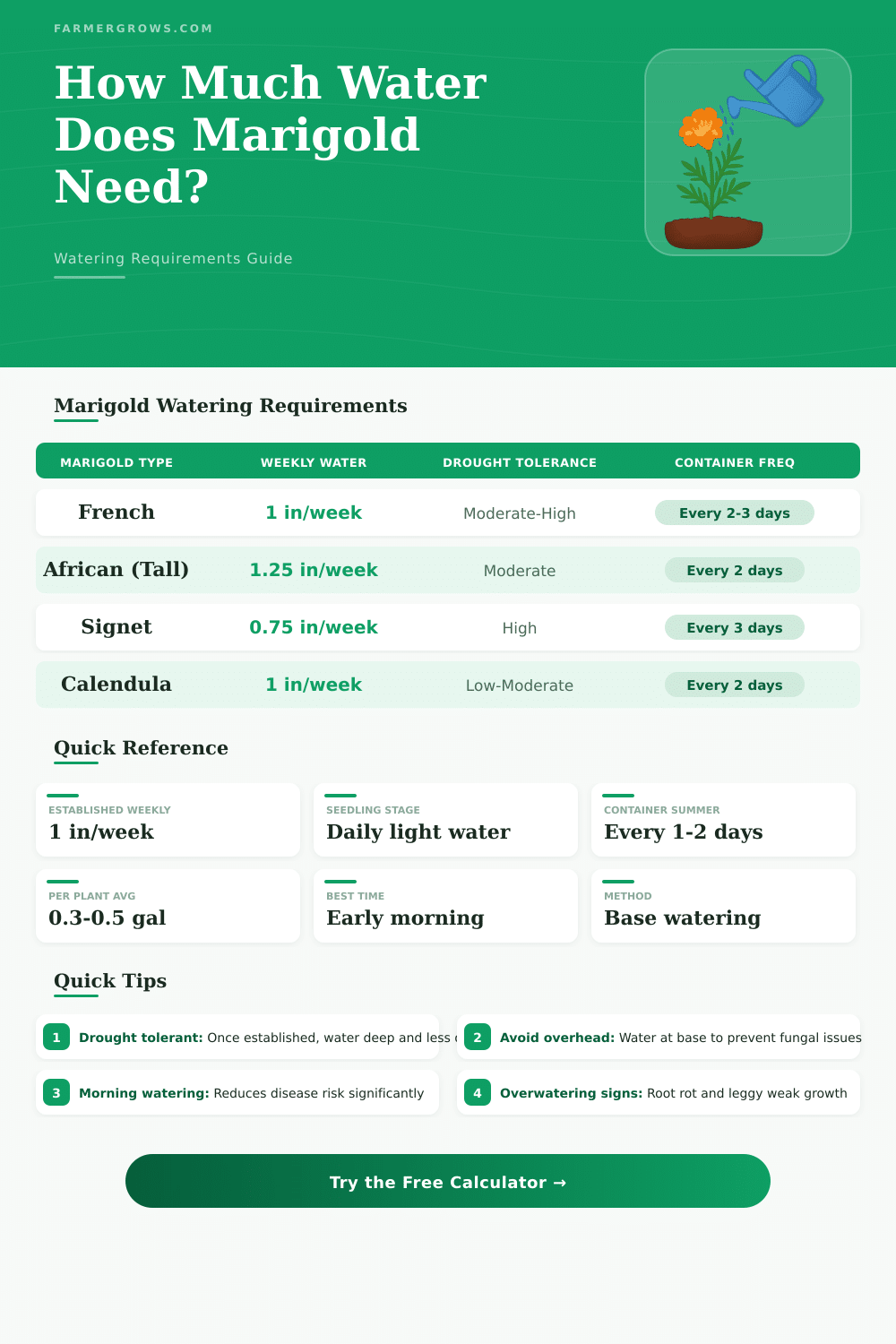
Water established marigolds when the top 1 to 2 inches of soil feel dry. In many U.S. gardens, this means watering about once or twice a week, but hot weather, rainfall, soil type, and pot size can change the schedule.
From sunny California patios to humid Florida flower beds and summer gardens across the Midwest, marigolds are a familiar sight in American yards. These bright flowers are often easy to grow, but their watering needs can change quickly during a heat wave, a stretch of rain, or a move from a garden bed to a small container. A fixed calendar is less useful than knowing when the soil needs water.
Marigolds generally grow best in soil that drains well and has time to dry slightly between waterings. Young plants need closer attention because their roots are still developing. Mature plants can often go longer between drinks, especially when they grow in the ground and receive regular rain.
The simplest method is to check the soil before watering. Push a finger about 1 to 2 inches into the soil near the plant, away from the main stem. If the soil feels dry at that depth, water slowly around the root zone. If it still feels moist, wait and check again later.
Most established marigolds need watering when the upper 1 to 2 inches of soil become dry. In mild weather, that may work out to once or twice a week. During hot, dry weather, plants in small pots may need water every day, while marigolds in garden beds may need less frequent watering.
These are starting points, not strict rules. A plant in sandy soil may dry out much faster than one in moisture-retaining soil. Rain can also meet a plant’s needs for several days, so do not water simply because a scheduled day has arrived.
Check the soil near the roots and look at the plant as a whole. If the soil is dry and the leaves look limp, watering is likely needed. If the soil is wet and the plant is drooping, adding more water could make the problem worse.
Source: thebackyardpros.com
Garden beds
Start by checking the soil every few days. Water when the root zone begins to dry, and count useful rainfall toward the plant’s needs.
Pots and window boxes
Check daily during warm or windy weather. Small containers can dry out quickly, even when nearby garden soil stays moist.
Newly planted marigolds
Check the soil daily while roots settle into their new home. Keep it lightly moist, not waterlogged.
Established plants
Allow the upper soil to dry between thorough waterings. Deep roots may draw moisture from below the surface.
A Simple Watering Schedule by Growing Condition
Use the table as a starting guide for deciding when to check your marigolds. The ranges describe common situations, not guaranteed watering intervals. Soil moisture should always guide the final decision.
Mild weather
Check garden beds every two or three days and water when the upper soil is dry. Watering may be needed once or twice a week.
Hot, dry weather
Check plants daily. Pots may need daily watering, while in-ground plants may need water every few days, depending on soil and rain.
Rainy weather
Pause routine watering and check the soil. Skip watering when the root zone remains moist.
Cool weather
Check less often because water evaporates more slowly. Water only when the soil has dried enough.
Why a Fixed Weekly Schedule Can Fail
Two marigolds planted in the same yard can need different amounts of water. A plant in a black plastic pot on a sunny concrete patio may dry much faster than one planted in a shaded, sheltered bed. Wind, pot size, drainage, and root growth all affect how quickly soil loses moisture.
A calendar helps you remember to check, but it should not decide whether you water. Use it as a reminder to inspect the soil rather than as an order to add water.
Check before adding water
Test the soil even if the usual watering day has arrived.
Adjust after rain
Rain may replace a planned watering, but light showers may wet only the surface.
How to Tell When Marigolds Need Water
The soil is the best first clue. Dry soil near the root zone suggests that your marigolds may need water, while damp soil suggests that you should wait. Leaf symptoms can help, but they are not reliable on their own because both excess water and a lack of water can cause wilting.
Check the soil before reaching for the hose. This quick step can prevent the common mistake of watering a plant that is already sitting in wet soil.
Source: gardening-abc.com
Dry soil
If the top 1 to 2 inches feel dry, check deeper if needed. Water if the root zone is beginning to dry.
Drooping leaves
Wilting can mean thirst, but it can also happen when soggy soil limits root function. Check soil moisture first.
Dry, crisp leaf edges
These may point to drought stress, heat, wind, or other damage. Check moisture and recent weather before changing your routine.
Yellow leaves
Yellowing can result from excess moisture, poor drainage, aging leaves, or other stress. Do not assume the plant needs more water.
Use the Finger Test
Push a clean finger into the soil about 1 to 2 inches deep. In a pot, test near the side rather than right beside the stem. In a garden bed, test the soil near the plant’s root zone without damaging the roots.
If the soil feels dry at that depth, water thoroughly. If it feels cool and moist, wait and test again later. Very small pots may dry through most of their root zone quickly, so check them more often during summer.
Dry to the touch
Water if the root zone also feels dry and there has been little useful rain.
Moist but not soggy
Wait before watering again and keep an eye on the weather.
Wet or muddy
Hold off on watering. Check whether the container or bed drains freely.
Watch the Plant at Different Times of Day
A marigold may droop during a hot afternoon and recover as temperatures fall. This can happen because leaves lose water faster in heat. If the soil is still moist and the plant recovers in the evening, extra water may not be needed.
If the plant stays limp in the cool morning and the soil is dry, water it. Persistent wilting in wet soil calls for a drainage and root check instead of another drink.
Afternoon droop with moist soil
Check again in the evening or early morning before deciding to water.
Morning droop with dry soil
Water the root zone thoroughly and see whether the plant recovers.
How Much Water Do Marigolds Need?
Give marigolds enough water to moisten the soil around their roots, then allow excess water to drain away. The right amount depends on the size of the plant, the depth of its roots, the soil, and the growing container. A small seedling needs less water than a large plant in a deep garden bed.
Instead of measuring every watering by a fixed number of cups, focus on the result. The root zone should become evenly moist, not flooded, and the plant should not sit in standing water. If water runs off hard soil before soaking in, apply it more slowly.
Source: microveggy.com
Water slowly
Use a gentle stream near the base of the plant so the soil can absorb water without washing away.
Reach the root zone
Do not stop after wetting only the surface. Check that water has soaked into the soil around the roots.
Let excess water escape
Containers must have drainage holes. Empty standing water from saucers after the soil has drained.
Check the result
After watering, test the soil again. If the center of a large pot remains dry, water more slowly and evenly.
How to Water Marigolds in Garden Beds
Water at the base of each plant, aiming for the soil rather than the blooms. A watering can, a hose with a gentle nozzle, or a well-placed drip line can all work. Apply water slowly enough to soak into the bed.
If the soil is very dry, split the watering into two gentle passes. The first pass can soften the surface, while the second helps water move deeper. Avoid repeated shallow sprinkles that wet only the upper layer.
Check after watering
Feel the soil a little below the surface to see whether moisture reached the roots.
Avoid waterlogged beds
If water pools for a long time, improve drainage where practical and reduce watering until the soil dries.
How to Water Marigolds in Pots
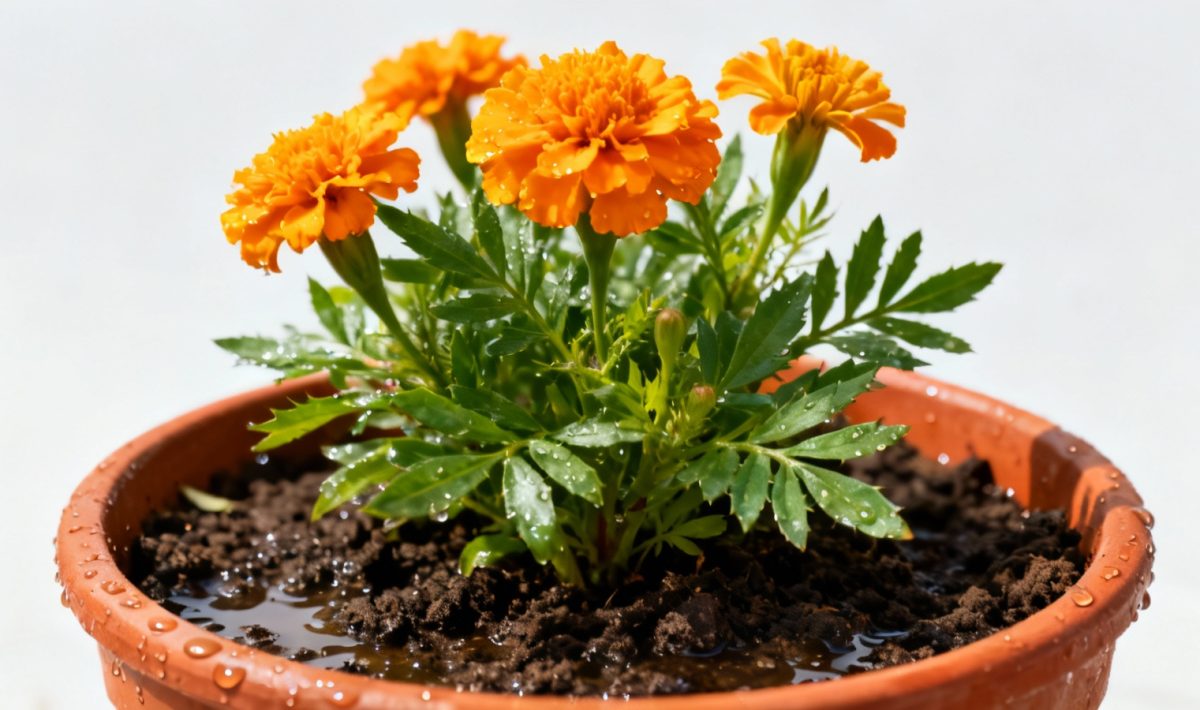
Water potted marigolds until excess water begins to flow from the drainage holes. This helps moisten the full root ball rather than just the top layer. Let the pot drain fully before placing it back on a saucer or decorative tray.
If water rushes straight through a very dry root ball, the potting mix may have pulled away from the sides or become hard to wet. Apply water in small passes and allow time for it to soak in. Do not leave the container standing in a bucket of water for long periods.
Choose a pot with drainage
A pot without drainage holes makes it much harder to prevent root problems.
Check the whole root ball
The surface may be wet while the center remains dry, so apply water slowly and evenly.
Recheck during heat
Small pots in direct sun may need water more than once during a hot, windy spell, but check moisture before each watering.
Watering Marigolds During Different Growth Stages
Marigolds need closer moisture checks when they are young than when they are well established. Seeds and new seedlings have small root systems, so the upper soil can dry before their roots reach deeper moisture. Mature plants can explore a larger area of soil and often handle short dry spells better.
The goal changes as the plant grows. Keep seed-starting mix evenly moist, help transplants settle in, and give established plants a thorough watering when their soil begins to dry.
Source: bulbsociety.org
Seeds and Seedlings
Marigold seeds need consistent moisture to germinate. Keep the seed-starting mix moist but not soaked, and use a gentle spray or careful watering method that does not displace seeds. Follow the seed packet’s directions for planting depth and germination care.
Once seedlings emerge, keep the mix from drying out completely. Good airflow and drainage matter because constantly wet conditions can encourage seedling diseases. As roots develop, adjust watering to the size of the container and the rate at which the mix dries.
Before germination
Check the surface often and keep the seed mix evenly moist without leaving it flooded.
After emergence
Use gentle watering and allow excess water to drain from trays or pots.
Newly Transplanted Marigolds
Water marigolds after planting to settle the soil around the roots. For the next several days, check moisture daily, especially in warm or windy weather. The aim is to prevent the root ball from drying while avoiding soil that stays soaked.
Plants often need more frequent checks during the first week or two because their roots have not yet spread far into the surrounding soil. Once new growth appears and the plants stay firm between waterings, gradually follow the usual soil-check method.
Right after planting
Water around the root ball so it makes good contact with the surrounding soil.
During establishment
Check the original root ball and nearby soil, since they may dry at different rates.
Mature and Flowering Plants
Established marigolds do not need constant moisture at the surface. Let the upper soil dry slightly between waterings, then soak the root zone well. A steady supply of suitable moisture supports healthy leaves and flowers, but more water does not automatically mean more blooms.
As flowers fade, remove spent blooms if you want to keep the plant tidy and encourage further flowering in many varieties. Continue to check soil moisture rather than increasing water just because the plant is producing more flowers.
During active growth
Water when the root zone begins to dry, with extra checks during hot spells.
Near the end of the season
Reduce watering when growth slows and weather cools, while still checking the soil for dryness.
How Weather and Soil Change Watering Needs
Weather and soil can change how often marigolds need water more than the calendar does. Sun, heat, wind, humidity, rainfall, and drainage all affect how quickly moisture leaves the root zone. Check plants more often when conditions change sharply.
Across the United States, growing conditions vary widely. A dry summer in Arizona can call for frequent checks, while a humid spell in Georgia may leave soil moist for days. Coastal gardens, mountain areas, and northern regions have their own patterns, so local weather matters more than a nationwide schedule.
Source: everythingbackyard.net
Heat and direct sun
Warm soil and strong sunlight increase water loss. Check pots and exposed beds more often during heat waves.
Wind
Wind can dry leaves and soil faster, especially on balconies, rooftops, and exposed patios.
Humidity
Humid air may slow water loss from leaves, but it does not guarantee that the soil is moist.
Rainfall
Skip watering if rain has soaked the root zone. A brief shower may wet only the surface.
Soil texture
Sandy soil usually drains and dries faster than heavier soil. Dense soil may hold moisture longer and can become waterlogged.
Watering in Hot Southern Summers
In hot areas of Texas, Florida, and the southern states, summer heat can dry container soil quickly. Check pots in the morning and again later if the weather is especially hot or windy. Water when the root zone is dry rather than waiting for severe wilting.
Warm, humid weather can also leave soil damp for longer than expected. Do not assume every hot day requires more water. Good drainage and a moisture check are especially useful when high temperatures follow several rainy days.
Morning checks
Check containers early, when it is easier to assess whether plants need water before the hottest part of the day.
After heavy rain
Wait until the soil begins to dry, especially in beds with dense soil or poor drainage.
Watering in Cooler or Rainy Regions
In cooler areas or during a wet spell, marigolds may need water less often. Soil stays moist longer when sunlight is weak and temperatures are low. Frequent watering under these conditions can leave roots short of air.
Use rainfall as part of your watering plan, but do not rely on the weather report alone. A roof overhang may keep a container dry even when the garden receives rain. Check the soil where each plant actually grows.
Sheltered containers
Check pots under eaves, porches, or balcony roofs because they may receive little or no rain.
Slow-draining beds
Wait longer between waterings if the soil stays wet, and address persistent drainage problems.
Signs You Are Overwatering or Underwatering Marigolds
Overwatering and underwatering can look alike, so diagnose the soil before changing your routine. Both can lead to drooping leaves and poor growth. The key difference is often whether the root zone is dry or remains wet.
Roots need both water and air. When soil stays saturated, roots may struggle to function and can begin to rot. When soil stays too dry, roots cannot supply enough water to the leaves. Either problem can stress the plant and reduce flowering.
Source: breathinggarden.com
Common Signs of Overwatering
Overwatered marigolds may have yellowing lower leaves, soft growth, a persistently wet root zone, or a drooping appearance despite damp soil. A sour smell from the soil or dark, mushy roots can suggest root damage, though these signs need to be considered alongside other causes.
If you suspect overwatering, stop adding water until the soil has begun to dry. Check the drainage holes and remove standing water from the saucer. If the soil remains soggy for days, consider whether the potting mix or planting site drains poorly.
Wet soil and drooping leaves
Do not add more water automatically. Check drainage and allow the soil to dry appropriately.
Yellowing leaves
Check for persistent moisture and poor drainage, while remembering that yellowing has other possible causes.
Soft or dark roots
Inspect carefully if the plant continues to decline. Remove badly damaged roots only when necessary and repot in fresh, well-draining mix if the root system can be saved.
Common Signs of Underwatering
Underwatered marigolds may have dry soil, limp leaves, crisp leaf edges, or flowers that fade sooner than expected. Containers can become especially dry when a plant is root-bound or when the potting mix no longer absorbs water evenly.
Water the soil slowly and thoroughly when it is dry. If the plant has wilted badly, give the water time to soak in and check whether the leaves recover. Avoid pouring repeated small amounts onto the surface if the deeper root ball remains dry.
Dry root zone
Water slowly until moisture reaches the roots, then allow excess water to drain.
Dry potting mix that repels water
Apply water in several passes so the mix can absorb it. Check the center of the root ball afterward.
Repeated rapid drying
Consider whether the container is too small, the plant is root-bound, or the site is unusually hot and windy.
A Simple Troubleshooting Order
When a marigold looks unhealthy, use the same checks in the same order. First feel the soil, then assess drainage, recent weather, and the plant’s growing conditions. This approach is more reliable than treating every wilted plant with extra water.
Step 1: Check moisture
Feel the soil 1 to 2 inches below the surface and check deeper if the pot is large.
Step 2: Check drainage
Look for blocked holes, standing water, or soil that stays soaked.
Step 3: Review conditions
Consider heat, wind, rain, recent transplanting, and the size of the container.
Step 4: Make one change
Adjust watering or drainage, then watch the plant’s response instead of making several changes at once.
Best Practices for Healthy Marigolds
Good watering starts with the right growing conditions. Marigolds generally do well in a sunny spot with soil that drains freely. If water cannot move through the root zone, even careful watering may not prevent problems.
Use a simple routine: check the soil, water slowly when needed, let the pot or bed drain, and review the plant again as the weather changes. You do not need a complex schedule or special equipment to follow these steps.
Source: farmergrows.com
Choose well-draining soil
Use a suitable potting mix for containers and avoid planting in a spot where water regularly pools.
Water near the base
Direct water to the soil around the roots to limit unnecessary wetting of flowers and leaves.
Water at a useful time
Morning is often practical because plants can take up water before daytime heat. If a plant needs water later, do not leave it severely dry just to wait for morning.
Use mulch with care
A thin layer of organic mulch can slow moisture loss in garden beds. Keep mulch away from the stems and continue checking soil moisture.
Account for rain
Check the actual root zone after rainfall rather than following the same schedule every week.
Avoid routine overwatering
Do not keep soil constantly wet in the belief that more water always produces more flowers.
Does Watering in the Morning Help?
Morning is usually a good time to water marigolds because it gives the soil time to absorb moisture before peak daytime heat. It also allows any water that reaches the foliage to dry during the day. Directing water at the base is still the better choice.
Evening watering can be reasonable when plants need water and morning is not practical. Avoid repeatedly soaking the foliage late in the day, especially when airflow is poor. The plant’s need for water matters more than following a rigid clock.
Best routine
Check soil in the morning and water the root zone if it is dry enough.
During a heat emergency
Water a genuinely dry, stressed plant when needed rather than waiting for a preferred time.
Can Mulch Reduce Watering?
A layer of organic mulch can help garden soil hold moisture by reducing evaporation and limiting direct sun on the soil surface. This may make watering less frequent, especially during dry summer weather. Mulch does not remove the need to check moisture.
Keep mulch a short distance from marigold stems so the base does not stay constantly damp. Pots may benefit from careful placement away from extreme heat, but any change should still leave the plant with enough light for healthy growth.
Use a modest layer
Spread mulch over the bed without piling it against stems.
Check below the mulch
Move it aside and feel the soil before watering, since the surface alone may not show the moisture level.
Common Marigold Watering Mistakes to Avoid
The most common watering mistake is following a schedule without checking the soil. A weekly routine may work during mild weather but fail during a heat wave or after several days of rain. Let the plant’s growing conditions guide your decision.
Another mistake is giving frequent, shallow splashes. These may wet the surface without supplying enough moisture to the root zone. Slow, thorough watering followed by a period of drying is usually more useful for established plants.
Source: everythingbackyard.net
Watering every day by habit
Daily watering can keep soil too wet in cool or rainy weather. Check moisture first.
Ignoring drainage
A pot without drainage holes or a bed that holds standing water can cause root stress even when the watering amount seems small.
Treating every wilt as thirst
Check the soil before watering. Wet soil and drooping leaves may point to a root or drainage problem.
Wetting flowers instead of soil
Direct the stream toward the root zone so water reaches the roots and flowers are not needlessly soaked.
Ignoring small containers
Pots and window boxes can dry faster than beds. Check them more often during warm weather.
Forgetting recent rainfall
Count rainfall when it reaches the root zone, but verify that sheltered plants received water.
How to Build a Reliable Watering Routine
Choose a regular time to inspect your marigolds, such as early morning. Test the soil, look for wilting or yellowing, and consider recent rain. Water only when the soil condition calls for it.
During a heat wave, inspect plants more often. After several rainy days, check for excess moisture instead. This small change in habit helps prevent both drought stress and waterlogged roots.
Make a quick daily check
Focus on small pots, new transplants, and plants exposed to hot sun or wind.
Adjust after weather changes
Increase checks during dry heat and reduce watering when the soil remains moist.
Track problem spots
If one plant dries much faster than others, review its pot size, soil, drainage, and exposure.
Frequently Asked Questions
Q
Should I water marigolds every day?
Not always. Established marigolds in garden beds may need water only once or twice a week during mild weather, while small pots may dry out daily in hot conditions. Check the top 1 to 2 inches of soil and water when it is dry.
Q
Can marigolds get too much water?
Yes. Soil that stays wet can limit air around the roots and may lead to root damage. Yellow leaves, drooping in damp soil, and poor growth can be warning signs. Check drainage and allow the soil to dry before watering again.
Q
How often should I water marigolds in pots?
Check potted marigolds daily during warm weather and water when the root zone begins to dry. A small pot in direct sun may need water every day, while a larger pot in cooler conditions may need it less often. Water until excess drains through the holes.
Q
Is it better to water marigolds in the morning or evening?
Morning is usually a practical choice because plants can take up water before the day’s heat. Water the soil near the base rather than soaking the flowers. If a plant is very dry later in the day, water it when needed instead of leaving it stressed.
Q
Why are my marigolds wilting even though the soil is wet?
Wet soil and wilting may point to poor drainage or damaged roots rather than a lack of water. Stop routine watering, check the drainage holes or garden soil, and look for a sour smell or soft, dark roots. If the soil stays saturated, improve drainage before resuming normal watering.
✦ Wrapping Up
Conclusion
The best answer to how often should you water marigolds is to check the soil and water when the upper 1 to 2 inches become dry. Established plants often need water once or twice a week in mild conditions, while pots and plants in hot weather may need much more frequent attention. Rain, soil texture, drainage, and plant age can all change the schedule.
Water slowly around the roots, let excess water drain, and avoid keeping the soil constantly wet. If a marigold droops or develops yellow leaves, check the soil before deciding whether to add water or allow it to dry. A simple moisture check is more dependable than a fixed watering calendar.
💡 Key Takeaway
Check your marigolds today by feeling the soil 1 to 2 inches below the surface. If it is dry, water the root zone thoroughly; if it is moist, wait and check again later.
I enjoy sharing simple gardening ideas, lawn care tips, and honest product reviews that help make outdoor work easier. From home gardening guides to helpful tools and lawn care advice, I write easy-to-follow content to help readers create a healthier and better-looking outdoor space without wasting time or money.