As an Amazon Associate, I earn from qualifying purchases.
The best backyard privacy fence blocks unwanted views, fits your home’s style, and suits your budget. Wood panels, vinyl fencing, horizontal slats, lattice tops, and layered plants are useful options for many American homes.
A private backyard can make an ordinary American home feel more peaceful. Whether you live in a busy Texas suburb, a compact New Jersey neighborhood, or a quiet home in the Pacific Northwest, the right fence can help you relax without feeling watched. It can also frame a patio, protect a garden, and give children and pets a clear place to play.
The best design depends on what you want to hide and what you want to keep. A tall, solid fence may block views from nearby windows, while a slatted screen can soften a view without closing off the yard. Trees and shrubs add a natural layer, but they need time and care to fill in.
Before choosing a design, check your local fence rules, property lines, and any homeowners association requirements. Height limits, permits, and rules for fences near streets can vary by town and neighborhood. A little planning can prevent costly changes after installation.
A good privacy fence does more than mark the edge of a yard. It controls sightlines, creates a sense of shelter, and helps outdoor spaces feel like an extension of the home. Start by deciding whether you need complete privacy, partial screening, or a decorative barrier.
The following ideas cover different budgets, styles, and maintenance needs. The best option is the one that solves your specific privacy problem without making the yard feel cramped or difficult to care for.
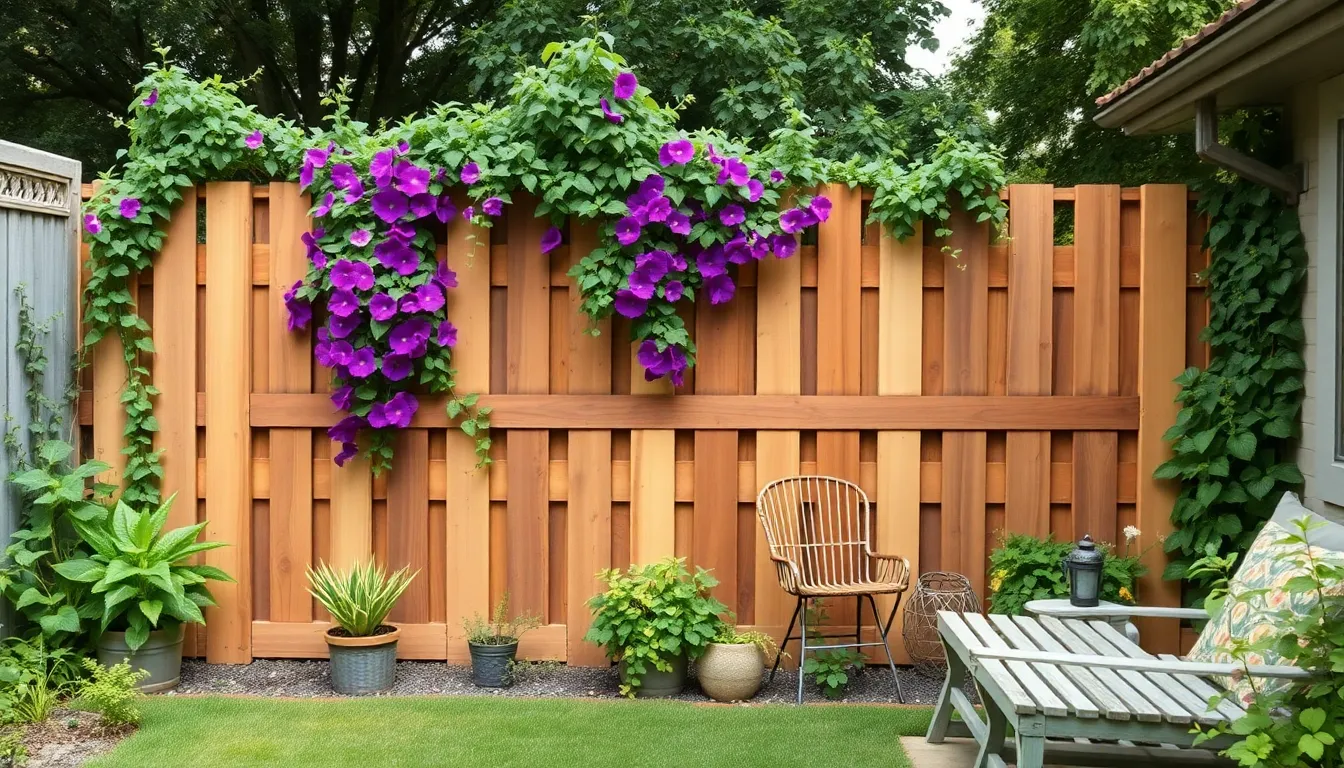
Source: thearchitecturedesigns.com
1. Classic solid wood fence
A solid wood fence is a familiar choice for American backyards. Closely fitted boards block direct views and suit many home styles. Cedar, redwood, pine, and other suitable lumber can work, depending on local availability and treatment needs. Wood requires inspection, cleaning, and periodic sealing, staining, or painting.
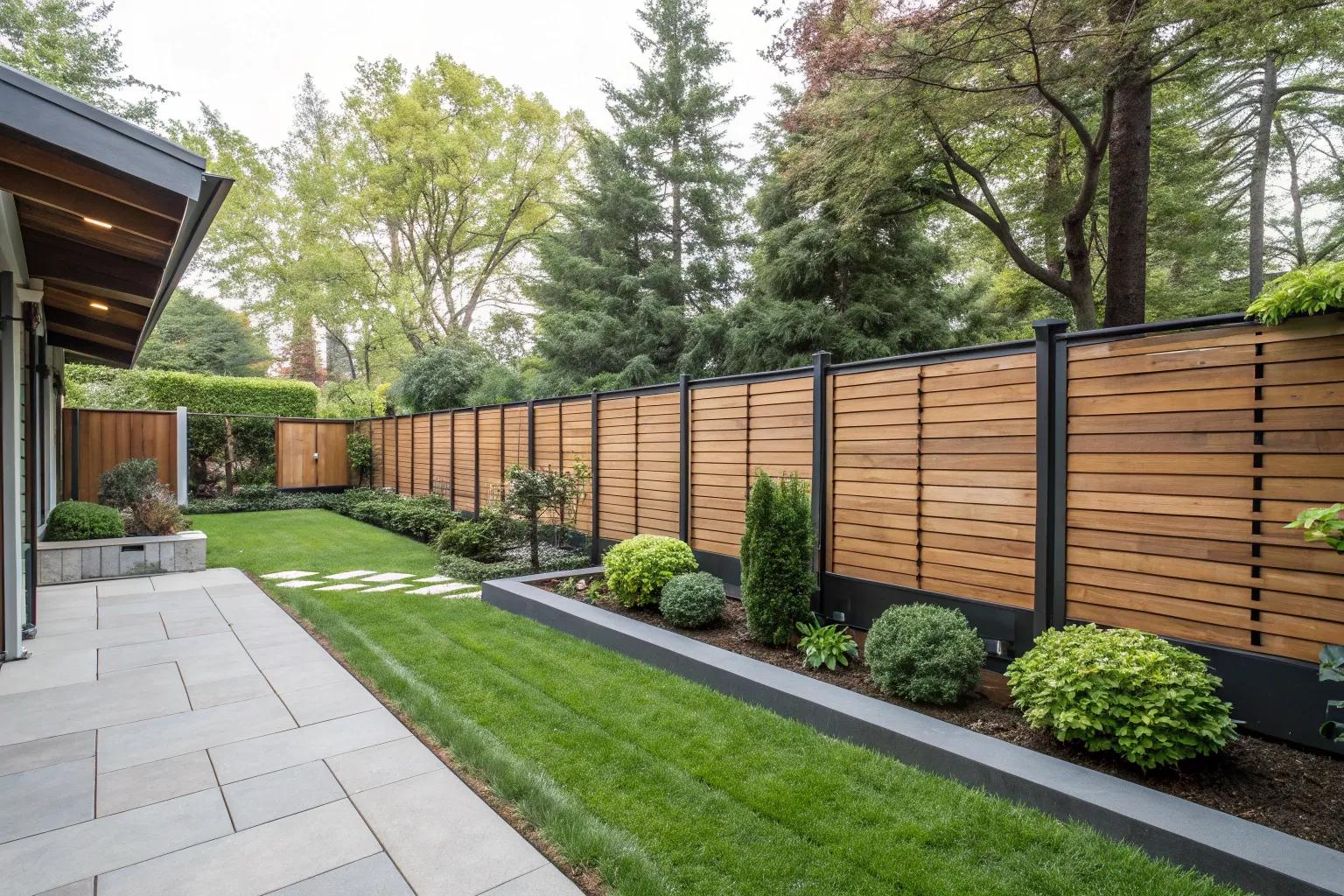
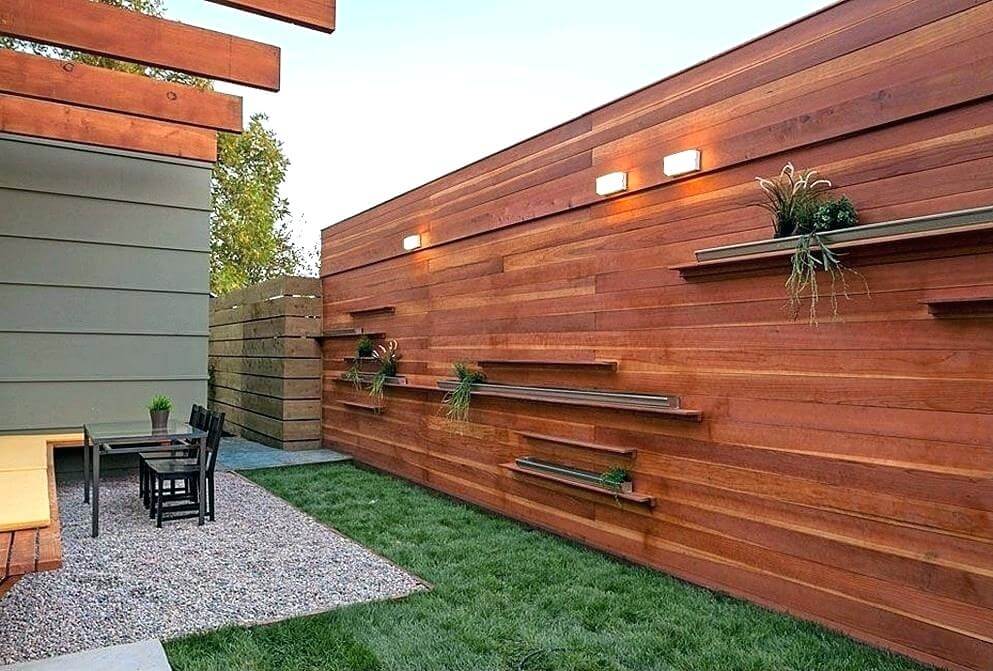
2. Horizontal wood slat fence
Horizontal boards give a yard a clean, modern look. Tight spacing improves privacy, while wider gaps allow more light and air through. This design works well around patios and contemporary homes. Keep board spacing consistent, and choose lumber and fasteners suited to outdoor exposure.
3. Vinyl privacy fence
Vinyl panels offer a smooth, uniform appearance and do not need painting or staining. They can be easy to wash with mild soap and water. However, vinyl can crack under impact, expand and contract with temperature changes, and suffer damage in severe weather. Check the panel system, post support, and local wind exposure before choosing it.
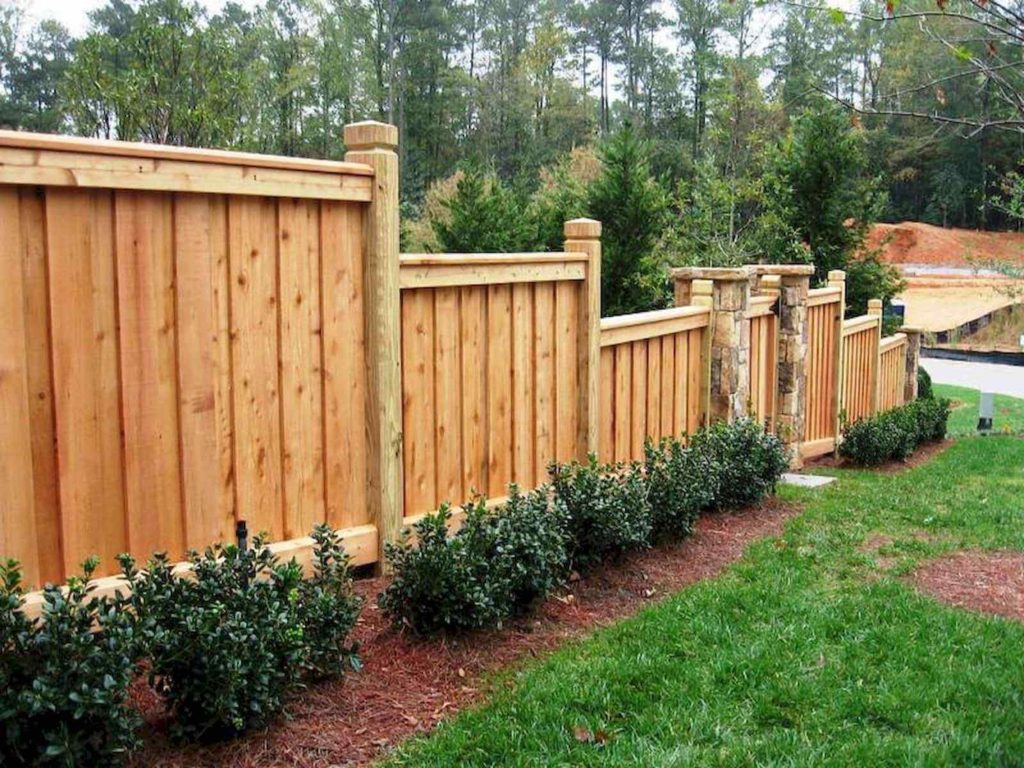
4. Board-on-board fence
A board-on-board fence uses overlapping boards on alternating sides of the rails. This layout helps limit direct sightlines and reduces gaps that can appear as wood changes with the weather. It creates a fuller look than a basic fence with separated pickets, although it uses more lumber and may cost more to build.
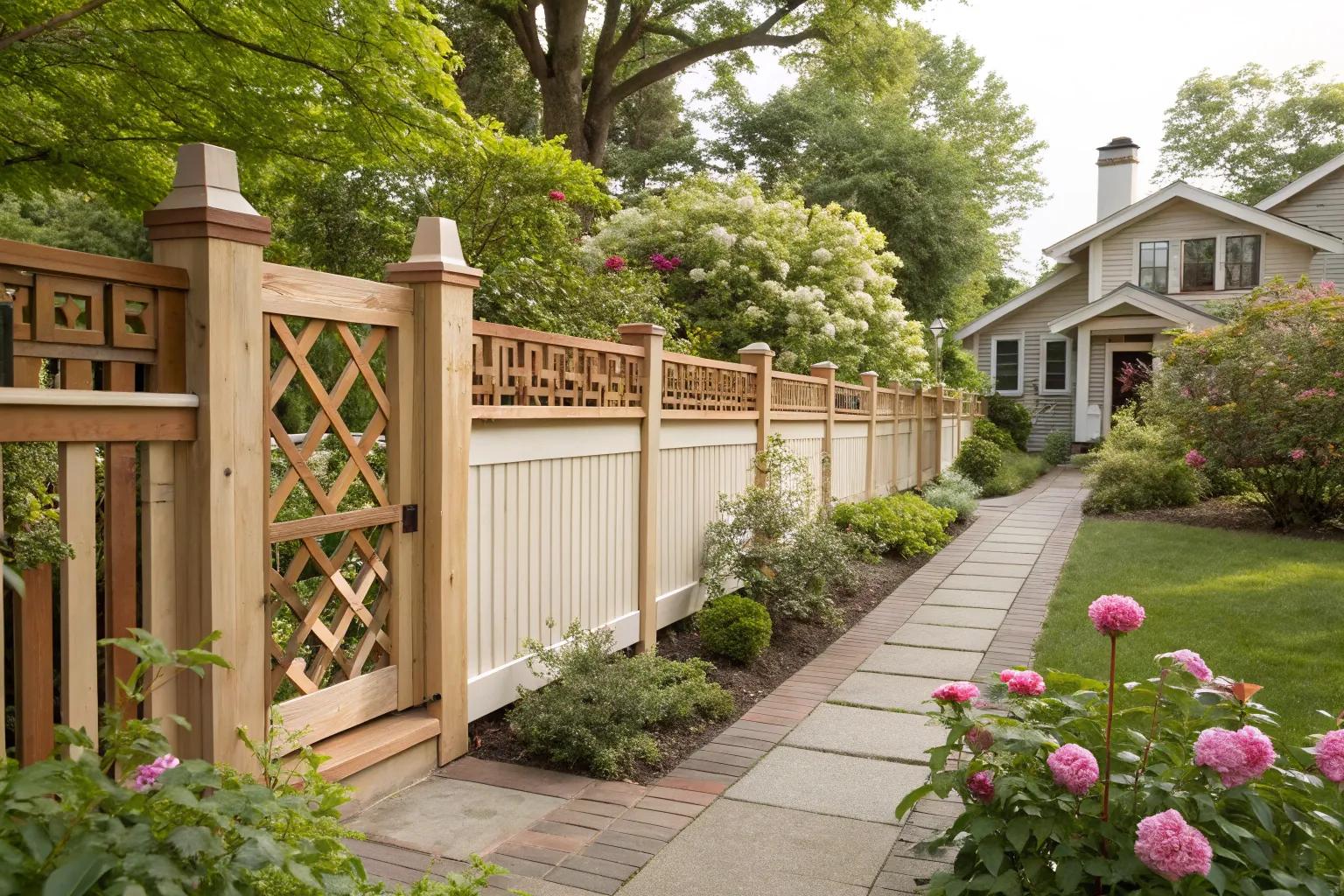
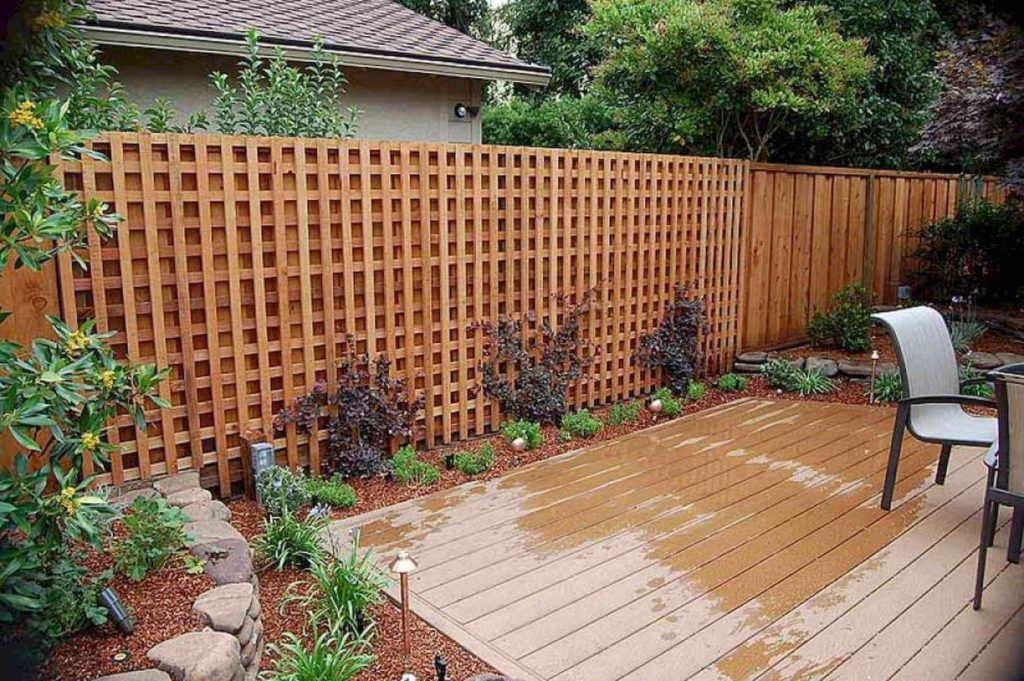
5. Fence with a lattice top
A lattice topper adds height and detail above a solid lower fence. It can screen standing views while letting some sunlight and air pass through. The open section will not provide complete privacy from elevated windows or balconies. Confirm that the total height is allowed before adding a topper to an existing fence.
6. Fence with a pergola-style screen
A screen with a pergola-inspired frame can create a private dining or seating area without enclosing the whole yard. Place it beside a patio, outdoor kitchen, or hot tub where privacy matters most. Use a design made for outdoor conditions, and ensure the frame and posts have suitable support for local wind and weather.
7. Mixed wood and metal fence
Wood panels paired with metal posts or a metal frame create a crisp, modern look. Metal supports can offer a different visual style from traditional timber posts, while wood supplies the main screening surface. Select compatible materials and corrosion-resistant hardware to reduce the risk of rust, staining, and premature wear.
8. Living privacy fence
A row of suitable evergreen shrubs can soften a fence or form a green screen on its own. Choose plants that suit your USDA hardiness zone, soil, sunlight, and available space. Account for mature width, root growth, and local water needs. Living screens take time to fill in and cannot provide immediate privacy unless you start with established plants.
9. Climbing plants on a sturdy fence
Climbing plants can soften a plain fence and create a leafy backdrop. Use a strong trellis or support system designed for the plant’s mature weight. Some climbers cling directly to surfaces, while others need wires or lattice. Avoid planting aggressive vines against weak panels, and check whether a species is invasive in your region.
10. Decorative composite fence
Composite fencing combines wood-based or other composite materials with a manufactured structure. It can offer a consistent appearance and often needs less routine finishing than wood. Costs, heat retention, color fading, and repair methods vary by product. Review the installation guide and warranty conditions instead of assuming every composite fence performs the same way.
11. Bamboo-style screening
Bamboo panels or screening rolls can add a natural look to a patio or existing fence. They are often useful for a small privacy area rather than a full boundary fence. Outdoor lifespan depends on the product, moisture, sun exposure, and fastening method. Secure screens well and check them after strong winds.
12. Partial privacy fence with a garden border
A lower or partially open fence combined with shrubs, grasses, and planters can create a softer boundary. This approach is useful when a solid wall would make a small yard feel boxed in. Place taller plants where views are most exposed, and leave enough room for mature growth, access, and routine pruning.
Which fence design offers the most privacy?
A well-built solid fence generally offers the strongest direct visual barrier. Board-on-board construction can also limit gaps, while tightly fitted horizontal slats provide a similar effect when installed with little spacing. No fence blocks every possible view from above, so consider neighboring second-story windows and raised decks.
If privacy is needed only beside a patio, a short section of solid screening may be more practical than enclosing the full property. Focus on the exposed angles instead of adding height everywhere.
Best for full visual screening
Solid wood, vinyl, and close-fitting composite panels.
Best for a modern look
Horizontal slats or mixed wood and metal.
Best for a natural setting
Evergreen shrubs, climbing plants, or a fence with a planted border.
How To Choose The Right Privacy Fence
Choose a fence by matching the design to the view you need to block, the weather it must withstand, and the amount of care you can provide. A fence that looks attractive in a catalog may not suit a narrow yard, a windy corner, or a property with strict height limits.
Walk around the yard at the times you use it most. Sit in your usual patio chair, stand near the outdoor dining table, and look toward neighboring windows, sidewalks, and streets. These simple checks help reveal where a screen will make the greatest difference.
Source: hmdcr.com
Privacy level
Use solid panels where you need to block direct views. Choose open slats or lattice where light and airflow matter more than complete screening.
Climate and weather
Consider strong winds, heavy rain, intense sun, freeze-thaw cycles, and coastal air. The local climate affects material wear and the support needed for a fence.
Yard size
Solid, tall fences can make small spaces feel enclosed. Lighter colors, narrow slats, or planting beds can soften the boundary without sacrificing every open view.
Maintenance
Wood may need periodic refinishing, plants need water and pruning, and vinyl needs cleaning and occasional checks for damage. Pick a design you can maintain over time.
Home style
Traditional pickets, board-on-board construction, horizontal slats, and dark metal frames create different visual effects. Choose a design that complements the house rather than competing with it.
Compare common privacy fence materials
This table summarizes the practical differences between common materials. It is a general guide, not a fixed ranking, because product quality, installation, and local conditions affect performance.
Wood
Appearance: warm and adaptable. Privacy: high with tight boards. Upkeep: periodic inspection and refinishing. Main trade-off: natural wood can weather, warp, or decay if poorly maintained.
Vinyl
Appearance: smooth and consistent. Privacy: high with solid panels. Upkeep: usually low, with washing and repairs as needed. Main trade-off: impact damage and temperature changes can affect panels.
Composite
Appearance: manufactured wood-like finishes. Privacy: high with solid systems. Upkeep: often lower than unfinished or stained wood. Main trade-off: price and repair options vary by system.
Metal frame with infill
Appearance: modern and structured. Privacy: depends on the infill material and spacing. Upkeep: inspect coatings, fasteners, and wood parts. Main trade-off: material compatibility and initial cost.
Living screen
Appearance: green and natural. Privacy: varies with plant density and season. Upkeep: watering, pruning, and replacement when needed. Main trade-off: plants take time to mature and need suitable growing conditions.
How tall should a backyard privacy fence be?
The right height is the lowest height that blocks the views that bother you while meeting local rules. A six-foot fence is a common residential design in many places, but it is not a universal legal limit or a guarantee of privacy. Some towns allow different heights in rear yards, front yards, corner lots, or special districts.
Measure from the correct grade and check whether a proposed fence topper counts toward total height. If the property slopes, the permitted measurement method can affect the design. Ask your local building or planning department before ordering materials.
Check local rules first
Confirm height limits, permit needs, setback rules, and any restrictions near sidewalks or driveways.
Check sightlines
A fence that blocks a seated neighbor’s view may not block an upstairs window. Position the screen where it addresses the actual viewing angle.
Check access and safety
Keep gates usable and preserve required visibility near vehicle entrances, corners, and pedestrian routes.
Affordable Backyard Fence Ideas For Privacy
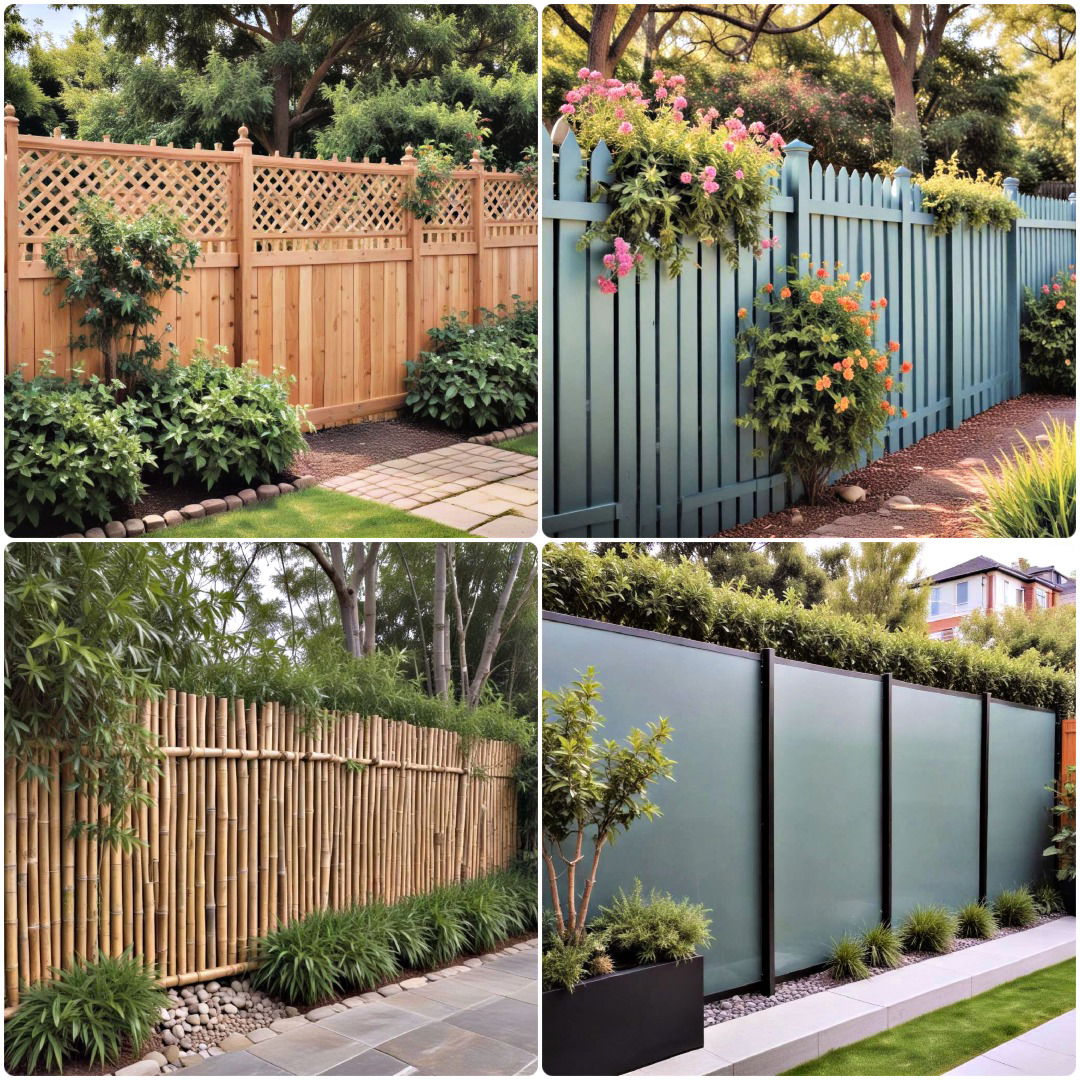
You do not always need a brand-new fence to gain privacy. A targeted screen, a repaired panel, or a row of plants can solve a specific problem for less work than replacing the entire boundary. Start by separating essential privacy needs from decorative upgrades.
The final cost depends on fence length, height, material, ground conditions, gates, labor, removal of an old fence, and local permit requirements. Get quotes based on the same dimensions and specifications so you can compare them fairly.
Source: www.bhg.com
Screen only the exposed area
Add a privacy panel near a patio, hot tub, or outdoor table instead of enclosing every side of the yard. Check local height rules and ensure the panel is properly supported.
Repair and reuse sound fence sections
Replace broken boards, tighten suitable fasteners, and repair gates when the main structure remains sound. Do not cover rotten posts or unstable supports with new decorative boards.
Use an existing fence as a base
Attach a suitable screen to a fence only if the existing structure can support the added weight and wind load. A lightweight-looking screen can still place extra force on posts.
Add plants in stages
Plant a few suitable shrubs or grasses in the most exposed spots first. Stagger planting over time if the budget is limited, while recognizing that full screening may take several growing seasons.
Compare total installed cost
Ask contractors to list materials, post installation, gates, removal, cleanup, and any permit fees separately. A lower initial quote may not include work that another quote covers.
A simple way to estimate fence materials
Measure the planned fence line in feet, then divide its length by the intended post spacing to estimate the number of fence bays. Add the necessary end, corner, and gate posts, and follow the selected fence system’s installation instructions. The exact number of posts and boards depends on the layout and panel dimensions.
For example, a straight 60-foot fence with posts spaced 6 feet apart has 10 six-foot bays. That layout usually needs 11 post positions if both ends are posts and there are no gates or corners. This is a planning example, not a final material list; actual post spacing and footing needs depend on the design, soil, and local conditions.
Measure
Record each straight run, corner, gate opening, and change in ground level.
Choose a system
Use the selected fence manufacturer’s panel sizes, post spacing, and hardware requirements.
Allow for waste
Account for cuts, damaged boards, slope adjustments, and replacement pieces without buying excessive materials.
Creative Ways To Make A Privacy Fence Look Better
A privacy fence can feel less imposing when you combine it with thoughtful colors, plants, and lighting. The goal is to make the fence look like part of the landscape rather than a wall that dominates the yard.
Before adding decorative features, consider maintenance and drainage. Plants should not trap moisture against vulnerable wood, and lights or accessories should not create hazards or weaken the fence.
Source: thearchitecturedesigns.com
Use a restrained color palette
Natural wood tones suit many traditional yards, while neutral painted finishes and dark frames can complement modern homes. Check material compatibility before applying paint or stain.
Plant a layered border
Combine shrubs, ornamental grasses, and low ground cover where space allows. Vary plant height to create depth, and leave access for pruning and fence repairs.
Add planters carefully
Freestanding planters can bring greenery to a plain fence without drilling into the panels. Use stable containers, provide drainage, and avoid overloading rails with heavy pots.
Add suitable outdoor lighting
Low-voltage outdoor lights can highlight plants and paths along the fence. Choose fixtures intended for outdoor use and follow the manufacturer’s installation instructions.
Create a focal point
A small trellis, a seating nook, or a well-placed planter can draw attention to a designed area. Keep the feature proportional to the yard and avoid blocking access to gates.
Can plants make a fence more private?
Yes. Plants can soften gaps, reduce views through open designs, and add a natural screen along an existing fence. Their effectiveness depends on species, mature size, planting distance, seasonal leaf cover, and how quickly the plants grow.
Evergreen shrubs can offer year-round screening in suitable climates, while deciduous plants may lose much of their coverage in winter. In dry regions, choose plants adapted to local water limits. In humid areas, allow airflow and enough spacing to reduce crowding and disease pressure.
For year-round screening
Consider suitable evergreen shrubs that remain dense in your local climate.
For a narrow yard
Choose plants with a manageable mature width instead of relying on frequent hard pruning.
For immediate coverage
Pair an existing solid fence with plants rather than depending on new shrubs to block views right away.
Privacy Fence Installation: What To Check Before You Start
A fence can look simple from the outside, but its long-term performance depends on sound planning and installation. Posts, footings, fasteners, drainage, and property boundaries matter as much as the visible boards. Check these items before digging or ordering materials.
If the fence is long, tall, exposed to strong winds, or built on a steep slope, professional advice may help prevent costly failures. Follow the chosen fence system’s instructions and local requirements rather than relying on a general online diagram.
Source: garden.eco
Confirm the property line
Review available property records and arrange a survey when the boundary is uncertain. Do not assume an old fence sits on the legal property line.
Check underground utilities
In the United States, contact 811 or the appropriate state one-call service before digging. Follow the instructions for marking underground utility lines and wait for the required responses.
Review permits and neighborhood rules
Ask the local building or planning office about fence height, setbacks, permits, corner visibility, and any special restrictions. Review homeowners association rules if they apply.
Assess drainage and soil
Avoid blocking natural water flow or placing footings where water collects. Soil type, frost conditions, slope, and local weather can change the support a fence needs.
Choose suitable fasteners and posts
Use hardware designed for outdoor exposure and compatible with the fence materials. Follow the fence system’s guidance for post depth, spacing, and support.
Plan gates and access
Place gates where people naturally enter the yard and ensure they can open without hitting paths, vehicles, or garden features. Keep access routes and required sightlines clear.
Common fence problems and how to avoid them
Many fence problems begin with a mismatch between the design and the site. A tall solid panel can catch strong winds, a poorly drained post hole can contribute to movement or decay, and a dense plant border can hide damage until repairs become more difficult.
Inspect the fence at least seasonally and after severe weather. Early repairs can be simpler than replacing a large section that has been left unstable.
Leaning posts
Possible causes include loose soil, inadequate support, water-related soil movement, or wind stress. Have unstable sections assessed before attaching extra screens or panels.
Rotting wood
Check areas that stay wet, including the base of boards and poorly drained post locations. Improve water management and replace damaged structural wood when needed.
Loose or rattling panels
Inspect fasteners, rails, and attachment points. Use compatible replacement hardware and follow the system’s repair instructions.
Plants damaging the fence
Trim growth that traps moisture or obstructs access. Redirect climbing plants to a suitable support if their weight or attachment method threatens the fence.
How To Create Privacy In A Small Backyard
In a small backyard, targeted screening often works better than a tall fence around every edge. A full enclosure may make a compact space feel smaller, while a few well-placed screens can shield the seating area and leave the rest of the yard open.
Look at the yard from the places where privacy matters most. If a neighbor’s window overlooks one corner, focus on that sightline rather than blocking light along the entire boundary. The result can feel more open while still giving you a sheltered place to sit.
Source: storage.googleapis.com
Screen the seating area
Place a freestanding or properly anchored screen beside the patio or outdoor dining area. Check local rules and ensure it will not tip in strong wind.
Use vertical space
A suitable trellis with contained climbing plants can add height without using much ground space. Choose a stable support and a plant that is easy to manage.
Choose lighter visual forms
Slats, lattice, and carefully placed planters can provide partial privacy without creating a heavy wall effect. Remember that open designs do not fully block views.
Keep paths clear
Place planters and screens so they do not obstruct doors, gates, walkways, or drainage routes. Leave room to clean and maintain the fence.
A practical privacy plan for a compact yard
Start with one exposed seating area and identify the angle that needs screening. Add a solid or close-spaced screen at that point, then use one or two plants to soften its edges. If privacy remains limited, adjust the screen’s position before extending the fence across the entire yard.
This staged method lets you test how the space feels before committing to a larger project. It can also help you spread costs over time while preserving sunlight and usable floor space.
First
Identify the main viewing angle from neighboring windows, yards, or walkways.
Next
Install a screen sized for that area and check its stability and local compliance.
Then
Add plants, lighting, or a small garden border if they improve the space without obstructing access.
Frequently Asked Questions
Q
What is the cheapest way to add backyard privacy?
The lowest-cost approach is often to screen only the area that needs privacy. Repairing sound existing fencing, adding a suitable panel beside a patio, or planting a few well-chosen shrubs can cost less than replacing the full boundary. Compare total material and labor costs before deciding.
Q
What type of fence provides the most privacy?
A solid wood, vinyl, or composite fence with minimal gaps usually provides strong direct visual privacy. Board-on-board construction can help limit gaps as wood changes with the weather. The result still depends on fence height, viewing angles, terrain, and nearby elevated windows.
Q
Is a six-foot privacy fence allowed in every US neighborhood?
No. Fence height limits and permit rules vary by city, county, property type, and location. Front yards, corner lots, sloped properties, and homes in planned communities may have different requirements. Check local rules and any homeowners association restrictions before installation.
Q
Are wood or vinyl privacy fences better?
Neither material is best for every property. Wood offers a natural look and can be repaired or refinished, but it generally needs more routine care. Vinyl usually needs less finishing, but damaged panels may require specific replacement parts and can be affected by impact and temperature changes. Compare the full system, climate, maintenance needs, and cost.
Q
Can I add a privacy topper to an existing fence?
Often, yes, if the existing fence is stable and the topper is compatible with its structure. Adding height can increase wind pressure on posts and rails, so a decorative extension should not be attached to a weak fence. Confirm the allowed total height and follow the manufacturer’s installation guidance.
Q
Which plants are best for a living privacy fence?
The best plants depend on your USDA hardiness zone, sunlight, soil, water supply, mature size, and local pest or disease pressures. Suitable evergreen shrubs can offer year-round coverage in many regions, while other plants may work better in hot, dry, or humid climates. Check local extension guidance and avoid species listed as invasive in your area.
Q
How can I make my backyard private without building a fence?
You can use freestanding privacy screens, pergola panels, tall planters, suitable shrubs, or a trellis with climbing plants. Place these features where they block the most troublesome sightlines. Check rules for structures and keep screens stable, especially in windy areas.
✦ Wrapping Up
Conclusion
The best backyard fence ideas for privacy balance visual coverage, cost, durability, and style. Solid wood and vinyl panels suit homeowners who want a strong screen, while horizontal slats, lattice, and mixed materials offer more design flexibility. Plants can soften the result and add natural beauty when the site and climate support them.
Before starting, identify the views you want to block, measure the fence line, and check local height limits, property boundaries, and underground utilities. Compare the full cost of materials, installation, upkeep, and future repairs rather than focusing only on the initial price.
A private yard does not have to be fully enclosed. Sometimes one well-placed panel, a small planted border, or a screen beside the patio is enough to make outdoor life feel more comfortable. Begin with the area that needs the most privacy and build from there.
💡 Key Takeaway
Walk through your backyard and mark the three most exposed sightlines. Measure those areas, check local fence rules, and compare a solid panel, a slatted screen, and a planted option before choosing your design.
I enjoy sharing simple gardening ideas, lawn care tips, and honest product reviews that help make outdoor work easier. From home gardening guides to helpful tools and lawn care advice, I write easy-to-follow content to help readers create a healthier and better-looking outdoor space without wasting time or money.

:strip_icc()/102775501_preview-cacb76db86b645e6b7c90e2478cfb172.jpg "6 Easy Fence Ideas to Create Privacy Without Breaking the Bank")