
As an Amazon Associate, I earn from qualifying purchases.
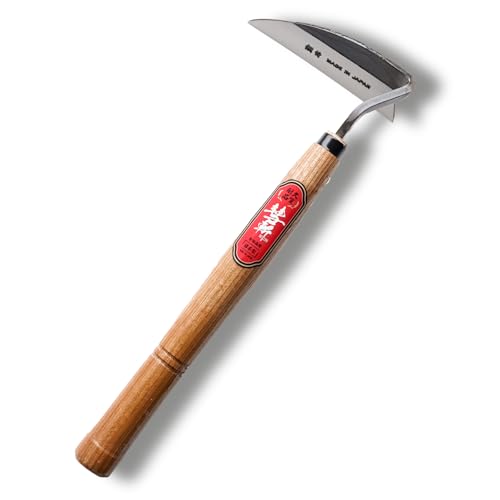
The SUIZAN Nejiri Kama is my leading pick for precise weeding, sharp cutting, and control in flower beds.
A busy weekend in an American backyard can turn into a long weeding session fast. Tiny weeds pop up between petunias, dandelions take hold near rose bushes, and grass creeps into fresh mulch. Pulling each weed by hand takes time, while large garden tools can damage nearby flowers. A good hand weeder makes this job easier. It helps you reach tight spots, loosen stubborn roots, and keep your flower beds neat. I looked at five different tools with these jobs in mind, including their shape, handle style, reach, and likely uses.
Page Contents
Toggle🏆 Top 3 Products

SUIZAN Nejiri Kama Japanese Hand Hoe
Its sharp, curved steel blade offers a useful balance of control and cutting power for weeds in crowded flower beds.

Jtshy 11.8-Inch Dual-Tip Hand Weeder
Its dual-tip design gives gardeners another way to reach and loosen weeds with a compact wood-handled tool.

SWELGO Curved-Head Hand Weeder
Its curved steel head and wood handle offer a simple manual option for routine weeding and light soil work.
SWELGO Curved-Head Hand Weeder
The SWELGO Weed Puller Tool is a simple choice for gardeners who want one small tool for several basic jobs. It has a curved steel head and a reusable wood handle. The product description also lists hand cultivator and garden hoe uses. This makes it a useful option to consider for flower beds that need regular care.
The curved head can help loosen soil around small weeds and lift growth from open spaces. Its compact hand-tool design also makes it easier to work close to plants than a full-size garden hoe. I would consider it for light weeding, small garden borders, and routine soil care. The product listing does not provide enough verified test data to confirm its long-term strength or exact cutting performance.
✅ Pros
- ✔ Curved steel head suits several basic weeding tasks.
- ✔ Wood handle offers a familiar and simple grip style.
- ✔ Manual design needs no battery, fuel, or power cord.
- ✔ Compact size should suit small flower beds and garden borders.
- ✔ Can help loosen soil around shallow-rooted weeds.
- ✔ The listed hoe and cultivator uses add some flexibility.
- ✔ Reusable construction may reduce the need for disposable tools.
- ✔ Easy to store with other small garden tools.
⚠️ Cons
- ✖ The listing does not state the exact blade dimensions.
- ✖ A short hand tool requires bending or kneeling.
- ✖ The curved head may need several passes on deep taproots.
- ✖ No verified long-term durability test results are provided.
- ✖ It may not be the best choice for very hard or rocky soil.
My Recommendation
I would consider the SWELGO a practical everyday option for small and medium flower beds. Its curved steel head gives it more flexibility than a simple straight digging stick. You can use it to loosen the soil, work around small weeds, and tidy open patches between flowers. It is also a reasonable option if you prefer a traditional wood handle. Keep in mind that a hand weeder is not a replacement for a long-handled tool when you need to cover a large area. You will still need to work close to the ground. For gardeners who want a basic manual tool without a complex design, this model deserves a place on the shortlist. It is especially worth considering for routine maintenance rather than heavy root removal.
| Best For | Why |
|---|---|
| Small Flower Beds | Its compact manual design can help with weeds in narrow planting areas. |
| Routine Garden Care | The curved head can support light weeding and soil loosening. |
| Traditional Tool Users | The wood handle offers a familiar style without batteries or complex parts. |
60-Inch Long-Handle Weed Puller and Hoe

The Weed Puller Tool with Long Handle takes a different approach from the other tools in this list. Instead of asking you to kneel beside every weed, it uses a 60-inch handle. The product title also describes a two-in-one hoe and weed rake design. This setup may appeal to gardeners who want to work across larger areas while standing.
A long handle can help you reach weeds along paths, open borders, and wider flower beds. It may also reduce the need to bend during routine garden work. However, a long tool is not always the easiest choice for delicate planting spaces. You need enough room to move the head without striking stems or flowers. I would use this type of tool for open areas and choose a smaller hand weeder for tight spaces near prized plants.
✅ Pros
- ✔ The 60-inch handle allows standing work.
- ✔ May reduce repeated bending and kneeling.
- ✔ Two-in-one hoe and rake design offers more than one type of use.
- ✔ Useful for larger flower beds with open spaces.
- ✔ Can reach weeds near paths and garden borders.
- ✔ Manual operation does not require a power source.
- ✔ Long reach may help with routine surface weeding.
- ✔ The combined design can reduce the need to switch between two tools.
⚠️ Cons
- ✖ Its long handle may feel awkward in very small beds.
- ✖ It can be harder to control near delicate flower stems.
- ✖ The tool may need more storage space than a compact weeder.
- ✖ A surface weeding action may leave deep roots behind.
- ✖ The listing does not confirm the handle material or exact head dimensions.
- ✖ It is less suitable for close, detailed work around dense plants.
My Recommendation
This long-handle weed puller makes the most sense for gardeners who have wide flower beds or long borders. Its biggest selling point is reach. You can work while standing instead of kneeling for every small weed. That can make a difference when you maintain several beds around a house. I would not choose it as my only tool for a crowded flower bed. A large head and long handle can make it harder to move between stems and ground cover. Instead, pair it with a small hand weeder for close work. If your main problem is surface growth in open soil, this tool may save effort. If you need to remove weeds beside delicate roots, a compact tool will offer better control.
| Best For | Why |
|---|---|
| Large Flower Borders | The long handle offers reach across wider planting areas. |
| Gardeners Who Prefer Standing | Its 60-inch length can reduce the need to kneel or bend. |
| Open Soil Areas | The hoe and rake design may help with surface weeds and loose soil. |
SUIZAN Nejiri Kama Japanese Hand Hoe
The SUIZAN Nejiri Kama is a Japanese-style hand hoe made for controlled cutting and weeding. Its 13-inch size gives it a compact form for detailed garden tasks. The product description highlights a sharp steel blade and use in flower beds, vegetable gardens, and landscaping. That combination makes it one of the most interesting choices for gardeners who need to work around established plants.
The curved blade shape is useful when you need to slice through small weeds at or just below the soil surface. It can also help loosen soil around unwanted growth. I like the idea of this style for narrow spaces where a wide hoe would be hard to control. Still, a cutting tool needs careful use. It may cut off the top of a deep-rooted weed without removing the full root. For dandelions and similar weeds, you may need to work deeper and lift the root out.
✅ Pros
- ✔ Compact 13-inch size suits detailed garden work.
- ✔ Sharp steel blade can cut through small weeds.
- ✔ Curved blade shape supports controlled slicing and scraping.
- ✔ Useful for narrow spaces between flowers.
- ✔ Suitable for flower beds and vegetable gardens.
- ✔ Manual design gives the user direct control over each cut.
- ✔ Can help loosen the soil around unwanted growth.
- ✔ A Japanese-style hoe offers a different approach from forked weeders.
- ✔ No battery, charging, or fuel is needed.
⚠️ Cons
- ✖ The sharp blade needs careful handling and safe storage.
- ✖ It may cut weed tops without removing deep roots.
- ✖ A short tool requires bending or kneeling.
- ✖ It may be less useful in very compacted or rocky soil.
- ✖ A cutting blade needs cleaning and proper care after use.
- ✖ It is not a standing tool for large garden areas.
My Recommendation
The SUIZAN Nejiri Kama is my leading choice in this group for gardeners who value precision. Its compact size and curved steel blade suit close work in flower beds. It can help cut small weeds, clear growth around borders, and loosen soil in tight spots. I would especially consider it for beds with established flowers and narrow planting gaps. Its cutting action also makes it useful when a simple pulling motion does not work well. However, you should not expect every weed to come out with its full root. Deep taproots may need extra digging. Wear gloves, keep the blade pointed away from your body, and avoid working too close to flower crowns. If you want one of the more versatile compact tools on this list, this is the model I would look at first.
| Best For | Why |
|---|---|
| Detailed Flower Bed Work | Its compact shape and curved blade suit narrow spaces around plants. |
| Cutting Small Weeds | The sharp steel blade can slice unwanted growth near the soil. |
| Experienced Gardeners | Its blade-based design gives useful control but needs careful handling. |
Four-Tooth Stainless Steel Hand Weeder

This upgraded four-tooth weed puller uses a fork-style head and an ergonomic handle. The product title highlights heavy-duty stainless steel and use in gardens, lawns, yards, and flower beds. The four teeth are the main feature to consider. They can help enter the soil around a weed and loosen the area before you pull. This design is different from a blade-style hoe because it focuses more on gripping and lifting.
A forked hand weeder can be helpful when a weed has a root that you want to remove instead of simply cutting it off. You can place the teeth near the base, push them into the soil, and work the root loose. The exact result will depend on soil moisture, root depth, and weed size. I would consider this tool for dandelions, small taproot weeds, and general flower bed maintenance. Take care near shallow flower roots, since the teeth can disturb nearby soil.
✅ Pros
- ✔ Four teeth can help loosen soil around weed roots.
- ✔ Stainless steel construction is designed for garden use.
- ✔ The ergonomic handle aims to offer a comfortable grip.
- ✔ Manual design provides direct control.
- ✔ Useful for small weeds with roots that need lifting.
- ✔ Compact form suits flower beds and garden borders.
- ✔ No electricity or batteries are required.
- ✔ The forked head can work in places where a wide hoe is too large.
- ✔ Can support regular weeding in lawns and planting areas.
⚠️ Cons
- ✖ Four teeth may disturb soil near shallow flower roots.
- ✖ It can be difficult to use in very hard, dry ground.
- ✖ The product title does not state the exact handle length.
- ✖ Small teeth may not suit thick or woody weed roots.
- ✖ The tool requires close ground work and some hand pressure.
- ✖ No independent durability or comfort test results are provided.
My Recommendation
I would consider this four-tooth weeder if your main goal is to loosen and lift weeds rather than cut them. The forked head gives you a way to work around the base of a weed and reach into the soil. That can be helpful for common garden weeds with small or medium roots. Its stainless steel construction and ergonomic handle are also useful features to look for in a daily garden tool. Still, do not push the teeth blindly into a crowded flower bed. Some flowers have shallow roots that can be damaged by careless digging. Work slowly and keep the head close to the weed itself. This tool is a good match for gardeners who want a straightforward root-removal design and do not mind a little hand work.
| Best For | Why |
|---|---|
| Root Loosening | The four-tooth head can enter the soil around unwanted roots. |
| Routine Flower Bed Care | Its compact form is suitable for individual weeds and small planting areas. |
| Gardeners Who Prefer Forked Tools | The teeth provide a different option from a sharp cutting blade. |
Jtshy 11.8-Inch Dual-Tip Hand Weeder
The Jtshy 11.8-inch Hand Weeder is a compact tool with a dual-tip design. Its product description also highlights a wood handle, rust-resistant steel, and an ergonomic grip. This shape may appeal to gardeners who want a simple tool for reaching roots and working around small plants. It is listed for lawns, yards, and flower beds, so it may suit several common garden jobs.
The dual-tip design gives this model a useful point of difference. A pointed end can help enter the soil near a weed, while the other tip may help with loosening and lifting. The exact shape and performance should be checked against the product listing before purchase. I would consider it for narrow planting gaps and small weeds that need individual attention. Its short length also makes it easier to carry and store than a long-handled weeder.
✅ Pros
- ✔ Dual-tip design offers more than one working point.
- ✔ Compact 11.8-inch length suits close garden tasks.
- ✔ Wood handle provides a traditional grip style.
- ✔ Rust-resistant steel is designed for outdoor garden use.
- ✔ Ergonomic grip may improve comfort during short weeding sessions.
- ✔ Useful for reaching weeds in narrow flower bed spaces.
- ✔ Manual operation requires no electricity or fuel.
- ✔ Easy to keep in a small garden tool box.
- ✔ Can help with individual weed removal rather than broad surface work.
⚠️ Cons
- ✖ Short length requires bending or kneeling.
- ✖ The dual-tip design may take time to learn.
- ✖ It may not provide enough leverage for very deep roots.
- ✖ The wood handle needs to stay clean and dry between uses.
- ✖ Not intended for clearing large areas quickly.
- ✖ The listing does not provide verified long-term performance results.
My Recommendation
The Jtshy hand weeder is worth considering if you want a small, simple tool for close work. Its dual-tip design may give you more flexibility than a single-point weeder. The wood handle also suits gardeners who prefer traditional hand tools. I would use it for small weeds between annuals, along garden edges, and in narrow spaces where a larger tool cannot move freely. It may also help with careful root loosening when you work around established plants. However, its compact length means you must bend down to use it. It is not the right choice if you want to weed a large bed while standing. For small flower beds and regular maintenance, it offers a practical design to consider.
| Best For | Why |
|---|---|
| Small Flower Beds | Its 11.8-inch length suits individual weeds and tight planting gaps. |
| Detailed Root Work | The dual-tip design may help with probing and loosening soil. |
| Traditional Tool Users | Its wood handle and simple manual design offer a familiar feel. |
Final Verdict: Which Should You Buy?
The SUIZAN Nejiri Kama is my top choice from these five products for gardeners who need a compact, controlled tool for flower beds. Its sharp curved steel blade suits detailed weeding around established plants. The Jtshy dual-tip model is another good option for close work, while the SWELGO curved-head tool offers a simple choice for everyday garden care. Choose the long-handle model if you prefer standing work, or the four-tooth weeder if root loosening is your main goal.
The best hand weeder for flower beds should match your soil, weeds, and planting space. Choose a tool that offers control, a comfortable grip, and enough strength for the roots you need to remove. With the right garden weeder, you can keep flower beds neat and give your plants more room to grow.
FAQs Of best hand weeder for flower beds
Q What is the best hand weeder for flower beds?
Q Is a hand weeder better than a garden hoe?
Q How do I remove dandelions from flower beds?
Q Can a hand weeder damage flower roots?
Q When is the best time to weed flower beds?

I enjoy sharing simple gardening ideas, lawn care tips, and honest product reviews that help make outdoor work easier. From home gardening guides to helpful tools and lawn care advice, I write easy-to-follow content to help readers create a healthier and better-looking outdoor space without wasting time or money.