
As an Amazon Associate, I earn from qualifying purchases.
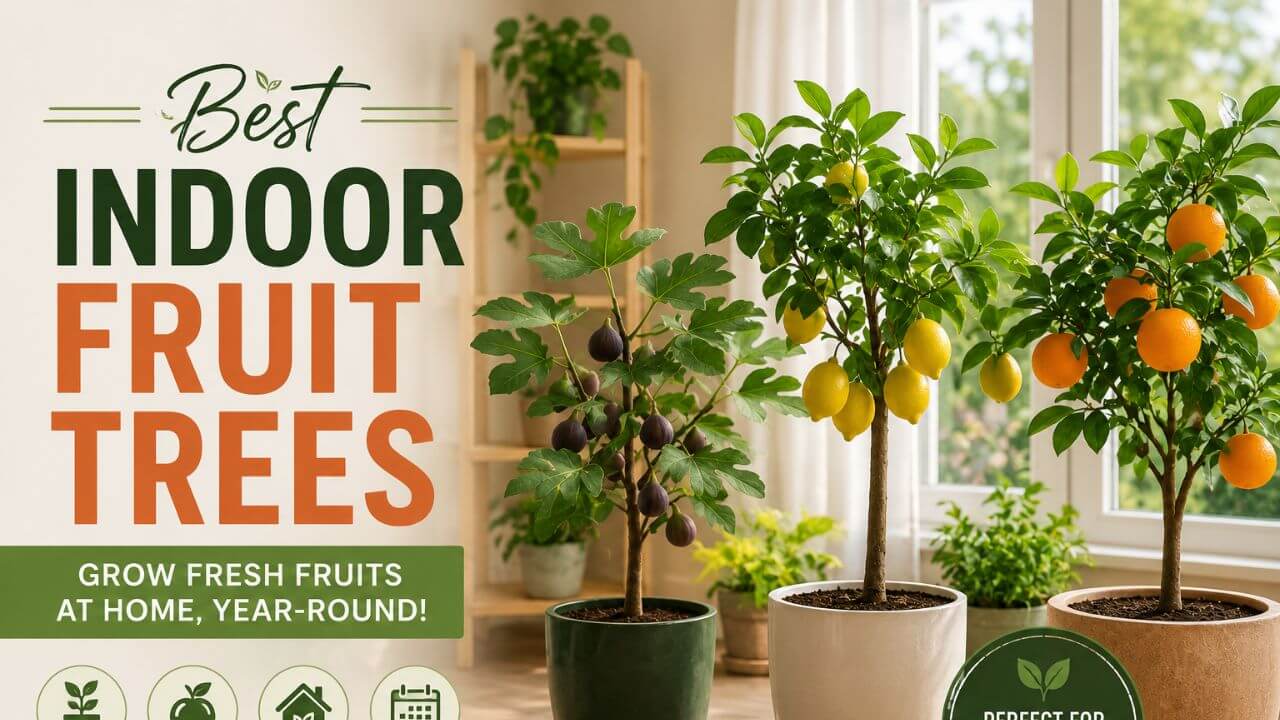
The best indoor fruit trees are dwarf citrus, figs, bananas, pomegranates, and guavas.
If you want fresh fruit on a windowsill, you’re in the right place. I’ve grown compact trees in small apartments and bright sunrooms, and I know what actually fruits inside. In this guide, we’ll explore the Best Indoor Fruit Trees, how to pick the right varieties, and the exact care steps that lead to real harvests, even in low light winters.
What Makes a Great Indoor Fruit Tree
Not every fruit tree can thrive indoors. The best picks stay compact, set fruit without complex chill needs, and handle dry air.
Key traits to look for:
- Dwarf or true patio varieties that top out at 3 to 6 feet.
- Self-fertile or easy to hand-pollinate blossoms.
- Low to moderate chill hours, or none at all.
- Tolerance for bright windows and dry indoor air.
Light is the deal maker. Aim for at least 6 to 8 hours of bright light. A south or southwest window is ideal. Grow lights help a lot in winter.
Use a fast-draining potting mix. Citrus and figs hate wet roots. A mix with bark, perlite, and peat or coir works well.
Water less than you think. Let the top inch of soil dry. Then water until it runs out the drain holes. Empty saucers.
Humidity helps fruit set. A tray with pebbles and water or a small humidifier near the plant can boost success. Keep air moving with a small fan to prevent pests.
:max_bytes(150000):strip_icc()/grow-fruit-trees-indoors-GettyImages-156860929-b4112bf94ee141e7878c7c373aded399.jpg)
The Best Indoor Fruit Trees to Grow Now
Below are the Best Indoor Fruit Trees I recommend after years of trial and error. I group them by how easy they are to fruit inside. Each entry includes light, pot size, and tips.
Easiest Winners
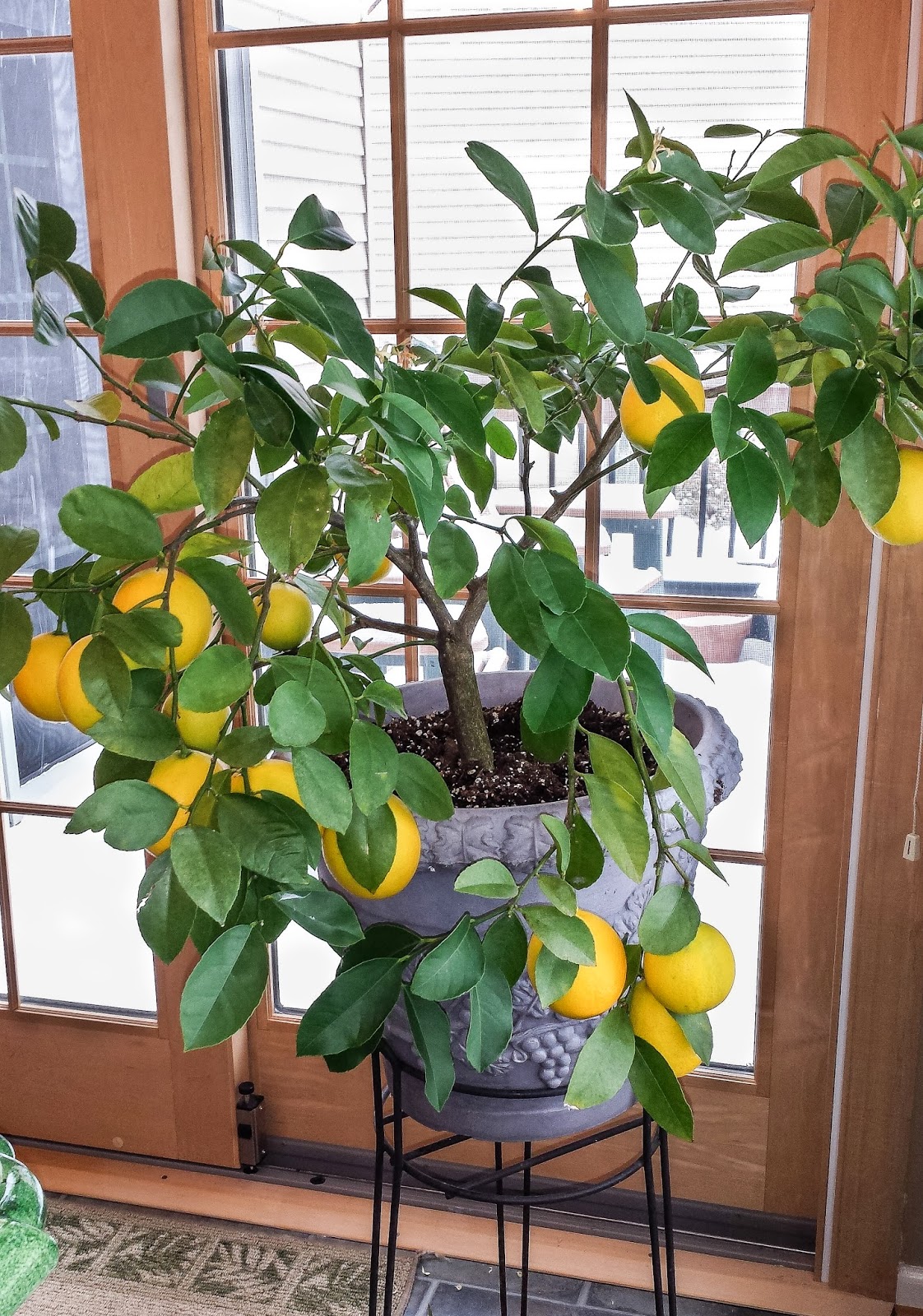
Dwarf Meyer Lemon
- Flavor is sweet-tart and floral. Fruits year-round in waves.
- Light needs are high. Use a grow light in winter.
- Pot size of 10 to 15 inches with gritty, fast-draining mix.
- Self-fertile. A gentle shake aids pollination.
Personal tip: My first indoor harvest came from a Meyer in a 12-inch pot under a 150-watt LED. It set five lemons in its first year.
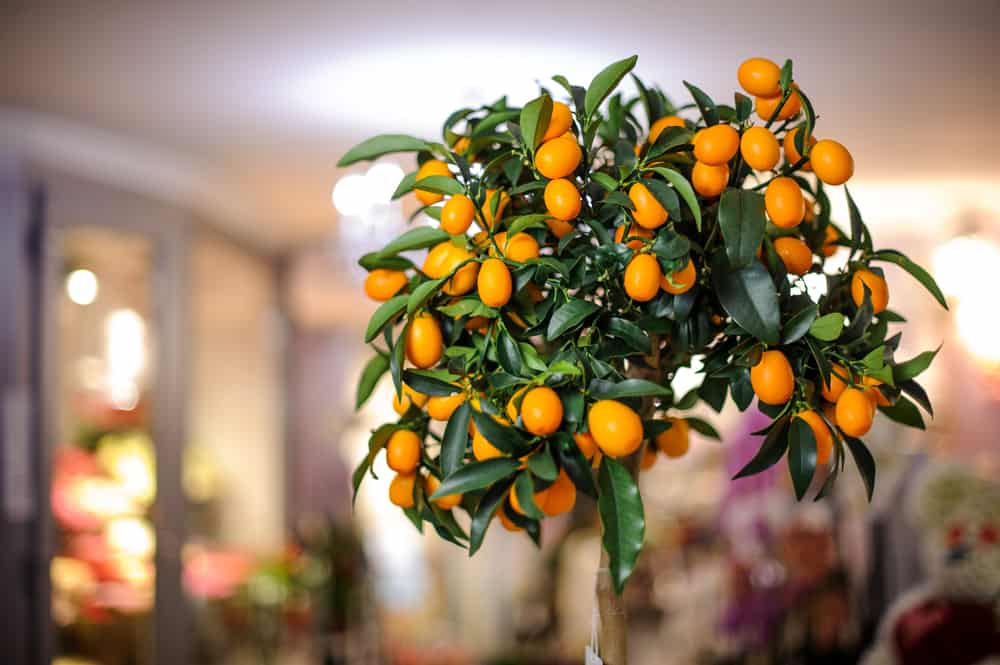
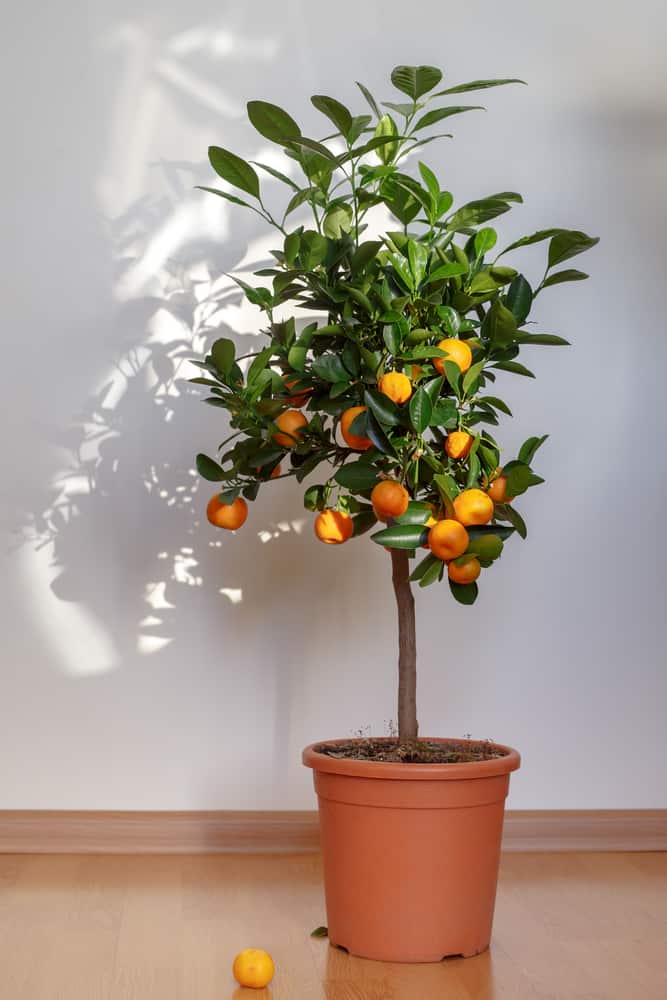
Calamondin Orange
- Small, tangy fruits great for drinks and marmalade.
- Compact growth and heavy blooms indoors.
- Very forgiving with dry indoor air.
Bearss Lime or Key Lime
- Strong lime flavor and steady set under lights.
- Needs bright light and warm nights above 60°F.
- Great for small balconies in summer.
Kumquat (Nagami or Meiwa)
- Bite whole, peel and all. Sweet peel and tart pulp.
- Naturally compact and easy to shape.
- Handles cooler rooms better than most citrus.
Dwarf Fig (Petite Negra, Little Ruby)
- Fruits on new growth. Sweet, jammy flavor.
- Needs bright light but tolerates brief dry spells.
- Let it go semi-dormant in winter if leaves drop.
Still Easy, With Style
Dwarf Pomegranate (Nana, Provence)
- Orange-red flowers and small, edible fruits.
- Tolerates indoor heat and lower humidity.
- Keep evenly moist during bloom and set.
Dwarf Guava (Strawberry Guava, Lemon Guava)
- Fragrant fruit with tropical notes.
- Needs strong light and good airflow.
- Prune after harvest to keep compact.
Dwarf Banana (Dwarf Cavendish, Super Dwarf)
- Not a tree, but a showstopper. Edible fruit indoors with strong light.
- Likes heat, moisture, and big pots.
- Keep soil evenly moist. Avoid cold drafts.
Barbados Cherry (Acerola)
- Vitamin C powerhouse with cherry-like fruit.
- Flowers and fruits multiple times a year.
- Self-fertile, but a small brush improves set.
For Patient Growers
Avocado (Wurtz/Little Cado, Day)
- Harder indoors but possible with strong light and pruning.
- May take years to set fruit. Often better as a foliage plant.
- Keep warm, bright, and avoid overwatering.
Dwarf Loquat
- Sweet, apricot-like flavor. Needs strong light.
- Best in sunrooms with mild winters.
- Hand-pollinate for better set.
Dwarf Mulberry
- Fast fruiting on new growth.
- Keep pruned to control size and improve light reach.
- Fruits can stain. Use a tray or mat under the pot.
Pro tip: Rotate your tree a quarter turn weekly for even light. This keeps the canopy balanced and reduces branch droop.
Why these are the Best Indoor Fruit Trees:
- They fruit on young wood or in containers.
- They are self-fertile or easy to pollinate by hand.
- They fit in small spaces and forgive indoor air swings.
Indoor Fruit Tree Care Blueprint
This is the care plan I give to friends who ask why their tree will not fruit. Follow this, and your Best Indoor Fruit Trees will reward you.
Light
- 6 to 8 hours of direct sun per day. Add 12 to 14 hours under LED in winter.
- Place the light 12 to 18 inches above the canopy.
Water
- Check soil with your finger. Water when the top inch is dry.
- Water until it drains. Never let the pot sit in water.
- Reduce water in low-light months.
Soil and Pot
- Use a chunky mix with bark and perlite. Roots need air.
- Choose a pot with many drain holes.
- Size up only when roots circle the pot.
Feeding
- Use a balanced, slow-release fertilizer in spring.
- Citrus like extra micronutrients like iron and magnesium.
- Liquid feed at half strength every 2 to 4 weeks in active growth.
Pruning and Training
- Pinch tips to shape and keep size.
- Remove crossing or weak branches.
- For bananas, keep one main stem and one pup.
Pollination
- Many citrus and figs are self-fertile.
- Gently tap flowers or use a soft brush to move pollen.
- Keep a small fan running to help pollen move.
Environment
- Keep temps 65 to 80°F. Avoid cold drafts.
- Raise humidity to 40 to 50 percent near the plant.
- Move outdoors in summer if safe, then acclimate back in fall.

Fruiting Timeline and Seasonal Care
Most Best Indoor Fruit Trees follow a rhythm. Plan for it and you will get more fruit.
Spring
- Push growth with more light and feeding.
- Repot if roots are tight.
- Start pest checks every week.
Summer
- Move outdoors if temps allow.
- Provide afternoon shade in heat waves.
- Keep soil evenly moist.
Fall
- Reduce feeding. Keep light strong.
- Bring plants inside before nights drop below 55°F.
- Trim lightly and clean leaves.
Winter
- Use grow lights for 12 to 14 hours.
- Water less. Watch for spider mites and scale.
- Expect slower growth or brief rest.
Fruit Set Timing
- Meyer lemon can bloom and fruit in cycles all year.
- Calamondin and kumquat set in late winter and summer.
- Figs often fruit in late spring and again in late summer.
Common Problems and Quick Fixes
Yellow leaves
- Often from overwatering or poor drainage.
- Fix by improving soil mix and watering less often.
No flowers
- Not enough light or too much nitrogen.
- Add a grow light and switch to a bloom-friendly feed.
Flowers but no fruit
- Low humidity or weak pollination.
- Use a soft brush and raise humidity.
Sticky leaves or webbing
- Scale, aphids, or spider mites are common indoors.
- Wipe leaves, shower the plant, then use insecticidal soap or horticultural oil.
- Improve airflow with a fan.
Leaf drop after moving inside
- Normal shock from light change.
- Increase light hours and avoid overwatering.
Design and Space-Smart Ideas
You can fit the Best Indoor Fruit Trees in a studio or a sunny kitchen. A little planning goes far.
Placement ideas
- Put a dwarf lemon in a bright kitchen corner.
- Line a sunny window with a kumquat and a fig.
- Use a rolling plant caddy to chase the sun.
Style tips
- Pick tall, narrow pots to save floor space.
- Group plants for a humidity boost and a lush look.
- Use simple stakes or a small trellis to train branches.
Small-space hacks
- Hang a clip-on grow light from a shelf.
- Use reflective walls or light paint to bounce light.
- Set a pebble tray under each pot to raise humidity.
:max_bytes(150000):strip_icc()/fall-garden-ideas-autumnal-charm-fruit-tree-getty-0923-985f274954b84920a2d0f0828d810cd9.jpg)
Buying Guide: Choosing and Sourcing
Good starts make all the difference for the Best Indoor Fruit Trees. Look for named dwarf varieties and reputable sellers.
What to look for
- A plant with firm, green leaves and no pests.
- A tag with the variety name and mature size.
- Roots that are not circling hard inside the pot.
Where to buy
- Local nurseries with indoor or citrus sections.
- Specialty online growers that list rootstock and size.
- Avoid unknown sellers with vague labels.
Starter kit checklist
- 12 to 15-inch pot with drain holes.
- Chunky potting mix and perlite.
- Slow-release fertilizer and liquid feed.
- LED grow light on a timer.
- Humidity tray and a small fan.
Budget tip: Start with one citrus and one fig. These two often top lists of the Best Indoor Fruit Trees because they fruit fast and forgive small mistakes.
Frequently Asked Questions of Best Indoor Fruit Trees
Do indoor fruit trees really produce fruit?
Yes, many do when given enough light and proper care. Citrus and figs are the most reliable in homes.
How much light do indoor fruit trees need?
Aim for 6 to 8 hours of direct sun or 12 to 14 hours under LED grow lights. A south-facing window works best.
What size pot is best to start with?
A 10 to 15-inch pot suits most dwarf citrus and figs. Use a pot with several drain holes and a breathable mix.
Do I need to hand-pollinate indoor citrus?
Often, no. But a gentle shake or a soft brush increases fruit set, especially in still air.
Which indoor fruit tree is best for beginners?
Dwarf Meyer lemon and Petite Negra fig are top picks. They are compact, self-fertile, and quick to reward care.
Can I grow peaches or nectarines indoors?
It is tough because they need winter chill and lots of sun. If you try, pick true dwarf varieties and provide cool winter rest.
How do I prevent pests on indoor fruit trees?
Inspect weekly, keep leaves clean, and use a fan for airflow. If pests appear, use insecticidal soap and isolate the plant.
Conclusion
You can harvest real, homegrown fruit inside, even in a small space. Pick two of the Best Indoor Fruit Trees to start, give them bright light, a chunky soil mix, and steady care, and you will see flowers and fruit within a year or two. Keep a simple routine, learn from small tweaks, and enjoy the fresh scent of blooms on winter mornings.
Ready to grow? Choose your first tree today, set up a light and timer, and track progress in a simple journal. If this guide helped, subscribe for more indoor growing tips or drop your questions in the comments.
Last Updated on June 25, 2026 by Saad Abdullah

I enjoy sharing simple gardening ideas, lawn care tips, and honest product reviews that help make outdoor work easier. From home gardening guides to helpful tools and lawn care advice, I write easy-to-follow content to help readers create a healthier and better-looking outdoor space without wasting time or money.