As an Amazon Associate, I earn from qualifying purchases.
The best plants for privacy in Florida include clusia, podocarpus, native wax myrtle, Simpson’s stopper, and suitable native hollies. For tropical screening, consider areca palms or bamboo muhly. Choose plants based on your Florida region, sunlight, soil, mature size, and cold tolerance.
Homeowners across Florida often want more privacy from nearby houses, busy streets, and outdoor living areas. A well-planned row of shrubs or small trees can create a natural screen while adding shade, greenery, and habitat for wildlife. Unlike a solid fence, a living screen can soften the look of a yard and blend into the landscape.
Florida’s climate makes plant selection especially important. South Florida has warm winters that support many tropical plants, while North and Central Florida can experience frost and occasional freezes. Coastal winds, sandy soil, summer rain, and dry spells also affect how well a privacy hedge grows. The right plant for Miami may not be the right choice for Jacksonville or Tallahassee.
The most useful approach is to match the plant to the location before deciding how quickly you want coverage. Clusia offers broad, dense leaves in warm areas, podocarpus provides a refined evergreen screen, and native wax myrtle can create a loose, wildlife-friendly hedge. This guide explains their strengths, limitations, spacing needs, and care requirements so you can build a screen that suits your property.
A good privacy plant creates a useful visual barrier without becoming a constant maintenance problem. Dense foliage, suitable mature height, and healthy growth near the ground matter more than rapid growth alone. A tall plant with a bare lower trunk may block an upstairs window but leave a patio exposed.
Evergreen plants are often preferred because they retain their leaves through much of the year. However, evergreen does not always mean frost-proof, and some species may lose leaves or suffer damage during an unusually cold winter. Check how a plant performs in your local area before planting an entire property line.
The best choice also depends on how much room you have. A narrow side yard may need an upright shrub that tolerates regular pruning, while a large backyard can support a wider screen of native shrubs and small trees. Consider maintenance access, overhead wires, underground utilities, and the mature width of every plant.
Source: i.pinimg.com
Dense foliage
Look for plants that form a thick canopy and retain enough leaves near the ground to screen views from sidewalks and neighboring yards.
Regional suitability
Compare the plant’s cold tolerance with your USDA hardiness zone and account for local frost pockets, coastal exposure, and wind.
Manageable mature size
Choose a species that can reach the desired height without repeated severe trimming or conflict with buildings and utility lines.
Water and soil needs
Select plants that fit your drainage and irrigation conditions. Florida’s sandy soils may drain quickly, while low spots can remain wet after heavy rain.
Understand Florida’s Growing Regions
North Florida generally has colder winters than the central and southern parts of the state. Central Florida occupies a transition zone where both tropical plants and more cold-tolerant shrubs may work, depending on the site. South Florida supports a wider range of tropical species, but salt exposure, flooding, and hurricane winds still influence plant performance.
North Florida
Favor cold-hardy shrubs and native trees, and check local performance before using tropical hedges.
Central Florida
Compare the plant’s cold tolerance with your exact location and consider a mixed screen that can recover from occasional frost.
South Florida
Clusia and other tropical choices may be suitable, but check invasive status, salt exposure, and water requirements.
The Best Plants for Privacy in Florida
Several shrubs, small trees, and clumping plants can create a useful screen in Florida. The strongest choice depends on the required height, available width, sunlight, and winter temperatures. The plants below offer different combinations of density, appearance, wildlife value, and upkeep.
Source: positivebloom.com
Clusia
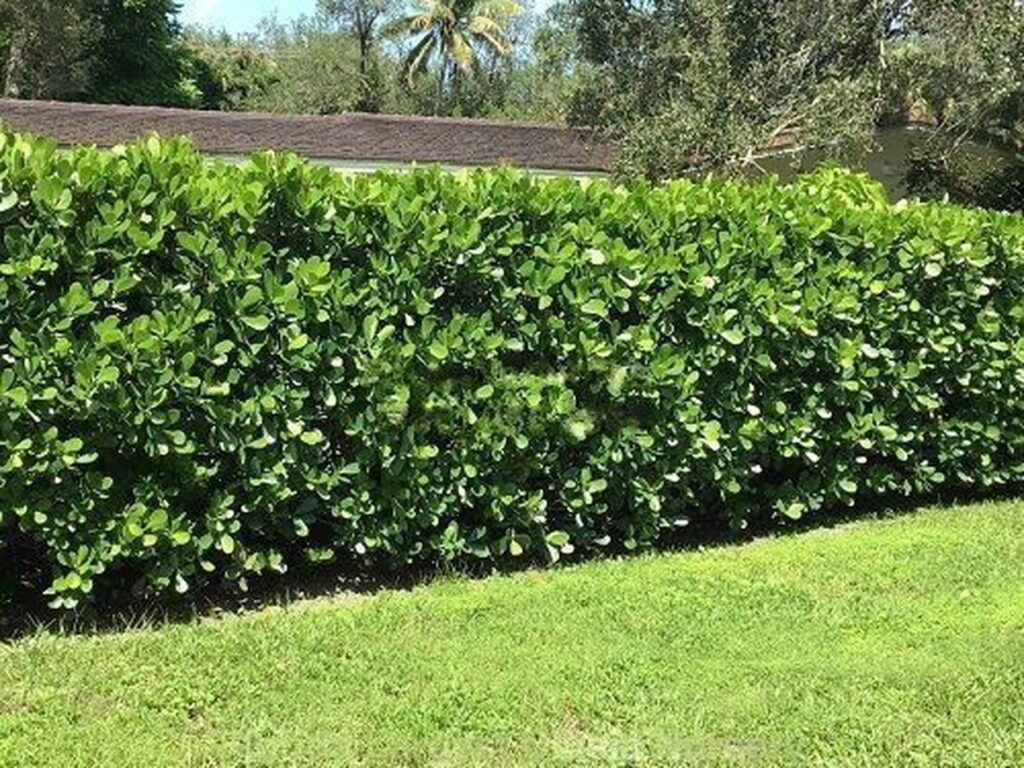
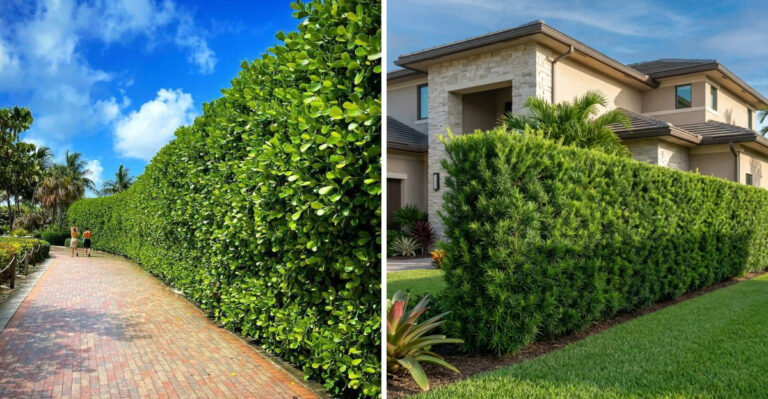
A broad-leaved evergreen shrub or small tree that forms a dense screen in suitable warm regions, especially South Florida. Its thick leaves create a solid visual barrier, but plants need protection from hard freezes and enough room for their mature size.
Podocarpus
An evergreen with narrow leaves and an upright growth habit. It can form a neat, formal hedge when trimmed correctly and is useful where a more compact appearance is wanted. Growth rate and cold tolerance vary with species, cultivar, and site.
Wax Myrtle
A native shrub or small tree with aromatic foliage. It can form a loose, informal screen and provide food and cover for wildlife. It may become broad and uneven without occasional shaping, so allow enough space.
Simpson’s Stopper
A Florida native evergreen shrub or small tree with attractive foliage and small flowers. It can work well in a natural privacy screen, though its growth rate and final form may not suit someone who needs an immediate, tightly clipped wall.
Native Hollies
Suitable native holly species can provide dense foliage and berries that benefit birds. Select the right species for your region and site, and check whether male and female plants are needed for fruit production.
Areca Palm
A tropical palm that creates a soft, layered screen in warm locations. Its multiple stems and arching fronds provide a lush look, but it needs adequate width and may suffer in colder areas.
Bamboo Muhly
A clumping ornamental grass with fine foliage that can soften a boundary and provide partial screening. It is not a substitute for a solid hedge where complete year-round privacy is needed, but it can add texture to a layered design.
Sweet Viburnum
A broad-leaved shrub commonly used for screening in suitable Florida locations. It can form a substantial hedge, but mature size, disease pressure, and local growing conditions should guide the choice.
Clusia: Best for a Dense Tropical Hedge
Clusia is a popular option for a thick, broad-leaved screen in warm parts of Florida. Its leathery leaves overlap as the hedge fills out, helping block views of patios, pools, and neighboring yards. It is particularly useful when a lush, tropical appearance is part of the landscape plan.
Clusia performs best when the selected species is suited to the site’s climate and drainage. It needs room to spread, and a tightly maintained hedge requires regular pruning. Before planting, check whether the species is suitable for your county and avoid using invasive plants in areas where they are restricted.
Best location
Warm areas with suitable drainage and enough space for broad foliage.
Main benefit
Thick evergreen leaves create a strong visual barrier.
Main limitation
Cold damage and the need for repeated shaping can be concerns in some locations.
Podocarpus: Best for a Neat Evergreen Screen
Podocarpus is useful when you want a tidy, understated hedge rather than a broad tropical wall. Its fine foliage can create a formal boundary along a driveway, walkway, or property line. It also works as a background for flowering plants and smaller shrubs.
Give podocarpus enough space for air movement and healthy growth. Heavy repeated cutting into old, bare wood may leave gaps that take time to fill. Choose the appropriate species or cultivar for your region, and confirm its mature dimensions before buying.
Best location
Sunny to partly shaded sites, depending on the selected species and local conditions.
Main benefit
A refined evergreen look that can be maintained as a formal hedge.
Main limitation
A tight formal shape requires regular pruning, and growth can be slower than that of some broad-leaved shrubs.
Wax Myrtle: Best for a Native, Natural Screen
Wax myrtle is a strong option for homeowners who prefer a natural-looking hedge and want to support local wildlife. Its foliage can provide cover, and its berries are used by several bird species. The plant can tolerate a range of conditions, although the best results depend on drainage, moisture, and the selected planting site.
Unlike a tightly clipped hedge, wax myrtle often looks best with a loose outline. Plant it where its natural width will not block paths or spill into neighboring space. Prune lightly to guide its shape rather than cutting it into a narrow column that conflicts with its natural form.
Best location
Informal screens, wildlife-friendly gardens, and larger property boundaries.
Main benefit
Native character, wildlife value, and flexible use as a shrub or small tree.
Main limitation
Its natural shape may be less uniform than a formal evergreen hedge.
Simpson’s Stopper: Best for a Florida Native Hedge
Simpson’s stopper is a useful choice for a natural screen with year-round foliage in suitable Florida settings. Its small leaves and branching structure give it a different look from large-leaved tropical hedges. It can also fit into a landscape designed around native plants and wildlife.
Allow for its eventual height and width, and do not expect every plant to fill a boundary at the same speed. Buy healthy nursery stock and water it carefully while roots establish. This species is most useful when the homeowner values a natural, durable planting over instant coverage.
Best location
Native landscapes, mixed hedges, and sites suited to its light and soil needs.
Main benefit
Evergreen foliage and a natural appearance that fits many Florida landscapes.
Main limitation
It may take time to reach the desired screening height.
Native Hollies: Best for Structure and Wildlife
Native hollies offer a useful mix of dense foliage, seasonal berries on female plants, and a more structured appearance. The right species can work as a hedge or as part of a mixed screen. Some hollies are better suited to northern parts of Florida, while others tolerate warmer regions more effectively.
Check the mature size, sunlight needs, soil preferences, and pollination requirements of the exact species. Berry production may require a compatible male plant nearby, and some species have prickly leaves that may not be ideal beside narrow walkways.
Best location
Mixed native hedges and property boundaries with enough room for mature growth.
Main benefit
Useful structure, foliage, and potential food and shelter for wildlife.
Main limitation
Species selection matters, and some plants need a compatible pollinator to produce berries.
Areca Palm: Best for a Tropical Privacy Effect
Areca palm creates a soft screen through its clusters of stems and arching fronds. It suits warm landscapes where a tropical look matters more than a tightly clipped, solid hedge. It can screen a patio or pool area while leaving a lighter, more open feel than dense shrubs.
The palm needs room to spread and can become crowded when planted too close to a fence or building. It is also less suitable for colder locations where hard freezes may cause damage. Check local planting guidance and plan for the eventual clump size before installation.
Best location
Warm yards with enough room for a broad clump and a tropical landscape style.
Main benefit
A tall, layered screen with a soft, natural appearance.
Main limitation
Cold sensitivity, broad growth, and gaps between fronds can limit privacy.
Bamboo Muhly: Best for Light, Textured Screening
Bamboo muhly is a clumping ornamental grass that adds height, movement, and texture. It is helpful when a yard needs a visual buffer without the dense, formal look of a clipped hedge. Its airy growth also pairs well with native shrubs and flowering plants.
Because its foliage is open, bamboo muhly should not be the only plant used to block a direct view into a bedroom window or a private seating area. Combine it with taller shrubs where more coverage is needed, and check the expected mature height and width of the variety you buy.
Best location
Layered landscapes, open boundaries, and decorative screening.
Main benefit
Distinctive texture and a natural form that can soften fences and walls.
Main limitation
It provides partial rather than solid privacy.
Sweet Viburnum: Best for a Substantial Shrub Hedge
Sweet viburnum is often used for a substantial green screen where the site suits its growth and soil needs. Its broad leaves can make a dense hedge, and it can be shaped to define outdoor living spaces. Before selecting it, check regional disease concerns and the mature dimensions of the exact plant.
A shrub that grows quickly can also become a maintenance burden when planted in a narrow strip. Give the hedge room for airflow and access for pruning. Avoid choosing it based only on the height of nursery specimens, because young plants do not show their final width.
Best location
Larger boundaries and yards with sufficient room for a broad shrub hedge.
Main benefit
Broad foliage and a substantial green screen.
Main limitation
Space, pruning, and plant-health needs must be considered before planting.
Compare the Best Florida Privacy Plants
Use the comparison below to narrow your choices before visiting a nursery. The growth habit and general suitability are more useful than a universal claim that one species is best for every Florida yard. Exact performance depends on the species or cultivar, local climate, soil, and care.
Source: wildrootsgarden.com
For a dense tropical barrier
Consider clusia in warm areas where the plant is suitable and there is room for a broad hedge.
For a formal evergreen line
Consider podocarpus when a neat shape and fine foliage fit the design.
For wildlife and a natural look
Consider wax myrtle, Simpson’s stopper, and suitable native hollies.
For a soft tropical screen
Consider areca palm where winters are mild and the mature clump has enough space.
For partial, decorative screening
Consider bamboo muhly as one layer in a mixed planting rather than as a complete visual barrier.
Quick Comparison by Privacy Need
A plant’s ability to block views depends on foliage density, branch structure, and how the plant is maintained. The following table summarizes the main trade-offs without assigning unsupported growth rates or universal heights.
Clusia
Privacy style: dense and tropical. Maintenance: regular shaping if kept formal. Key check: cold tolerance and local suitability.
Privacy style: loose, natural screen. Maintenance: light shaping and occasional size control. Key check: available room and soil moisture.
Simpson’s Stopper
Privacy style: native evergreen screen. Maintenance: establishment care and selective pruning. Key check: patience while the hedge fills in.
Native Hollies
Privacy style: structured shrub or small-tree screen. Maintenance: species-dependent pruning. Key check: regional fit and pollination needs.
Areca Palm
Privacy style: tropical, layered screen. Maintenance: removal of dead fronds and space management. Key check: cold exposure and clump width.
Bamboo Muhly
Privacy style: airy, partial screening. Maintenance: seasonal cleanup as needed. Key check: whether open foliage provides enough coverage.
Sweet Viburnum
Privacy style: broad, substantial shrub hedge. Maintenance: size control and plant-health monitoring. Key check: mature size and local disease pressure.
Which Plants Work Best in Small Yards?
Small yards benefit from plants with a manageable mature width and a growth habit that does not require constant cutting. Podocarpus may suit a narrow hedge when the selected type fits the site. A layered screen can also use a few carefully spaced shrubs rather than a continuous row of oversized plants.
Do not assume that a narrow hedge will stay narrow without regular care. Check mature width and pruning needs before buying, and avoid placing plants where repeated cutting will expose bare branches or damage their natural form.
Measure first
Record the distance from the property line to the path, wall, or fence before selecting a plant.
Choose a suitable form
Look for a naturally upright plant if space is limited, rather than relying on severe pruning to control a broad shrub.
How to Choose the Right Privacy Plants for Your Yard
Start by deciding what you need to hide and how tall the screen must be. Blocking a neighbor’s ground-floor window may require a different plant height and density from screening a pool, porch, or second-story window. The desired view determines the best placement and whether a hedge alone will solve the problem.
Next, assess the planting strip at different times of day. Full sun, afternoon shade, roof runoff, standing water, and reflected heat from paving can change plant performance. A plant that thrives in an open yard may struggle beside a hot wall or under the shade of a large tree.
Source: archfoundation.org
Measure the screen
Estimate the required height, total length, and maximum width. Include space for maintenance access and future growth.
Check sunlight
Observe how many hours of direct sun the area receives and match the plant to those conditions.
Check drainage
Notice whether water drains quickly, remains after rain, or flows toward the proposed hedge.
Check the local climate
Use your USDA hardiness zone as a starting point, then account for local cold pockets and coastal exposure.
Check local rules
Review property-line restrictions, homeowners association requirements, utility locations, and county guidance before planting.
How Far Apart Should You Plant a Privacy Hedge?
Spacing depends on the plant’s expected mature width and the speed at which you need the screen to close. Closely spaced plants may fill a gap sooner, but crowding can increase competition for water, restrict airflow, and make pruning difficult. Plants placed too far apart may leave visible gaps for years.
Use the nursery label or reliable guidance for the exact species and cultivar. As a general planning method, estimate how much width each mature plant will occupy, then arrange the row so neighboring canopies can meet without being forced into severe competition. Do not apply one fixed spacing rule to every hedge.
For a formal hedge
Follow recommended spacing for the chosen variety and leave room for the mature width and intended clipped shape.
For a natural screen
Allow plants to develop their natural form, and consider staggered rows where space permits.
For a narrow strip
Select naturally compact or upright plants instead of crowding large shrubs into limited space.
Should You Plant One Species or Mix Several?
A single-species hedge can create a uniform look and simplify pruning, but one pest or disease may affect many plants at once. A mixed screen can offer more varied foliage, flowers, and wildlife value while reducing reliance on one plant type. It also lets you combine dense shrubs with taller plants to block views at different heights.
A mixed planting needs careful design. Select plants with compatible light, water, and soil needs, and place taller species where they will not shade out smaller ones. Use native plants suited to the region where possible, and avoid species known to be invasive in the area.
Single-species hedge
Best when a uniform appearance and consistent trimming are the main goals.
Mixed privacy screen
Best when a natural appearance, varied structure, and broader habitat value matter.
How to Plant a Privacy Hedge in Florida
A healthy hedge starts with good site preparation rather than a large amount of fertilizer. Choose suitable plants, prepare the soil without damaging nearby roots or utilities, and water well during establishment. Planting carefully at the start can reduce the need to replace struggling shrubs later.
Source: leafyplace.com
Step 1: Mark the planting line
Measure the boundary and mark each plant location using the recommended spacing for the selected species.
Step 2: Check utilities and drainage
Have underground utilities located before digging. Avoid low spots where roots may remain waterlogged, unless the chosen species suits those conditions.
Step 3: Prepare the planting holes
Dig holes that are wide enough for the root ball and no deeper than needed. Keep the root flare at the proper level and avoid burying the trunk.
Step 4: Set the plants
Remove the container carefully, loosen severely circling roots where appropriate, and position each plant upright at the correct depth.
Step 5: Backfill and water
Use the excavated soil unless a soil test or specific planting guidance indicates otherwise. Water thoroughly to settle the soil around the roots.
Step 6: Add mulch
Apply a layer of organic mulch over the root zone, keeping it several inches away from trunks and stems. Do not pile mulch against the plant.
Step 7: Monitor establishment
Check soil moisture often during the early weeks and adjust irrigation to rainfall, drainage, and plant needs.
When Is the Best Time to Plant?
Florida’s mild climate allows many shrubs to be planted outside the hottest part of summer, but the best window depends on the region and species. Fall, winter, or spring may be suitable for many cold-tolerant plants in parts of the state, while tropical plants need protection from cold and should not be installed just before a damaging freeze.
Avoid planting during extreme heat or when the soil is saturated. Newly planted roots need time to establish, and heavy rain can wash soil away or leave roots without enough oxygen. Check local University of Florida IFAS Extension guidance for the species and county before setting a planting date.
Before planting
Confirm the species, planting depth, recommended spacing, and expected cold conditions.
After planting
Keep the root zone evenly moist without leaving it waterlogged.
Watering, Pruning, and Long-Term Hedge Care
A privacy hedge needs the most attention while its roots establish. Water deeply when the root zone begins to dry, but do not follow a rigid schedule without checking rainfall and soil conditions. Florida’s frequent summer storms can reduce irrigation needs, while sandy soil and hot weather may cause the root zone to dry quickly between rains.
Once plants are established, adjust watering to the species and local conditions. Native plants suited to the site may need less supplemental water than a tropical hedge, but no plant is fully maintenance-free. Monitor foliage, branches, and soil to spot problems before gaps develop.
Source: treevitalize.com
Water based on soil moisture
Check the root zone before irrigating. Water thoroughly when needed, then allow the soil to drain rather than keeping it constantly wet.
Prune with the plant’s natural form in mind
Remove dead or damaged branches and trim to guide growth. Avoid cutting too deeply into bare wood when the species does not readily regrow from it.
Use fertilizer carefully
Do not apply fertilizer automatically at planting. A soil test, plant symptoms, and species-specific guidance can help determine whether nutrients are needed.
Inspect for pests and disease
Look for leaf spots, unusual yellowing, branch dieback, or insects. Identify the cause before applying a pesticide or fertilizer.
Refresh mulch as needed
Maintain a moderate mulch layer over the root zone while keeping stems and trunks clear.
Why Is Your Privacy Hedge Not Filling In?
Sparse growth can result from insufficient light, poor drainage, drought stress, crowded roots, unsuitable pruning, or pest and disease problems. Look at the whole planting strip before replacing shrubs. Plants may be struggling because the site does not suit the species rather than because they need more fertilizer.
Start by checking soil moisture and light, then inspect leaves and branches for damage. Review recent pruning and irrigation, and compare the symptoms with reliable plant-health guidance. If several plants decline at once or the cause is unclear, contact a local Extension office or qualified landscape professional.
Yellow leaves
Check moisture, drainage, root health, and nutrient needs before adding fertilizer.
Bare lower branches
Check light levels, pruning practices, and whether the plant naturally sheds lower foliage as it grows.
Uneven growth
Compare sunlight, irrigation coverage, soil conditions, and spacing along the full hedge.
Sudden dieback
Inspect for root problems, pests, disease, storm damage, and irrigation failures before treating.
How to Keep a Privacy Screen More Sustainable
A sustainable screen begins with plants that suit the site. Native species can support local wildlife and may reduce some maintenance needs when their natural growing conditions are matched. Still, native plants need suitable drainage, light, and care during establishment.
Use a diverse planting where it fits the design, conserve water through appropriate irrigation, and avoid unnecessary pesticide applications. Do not plant invasive species simply because they grow quickly or form a dense barrier. A slightly slower hedge that fits the site can be easier to manage over many years.
Favor suitable native species
Check regional recommendations and choose plants adapted to the conditions of the actual site.
Reduce wasted water
Adjust irrigation to rainfall, soil moisture, and plant needs instead of watering every day by habit.
Protect local habitat
Avoid invasive plants and retain a mix of suitable flowering and fruiting species where practical.
Common Mistakes to Avoid When Planting Privacy Plants
Many privacy planting problems start with a mismatch between the plant and the site. A hedge may look attractive at the nursery but become too broad for a narrow side yard or struggle through winter cold. Choosing plants based on their current size instead of their mature form often leads to extra pruning and replacement costs.
Source: floridabackyardprivacy.com
Choosing a plant only because it grows fast
Rapid growth does not guarantee dense coverage at the right height. Consider branch structure, foliage density, mature width, and maintenance needs.
Ignoring mature size
A plant that grows into a walkway or against a building may need repeated cutting or removal. Read the mature-size guidance before buying.
Planting too close together
Crowded roots and foliage can compete for water and reduce airflow. Follow spacing recommendations for the exact plant.
Overwatering new shrubs
Frequent irrigation in poorly drained soil can harm roots. Check moisture and drainage before adding more water.
Overfertilizing
Excess nutrients do not solve every growth problem and can damage plants or contribute to nutrient runoff. Test or diagnose before applying fertilizer.
Using an invasive species
Some plants spread beyond their intended space and harm natural areas. Check Florida invasive-plant guidance and local restrictions before purchase.
Expecting instant privacy
Even fast-growing plants need time to establish and fill in. If privacy is urgent, consider a lawful temporary screen while the living hedge matures.
Check Property Lines and Utilities Before Planting
Before digging, confirm the property boundary and have underground utilities located through the appropriate service. Consider overhead lines, drainage features, septic systems, and access to meters or equipment. Keep large plants away from places where roots or branches could create conflicts as they mature.
Also review local rules and any homeowners association requirements that apply to hedge height, visibility near driveways, and planting along shared boundaries. A living screen should improve privacy without blocking safe sight lines or interfering with neighboring property.
Property boundaries
Confirm the line before installing a hedge or planning for future branch growth.
Underground utilities
Arrange utility locating before digging any planting holes.
Road and driveway visibility
Keep vegetation within local sight-distance and setback requirements.
Design Ideas for a More Private Florida Yard
The best privacy screens work with the rest of the yard instead of appearing as a single wall of greenery. Combine different heights and textures to soften boundaries, screen windows, and create more comfortable outdoor spaces. The layout should respond to the views you want to block and the space available for plants to mature.
Source: archfoundation.org
Layered backyard screen
Use taller shrubs or small trees at the back, medium shrubs in front, and low plants near paths. This arrangement can block views at several heights without relying on one enormous hedge.
Poolside privacy
Choose plants suited to the local climate and exposure. Allow access for pool care, avoid species that drop excessive debris into the water, and check any pool-barrier rules before changing the layout.
Narrow side-yard hedge
Choose a suitable upright plant with a manageable mature width. Keep access to air-conditioning units, meters, gates, and maintenance paths.
Wildlife-friendly property edge
Combine suitable native shrubs, hollies, and small trees to provide varied foliage and seasonal food for wildlife.
Privacy around a patio
Use dense shrubs where direct views matter most and more open plants where you want light and airflow. Plan around the actual seating height and nearby windows.
How to Combine Plants With a Fence
A fence and a living screen can work together. The fence provides immediate separation, while shrubs and small trees soften the hard edge and add greenery. Plants can also screen views over a fence that is too low to block a neighbor’s window.
Leave space between the fence and the mature plant canopy for airflow and maintenance. Avoid placing a broad hedge where it will make repairs impossible or trap moisture against a wooden fence. If the fence is shared, check the applicable property rules before making changes.
For immediate coverage
Use an existing lawful fence while the plants establish.
For a natural appearance
Mix shrubs with suitable ornamental grasses or small trees instead of clipping every plant into the same shape.
For easier upkeep
Maintain a clear access strip where practical so you can inspect and repair the fence.
Where to Find Reliable Florida Planting Advice
Plant names can be confusing because common names sometimes refer to several different species. Before purchasing, confirm the botanical name and check whether the plant is recommended for your region. This matters most when cold tolerance, mature size, or invasive status could change the decision.
The University of Florida Institute of Food and Agricultural Sciences Extension provides Florida-specific gardening and landscape guidance. County Extension offices can help you interpret local conditions, choose suitable plants, and identify pests or disease. Florida’s official invasive-species resources can also help you avoid plants that threaten natural areas.
For a large hedge or a planting close to structures, a qualified local landscape professional may help with spacing, drainage, and long-term maintenance. Ask for the exact species or cultivar, expected mature dimensions, irrigation needs, and a plan for replacement if plants fail to establish.
Source: cdn.shopify.com
University of Florida IFAS Extension
Use its gardening resources and county offices for region-specific plant selection and care guidance.
Florida invasive-plant guidance
Check current state and regional resources before planting species that spread readily or have known environmental impacts.
Local nurseries
Ask for botanical names, mature sizes, and evidence that the plant performs well in your local climate.
Landscape professionals
Seek help when drainage, property boundaries, large trees, or complex planting layouts require closer assessment.
Frequently Asked Questions
Q
What is the best plant for privacy in Florida?
There is no single best plant for every Florida yard. Clusia is a strong option for dense tropical screening in suitable warm locations, while podocarpus works well for a neat evergreen hedge. Wax myrtle, Simpson’s stopper, and suitable native hollies are useful choices for natural screens. Match the species to your region, available space, and desired maintenance level.
Q
What privacy plants grow quickly in Florida?
Clusia, sweet viburnum, and some other broad-leaved shrubs can grow into substantial screens under suitable conditions. Actual growth depends on species, cultivar, sunlight, drainage, irrigation, and seasonal temperatures. Do not select a plant by growth speed alone; mature width, density, and local suitability are just as important.
Q
Which privacy plants stay green all year in Florida?
Clusia, podocarpus, wax myrtle, Simpson’s stopper, and suitable holly species can provide evergreen screening where the local climate and site suit them. Evergreen plants may still suffer leaf loss or branch damage during unusual cold weather, drought, or disease. Confirm the exact species and its cold tolerance before planting.
Q
What are the best native plants for privacy in Florida?
Wax myrtle, Simpson’s stopper, and appropriate native hollies are useful starting points for native privacy screens. The best selection depends on your part of Florida, soil moisture, sunlight, and desired height. Check the botanical name and regional guidance to make sure the plant is native to or suitable for your area.
Q
Can I use bamboo as a privacy screen in Florida?
Some clumping bamboos may be suitable for screening, but bamboo types differ in their growth habits and potential to spread. Running bamboo can spread beyond its intended area and may become difficult to control. If you want a bamboo-like look, consider bamboo muhly for partial screening or choose a verified noninvasive clumping species recommended for your region.
Q
How tall should a Florida privacy hedge be?
The right height depends on the view you need to block, the position of nearby windows, and local rules. A low hedge may screen a patio from pedestrians but will not hide an upstairs window. Estimate the height needed from the actual viewing angle, then choose a species that can reach and maintain it without unsafe or excessive pruning.
Q
Do privacy plants need fertilizer when planted?
Not every newly planted shrub needs fertilizer. Excess nutrients can harm roots or contribute to runoff, and fertilizer will not correct poor drainage, unsuitable light, or overwatering. Follow species-specific guidance and use soil testing or a clear diagnosis when nutrient needs are uncertain.
Q
How can I get privacy while my hedge grows?
An existing fence, a lawful freestanding screen, or suitable container plants can provide temporary privacy while shrubs establish. Keep temporary structures stable and compliant with local rules, and avoid blocking driveways, sidewalks, or required sight lines. Plan the permanent planting around the mature size of the plants rather than crowding them to get faster coverage.
✦ Wrapping Up
Conclusion
The best plants for privacy in Florida are those that match your climate, soil, space, and desired look. Clusia and podocarpus can create dense evergreen screens in suitable locations, while wax myrtle, Simpson’s stopper, and native hollies offer natural alternatives. Areca palms and bamboo muhly can add a tropical or textured layer where their more open growth fits the goal.
Before buying, measure the planting area, check mature height and width, confirm cold tolerance, and review local planting guidance. Good spacing and careful watering during establishment will help the screen grow into a useful landscape feature. A well-planned hedge can offer privacy for years without becoming a constant battle with pruning, drought, or overcrowding.
💡 Key Takeaway
Measure the area you want to screen, note its sunlight and drainage, and select two or three suitable species to compare. Confirm their botanical names, mature dimensions, cold tolerance, and local suitability before purchasing. For Florida-specific guidance, consult your county University of Florida IFAS Extension office.
I enjoy sharing simple gardening ideas, lawn care tips, and honest product reviews that help make outdoor work easier. From home gardening guides to helpful tools and lawn care advice, I write easy-to-follow content to help readers create a healthier and better-looking outdoor space without wasting time or money.