As an Amazon Associate, I earn from qualifying purchases.
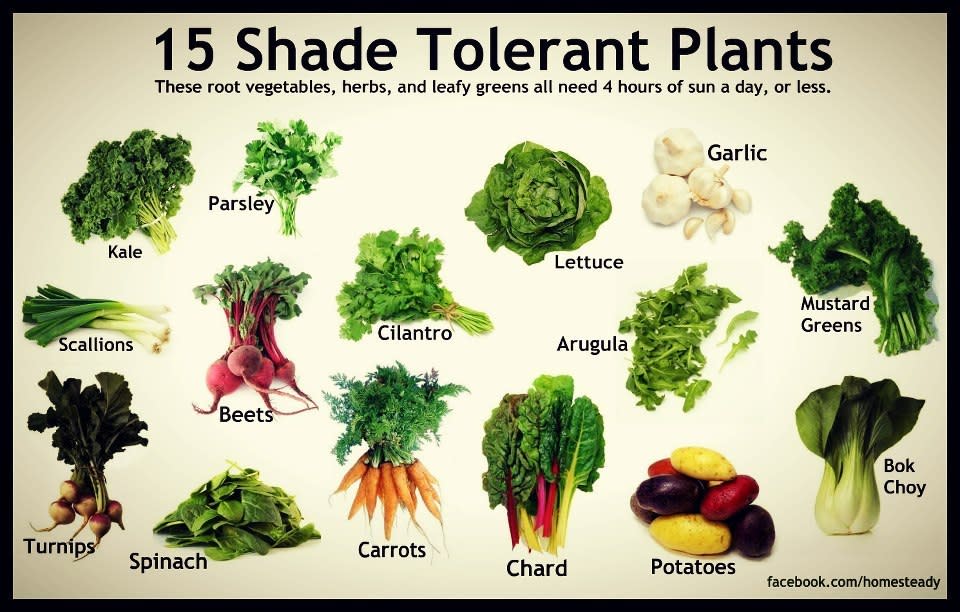
The best vegetables to grow in partial shade include lettuce, spinach, kale, Swiss chard, arugula, radishes, beets, carrots, peas, and green onions. These crops can grow with less direct sun than tomatoes, peppers, and cucumbers. Leafy greens and quick root crops are often the easiest choices for a garden that gets only a few hours of sunlight.
A shady backyard does not have to mean giving up fresh vegetables. Across the United States, many home gardeners grow food beside fences, under open trees, along the north side of a house, or in yards shaded by nearby buildings. The key is to match each crop to the amount of sunlight that reaches the garden. A spot with morning sun and afternoon shade can be useful for crops that struggle in the heat of a long summer day.
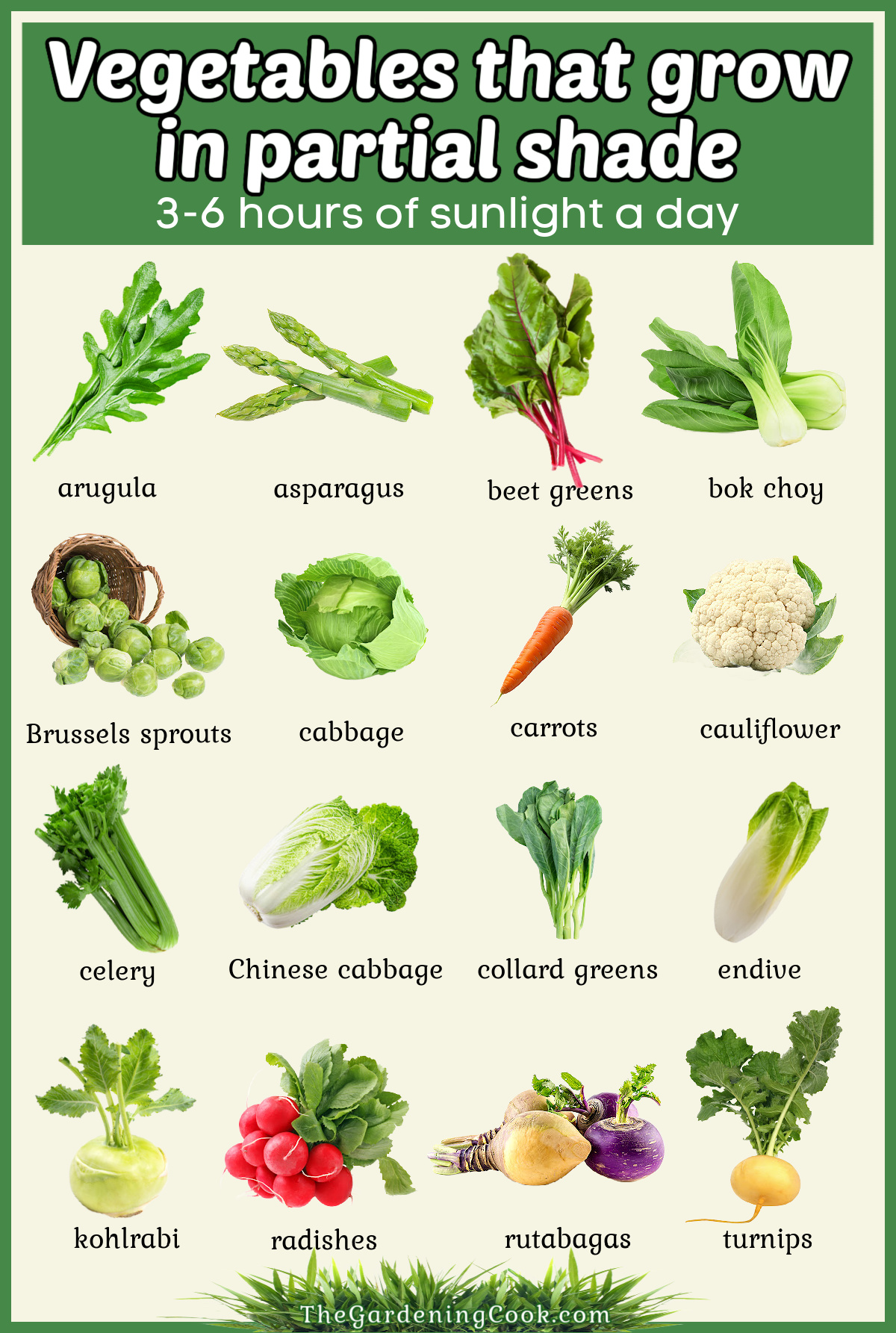
Partial shade usually means a garden gets about three to six hours of direct sunlight each day, though gardening guides may use slightly different definitions. Some crops can also grow in bright, indirect light, but they may produce smaller harvests. Vegetables grown for their leaves or stems tend to cope better with reduced light than plants grown for large fruits.
This guide explains which vegetables are most likely to thrive in partial shade, how much sunlight they need, and how to care for them through the growing season. It also covers common problems, from slow growth to damp soil, so you can make the most of the light your yard offers. Your local climate, planting dates, soil, and the depth of the shade will all affect the results.
What Does Partial Shade Mean for a Vegetable Garden?
Partial shade means a garden receives some direct sunlight but is shaded for part of the day. For many gardening purposes, this means about three to six hours of direct sun. The exact amount matters because a bed with five hours of morning sun can behave differently from one that gets only scattered light beneath a dense tree canopy.
Sunlight provides the energy plants use to make sugars through photosynthesis. When light is limited, plants may grow more slowly and produce fewer leaves, smaller roots, or fewer fruits. Choosing crops that can use moderate light efficiently is often more effective than trying to grow sun-loving vegetables in a deeply shaded spot.
Before planting, observe the garden in the morning, around midday, and in the afternoon. Count the hours when direct sunlight reaches the soil or leaves. Repeat the check on a clear day, and consider how nearby trees and buildings change the pattern through the season.
Source: thegardeningcook.com
Full sun
Usually means at least six hours of direct sunlight daily. Many tomatoes, peppers, cucumbers, squash, and other fruiting crops perform best with this amount or more.
Partial shade
Often means about three to six hours of direct sun. Leafy greens, some root vegetables, peas, and alliums are useful options.
Dappled shade
Sunlight passes through leaves or other openings and creates shifting patches of light. Some greens may grow well here, depending on how bright the area remains.
Deep shade
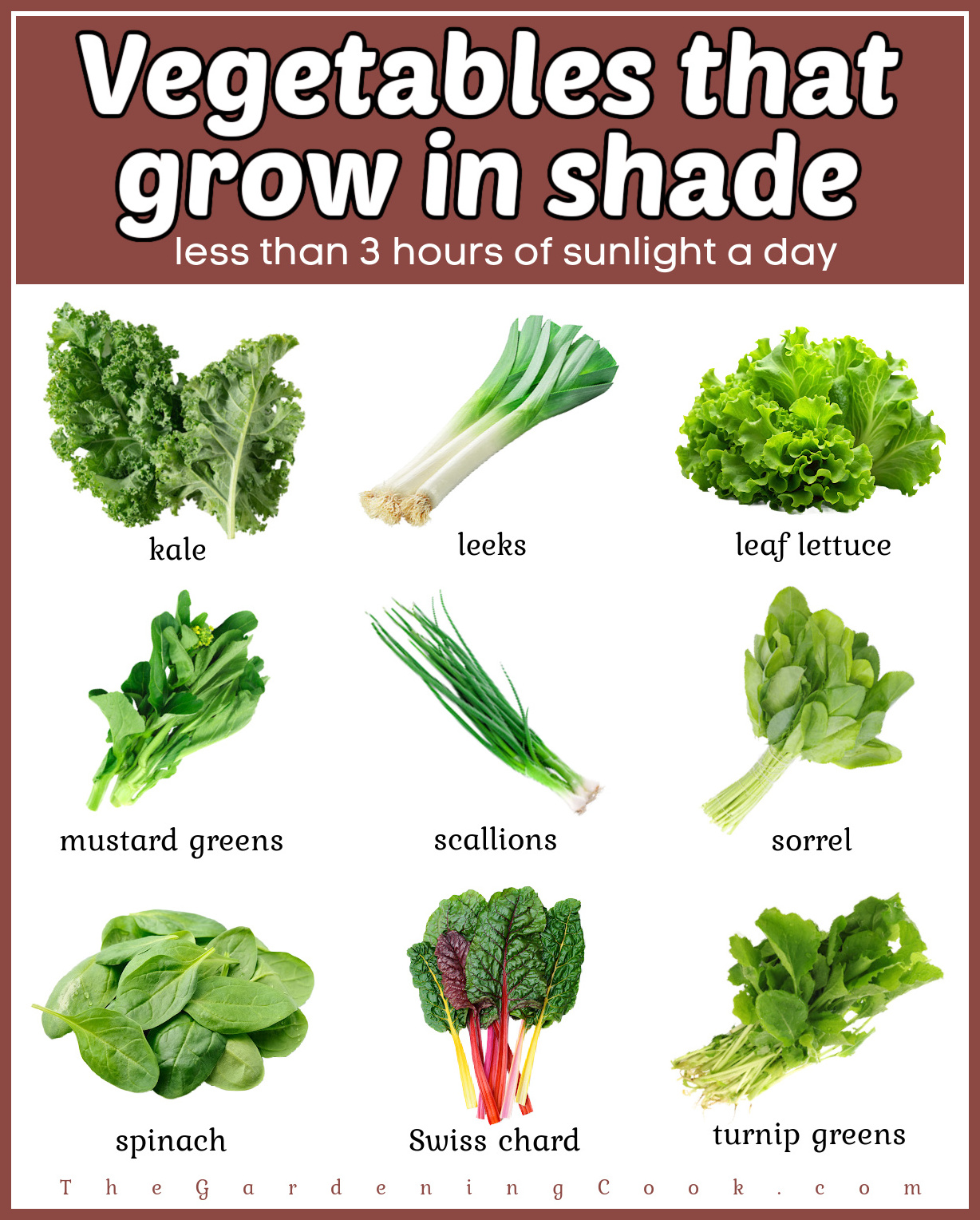
Receives little or no direct sunlight and may stay dim all day. Most edible vegetables struggle to produce well under these conditions.
Why Morning Sun Can Be Better Than Afternoon Sun
Morning sun gives plants direct light before the hottest part of the day. Afternoon shade can reduce heat stress and slow the drying of tender leaves. This arrangement is often useful for lettuce, spinach, and other cool-season crops in warm regions of the United States.
The benefit depends on the season and climate. In a cool northern spring, more sunlight may help plants grow faster. In a hot southern summer, shade during the afternoon may reduce wilting, but dense shade can still limit growth.
Best use
Try morning sun and afternoon shade for leafy greens when summer temperatures rise.
What to avoid
Do not assume that a cool, shady location will remain suitable through every season. Check soil moisture and plant growth as conditions change.
The Best Leafy Vegetables to Grow in Partial Shade
Leafy vegetables are usually the best place to start when sunlight is limited. Their harvest comes from leaves or stems rather than large fruits, so they can provide useful yields without the long hours of direct sun that tomatoes and peppers often need. They are also well suited to small beds and containers.
Growth will still depend on light levels, soil fertility, temperature, and water. A leafy crop in bright partial shade may grow well, while the same crop under a dense evergreen tree may remain small. Start with a few varieties, observe how they perform, and plant more of the strongest growers.
Source: gardeninglatest.com
Lettuce
Lettuce is one of the easiest crops for a partly shaded garden. Leaf varieties are especially useful because you can pick outer leaves as the plant grows. Partial shade can also help delay bolting, which is when a plant sends up a flower stalk and its leaves often become bitter. Aim for roughly three to five hours of direct sun or bright light. Keep the soil evenly moist, and sow small batches every few weeks during suitable weather.
Spinach
Spinach prefers cool weather and can grow with moderate sunlight. It is a useful spring and fall crop in many parts of the United States. In partial shade, growth may be slower, so give plants fertile soil and steady moisture. Sow seeds when temperatures suit the variety, and harvest outer leaves once the plants are established. Hot weather can cause spinach to bolt even in a shaded bed.
Kale
Kale tolerates partial shade and offers a long harvest when growing conditions are suitable. It grows best in fertile, well-drained soil and usually produces more leaves with additional sunlight. Pick the lower, older leaves first and leave the growing tip intact. Watch for cabbage worms, aphids, and other pests, which can affect kale regardless of light level.
Swiss chard
Swiss chard is a productive leafy crop with colorful stems and broad leaves. It can tolerate partial shade, although plants may grow more slowly when light is scarce. Sow it in well-drained soil and water when the top layer begins to dry. Harvest a few outer leaves at a time rather than stripping the plant bare.
Arugula
Arugula grows quickly in cool weather and is well suited to small spaces. Its peppery leaves work in salads, sandwiches, and cooked dishes. Partial shade may help keep leaves tender during mild weather, but warm temperatures can still trigger flowering. Sow short rows at intervals to keep a fresh supply coming.
Mustard greens
Mustard greens can provide a quick harvest in spring or fall. They tolerate some shade and offer a stronger flavor than many lettuce varieties. Give plants enough space for airflow, water them consistently, and harvest young leaves if you prefer a milder taste. In hot weather, their flavor can become more intense.
Bok choy
Bok choy, also called pak choi, can grow in partial shade during cool weather. Its crisp stems and tender leaves are useful in stir-fries, soups, and salads. Use varieties suited to your season, keep moisture steady, and avoid prolonged heat that can cause premature flowering. Good airflow and careful watering help reduce disease risk.
How to Get More Leaves From a Shady Bed
Choose loose-leaf types when possible because they allow repeated harvests without waiting for a full head to form. Sow seeds in short rows, and thin crowded seedlings so the remaining plants have room to grow. Crowded leaves can block light and hold moisture, making the bed harder to manage.
Harvest leafy vegetables when the leaves are large enough to use but still tender. Pick outer leaves from lettuce, kale, and Swiss chard while leaving the center intact. For spinach and arugula, take modest amounts at a time and let the plants recover between harvests.
Use succession sowing
Plant a small new batch every two to three weeks during the suitable season instead of sowing the entire bed at once.
Choose cool-season windows
Spring and fall are often best for spinach, arugula, and many lettuce types, especially in regions with hot summers.
Watch for bolting
A tall flower stalk often signals that a plant is shifting toward seed production. Harvest usable leaves promptly and sow a fresh batch when temperatures allow.
Root Vegetables That Can Grow With Less Sun
Some root vegetables can grow in partial shade, but their roots usually need more time to reach a useful size. Their success depends on both sunlight and soil structure. Loose, stone-free soil helps roots develop, while compacted or waterlogged soil can lead to poor shape and slow growth.
For a shady bed, choose quick-maturing crops or varieties described as suitable for cool-season growing. Do not expect the same yield as a sunny garden. Check the seed packet for the recommended spacing, maturity range, and planting window.
Source: comeawayhome.co.uk
Radishes
Radishes are a strong choice because many varieties mature quickly. They can form usable roots in partial shade, though low light may delay harvest or produce smaller roots. Sow seeds directly into loose soil, thin seedlings to the recommended spacing, and keep moisture even. Roots that remain crowded or grow too slowly may become tough or split.
Beets
Beets can tolerate partial shade and provide both edible roots and leafy tops. Their growth may be slower than in full sun, so give them a long enough growing window. Each beet seed cluster may produce several seedlings, which need thinning to reduce competition. Use young leaves in salads or cook larger leaves like other greens.
Carrots
Carrots may grow in partial shade if the soil is deep, loose, and well drained. They generally need more time to form substantial roots when light is limited. Sow seeds directly where the plants will grow because carrots do not transplant well. Keep the seedbed moist during germination, and thin seedlings so the roots have space.
Turnips
Turnips can be useful for their roots and leafy tops. They grow best in cool conditions and can tolerate some shade, although root size may be reduced. Sow them in workable soil and harvest roots while they are tender. If the area receives very little direct light, focus on the greens rather than expecting large roots.
Why Root Size Can Be Smaller in Partial Shade
Root crops need energy from their leaves to build the part you harvest. With fewer hours of direct sunlight, plants may make less energy and grow more slowly. A carrot may still look healthy above the soil while taking longer to form a mature root.
Avoid adding large amounts of fertilizer to compensate for limited light. Too much nitrogen can encourage leafy growth without solving the shortage of sunlight. Start with healthy soil, use a balanced amendment only when needed, and follow soil-test recommendations where available.
Keep soil loose
Remove stones and break up compacted areas before sowing carrots, radishes, or beets.
Thin seedlings
Follow the seed packet’s spacing advice so roots have room to expand.
Be patient
Check crop maturity regularly, but allow extra time if plants are healthy and still growing.
Other Vegetables Worth Trying in Partial Shade
A partly shaded garden can support more than leafy greens and root crops. Peas, green onions, scallions, and some herbs may grow well when the light is bright enough. Their performance depends on the number of direct-sun hours, local temperatures, and the amount of space available.
Try one or two additional crops in a small area before planting an entire bed. This approach makes it easier to learn what grows well in your yard without using the whole season on a crop that may not suit the conditions.
Source: The Old Farmers Almanac
Green onions and scallions
These crops are useful for narrow beds and containers because they need little space. They can grow in partial shade, although growth may be slower and stems may remain thinner. Keep the soil moist but not soggy, and harvest when the stems reach a useful size.
Peas
Peas prefer cool weather and can tolerate some partial shade, especially when the site receives several hours of direct sun. They may produce fewer pods in low light than in a sunny bed. Provide a suitable support for climbing varieties, and sow at the time recommended for your region.
Garlic
Garlic may survive in partial shade, but bulb size and yield generally improve with ample sunlight. If the bed receives only a few hours of direct sun, harvest expectations should be modest. Choose a variety suited to your climate and plant according to local timing guidance.
Celery
Celery can benefit from cooler conditions and may tolerate some shade, but it needs steady moisture and fertile soil. It can be demanding in a small garden because its roots must not dry out. Use it where the light is bright and watering is easy to manage.
Cilantro
Cilantro is an herb rather than a vegetable, but it can be a useful companion crop in a partial-shade garden. Cooler conditions may delay flowering, while hot weather can make it bolt quickly. Sow small batches and harvest the leaves before flowering begins.
Can You Grow Tomatoes, Peppers, or Cucumbers in Partial Shade?
Tomatoes, peppers, cucumbers, squash, and eggplant are usually poor choices for a deeply shaded vegetable bed. These crops use substantial sunlight to support flowering and fruit development. They may survive with reduced light but produce fewer fruits or take longer to ripen.
If your site gets close to six hours of direct sun, you can experiment with compact or early-maturing varieties. Keep expectations realistic and compare their performance with crops better suited to partial shade. When possible, reserve the brightest area for fruiting vegetables.
Tomatoes
Choose a sunny location whenever possible. In reduced light, flowering and ripening may be slower, and total fruit production may fall.
Peppers and eggplant
These heat-loving crops usually perform best with long periods of direct sunlight. Partial shade may limit flowering and fruit yield.
Cucumbers and squash
These crops generally need ample sun to support vines and fruit. Dense foliage can also make a damp, shaded site more prone to disease.
Best Vegetables for Different Levels of Shade
The best crop depends on how much direct sun reaches the bed. A site with five hours of sunlight offers more choices than one that receives only two hours of weak morning sun. Use the following guide to narrow your options before buying seeds.
The ranges below are practical starting points, not strict biological limits. Variety, season, light intensity, and local conditions can change the outcome. Bright indirect light can support some growth, but it should not be treated as equal to direct sunlight.
Source: Portland Monthly
About five to six hours of direct sun
Try lettuce, spinach, kale, Swiss chard, arugula, radishes, beets, carrots, peas, and green onions. This light level gives the broadest range of choices among the crops discussed here.
About three to four hours of direct sun
Start with loose-leaf lettuce, spinach, arugula, mustard greens, green onions, and some radishes. Expect slower growth and smaller harvests, especially in spring and fall when sunlight is weaker.
Dappled shade with bright indirect light
Experiment with lettuce, arugula, spinach, and herbs such as cilantro. Observe plant growth closely and avoid crops that need large amounts of energy for fruit or root production.
Very deep shade with almost no direct sun
Most vegetables will struggle. Look for a brighter location, prune only where appropriate and safe, or use containers that can be moved to a sunnier spot.
A Simple Crop Comparison
Use this table to compare the likely value of each crop in a partly shaded home garden. The categories describe general suitability rather than guaranteed yields. A crop labeled high is still likely to grow more slowly than it would in full sun.
Best overall choices
Lettuce, spinach, arugula, kale, and Swiss chard are strong choices when the garden has moderate light and workable soil.
Good choices with patience
Radishes, beets, carrots, turnips, and peas may produce useful harvests, but low light can reduce size or yield.
Usually better in full sun
Tomatoes, peppers, eggplant, cucumbers, and squash are more likely to disappoint when sunlight is limited.
How to Prepare a Vegetable Garden in Partial Shade
A partly shaded bed needs healthy soil, good drainage, steady moisture, and careful spacing. Since plants may grow more slowly, avoid creating extra stress with poor soil or crowded seedlings. Small changes to the growing area can make a meaningful difference without trying to change the natural light completely.
Before planting, check whether the shade comes from a building, fence, shrub, or tree. Each source creates different growing conditions. A wall may reflect heat, while a large tree can compete for water and nutrients as well as block sunlight.
Source: yourbackyardfarmer.com
Choose the brightest practical site
Place the bed where it receives the most useful direct light, ideally morning sun. Avoid spots that remain dark and damp throughout the day.
Check soil drainage
Water should move through the soil rather than pool around plant roots. Improve drainage where needed, and use a raised bed if the ground is poorly drained and the structure can be installed safely.
Add mature compost
Work a modest amount of finished compost into the soil to improve its structure and support plant growth. Do not use fresh manure around growing vegetables unless it has been properly handled according to food-safety guidance.
Space plants well
Follow the seed packet or plant label. Good spacing lets available light reach leaves and helps air move through the bed.
Use suitable containers
Containers make it easier to test different spots and move plants when needed. Choose containers with drainage holes and enough depth for the selected crop.
How to Grow Vegetables Under Trees
Growing vegetables under trees is more difficult than growing them beside a building because tree roots compete for water and nutrients. The canopy may also reduce light for much of the day. Young seedlings can dry out quickly when nearby roots draw water from the same soil.
If you use this space, favor shallow-rooted leafy crops and start with a small bed. Avoid cutting major roots or digging deeply near a tree. Do not prune large branches to increase sunlight unless a qualified tree-care professional confirms that the work is appropriate and safe.
Check root competition
Watch soil moisture closely, especially during dry weather. Water plants at their roots and adjust as needed.
Protect tree health
Do not pile soil against the trunk or cut large roots to make room for a vegetable bed.
Try containers first
Containers can reduce direct competition with tree roots, though the plants still need enough light and regular watering.
Watering, Feeding, and Pest Care in a Shady Garden
Vegetables in partial shade may lose water more slowly than plants in full sun, but this does not mean the soil will always stay moist. Tree roots, wind, warm weather, and shallow containers can dry a bed quickly. Check the soil rather than watering on a fixed schedule alone.
Shade can also keep leaves wet for longer after rain or watering. Long periods of leaf wetness, poor airflow, and damp soil can encourage some plant diseases. Careful watering and good spacing help reduce these risks.
Source: www.pinterest.com
Water at the soil level
Direct water toward the roots when practical. Morning watering gives foliage time to dry during the day and reduces prolonged wetness.
Check moisture before watering
Feel the soil a short distance below the surface. Water when the crop’s needs and soil condition call for it, rather than keeping the bed constantly wet.
Use mulch with care
A thin layer of suitable organic mulch can help regulate moisture and suppress weeds. Keep mulch away from plant stems and avoid thick layers in cool, wet sites.
Feed according to need
Use compost and soil-test results to guide nutrient management. Extra fertilizer cannot replace missing sunlight and may lead to excessive leaf growth or nutrient loss.
Inspect leaves regularly
Look for holes, yellow patches, mold, aphids, and other signs of trouble. Remove badly damaged plant parts when appropriate and identify the cause before using a treatment.
How to Prevent Slow, Weak Growth
Long, thin stems and pale leaves may indicate that plants are reaching for light. Slow growth can also result from cold soil, poor drainage, nutrient problems, or unsuitable planting dates. Check the site before assuming that fertilizer is needed.
If seedlings stretch toward a brighter area, move containers to a location with more direct light. For plants growing in the ground, thin crowded seedlings and remove nearby weeds. If the area remains too dark, replace struggling crops with more shade-tolerant greens or use another location.
Symptom: thin stems and small leaves
Possible cause: inadequate light or crowded growth. Move containers, improve spacing, or choose crops suited to the site’s light level.
Symptom: yellow leaves
Possible causes include overwatering, poor drainage, nutrient shortages, and natural leaf aging. Check soil moisture and plant condition before adding fertilizer.
Symptom: soft, damaged roots
Possible cause: waterlogged or compacted soil. Improve drainage where possible and avoid repeatedly watering soil that is already saturated.
Symptom: leaves with holes
Possible cause: chewing insects or other pests. Inspect both sides of leaves and identify the pest before deciding on a control method.
Seasonal Planting Tips for U.S. Gardeners
The best planting time depends on your USDA hardiness zone, local frost dates, and summer temperatures. Hardiness zones describe average annual extreme minimum winter temperatures, but they do not tell you everything about the growing season. For vegetables, local planting calendars and the crop’s temperature needs are often more useful.
Partial shade can be an advantage during hot weather, but reduced sunlight may slow growth in spring and fall. Match the crop to both the light and the season. A cool-season green may flourish in a shady spring bed and struggle in the same spot during a cold, dim autumn.
Source: thegardeningcook.com
Early spring
Plant cool-season crops such as spinach, lettuce, arugula, radishes, and peas when soil and local weather allow. In colder regions, wait until the soil is workable and follow local planting guidance.
Late spring and early summer
Continue sowing suitable leafy greens, but watch rising temperatures. Partial afternoon shade can help in warm areas, while excessive shade may slow growth too much.
Peak summer
Try heat-tolerant lettuce varieties, Swiss chard, green onions, and other crops suited to local conditions. Keep water available, and inspect plants for heat stress and pests.
Late summer and fall
Sow spinach, arugula, radishes, and other cool-season crops based on the expected first frost and the time each variety needs to mature. Remember that daylight decreases as fall progresses.
Why Regional Advice Matters
A planting date that works in Minnesota may be unsuitable in Texas or Florida. Northern gardeners may need to make the most of short spring and fall windows, while gardeners in warmer states may avoid the hottest months for spinach and other cool-season crops. Coastal, mountain, and inland climates can differ even within one state.
Use your local cooperative extension service, state university gardening resources, or a regional planting calendar to confirm timing. Check the expected frost dates and the crop’s days to maturity, then allow for slower growth if the bed receives limited light.
Use local frost dates
Compare the crop’s temperature needs with your area’s expected last spring frost and first fall frost.
Read the seed packet
Follow instructions for planting depth, spacing, maturity, and temperature range for the variety you choose.
Keep a simple garden record
Note sunlight hours, sowing dates, rainfall, watering, and harvest size. These notes can help you choose better crops next season.
Common Mistakes When Growing Vegetables in Partial Shade
The most common mistake is expecting a shady garden to produce exactly like a sunny one. Many vegetables tolerate less light, but tolerance does not mean they have no light needs. A sensible crop choice, steady care, and realistic harvest goals usually matter more than trying to force sun-loving plants to grow in the wrong place.
Another common problem is keeping the soil too wet. Shade may reduce evaporation, and a bed beside a wall or beneath a tree may have uneven drainage. Check the soil and plant condition before watering or feeding.
Source: storage.googleapis.com
Planting fruiting crops in deep shade
Tomatoes, peppers, squash, and cucumbers may grow leaves but produce little fruit. Use the sunniest spot available for these crops and reserve shadier areas for greens.
Ignoring changing light
A site that is sunny in early spring may become shaded when nearby trees grow leaves. Recheck the bed during the season instead of relying on a single observation.
Overfertilizing
Extra fertilizer does not fix a lack of sunlight. Use soil tests, compost, and crop-specific recommendations to avoid unnecessary nutrient applications.
Sowing too much at once
A large planting can mature all at the same time or fail as a group if the site is unsuitable. Start with small batches and sow more after you see how the first plants perform.
Leaving seedlings crowded
Crowded plants compete for light, water, and nutrients. Thin them according to the seed packet and keep paths clear so you can inspect the bed.
Assuming shade means no watering
Roots may still dry out, especially in containers or near trees. Check moisture regularly and water when the crop and soil need it.
A Simple Plan for Your First Shady Vegetable Bed
Start with a small bed or a few containers rather than filling the entire area. Pick two leafy crops, such as lettuce and Swiss chard, and one quick crop, such as radishes. This mix lets you compare growth rates and harvest quality without spending too much on seeds.
Track the number of direct-sun hours, the date you planted, and the date you first harvested. If plants remain small despite healthy soil and suitable watering, test a brighter location before adding more fertilizer. Use the results to plan a better mix for the next planting.
Step one: map the light
Observe the bed through the day and record the hours of direct sun.
Step two: prepare the soil
Check drainage, remove weeds, and add mature compost if needed.
Step three: sow suitable crops
Start with lettuce, spinach, arugula, Swiss chard, or radishes based on the season.
Step four: check growth
Look for new leaves, healthy color, and steady development. Adjust watering and spacing when needed.
Step five: learn from the harvest
Keep the crops that produce well and replace poor performers with varieties better suited to your conditions.
Frequently Asked Questions
Q
What vegetables grow best in partial shade?
Lettuce, spinach, arugula, kale, Swiss chard, mustard greens, and bok choy are among the best vegetables to try in partial shade. Radishes, beets, carrots, green onions, and peas may also grow well when the site receives enough light. Leafy crops are often the most dependable because they do not need to produce large fruits.
Q
Can vegetables grow with only three hours of sunlight?
Some vegetables can grow with about three hours of direct sunlight, especially leafy greens such as lettuce, arugula, and spinach. Growth will usually be slower than in a brighter location, and harvests may be smaller. Bright indirect light can help, but deep shade is unlikely to support a productive vegetable garden.
Q
Can tomatoes grow in partial shade?
Tomatoes can survive with less than full sun, but fruit production and ripening may suffer. They generally perform best with at least six hours of direct sunlight, and many benefit from more. If your garden has limited light, choose a compact variety for a trial and use the brightest available spot.
Q
Is morning sun or afternoon sun better for shade-tolerant vegetables?
Morning sun followed by afternoon shade is often useful for leafy greens in hot weather. It provides direct light during cooler hours and can reduce heat stress later in the day. In cool climates or during spring and fall, more sunlight may be needed to keep plants growing at a good pace.
Q
Do root vegetables grow well in partial shade?
Radishes, beets, carrots, and turnips can grow in partial shade, but their roots may be smaller or take longer to mature. Loose soil, proper thinning, and steady moisture help improve results. If the garden receives only a short period of direct sun, leafy vegetables are usually a more reliable first choice.
Q
Can I grow vegetables under a tree?
You can try leafy greens under a tree if enough light reaches the ground, but tree roots may compete with vegetables for water and nutrients. Start with a small planting, monitor moisture, and avoid cutting large roots or adding soil against the trunk. Containers can help reduce root competition, although they do not solve a lack of sunlight.
Q
How often should I water a vegetable garden in partial shade?
There is no single watering schedule for every shaded garden. Check the soil below the surface and water when the crop needs moisture. Shade can slow evaporation, while tree roots, wind, heat, and small containers can dry the soil quickly. Aim for consistent moisture without leaving the roots in waterlogged soil.
Q
Will vegetables grown in partial shade taste different?
Taste depends on the crop, variety, maturity, temperature, and growing conditions. Some leafy greens may stay tender longer when afternoon shade reduces heat stress. However, limited light can also slow growth and change the texture or size of a harvest. Harvesting at the right stage and growing crops in their preferred season usually matter more than shade alone.
✦ Wrapping Up
Conclusion
A partly shaded yard can still provide a useful harvest of fresh vegetables. Lettuce, spinach, arugula, kale, and Swiss chard are strong choices for beginners, while radishes, beets, carrots, peas, and green onions offer more options when the site receives enough direct sun. The best results come from matching crops to the light rather than expecting every vegetable to thrive in the same place.
Start by measuring the sunlight in your garden and checking the soil. Plant a few easy crops, keep the moisture steady, and give each plant enough room to grow. If one crop struggles, compare its light needs with the conditions in your yard before changing fertilizer or watering. A few simple records will help you build a more productive garden each season.
💡 Key Takeaway
For your first partial-shade planting, choose lettuce, Swiss chard, and radishes. Sow them in a bright spot with good drainage, follow the seed packet for spacing, and record the sunlight and harvest dates. Use those results to decide which crops deserve more space next season.
I enjoy sharing simple gardening ideas, lawn care tips, and honest product reviews that help make outdoor work easier. From home gardening guides to helpful tools and lawn care advice, I write easy-to-follow content to help readers create a healthier and better-looking outdoor space without wasting time or money.