
As an Amazon Associate, I earn from qualifying purchases.
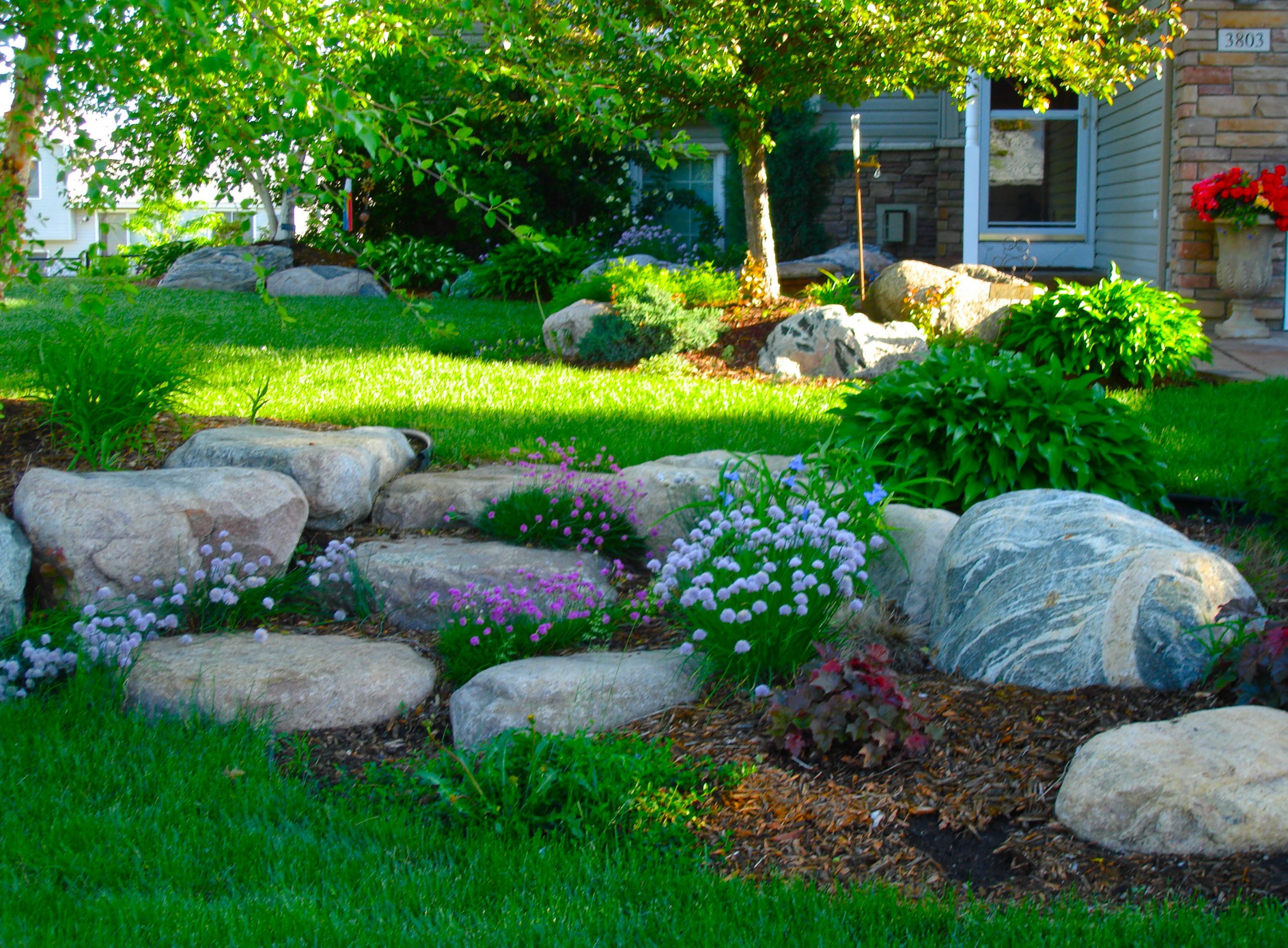
Boulder landscaping ideas turn plain yards into natural, low-maintenance showpieces with instant character.
If you want a yard that looks timeless and unique, you are in the right place. I have planned and built dozens of outdoor spaces that use boulders for structure, shade, and style. This guide shares the best Boulder landscaping ideas with clear steps, pro tips, and mistakes to avoid, so you can shape a yard you love.
What Are Boulder Landscaping Ideas?
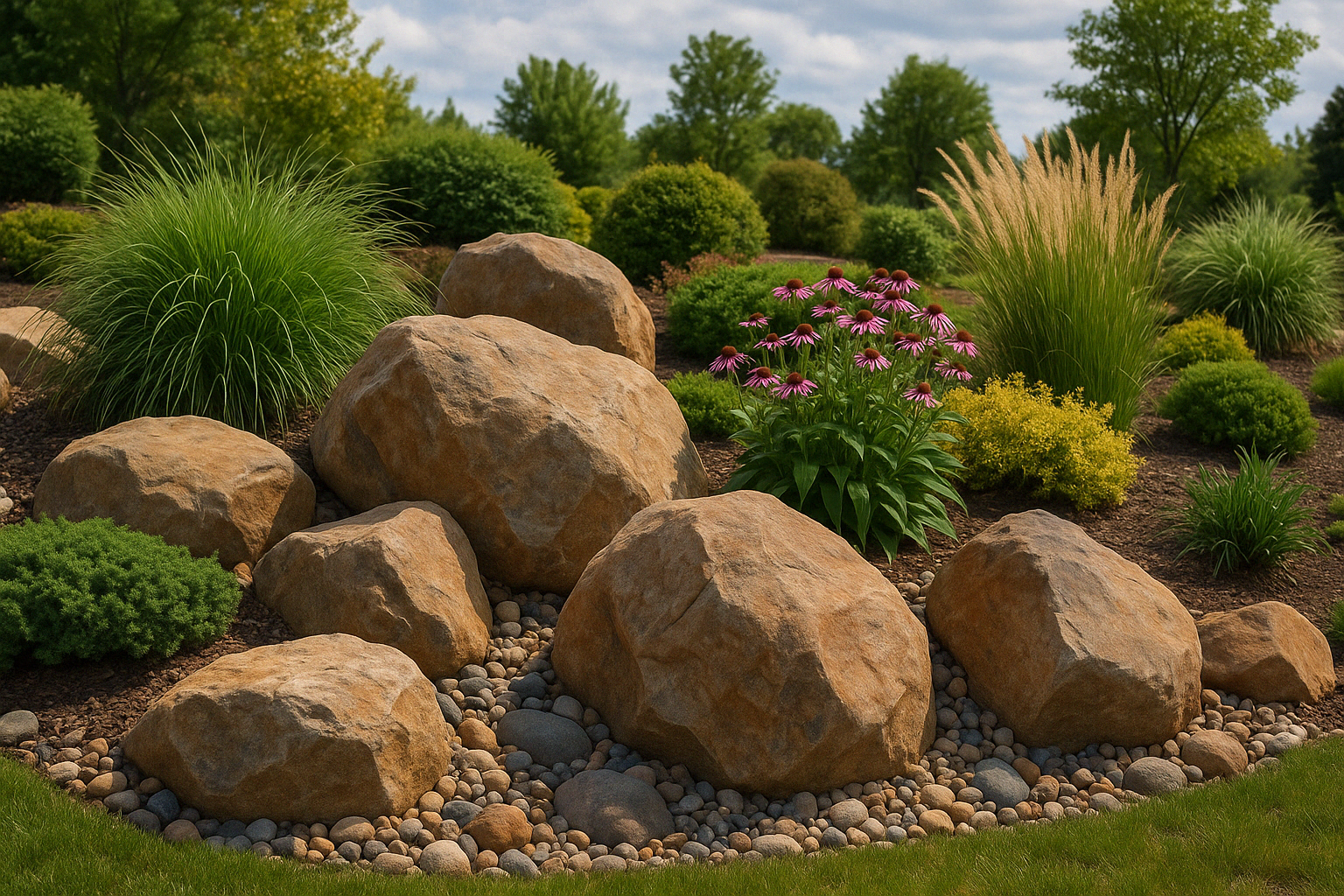
Boulder landscaping ideas use large, natural stones to anchor a space. They add height, texture, and a strong focal point. They also help with erosion, drainage, and plant health.
Boulders differ from river rock and gravel. They are heavy, often one to several feet wide. When you set them right, they look like they were always there. That is the magic of good design.
Great boulder work follows simple rules. Match the scale of the stone to the house. Sink each boulder into the soil to look natural. Group stones like a small outcrop, not like lone soldiers in a line.
Plan Before You Place a Single Stone
Strong Boulder landscaping ideas start with a site check. Walk the yard after rain. Note where water pools and where soil washes away. Look at sun and wind. Check views from the street and the window you use most.
Do a simple sketch. Mark slopes, trees, and paths. Decide where you want a focal point. Big stones draw the eye, so choose their spots first.
Think about function. Do you need seating, steps, or a barrier? Boulders can do all three. They can also edge beds, hold soil, and guide flow to a drain or rain garden.

Source: rocklandsupplies.com
Choose the Right Type of Boulder
The right stone looks like it belongs. Pick rock that matches local geology when you can. That trick makes Boulder landscaping ideas feel real and rooted.
Common choices:
- Granite boulders are hard and speckled. They fit modern and mountain styles.
- Sandstone has warm tone and layers. It suits desert and rustic scenes.
- Limestone is light and blocky. It works for cottage looks and clean lines.
- Basalt is dark and dense. It adds drama and pairs well with grasses.
Look at shape and face. Weathered stones have moss, pits, and soft edges. Split stones have fresh lines. Use a mix, but keep color and texture in the same family.
Ask about ethical sourcing. Local stone cuts shipping and blends better. Expect costs by the ton. Many yards sell by piece if you need only a few anchors.
Design Principles That Make Boulders Shine
Boulder landscaping ideas work best with a few clear rules:
- Use the 60-30-10 rule. One large anchor, one mid stone, and one small finisher.
- Bury the base. Set one third below grade so it looks like nature put it there.
- Show the best face. Tip and turn to reveal grain, color, and ledges.
- Keep space to breathe. Plants need air and room. Do not crowd every edge.
- Repeat forms. Echo a slope or a roof line with your stone angles.
On a steep corner lot, I once staged three granite boulders to echo the ridge line of the home. We sank them deep and aligned the grain with the slope. Neighbors asked if we found them under the house. That is the goal.

Source: kurtzbroslandscapesupply.com
25 Boulder Landscaping Ideas
1. Front Yard Curb Appeal
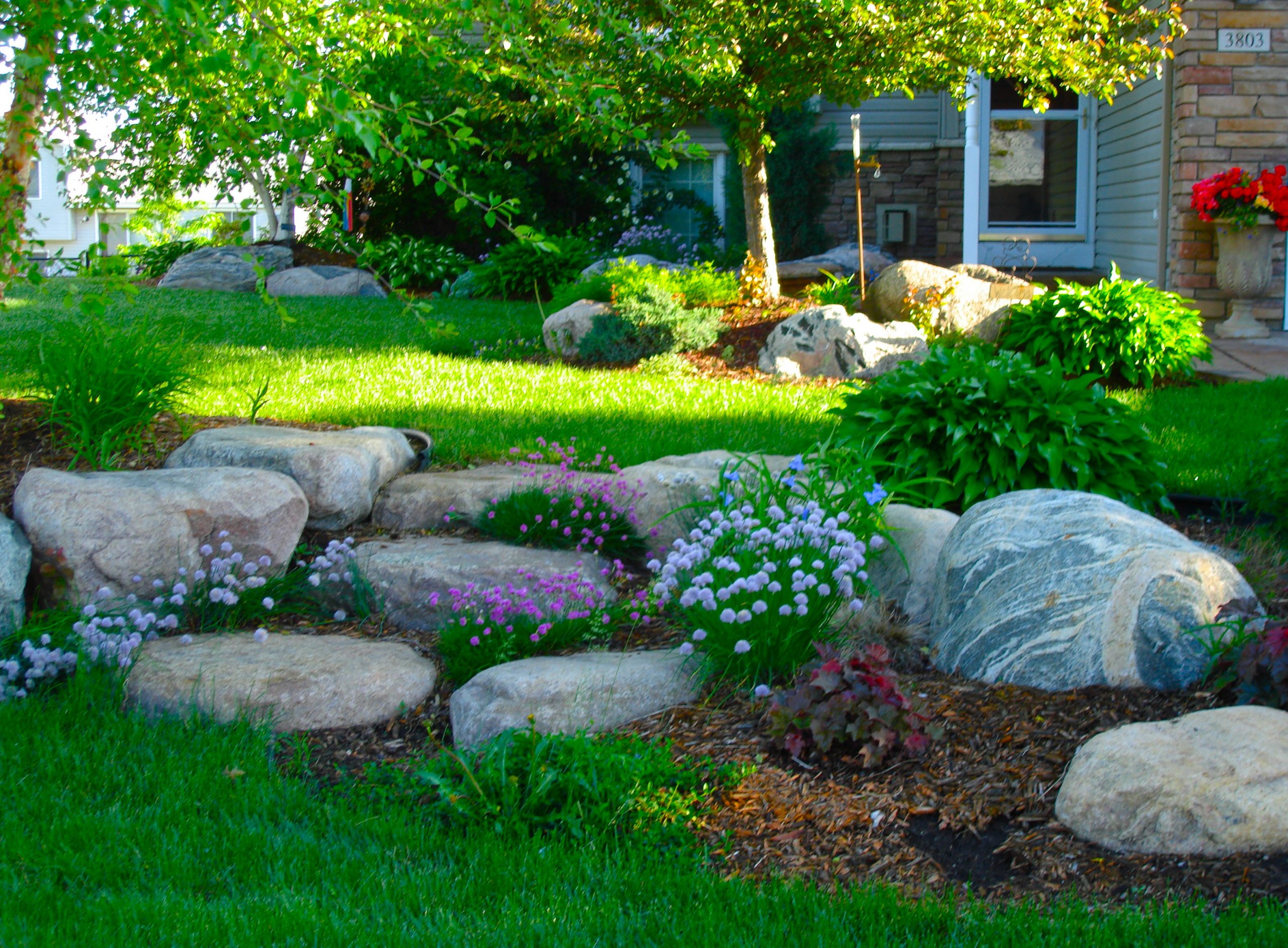
Place one large boulder near your front door or driveway to create a natural focal point. Add evergreen shrubs, colorful flowers, or low-growing plants around it. This softens the edges and makes the stone look like it belongs there. Bury part of the boulder for a more natural finish.
2. Sloped Yard Erosion Control
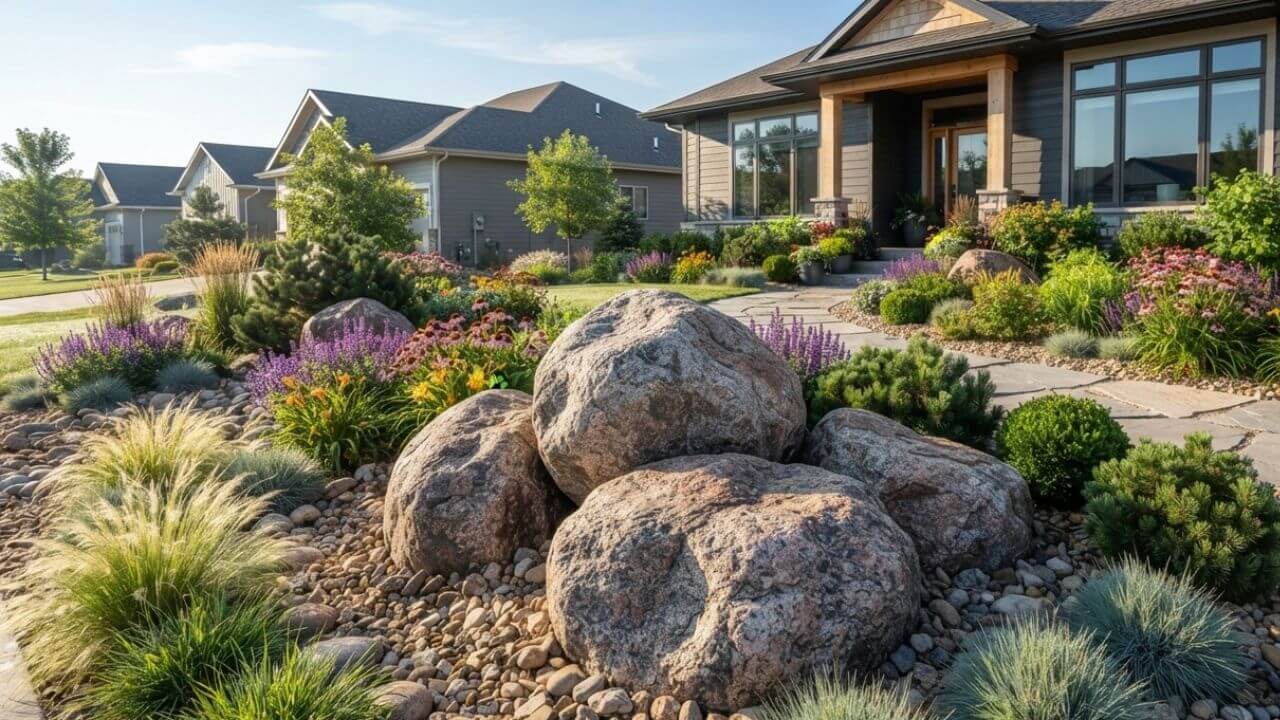
Large boulders help hold soil in place on sloped yards. Arrange them in small groups to slow rainwater and reduce erosion. Fill the gaps with creeping juniper, sedum, or other groundcovers. This creates a beautiful hillside that needs very little care.
3. Dry Creek Bed
A dry creek bed adds beauty while improving drainage. Line a shallow channel with river rock and place large boulders around the curves. Add native plants or ornamental grasses along the edges. The finished design looks natural and works well all year.
4. Zen and Modern Landscape
Keep the design simple for a modern look. Use large boulders, decorative gravel, and a few carefully chosen plants. Leave open space between the rocks to create a calm and balanced landscape that is easy to maintain.
5. Cottage or Pollinator Garden
Natural boulders fit perfectly in a cottage-style garden. Plant lavender, coneflowers, salvia, or daisies around the rocks. Let creeping thyme or sedum spread between the stones. This creates a colorful garden that attracts bees and butterflies.
6. Xeriscape and Low-Water Landscape
Save water with a xeriscape design. Combine granite boulders with gravel mulch and drought-tolerant plants like agave, yucca, and blue fescue. This landscape stays attractive throughout the year while needing much less water than a lawn.
7. Kid- and Pet-Friendly Boulder Design
Choose smooth, rounded boulders that are safe for children and pets. They can also be used as natural seats or stepping stones. Leave open space for play and add mulch around the rocks for a softer landing surface.
8. Boulder Garden Border
Use medium-sized boulders instead of brick edging to outline flower beds or shrubs. Space the rocks unevenly for a more natural look. Finish the border with mulch or low-growing plants to tie everything together.
9. Boulder Pathway
Line a gravel or stepping-stone path with large boulders to give it more character. Mix different stone sizes for a natural appearance. Add flowers or ornamental grasses along the sides to make the walkway more inviting.
10. Boulder Rock Garden
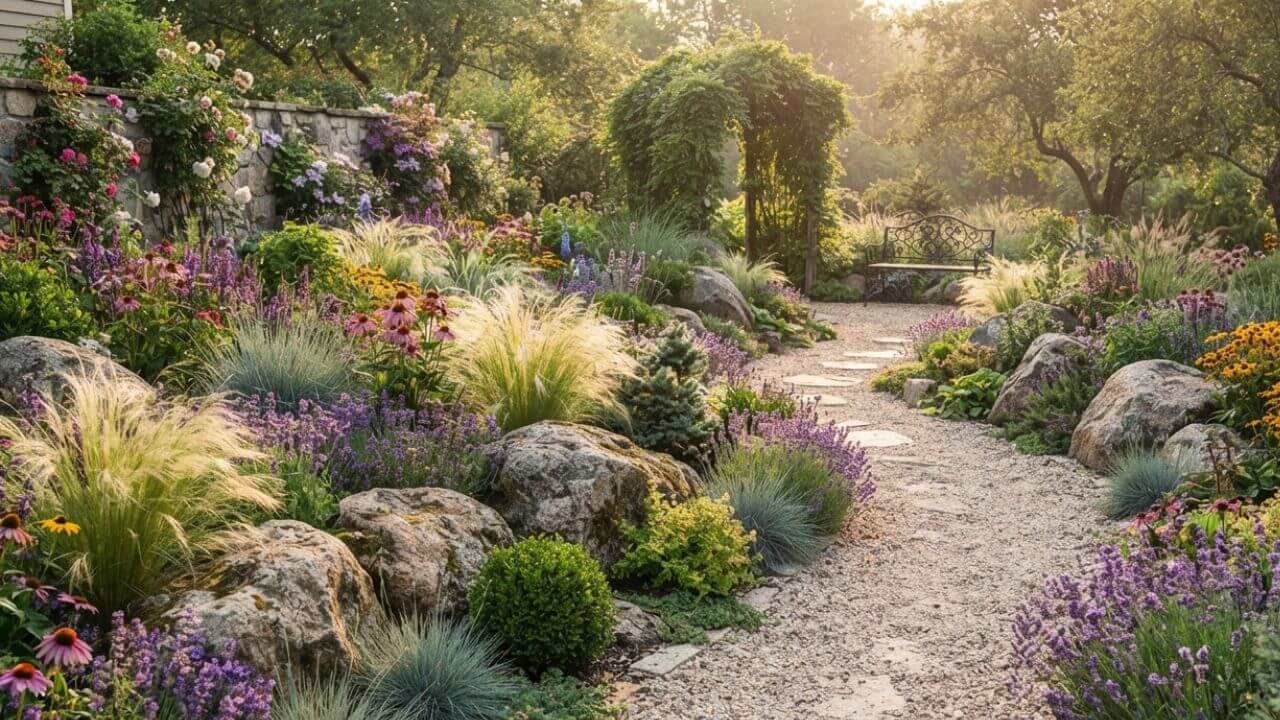
A boulder rock garden is beautiful and easy to maintain. Combine large boulders with decorative gravel, smaller rocks, and drought-tolerant plants. Group the stones in odd numbers to create a landscape that looks naturally formed.
11. Boulder Water Feature
Build a small waterfall, fountain, or pondless stream with natural boulders. Arrange the rocks so the water flows smoothly over them. Add ferns or other moisture-loving plants nearby to create a peaceful backyard retreat.
12. Boulder Retaining Wall
Replace a plain retaining wall with stacked landscape boulders. The rocks help prevent erosion while adding natural texture to your yard. Plant groundcovers between the stones to soften the look and add extra color.
13. Boulder Around Trees
Highlight mature trees with a few large boulders around the base. Cover the soil with mulch and add shade-loving plants like hostas or ferns. This simple design makes the tree stand out while reducing the area you need to mow.
14. Boulder Flower Bed
Add one or two large boulders to your flower bed for a natural focal point. Surround them with colorful flowers like coneflowers, daylilies, black-eyed Susans, or salvia. The contrast between flowers and stone creates a beautiful display.
15. Boulder Succulent Garden
Create a drought-friendly garden with large boulders and succulents like agave, aloe, echeveria, and sedum. Finish the space with decorative gravel to reduce weeds and keep maintenance low.
16. Modern Front Yard Boulder Design
Use one oversized boulder as the main feature in a modern front yard. Pair it with black gravel, neatly trimmed shrubs, and simple greenery. Keeping the design clean makes the space look stylish and uncluttered.
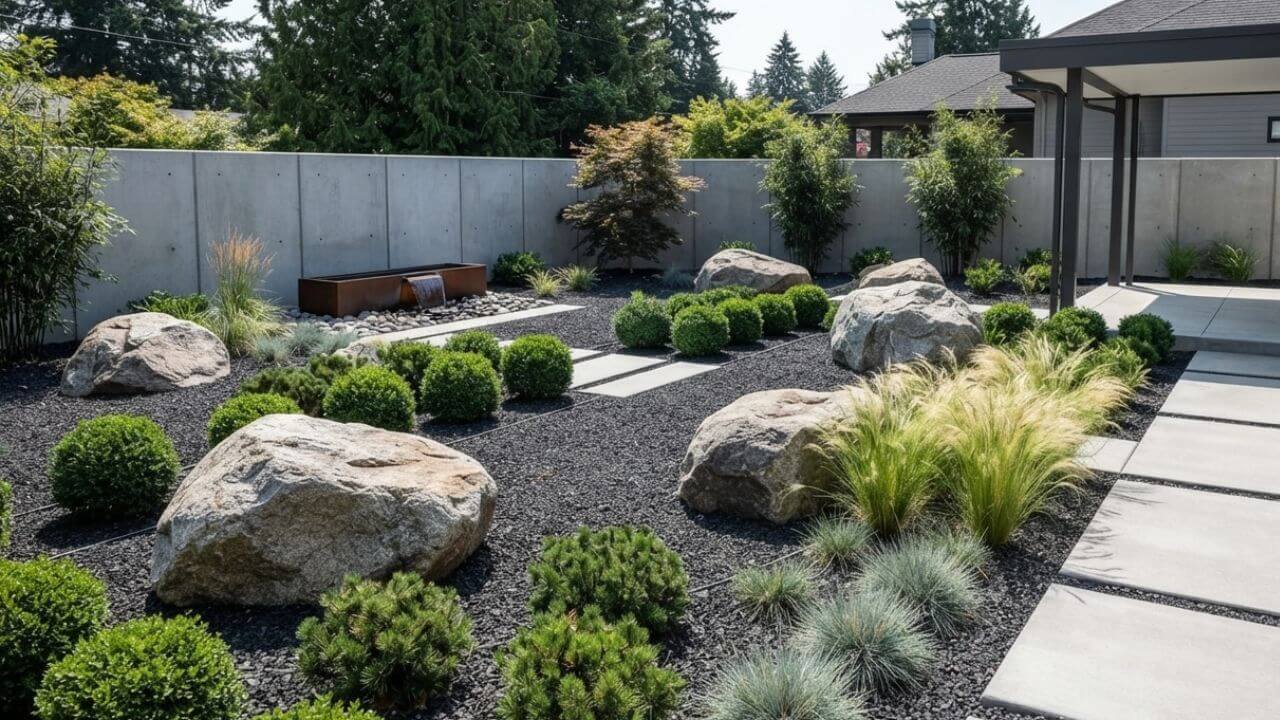
17. Backyard Boulder Seating Area
Turn large flat boulders into natural outdoor seating. Place them near a patio, garden, or fire feature and surround the area with flowering shrubs or ornamental grasses. It’s an easy way to create a relaxing backyard space.
18. Boulder Hillside Landscape
Make a steep hillside more attractive with grouped landscape boulders. Plant ornamental grasses and deep-rooted groundcovers between the rocks to help control erosion while adding color and texture.
19. Boulder Entry Feature
Place a statement boulder beside your front walkway or driveway to welcome visitors. Add decorative gravel, small shrubs, or landscape lighting around it to make the entrance stand out day and night.
20. Boulder Privacy Garden
Use large boulders with evergreen shrubs and tall ornamental grasses to create a private garden. This layered design blocks unwanted views while giving your backyard a peaceful and natural feel.
21. Boulder and Gravel Landscape
Replace part of your lawn with decorative gravel and natural boulders. Add a few drought-tolerant plants for color. This combination creates a clean, modern yard that needs very little maintenance.
22. Boulder Rain Garden
Build a rain garden with large boulders to improve drainage naturally. Plant moisture-loving native flowers around the rocks to attract pollinators while helping collect rainwater after storms.
23. Boulder and Ornamental Grass Display
Pair large boulders with ornamental grasses such as fountain grass or little bluestem. The soft movement of the grasses balances the strong shape of the rocks and adds interest in every season.
24. Boulder Lighting Design
Install warm LED lights around your landscape boulders to highlight their texture after dark. Soft lighting creates a cozy atmosphere and makes your landscape look beautiful at night.
25. Natural Woodland Boulder Garden
Create a woodland-style garden with weathered boulders, native trees, ferns, and wildflowers. Finish the area with bark mulch to hold moisture and give the landscape a natural, established look.
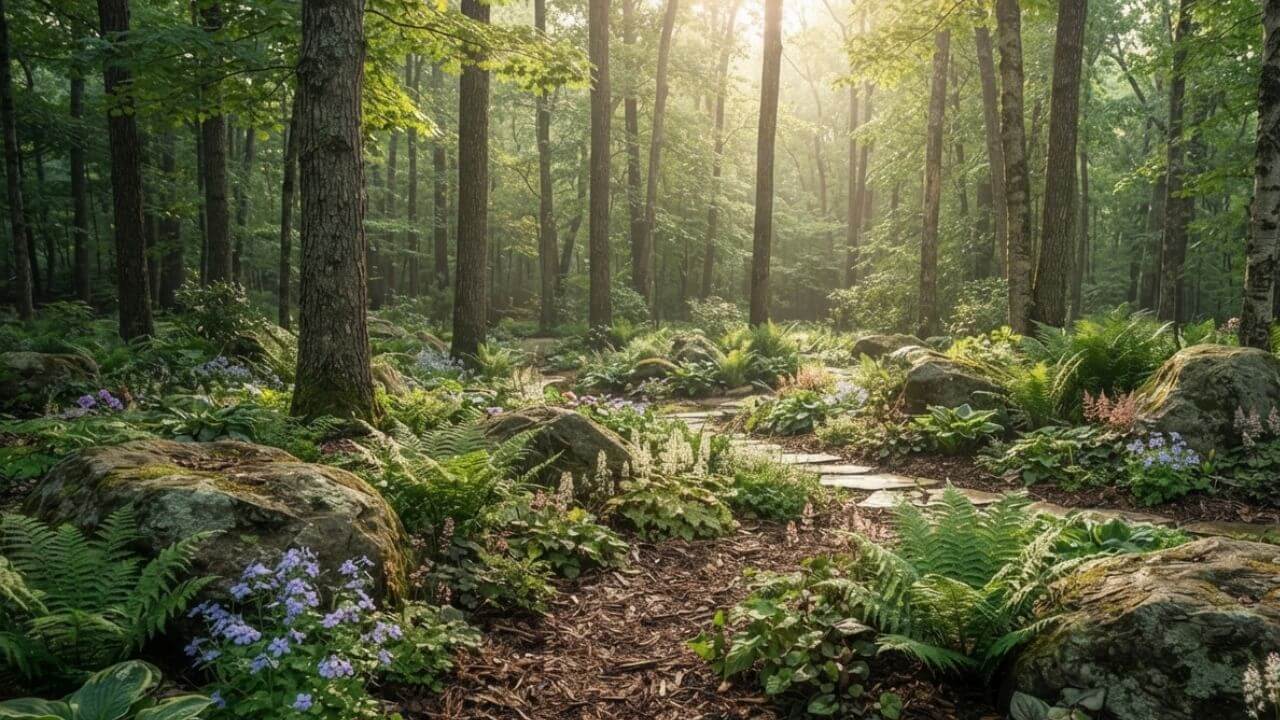
These boulder landscaping ideas work well in front yards, backyards, slopes, and small gardens. Mix different boulder sizes and choose plants that grow well in your area. Keep the layout natural instead of perfectly straight. The result is a beautiful, low-maintenance landscape you can enjoy for years.
How to Install Boulders Step by Step
Tools and prep
- Mark utilities before you dig. Call your local locate service.
- Gather a digging bar, shovel, tamp, and sliding boards. Rent a skid steer for heavy stones.
Base and bedding
- Excavate a hole one third the height of the stone. Widen the base a bit.
- Add 3 to 4 inches of compacted crushed gravel. This helps drainage and stops settling.
Set and lock
- Tip the boulder in, best face showing. Check angles from key views.
- Backfill with gravel and soil. Tamp as you go. Water to settle.
Finish
- Blend grade to the stone with soil and mulch. Hide the dig line.
- Step back and adjust tilt if needed.
Pro tip from the field: Stage stones on the ground first. Live with the layout for a day. Tiny turns make a big change in feel.
Source: boulderimages.com
Plant Pairings That Make Stones Pop
Plants bring life to Boulder landscaping ideas. Choose forms that play off the rock.
Great companions
- Creeping thyme, sedum, and ice plant for sunny, dry edges.
- Blue fescue, little bluestem, and feather reed grass for motion.
- Lavender, sage, and rosemary for scent and pollinators.
- Ferns, hosta, and heuchera for shade pockets.
- Native prickly pear, penstemon, and yucca for arid zones.
Layer plants like this:
- Tall near the back or uphill side.
- Mid at the sides to frame.
- Low at the front to show the stone face.
Water deep and rare. Rocks hold heat. That helps roots grow strong.
Water and Fire Features With Boulders
Boulder landscaping ideas shine with simple features.
Pondless waterfall
- Use a pump set to at least 100 gallons per hour per inch of spillway.
- Hide the basin under river rock. Place boulders to steer flow and stop splash.
Boulder fountain
- Core-drilled stones make easy, calm bubblers. Add a recirculating kit.
- Aim for gentle sound you can talk over.
Fire ring or fire boulder
- Use fire-rated stones and a metal insert. Keep clearance from plants.
- Check local rules and wind patterns. Safety first.
Tip: Warm light and moving water make small yards feel big. Use one strong feature, not three small ones.
Lighting and Finishing Touches
Light turns Boulder landscaping ideas into night art. Use warm LEDs between 2700K and 3000K. Aim lights across the face, not right at it. That shows texture.
Simple add-ons boost polish.
- Gravel mulch ties it all together and drains well.
- A few flat cap stones make casual seats.
- A low path invites guests to explore.
Less is more. One or two lit stones beat a runway of lights.
Maintenance and Long-Term Care
Good Boulder landscaping ideas stay low-care. Pull weeds early. A thin layer of fresh gravel or mulch each spring makes it look new.
Check for frost heave after hard winters. If a stone tilts, pry, add gravel, and reset. Brush algae from water features with a soft brush. Rinse with clean water, not harsh chemicals.
Trim plants so they do not swallow the rock. Show the face you chose on day one.
Budget, Cost, and Smart Savings
Costs vary by size, type, and access. Stone can run by the ton, plus delivery. Moving heavy stones may need a machine and crew.
Save money with these moves:
- Use one or two hero stones, then fill with mid-size rock.
- Buy local stone to cut freight.
- Do the layout and plant work yourself. Hire pros only for the heavy set.
Boulder landscaping ideas can raise curb appeal. One well-placed outcrop can lift a front yard like a new door or paint.
Safety, Permits, and HOA Basics
Large stones are heavy. Plan a safe path for machines. Lay plywood to protect lawn and roots. Wear gloves, boots, and eye gear.
Check rules for front yard features, walls, or fire pits. Some towns need a permit for tall stacks or gas lines. If you dig, call to mark utilities first. It is the law in many areas.
Common Mistakes to Avoid and Pro Tips
Avoid these traps in Boulder landscaping ideas:
- Setting stones on soil without a compacted base.
- Placing a lone boulder that looks random.
- Using too many types of rock in one view.
- Forgetting sight lines from inside the home.
Pro tips that pay off:
- Stage with smaller rocks first. Add the big anchor last.
- Use geotextile under gravel to slow weeds but let water pass.
- Repeat plant textures in twos and threes for calm rhythm.
- Photograph each layout. The camera shows clutter the eye misses.
I once fixed a yard that used six rock types. We kept two, sold the rest, and the whole space felt calm and high-end.
Eco-Friendly and Wildlife Wins
Boulder landscaping ideas can boost local habitat. Stones store heat for early pollinators. They give lizards and bees safe hideouts. Gaps between rocks help water soak in.
Do this for a greener yard:
- Use native plants and mulch that fits your climate.
- Direct downspouts to a boulder-edged rain garden.
- Avoid harsh cleaners. Spot treat weeds by hand near water.
Small changes add up. Your yard can be beautiful and kind to nature.
Frequently Asked Questions of Boulder Landscaping Ideas
How big should my boulders be for a front yard?
Pick at least one stone 2 to 3 feet wide for impact. Add one mid and one small stone to balance scale.
Do I need a base under each boulder?
Yes. A compacted gravel base stops settling and keeps the stone stable. It also drains water away.
Can I move boulders without heavy equipment?
Small boulders can slide on plywood with bars and straps. Large stones need a skid steer or a pro crew for safety.
What plants work best with boulders in hot, dry areas?
Choose drought-tough plants like yucca, agave, lavender, and blue fescue. Add creeping thyme and sedum to fill gaps.
Will boulders damage my sprinkler system?
They can if you do not map lines first. Mark utilities and irrigation, then plan safe routes and clearances.
How many boulders should I use in a small yard?
Use one hero stone and one or two support stones. Keep space between them so the design can breathe.
Are boulder water features high maintenance?
Pondless designs are low-care with simple pump checks. Clean debris and top off water as needed.
Conclusion
Boulder landscaping ideas bring instant structure, better drainage, and a timeless, natural feel. Start with a plan, pick local stone, and set each boulder deep with care. Keep the design simple, repeat forms, and let plants frame the rock, not hide it.
You can do this in a weekend for a small area. Choose one idea from this guide, sketch it, and set your first stone. Ready for more tips and real-world builds? Subscribe, share your before-and-after, or ask a question in the comments.
Last Updated on July 20, 2026 by Saad Abdullah

I enjoy sharing simple gardening ideas, lawn care tips, and honest product reviews that help make outdoor work easier. From home gardening guides to helpful tools and lawn care advice, I write easy-to-follow content to help readers create a healthier and better-looking outdoor space without wasting time or money.