
As an Amazon Associate, I earn from qualifying purchases.
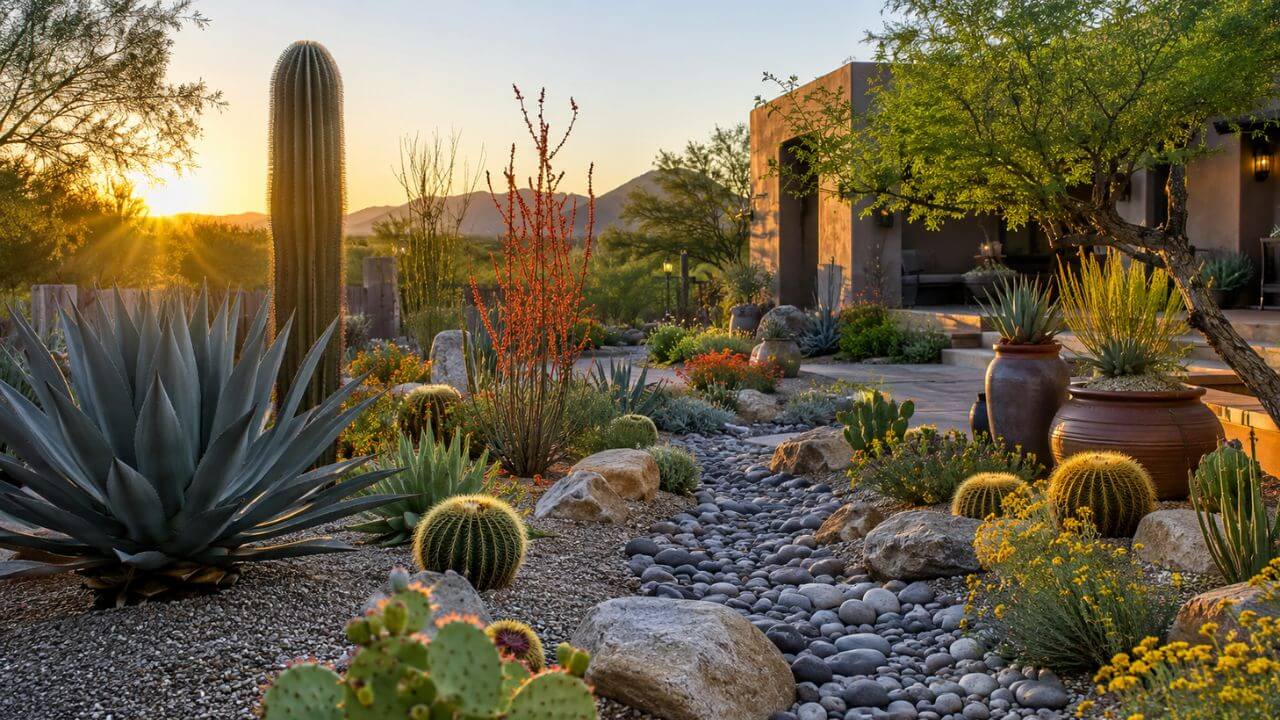
I used to think desert landscaping meant nothing more than rocks, gravel, and a few scattered cactus plants. It felt dull and uninspiring until I visited several beautifully designed dry gardens and realized I had misunderstood desert landscaping entirely.
The best Desert Landscaping Ideas are modern, colourful, relaxing, and surprisingly lush, without requiring constant watering or weekend maintenance. After experimenting with drought-friendly plants and hardscaping in my own projects, I discovered that desert landscapes can become some of the most beautiful and practical outdoor spaces you can create.
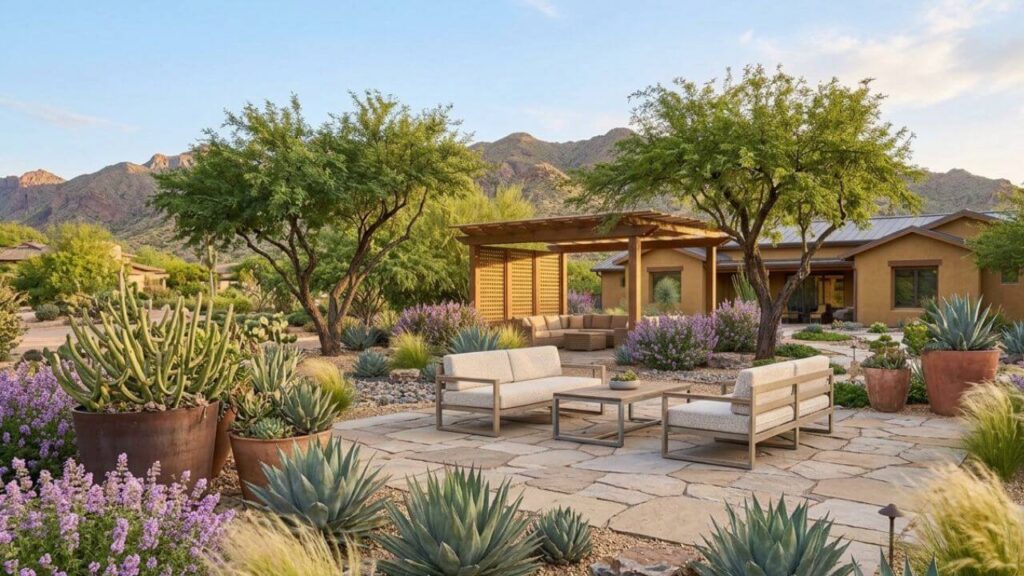
What Makes a Desert Landscape Work?
Good desert landscaping focuses on efficiency.
Every plant, stone, and feature serves a purpose.
The goal is not to remove plants. The goal is to use the right plants in the right places.
| Element | Purpose |
| Gravel mulch | Reduces evaporation |
| Native plants | Lower water use |
| Stone pathways | Add structure |
| Succulents | Provide texture |
| Shade trees | Cool outdoor spaces |
The result feels clean, natural, and easy to maintain.
Start With Drought-Tolerant Plants
The biggest mistake I made early on was trying to force thirsty plants into dry conditions. They survived, but they never thrived.
Native and drought-tolerant plants performed far better with less effort.
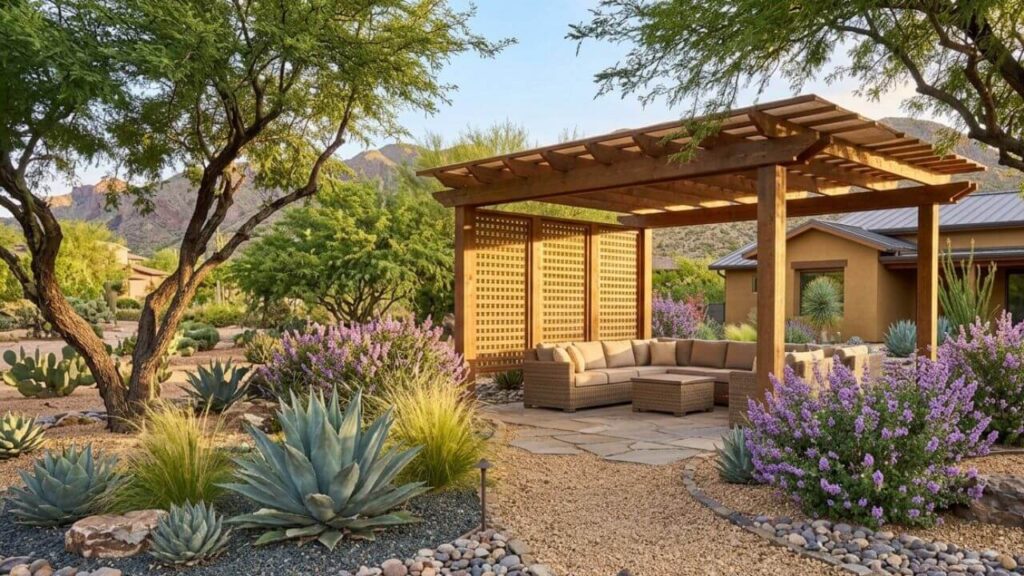
Some excellent choices include:
- Agave
- Red Yucca
- Lavender
- Desert Marigold
- Russian Sage
- Texas Ranger
- Salvia
- Aloe
| Plant | Best Feature |
| Agave | Architectural shape |
| Red Yucca | Long bloom season |
| Lavender | Fragrance and color |
| Texas Ranger | Handles extreme heat |
These plants continue looking good even during long dry periods.
Gravel Is Your Best Friend
Many homeowners see gravel as a replacement for plants.
I learned that gravel works best as a partner to plants.
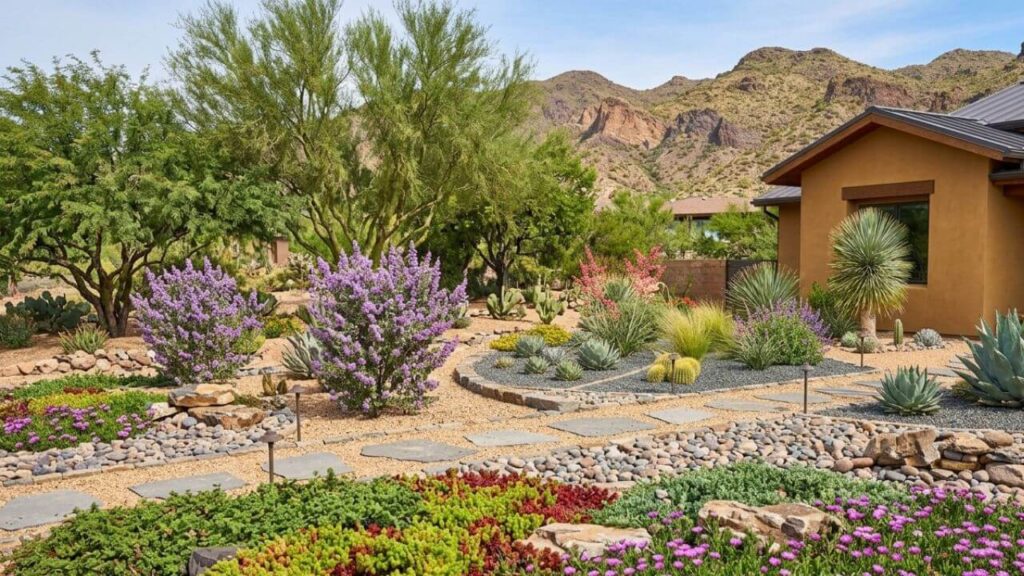
Decorative gravel helps retain moisture, suppress weeds, and create contrast around foliage.
Popular options include:
- Crushed granite
- River rock
- Pea gravel
- Lava rock
Different textures create visual interest without increasing maintenance.
Use Layers Instead of Empty Spaces
One common mistake in desert yards is leaving huge open areas.
That can make the landscape feel unfinished.
Layering plants creates depth and makes the yard feel intentional.
| Layer | Example Plants |
| Tall | Palo Verde, Mesquite |
| Medium | Yucca, Texas Sage |
| Low | Sedum, Ice Plant |
This approach keeps the space open while adding visual balance.
Desert Landscaping Ideas With Succulents
Succulents became one of my favorite landscaping plants because they offer so much variety. Some look architectural. Others provide color.
Many create shapes that flowers cannot match.
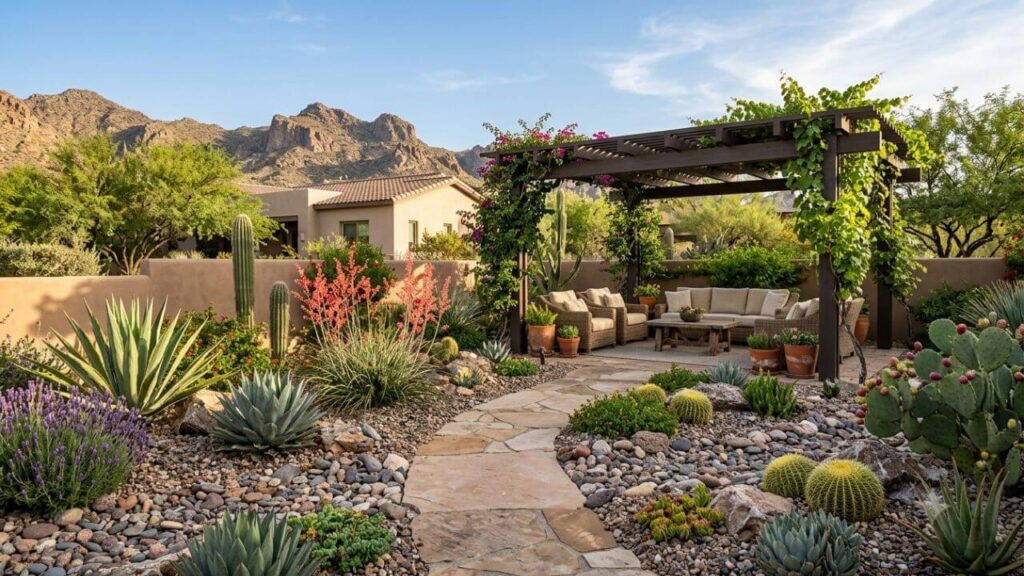
Excellent options include:
- Echeveria
- Hens and Chicks
- Aloe
- Sedum
- Agave
- Jade Plant
Group similar succulents together for a stronger visual impact.
Add Shade Wherever Possible
Shade transforms desert landscapes.
A shaded seating area can feel ten degrees cooler than nearby sunny spots.
Good choices include:
- Pergolas
- Shade sails
- Desert trees
- Covered patios
| Shade Option | Main Benefit |
| Pergola | Outdoor living space |
| Mesquite Tree | Natural cooling |
| Shade Sail | Affordable solution |
Comfort matters as much as appearance.
Natural Stone Creates Character
Stone belongs naturally in desert landscapes.
It looks timeless and requires almost no maintenance.
Consider using stone for:
- Pathways
- Borders
- Retaining walls
- Seating areas
- Dry creek beds
A dry creek bed can become a focal point even when it never carries water.
Desert Landscaping Ideas for Small Backyards
Small yards benefit greatly from desert designs.
Lower maintenance becomes even more valuable in limited spaces.
Some ideas that work especially well include:
- Vertical succulents
- Container agaves
- Decorative boulders
- Compact gravel patios
- Raised beds
Too many plants make small spaces feel crowded.
A few statement plants create stronger results.
Native Plants Save Time and Money
The longer I garden, the more I appreciate native plants.
They understand the local climate better than imported species ever will.
| Benefit | Why It Matters |
| Less water | Lower bills |
| Fewer pests | Less maintenance |
| Better survival | Healthier plants |
Native landscaping works with nature instead of against it.
Drip Irrigation Makes a Huge Difference
Traditional sprinklers waste a surprising amount of water.
Drip irrigation delivers water directly to the roots.
The results are impressive.
Benefits include:
- Lower water use
- Healthier plants
- Fewer weeds
- Reduced evaporation
The installation cost usually pays for itself over time.
Desert Landscaping Ideas Around Patios
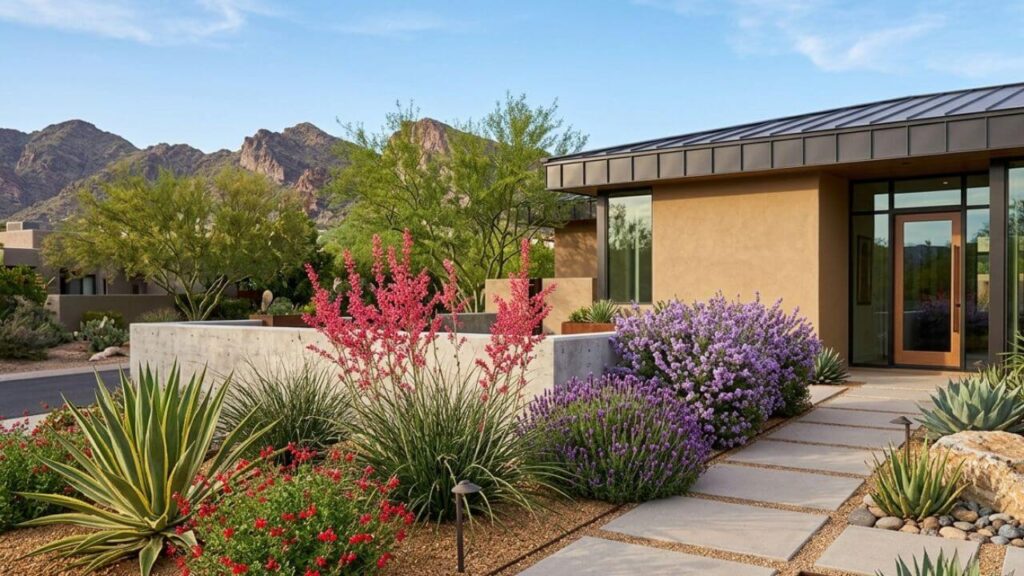
Patios become much more inviting when surrounded by drought-friendly plants.
My favorite combinations include:
- Agave near corners
- Lavender near seating areas
- Decorative grasses for movement
- Large containers with succulents
The result feels modern and relaxing.
Mistakes I Would Avoid Next Time
Every landscape project teaches lessons.
These were mine.
| Mistake | Better Approach |
| Overplanting | Give plants room |
| Using thirsty plants | Choose natives |
| Ignoring shade | Create cool zones |
| Skipping mulch | Protect the soil |
| Using only rocks | Add texture with plants |
The biggest surprise was learning that desert gardens need balance.
Too many plants feel crowded.
Too few feel empty.
Step-by-Step Guide to Building a Desert Landscape
Step 1: Evaluate sun exposure
Know where the hottest areas exist.
Step 2: Improve drainage
Most desert plants hate wet roots.
Step 3: Install irrigation
Drip systems work best.
Step 4: Add hardscaping
Place pathways, stones, and seating first.
Step 5: Plant in layers
Start with trees and larger plants.
Step 6: Apply mulch
Gravel mulch reduces evaporation.
Step 7: Add lighting
Landscape lighting makes desert plants look incredible at night.
Tools and Materials You Will Need
Most projects require:
- Shovel
- Wheelbarrow
- Landscape fabric
- Gravel
- Drip irrigation supplies
- Pruners
- Mulch
Good planning saves more money than expensive tools.
Maintenance and Long-Term Care
Desert landscaping is low maintenance, not no maintenance.
Regular tasks include:
- Removing weeds
- Checking irrigation lines
- Pruning damaged branches
- Refreshing gravel when needed
Small jobs prevent larger problems later.
Frequently Asked Questions
What is the cheapest desert landscaping option?
Decorative gravel combined with native plants offers excellent value.
Which plants survive extreme heat best?
Agave, yucca, and Texas Sage perform exceptionally well.
Does desert landscaping increase home value?
Attractive low-maintenance landscaping can improve curb appeal and buyer interest.
Is desert landscaping only for Arizona or Nevada?
No. Many drought-friendly designs work across the United States.
How often should desert landscapes be watered?
Deep watering less frequently works better than shallow daily watering.
Is mulch important in desert gardens?
Yes. Mulch helps conserve moisture and suppress weeds.
Can I grow flowers in desert landscapes?
Absolutely. Many drought-tolerant flowers provide excellent color.
Conclusion
The biggest lesson I learned about desert landscaping was simple.
A dry garden does not need to feel empty.
With the right plants, textures, and materials, it can feel modern, welcoming, and full of life.
If I started over tomorrow, I would spend less money chasing exotic plants and more time choosing native species that naturally fit the environment.
Start with one gravel bed, one focal plant, and one shaded seating area.
You may discover that a desert landscape becomes the easiest yard you have ever maintained and one of the most beautiful too.

I enjoy sharing simple gardening ideas, lawn care tips, and honest product reviews that help make outdoor work easier. From home gardening guides to helpful tools and lawn care advice, I write easy-to-follow content to help readers create a healthier and better-looking outdoor space without wasting time or money.