
As an Amazon Associate, I earn from qualifying purchases.
Disc harrows handle big, rough fields; tillers make smooth, fine seedbeds fast.
If you are torn between Disc Harrow Vs Tiller, you are in the right place. I have run both on pastures, food plots, and market gardens. This guide breaks down Disc Harrow Vs Tiller with clear examples, facts, and field tips. You will learn when each tool wins, what to watch for, and how to get the best results without wasting time or fuel.

Disc Harrow Vs Tiller: What each tool does
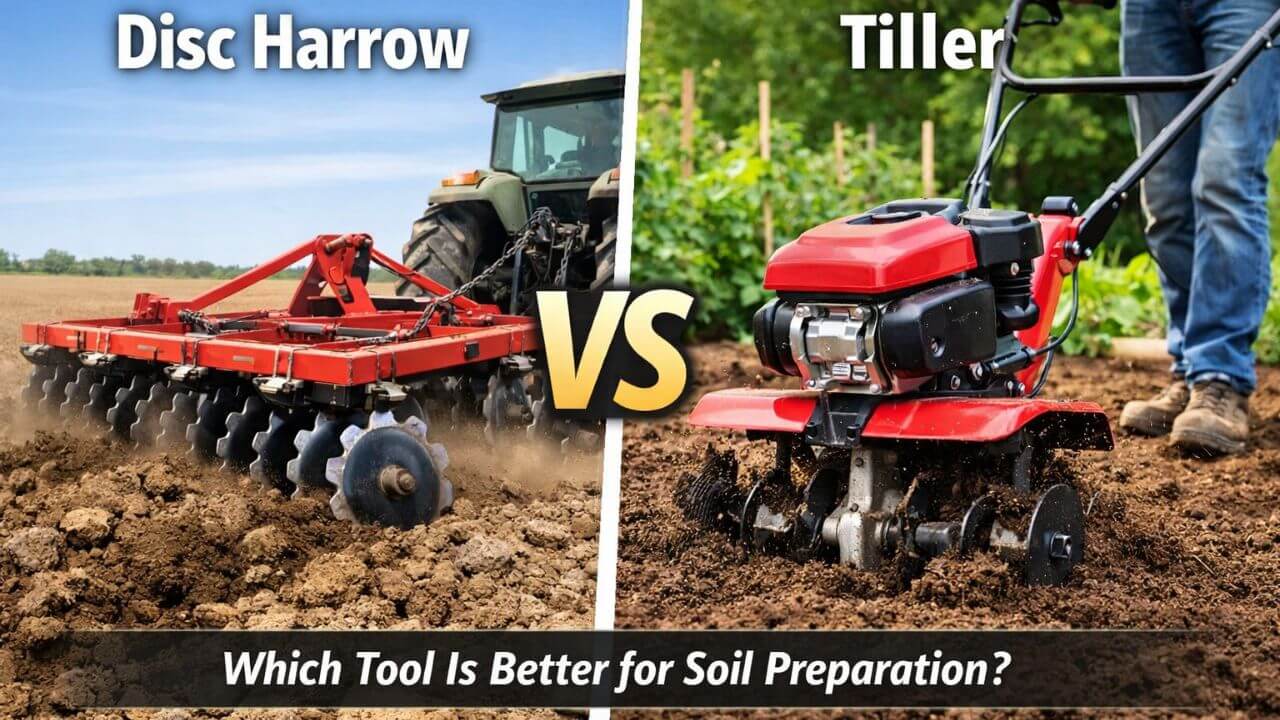
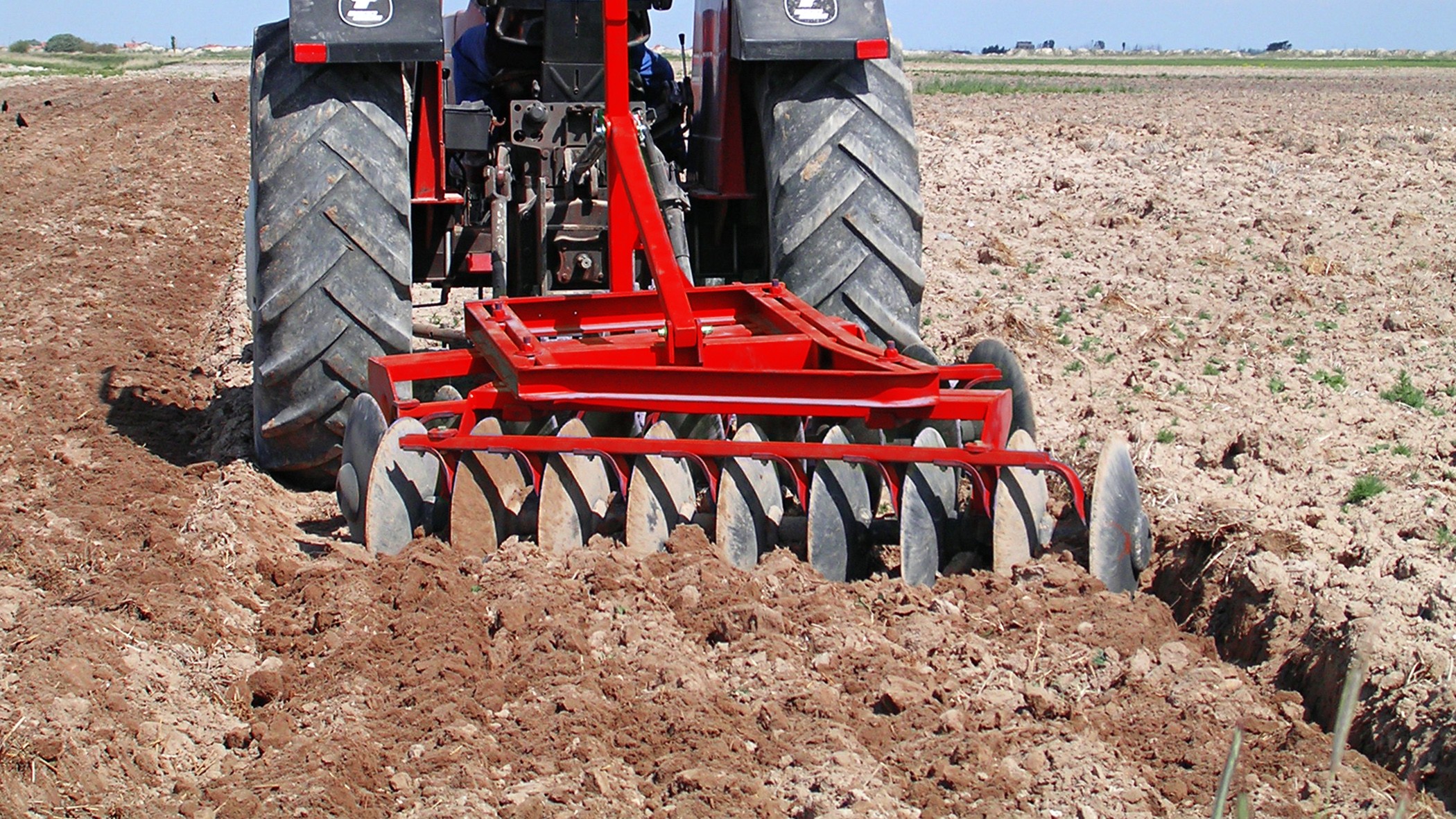
A disc harrow uses rows of concave steel discs. The discs slice, mix, and level soil. They chop residue and break clods. A disc harrow needs a tractor and covers ground fast.
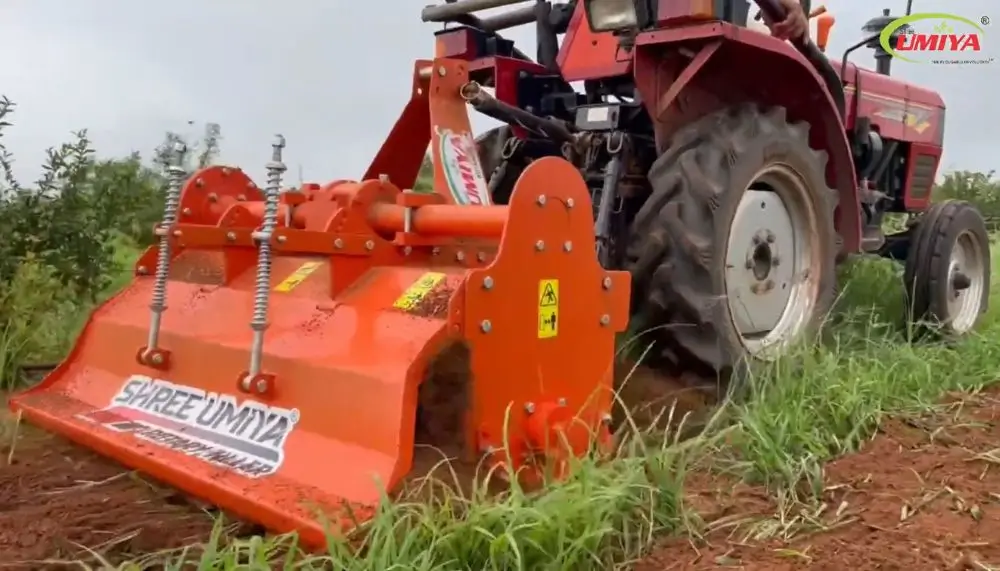
A tiller, also called a rotary tiller or rotavator, uses spinning tines powered by a PTO or an engine. The tines grind soil and leave a fine seedbed. Tillers are great for gardens and food plots. They are slow over large acres and do not like heavy residue.
In the Disc Harrow Vs Tiller decision, think about acres, residue, and finish quality. If you want speed and residue handling, the disc harrow wins. If you want a smooth top few inches, the tiller shines.
Disc Harrow Vs Tiller: Key differences that matter
- Field size. Disc harrow is best for large fields. Tiller fits small plots and beds.
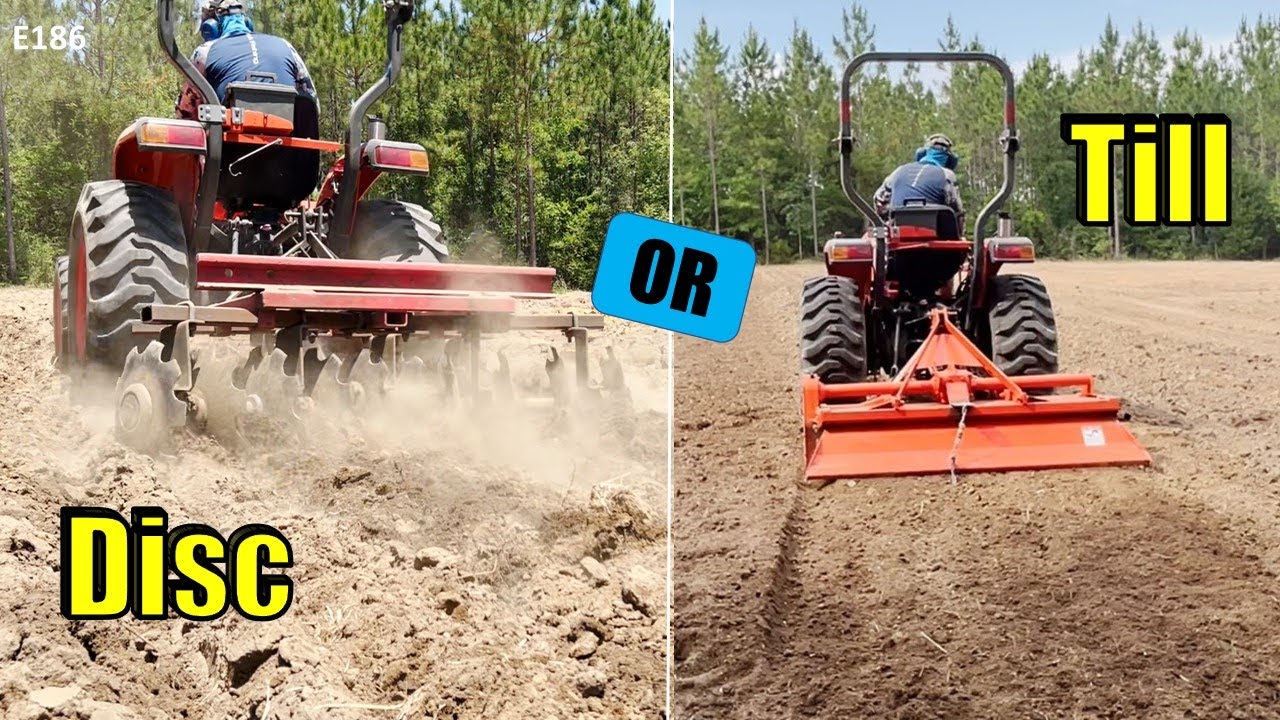
- Finish. Disc harrow leaves a medium to coarse seedbed. Tiller leaves a fine, fluffy finish.
- Residue. Disc harrow chops stalks and covers trash better. Tiller can wrap in vines and heavy straw.
- Speed. Disc harrow runs 4–8 mph. Tiller runs about 0.5–2 mph.
- Depth. Both often work 3–6 inches. Heavy discs can reach deeper than most small tillers.
- Power. Disc harrow needs drawbar power and weight. Tiller needs steady PTO power.
- Compaction risk. Repeated tilling at one depth can create a hardpan. Discs can also compact if run when wet.
- Cost per acre. Disc harrow is cheaper per acre on big ground. Tiller is cost effective for small plots.
- Versatility. Disc harrow handles sod, residue, and rough ground. Tiller is best for seedbeds and mixing compost.
Use these points as your quick map for Disc Harrow Vs Tiller.

When a disc harrow is the better choice
Pick a disc harrow when you need to cover acres and handle trash. It is ideal after mowing corn stalks or old hay. It breaks sod faster than a tiller. It also levels plowed ground in fewer passes.
From my own fields, one fall I had 12 acres of weedy rye. The disc harrow cut and mixed it in two passes. A tiller would have clogged and taken days. In Disc Harrow Vs Tiller on rough land, the disc harrow is the safe bet.
Tips for success:
- Add weight only as needed for bite. Too much weight smears wet soil.
- Angle gangs more for aggression. Straighten them to finish smooth.
- Make a cross pass to level ridges.
When a tiller is the better choice
Choose a tiller when you need a smooth seedbed fast. It shines for gardens, raised beds, and food plots. It mixes compost and fertilizer well. It also helps with shallow weed control.
On a ½ acre market garden, I used a 6‑foot PTO tiller each spring. One slow pass gave a fine bed for carrots and greens. In the Disc Harrow Vs Tiller match for tight spaces, the tiller wins by a mile.
Tips for success:
- Go slow for an even texture. Faster speed makes chunkier soil.
- Vary depth each season to avoid a tillage pan.
- Keep residue light or mow first to prevent wrapping.

Performance in real soil: depth, speed, residue, and moisture
Depth and finish:
- Disc harrow: common working depth is 3–6 inches. Heavy tandems can go deeper. It leaves a medium tilth.
- Tiller: common working depth is 4–6 inches. It leaves a fine tilth that suits small seed.
Speed and fuel:
- Disc harrow: higher ground speed and wide swath lower time per acre.
- Tiller: slow ground speed increases time and fuel on big fields.
Residue and rocks:
- Disc harrow handles stalks and light rocks better.
- Tiller struggles with long vines and large rocks.
Moisture rules:
- Work soil only when it crumbles in your hand.
- If it smears or balls up, wait. Wet tillage causes clods and compaction.
In short, Disc Harrow Vs Tiller is not only about tools. It is about soil, moisture, and timing.
Can a disc harrow replace a plow?
A disc harrow can break sod and work shallow to medium depth. It cannot bury very deep residue like a moldboard plow. For very heavy residue, plow first, then disc.
Will a tiller work in rocky soil?
A tiller can bounce and break tines in rocky fields. Go slow and remove larger rocks. In very rocky ground, a disc harrow is safer.
How wet is too wet to till or disc?
If a squeezed soil ball stays shiny and hard, it is too wet. Wait until it crumbles when pressed. This one habit saves your soil for years.
Costs, time per acre, and upkeep
Typical costs vary by width and duty:
- PTO tiller 5–7 feet: about $1,800–$4,500 new. Used units can be lower.
- Tandem disc 6–8 feet: about $2,000–$5,000 new. Larger farm discs can cost far more.
Time per acre:
- Disc harrow: fast. Several acres per hour, based on width and speed.
- Tiller: slow. Often under one acre per hour on small tractors.
Maintenance:
- Disc harrow: grease bearings, check blades, tighten gangs, watch hitch pins.
- Tiller: check and change gearbox oil, grease points, set slip clutch, replace worn tines, keep shields on.
In Disc Harrow Vs Tiller planning, factor not just price. Add fuel, time, parts, and storage.

Field-tested workflows and pass plans
New food plot with heavy grass:
- Mow low and let residue dry.
- Spray if needed and wait the label interval.
- Disc two passes at a light angle.
- Disc a cross pass to level.
- Tiller once for a fine top if small seed needs it.
- Plant and firm with a cultipacker.
Garden bed refresh in spring:
- Broadfork or shallow rip if compaction is suspected.
- Spread compost and fertilizer.
- Tiller one slow pass at 4–5 inches.
- Rake or pack lightly. Seed.
Cover crop termination:
- Roll or mow at flowering.
- Disc to mix residue.
- Plant a cash crop or till once for small seeds.
These steps blend the best of Disc Harrow Vs Tiller. Use only the passes you need.
Disc Harrow Vs Tiller: Buying checklist
- Acres to cover. Large acres favor a disc. Small plots favor a tiller.
- Tractor specs. Check PTO horsepower, weight, and tire ballast.
- Soil type. Clay needs patience and timing. Sand is easy but dries fast.
- Residue load. High residue points to a disc. Light residue is fine for a tiller.
- Desired finish. Fine seed needs a tiller or a final finishing pass.
- Budget and parts. Choose brands with easy parts and dealer support.
- Transport and storage. Measure gate widths and shed space.
- Safety. Keep shields, slip clutches, and guards in place.
- Long-term soil health. Rotate depths and leave some residue to protect soil.
Use this list to make the Disc Harrow Vs Tiller choice with confidence.
Frequently Asked Questions of Disc Harrow Vs Tiller
Which is better for breaking new ground, disc harrow or tiller?
A disc harrow is better for breaking new ground with grass or stalks. It cuts and mixes without clogging, then you can till for a fine finish if needed.
Can I prepare a seedbed using only a disc harrow?
Yes, for many crops a disc harrow alone is enough. Make cross passes and finish with a packer to firm the surface for small seeds.
Do tillers cause hardpan?
They can if you till at the same depth every year. Vary your depth and add deep loosening as needed to avoid a compact layer.
What size tractor do I need for a 6‑foot tiller?
Many 6‑foot tillers need about 30–50 PTO horsepower. Check the exact model specs and your soil conditions.
Is a tiller good for cover crop termination?
It works for light residue and small stands. Heavy, fibrous covers are easier to manage with a mower or disc first.
Will a disc harrow work in wet clay?
It will move soil but can smear and cause ruts. Wait until the soil crumbles in hand before any pass.
How deep should I till for vegetables?
Four to six inches is common for most beds. Go shallower for no-till transplants and deeper only when needed.
Conclusion
Disc Harrow Vs Tiller comes down to acres, residue, and the finish you want. Use a disc harrow for speed, trash handling, and field leveling. Use a tiller when a fine seedbed matters most, and residue is light. Work only when soil crumbles, and vary depth to protect structure.
Pick one tool to start, then add the other as your needs grow. Walk your field, note moisture and residue, and choose the pass that fits today. Ready to dig deeper? Share your field setup in the comments, or subscribe for more practical soil and equipment guides.