As an Amazon Associate, I earn from qualifying purchases.
Landscaping a front yard in the United States typically costs about $1,500 to $5,000 for a straightforward professional makeover, while a larger renovation with extensive planting, new walkways, grading, irrigation, or retaining walls can cost $6,000 to $15,000 or more. A small DIY refresh may cost a few hundred dollars to around $1,500, depending on materials and the work required.
For American homeowners, front yard landscaping is a practical way to improve curb appeal, make an entryway more inviting, and create an outdoor space that suits the home’s architecture. The cost can vary substantially between regions of the United States because contractor rates, material availability, climate, and local building requirements differ. A modest suburban yard that needs fresh mulch and a few shrubs will have a very different budget from a sloped property that requires drainage improvements and a new stone walkway.
National landscaping cost guides provide useful starting points, but their estimates often cover different project sizes and services. Recent published estimates place a typical front yard landscaping project around $1,500 to $5,000, while broader landscaping projects can cost considerably more. The most reliable way to estimate your own project is to measure the area, list the features you want, separate installation costs from future maintenance, and obtain itemized quotes from local contractors.
This guide explains typical US front yard landscaping costs, common project expenses, the factors that influence contractor estimates, and practical ways to control spending without creating drainage, accessibility, or maintenance problems.
Average Cost to Landscape a Front Yard in the United States
The cost to landscape a front yard depends on whether you are refreshing an existing garden or rebuilding the entire outdoor layout. A useful preliminary budget is $1,500 to $5,000 for a straightforward professional project. This is a planning range rather than a guaranteed national price or a formal quote.
Broad landscaping cost guides also report prices per square foot, but those figures should not be applied blindly to every front yard. The amount of planting, lawn replacement, grading, paving, and demolition included in the estimate can change the effective price substantially. A small yard with expensive stonework may cost more than a larger yard planted mainly with inexpensive ground covers.
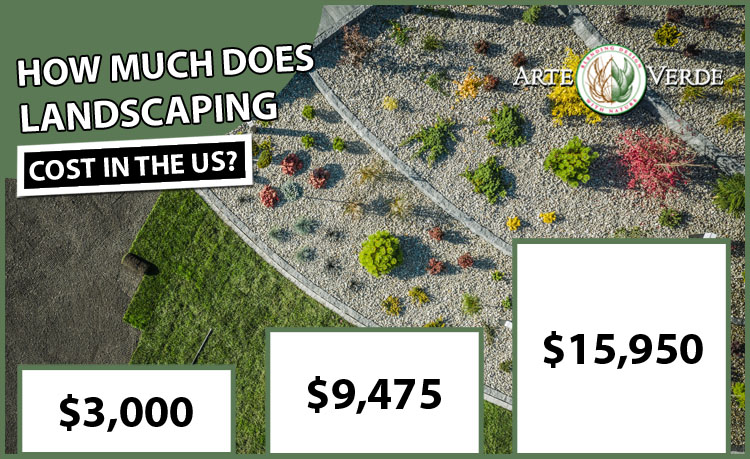
For budgeting, divide your project into three practical levels. These categories are illustrative planning estimates, not standardized industry price bands, and local contractor quotes may fall outside them.
Source: arteverde.com
Basic refresh: $300 to $1,500
Suitable for homeowners who mainly need mulch, edging, a few flowers or shrubs, limited pruning, and small decorative improvements. DIY work is often the most affordable approach, although delivery and contractor minimum charges can raise the total.
Moderate professional makeover: $1,500 to $5,000
May include prepared planting beds, several shrubs, selected ornamental plants, mulch, limited lawn repair, and minor edging or walkway improvements.
Extensive renovation: $6,000 to $15,000 or more
May involve larger plant installations, significant lawn replacement, irrigation, new paths, substantial soil preparation, grading, or selected hardscape features. Major retaining walls, complicated drainage work, and extensive paving can increase the budget further.
Why published landscaping averages differ
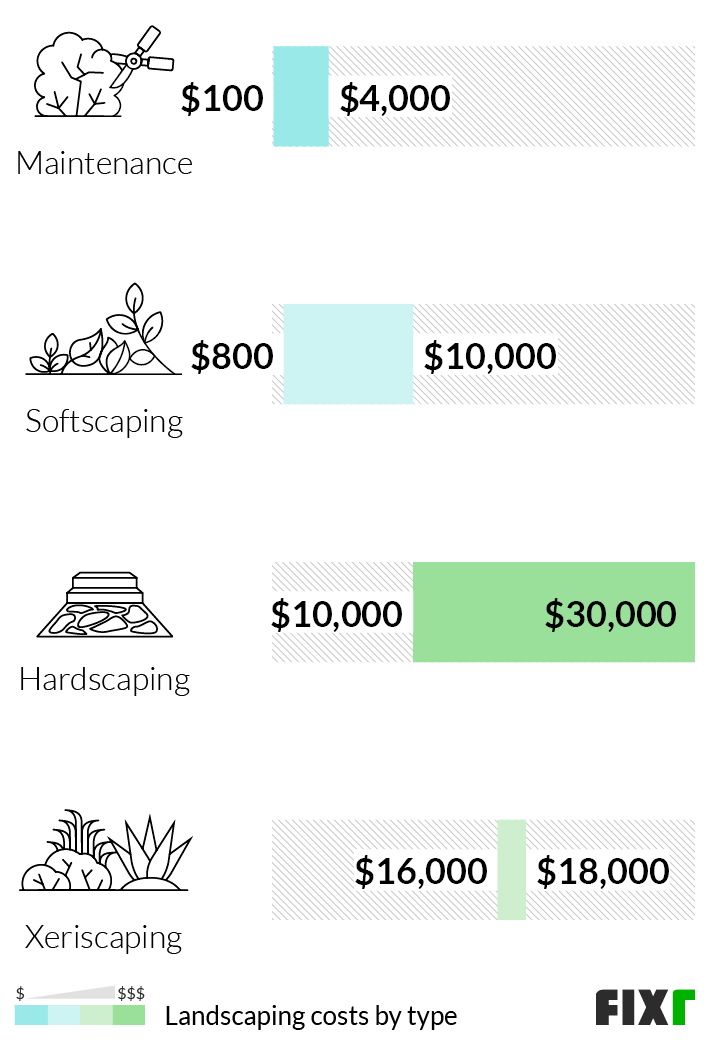
National cost guides do not always measure the same thing. Some include small planting jobs and lawn repairs, while others estimate a full landscaping installation with design, new soil, grass, plants, and hardscape features. For example, recent Angi estimates place front yard landscaping at approximately $1,500 to $5,000, while Fixr reports a higher range of approximately $4,000 to $6,000 for front yard projects. These differences demonstrate why the included work must be checked before comparing prices.
Use published figures to establish a preliminary budget, not to determine whether an individual quote is fair. Compare at least two or three estimates that describe the same work, quantities, materials, and preparation requirements.
Cost per square foot
General landscaping estimates commonly fall around $4.50 to $12 per square foot for many professionally installed projects, with complex tear-outs and extensive renovations potentially costing much more. This broad range is useful for an initial calculation, but it is not a universal rate for a lawn, flower bed, or walkway.
For example, multiplying 600 square feet by $6 per square foot produces a preliminary estimate of $3,600. That calculation is appropriate only if the $6 rate reflects the type of landscaping planned and the same labor and materials. A contractor may instead price individual planting beds, lawn areas, and paved sections separately.
Measure the area
For a rectangular space, multiply length by width. For irregular yards, divide the property into smaller rectangles or triangles and add their areas.
Separate different surfaces
Calculate lawn, planting beds, gravel, and paving separately because each surface requires different materials and installation methods.
Front Yard Landscaping Cost by Project Type
The features you install usually have a greater effect on the final price than the simple fact that the project is in the front yard. Adding mulch and shrubs is relatively straightforward, while replacing a lawn, installing a walkway, or correcting a slope involves more materials, equipment, and labor.
The following planning ranges summarize common project types using broad published landscaping estimates and practical budgeting allowances. They are not a quotation database for every service, and some prices overlap because contractors may bundle preparation, materials, and installation.
Source: farrellslandscaping.com
Mulch and planting-bed refresh: $300 to $1,500
A limited project may include removing weeds, defining bed edges, spreading mulch, and planting a small selection of flowers or shrubs. Larger beds, extensive soil replacement, and mature plants increase the total.
Flower beds and foundation planting: $800 to $3,000
Professionally installed beds can include soil preparation, shrubs, perennials, edging, and mulch. The number and size of plants, access conditions, and the amount of old landscaping removed affect the price.
Tree and shrub planting: $120 to $2,500 or more
Tree planting prices depend on species, plant size, digging conditions, staking, delivery, and equipment requirements. Small shrubs generally cost less than mature specimen trees.
Lawn replacement with sod: $950 to $4,300
A professionally installed sod project may include removing old grass, preparing the soil, leveling, supplying sod, and installing it. The price changes with lawn area, site access, soil conditions, and the amount of preparation needed.
Lawn grading: approximately $1,000 to $3,500 for many projects
Minor leveling may cost less, while substantial earthmoving, difficult access, and drainage corrections can increase the total. Grading must preserve appropriate drainage away from buildings and neighboring properties.
Walkway installation: $500 to $3,000 or more
A short, simple path may fit the lower end of a project budget, while extensive paving, premium stone, complex patterns, excavation, and difficult site access can cost considerably more. Obtain a material-specific estimate.
Irrigation installation: $1,700 to $3,550 for many residential systems
Costs depend on the area served, water supply, number of zones, controller, trenching, and local installation requirements. A small drip-irrigation arrangement for planting beds may cost less than a complete automatic lawn system.
Retaining wall: $3,250 to $9,000 for many installations
Wall height, length, material, soil pressure, drainage, engineering, excavation, and access determine the final cost. Structural walls should be evaluated by an appropriately qualified professional.
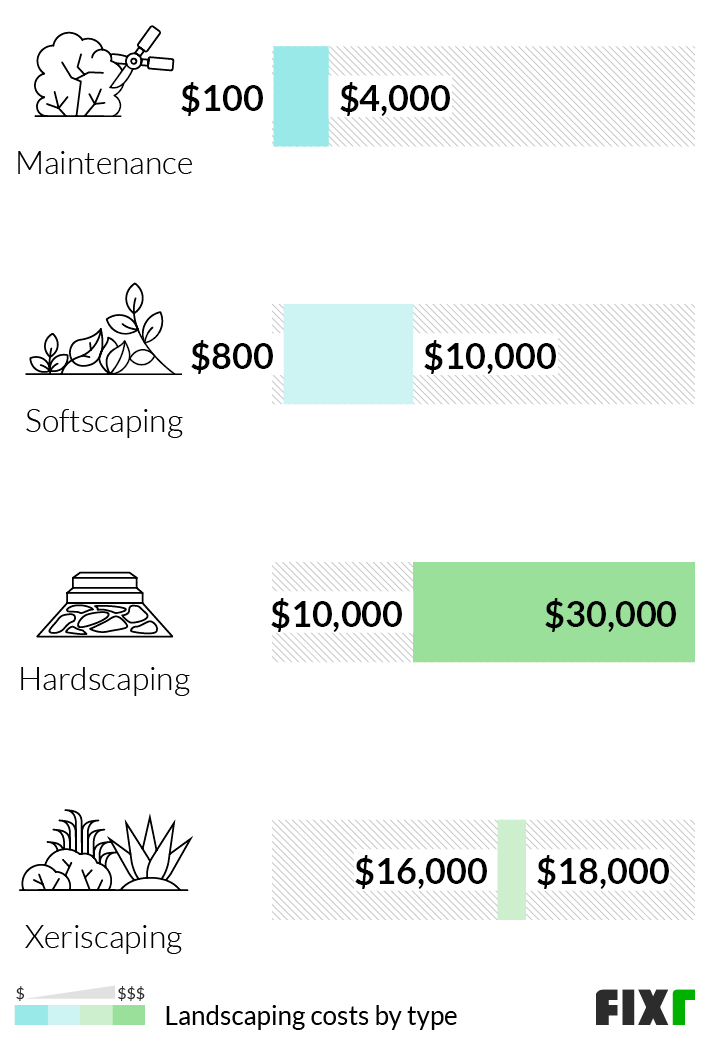
Softscaping versus hardscaping
Softscaping refers to living elements such as trees, shrubs, flowers, lawns, and ground covers. It is often the more economical way to refresh a front yard, especially when healthy existing trees and lawn areas can remain. However, premium plants, extensive soil improvements, and mature specimens can make a planting-focused project expensive.
Hardscaping includes nonliving features such as walkways, stone edging, retaining walls, and paved entry areas. These elements can improve circulation and structure, but installation may require excavation, a stable base, drainage provisions, and skilled labor. A yard that combines several hardscape features is likely to cost more than one that relies primarily on plants and mulch.
Lower initial cost
Consider mulch, locally suitable plants, ground covers, and selective lawn repairs when the existing site is functional.
Higher initial investment
Budget carefully for masonry, extensive paving, retaining walls, major grading, and irrigation infrastructure.
How much does a complete front yard redesign cost?
A complete redesign can exceed $10,000 when it combines design services, extensive planting, lawn replacement, walkways, lighting, irrigation, or drainage work. Larger properties and difficult sites can cost considerably more.
Before requesting bids, decide which features are essential and which can be added later. Completing necessary grading and drainage first, followed by planting and optional decorative features, can make the project easier to manage without sacrificing essential site performance.
What Factors Affect Front Yard Landscaping Prices?
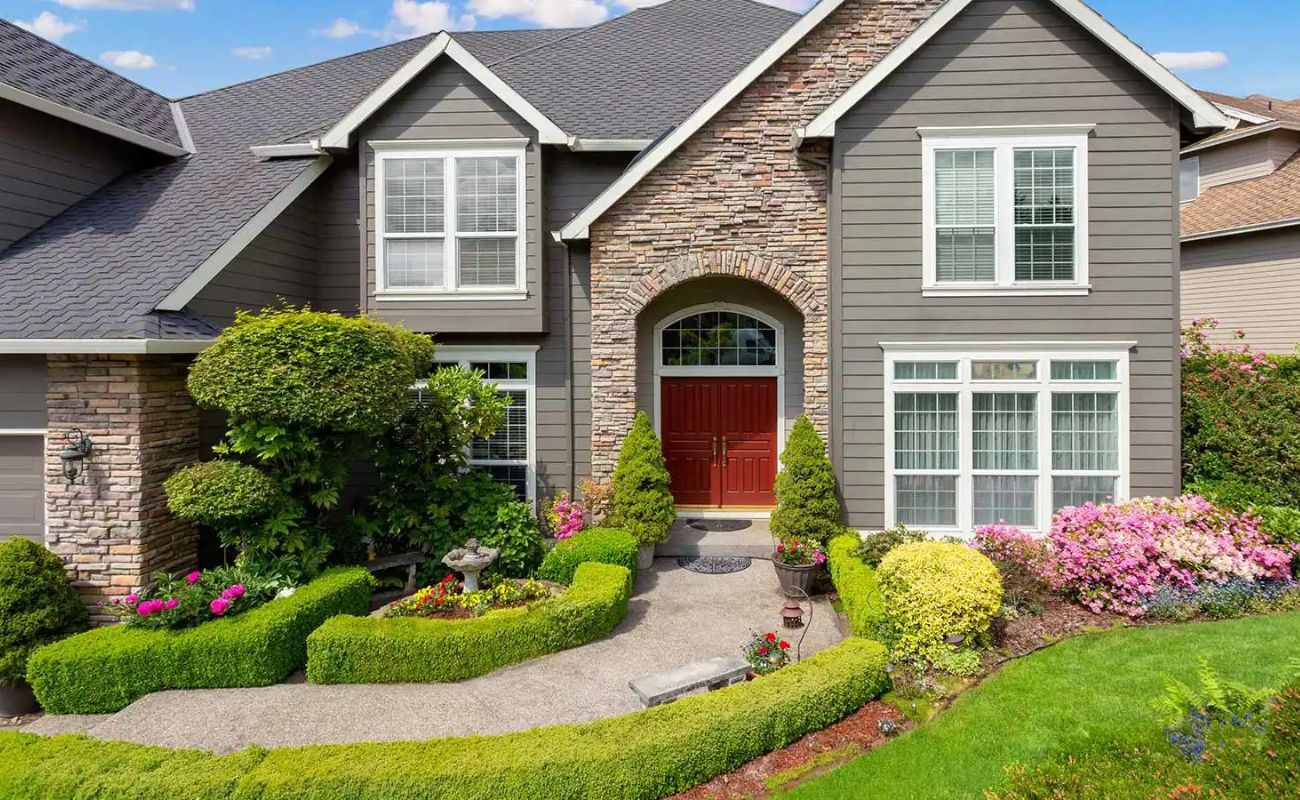
Front yard landscaping prices depend on the condition of the property, the design, the selected materials, and local labor costs. Two yards with the same square footage can receive very different estimates if one is level and easy to access while the other requires excavation, drainage work, or removal of established vegetation.
Review these factors before setting a final budget because they help explain why contractor quotes differ.
Source: i.pinimg.com
Yard size and layout
A larger landscaped area generally requires more materials and labor. Narrow side access, irregular boundaries, tight planting spaces, and obstacles can increase installation time.
Site preparation
Removing old sod, shrubs, roots, rocks, and construction debris adds work. Poor soil, compacted ground, and uneven surfaces may require additional preparation.
Drainage and slope
Steep slopes, standing water, erosion, and runoff near the foundation may require grading or drainage solutions before planting can begin. Correcting these problems can be more important than adding decorative features.
Plant selection
Young shrubs and small perennials usually cost less than mature plants. Rare varieties, large trees, special delivery requirements, and plants with demanding establishment needs can increase costs.
Material quality
Natural stone, specialty pavers, custom edging, and premium landscape lighting generally cost more than basic alternatives. Material thickness, durability, appearance, and installation requirements all matter.
Local labor rates
Prices vary among US cities and regions because of wages, contractor demand, travel, insurance, disposal fees, and the local availability of materials.
Permits and utility requirements
Some projects involving retaining walls, drainage changes, lighting, irrigation connections, or work near public rights-of-way may require permits or inspections. Requirements depend on local rules and the exact project.
Time of year
Weather, regional planting seasons, contractor schedules, and seasonal demand can affect availability and scheduling. Ask contractors how timing affects the price and plant establishment.
How climate affects the budget
Plant choices should match the local US climate and the conditions immediately around the house. Homeowners in hot, dry regions may benefit from drought-tolerant plants and efficient irrigation, while those in colder areas need plants suited to winter temperatures and freeze-thaw conditions. Coastal locations may require attention to wind, salt exposure, or sandy soil.
Choose plants based on regional hardiness, sunlight, mature size, soil drainage, and expected water needs. A low purchase price is not necessarily a saving if a plant struggles in its location and must be replaced.
Match plants to sunlight
Identify full-sun, partial-shade, and shaded areas before buying plants. Check the recommended exposure for each species.
Plan for mature size
Leave enough space for trees and shrubs to grow without obstructing windows, sidewalks, utility equipment, or sightlines at driveways.
Consider water demand
Group plants with similar watering needs and select regionally appropriate species to make irrigation more efficient.
Labor and design fees
Labor is a substantial part of many landscaping estimates. Published cost guides commonly place landscaper labor around $50 to $100 per hour, while landscape designers may charge approximately $50 to $150 per hour. These are broad national reference figures, not guaranteed local rates, and some contractors use project-based pricing instead.
A design plan can help coordinate plant placement, drainage, paths, and materials before installation. A small refresh may not need a detailed professional plan, but a complex renovation can benefit from design assistance that reduces costly changes during construction. Ask whether the design fee is separate from installation or credited toward the project.
Sample Front Yard Landscaping Budgets
A sample budget makes it easier to see how the individual parts of a landscaping project fit together. The examples below are hypothetical planning scenarios, not measured contractor bids or guaranteed market prices. Actual estimates depend on local rates, quantities, material selections, and site conditions.
Use the examples as a starting point, then replace the allowances with local supplier prices and written contractor estimates.
Source: images.squarespace-cdn.com
Example 1: Small front yard refresh, $900
Assume $200 for mulch and delivery, $300 for plants, $150 for edging and small supplies, $150 for debris removal, and $100 for miscellaneous materials. This example assumes the homeowner performs most of the installation and the existing lawn and drainage remain in good condition.
Example 2: Moderate professional makeover, $3,800
Assume $900 for planting materials, $500 for mulch and edging, $1,300 for installation labor, $500 for limited lawn repair, $250 for delivery and disposal, and $350 for contingency. The allowance is illustrative and should be adjusted to match the contractor’s actual scope.
Example 3: Larger redesign, $10,500
Assume $1,500 for design and planning, $1,800 for plants and soil, $1,400 for lawn installation, $3,000 for a new walkway, $1,200 for site preparation, $800 for labor and delivery allowances not already included elsewhere, and $800 for contingency. A contractor should clarify whether each line includes labor to avoid double-counting.
How to calculate your own estimate
Start by dividing the front yard into measurable work areas. For a 500-square-foot planting and lawn improvement area, an initial rate of $5 to $10 per square foot would produce a preliminary range of $2,500 to $5,000. This is a broad planning calculation based on an assumed rate; it is not a substitute for pricing the actual mix of materials and labor.
Next, list features that may be excluded from a general square-foot estimate, such as a new walkway, major tree removal, drainage corrections, irrigation, or a retaining wall. Add separately quoted amounts only after confirming that the general estimate does not already include them.
Step 1: Measure
Record the square footage of lawn, planting beds, and paved areas, along with the length of edging, walkway borders, or retaining walls.
Step 2: Define the scope
List demolition, soil preparation, plants, lawn work, hardscaping, irrigation, lighting, cleanup, and any design services.
Step 3: Obtain local prices
Request itemized quotes that specify quantities, material grades, labor, delivery, and disposal.
Step 4: Add a contingency
Consider reserving approximately 10% to 15% of the planned budget for uncertain quantities or minor unforeseen work. This is a budgeting recommendation, not a guarantee that major hidden problems will fit within the reserve.
A practical budget worksheet
Use this checklist to organize the figures you receive. Enter zero when a service is not needed, and make sure bundled contractor prices are not counted twice.
Design and planning
Record any consultation, drawing, survey, or design fee.
Preparation and removal
Include old plant removal, sod removal, soil preparation, excavation, and disposal.
Plants and ground cover
List trees, shrubs, flowers, mulch, gravel, soil amendments, and lawn materials.
Installation and equipment
Include labor, machinery, delivery, irrigation, lighting, and installation supplies.
Keep the one-time contingency separate from recurring watering, pruning, mowing, and replacement expenses.
How to Save Money on Front Yard Landscaping
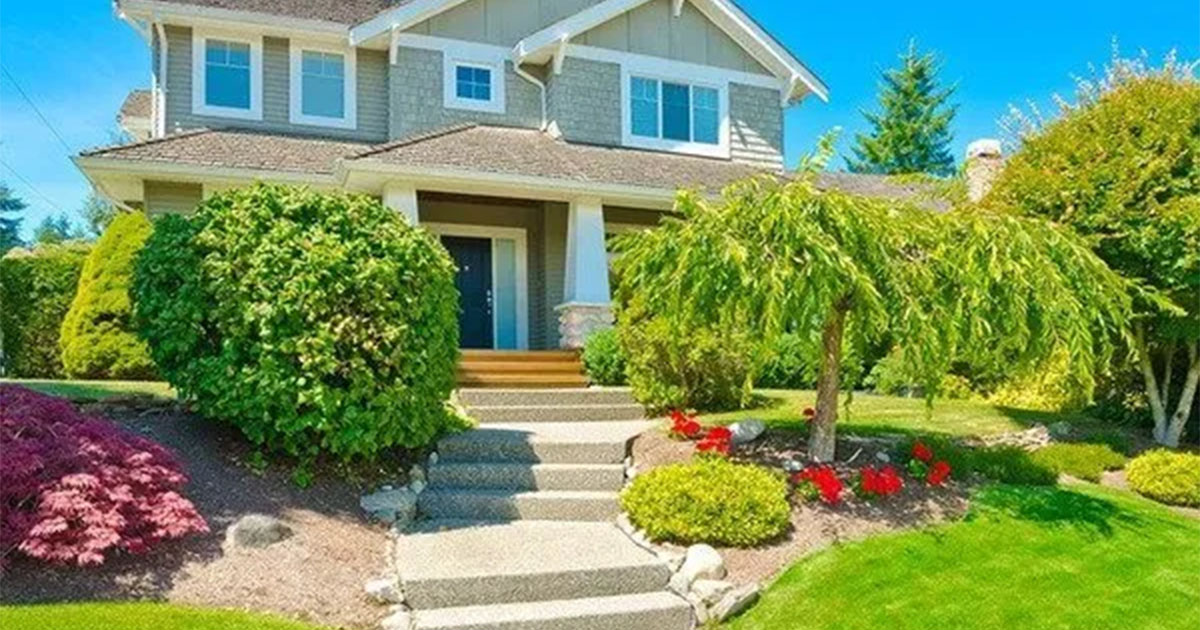
The most effective way to reduce landscaping costs is to simplify the project without neglecting essential preparation. Keeping healthy existing features, choosing suitable plants, limiting expensive hardscaping, and completing straightforward work yourself can reduce the initial investment.
However, a low upfront price is not always the lowest long-term cost. A poorly drained planting bed, an incorrectly installed walkway, or a plant placed in unsuitable conditions may require expensive repairs or replacement. Prioritize function first and decorative upgrades second.
Source: assets.fixr.com
Keep healthy existing plants
Retain established trees and shrubs when they are healthy, safely located, and appropriate for the design. Removing them unnecessarily can add disposal costs and eliminate valuable shade.
Use smaller plants
Young shrubs and small perennials usually cost less than mature specimens. Allow for the time they need to fill out and avoid overcrowding them to create an instant finished appearance.
Choose simple shapes
Straight bed edges and uncomplicated planting layouts can reduce cutting, measuring, and installation time compared with intricate curves and elaborate patterns.
Use mulch strategically
Mulch can suppress weeds and help conserve soil moisture when installed correctly. Keep it away from tree trunks, plant crowns, and the siding or foundation of the house.
Compare alternative materials
Consider suitable gravel, concrete pavers, locally available stone, or other practical materials instead of expensive specialty products. Compare preparation and installation costs, not just the purchase price.
Install the project in phases
Complete necessary grading, drainage, and access improvements first. Add planting beds, lawn improvements, and decorative lighting later if the budget requires it.
Do appropriate work yourself
Homeowners may be able to handle weeding, mulching, simple planting, and basic bed preparation. Account for tool rentals, delivery, disposal, and the time needed to complete the work.
Get comparable quotes
Ask multiple contractors to price the same design, quantities, and material specifications. A lower quote may exclude important preparation, cleanup, or warranty coverage.
When DIY landscaping makes sense
DIY landscaping is often practical for small, accessible projects that do not change the grade significantly or require specialized construction. Planting a few shrubs, spreading mulch, refreshing an existing bed, or installing simple edging may be manageable for a homeowner with suitable tools and time.
Professional help is more appropriate when a project involves major excavation, uncertain drainage, large tree removal, electrical connections, structural walls, heavy equipment, or work subject to permits. Contact the relevant utility-locating service before digging, and follow local requirements for underground utilities and public rights-of-way.
Good DIY candidates
Weeding, mulching, planting small containers or shrubs, basic garden cleanup, and simple decorative changes that do not affect drainage or utilities.
Work that may need a professional
Major grading, retaining walls, significant tree removal, complex irrigation connections, outdoor electrical installations, and drainage changes near foundations or neighboring properties.
How to avoid expensive landscaping mistakes
Do not choose plants solely because they look attractive at the garden center. Check their mature height and spread, root behavior, hardiness, sun requirements, and water needs. Plants placed too close to buildings, sidewalks, or underground utilities may cause future maintenance or repair problems.
Avoid covering drainage problems with decorative stone or extra soil. Water should not be directed toward the foundation or onto a neighbor’s property. If water pools near the house, the slope is unstable, or erosion is substantial, have the site assessed before installing new beds or paving.
Finally, read the estimate before work begins. Clarify who is responsible for utility locating, permits, disposal, plant replacement, and damage to existing surfaces. Written scope details make it easier to identify exclusions before they become unexpected charges.
Additional Costs and Long-Term Maintenance
The installation price is only part of the cost of owning a landscaped front yard. Plants need water and periodic pruning, lawns may require mowing and seasonal care, and hardscape features sometimes need repairs. Planning for these expenses helps you choose a design that fits both your initial budget and your ongoing schedule.
The amount you spend after installation depends on the plant species, climate, lawn size, irrigation system, and how much work you perform yourself. A low-water planting design may reduce irrigation needs, but its actual maintenance costs still depend on plant establishment, weeds, pruning, and local conditions.
Source: arteverde.com
Watering and irrigation
New plants and sod need appropriate establishment watering. An automatic irrigation system can reduce manual work, but it adds installation, water, electricity where applicable, seasonal adjustment, and repair costs.
Mowing and lawn care
Budget for mowing, edging, and any locally appropriate lawn treatments if you keep turf. Lawn size and the frequency of service determine the recurring expense.
Pruning and plant replacement
Trees and shrubs may require pruning, while plants can fail because of weather, pests, disease, or unsuitable growing conditions. Check whether the contractor provides a limited establishment warranty.
Mulch and bed maintenance
Planting beds may need occasional mulch replacement, weeding, edging, and soil improvements. The frequency depends on material type, weather, and how quickly weeds develop.
Lighting and hardscape repairs
Outdoor lights, irrigation controls, paving joints, and retaining-wall drainage components may need inspection or repair. Installation quality and exposure to weather affect service life.
Budgeting for the first year
A practical first-year budget should separate installation from recurring care. For example, a homeowner may allocate $3,500 to installation, then reserve an additional amount for water, lawn service, pruning, and replacement plants. The maintenance reserve should reflect the actual features installed rather than a universal percentage of the project cost.
Ask the contractor which tasks are included after installation. Some estimates cover only construction and cleanup, while others include initial watering instructions, a limited maintenance visit, or plant replacement under specific conditions.
Does landscaping increase home value?
Well-maintained landscaping can improve curb appeal and make a home more attractive to prospective buyers, but no fixed return is guaranteed. The financial result depends on local housing demand, the quality of the installation, neighborhood expectations, maintenance requirements, and the buyer’s preferences.
For homeowners planning to sell, a tidy entrance, healthy plants, a well-maintained lawn, and a safe, functional walkway may be more practical than an expensive custom feature. Keep receipts and design information for substantial work, but do not assume that every landscaping dollar will be recovered at resale.
How to Get an Accurate Front Yard Landscaping Quote
The best way to establish your actual project cost is to request written, itemized estimates from local landscaping contractors. Give each contractor the same project description so the prices can be compared fairly.
A useful estimate should explain what will be installed, what preparation is required, which materials are included, and how the contractor will handle changes or unexpected conditions.
Source: farrellslandscaping.com
Prepare measurements and photographs
Record the approximate yard dimensions and take photographs from the street, walkway, and house. Mark areas that need planting, lawn replacement, drainage improvements, or paving.
Write a prioritized project list
Separate essential repairs from optional upgrades. Identify the features that must be included in the initial project and those that can wait.
Request itemized estimates
Ask for separate or clearly identified charges for design, site preparation, plants, soil, mulch, lawn installation, hardscaping, labor, delivery, debris disposal, and permit fees where applicable.
Verify qualifications and insurance
Check applicable state or local licensing requirements, relevant experience, insurance, references, and any qualifications needed for specialized work. Requirements differ by jurisdiction and project type.
Confirm payment and warranty terms
Review the payment schedule, estimated completion dates, change-order process, cleanup responsibilities, and the exact conditions of any plant or workmanship warranty.
Check exclusions before signing
Confirm whether the price includes taxes, delivery, utility locating, permits, disposal, soil amendments, restoration of damaged lawn, and repairs to existing surfaces.
Questions to ask a landscaping contractor
Before accepting a proposal, ask how the contractor will prepare the site, protect existing features, manage runoff, and establish new plants. Ask which materials and quantities are specified and whether substitutions require your approval.
If the property has slopes, drainage problems, large trees, or a retaining wall, ask who is responsible for evaluating the relevant conditions and whether engineering, permits, or inspections are required. A written answer is more useful than a general assurance that the work will be handled.
What exactly is included in the total?
Clarify labor, materials, site preparation, delivery, disposal, cleanup, and any design or permit costs.
What could increase the price?
Ask about hidden roots, poor soil, buried debris, inaccessible work areas, unexpected drainage conditions, and material-price changes.
How will the plants be maintained?
Request watering and care instructions and confirm any warranty conditions, exclusions, or replacement charges.
Can the project be completed in phases?
Ask whether the essential work can be completed first without requiring expensive rework when later features are installed.
Frequently Asked Questions
Q
What is the cheapest way to landscape a front yard?
The cheapest approach is usually to retain healthy existing plants and lawn, clean up the beds, add mulch, and install a small number of suitable plants. Doing straightforward work yourself can reduce labor costs, provided the project does not involve major excavation, drainage corrections, utility conflicts, or structural construction.
For a small DIY refresh, a planning budget of approximately $300 to $1,500 may be reasonable. Actual costs depend on the size of the area, plant quantities, delivery, disposal, and local prices.
Q
How much does it cost to landscape a 1,000-square-foot front yard?
Using a broad general landscaping estimate of $4.50 to $12 per square foot, a 1,000-square-foot area would produce a preliminary range of $4,500 to $12,000. This calculation is not a specific quote for a front yard and may not reflect a project that consists mainly of inexpensive planting or one that requires substantial grading and hardscaping.
For a more accurate estimate, measure the lawn, beds, and paved areas separately, then price each type of work using local material and labor estimates.
Q
Is it cheaper to landscape a front yard yourself?
DIY landscaping can be cheaper because you avoid some professional labor charges. It is often suitable for weeding, planting small shrubs, spreading mulch, and refreshing existing beds. However, equipment rentals, delivery, waste disposal, and mistakes can reduce the savings.
Hire an appropriately qualified professional for major grading, drainage problems, large tree removal, electrical work, structural retaining walls, or other tasks that require specialized expertise or permits.
Q
How much should I budget for landscaping labor?
Broad published estimates place landscaper labor at approximately $50 to $100 per hour, although local rates vary and many contractors charge a fixed project price. Designers and specialists may use different rates depending on their role and qualifications.
Ask whether the quote separates labor from materials and whether equipment, travel, site preparation, and cleanup are included. Compare the total scope rather than choosing a contractor solely because of a lower hourly rate.
Q
Does front yard landscaping cost more with a slope?
It can. Slopes may require additional soil preparation, erosion control, retaining walls, steps, drainage work, or equipment access. The added expense depends on the severity of the slope, soil conditions, the amount of earthmoving, and the selected design.
If water collects near the foundation or runoff affects neighboring properties, address those issues before installing decorative features. Have a qualified professional evaluate substantial drainage or structural concerns.
Q
How long does front yard landscaping take?
A small planting and mulch refresh may take a day or two, while a moderate installation may take several days. A large redesign involving excavation, paving, drainage, irrigation, or retaining walls may take weeks, depending on permits, weather, material delivery, and contractor availability.
Ask for a written schedule that identifies preparation, installation, inspections if applicable, and cleanup. New plants and sod may also need ongoing care after the construction work is finished.
Q
Should I landscape the entire front yard at once?
Not necessarily. Phasing the project can make the expense easier to manage. Address drainage, erosion, unsafe access, and essential grading first, then complete the planting and lawn work. Decorative lighting, additional beds, or premium paving can follow when the budget allows.
Plan the complete layout before starting separate phases so that later work does not require removing newly installed plants or rebuilding paths.
✦ Wrapping Up
Conclusion
The cost to landscape a front yard in the United States commonly falls around $1,500 to $5,000 for a straightforward professional makeover, while larger projects with substantial hardscaping, grading, drainage, or irrigation can reach $6,000 to $15,000 or more. Small DIY improvements may cost considerably less, but the final price depends on the size of the yard, site conditions, material choices, labor rates, and the services included.
A realistic budget begins with clear priorities and accurate measurements. Keep healthy existing features where practical, choose plants suited to local growing conditions, and distinguish essential site preparation from optional decorative upgrades. Obtain itemized proposals from multiple contractors and compare the actual scope, material specifications, exclusions, and warranty terms before making a decision.
💡 Key Takeaway
Measure your front yard, list the improvements you want, set a maximum budget, and request two or three itemized quotes for the same scope of work. Reserve additional funds for uncertain site conditions and prioritize proper grading and drainage before cosmetic upgrades.
I enjoy sharing simple gardening ideas, lawn care tips, and honest product reviews that help make outdoor work easier. From home gardening guides to helpful tools and lawn care advice, I write easy-to-follow content to help readers create a healthier and better-looking outdoor space without wasting time or money.