
As an Amazon Associate, I earn from qualifying purchases.
Use a string trimmer, scythe, sickle, shears, or hedge trimmer to cut.
If your mower is broken, the grass is too tall, or noise rules are tight, you still have smart options. In this guide, I’ll show you How To Cut Grass Without A Lawn Mower using tools I’ve tested in yards big and small. You’ll learn simple methods, pro tips, safety steps, and the best times to cut so your lawn stays healthy and looks clean.
:max_bytes(150000):strip_icc()/cuttinggrasswithscythe-19a169136ebc44918368e4015318e521.jpg)
How To Cut Grass Without A Lawn Mower: When and Why It Makes Sense
Sometimes a mower is not the right tool. Think small patches, steep slopes, wet edges, tight corners, or very tall grass. You may also face storage limits, power outages, or early quiet hours. In those cases, learning How To Cut Grass Without A Lawn Mower is a smart, low-cost skill.
-
Good fits
- Small or awkward spaces where a mower cannot reach.
- Overgrown yards that need a first pass.
- Steep banks, ditches, and under trees or decks.
- Quiet zones or early mornings when you must keep noise low.
-
Not ideal
- Large, flat lawns if you want a golf-like finish.
- Very rocky soil with lots of hidden debris.
- Times when grass is soaked or soft.
How To Cut Grass Without A Lawn Mower: Tools That Work
You have many options. Pick by yard size, grass height, comfort, and budget. If you want to master How To Cut Grass Without A Lawn Mower, match the tool to the job first.

- String trimmer or weed eater Best all-around choice. Use with a guard and a steady sweep for even height.
- Brush cutter For tall weeds or light brush. Uses a blade. More power. Use strict safety gear.
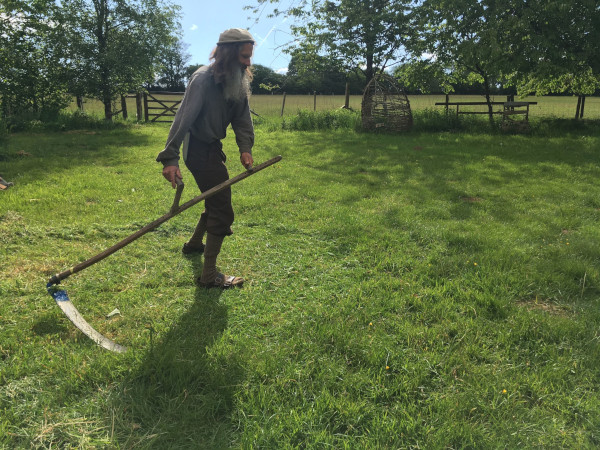
- Scythe Fast for tall, soft grass. Uses a smooth arc. Quiet and low-cost once you learn it.
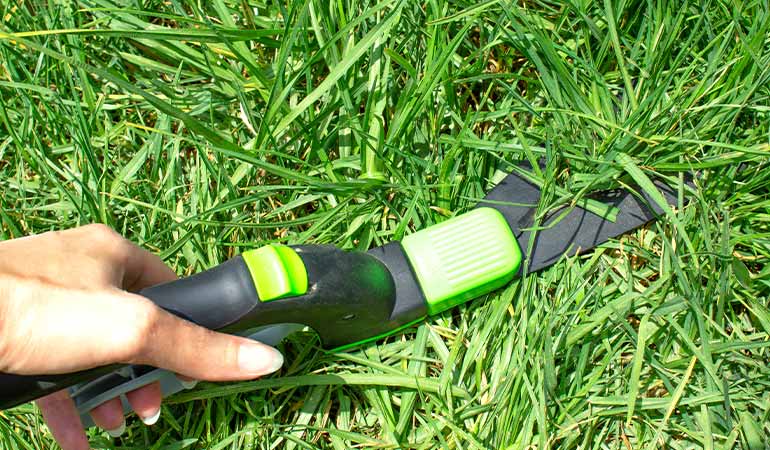
- Grass sickle or billhook Good for edges and small areas. Works close to fences and beds.
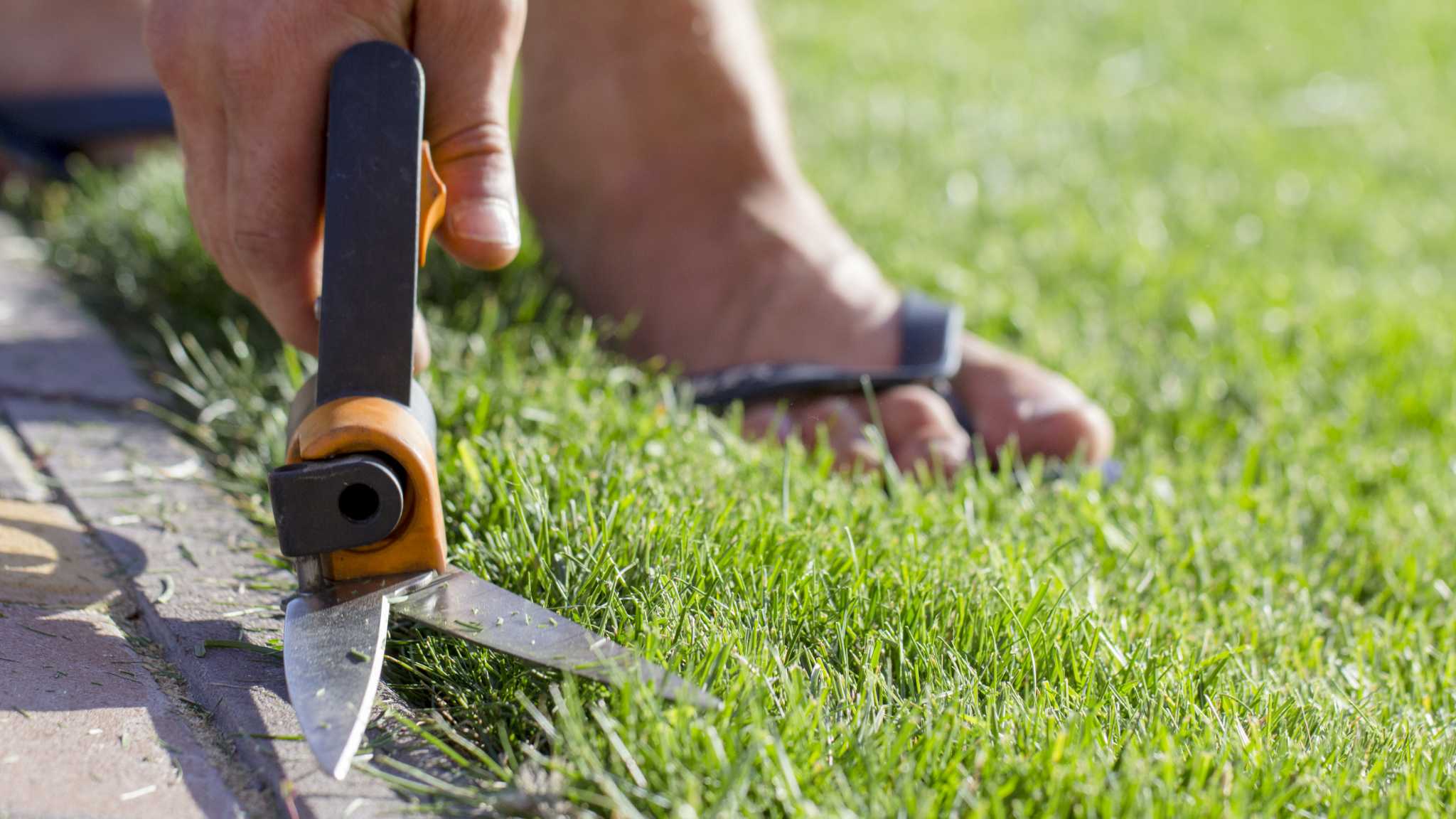
- Long-handled manual shears Simple, cheap, and tidy. Slow but very precise for strips and corners.
- Cordless hedge trimmers Surprising lawn helper for small flats. Keep the blade level and move slowly.
- Machete or bolo Only for rough cuts. Not for a fine lawn. Use care and gloves.
- Scuffle hoe or stirrup hoe For tiny patches and seedlings. Pulls up young grass and trims low.
How To Cut Grass Without A Lawn Mower: Step-by-Step Methods
These steps keep the cut even, protect the turf, and save your back. I learned many of them while rehabbing rentals and helping neighbors after storms.
Method 1: String trimmer, lawn-style
- Set a reference height. Use stakes or your boot toe as a visual guide.
- Hold the trimmer so the line is level. Keep the head slightly tilted up.
- Walk in straight passes that overlap a bit.
- Cut only the top third. Make more passes if the grass is very tall.
- Let clippings lie if thin. Rake if thick clumps form.
- Edge last for a clean border.
Pro tip: Flip the trimmer so the guard faces the uncut side. This keeps your line of sight clear and smooths the pass.
Method 2: Scythe for tall grass and meadows
1. Fit the snath to your height. A good fit saves effort.
2. Keep the blade very sharp. Hone often.
3. Stand tall. Rotate from your hips. Sweep in a low arc.
4. Lay windrows to one side. Rake or dry for mulch.
Pro tip: Sharpness matters most. A few light hones beat one heavy grind. Research shows sharp blades reduce tearing and stress on turf.
Method 3: Grass sickle for edges and tight spots
- Kneel or squat for control.
- Use short, smooth pulls at a set height.
- Work from the far edge in, so clippings fall away.
Method 4: Long-handled shears for small lawns
- Keep the blade level and check height often.
- Snip in a grid pattern. Then go across it once more.
- Rest often. This is slow but very neat.
Method 5: Cordless hedge trimmers on flat areas
- Hold the blade flat, parallel to the soil.
- Move in slow lines and keep a steady pace.
- Avoid stones. One hit can nick the blade.
Method 6: Brush cutter for thick weeds
- Wear full PPE. Use a face shield, long pants, boots, and gloves.
- Cut in layers. Do not force the blade.
- Clear debris first. Rocks and wire are hazards.
Plan Your Cut: Height, Timing, and Lawn Health
Healthy lawns bounce back when you cut less than one-third of the blade at a time. That rule protects roots and saves water. If you aim for the right height, your lawn will fill in and shade weeds. This plan works whether or not you use a mower.

The one-third rule
Cut only the top third each time. If the grass doubled in a wet week, make two or three light passes. This reduces shock and browning.
Target heights by grass type
- Cool-season grass Kentucky bluegrass, fescue, rye. Aim for 2.5 to 3.5 inches.
- Warm-season grass Bermuda, zoysia, St. Augustine. Aim for 1 to 2.5 inches, based on type.
- Shade areas Leave an extra half inch to boost leaf area.
Note: University turf programs show higher mowing height improves root depth and soil cover.
Best time to cut
- Mid-morning after dew dries, or late afternoon.
- Skip hot midday. It adds stress.
- Avoid wet grass. Wet blades clump and tear.
Mulch or bag without a mower
- Thin clippings Mulch in place. They add nitrogen and hold water.
- Thick clumps Rake and compost, or spread thinly so the lawn can breathe.
- Overgrown cuts Remove the first big batch. Then mulch the second light pass.
Safety, Ergonomics, and Maintenance
Safety first. Cutting without a mower can fling debris or strain your back. Good gear and good form make the work faster and safer. This is key to any plan on How To Cut Grass Without A Lawn Mower.

Personal protective equipment
- Eye and face protection Use glasses or a shield.
- Ears Wear muffs or plugs with gas tools.
- Hands and legs Gloves and long pants stop cuts.
- Feet Closed-toe boots with grip.
Body mechanics that save your back
- Keep elbows close. Let your hips and legs power the sweep.
- Switch lead hand often. Balance the load.
- Take short breaks. Stretch and drink water.
Keep tools sharp and tuned
- Hone scythe and sickle blades often. Sharp blades cut clean and quiet.
- Replace trimmer line early. Fresh line cuts more evenly.
- Check bolts, guards, and batteries before each job.
Eco-Friendly and Low-Cost Alternatives
You can also prevent constant cutting. Think design, not just tools. This expands your options for How To Cut Grass Without A Lawn Mower and still have a tidy space.

Smother and replace in tough spots
Use cardboard and mulch to smother strips you hate to cut. Then add gravel, pavers, or plantings.
Plant groundcovers or a meadow strip
Low-grow plants like clover, creeping thyme, or prairie mixes need fewer cuts. They feed pollinators and trim water use.
Try managed grazing
In rural areas, goats or sheep can clear tall growth fast. Use portable fencing. Move animals to avoid overgrazing.
Tight edges and paths
Switch to mulch or stone along fences and beds. That ends fussy trimming runs.
Troubleshooting and Common Mistakes
Most problems come from dull blades, rushed cuts, and wet grass. Here is how I fix the big ones. These tips keep your plan for How To Cut Grass Without A Lawn Mower on track.
Uneven or shaggy results
Slow down and overlap each pass. Lower the cut a little on a second light pass. Sharpen before you try again.
Scalping and brown spots
You cut too low. Raise the height and water deeply once. Let the grass recover for a week.
Wet grass clumps and tears
Wait for it to dry. Clean and dry your tool. Use a lighter touch on the next pass.
Thatch and buildup
Rake after a heavy cut. Do a light dethatch in spring or early fall. Feed the soil with compost to boost microbes.
Quick-Start Checklist
Ready to act today? Use this short plan. It works even if you have never tried this before.
- Walk the lawn and remove rocks, toys, and wire.
- Pick your tool by height and area size.
- Set a target height. Follow the one-third rule.
- Cut in straight passes. Overlap a little each time.
- Rake thick clumps. Mulch thin clippings in place.
- Edge and tidy. Then water if the day is hot and dry.
Frequently Asked Questions of How To Cut Grass Without A Lawn Mower
What is the fastest way to cut grass without a mower?
Use a string trimmer with a level sweep. Work in overlapping lanes and keep the head at a steady height.
Can a string trimmer replace a mower long-term?
Yes, for small yards and edges. For big, flat lawns, a mower still gives a more even finish.
Is scything hard to learn?
It takes an hour to get the swing. Once you learn it, tall grass falls fast and quiet.
How short can I cut grass without a lawn mower?
Stay near your normal mowing height. With How To Cut Grass Without A Lawn Mower, follow the one-third rule to avoid stress.
What should I do with the clippings?
Leave thin clippings to mulch. Rake and compost heavy piles, or spread them thin to avoid smothering.
Will cutting with a trimmer hurt the lawn?
Not if the line is fresh and you cut when dry. Ragged cuts come from dull line, wet grass, or cutting too low.
Can hedge trimmers be used on lawns?
Yes, for small, flat spots. Keep the blade level and move slow to avoid gouges.
How often should I cut if I am not using a mower?
Cut when growth reaches one-third over your target height. This timing works for How To Cut Grass Without A Lawn Mower and with a mower.
Conclusion
You now have a full, practical plan for neat results without a mower. Match the tool to the job, cut no more than one-third, and keep your blades sharp. With a calm pace and a little practice, you can handle edges, tall patches, and whole small lawns with ease.
Try one method this week on a small area. Track your time, your finish, and how the lawn responds. If this helped, share it with a neighbor, subscribe for more yard tips, or drop a comment with your results and questions.

I enjoy sharing simple gardening ideas, lawn care tips, and honest product reviews that help make outdoor work easier. From home gardening guides to helpful tools and lawn care advice, I write easy-to-follow content to help readers create a healthier and better-looking outdoor space without wasting time or money.