As an Amazon Associate, I earn from qualifying purchases.
The closest way to permanently get rid of driveway weeds is to remove the entire plant, clean the cracks, repair or seal the openings, and keep dirt and seeds from building up. No weed killer or home remedy can guarantee that weeds will never return.
Driveway weeds are a common problem for homeowners across the United States. From concrete driveways in Texas to asphalt parking areas in Ohio and paver paths in California, small weeds can grow in cracks, joints, and gaps. They make a clean driveway look messy and can make some surfaces harder to maintain.
The problem often starts with a little dust, sand, or leaf debris. Wind carries seeds into these tiny spaces, and rain provides enough moisture for them to sprout. Before long, grass, dandelions, clover, and other unwanted plants begin to spread.
Simply cutting off the green tops does not solve the problem. Many weeds can grow back from roots left inside the cracks. The better approach is to remove the roots, clear the growing material, and repair the openings where possible.
This guide explains how to remove driveway weeds, which methods work on concrete, asphalt, gravel, and pavers, and how to prevent new growth. It also explains why popular remedies such as salt and household vinegar are not reliable long-term fixes.
You can greatly reduce driveway weeds for a long time, but you cannot guarantee that they will never return. Seeds can blow in from nearby lawns, gardens, fields, and roads. Even a repaired driveway can collect enough dust for a new seed to grow.
The most lasting solution is to deal with both the existing weeds and the spaces that allow new ones to grow. Removing plants without fixing open cracks often leads to another round of weeding. Sealing every suitable gap without cleaning it first can also leave roots and debris behind.
Think of weed control as a two-part job. First, remove the current growth. Then, make the driveway less welcoming to new seedlings.
Short-term control
Pulling, scraping, cutting, or treating visible weeds removes the current growth but may not stop new seedlings.
Long-term control
Cleaning cracks, repairing damaged joints, and maintaining the driveway reduce the places where weeds can establish.
Ongoing prevention
Regular sweeping and early removal help keep the driveway clear after repairs.
Why Do Weeds Keep Coming Back?
Weeds return because removing the leaves does not always remove the roots. Some plants have deep taproots, while others spread through underground stems or small root fragments. If part of a living root system remains, the plant may grow again.
Seeds are another reason. Driveways collect windblown seeds, soil, and organic matter. A small amount of this material can create a suitable place for a new plant to grow.
Cracks also change over time. Water, temperature changes, vehicle movement, and normal surface wear can open small gaps or loosen joint material. These changes create fresh spaces for weeds to take hold.
What You Need Before Removing Driveway Weeds
Gather the right tools before starting. The tools you need depend on the driveway material and how deeply the weeds have grown. A small driveway with a few young weeds may need only a hand tool, while a large area may require more time and cleaning equipment.
Choose a dry day when you can see the cracks clearly. Wear gloves and sturdy shoes. If you plan to scrape, brush, or use powered equipment, protect your eyes from flying grit and debris.
Source: diyjoy.com
Crack weeder or weeding knife
A narrow blade reaches into small joints and helps loosen roots that ordinary garden tools cannot reach.
Protect your hands from rough concrete, sharp stones, thorns, and irritating plant sap.
Stiff outdoor brush
Removes loose dirt, dead leaves, and plant material after the weeds have been pulled.
Broom or leaf blower
Clears dry debris from the driveway and helps keep cracks free of new growing material.
Crack repair material
Use a compatible concrete crack filler, asphalt crack sealant, or paver joint material according to the driveway surface.
Safety glasses
Protect your eyes when scraping joints, brushing grit, pressure washing, or using powered equipment.
Check Your Driveway Material First
Concrete, asphalt, gravel, and pavers need different repair methods. A filler designed for asphalt may not bond correctly to concrete. Polymeric sand is intended for suitable paving joints, not every crack in a solid slab.
Look for loose sections, deep openings, damaged edges, and drainage problems before you begin. If the driveway has major settlement, large structural cracks, or repeated water damage, consider getting a qualified paving contractor to inspect it.
Step-By-Step: How To Permanently Get Rid Of Weeds Driveway
The following method combines weed removal, crack cleaning, and surface repair. It works as a general approach for many residential driveways, but the repair material must match the surface. Do not rush through the cleaning stage because leftover roots and soil can make the problem return.
Source: i.ytimg.com
Step 1: Remove Large Weeds By Hand
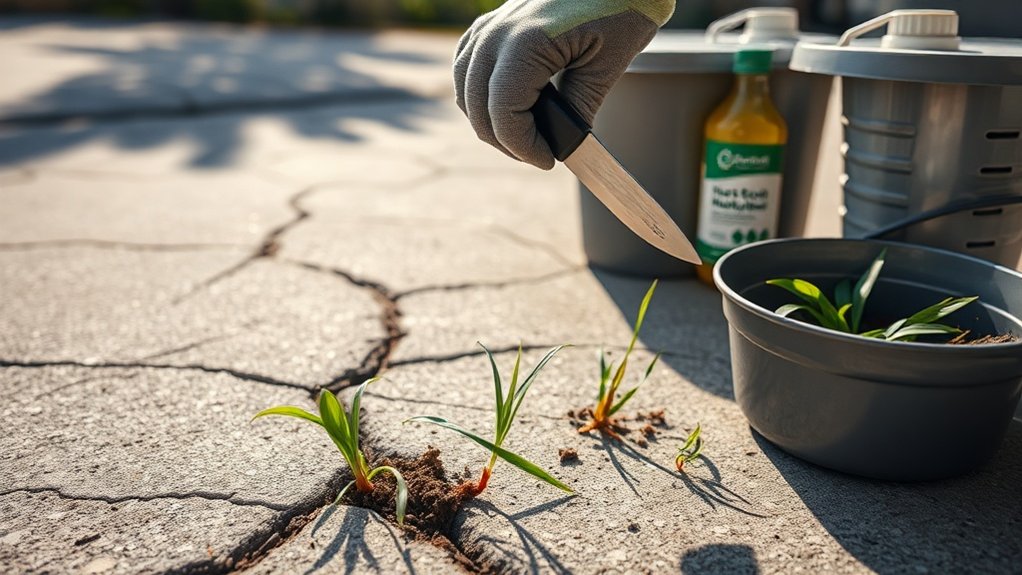
Start by removing the largest weeds. Use a crack weeder, narrow garden knife, or hand weeding tool to loosen the plant near its base. Hold the leaves close to the ground and pull slowly.
Try to remove as much of the root as possible. Dandelions, for example, have long taproots that can break when pulled too quickly. Some spreading grasses also have underground stems that can remain alive after the visible leaves are removed.
If the ground is very dry and the roots are difficult to loosen, a small amount of water may help soften the debris. Avoid flooding the cracks or washing soil into storm drains.
Work carefully
Use a narrow tool to reach the roots without widening or chipping the surrounding driveway.
Remove the whole plant
Do not leave loose roots, stems, or seed heads behind.
Step 2: Scrape Out Dirt And Dead Roots
After pulling the weeds, inspect each crack. You may find compacted soil, dried roots, leaves, small stones, and other debris. These materials provide a growing medium for future seedlings.
Use a crack-cleaning tool to loosen the material. Follow with a stiff brush to remove the remaining dirt. A shop vacuum can help collect dry debris from accessible joints.
Avoid scraping so aggressively that you damage the driveway edges. If the cracks are deep or the joint material is badly damaged, cleaning alone will not be enough.
Remove loose material
Clear soil and plant fragments from the full accessible depth of the opening.
Collect the debris
Dispose of pulled weeds and seed heads so they do not spread back across the driveway.
Step 3: Treat Any Persistent Regrowth
Some established perennial weeds may return even after careful removal. If the roots cannot be extracted without damaging the pavement, you can consider a suitable weed-control product as an additional step.
Choose a product whose label specifically permits use on the relevant driveway or hard surface. A general lawn weed killer may not be suitable for concrete cracks or gravel. Some products kill existing plants only, while others contain ingredients intended to prevent new growth.
Apply only to the target weeds and follow the label for the permitted location, amount, weather conditions, protective equipment, and re-entry time. Avoid spraying when wind can carry the product onto grass, flowers, shrubs, or trees.
Do not assume that a product advertised for year-long control will work for that long under every condition. Rainfall, soil type, and the product formulation can affect how long control lasts.
Spot treatment
Treat individual weeds instead of spraying the entire driveway when the product label allows this approach.
Read the label
Check that the product is approved for the exact surface and location before using it.
Protect nearby plants
Keep spray away from lawns, garden beds, tree roots, and drainage areas.
Step 4: Clean The Driveway Thoroughly
Once the weeds are gone and any treatment has been used according to its label, clean the driveway. Sweep away dead plants, loose soil, and other material that has collected around the cracks.
For stubborn dirt, use a stiff brush and suitable cleaning method. A pressure washer can help with some surfaces, but high pressure can remove joint sand, damage weak concrete, or force water beneath paving.
If you use a pressure washer, begin with a low setting in an inconspicuous area. Keep the spray under control and avoid directing it into damaged joints or loose pavement.
Step 5: Repair And Seal Suitable Cracks
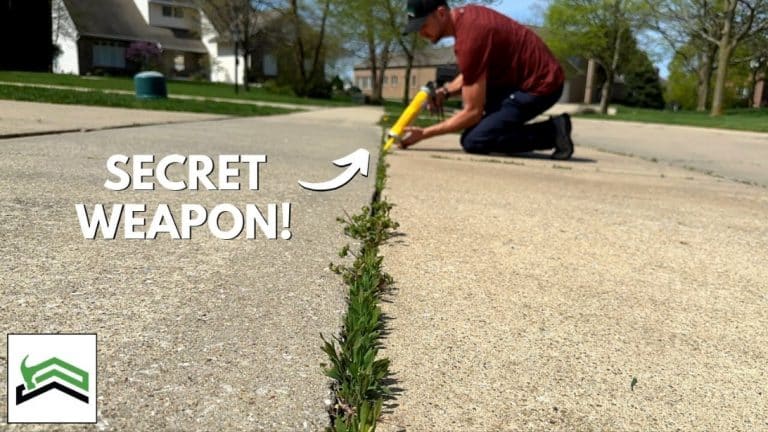
This is the most important part of long-term prevention. Once the cracks are clean and ready for repair, use a product designed for your driveway material. Follow its preparation, temperature, moisture, and curing instructions.
For small concrete cracks, a compatible concrete crack filler or flexible concrete sealant may close the opening. For asphalt, use an asphalt crack filler or sealant designed for the size and type of crack. Do not fill expansion joints with rigid material that prevents normal movement.
For large or deep cracks, a simple surface filler may not solve the underlying problem. Water drainage, movement, and an unstable base may need professional attention.
Repairing the openings reduces the spaces where dirt and seeds can collect. It also helps limit water entry, which can contribute to further pavement damage.
Concrete
Use a compatible concrete crack repair product and preserve joints that are designed to allow slab movement.
Asphalt
Use a suitable asphalt crack filler or sealant. Follow the manufacturer’s instructions for crack size and preparation.
Pavers
Restore missing joint material with an appropriate jointing product.
Step 6: Allow Repairs To Cure
Do not drive over fresh filler or newly installed joint material before it is ready. Different products have different curing times, and weather can affect the process.
Keep the repaired area free from dust, heavy rain, and vehicle traffic when the instructions require it. Check the surface before returning the driveway to normal use.
A properly completed repair should leave the cracks filled, the joints stable, and fewer spaces available for new weeds to establish.
Best Ways To Prevent Weeds In Different Driveway Types
The best weed prevention method depends on the material. A concrete driveway has different weak points from a gravel or paver driveway. Choosing the right repair method helps prevent wasted effort and damage.
Use the following comparison to identify the most suitable approach for your driveway.
Source: classicstonedriveways.co.uk
Concrete Driveways
Concrete driveways often develop weeds in expansion joints, small cracks, and gaps along the edges. These spaces collect dirt and moisture, allowing seeds to sprout.
Remove the weeds and clean the openings. Fill suitable cracks with a compatible concrete repair product, while keeping designed expansion and control joints functional. Use a flexible joint sealant where appropriate.
Do not cover every joint with ordinary cement. Concrete slabs need properly designed joints to handle normal movement. A rigid repair in the wrong location can crack or fail.
Best prevention
Repair suitable cracks, maintain expansion joints, and sweep away dirt before it builds up.
Asphalt Driveways
Weeds often appear in damaged asphalt, especially where the surface has started to break apart. Remove the growth and loose debris before repairing the opening.
Use an asphalt-compatible crack filler for suitable cracks. Larger damaged areas may need patching rather than simple filling. If the surface is crumbling or sinking, a professional assessment can help identify the cause.
Avoid using ordinary concrete filler on asphalt. The materials behave differently, and the wrong repair product may not bond properly.
Best prevention
Keep asphalt cracks sealed with compatible materials and repair damaged areas before they spread.
Gravel Driveways
Gravel driveways are more likely to collect seeds because loose stones leave open spaces where soil and organic matter can settle. Regular maintenance is essential.
Use a rake or hoe to disturb young weeds and remove their roots. For a larger infestation, remove the affected surface gravel, clear the underlying debris, and replace or redistribute the stone.
A suitable landscape fabric beneath newly installed gravel can help reduce weed growth. However, fabric is not a complete guarantee. Seeds can still land on top of the gravel and germinate in collected dust.
Best prevention
Maintain adequate gravel depth, remove weeds early, and keep the surface free of accumulated soil.
Brick And Paver Driveways
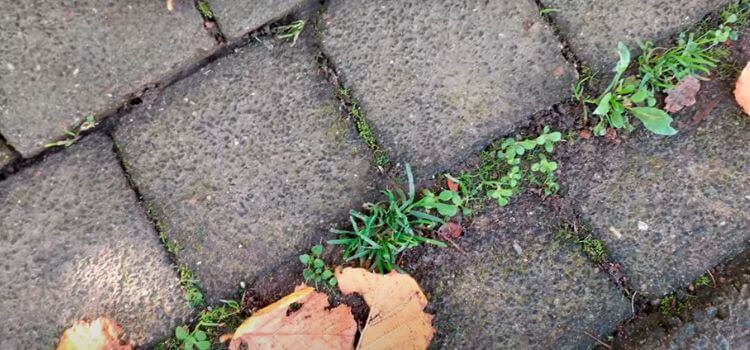
Weeds commonly grow between pavers when joint sand becomes loose or washes away. Removing the weeds without restoring the joints leaves the same growing space open.
After removing the plants and cleaning the joints, replace the missing material with suitable joint sand. Polymeric sand may be an option for compatible pavers and joints.
Polymeric sand contains binding ingredients that help the sand hold together after installation and activation with water. It can make it harder for seeds to settle in and can reduce joint erosion.
Follow the product instructions carefully. The paver surface must be prepared correctly, and excess sand must be removed before watering. Not every paver system or joint is suitable for polymeric sand.
Best prevention
Keep paver joints properly filled and use a compatible jointing material.
Home Remedies For Driveway Weeds: What Works And What To Avoid
Many homeowners look for a cheap homemade weed killer. Common suggestions include vinegar, salt, baking soda, bleach, and boiling water. However, a method that kills visible leaves does not always kill established roots or prevent new seeds from growing.
Some household mixtures can also damage the driveway or harm nearby plants. A low-cost treatment may create a more expensive repair or landscaping problem later.
Source: lawnaffection.com
Does Vinegar Kill Driveway Weeds?
Vinegar can damage plant tissue that it directly touches. It may work on small, young weeds, especially when their leaves are exposed to the treatment.
However, household vinegar is not a dependable way to kill deep roots. Established perennial weeds may regrow after the leaves die. Stronger horticultural vinegar products also require careful handling and can cause serious eye and skin injuries.
Repeated vinegar applications can harm nearby vegetation and may affect some paving materials. If you use an acetic-acid weed-control product, choose one labeled for the intended location and follow all safety instructions.
Does Salt Permanently Kill Driveway Weeds?
Salt can damage plants by disrupting their ability to take up water. It may kill some weeds, but it does not create a safe or reliable long-term driveway repair.
Salt can move with rainwater into nearby soil. This can harm grass, flowers, shrubs, and trees. Repeated use can also contribute to surface deterioration and soil problems.
Avoid pouring salt into driveway cracks, especially near lawns, garden beds, or drainage routes.
Can Boiling Water Kill Weeds?
Boiling water damages the plant cells it contacts. It can be useful for very small weeds growing in isolated cracks, but it may not reach deep roots or underground stems.
Established weeds can regrow after the visible leaves are damaged. Hot water can also injure nearby plants and cause severe burns if it splashes onto your skin.
Use extreme caution if considering this method, and never pour boiling water near children, pets, or people walking on the driveway.
Why You Should Avoid Bleach And Baking Soda Mixtures
Bleach is not a suitable general driveway weed treatment. It can damage desirable plants, create harmful exposure risks, and move into nearby drainage systems.
Baking soda can also affect soil chemistry and harm plants. Neither substance repairs cracks or stops windblown seeds from landing in the driveway.
Do not mix household cleaning products or combine chemicals to make homemade weed killers. Some mixtures can release dangerous fumes or cause chemical burns.
Should You Use A Commercial Driveway Weed Killer?
A commercial herbicide can help when weeds are widespread or difficult to remove by hand. Some products kill existing plants, while others also contain ingredients that limit new growth for a stated period.
The important difference is the intended use. A lawn weed killer may target broadleaf weeds while leaving grass alive. A nonselective driveway product may kill most vegetation it touches. A residual product may also prevent desirable plants from growing in the treated soil.
Choose a product according to the exact surface and location. Read the full label before purchasing or applying it. A product being sold as a weed killer does not mean it is suitable for every driveway.
Contact Herbicides
Contact herbicides damage the plant tissue they touch. They can be useful for small, actively growing weeds with exposed leaves.
Their main limitation is that they may not kill the entire root system. Deep-rooted or spreading perennial weeds can return after the treated leaves die.
These products are better viewed as a tool for controlling visible growth than as a replacement for crack repair.
Systemic Herbicides
Systemic herbicides are absorbed by the plant and move into other tissues. Depending on the active ingredient and product directions, this movement can help control roots and other growing parts.
Results are not always immediate. Some plants need time to absorb and move the treatment through their tissues. Cutting or pulling weeds too soon after treatment may reduce the intended effect.
Follow the label for the required waiting period, weather conditions, and application method. Never assume that a systemic product is safe for every surface or nearby plant.
Residual Weed Preventers
Some driveway weed-control products contain ingredients that remain active in the treated area and prevent certain new plants from establishing. Their stated control period depends on the product and conditions.
These products can be unsuitable near trees, shrubs, flower beds, or areas you plan to plant. Rainfall and soil conditions can also affect their performance.
Use residual products only in locations specifically permitted by the label. Keep them away from areas where you want desirable plants to grow.
Important Herbicide Safety Rules
In the United States, pesticide use is governed by product labeling and applicable federal and state rules. Using a pesticide in a way that conflicts with its label is not an acceptable shortcut.
Wear the protective equipment listed on the label. Keep children and pets away during application and for the stated re-entry period. Avoid windy conditions, runoff, and application near storm drains or surface water.
Never pour leftover herbicide or cleaning water into a street drain, sink, or gutter. Follow the product disposal instructions and local waste rules.
Check the application site
Confirm that the label permits use on driveways, cracks, gravel, or pavers as applicable.
Check the weather
Follow the label’s wind, rain, and temperature limits.
Prevent drift and runoff
Use careful spot application and protect nearby plants and water sources.
Store products safely
Keep chemicals in their original containers and away from children, pets, food, and heat.
How To Stop Weeds From Growing Back
Removing weeds once is only the beginning. Regular driveway care helps prevent new seeds from finding a place to grow. Small maintenance tasks can save time compared with repeatedly clearing large, established weeds.
The best routine focuses on keeping the surface clean, repairing damaged joints, and removing new growth while it is still small.
Source: i.pinimg.com
Sweep regularly
Remove dirt, leaves, grass clippings, and other debris before they collect in driveway cracks.
Check cracks after heavy rain
Look for missing joint material, washed-out sand, and new openings that could collect soil.
Remove young seedlings
Pull small weeds before their roots become established or they produce seeds.
Maintain driveway edges
Keep grass, creeping plants, and garden debris from spreading into driveway joints.
Maintain proper drainage
Address standing water and drainage problems that repeatedly wash material into cracks.
Inspect repaired areas
Check fillers and joint materials periodically for gaps, movement, or signs of failure.
Create A Simple Driveway Maintenance Schedule
A short inspection every few weeks during the growing season can help you catch weeds before they spread. You do not need to spend hours cleaning the driveway each time.
After heavy rain, check whether joint sand or crack filler has moved. During periods of active growth, remove small weeds as soon as they appear. Before winter in colder parts of the United States, inspect cracks and complete suitable repairs according to the product’s temperature requirements.
The schedule can change with local weather. Homeowners in warm states may see weed growth throughout much of the year, while colder regions may need more attention during spring and summer.
Weekly or every few weeks
Sweep the driveway and remove new seedlings.
After heavy rain
Inspect joints, drainage areas, and repaired cracks.
Seasonally
Check the whole driveway for damaged pavement, loose joint material, and recurring weeds.
Common Mistakes That Make Driveway Weeds Worse
Some weed-removal methods appear to work because the visible plants disappear. However, a driveway can become a recurring weed problem when roots, debris, and damaged joints remain.
Avoid these common mistakes when planning your cleanup.
Source: i.ytimg.com
Only cutting the leaves
Cutting the tops may make the driveway look clean for a short time, but many weeds can regrow from roots left below the surface.
Leaving pulled weeds nearby
Some weeds may still carry mature seeds. Collect and dispose of plant material instead of leaving it in cracks or on the driveway.
Using salt repeatedly
Salt can move into nearby soil, damage desirable plants, and create problems beyond the driveway.
Using the wrong crack filler
Concrete, asphalt, and pavers need compatible repair materials. An unsuitable product may fail or damage the surface.
Pressure washing damaged joints
High pressure can remove joint material, weaken edges, or force water beneath paving.
Applying herbicide before checking the label
Some products remain active in soil and can harm nearby trees, shrubs, lawns, or future plantings.
Ignoring drainage
Water can carry soil and seeds into cracks and may contribute to ongoing pavement damage.
Expecting one treatment to solve everything
Even a good treatment cannot stop every new seed from arriving. Regular maintenance is still needed.
When Should You Call A Driveway Repair Professional?
A few small surface cracks are often manageable with suitable home repair products. However, large openings, sinking sections, repeated cracking, and severe surface damage may indicate a deeper problem.
If water repeatedly collects around the driveway or cracks continue to widen, a professional can inspect the base, drainage, and pavement condition. Repairing the underlying issue may be more effective than repeatedly filling the same openings.
Get professional advice when the driveway has significant settlement, unstable pavers, large broken sections, or damage that creates a safety hazard.
Research Notes And Useful Reader Questions
The most useful distinction in driveway weed control is the difference between killing existing plants and preventing new growth. These are separate tasks, and a complete solution should address both.
The guidance for this article was checked against U.S. Cooperative Extension advice, published driveway maintenance guidance, hard-surface weed management information, and pesticide product labeling. The reviewed material consistently supports root removal, crack cleaning, appropriate repairs, and careful product selection.
One important limitation is that no method can promise a weed-free driveway forever. Weather, pavement movement, nearby vegetation, and new seed deposits can all change the result.
Observed question: Can homemade mixtures permanently kill driveway weeds?
An October 2024 Cooperative Extension question addressed this issue. The response explained that homemade mixtures and commercial herbicides do not provide a truly permanent solution. The practical answer is to combine removal with suitable crack repair.
Observed question: How do I prevent weeds between pavers?
Driveway and paving guidance discusses replacing loose joint sand with suitable polymeric sand. The useful addition is to explain that product compatibility, joint preparation, and correct installation matter.
Inferred next need: What should I do when weeds return after treatment?
This follows directly from the main task. Check for surviving roots, remaining soil, missing joint material, and fresh seed deposits before repeating a treatment.
Inferred next need: Which repair material works on my driveway?
The answer depends on whether the surface is concrete, asphalt, gravel, or pavers. Choosing a compatible repair material helps prevent failed repairs.
Inferred next need: How often should I inspect the driveway?
Regular inspection during the growing season and after heavy rain can identify new weeds and damaged joints before they become larger problems.
What The Reviewed Guides Do Not Always Explain Clearly
The main useful improvement is to connect weed removal with surface repair. A guide that explains only how to kill leaves does not fully answer why weeds return.
Another important distinction is between paver joints and cracks in a concrete slab. Polymeric sand is not a universal crack filler, and rigid cement should not be used to block every movement joint.
Finally, the advertised duration of a weed-control product should not be confused with permanent prevention. The product label and actual site conditions determine its appropriate use and expected limits.
Frequently Asked Questions
Q
What Is The Best Way To Permanently Kill Weeds In Driveway Cracks?
The closest approach to permanent control is to remove the entire weed, clear soil and roots from the crack, and repair the opening with a compatible material. Regular sweeping and early removal of new seedlings help maintain the result.
No method can guarantee that weeds will never return because new seeds can arrive from nearby areas.
Q
Does Salt Kill Weeds Growing Between Concrete?
Salt can damage and kill some weeds, but it is not a good long-term driveway solution. Rain can carry salt into nearby soil, where it may harm grass, flowers, shrubs, and trees.
Use root removal and suitable concrete crack repair instead of repeatedly adding salt.
Q
Will Vinegar Kill Weeds Growing In Driveway Cracks?
Vinegar can damage the leaves and stems it touches, especially on young weeds. However, it may not kill deep roots or prevent new seeds from growing.
Repeated applications can also harm nearby plants and may affect some paving materials. Use only a properly labeled weed-control product if chemical treatment is necessary.
Q
Does Boiling Water Kill Weeds Permanently?
Boiling water can kill small weeds by damaging their plant tissue. However, it may not reach deep roots or underground stems, so established weeds can grow back.
It also creates a serious burn risk. It should not be treated as a permanent solution.
Q
How Do I Keep Weeds From Growing Between Pavers?
Remove the existing weeds and clean the joints. Then replace missing or loose joint material with a product suitable for your pavers.
Polymeric sand can help stabilize compatible paver joints when installed correctly. Sweep the surface regularly so seeds and dirt do not collect between the pavers.
Q
Can A Pressure Washer Remove Weeds From Driveway Cracks?
A pressure washer can remove loose dirt and some shallow weeds. However, it may not remove deep roots, and excessive pressure can damage concrete, wash out paver joints, or force water beneath the pavement.
Use a low setting when appropriate and test a small area first. A crack weeder is often more controlled for removing established plants.
Q
How Often Should I Remove Driveway Weeds?
Inspect your driveway every few weeks during periods of active weed growth. Remove young seedlings before they develop deep roots or produce seeds.
Also check the driveway after heavy rain for washed-out joint material, new cracks, and accumulated debris.
✦ Wrapping Up
Conclusion
Learning how to permanently get rid of weeds driveway growth starts with understanding why these plants return. Cutting off the leaves or spraying a weed killer may remove visible growth, but neither method repairs the cracks or prevents every new seed from arriving.
For the best long-term result, pull the weeds, remove their roots, clean out the soil, and repair suitable openings with materials designed for your driveway. Use polymeric sand where it is appropriate for paver joints, and choose concrete or asphalt repair products for the matching surfaces.
Avoid salt, bleach, and risky homemade mixtures. If you use a commercial herbicide, follow its label and protect nearby plants, people, pets, and water sources.
A clean driveway does not require constant heavy work. A little sweeping, quick removal of new weeds, and regular crack inspections can make a big difference. The goal is to remove the current problem and make it harder for another one to start.
💡 Key Takeaway
Start by removing every visible weed and as much of its root as possible. Sweep the cracks clean, identify your driveway material, and repair suitable openings with the correct filler or joint material. Then inspect the driveway every few weeks and remove new seedlings while they are small.
I enjoy sharing simple gardening ideas, lawn care tips, and honest product reviews that help make outdoor work easier. From home gardening guides to helpful tools and lawn care advice, I write easy-to-follow content to help readers create a healthier and better-looking outdoor space without wasting time or money.