As an Amazon Associate, I earn from qualifying purchases.
Most hydrangeas do not need heavy pruning in fall. Remove dead or damaged stems, tidy up loose debris, and leave healthy branches in place until you know which type you grow. Bigleaf, mountain, oakleaf, and climbing hydrangeas often bloom on old wood, so cutting them back in fall can remove next summer’s flowers. Panicle and smooth hydrangeas bloom on new wood and tolerate harder pruning, but late winter or early spring is usually a better time for major cuts.
Across the United States, fall brings a welcome change in the garden. Summer heat fades, leaves turn gold and red, and hydrangea blooms dry into soft shades of tan and brown. It is tempting to grab the pruning shears and cut every shrub down before winter, especially when the yard needs a final tidy-up. Yet hydrangeas do not all grow or bloom in the same way, and one quick trim can cost you a whole season of flowers.
The safest approach is to identify your hydrangea, check for dead or broken wood, and make only the cuts that are needed. In much of the country, fall weather can shift from mild days to early freezes, so avoid pruning healthy stems just to make a shrub look neat. Those stems may hold next year’s flower buds or help shield the plant through winter. A little patience now can lead to a fuller display when spring and summer return.
For most hydrangeas, fall is a time for light cleanup rather than a major haircut. You can remove dead wood and damaged branches, but healthy stems should usually stay in place until the plant’s pruning needs are clear. This matters most for varieties that form flower buds before winter.
Hydrangeas use two main flowering patterns. Some set buds on old wood, which means stems that grew in a previous season carry the next round of flowers. Others form flowers on new wood, which grows during the current season. Knowing the difference helps you avoid cutting away the very growth you want to keep.
Your local climate also affects the best timing. Gardeners in northern states may face an early freeze, while those in warmer parts of the South may have a longer fall season. In either case, there is usually no need to rush into major pruning just because summer flowers have faded.
Source: detroitchinatown.org
Light fall cleanup
Remove dead, broken, or clearly diseased branches when necessary. Leave sound stems and avoid changing the shrub’s overall shape without a good reason.
Heavy pruning
Wait until late winter or early spring for hydrangeas that bloom on new wood, unless a specific growing problem calls for another approach.
Dead flower heads
These can remain through winter. Remove them in fall only if you prefer a tidier look or need to address a specific problem.
Why Fall Pruning Can Reduce Blooms
Old-wood hydrangeas often develop flower buds during the growing season and carry them through winter. A cut made in fall can remove those buds before they open the following year. The shrub may still grow healthy leaves, but its flower display may be smaller or absent.
This is why a bare, neat-looking shrub is not always the goal. Healthy stems can look untidy after the leaves drop, yet keeping them intact may be the best way to protect next summer’s flowers.
Check before cutting
Identify the hydrangea species or cultivar before shortening live stems.
Choose patience over appearance
If the shrub is healthy, leave its natural shape alone until the correct pruning season.
Identify Your Hydrangea Before You Prune
The most important step is to identify the type of hydrangea in your yard. Flower shape and leaf form can provide useful clues, although cultivars sometimes look alike. If you have a plant label, keep it as your first reference, and compare the plant with a reliable description of the species.
The following table shows the usual pruning approach for common garden hydrangeas in the United States. It is a general guide, not a substitute for cultivar-specific advice. Some reblooming cultivars can flower on both old and new wood, which makes conservative pruning especially useful.
Source: www.pinterest.com
Bigleaf hydrangea
Often has large, rounded flower clusters or flatter lacecap blooms and broad leaves. Many cultivars bloom on old wood, so avoid cutting healthy stems in fall.
Mountain hydrangea
Often has lacecap flowers and smaller leaves than bigleaf hydrangea. Many varieties bloom on old wood and need little fall pruning.
Oakleaf hydrangea
Has leaves shaped like oak leaves and cone-shaped flower clusters. It usually blooms on old wood and benefits from minimal pruning.
Climbing hydrangea
Clings to walls, fences, or tree trunks and usually blooms on old wood. Prune only when needed to manage growth or remove damaged stems.
Panicle hydrangea
Has cone-shaped flower clusters and usually blooms on new wood. It can tolerate more pruning, but a major cut is generally best made in late winter or early spring.
Smooth hydrangea
Often has rounded flower clusters and blooms on new wood. It can be pruned in late winter or early spring, with the amount of cutting based on the cultivar and desired shape.
Old Wood Versus New Wood
Old wood means stems that formed during a previous growing season. When a hydrangea blooms on old wood, next year’s flower buds may already be present by fall. Removing those stems can reduce flowering, even if the plant itself remains healthy.
New wood means growth produced during the current growing season. Hydrangeas that bloom on new wood form their flowers on newer stems, so they can generally be pruned before new spring growth begins. However, this does not mean that fall pruning is required.
If you are unsure which type you have, use the least risky option: remove only dead or damaged wood and wait to shorten healthy stems until you have identified the plant.
Old-wood types
Protect healthy stems and flower buds through winter. Prune lightly and at the correct time for the species.
New-wood types
Save major shaping for late winter or early spring, before fresh growth makes the plant harder to assess.
The Best Time to Prune Hydrangeas in Fall
There is no single fall date that works for every hydrangea or every part of the United States. The right time depends on the plant type, your local weather, and the reason for pruning. For most healthy shrubs, the best fall pruning plan is to make only necessary cleanup cuts and postpone major shaping.
If you need to remove a broken branch or a stem with clear signs of disease, do not let the calendar stop you from addressing the problem. Make a clean cut in suitable weather, then avoid further pruning unless another issue appears. When a damaged stem is not an immediate hazard, you can wait for a dry day with mild temperatures.
Avoid major cuts just before a hard freeze, especially on hydrangeas that bloom on old wood. Late-season pruning may also encourage tender growth in climates where warm weather returns unexpectedly. In areas with mild winters, the plant may remain active longer, but the basic rule still applies: prune according to the hydrangea type rather than the season alone.
Source: ca.pinterest.com
Early fall
Check the shrub’s health, identify its type, and remove broken or dead branches if needed. Avoid routine heavy pruning.
Mid-fall
Leave healthy stems in place, especially on old-wood varieties. Allow the plant to begin its natural seasonal slowdown.
Late fall
Finish essential cleanup, remove fallen leaves from the crown when practical, and prepare the root zone for winter.
How Climate Changes the Timing
In colder parts of the Northeast, Midwest, and northern mountain regions, early freezes can arrive before fall cleanup is complete. Protecting existing stems and flower buds is often more useful than cutting the shrub into a neat shape. Leave major cuts for the appropriate late-winter or spring window.
In the Southeast and other areas with milder winters, hydrangeas may keep their leaves longer. You can still follow the same conservative method. Wait until the shrub’s pruning needs are clear, and do not assume a long fall means every type should be cut back.
In the Pacific Northwest and other wet regions, choose a dry spell for pruning when possible. Wet weather can make handling tools and inspecting plant tissue more difficult, and repeated cuts are best avoided when conditions are poor.
Cold climates
Preserve healthy stems and buds, and avoid major pruning as freezing weather approaches.
Mild climates
Use species-specific timing even if the plant stays leafy well into fall.
Wet climates
Choose dry conditions for necessary cuts and clean tools before moving between plants.
How to Prune Hydrangeas in Fall Step by Step
You can complete a safe fall pruning check with a few basic tools and a careful look at the shrub. The goal is to remove material that should not remain, not to force every stem into the same shape. Work slowly and stop when you reach healthy growth that does not need attention.
Before you begin, gather clean, sharp bypass pruning shears, sturdy gardening gloves, and a container for plant debris. Use loppers only when a branch is too thick for your hand shears and you can reach it safely. Large, high, or hazardous branches are better left to a qualified professional.
Source: storage.googleapis.com
Step 1: Confirm the plant type
Look for a plant label, note the flower shape and leaf form, and check whether the cultivar blooms on old wood or new wood. If you cannot identify it, limit work to essential cleanup.
Step 2: Inspect the whole shrub
Look for broken branches, stems that are clearly dead, crossing growth, and any obvious signs of disease. Check the base and center as well as the outer edges.
Step 3: Remove dead or broken stems
Cut dead wood back to healthy tissue or to its point of origin. Remove broken branches at a suitable junction without leaving a long, damaged stub.
Step 4: Handle diseased material carefully
If a stem has clear signs of disease, remove the affected section when appropriate and clean the tool before using it elsewhere. Dispose of diseased debris according to local guidance rather than automatically adding it to a home compost pile.
Step 5: Decide what to do with faded blooms
Leave healthy flower heads if you enjoy their winter texture. If you choose to remove them, cut just above a healthy pair of buds or a suitable stem junction, taking care not to cut into the next season’s flower buds.
Step 6: Stop before removing healthy stems
Do not keep cutting simply because a few branches remain longer than others. Preserve sound growth unless your hydrangea type and a clear pruning goal justify further work.
Step 7: Clean up the area
Gather fallen leaves and cuttings, especially material showing signs of disease. Keep the root area clear enough for air to move and water to drain.
How to Make a Clean Pruning Cut
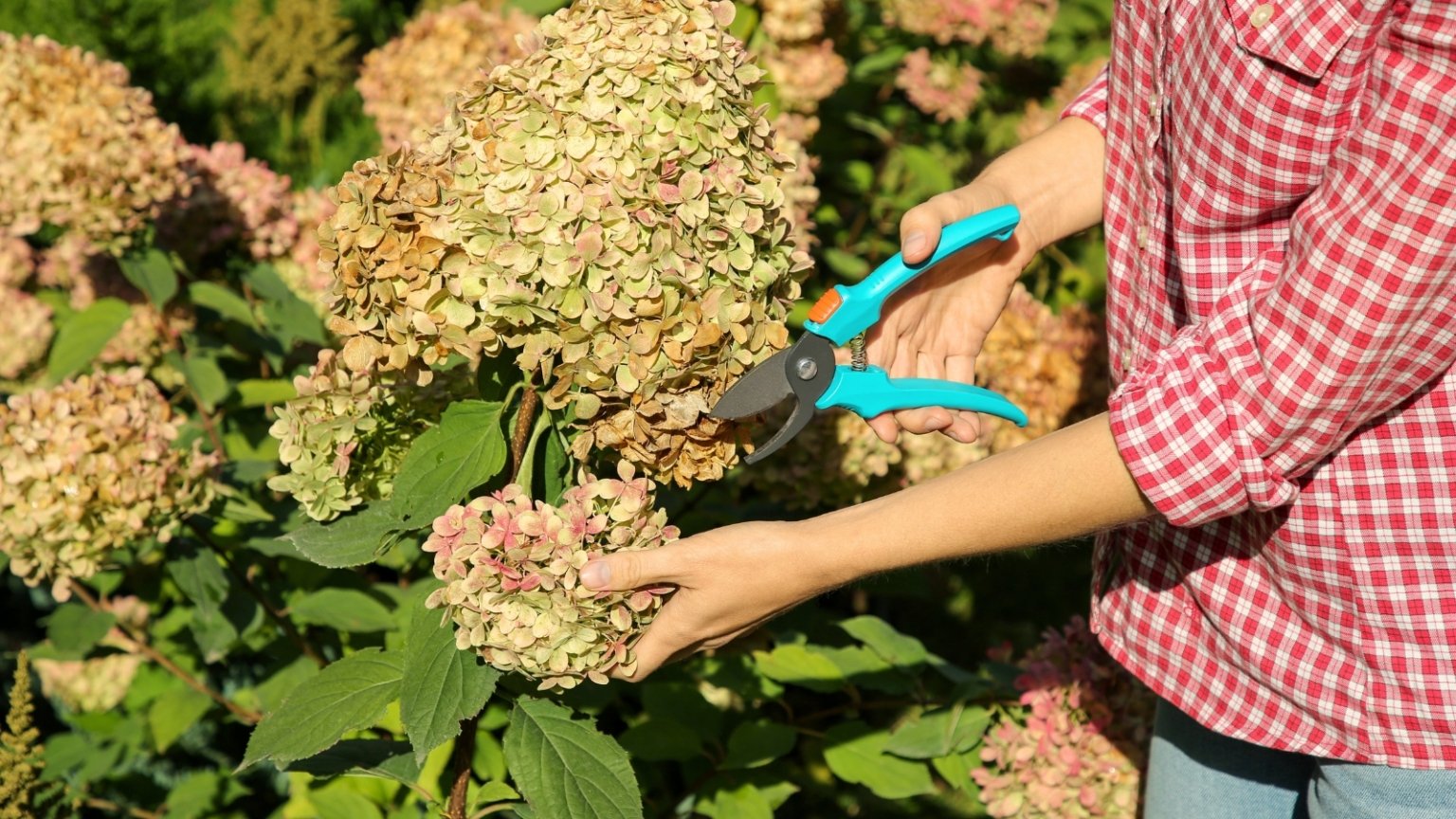
Make each cut with sharp, clean shears. For a branch you need to shorten, cut just above a healthy bud or suitable side branch without damaging the bud. Avoid leaving a long stub, but do not cut so close that you injure the growing point.
When removing an entire dead stem, cut near its base or where it joins a healthy branch. Do not damage the crown or the neighboring stems. Hydrangea stems vary in thickness and structure, so the exact cut depends on the branch rather than a fixed height above the ground.
Use sharp blades
Sharp shears make cleaner cuts and reduce the need to twist or crush the stem.
Keep tools clean
Remove sap and plant debris from the blades, and disinfect them when disease is suspected or when moving between affected plants.
Avoid random shortening
Do not cut all stems to the same height. Hydrangea species have different growth habits and flowering needs.
What to Do If You Cut Too Much
If you accidentally remove a healthy stem, there is usually no need to make more cuts in an attempt to correct the shape. Stop pruning and let the shrub recover. A cut cannot be reversed, and extra trimming may remove even more flower buds.
The plant may still produce leaves and stems the following season, but an old-wood hydrangea may bloom less if you removed its flower buds. Keep watering appropriate for the weather, maintain a healthy root zone, and wait to judge the shrub’s overall recovery until new growth appears.
Stop further cutting
Do not try to even out every branch after an accidental cut.
Protect the root zone
Maintain suitable soil moisture and a light layer of mulch without piling it against the stems.
Should You Cut Off Dead Hydrangea Flowers in Fall?
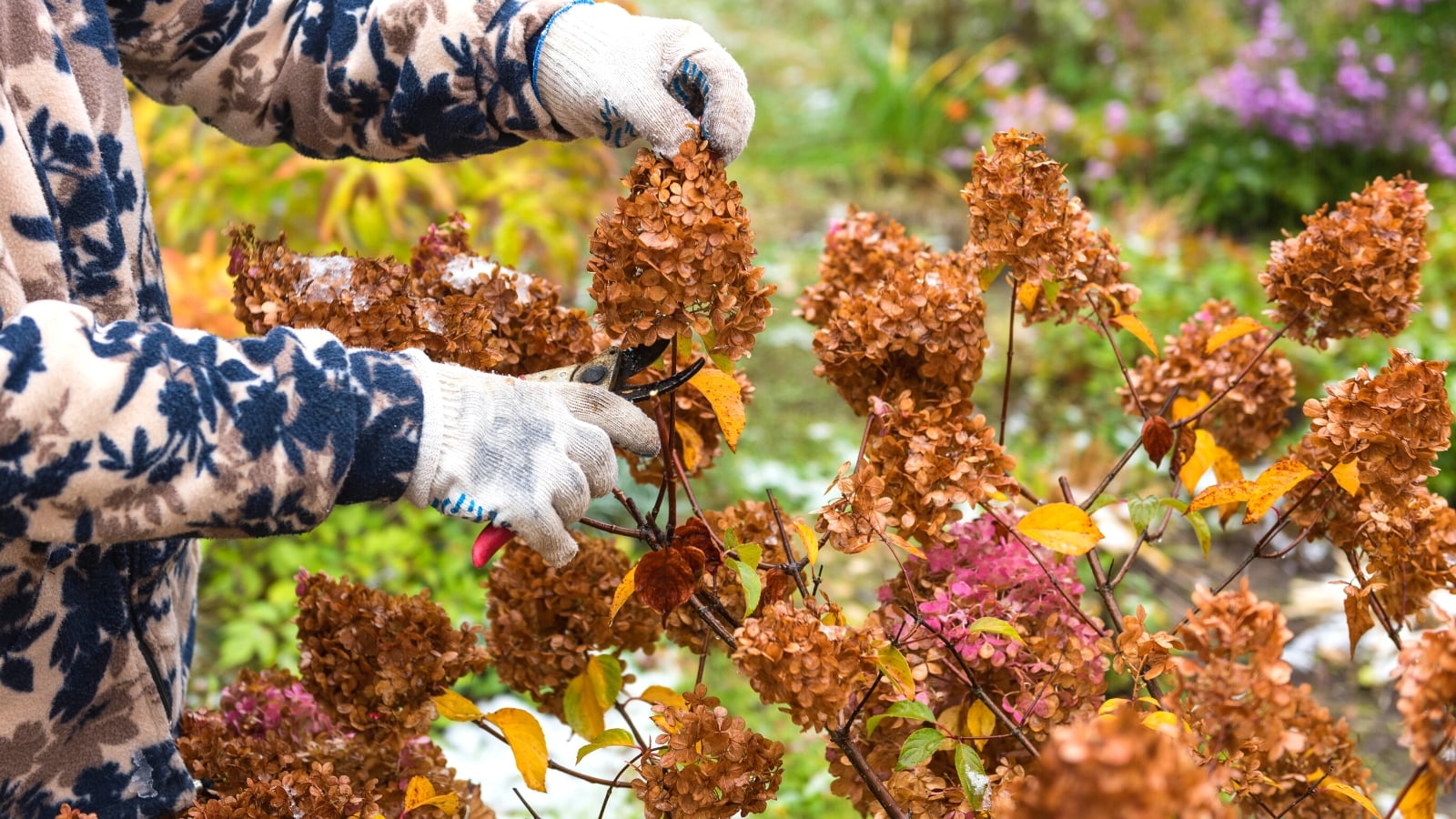
You do not have to remove faded hydrangea flowers in fall. Dry flower heads can add shape and texture to a winter garden, especially when frost settles on them. Leaving them in place is also a simple way to avoid accidentally cutting away buds on old-wood varieties.
If you prefer a tidy garden, you can remove some flower heads with care. Look closely at the stem beneath each bloom and avoid cutting far down into healthy growth. On bigleaf, mountain, oakleaf, and climbing hydrangeas, flower buds may sit near the ends of stems, so a deep cut can reduce next year’s bloom.
Panicle and smooth hydrangeas have more flexibility because they flower on new wood. Even so, removing old flower heads in fall is mostly a matter of appearance rather than plant health. If the flowers do not bother you, there is no need to rush outside with the shears.
Source: thisismygarden.com
Leave flowers for winter interest
Keep dry blooms on the shrub if you like their texture or want to avoid unnecessary pruning.
Remove blooms carefully
Use clean shears and make a small cut that avoids healthy buds and stems.
Skip deep cuts on old-wood types
Do not shorten the whole flowering stem just to remove one faded flower head.
Can Dead Flower Heads Protect Hydrangeas in Winter?
Leaving flower heads in place may offer a small amount of cover around the upper stems, but they are not a substitute for proper winter care. Healthy stems, suitable planting conditions, and protection for the root zone matter more than the presence of dry blooms alone.
In areas with heavy snow or strong winds, flower heads may bend stems or collect unwanted weight. If a branch is at risk of breaking, remove the flower head or damaged section with a careful cut. The aim is to prevent injury without removing more growth than necessary.
Keep them when practical
Dry blooms can remain through winter if they are not causing damage.
Remove risky growth
Address stems that are broken, hanging dangerously, or likely to split under heavy snow.
How Much Should You Cut Back Each Hydrangea Type?
The amount you cut depends on the species, the health of the plant, and your reason for pruning. Fall is rarely the time for a routine hard cut on an established hydrangea. Use the following comparison to decide how much intervention is appropriate.
These recommendations describe common types, not every cultivar. If the plant label provides specific instructions, use those directions to refine your plan. When a shrub has been neglected for years, gradual renewal over more than one season may be safer than cutting everything at once.
Source: www.pinterest.com
Bigleaf and mountain hydrangeas
In fall, remove only necessary dead or broken wood. Avoid shortening live stems because flower buds may already be present.
Oakleaf hydrangeas
Keep healthy stems through winter. Prune only where needed to remove damage or address a clear growth issue.
Climbing hydrangeas
Use minimal fall pruning. Remove damaged growth and wait for the appropriate pruning window before managing size.
Panicle hydrangeas
Leave healthy stems in fall unless a specific problem requires attention. Shape or reduce size in late winter or early spring.
Smooth hydrangeas
Avoid unnecessary fall cutting. Prune before spring growth if you want to manage height or encourage a particular form.
Can You Cut Hydrangeas Back to the Ground?
Cutting a hydrangea down to the ground is not a good general fall-care method. Some smooth hydrangea cultivars can tolerate hard pruning because they flower on new wood, but that does not mean every cultivar needs a severe cut. Heavy pruning can also affect stem strength and the shape of the plant.
Bigleaf, mountain, oakleaf, and climbing hydrangeas should not be routinely cut to the ground in fall. Doing so may remove next year’s flower buds and leave the plant with a reduced display. Identify the type and check its specific pruning guidance before making a major change.
For old-wood types
Do not cut the shrub to the ground as a standard fall practice.
For new-wood types
Use late-winter or early-spring pruning when needed, and retain a suitable framework of stems if the cultivar benefits from it.
Prepare Hydrangeas for Winter After Pruning
Once essential pruning is finished, focus on the roots and the soil around the plant. Hydrangeas generally benefit from even soil moisture during dry fall weather, but soggy soil can cause root problems. Check the ground before watering rather than following a fixed schedule.
A layer of organic mulch can help reduce soil temperature swings and limit moisture loss. Spread mulch over the root zone while leaving space around the stems. A thick mound pressed against the crown can trap moisture and encourage decay.
Avoid adding high-nitrogen fertilizer late in the growing season unless a soil test or local guidance supports it. Late feeding can encourage growth at a time when the plant should be preparing for winter. In most home gardens, suitable moisture, a healthy root zone, and minimal disturbance are more useful than extra fertilizer.
Source: epicgardening.com
Water when needed
If fall is dry, water the root zone deeply enough to moisten the soil. Reduce watering when rain keeps the soil adequately moist.
Apply mulch
Use a light, even layer of suitable organic mulch over the root area, keeping it away from direct contact with stems.
Clear unhealthy debris
Remove fallen leaves or plant material that may harbor disease, especially when the shrub had visible leaf problems during summer.
Protect exposed plants
For hydrangeas that are marginally hardy in your area, consider a suitable winter protection plan based on the cultivar and local climate.
Should You Fertilize Hydrangeas in Fall?
Routine fall fertilizing is usually unnecessary for established hydrangeas. Fertilizer cannot make up for poor drainage, unsuitable light, or damaged roots, and a late dose of nitrogen may encourage tender growth in some conditions.
If the plant has shown poor growth or unusual leaf color, first review its growing conditions. A soil test can help determine whether a nutrient problem exists. Follow the test results and local extension recommendations instead of adding fertilizer without a clear reason.
Avoid guesswork
Do not apply fertilizer simply because the flowers have faded or the leaves are changing color in fall.
Check the soil
Use a soil test when nutrient problems are suspected, and adjust care based on the findings.
Common Fall Hydrangea Pruning Mistakes
Most fall pruning problems start with good intentions. Gardeners want a neat yard before winter, so they cut back every stem, remove every flower head, or shape all shrubs in the same way. Hydrangeas respond differently by type, which means a method that works for one plant may reduce flowers on another.
Avoid making large cuts just to create a uniform shape. A healthy hydrangea does not need to look bare and tidy in winter to be ready for spring. Small, well-chosen cuts are often all that is needed.
Source: nhcleantechcouncil.org
Pruning without identifying the species
A plant that blooms on old wood can lose next year’s flowers after an ill-timed cut. Identify the plant first or stick to essential cleanup.
Cutting every stem to the same height
Hydrangeas differ in growth habit and flower placement. Uniform cutting may damage their natural form or remove buds.
Removing all flower heads
Dead blooms can remain through winter. Remove them only when desired or when they cause a practical problem.
Using dull or dirty tools
Dull blades can crush stems, while dirty tools can move plant debris and possible pathogens between cuts.
Pruning before a freeze
Major cuts close to freezing weather are rarely needed and can leave old-wood hydrangeas more exposed.
Assuming brown leaves mean a dead plant
Leaf color often changes naturally in fall. Check the stems before deciding a branch is dead.
Overwatering during cool weather
Hydrangeas need moisture, but their water use often drops as temperatures cool. Check soil moisture before adding more water.
How to Tell Whether a Stem Is Dead
Brown leaves and dry flower heads do not prove that a hydrangea stem is dead. Many healthy stems lose their leaves in fall and remain dormant through winter. Look for other signs before cutting.
A clearly broken stem, a section that is dry and brittle throughout, or tissue that shows obvious decay may need removal. If you are unsure, wait until late winter or spring when new growth can help you judge the plant’s condition. Avoid repeatedly scratching stems or making test cuts across many branches.
Look for physical damage
A split, crushed, or hanging branch is a stronger reason to prune than a stem that has simply lost its leaves.
Wait when uncertain
If a branch is not hazardous, delaying the cut can prevent the accidental removal of healthy growth.
When to Seek Local Gardening Advice
If an established hydrangea has stopped blooming, has large areas of dieback, or repeatedly develops unusual stem damage, local advice can help narrow down the cause. A county Cooperative Extension office may be able to help identify the plant and assess common regional issues.
Take clear photos of the whole shrub, its leaves, flower heads, and any affected stems. Include the plant’s location, approximate age, and recent pruning history. These details are more useful than a general description alone.
For repeated poor flowering
Check species, pruning time, light, and winter damage before assuming the shrub needs a harder cut.
For widespread stem dieback
Seek help identifying possible disease, root problems, or winter injury before removing large portions of the plant.
A Simple Fall Hydrangea Care Checklist
A short checklist can help you finish fall care without overworking the shrub. You do not need to complete every task on the same day. Work when the weather is suitable, and leave anything that can safely wait until the correct pruning season.
Identify the hydrangea
Confirm the species or cultivar and find out whether it blooms on old wood, new wood, or both.
Inspect the stems
Look for broken branches, clear dieback, and obvious disease. Do not mistake normal leaf drop for stem death.
Make only necessary cuts
Remove damaged material with clean, sharp tools. Avoid heavy shaping in fall.
Choose what to do with flowers
Leave dry flower heads for winter interest or remove them carefully without cutting into healthy buds.
Check soil moisture
Water if the root zone is dry, but avoid keeping cool-season soil saturated.
Protect the root zone
Apply a suitable layer of mulch and keep it clear of the stems.
Plan spring pruning
Make a note of any shaping or renewal work that can wait until late winter or early spring.
What Success Looks Like
A successfully prepared hydrangea may still look loose, brown, or uneven after fall cleanup. That is normal for a deciduous shrub. The goal is to keep the plant healthy and preserve the growth needed for the next season, not to make it look freshly trimmed all winter.
By spring, the shrub should be ready to resume growth as temperatures and conditions allow. Some old-wood varieties may show winter damage in cold regions, so inspect them again before pruning. Remove confirmed dead growth when the risk of severe cold has passed and the plant’s growth pattern becomes clearer.
Healthy stems remain
Most live branches are intact, with cuts limited to necessary cleanup.
The root zone is cared for
Soil moisture is suitable, mulch is not piled against the crown, and unhealthy debris is removed.
Spring work is planned
Any major shaping is postponed until the appropriate time for the plant type.
Frequently Asked Questions
Q
Is it better to prune hydrangeas in fall or spring?
For most hydrangeas, spring is the better time for major pruning, but the correct timing depends on the type. Bigleaf, mountain, oakleaf, and climbing hydrangeas often bloom on old wood, so pruning after they flower is usually safer for preserving next year’s buds. Panicle and smooth hydrangeas bloom on new wood and can generally be pruned in late winter or early spring. In fall, focus on essential cleanup rather than heavy cutting.
Q
Can I prune hydrangeas in October?
You can remove dead, broken, or clearly diseased stems in October when conditions are suitable. However, avoid routine heavy pruning, especially if you have an old-wood hydrangea. October weather varies across the United States, so the month alone does not determine whether pruning is appropriate. Identify the plant and consider local frost timing before making cuts.
Q
Should I cut hydrangeas down before winter?
No, cutting all hydrangeas down before winter is not recommended. Bigleaf, mountain, oakleaf, and climbing hydrangeas may carry next year’s flower buds on their existing stems. Panicle and smooth hydrangeas tolerate more pruning because they bloom on new wood, but they usually do not need a fall cut to survive winter. Keep healthy stems unless you have a clear, species-specific reason to remove them.
Q
What happens if I do not prune my hydrangeas in fall?
In most cases, nothing harmful happens if you skip fall pruning. Healthy hydrangeas can go into winter with their old flower heads and stems still attached. The shrub may look less tidy, but leaving it alone can help preserve flower buds and avoid unnecessary cuts. You can remove damaged growth later when the plant’s condition and pruning needs are easier to assess.
Q
Should I remove brown hydrangea leaves in fall?
You do not need to remove every brown leaf from a hydrangea. Leaves often change color and fall naturally as the shrub enters dormancy. Collect fallen leaves when they show signs of disease or form a thick, wet layer around the crown. Focus on the health of the stems and root zone rather than making every branch and leaf look clean.
Q
How far back should I cut hydrangeas in fall?
For most hydrangeas, do not shorten healthy stems at all in fall unless you have identified the type and know the cut is appropriate. Remove dead or broken branches back to healthy tissue or a suitable branch junction. Old-wood types need special care because flower buds may already be present. For new-wood types, save routine height reduction and shaping for late winter or early spring.
Q
Can I prune a hydrangea that has become too large?
Yes, but the best method and timing depend on the hydrangea type and how much size reduction is needed. Avoid cutting an oversized shrub back severely in fall without identifying it first. Some types respond well to selective thinning, while old-wood types can lose many flowers if their stems are shortened at the wrong time. If the plant needs major renovation, spread the work over time when appropriate and use cultivar-specific guidance.
✦ Wrapping Up
Conclusion
Learning how to prune hydrangeas in fall starts with one simple rule: identify the plant before you cut. Most hydrangeas need little more than a health check and light cleanup during this season. Removing dead or broken stems can be useful, but cutting back healthy branches may remove flower buds that have been forming for months.
Bigleaf, mountain, oakleaf, and climbing hydrangeas usually need their live stems protected through winter. Panicle and smooth hydrangeas offer more freedom because they bloom on new wood, yet major pruning is still usually best saved for late winter or early spring. Once fall cleanup is done, focus on suitable soil moisture, mulch, and a healthy root zone.
💡 Key Takeaway
Before picking up your pruning shears, identify your hydrangea and check each stem. Remove only dead, broken, or clearly diseased growth in fall, leave healthy branches in place, and plan major pruning for the right season for your variety.
I enjoy sharing simple gardening ideas, lawn care tips, and honest product reviews that help make outdoor work easier. From home gardening guides to helpful tools and lawn care advice, I write easy-to-follow content to help readers create a healthier and better-looking outdoor space without wasting time or money.