As an Amazon Associate, I earn from qualifying purchases.
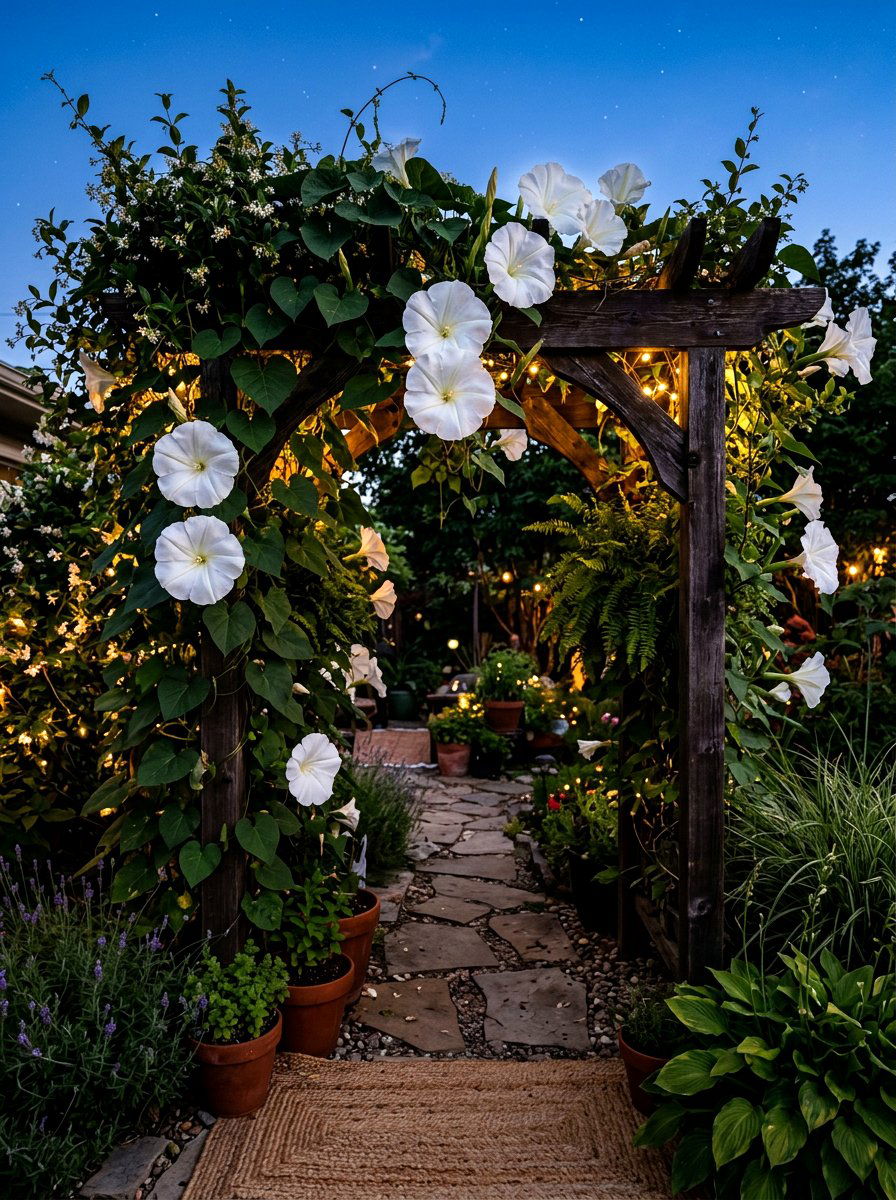
The best moonflower garden ideas combine white night-blooming flowers, climbing vines, soft outdoor lighting, fragrant plants, and cozy seating to create a beautiful space you can enjoy after sunset.
Summer evenings in the United States are a lovely time to enjoy the backyard. When the heat of the day fades, a garden can become a quiet place to sit, relax, and enjoy the fresh air. A moonflower garden makes those hours even more special with large white blooms that open as daylight fades.
Moonflower (Ipomoea alba) is a climbing vine known for its large, fragrant, white flowers. The blooms open in the evening and usually close the next morning. This makes the plant a wonderful choice for patios, fences, pergolas, and outdoor seating areas. Its twining stems can also grow quickly in warm weather, so a strong support is useful.
You do not need a large yard to create this look. A small patio, a sunny fence, or a garden bed near your porch can become a lovely evening retreat. Pair moonflowers with pale blooms, silver foliage, simple paths, and a few warm lights. The goal is to create a space that feels calm and inviting without making the garden hard to care for.
1. Create a Moonflower Garden Along a Garden Trellis
A garden trellis is one of the easiest ways to show off moonflower vines. The climbing stems grow upward and spread across a support, creating a green wall filled with white flowers. This design works well in both small and large backyards.
Choose a sunny area where the vine can receive at least six hours of direct sunlight. Set the trellis in the ground before planting, so you do not disturb the roots later. A strong wooden, metal, or wire support can help hold the mature vine.
Place the trellis where you can see it from a patio, kitchen window, or outdoor chair. The white blooms stand out against dark green leaves, especially as the sky gets darker. You can also add a simple garden path in front of the structure to make it feel like a planned feature.
Source: itsoverflowing.com
Choose a sturdy support
Use a strong trellis that can handle a vigorous climbing vine. Secure it well so it does not lean or fall as the plant grows.
Leave room for growth
Allow space around the trellis for spreading stems and nearby plants. Moonflower can become large during a warm growing season.
Keep the flowers in view
Place the structure near a sitting area or window so you can enjoy the blooms in the evening.
Make the Trellis a Garden Feature
A plain trellis can look more inviting when you add a narrow bed beneath it. Plant low-growing white flowers or silver-leaf plants along the front. Keep these companion plants far enough from the vine to prevent crowding.
For a neat look, use dark mulch or small pale stones around the bed. These simple materials help define the space and make the white flowers stand out.
For a cottage look
Choose a wooden trellis and surround it with soft white flowers and simple garden edging.
For a modern look
Use a black metal trellis with a clean gravel border and a few carefully placed plants.
2. Build a Romantic Moonflower Archway
A moonflower archway can turn an ordinary garden path into a special evening entrance. As the vines climb over the frame, their green leaves create a natural canopy. White blooms add a soft touch that looks lovely after sunset.
Place the arch at the entrance to a garden, between two flower beds, or along a path leading to a patio. Make sure the structure is strong and firmly anchored. Moonflower vines can become heavy as they spread, so a lightweight decorative frame may not be suitable.
You can grow one or more plants near the sides of the arch and guide the young stems toward the support. Check the vines as they grow and gently direct them where needed. Avoid forcing stems into tight spaces or tying them too firmly.
Source: archfoundation.org
Pick the right location
Choose a sunny entrance or path where the vines can grow without blocking doors, walkways, or access to other parts of the yard.
Use a strong arch
A well-anchored metal or solid wood arch is better suited to a vigorous vine than a flimsy decorative frame.
Add a simple walkway
Use stepping stones, brick, or gravel to make the arch feel like a natural part of the landscape.
Add Flowers Around the Arch
Keep the planting around the base simple. White petunias, pale alyssum, or other locally suitable flowers can soften the edges of the path. Choose plants that have similar light and water needs.
A few silver-leaf plants can also help the area look brighter in low light. Avoid filling every open space with flowers. Leaving some room around the arch makes the design look calm and easy to maintain.
Use a limited color palette
Combine white flowers with green and silver foliage for a soft moonlit effect.
Keep the path clear
Trim plants that spread over the walkway so people can pass through safely at night.
3. Design a Cozy Moonflower Patio Garden
A patio is a great place for a moonflower garden because you can enjoy the blooms without walking through the yard. A few containers, a climbing support, and comfortable seating can create a peaceful evening space. This idea is especially useful for homes with small backyards.
Place a large container near a sturdy railing, wall-mounted support, or freestanding trellis. Make sure the pot has drainage holes and enough room for the plant’s roots. A very small pot can dry out quickly and may not support a large vine well.
Add a simple outdoor chair, a small side table, and a few cushions in light colors. Keep the flowers close enough to enjoy their fragrance but not so close that the vines block the seating area. A clear path around the furniture will also make the patio easier to use.
Source: palosverdespulse.com
Choose a roomy pot
Use a stable container with drainage holes and enough soil volume to support a vigorous climbing plant.
Add vertical support
Install a strong container trellis or place the pot beside a suitable support before the vine becomes large.
Create a sitting corner
Add a comfortable chair and a small table so the flowers become part of your evening routine.
Use Soft Outdoor Lighting
Warm, low-level lighting can make a patio feel welcoming after dark. Place solar path lights along the edge of the seating area or use a shielded outdoor fixture to light the walking surface. Keep bright lights away from the flower display when possible.
Moonflowers are part of a nighttime garden, so the goal is not to flood the space with light. A few gentle lights can help you move around while leaving the flowers and nighttime visitors less disturbed. Choose outdoor-rated fixtures and follow their installation instructions.
Use warm light
Choose gentle lighting for seating areas instead of bright floodlights aimed at the flowers.
Light the walking route
Place fixtures near steps and path edges to help prevent trips and falls.
4. Mix Moonflowers With Other White Night-Blooming Flowers
A moonflower garden can look more complete when you combine the vine with other pale flowers. Different plant shapes and bloom times add depth to the space. You can use tall plants at the back, medium flowers in the center, and low-growing plants near the front.
Evening primrose is one option for a moon garden. Its flowers may open in the evening, depending on the species. Night phlox and some white-flowering varieties of garden plants can also add color and fragrance. Always check the growing needs of each plant before putting them together.
Think about how the garden will look in daylight as well as after dark. Moonflower leaves provide a strong green background, while pale flowers and silver foliage catch the available light. A mix of textures can make the bed attractive even when some blooms have closed.
Source: suite101.com
Evening primrose
Some species produce flowers that open in the evening and can add another layer of interest to a nighttime garden. Choose a species suited to your region.
Night phlox
This fragrant flowering plant can add a soft scent and small blooms to a moon garden. Check local growing conditions before planting.
White petunias
White petunias can brighten the front edge of a sunny bed or a suitable patio container during their growing season.
Silver foliage
Plants such as lamb’s ear and suitable artemisia varieties can reflect available light and add a different leaf texture.
Arrange Plants in Layers
Start with the moonflower trellis at the back or side of the garden. Place medium-height flowers in front of it, then use low-growing plants near the border. This arrangement gives each plant room to grow and makes the bed easier to view.
Do not crowd the moonflower with too many climbing plants. Its stems can spread quickly and shade nearby flowers. Keep enough open space for air movement and easy garden care.
Back layer
Use the moonflower vine on a fence, arch, or trellis as the main vertical feature.
Middle layer
Add medium-height white or pale flowers that suit the same sunlight and soil conditions.
Front layer
Use compact flowers or silver foliage to create a neat garden edge.
5. Make a Small Moonflower Garden in Containers
You can enjoy moonflower garden ideas even if you do not have a large yard. Container gardening lets you place a vine on a balcony, deck, or small patio. It also gives you more control over the soil and the plant’s location.
Start with a large, stable pot that has open drainage holes. Fill it with a suitable, well-draining potting mix and position a sturdy trellis in the container. Plant the seeds or a young plant near the support and guide the stems as they begin to climb.
Container-grown moonflowers need closer attention to watering than plants in the ground. Check the soil often, especially during hot weather. Water when the upper layer begins to dry, and allow excess water to drain freely. Do not leave the pot sitting in a tray of standing water.
Source: flowerchick.com
Choose a stable container
A large, heavy pot can help support the vine and reduce the chance of tipping in strong wind.
Use fresh potting mix
Choose a mix made for containers that drains well while holding enough moisture for healthy roots.
Check moisture often
Containers can dry out faster than garden beds, so check the soil during warm and windy weather.
Decorate the Container Area
Choose a pot that suits the style of your outdoor space. A plain white container can fit a soft moon garden, while a dark ceramic or stone-look pot can create a stronger contrast with the green leaves.
Place one or two smaller pots nearby with compact white flowers. Keep their water and sunlight needs in mind. Avoid placing too many containers together, since crowded plants can be harder to water and maintain.
For a clean look
Use matching containers in white, gray, or natural stone shades.
For a relaxed look
Combine a large moonflower pot with a few smaller containers of seasonal flowers.
6. Create a Moonflower Garden Around a Fence or Privacy Screen
A fence can become a useful backdrop for a moonflower garden. Instead of leaving a plain fence bare, you can train the vines along a suitable wire grid or other climbing support. The green foliage and white blooms can soften the look of the structure.
This design works well along a backyard boundary, beside a patio, or near an outdoor dining area. It can add a decorative screen during the growing season, although it should not be treated as a permanent privacy solution. In colder areas, the vine may die after frost.
Before planting, check whether the fence can support the extra weight. Moonflower climbs by twining, so it needs something it can wrap around. A smooth wall or solid fence may need a separate trellis or wire support.
Source: mx.pinterest.com
Add a climbing grid
Install a suitable wire grid or trellis where the vine can wrap around the support.
Protect nearby plants
Keep the vine from spreading over shrubs, small trees, or plants that need full sunlight.
Plan for seasonal growth
Remember that the vine may need to be replanted after winter in areas where it cannot survive frost.
Use the Fence as a Moon Garden Backdrop
Dark fencing can help white blooms stand out, while a light-colored fence can give the garden a softer look. You can also place a narrow flower bed along the base with pale blooms and low-growing greenery.
Leave access to the fence for repairs, cleaning, and pruning. If the vine grows into a gate or latch, guide it away before the stems become tangled.
Add a narrow border
Use a simple planting strip with flowers that will not compete with the climbing vine.
Keep gates clear
Check the stems often and guide them away from hinges, locks, and moving parts.
7. Add a Moonflower Pergola for a Peaceful Evening Retreat
A pergola can make a moonflower garden feel like an outdoor room. It gives the vine a large climbing surface and creates a natural frame for a seating or dining area. This idea works best when you have enough space for a strong structure and room for the plant to spread.
Plant moonflower near the posts and guide the stems toward the sides of the pergola. Do not assume the vine will cover the entire roof in one season. Growth depends on warmth, sunlight, water, and the length of the growing season.
Place a small table and comfortable chairs beneath or beside the structure. Keep the main walking area open and avoid letting stems hang too low. You can also use a few white cushions or pale outdoor accessories to carry the moon garden theme through the seating area.
Source: www.pinterest.com
Use a well-built pergola
Choose a sturdy structure that is properly anchored and suitable for supporting climbing plants.
Guide the stems
Direct young vines along the posts and suitable crosspieces without forcing or tightly binding them.
Add comfortable seating
Place chairs where you can enjoy the flowers while keeping the walkway and garden access clear.
Finish With Simple Moon Garden Details
A pergola does not need many decorations to look beautiful. A small outdoor table, a few pale cushions, and subtle lighting can be enough. Keep the overall design simple so the flowers remain the main attraction.
If you want to encourage nighttime pollinators, avoid leaving bright lights on throughout the night. Use lighting only where needed and direct it toward paths or seating rather than shining it into the surrounding garden.
Add a soft color scheme
Use white, cream, pale gray, and natural wood tones for a calm outdoor setting.
Keep the space uncluttered
Use only a few outdoor accessories so the climbing flowers and foliage remain easy to see.
How to Grow Moonflowers Successfully in Your Garden
Good garden design starts with healthy plants. Moonflower is a warm-season vine that grows best in a sunny location with moist, well-drained soil. It can grow to around 15 feet tall and spread several feet wide under suitable conditions, so plan its location before sowing the seeds.
In much of the United States, moonflower is grown as an annual because it cannot tolerate freezing weather. It may survive as a perennial in warmer areas, but local climate and growing conditions matter. Check your USDA hardiness zone and local frost dates before choosing a planting time.
The seeds have a hard outer coat. Lightly nicking the seed coat with a file or soaking the seeds overnight in warm water can help water enter and support germination. Take care not to damage the inner seed when preparing them.
Sunlight
Choose a spot with full sun or suitable partial shade. More direct sunlight generally supports stronger growth and flowering.
Soil
Use moist, well-drained soil. Avoid areas where water sits around the roots for long periods.
Water
Keep the soil evenly moist while the vine is getting established. Water more often during hot, dry periods when the soil dries quickly.
Support
Install a fence, trellis, arbor, or other sturdy structure for the twining stems.
Plant Moonflower Seeds at the Right Time
If you live in a colder part of the United States, you can start seeds indoors about four to six weeks before your last expected spring frost. Some growing guides recommend starting them six to eight weeks before the frost date. Use a warm, bright location and avoid moving young plants outdoors while nights are still cold.
For direct sowing, wait until the danger of frost has passed and the soil has warmed. Prepare the planting area, loosen the soil, and sow the seeds according to the seed packet instructions. Keep the soil lightly moist while waiting for seedlings to emerge.
In warm areas, planting dates may be different. Follow local extension guidance and watch for seasonal rain and heat. Avoid planting in a spot that stays waterlogged after heavy rain.
Start indoors
Use seed-starting containers when you need a longer growing season in a cooler climate.
Direct sow outdoors
Plant after frost danger has passed and the soil has warmed enough for active growth.
Acclimate young plants
Gradually expose indoor-grown seedlings to outdoor conditions before transplanting them permanently.
Give the Vines Room to Grow
Moonflower can grow slowly at first and then spread quickly once warm weather arrives. Check the stems every few days during active growth. If they begin to wrap around nearby plants, guide them toward their own support.
Avoid using heavy fertilizer unless the plant shows a clear need. Excessive feeding can encourage leafy growth at the expense of flowers. A healthy plant in suitable soil may need little extra feeding.
Check the support
Make sure ties, wires, and trellis parts remain secure as the vine becomes larger.
Control unwanted growth
Remove or redirect stems that begin covering shrubs, paths, gutters, or other structures.
Common Moonflower Garden Problems and How to Fix Them
Moonflower is generally easy to grow when it has warmth, sunlight, water, and room to climb. Still, a few common problems can affect the appearance of the vine. Check the growing conditions first before adding fertilizer or using a garden treatment.
A vine with lots of leaves but few flowers may need more sunlight, or it may still be too young to bloom. Poor drainage and inconsistent watering can also weaken growth. Look at the whole plant before deciding what to change.
Lots of leaves but few flowers
Check whether the plant receives enough direct sunlight. Avoid excessive fertilizer, especially products high in nitrogen.
Slow seed germination
Check seed age, soil warmth, and moisture. Prepare the hard seed coat by lightly nicking or soaking it before sowing.
Yellow leaves
Check the soil before watering again. Overwatering, poor drainage, and root stress can cause yellow foliage.
Dry or wilted leaves
Check soil moisture and recent weather. Water thoroughly if the soil is dry, but do not keep the roots constantly wet.
Vines growing over nearby plants
Redirect young stems toward their support and trim unwanted growth where needed.
Why Are My Moonflower Vines Not Blooming?
A lack of flowers can have several causes. Too much shade is one of the first things to check. Moonflower needs a suitable amount of sunlight to produce healthy growth and blooms.
The growing season also matters. A late-planted vine may spend much of the season producing leaves before it begins to flower. Give the plant enough warm growing time and avoid feeding it heavily in an attempt to force blooms.
Remember that moonflower flowers open in the evening. A bloom that is closed during the day is not necessarily a problem. Check the plant near dusk before deciding that it is not flowering.
Check the light
Move a container to a sunnier location if the current position receives too much shade.
Allow time
Give young vines time to mature, especially if seeds were planted late in the season.
Avoid excess feeding
Do not keep adding fertilizer when the plant already has healthy green foliage.
Important Safety Tips Before Planting Moonflowers
Before buying seeds, check the botanical name on the packet. The name moonflower is used for several different plants, including Ipomoea alba and some Datura species. These plants are not interchangeable, and their appearance, growth habits, and safety risks differ.
Ipomoea alba seeds contain compounds that can be harmful if eaten. Keep the seeds, seed pods, and stored planting material away from children and pets. Never use garden seeds for food or home remedies.
Datura species are a separate group of plants with serious poisoning risks. Some have been sold or described under moonflower names. If you have pets or young children, identify every plant before bringing it into the garden and consider avoiding highly toxic alternatives.
Wear gardening gloves if needed, wash your hands after handling seeds, and store unused seeds in a clearly labeled, secure container. If someone eats an unknown garden plant or seed, contact Poison Control in the United States at 1-800-222-1222. Seek emergency help for severe symptoms.
Read the scientific name
Look for Ipomoea alba if you want the familiar white climbing moonflower vine.
Store seeds safely
Keep seeds and seed pods in a closed, labeled container away from children and animals.
Do not eat the plant
Do not consume moonflower seeds, leaves, flowers, or other plant parts.
Check pet access
Place plants where pets cannot chew the foliage or reach fallen seeds and seed pods.
Which Moonflower Garden Idea Should You Choose?
The right design depends on the space you have and how you want to enjoy the flowers. A trellis is a practical choice for a narrow garden, while a pergola works better in a larger yard. Containers are useful when you need more control over the plant’s position.
Think about maintenance before choosing a design. A large climbing vine needs regular attention, especially when it begins spreading quickly. Pick a support that is easy to reach so you can guide stems and remove unwanted growth without damaging nearby plants.
For a small backyard
Choose a single trellis or large container with vertical support. This uses height rather than taking up a large area of ground.
For a romantic garden
Choose a moonflower arch with a simple path and pale flowers around the base.
For a patio
Grow moonflower in a large, stable container near a comfortable outdoor seating area.
For a large backyard
Use a pergola or a long fence with enough room for the vines to spread.
For a low-maintenance layout
Use one main climbing feature and a small group of plants with similar light and water needs.
Quick Design Comparison
Use this comparison to match a garden layout to your available space and the amount of care you can provide.
Trellis garden
Best for narrow spaces, fences, and simple vertical displays. Needs a secure support and occasional stem guidance.
Archway garden
Best for paths and garden entrances. Needs strong anchoring and enough clearance for people to walk through.
Patio container garden
Best for decks, patios, and small yards. Needs a large pot, a stable support, and frequent moisture checks.
Fence garden
Best for decorating a plain boundary. Needs a climbing grid and regular control of spreading stems.
Pergola garden
Best for large outdoor spaces and seating areas. Needs a sturdy structure and enough room for a vigorous vine.
Frequently Asked Questions
Q
What is the best place to plant moonflowers?
The best place is a sunny area with moist, well-drained soil and enough room for the vine to climb. A fence, trellis, arbor, or pergola can provide useful support. Plant near a patio or outdoor seating area if you want to enjoy the flowers and their fragrance in the evening.
Q
Do moonflowers come back every year?
Moonflower (Ipomoea alba) is a tender perennial in warm climates, but it is grown as an annual in many parts of the United States. Frost can kill the vine. In suitable warm regions, it may survive for more than one season. You can also collect mature seeds and sow them again when the next growing season begins.
Q
How long do moonflower blooms stay open?
Moonflower blooms usually open in the evening and close the next morning. Individual flowers are short-lived, but a healthy vine can produce many buds over its growing season. This means new blooms may continue to appear even after older flowers have faded.
Q
Can moonflowers grow in pots?
Yes, moonflowers can grow in containers when you provide enough room for their roots and a strong climbing support. Choose a large, stable pot with drainage holes and use a well-draining potting mix. Container plants may need more frequent watering because pots can dry out faster than garden soil.
Q
Do moonflowers attract pollinators?
Yes. The fragrant nighttime blooms of Ipomoea alba provide nectar for night-flying moths, including some sphinx and hawk moths. Planting moonflowers can add a useful nectar source to a nighttime garden. You can support these visitors further by limiting unnecessary bright outdoor lighting.
Q
Are moonflower plants poisonous to pets?
Moonflower safety depends on the species. Ipomoea alba seeds contain compounds that can be harmful if eaten, while Datura species sold under similar common names can be much more dangerous. Keep all unidentified seeds and plants away from pets and children. Check the scientific name before planting and contact a veterinarian or Poison Control if ingestion occurs.
Q
Why do moonflowers open at night?
Ipomoea alba has flowers adapted to nighttime activity. Its pale, fragrant blooms are suited to attracting night-flying pollinators such as moths. The flowers open around dusk and usually close after daylight returns.
✦ Wrapping Up
Conclusion
Moonflower garden ideas can help turn an ordinary backyard into a lovely place to enjoy after sunset. A climbing trellis, romantic archway, cozy patio, or simple container display can all provide a beautiful setting for these fragrant white flowers. You can make the design as simple or detailed as your space allows.
Start by choosing a sunny location, preparing well-drained soil, and providing a sturdy support. Add a few pale flowers or silver-leaf plants to bring more texture to the garden. Keep the vines under control, water them as needed, and use gentle lighting around paths and seating areas.
Most of all, remember that the beauty of a moonflower garden comes from enjoying it at the right time. Take a seat outside as the sun goes down and watch the flowers open. With thoughtful planning and basic care, your garden can become a peaceful evening retreat.
💡 Key Takeaway
Start with one moonflower vine beside a sturdy trellis near your favorite outdoor sitting area. Give it sunlight, moist and well-drained soil, and enough room to climb. Once the vine begins blooming, add a few white flowers and soft path lights to complete your moon garden.
I enjoy sharing simple gardening ideas, lawn care tips, and honest product reviews that help make outdoor work easier. From home gardening guides to helpful tools and lawn care advice, I write easy-to-follow content to help readers create a healthier and better-looking outdoor space without wasting time or money.