As an Amazon Associate, I earn from qualifying purchases.
Yes, some lawn mowers can start without oil, but starting or running an oil-dependent engine without enough oil can cause severe damage. Some models have a low-oil shutdown system that prevents starting or stops the engine. Never run a gas mower until you have checked and filled its oil to the level specified in the owner’s manual.
Across American homes, lawn care often means mowing a small suburban yard, cutting grass around a country property, or keeping a large lawn neat through a long summer. When a mower refuses to start, it is tempting to pull the starter cord a few more times or turn the key again. Before you do, check the oil. A low oil level can stop some engines from starting, while an engine without enough lubrication may suffer serious damage if it runs.
The answer depends on the type of mower, its engine design, and whether it has a low-oil sensor. A typical gas mower with a four-stroke engine needs oil to protect its moving parts. A two-stroke engine may use a fuel-and-oil mixture instead, while a battery-powered electric mower generally does not need engine oil. Knowing which machine you own is the first step toward a safe fix.
Yes, a lawn mower can sometimes start without engine oil. Many small gas engines do not require oil pressure to activate the ignition system, so they may fire and run even when the crankcase is empty. However, other engines use a low-oil protection system that can prevent starting or stop the engine when the oil level falls too far.
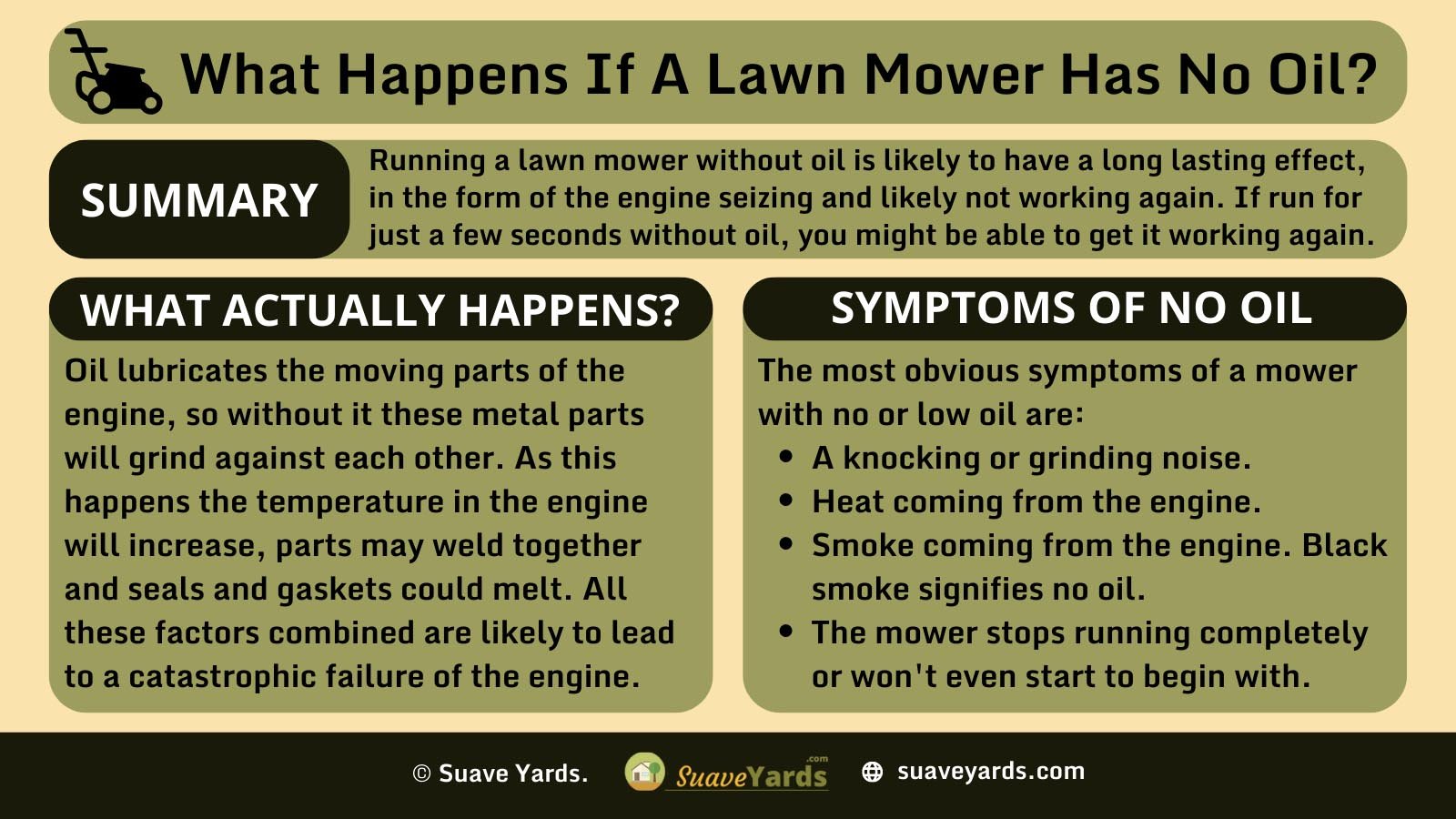
Starting is not the same as operating safely. Engine oil forms a protective film between moving metal parts. Without that film, friction and heat rise, and parts that normally move smoothly can wear, seize, or break. Even a short period of operation can cause damage, depending on the engine, its condition, and the load.
If your mower starts with little or no oil, shut it off immediately. Do not keep it running to see whether it sounds normal. Engine damage can begin before obvious symptoms appear, and adding oil afterward does not guarantee that the engine remains undamaged.
Source: suaveyards.com
Starting without oil
Possible on some gas engines, depending on the design and whether a low-oil protection system is fitted.
Running without oil
Unsafe for an engine that relies on crankcase oil for lubrication. Internal wear and overheating can occur.
Starting with low oil
A mower may start normally, refuse to start, or stop after starting. The result depends on its design and the severity of the oil shortage.
Why can an engine start without lubrication?
The starter cord or electric starter turns the engine’s crankshaft. If the fuel, air, ignition, and compression systems are working, the engine may fire even if the oil level is dangerously low. The ignition system does not necessarily check whether the engine has enough oil before producing a spark.
Oil protects the crankshaft bearings, connecting rod, piston, cylinder walls, and other moving parts. The exact lubrication method varies by engine. Some small engines use splash lubrication, in which a moving part distributes oil inside the crankcase, while others use a pump or a combination of methods. None of these systems can provide proper protection if the required oil supply is absent.
Does a mower need oil pressure to start?
Many small walk-behind mower engines do not use a conventional automotive-style oil-pressure warning system. Their lubrication system may work without a dashboard pressure gauge or warning light. Some engines instead rely on the correct oil level and regular manual checks.
A low-oil sensor, where fitted, is a separate protective feature. It may ground the ignition circuit or otherwise stop the engine when the oil level is too low. The presence, function, and reset procedure of this feature vary by model, so consult the manufacturer’s instructions rather than assuming every mower has it.
What Happens When You Run a Lawn Mower Without Oil?
Running a gas mower without the required oil can cause rapid internal wear and, in severe cases, complete engine failure. Oil reduces friction, carries heat away from some engine parts, and helps keep surfaces separated by a thin lubricating film. Without enough oil, those surfaces can rub directly against each other.
The damage does not always happen at the same speed. An engine that is already hot, worn, or under a heavy cutting load may be at greater risk than one that has just been started. Still, there is no reliable safe running time for an engine with no oil. Do not assume that a few minutes will be harmless.
A mower may initially sound normal and then begin knocking, rattling, losing power, or stopping abruptly. Severe friction can cause parts to overheat and seize, meaning they can no longer move as intended. Once this happens, a simple oil refill may not restore operation.
Source: mowerliving.com
Excess friction
Moving parts lose the protective film that helps them slide or rotate without damaging contact.
Heat buildup
Friction can create heat that the engine can no longer manage as designed.
Bearing and crankshaft wear
Poor lubrication can damage surfaces that support and guide the crankshaft and connecting rod.
Piston and cylinder damage
Severe heat and friction can cause scoring, loss of compression, or parts to seize.
Engine failure
In severe cases, internal parts may break or lock up, making major repairs or engine replacement necessary.
Can a lawn mower seize without oil?
Yes. An engine can seize when excessive heat and friction cause its moving parts to bind or lock together. This may happen after severe oil starvation, although the time and extent of damage vary with the engine and operating conditions.
If the mower suddenly stops and the engine will not turn normally, do not force the blade, pull the starter cord repeatedly, or use tools to force the crankshaft. A jammed blade, a mechanical fault, or internal engine damage could be responsible. Disconnect the spark plug lead before carrying out permitted external checks, and have a qualified small-engine technician inspect the machine if the cause is unclear.
Can a mower survive a brief start without oil?
It is possible that an engine started briefly with little oil and sustained no obvious damage, but you cannot confirm that by sound alone. The outcome depends on how much oil remained, whether the engine was already warm, how long it ran, and its mechanical condition.
If you accidentally started the mower, switch it off immediately and allow it to cool. Check the oil level and look for leaks. If the engine made a knocking noise, stopped suddenly, became unusually hot, or will not turn normally, do not restart it just to test it. Seek a mechanical inspection.
How Low-Oil Protection Works on a Lawn Mower
Some lawn mower engines have a low-oil shutdown feature that helps prevent damage when the oil level falls below a set point. A sensor detects a condition associated with low oil and triggers a response in the engine’s control or ignition circuit. Depending on the design, the engine may fail to start, stop while running, or show another warning.
This protection is useful, but it is not a replacement for checking the oil. A sensor may not be fitted, may not detect every lubrication problem, or may respond differently from what an owner expects. A mower can also lose oil through a leak or consume oil while running, leaving it at risk even if it started normally.
If your mower will not start and you suspect low oil, check the oil before investigating more complex causes. Do not bypass the sensor or disconnect a safety wire to force the engine to run. That can remove a protection feature and allow a preventable mechanical failure.
Source: myhometurf.com.au
Signs that the low-oil sensor may be involved
A low-oil shutdown system may be involved if the mower refuses to start despite having fresh fuel, or if it starts and then stops. These symptoms are not proof of a low-oil problem because ignition faults, fuel restrictions, stale gasoline, and other issues can cause similar behavior.
Park the mower on level ground, shut off the engine, and check the oil using the exact procedure in the manual. If the oil is low, add the specified type in small amounts until the level reaches the marked range. If the oil is already correct and the engine still will not start, use the model’s troubleshooting guide or arrange service.
Check the oil level
Use the correct dipstick or level-check method for the engine.
Inspect for leaks
Look around the crankcase, drain plug, fill cap, and other visible areas for fresh oil.
Follow the manual
Use the specified starting procedure and sensor troubleshooting steps without disabling safety features.
Why a low-oil sensor does not make oil checks optional
The sensor is a last line of defense, not a guarantee that the engine will never suffer damage. It may not protect against every lubrication fault, and it cannot restore oil that has leaked away. It also cannot ensure that the oil is clean, suitable for the temperature, or changed at the correct interval.
Make oil checks part of your routine before mowing, especially after storage, transport, an oil change, or work on the engine. A quick inspection is much less costly than repairing an engine damaged by poor lubrication.
Do All Lawn Mowers Need Oil?
No. The need for oil depends on the mower’s power source and engine design. A typical four-stroke gas mower needs engine oil in its crankcase, while a two-stroke engine may need oil mixed with fuel or supplied through a separate oiling system. Most battery-powered electric mowers do not use engine oil because they have no combustion engine.
This distinction matters when a mower will not start. Adding engine oil to a machine that does not use it will not solve a battery or electrical problem. Likewise, putting straight gasoline into an engine that requires a specific fuel-and-oil mixture can damage it.
Check the model number and owner’s manual before adding fluids. If the manual specifies a fuel mixture, follow its exact ratio and approved oil type. Never guess the fuel mixture based on the appearance or size of the mower.
Source: thrivingyard.com
Four-stroke gas lawn mowers
Most common residential gas walk-behind mowers use four-stroke engines. These engines keep lubricating oil in the crankcase, separate from the gasoline in the fuel tank. The oil must remain within the specified level range and be changed according to the manufacturer’s schedule.
If a four-stroke mower runs low on oil, stop using it until you have corrected the level and checked for the cause. Use the viscosity and oil specification listed in the manual, since the right choice can depend on the engine and expected outdoor temperatures.
Oil location
Usually checked through a dipstick or oil-fill opening on the engine.
Fuel supply
Gasoline is kept in a separate fuel tank.
Main concern
Running with insufficient crankcase oil can damage internal engine parts.
Two-stroke gas lawn mowers
Some smaller outdoor power tools and certain older or specialized mowing machines use two-stroke engines. Depending on the design, the engine may require oil mixed with gasoline at a specified ratio or use a separate oil-delivery system. The correct method must come from the engine manufacturer.
A two-stroke engine that requires premixed fuel does not use the same separate crankcase oil arrangement as a typical four-stroke mower. Running it on straight gasoline when the required mixture contains oil can quickly damage its internal parts. Never apply four-stroke oil-check instructions to a two-stroke engine without confirming that they match the model.
Battery-powered electric lawn mowers
Most cordless and corded electric lawn mowers do not need engine oil because they do not have a gasoline engine. Their cutting system is driven by an electric motor. A mower that will not start is more likely to need a check of the battery charge, power connection, safety key, handle switch, blade obstruction, or other model-specific safety feature.
Do not assume every electric mower is maintenance-free. Some models may have gearboxes, bearings, or other components with specific lubrication requirements. Follow the manufacturer’s instructions, and never pour engine oil into the motor housing or another compartment unless the manual explicitly requires it.
How to Check and Add Lawn Mower Oil Safely
Checking the oil is the first step if your gas mower will not start or you suspect it has been running low. You need the owner’s manual, the correct oil for the engine, a clean cloth or paper towel, and a level place to park the mower. Let a hot engine cool before opening the oil-fill cap or handling nearby parts.
The exact checking method differs between engines. Some dipsticks must be wiped, reinserted fully, and then removed for a reading. Others must be placed on the opening without being threaded in, or checked by a different method. Follow the instructions for your model rather than using a universal rule.
Do not overfill the crankcase. Too much oil can cause smoking, leaks, poor running, or other engine problems. Add oil slowly, recheck the level, and stop when it reaches the correct mark.
Source: backyardgadget.com
Step 1: Prepare the mower
Park the mower on firm, level ground. Turn it off, remove the key if fitted, and let the engine cool. On a gas mower, disconnect the spark plug lead before performing maintenance that could allow accidental starting, following the manual’s safety directions.
Keep the mower away from open flames and sparks. Gasoline vapors can ignite, and spilled oil can make the mower slippery. Wear suitable gloves if needed and keep children and pets away from the work area.
Step 2: Read the oil level
Locate the oil-fill cap or dipstick. Clean the area around it before opening it so dirt does not fall into the engine. Remove the dipstick and wipe it clean if the manufacturer’s procedure calls for this step.
Reinsert or position the dipstick as directed, then remove it and read the level. The oil should fall within the marked operating range. If there is no visible oil on the dipstick, treat the situation as serious and do not start the engine until you have confirmed the correct fill procedure and oil capacity.
Step 3: Add the correct oil
Use the oil grade and specification stated in the owner’s manual. If the oil level is low, pour in a small amount, wait briefly for it to settle, and check again. Repeat until the level reaches the proper range without exceeding the full mark.
Wipe away spilled oil and secure the cap or dipstick. If the level was very low, look for an oil leak and check whether the mower has been using oil between services. Simply filling the crankcase may not fix the underlying problem.
Step 4: Decide whether restarting is safe
If the oil was only slightly low, there are no signs of a leak or mechanical trouble, and the mower has not been run without lubrication, correcting the level may be all that is needed. Reconnect the spark plug lead and follow the normal starting procedure described in the manual.
If the crankcase was empty, the mower ran without oil, or you heard unusual knocking or grinding, do not assume it is safe to restart after filling it. An inspection may be needed to check for internal damage. If the engine will not turn normally or stopped abruptly, seek qualified repair service.
What to Do If You Started a Lawn Mower Without Oil
If you accidentally started a mower and then realized the oil was missing, shut it off at once. Do not let it idle while you look for oil, and do not restart it simply to check whether the engine still works. The safest next step depends on how much oil remained and what happened while it was running.
An engine that ran for only a brief moment may escape serious damage, but no simple visual check can prove that. An engine that ran for several minutes without oil, made abnormal noises, overheated, or stopped suddenly needs more caution. The longer an oil-dependent engine operates without adequate lubrication, the greater the potential for damage.
Once the engine is cool, check the oil level and inspect for leaks. If the engine was completely dry or showed warning signs, arrange an inspection before using the mower again. Tell the technician how long it ran, whether it was under load, and whether it made unusual sounds.
Source: bestsowftware.com
If the mower ran briefly and still turns normally
First, check the oil level using the correct procedure. Add the specified oil if needed, but do not assume that the refill proves the engine is healthy. Check for leaks, signs of overheating, and any unusual sound that occurred before you shut it off.
If the oil was not completely absent and there were no symptoms, the engine may be unharmed. However, if it was truly run with an empty crankcase, professional assessment is the safer option before returning it to service. A normal starter feel does not rule out bearing or surface damage.
If the engine knocked, seized, or stopped suddenly
Do not restart an engine that made a new knocking sound, stopped abruptly, or appears locked. These signs may indicate serious mechanical trouble, although a blade obstruction or another fault can also stop a mower. Repeated starting attempts can worsen an existing problem or create additional hazards.
Disconnect the spark plug lead before permitted external checks, and follow the manual’s instructions for safe handling. Do not put your hands near the blade or reach under the deck while the machine is connected to a starting source. If you cannot identify an obvious external obstruction safely, arrange a professional inspection.
If the mower keeps losing oil
A recurring low oil level suggests that oil may be leaking, being consumed, or not being checked correctly. Inspect visible areas around the oil-fill cap, drain plug, crankcase, and engine seals for fresh oil. Oil on the mower deck may indicate a leak, but the source needs to be identified before assuming which part has failed.
If the mower emits persistent blue or blue-gray exhaust smoke, it may be burning oil. Other faults can produce smoke too, so the symptom is not a definitive diagnosis. Stop using the mower if oil loss is substantial, and have it checked before the engine suffers further damage.
Troubleshooting a Lawn Mower That Will Not Start
Low oil is one possible reason a mower will not start, but it is not the only one. After checking oil and correcting any shortage, investigate the other likely causes in a safe order. Start with simple checks before removing engine parts or attempting repairs.
For a gas mower, common starting problems include stale fuel, a disconnected spark plug lead, a dirty air filter, a faulty ignition component, a clogged carburetor, or a safety control that is not engaged. A battery mower may have a discharged battery, a loose connection, a missing safety key, or a blocked blade that activates a protective feature.
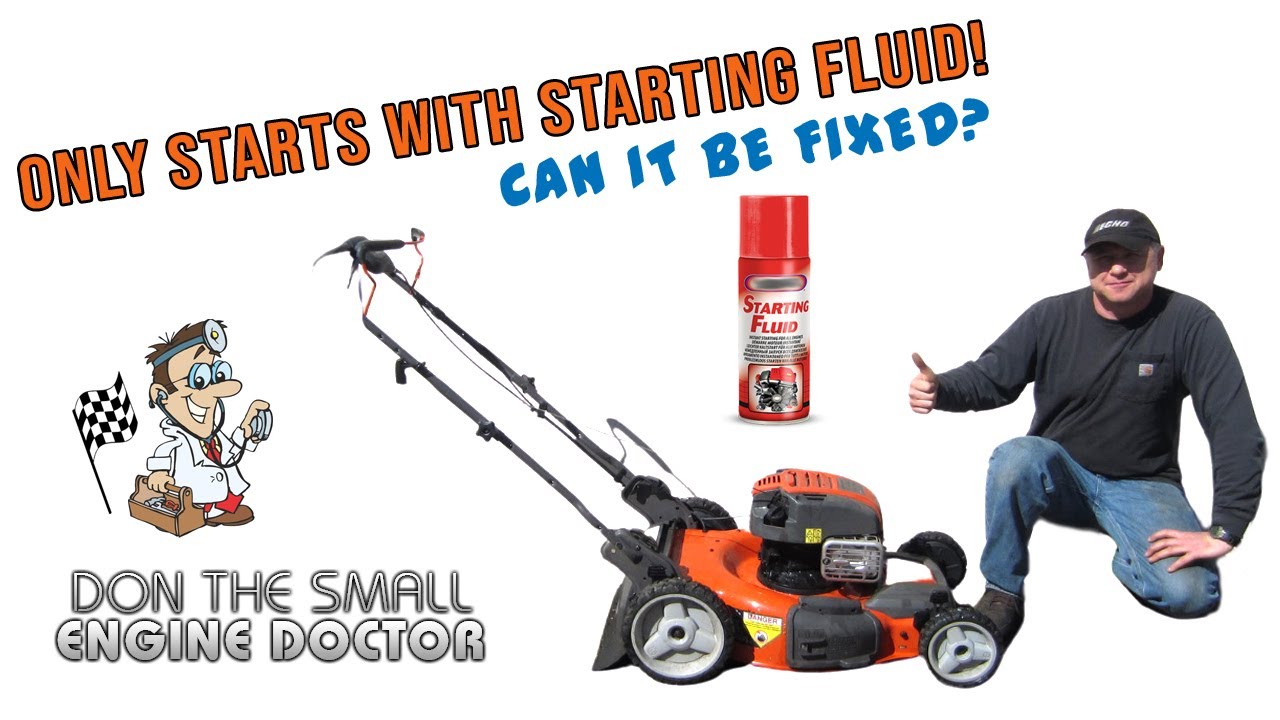
Never spray starting fluid into an engine as a substitute for checking oil or diagnosing the problem. Starting fluid does not lubricate engine parts and may create a fire hazard or damage certain engines when used incorrectly. Follow the manufacturer’s troubleshooting steps instead.
Source: thehomereviews.com
Use the symptoms to guide your next check
The symptoms can help narrow down the cause, but they cannot confirm a diagnosis on their own. Check the oil and follow the model’s safety instructions first. If the engine appears seized or there are signs of severe damage, stop troubleshooting and seek service.
The starter cord pulls normally, but the engine does not fire
After confirming the oil is correct, check the fuel supply, ignition lead, air filter, and starting controls according to the manual.
The engine starts and then stops
Possible causes include a low-oil shutdown feature, a fuel restriction, a blocked air supply, or an ignition fault. Check oil and fuel before investigating further.
The starter cord is unusually hard to pull
Do not force it. A blade obstruction, mechanical fault, or internal engine problem may be responsible. Disconnect the spark plug lead and follow the safe inspection procedure.
The engine makes a knocking or grinding sound
Stop immediately. If the mower has been run with low or no oil, have the engine inspected before restarting.
The engine runs but produces unusual smoke
Check the oil level and look for overfilling or leakage. Persistent smoke or other abnormal behavior calls for further diagnosis.
The electric mower does not respond
Check battery charge, power connections, the safety key, and the manufacturer’s startup procedure. Engine oil is generally not the issue on a battery-powered mower.
When to call a small-engine repair technician
Seek professional help if the engine was run with no oil and now knocks, will not turn normally, stops abruptly, or shows signs of overheating. A technician can inspect the engine and determine whether the problem involves internal wear, a seized component, or another mechanical fault.
Professional diagnosis is also sensible when the mower repeatedly loses oil, the cause of a low-oil shutdown is unclear, or you are unsure how to check the engine safely. Avoid dismantling parts you cannot reinstall correctly, especially if the mower is under warranty.
How Often Should You Check Lawn Mower Oil?
Check the oil before mowing or at the interval specified in the owner’s manual. A quick check is especially useful before the first mow of the season, after the mower has been stored for winter, and after any repair that may have affected the oil supply. A machine that sits unused can still develop leaks or have an incorrect oil level when it is brought back into service.
Oil checks and oil changes serve different purposes. Checking confirms that the level is within the operating range, while changing removes old oil and replaces it with fresh oil of the specified type. A mower can have the right amount of dirty or degraded oil, so checking the level alone does not eliminate the need for scheduled maintenance.
Use the engine manufacturer’s maintenance schedule, including the recommended service intervals and any special requirements for severe operating conditions. Heavy use, dusty yards, long mowing sessions, and hot weather may affect maintenance needs. Do not extend the interval simply because the mower still starts easily.
Source: myhometurf.com.au
A practical oil-check routine
A simple routine can help prevent an avoidable engine failure. Before mowing, park on level ground, shut off the engine, let it cool as directed, and check the level using the correct procedure. Look for leaks and confirm that the oil-fill cap or dipstick is secure before starting.
Record oil changes and other maintenance in a notebook or phone calendar. If you repeatedly need to add oil between scheduled changes, investigate the reason instead of treating top-ups as normal. A clear maintenance record also helps a repair technician understand the mower’s service history.
Before mowing
Check the oil level and inspect for visible leaks.
At scheduled service intervals
Change the oil and perform the other maintenance listed in the manual.
After an oil leak or repair
Confirm the oil level and check that the source of the leak has been addressed.
Before seasonal storage
Follow the manufacturer’s storage instructions and note any maintenance due before the next season.
Common Mistakes to Avoid When a Mower Has Low Oil
A low oil level can turn a simple maintenance job into a costly repair if you respond the wrong way. The safest approach is to stop the engine, verify the correct oil level, and work out why the oil is low before returning the mower to service. Avoid shortcuts that hide the warning signs or remove a safety feature.
Small engines vary, so an instruction that works on one mower may not apply to another. Use the exact engine manual whenever the oil-check method, fill capacity, oil grade, or safety system is uncertain.
Source: bestsowftware.com
Running the mower to see whether it works
This can worsen internal damage. Correct the oil level first, and seek an inspection if the engine ran without lubrication or showed abnormal symptoms.
Adding any oil that is available
Different engines require specific oil grades and specifications. Use the oil approved by the manufacturer for the engine and expected temperatures.
Filling above the maximum mark
Overfilling can cause smoking, leaks, and poor running. Add oil in small amounts and recheck the level.
Assuming a sensor prevents all damage
A low-oil protection system may not be present or may not detect every lubrication problem. Continue checking oil as directed.
Disabling the low-oil sensor
Do not bypass safety features to make the mower run. Correct the underlying problem or seek qualified service.
Ignoring repeated oil loss
Frequent top-ups may point to a leak or oil consumption. Find and repair the cause rather than continuing to mow.
Assuming every mower uses engine oil
Most electric mowers do not use combustion-engine oil. Check the model’s manual before adding any fluid.
How Much Does It Cost to Fix a Lawn Mower Run Without Oil?
The repair cost depends on how much damage occurred and whether the engine can be repaired economically. If the problem is simply a low oil level and the engine has not been damaged, the remedy may involve adding the correct oil and addressing a small leak. If oil starvation has damaged internal parts, the repair can become much more involved.
A technician may need to inspect compression, crankshaft movement, internal clearances, or other engine components to determine the extent of the damage. The appropriate tests depend on the engine and its symptoms. A mower that will not turn normally after running without oil should not be treated as a routine oil-change job.
Compare the repair estimate with the cost of a replacement engine or mower before approving major work. The decision depends on the mower’s age, overall condition, parts availability, and the cost of labor. There is no single repair price that applies to every make and model.
Source: suaveyards.com
When an oil refill may be enough
An oil refill may be enough when the oil was only slightly low, the engine has not been run without lubrication, and no leak or mechanical symptom suggests another fault. Use the correct oil, restore the proper level, and follow the maintenance instructions.
If the engine ran with an empty crankcase, however, an oil refill alone cannot confirm that no damage occurred. Be cautious about restarting it, particularly if you heard unusual sounds or the engine stopped abruptly.
When major repair or replacement may be needed
Severe oil starvation can damage the crankshaft, connecting rod, piston, cylinder, or bearings. Repair may require substantial disassembly, parts, and labor. Depending on the engine design and damage, replacing the engine or mower may be more practical than rebuilding it.
Ask the technician to explain the confirmed fault, the proposed repair, and any remaining uncertainty. If the engine is badly damaged, request a comparison of repair and replacement costs before deciding.
Frequently Asked Questions
Q
Will a lawn mower start if the oil is completely empty?
It may start if the engine’s ignition and fuel systems work and no low-oil protection system prevents it. However, an engine that relies on crankcase oil should not be run with an empty crankcase. Shut it off, fill it according to the manual, and seek an inspection if it was already operated without oil.
Q
Will low oil stop a lawn mower from starting?
Yes, low oil can prevent some mower engines from starting or cause them to shut down if they have a low-oil protection feature. Other engines may still start despite an unsafe oil level. Check the oil first, but remember that fuel, ignition, and other faults can cause similar starting symptoms.
Q
How long can a lawn mower run without oil?
There is no safe running time for an engine that requires oil but has none. Damage may begin quickly, and the rate depends on the engine, its condition, temperature, and load. Stop the engine immediately if you discover that it has been running without sufficient oil.
Q
Can I add oil after running a lawn mower without it?
Yes, you can restore the oil level using the correct oil and filling procedure, but that does not undo damage already caused by friction and heat. If the engine ran with no oil, knocked, overheated, stopped suddenly, or will not turn normally, have it inspected before restarting.
Q
Will a battery-powered lawn mower start without oil?
Most battery-powered electric mowers do not need engine oil, so an engine oil shortage is generally not the reason they fail to start. Check the battery charge, safety key, electrical connections, and startup controls. Follow the manual for any separate lubrication needs in gears or other components.
Q
What oil should I use in my lawn mower?
Use the oil grade and specification listed in your mower’s owner’s manual. The correct choice depends on the engine and the temperatures in which you operate it. Do not choose oil based only on the brand or assume that every small engine uses the same grade.
Q
Can I mow the lawn if the oil is just below the full mark?
If the oil remains within the operating range specified by the manufacturer, it may not need a top-up immediately. If it falls below the minimum mark, correct the level before starting. If the level keeps dropping, inspect for leaks or oil consumption instead of relying on repeated refills.
Q
Why does my lawn mower stop after a few seconds?
Possible causes include low-oil protection, a fuel supply problem, a clogged air filter, or an ignition fault. Check the oil and follow the model’s troubleshooting guide before investigating other systems. Do not bypass a low-oil sensor or repeatedly restart an engine that shows signs of mechanical damage.
✦ Wrapping Up
Conclusion
A lawn mower may start without oil, but an oil-dependent engine can suffer serious damage if it runs without enough lubrication. Some models have a low-oil shutdown system, while others may continue running even when the oil level is dangerously low. Never treat a successful start as proof that the engine has enough oil.
If your mower will not start, check the oil before moving on to fuel, ignition, or other troubleshooting steps. If you accidentally ran the engine without oil, switch it off, let it cool, check for leaks, and restore the correct oil level. When the engine was completely dry or showed knocking, overheating, or sudden stoppage, seek a professional inspection before restarting it.
💡 Key Takeaway
Before your next mow, park the mower on level ground, check the oil using the owner’s manual, and add the specified oil if needed. Never run an oil-dependent engine with an empty crankcase, and investigate any repeated oil loss before mowing again.
I enjoy sharing simple gardening ideas, lawn care tips, and honest product reviews that help make outdoor work easier. From home gardening guides to helpful tools and lawn care advice, I write easy-to-follow content to help readers create a healthier and better-looking outdoor space without wasting time or money.