

As an Amazon Associate, I earn from qualifying purchases.
A bare sanctuary in January can feel a little chilly, even with the heat on. The right flowers change that fast. These winter floral arrangements for church use evergreens, berries, pinecones, and a few unexpected blooms to bring warmth to the altar, pews, and entryway. Whether you’re planning for Advent, Christmas, or a quiet Sunday in February, you’ll find something that fits your space and budget.
1. Poinsettia Altar Tiers
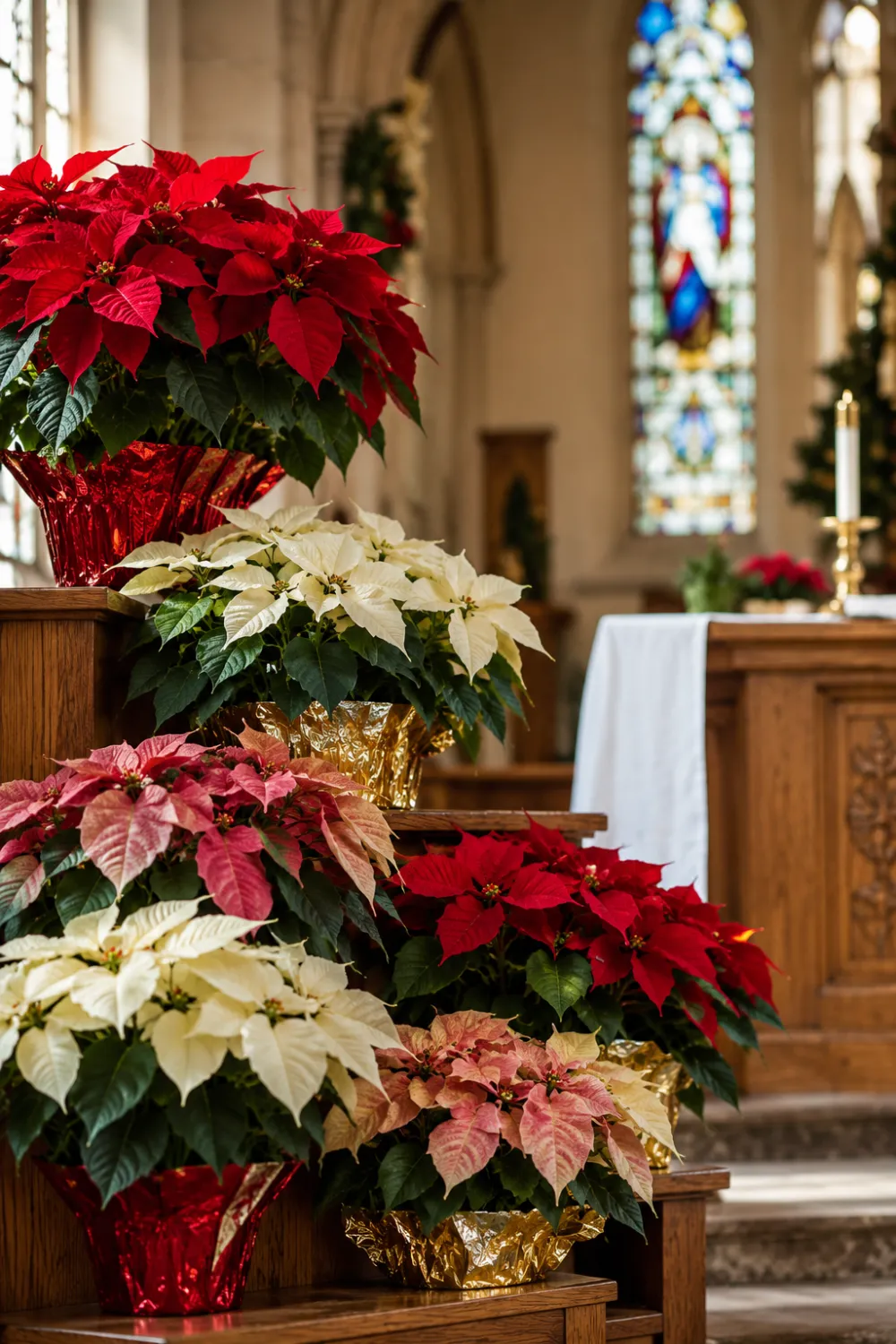
Stack poinsettias on a tiered stand or wooden risers and the altar looks full and festive right away. Mix red with cream and marble pink for depth. Keep each pot in its foil sleeve, but set it on a saucer so water never reaches the wood. Poinsettias hate cold drafts, so move them away from the door between services.
2. Evergreen Pew Bows
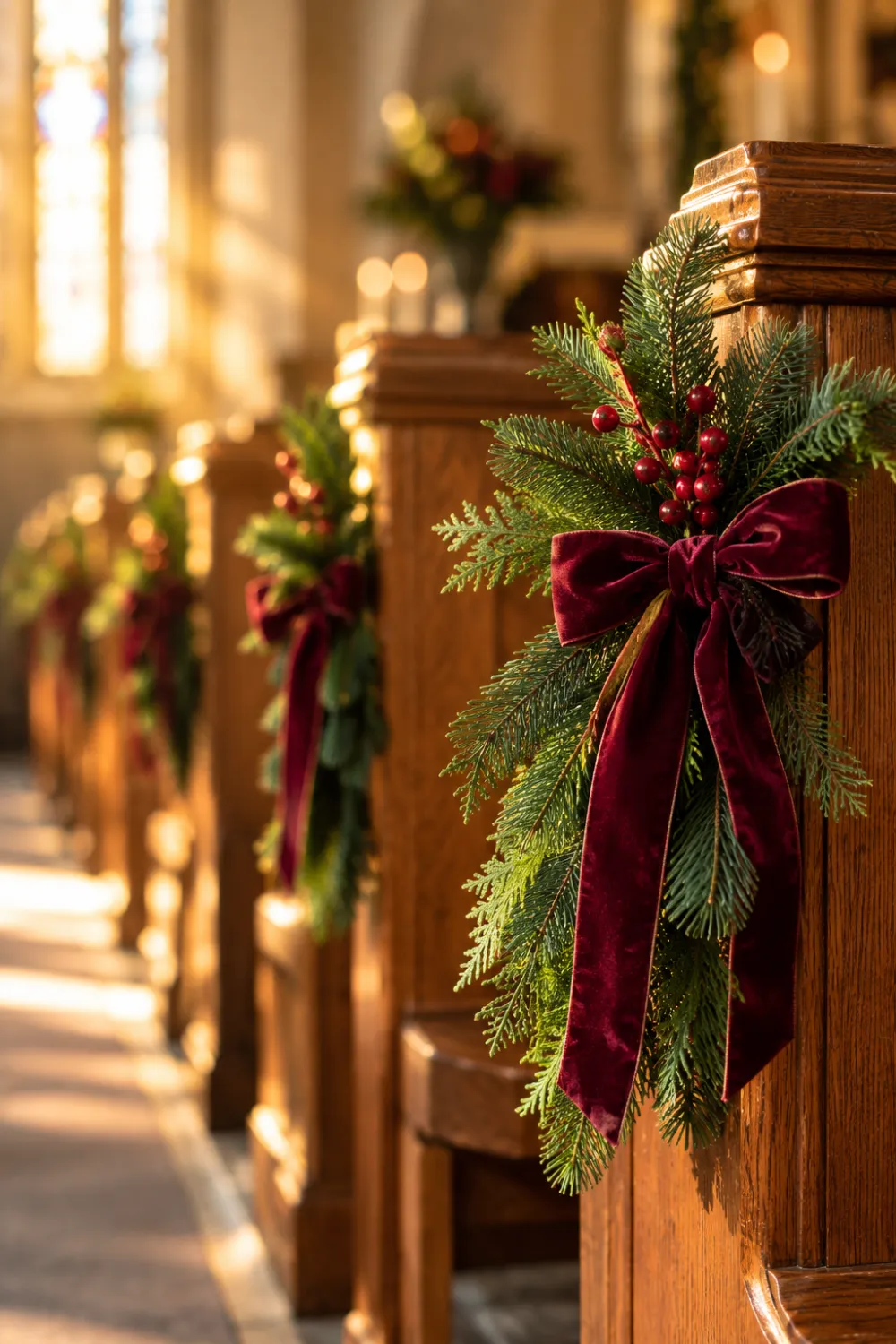
Pew ends are an easy place to add color. Tie a small bundle of cedar and noble fir with thick velvet ribbon in burgundy or forest green, then hook it on with a wire clip. Add two or three sprigs of faux berries for a pop. Make them the day before and mist lightly, and they’ll still smell wonderful on Sunday.
3. White Amaryllis Vases
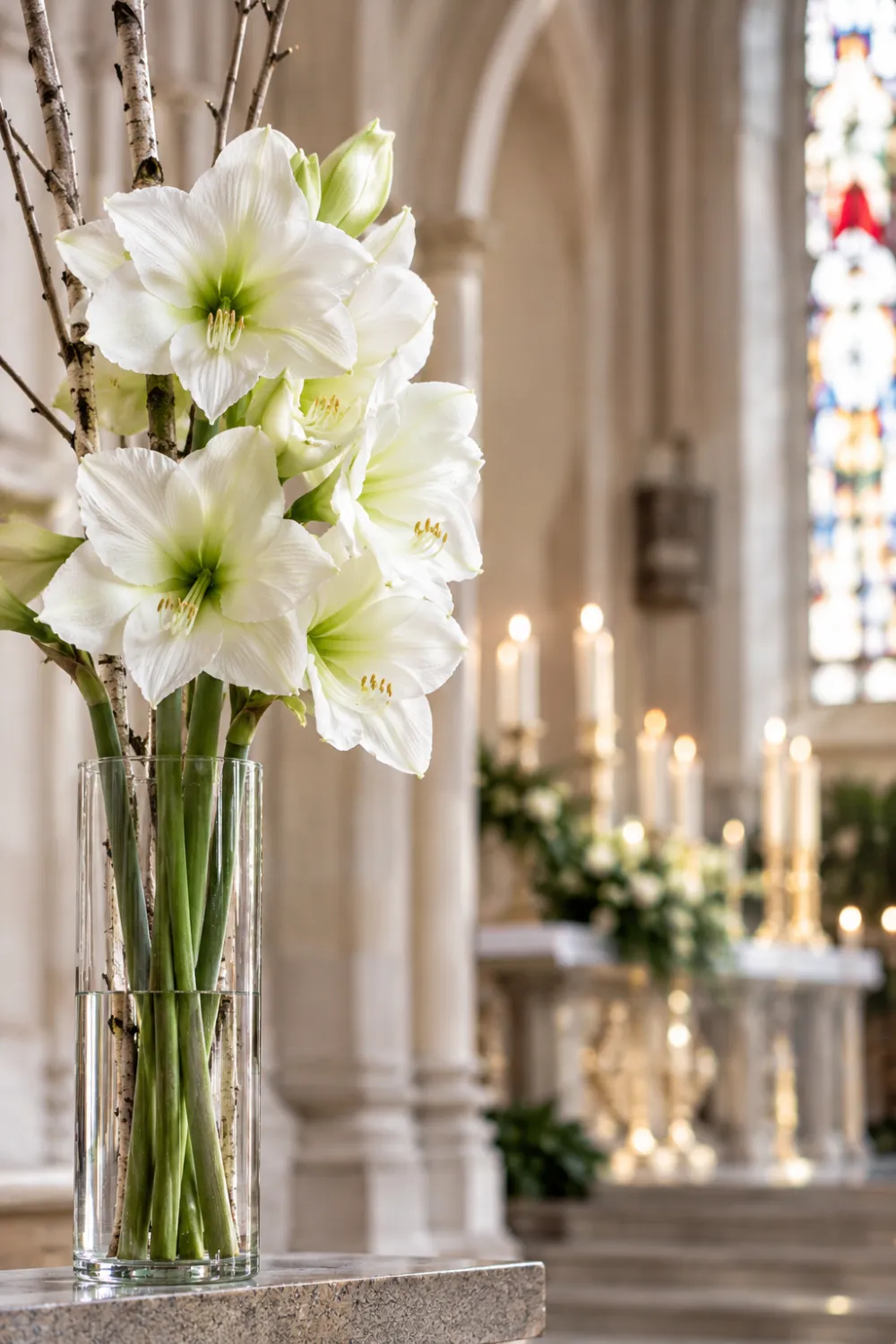
Amaryllis stems are tall, bold, and hollow, which makes them perfect for big spaces. Group three to five in a tall glass cylinder, with a few birch twigs for support. White blooms glow beautifully under sanctuary lighting. Fill the hollow stems with water and plug the ends with a bit of cotton so they stand straight and last longer.
4. Advent Wreath Centerpiece
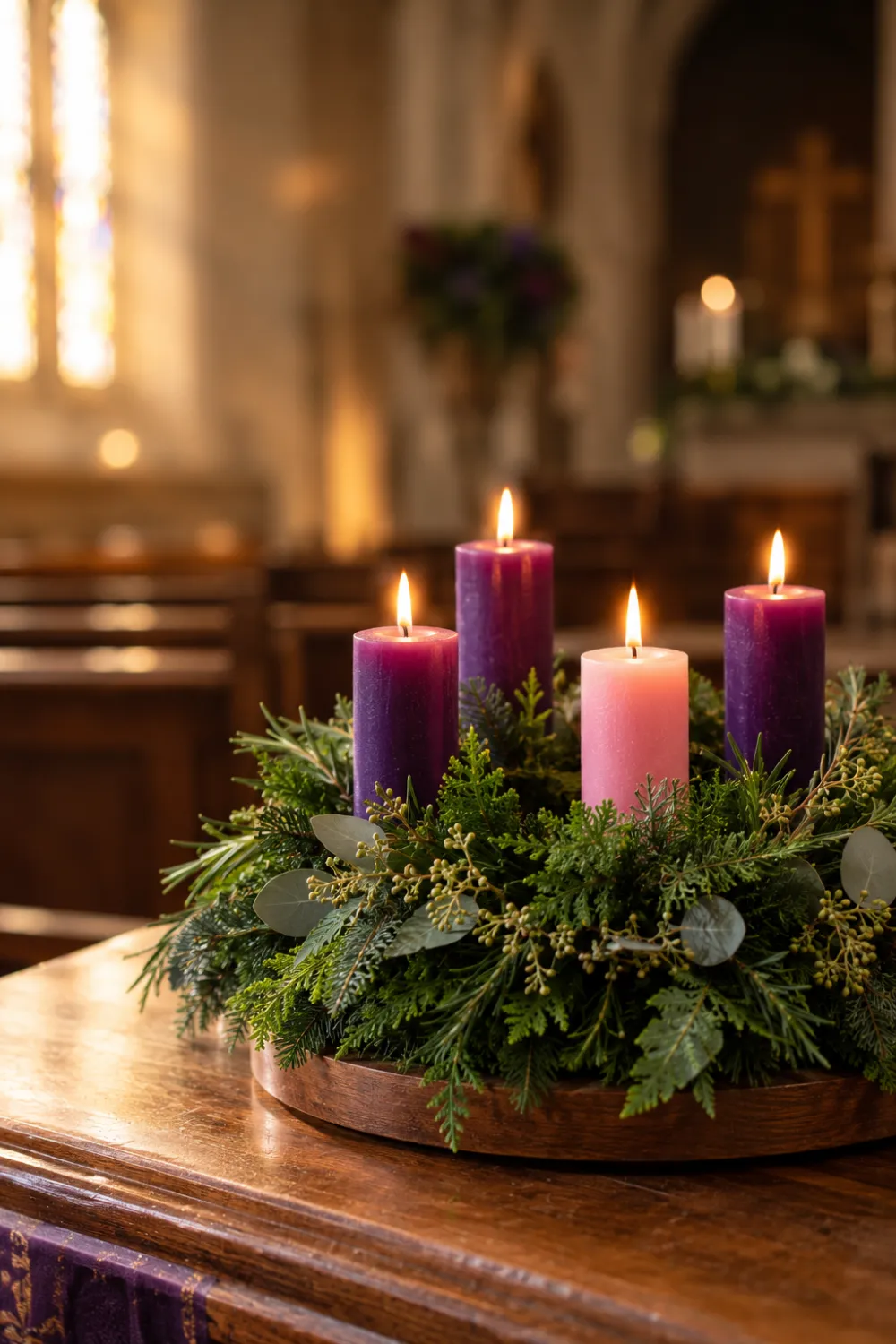
Circle four candles with fresh greens, then tuck in rosemary sprigs and seeded eucalyptus for texture. Use purple or blue ribbon accents, with one pink, to match the weeks of Advent. A well-soaked foam ring holds the greens, and candle holders press right into the base. Trim greens back from the flames each week, and keep the wreath on a heatproof tray.
5. Pinecone and Berry Garland
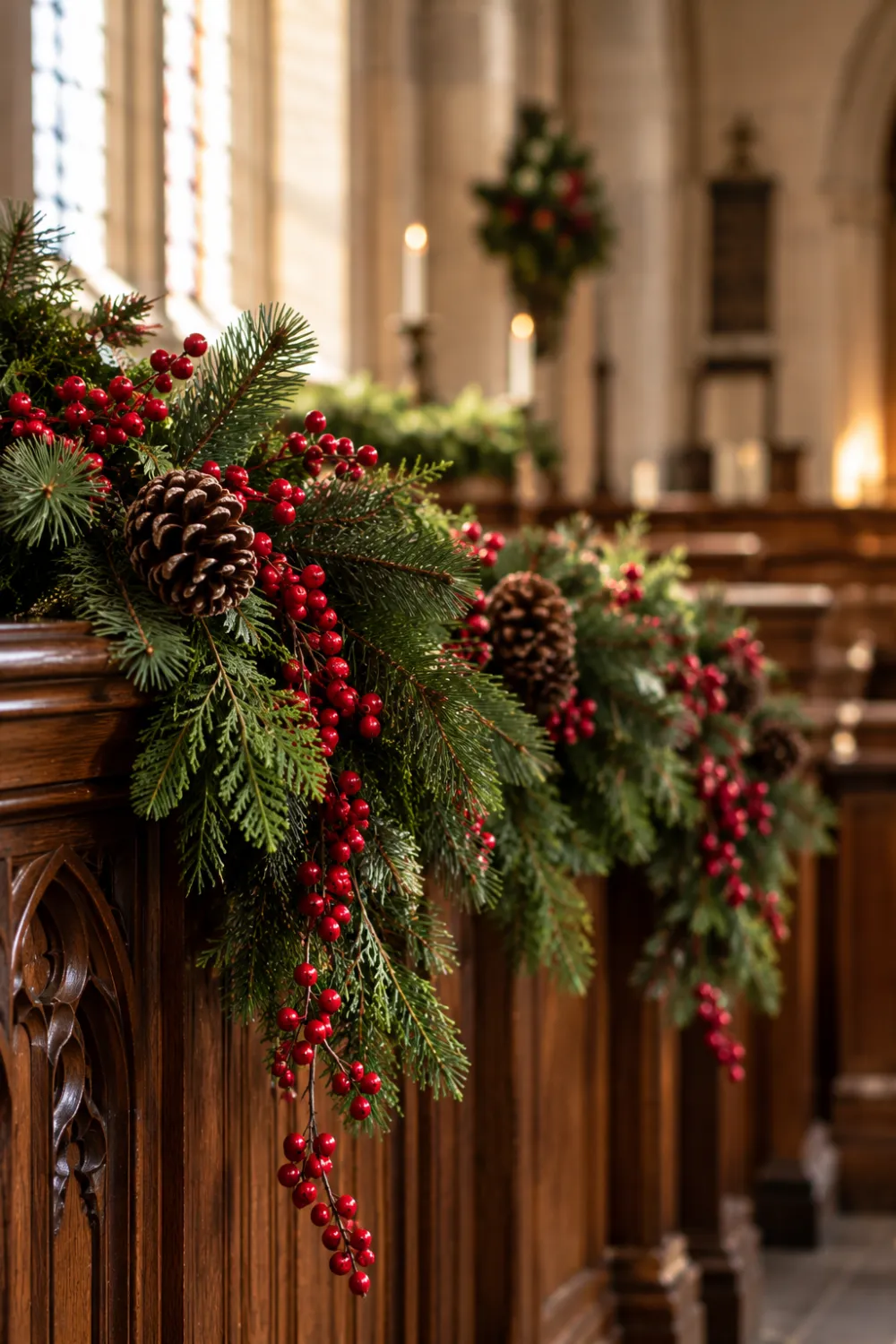
Drape a garland along the choir rail or communion table using real pine, pinecones, and winterberry. Wire the pinecones onto the base so they don’t shift. Attach sprigs in clusters of three, which looks fuller than single stems. Let the berries trail off the ends for movement. Hang it a few days early, because pine holds up surprisingly well indoors.
6. Paperwhite Window Ledges
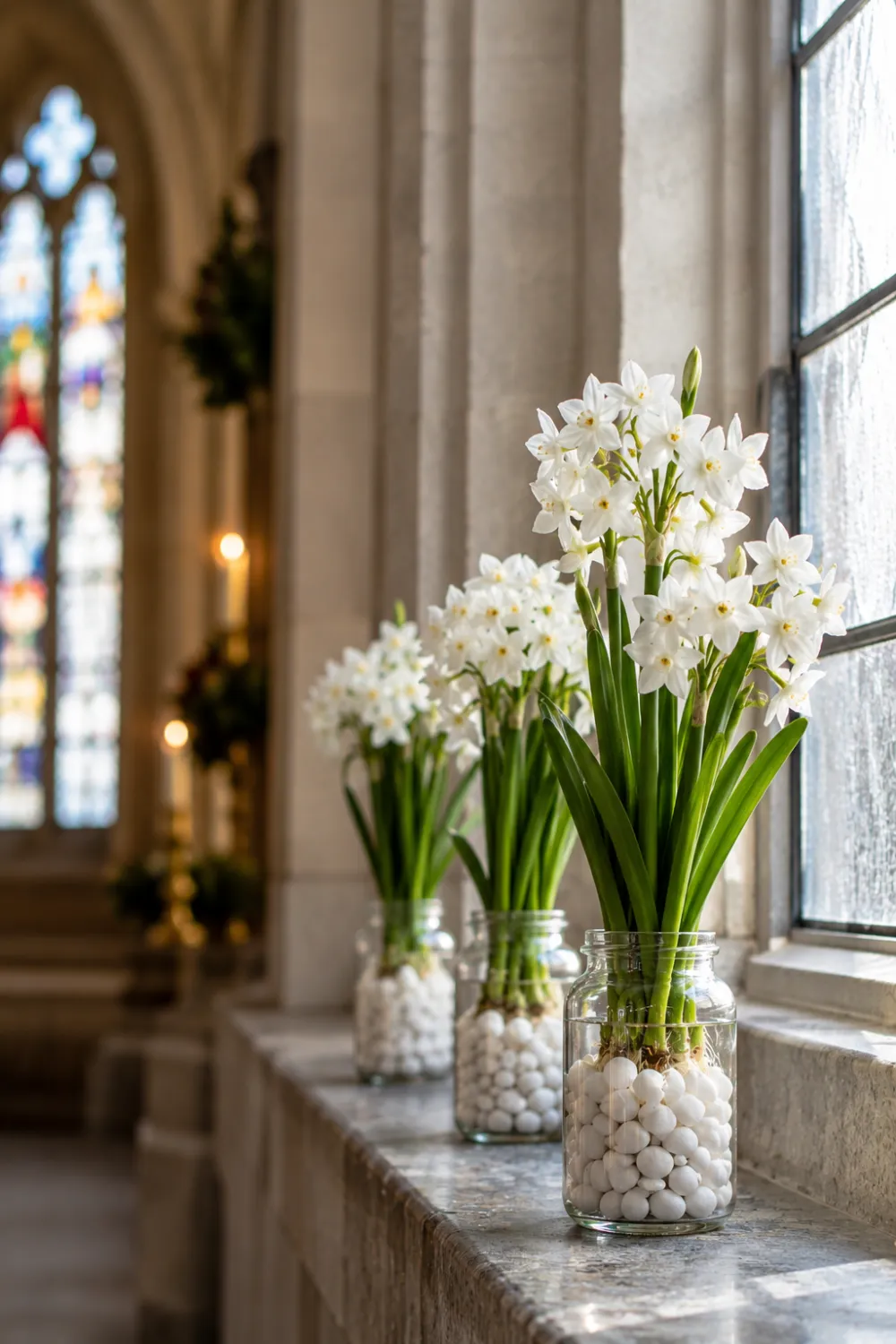
Paperwhites in simple glass jars with pebbles look clean and quiet along deep windowsills. Plant the bulbs about three weeks ahead so blooms open in time for the service. Keep them cool to stop the stems from flopping. Their scent is strong, and some people find it overwhelming. They suit side ledges better than spots right beside the front pews.
7. Red Rose and Cedar Arrangement
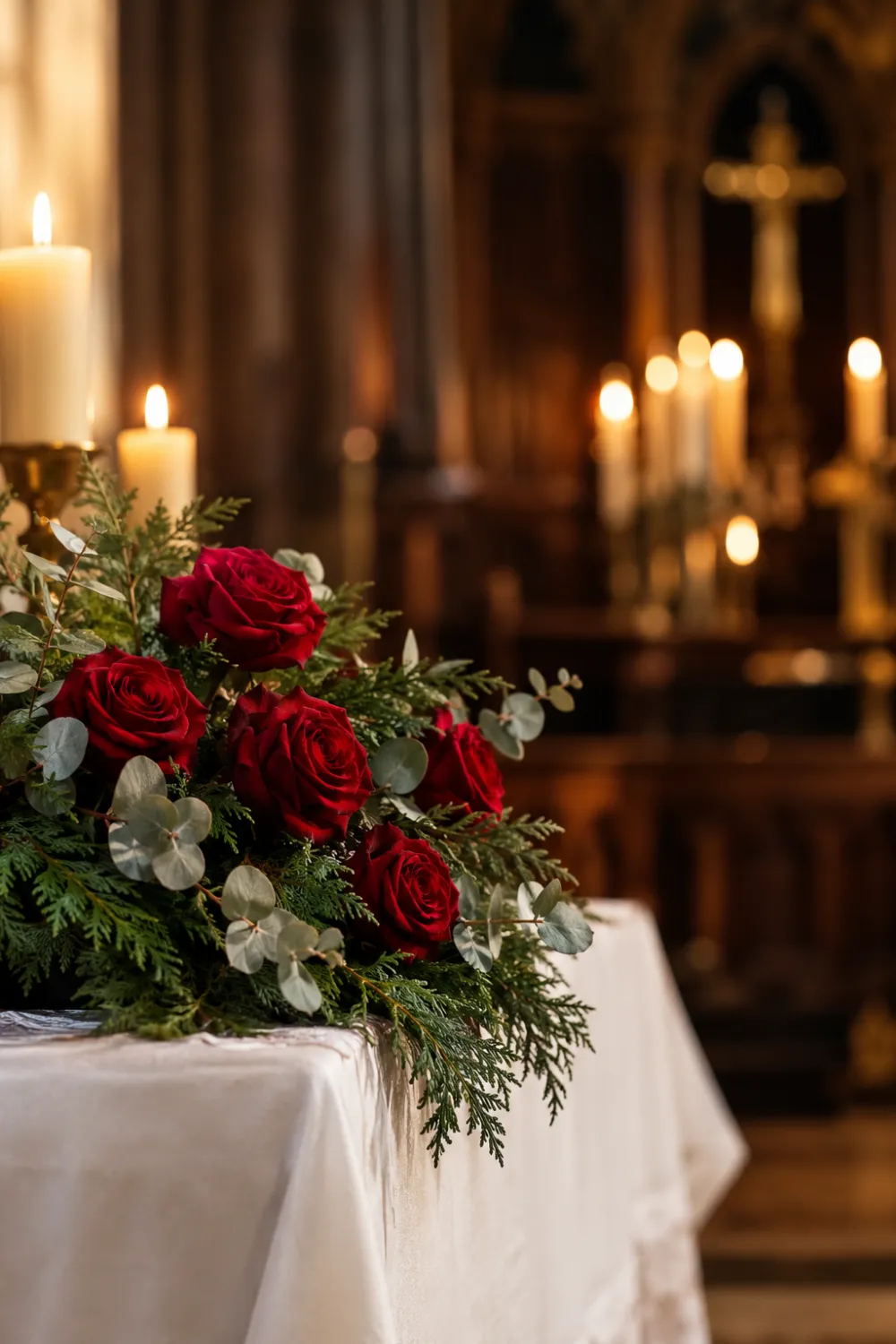
Red roses look rich against dark cedar. Build a low, wide arrangement for the altar in a foam base, placing the cedar first and then the roses in odd numbers. A few sprigs of silver dollar eucalyptus soften the red. Roses drink heavily in heated rooms, so top up the water Saturday evening. This one is lovely for Christmas Eve candlelight services.
8. Hellebore Baptismal Font
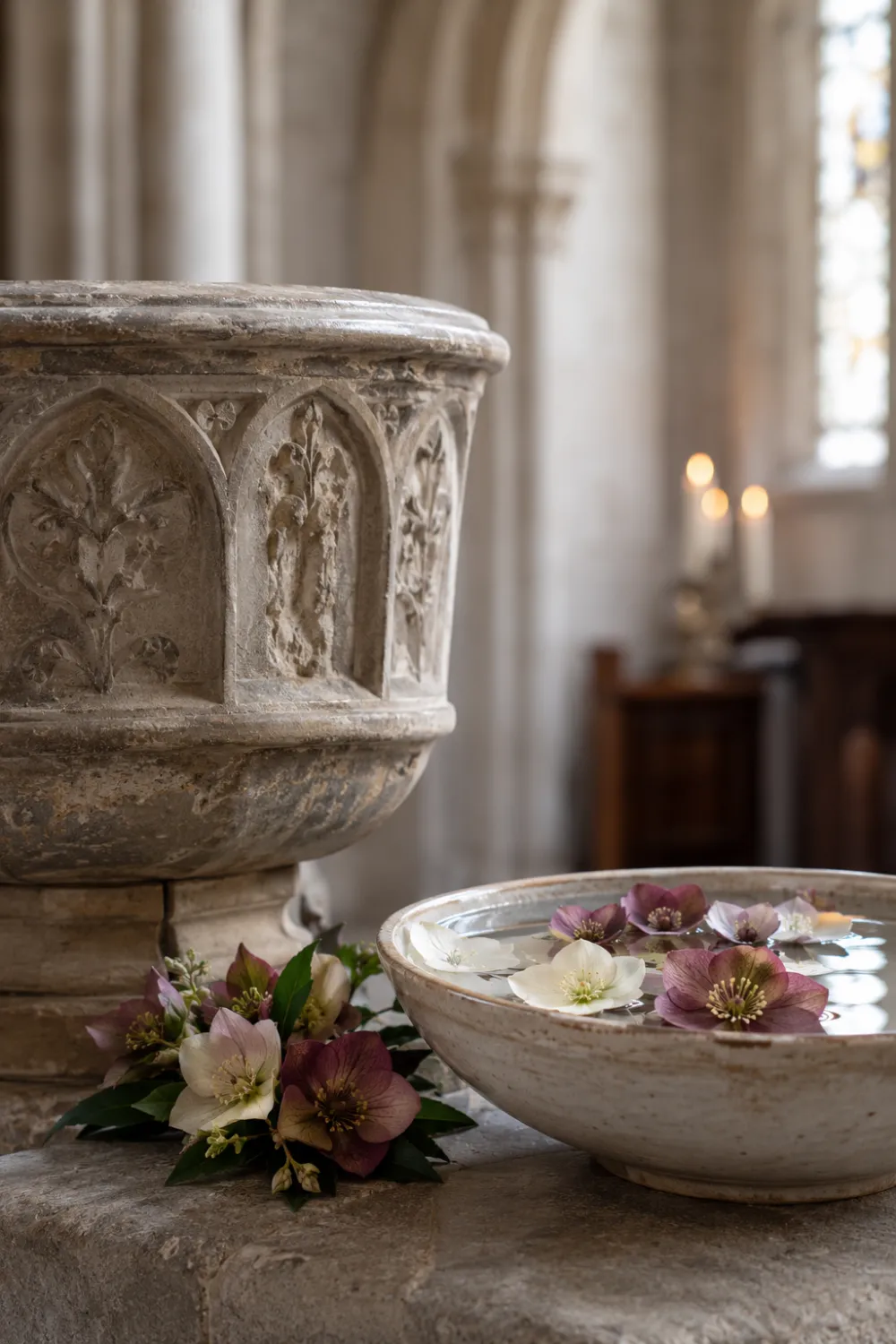
Hellebores, often called Christmas roses, bloom right in winter and have a gentle, nodding look. Float a few blossoms in a shallow bowl beside the font, or set a small posy at its base. Sear the cut stem ends in hot water first, or they wilt fast. Soft cream and dusty plum shades feel calm and reverent for baptism Sundays.
9. Hydrangea and Silver Fir
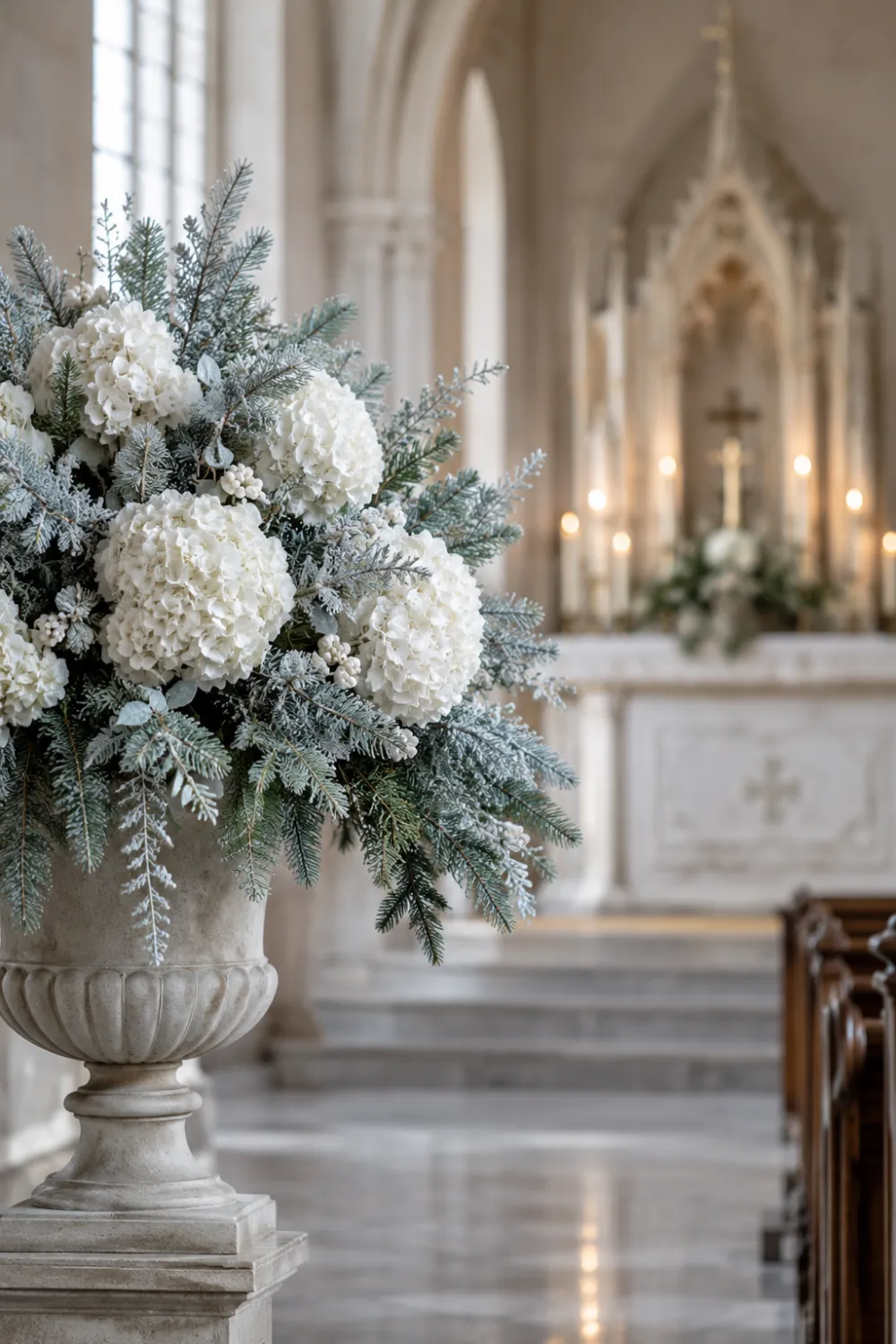
White hydrangeas paired with silver fir create a frosty, snow-dusted look. Tuck fir tips between the blooms in a pedestal urn near the front of the sanctuary. Fresh hydrangeas are thirsty, so recut the stems and soak the heads in water for an hour before arranging. Dried hydrangeas need no care at all, which makes them a smart pick for tight budgets.
10. Lantern Floral Clusters
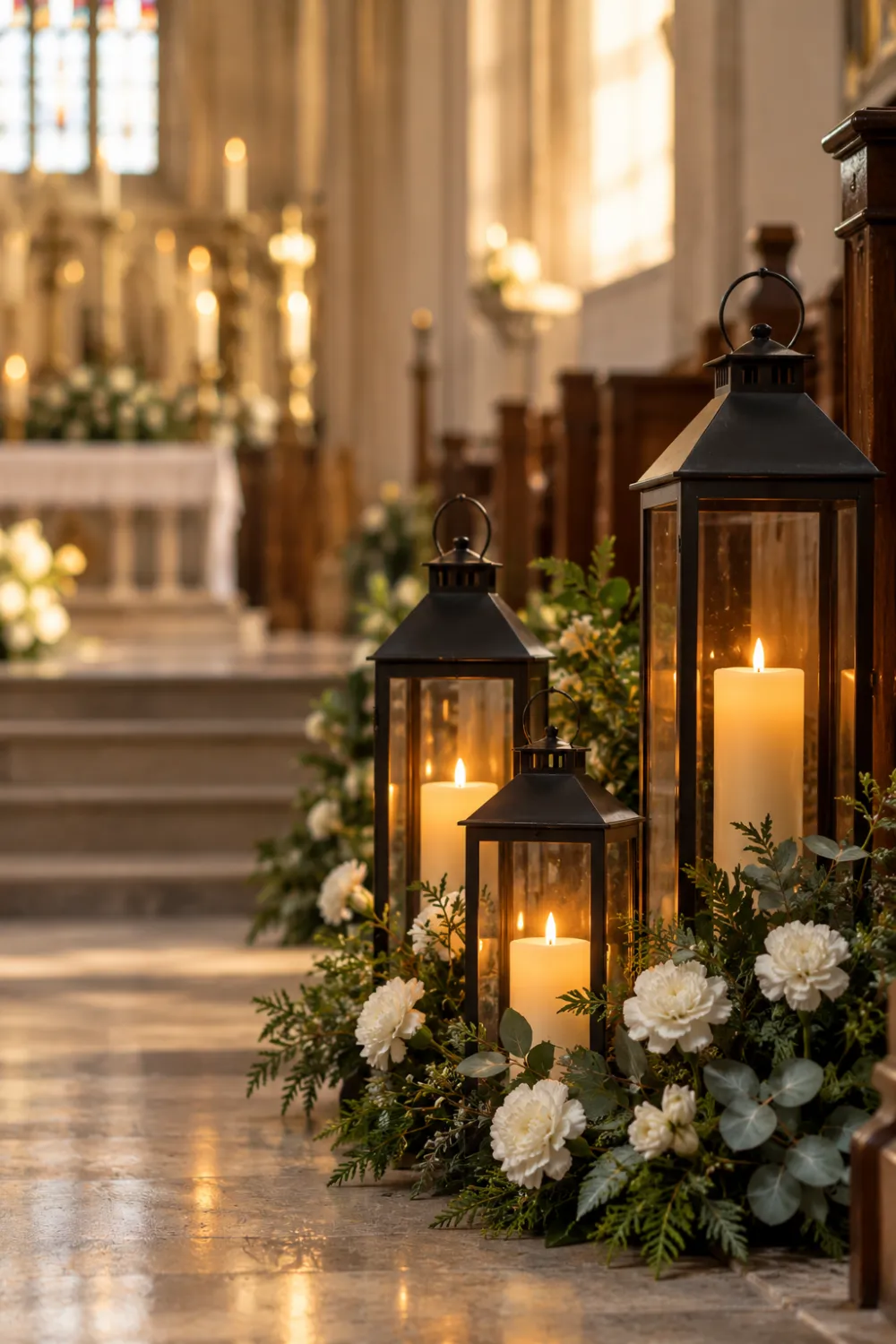
Set three lanterns of different heights along the aisle or at the chancel steps. Then tuck greens and white carnations around their bases. Use LED candles inside for safety. The warm glow makes even a small bunch of flowers feel special. Carnations are tough and affordable, and they can last up to two weeks, which helps volunteers who arrange early.
11. Holly and Ivy Entryway Urn
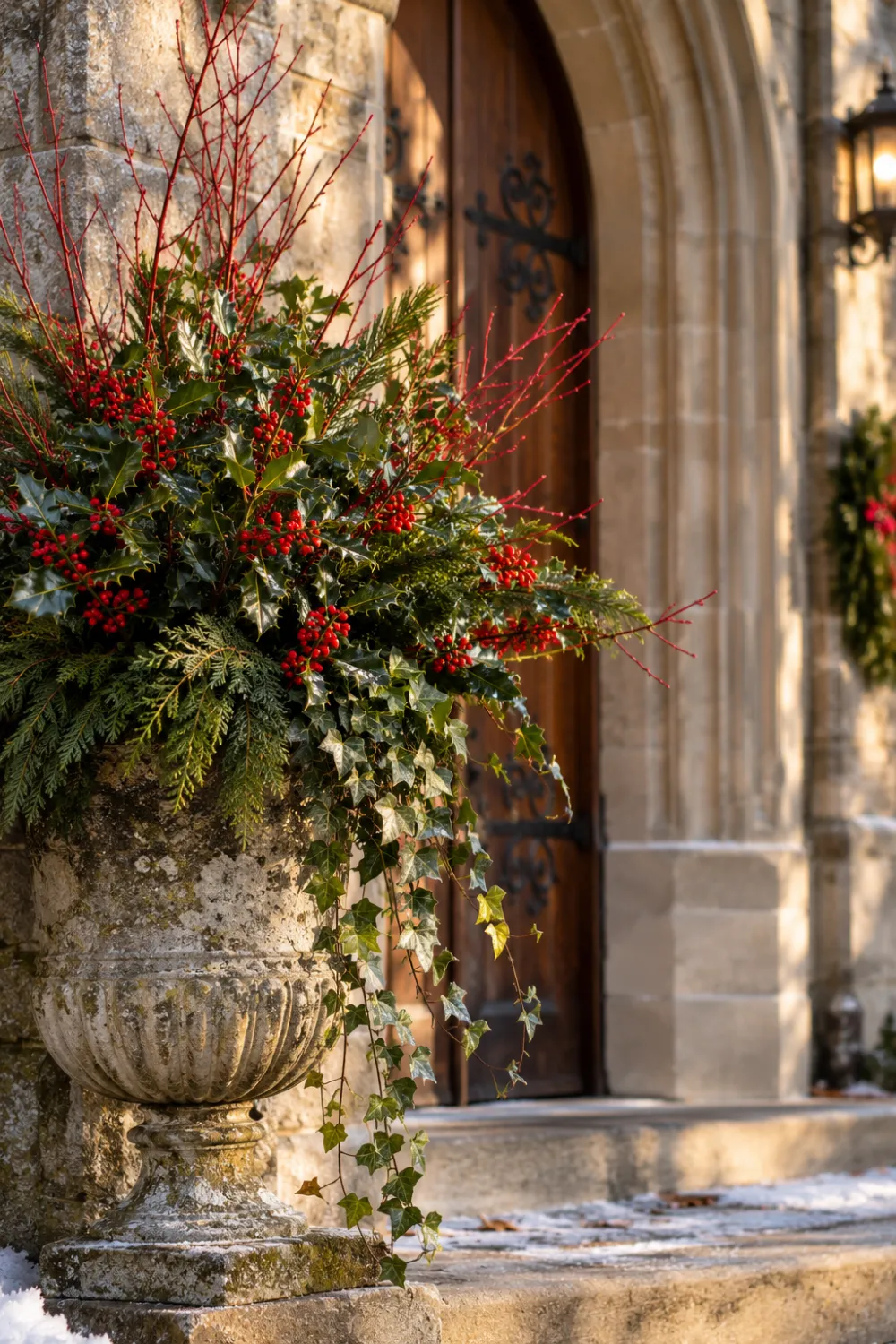
Greet people at the door with a big stone urn filled with holly, ivy, and red-twig dogwood. Push the stems into damp sand or wet foam so they stay upright in the cold. Fresh holly lasts weeks outdoors. Keep real berries out of children’s reach, since they’re toxic if eaten, and use faux berries for family or children’s services.
12. Dried Cotton and Wheat
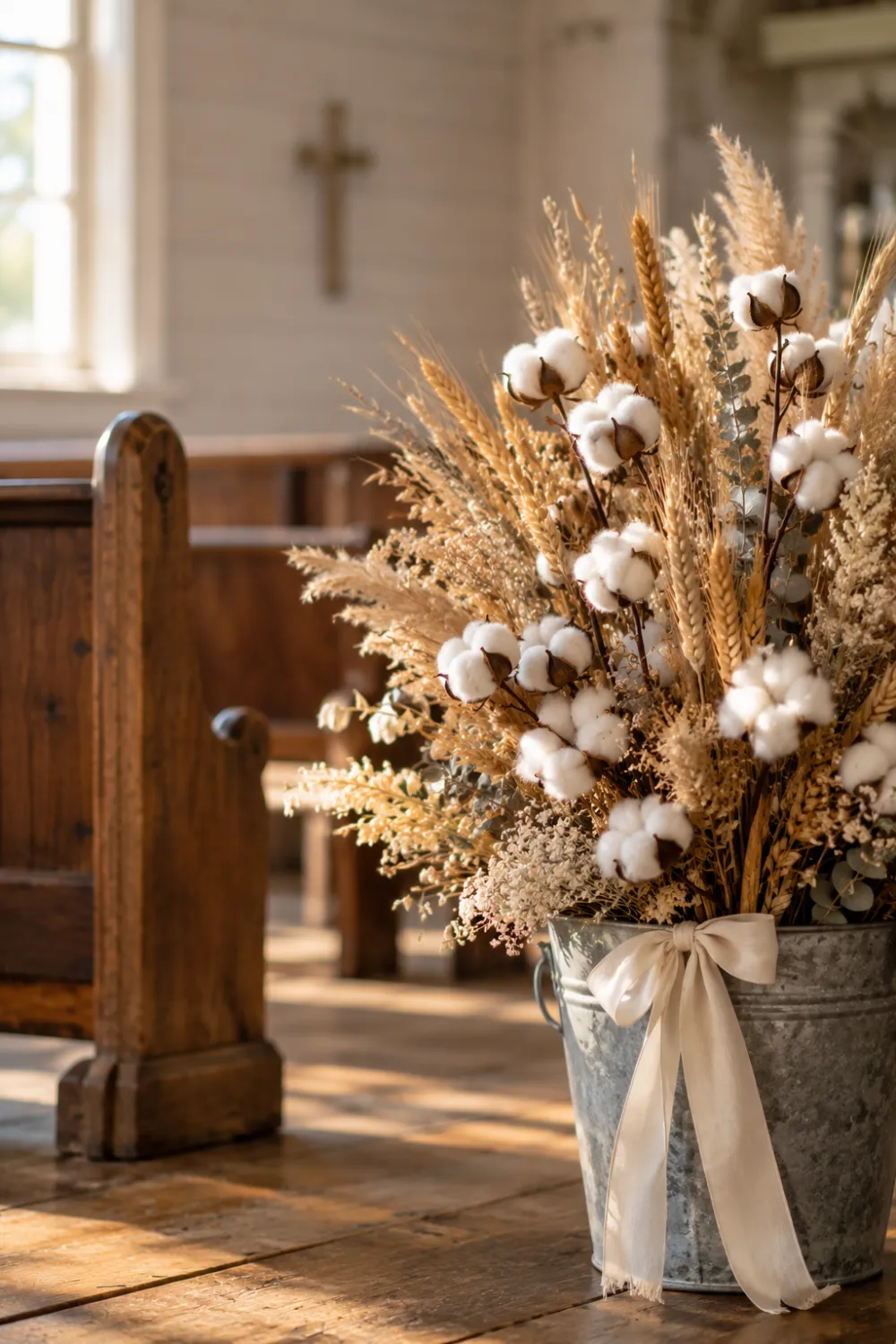
Cotton stems, wheat, and dried grasses bring a soft, earthy feel that suits a rustic country church. Gather them in a galvanized bucket or wooden crate near the front. They need no water and can be reused next year. Add a few strips of cream ribbon if you like. It’s a great low-cost option for small congregations on a tight flower budget.
13. Candlelit Chancel Greenery
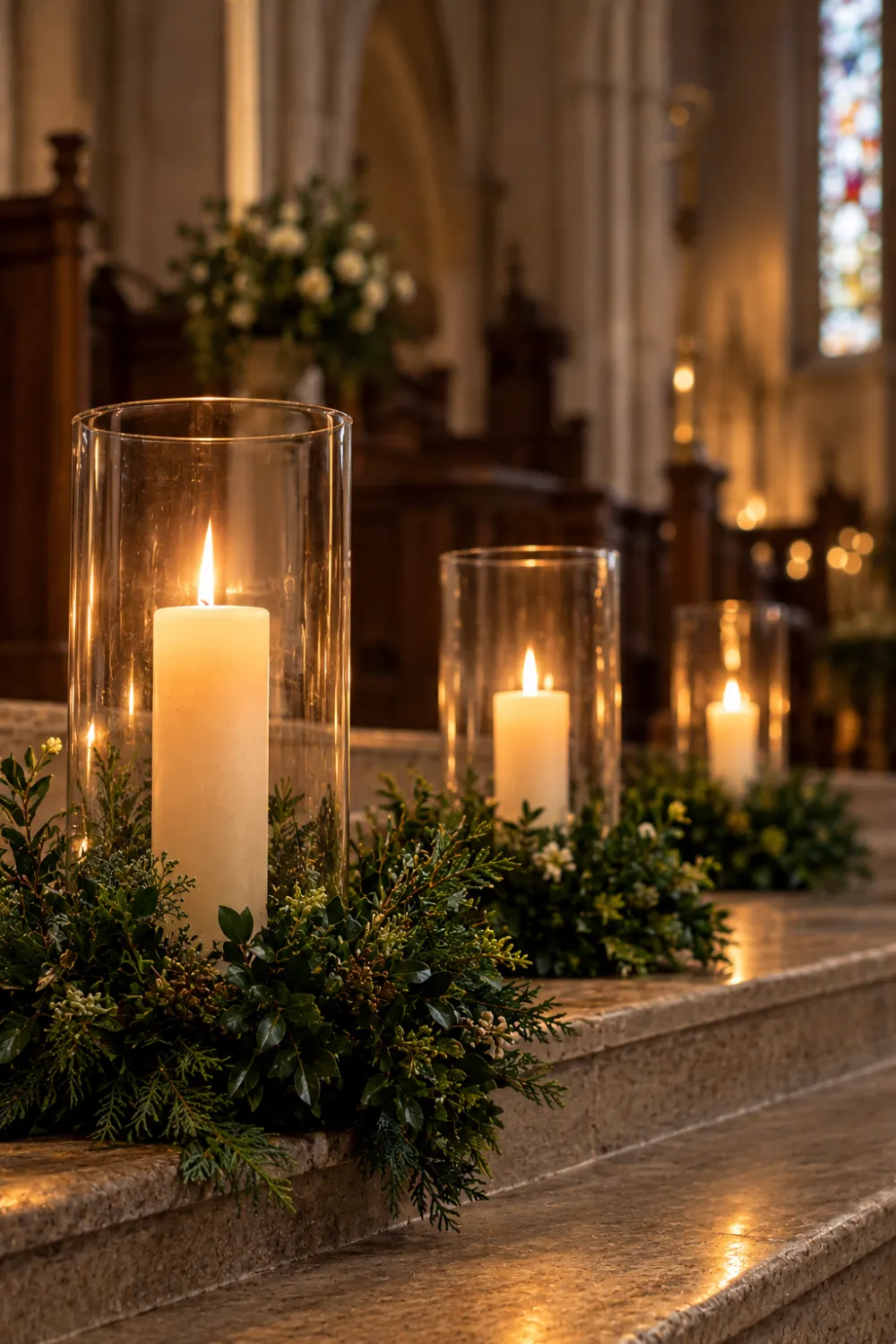
Tall pillar candles ringed with low greenery create a quiet, glowing look for evening services. Boxwood and juniper work well here. Use glass hurricane shades or sturdy holders, and leave a hand’s width of space between the greenery and the wick. Have a volunteer keep an eye on the candles, and swap in fresh clippings if the leaves start to dry out.
14. Cross Greenery Spray
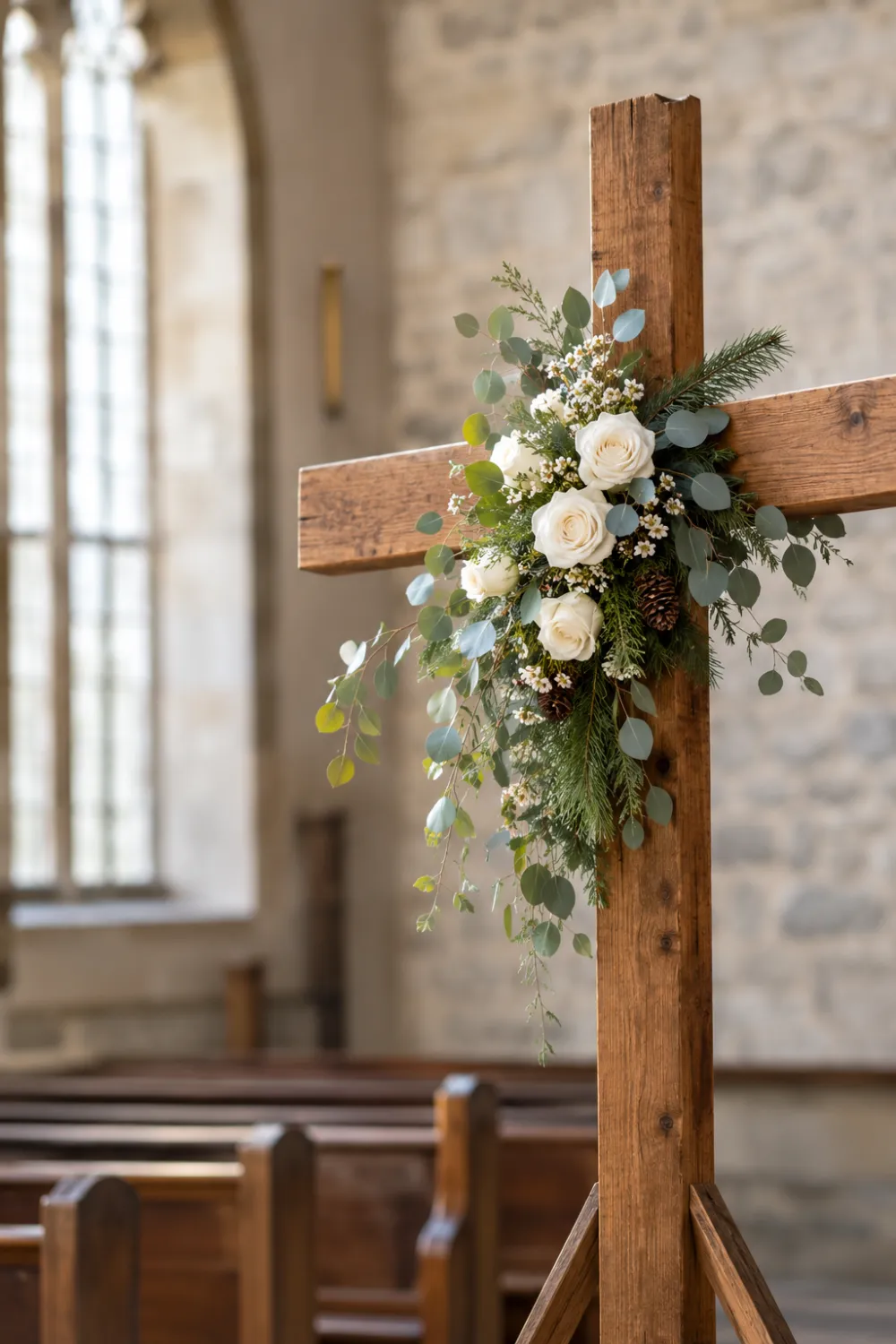
Lean a simple wooden cross on a stand and tie a loose spray of eucalyptus, white roses, and pine where the beams meet. Keep it slightly asymmetrical so it feels natural instead of stiff. Hide a small water tube behind the greenery to keep the roses fresh. This works especially well for Epiphany and the weeks after Christmas, when the sanctuary needs something simple.
15. Potted Cyclamen Steps
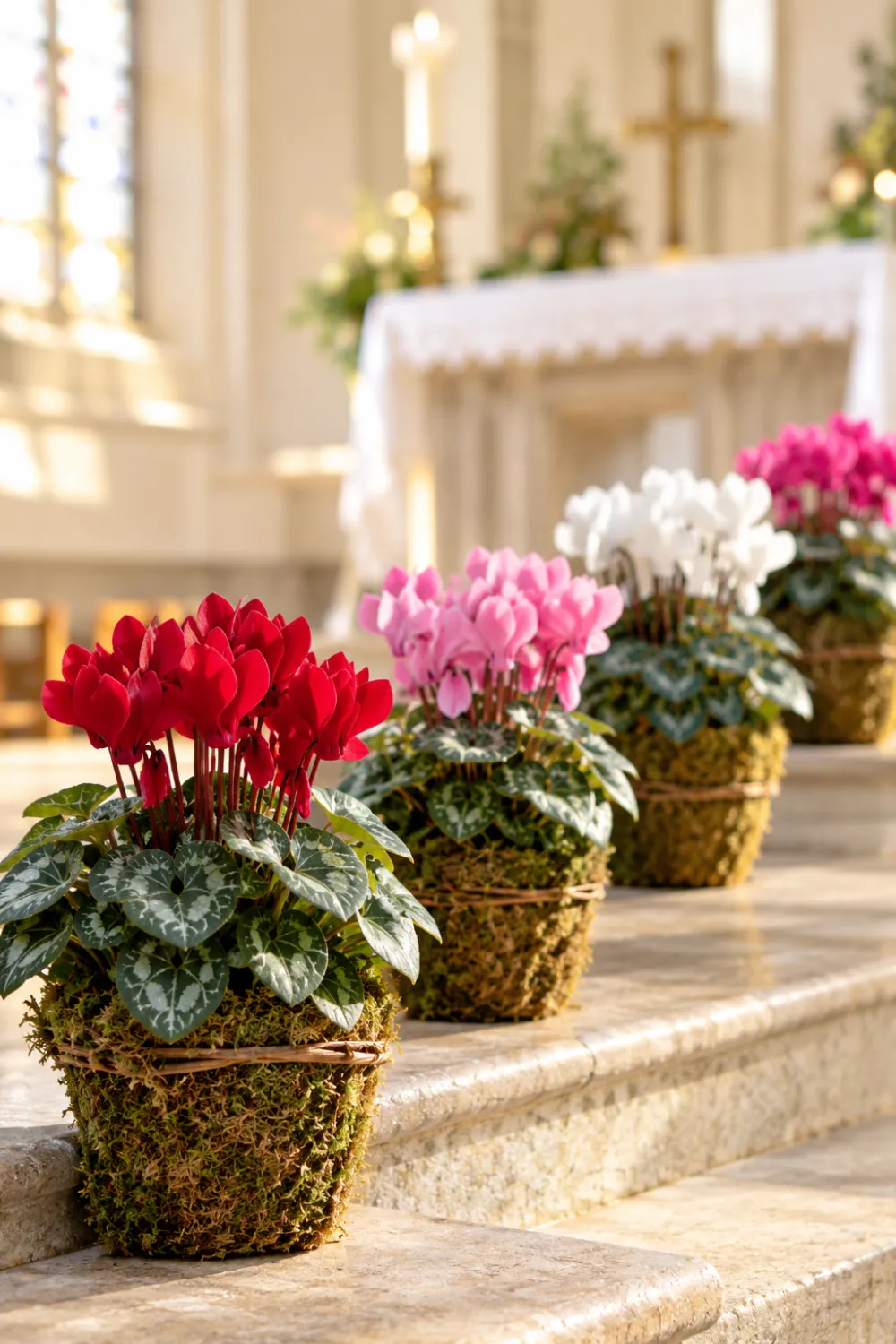
Line the chancel steps with small potted cyclamen in red, pink, and white. They’re often inexpensive in winter, bloom for weeks, and can go home with members afterward. Hide plain nursery pots inside moss-wrapped baskets for a finished look. Water them from below rather than over the blooms. They’re a cheerful way to brighten late-winter services.
Conclusion
The best winter floral arrangements for church match your space, your season, and your volunteers’ time. Small sanctuaries shine with a few potted plants or a single urn, while larger rooms can handle garlands and tiered displays. Start with one or two ideas, see how your congregation responds, and build from there. Sometimes simple is exactly right.
Last Updated on October 31, 2026 by Anwer Rajib
