
As an Amazon Associate, I earn from qualifying purchases.
Can you grow garlic in containers over winter? Yes, you can. Garlic is one of the best crops for winter container gardening and can survive freezing temperatures with proper care and protection.
Growing garlic in containers over winter is an excellent option for gardeners with limited space, poor soil, or small yards.
What Does Growing Garlic in Containers Over Winter Mean?
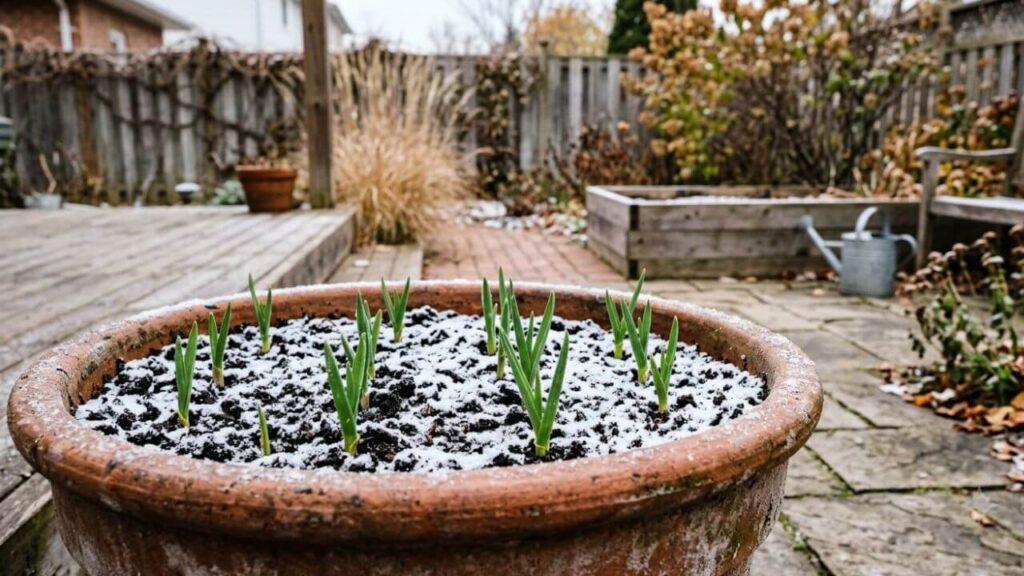
Growing garlic in containers over winter means planting garlic cloves in autumn and allowing them to remain outdoors during winter dormancy.
During winter, the cloves develop roots while cold temperatures help trigger bulb formation. This process is called vernalization.
Without enough cold exposure, garlic often produces small or poorly developed bulbs.
Benefits of Growing Garlic in Containers
Container gardening offers several advantages.
- Ideal for patios and balconies.
- Better control over soil quality.
- Easier pest management.
- Improved drainage.
- Easier harvesting.
- Containers can be moved if necessary.
For urban gardeners, containers may be the easiest way to grow garlic successfully.
Can Garlic Survive Winter in Containers?
Yes. Garlic is surprisingly cold-tolerant.
Many garlic varieties can survive temperatures well below freezing when planted properly. The soil inside containers freezes faster than garden soil, however, so additional protection is often helpful in colder regions.
Gardeners in USDA Zones 3 to 7 usually benefit from extra winter protection, while gardeners in Zones 8 to 10 often need very little protection.
Best Garlic Types for Winter Container Growing
There are two main types of garlic.
Hardneck Garlic
Hardneck garlic performs exceptionally well in colder climates.
Benefits include:
- Excellent cold tolerance.
- Larger cloves.
- Strong flavor.
- Produces edible garlic scapes.
Popular varieties include:
- Music
- German Extra Hardy
- Chesnok Red
Softneck Garlic
Softneck garlic grows better in warmer regions.
Benefits include:
- Longer storage life.
- More cloves per bulb.
- Better performance in mild winters.
Popular varieties include:
- California Early
- California Late
When to Plant Garlic in Containers
The best planting time depends on your location.
| USDA Zone | Recommended Planting Time |
| Zones 3-5 | Late September to October |
| Zones 6-7 | October to November |
| Zones 8-10 | November to December |
In most of the United States, planting garlic four to six weeks before the ground freezes produces the best results.
Choosing the Best Container for Growing Garlic
Container size matters.
Choose a container that is:
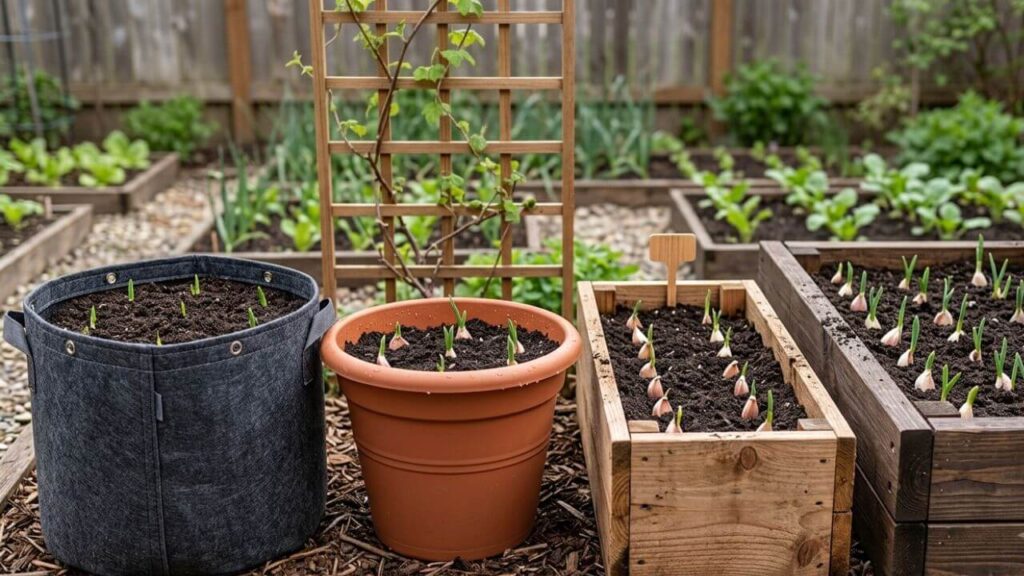
- At least 8 to 12 inches deep.
- At least 12 inches wide.
- Equipped with drainage holes.
Larger containers hold moisture more evenly and provide better insulation during winter.
Fabric grow bags, plastic pots, wooden planters, and raised containers all work well.
Best Soil Mix for Container Garlic
Garlic dislikes wet soil.
Use a loose and well-draining soil mixture such as:
- High-quality potting mix
- Compost
- Perlite or coarse sand
Avoid using heavy garden soil because it often compacts and drains poorly.
The ideal soil pH is between 6.0 and 7.0.
Tools and Materials Needed
Before planting, gather:
- Garlic cloves
- Container or grow bag
- Potting mix
- Compost
- Mulch
- Hand trowel
- Watering can
- Slow-release fertilizer
Using quality materials greatly improves success rates.
How to Plant Garlic in Containers for Winter
Step 1: Separate the Cloves
Break apart the bulb carefully.
Keep the paper skins attached and select only healthy cloves.
Larger cloves usually produce larger bulbs.
Step 2: Fill the Container
Fill the container with prepared soil, leaving about one inch of space at the top.
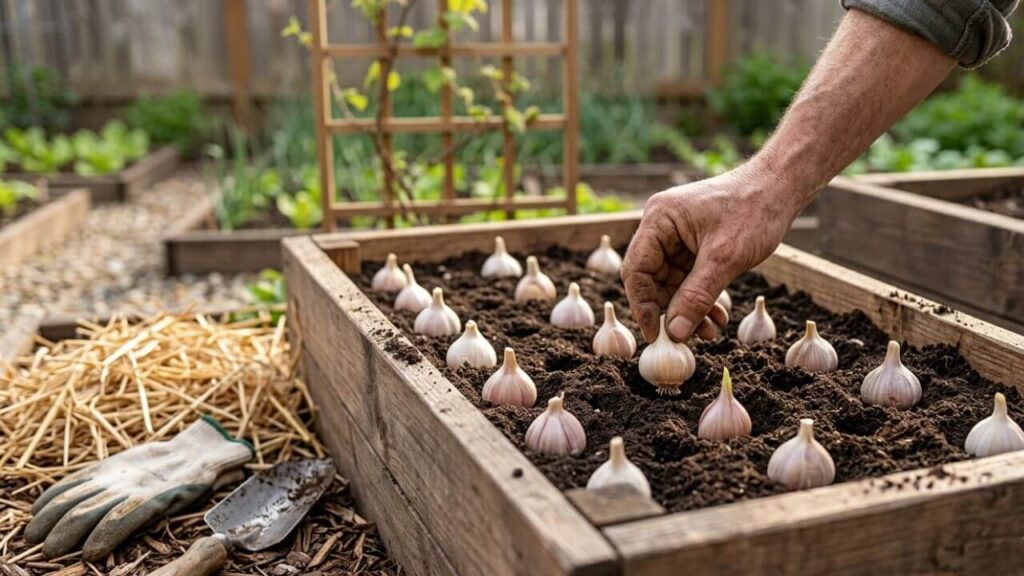
Step 3: Plant the Cloves
Plant each clove:
- Pointed end facing upward.
- Two inches deep.
- Four to six inches apart.
Proper spacing improves airflow and bulb development.
Step 4: Water Thoroughly
Water immediately after planting.
The soil should be moist but never waterlogged.
Step 5: Apply Mulch
Add two to four inches of mulch.
Good options include:
- Straw
- Shredded leaves
- Pine needles
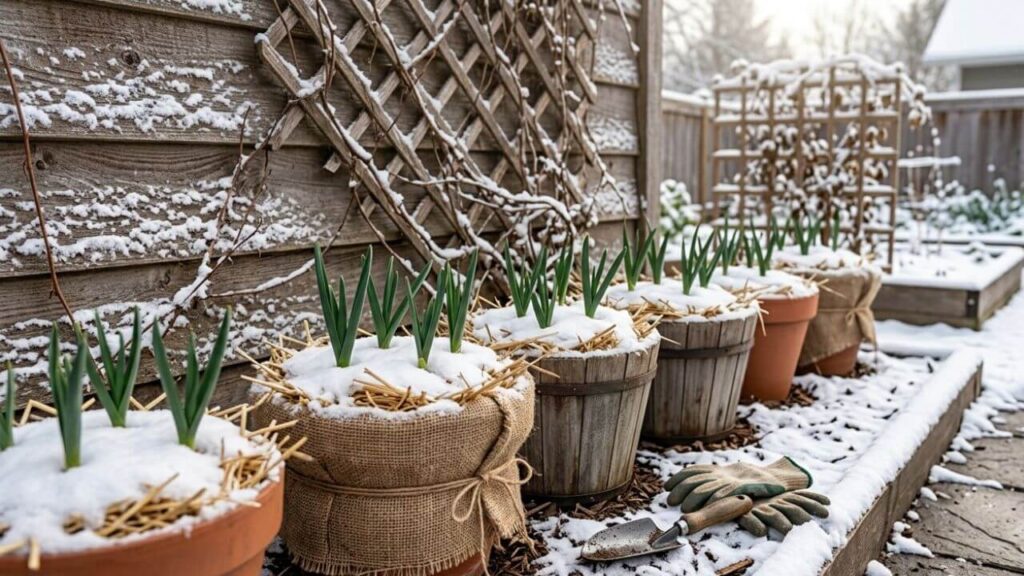
Mulch helps regulate soil temperature and reduces freeze-thaw damage.
How to Protect Potted Garlic During Winter
Winter protection depends on your climate.
Mild Winter Regions
In warmer states, containers usually need little protection.
Simply keep the soil lightly moist throughout winter.
Cold Winter Regions
In colder climates:
- Move containers against a south-facing wall.
- Wrap pots with burlap or insulation.
- Place containers in an unheated garage during extreme cold.
- Add extra mulch during severe freezes.
The goal is not to keep garlic warm but to prevent repeated freezing and thawing.
Watering Garlic During Winter
Garlic requires much less water during dormancy.
Follow these guidelines:
- Water only when the soil becomes dry.
- Avoid saturated soil.
- Reduce watering during freezing weather.
Excess moisture is one of the most common causes of garlic failure.
Fertilizing Container Garlic
Garlic benefits from light feeding in early spring.
Apply:
- Compost
- Balanced organic fertilizer
- Slow-release vegetable fertilizer
Avoid excessive nitrogen late in the season because it may encourage leaves rather than bulbs.
Common Problems When Growing Garlic in Containers
Poor Bulb Development
Possible causes:
- Insufficient cold exposure.
- Small seed cloves.
- Overcrowding.
Rotting Cloves
Usually caused by:
- Poor drainage.
- Overwatering.
- Heavy soil.
Yellow Leaves
Possible reasons include:
- Nutrient deficiency.
- Natural aging.
- Excess moisture.
Common Mistakes to Avoid
Many beginners make simple mistakes.
Avoid:
- Using containers without drainage holes.
- Planting cloves upside down.
- Overwatering during winter.
- Using small pots.
- Removing mulch too early.
- Harvesting too soon.
These mistakes can reduce bulb size and yield.
Expert Tips for Bigger Garlic Bulbs
Experienced gardeners recommend:
- Plant the largest cloves available.
- Use fresh potting soil each season.
- Keep containers in full sun.
- Feed lightly in spring.
- Remove flower stalks from hardneck varieties.
Small adjustments often produce much larger bulbs.
Maintenance and Prevention Tips
To maintain healthy plants:
- Inspect containers regularly.
- Keep weeds under control.
- Maintain consistent moisture.
- Replace old soil each year.
- Rotate planting locations when possible.
Healthy plants are more resistant to disease and stress.
When to Harvest Container Garlic
Most garlic planted in autumn is ready for harvest in early summer.
Signs that garlic is ready include:
- Lower leaves turning brown.
- Upper leaves remaining partially green.
- Bulbs feeling firm.
Do not wait until every leaf turns brown because bulbs may split underground.
Frequently Asked Questions
Can garlic stay outside in pots during winter?
Yes. Garlic is naturally cold hardy and can survive outdoors in containers in most climates.
How cold is too cold for potted garlic?
Garlic tolerates freezing temperatures well, but containers may require insulation when temperatures remain below 0°F for extended periods.
Should I move my garlic pots indoors?
Usually no. Garlic needs winter cold to develop properly. Only move containers during extreme weather conditions.
How often should I water garlic in winter?
Water sparingly and only when the soil becomes dry several inches below the surface.
Can I grow garlic on a balcony?
Yes. Garlic grows very well in containers placed on sunny balconies and patios.
How many garlic plants fit in one container?
A twelve-inch container typically holds four to six garlic plants comfortably.
Conclusion
So, can you grow garlic in containers over winter? Absolutely. Garlic is one of the easiest and most rewarding crops for winter container gardening.
Choose a large container, use well-draining soil, plant in autumn, and provide basic winter protection when necessary. By the following summer, you can harvest fresh, flavorful garlic grown right outside your door.
Even beginner gardeners can achieve excellent results with a little planning and patience.

I enjoy sharing simple gardening ideas, lawn care tips, and honest product reviews that help make outdoor work easier. From home gardening guides to helpful tools and lawn care advice, I write easy-to-follow content to help readers create a healthier and better-looking outdoor space without wasting time or money.