
As an Amazon Associate, I earn from qualifying purchases.
The first houseplant I ever lost looked thirsty, so I watered it again. A week later, the leaves looked worse. When I removed the plant from the pot, the roots were black and soft. That experience taught me an important lesson. Learning how to save a dying plant starts with diagnosis, not treatment.
Many plants that appear beyond saving can recover if you find the real problem early enough. Leaves, roots, soil, and light conditions all leave clues. Once you understand what your plant is trying to tell you, recovery becomes much easier.
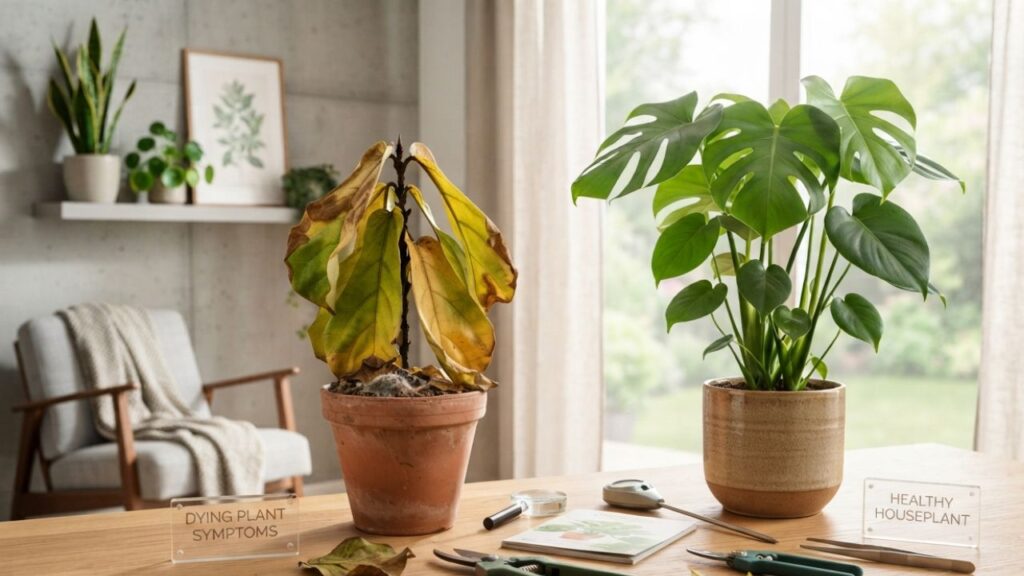
Step 1: Learn to Recognize Dying Plant Symptoms
Plants rarely fail without warning.
The challenge is that several problems can create the same symptom. Yellow leaves may point to overwatering, underwatering, poor drainage, or low light.
Look for these common dying plant symptoms:
- Yellow leaves on plants
- Drooping plant leaves
- Plant leaves turning brown
- Slow or stopped growth
- Leaf drop
- Mushy stems
- Mold on the soil surface
- Weak or leggy growth
- Bad smells from the pot
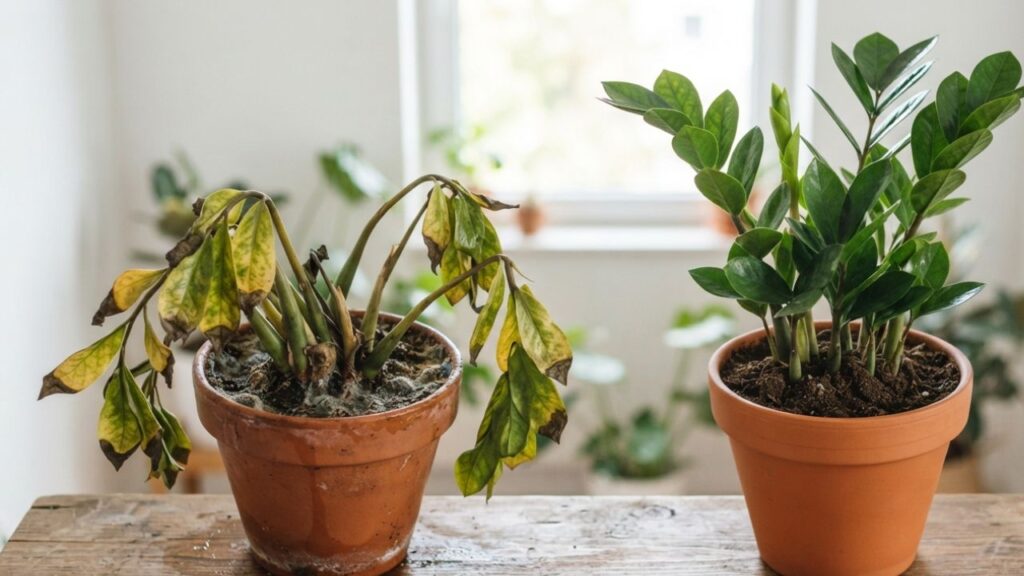
The table below can help narrow down the cause.
| Symptom | Likely Cause |
| Yellow leaves | Overwatering |
| Brown leaf edges | Dry soil |
| Wilting with wet soil | Root rot |
| Pale growth | Lack of light |
| Mushy stems | Excess moisture |
| Crispy leaves | Underwatering |
The biggest mistake beginners make is treating the symptom instead of the cause.
Adding more water to a drooping plant sounds logical, but it can kill a plant suffering from root rot.
Step 2: Check Soil Moisture Before You Do Anything Else
Most struggling plants suffer from watering mistakes.
Many homeowners water plants according to the calendar instead of checking the soil first. Plants do not use water at the same rate every week.
Temperature, humidity, sunlight, and pot size all affect moisture levels.
Push your finger about two inches into the soil.
- Dry soil suggests the plant needs water.
- Damp soil means waiting another day or two.
- Wet soil points toward overwatering problems.
This simple test solves more plant problems than expensive fertilizers or treatments.
One of the biggest reasons plants die is kindness in the form of too much water.
Step 3: Learn How to Check Plant Roots
Roots reveal problems that leaves cannot.
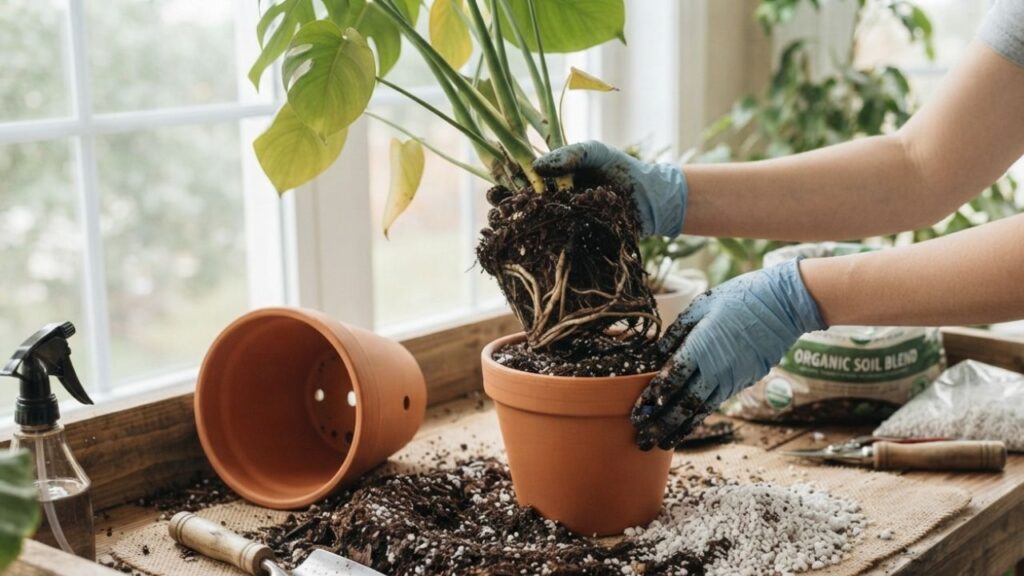
If watering adjustments do not help, gently remove the plant from its container and inspect the roots.
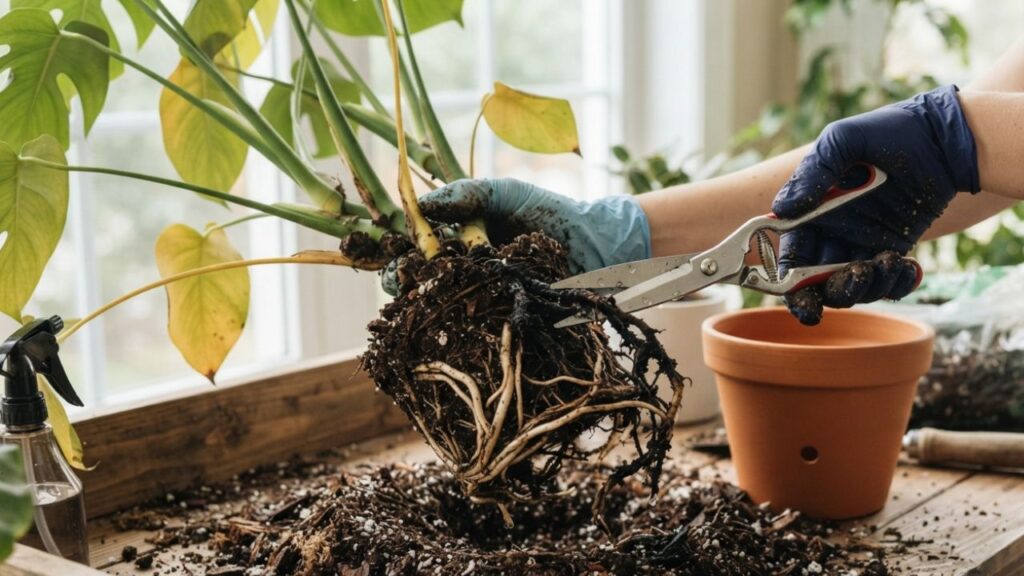
Healthy roots should be:
- White or light tan
- Firm to the touch
- Fresh smelling
Damaged roots look very different.
Signs of unhealthy roots include:
- Brown or black color
- Soft texture
- Slimy coating
- Sour smell
Learning how to check plant roots is one of the most valuable houseplant recovery tips you can learn.
I have seen plants recover after losing half their root system because healthy roots still remained.
Step 4: How to Save an Overwatered Plant
Overwatering causes more indoor plant deaths than almost any other problem.
Roots need oxygen as much as they need moisture. When soil remains wet for long periods, roots begin to suffocate.
Signs that you need overwatered plant recovery include:
- Yellow leaves
- Drooping stems
- Fungus gnats
- Wet soil for several days
- Mold on the soil surface
- Mushy stems
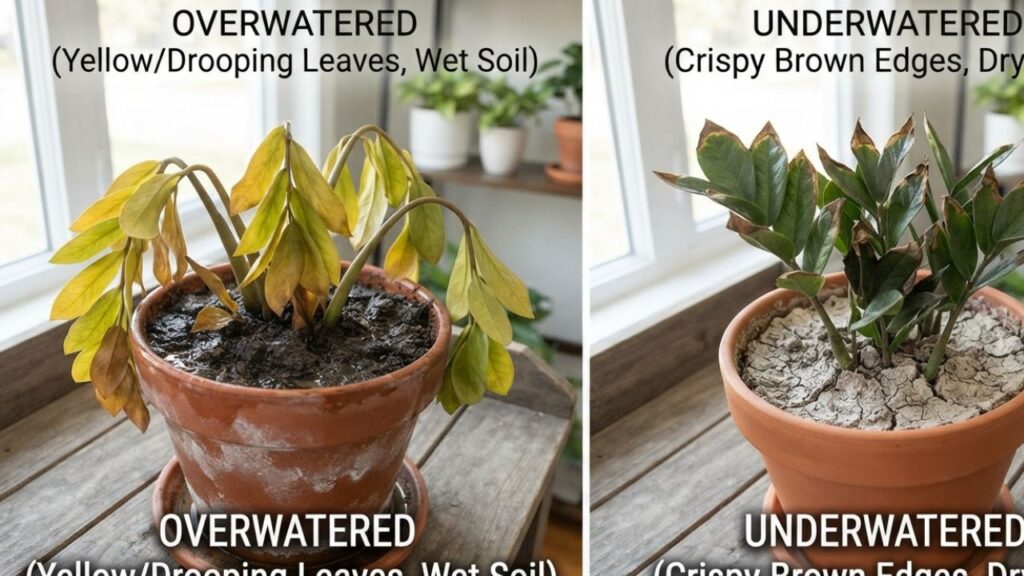
If you need to know how to save an overwatered plant, follow these steps:
- Stop watering immediately.
- Move the plant into bright indirect light.
- Remove the plant from the pot if soil remains soaked.
- Trim damaged roots.
- Replace wet soil if necessary.
- Wait until the top soil dries before watering again.
The hardest part of overwatered plant recovery is patience.
Many gardeners restart the problem by watering too soon.
Step 5: How to Save an Underwatered Plant
Dry plants recover much faster than waterlogged plants.
Signs of underwatering include:
- Drooping plant leaves
- Crispy leaf edges
- Dry soil pulling away from the pot
- Lightweight containers
- Plant leaves turning brown
If you need to know how to save an underwatered plant, avoid dumping large amounts of water into the pot all at once.
Instead:
- Water slowly.
- Allow the soil to absorb moisture.
- Repeat if water runs straight through.
- Empty drainage trays afterward.
For severely dry plants, place the pot in a sink or bucket for fifteen minutes.
This method allows the root ball to absorb moisture evenly.
Underwatered plant recovery works best when moisture returns gradually.
Step 6: How to Fix Root Rot Before It Spreads
Root rot is one of the most serious plant problems.
The disease develops when roots remain wet for too long and fungi begin attacking damaged tissue.
Learning how to fix root rot quickly can save the plant.
Remove the Plant
Carefully lift the plant from the container.
Shake away loose soil so the roots become visible.
Remove Damaged Roots
Using clean scissors or pruning shears, remove every black or mushy root.
Leave only healthy tissue behind.
Replace the Soil
Never reuse infected soil.
Fresh potting mix reduces the risk of reinfection.
Improve Drainage
Without better drainage, root rot will return.
Use containers with drainage holes and avoid compacted soil.
Mild root rot can recover surprisingly well when treated early.
Step 7: Improve Light Before Reaching for Fertilizer
Many gardeners assume yellow leaves mean the plant needs nutrients.
Poor lighting causes more problems than fertilizer shortages.
Plants need light to process water and nutrients. A plant sitting in a dark corner may continue declining even with perfect watering.
Signs of light problems include:
- Small leaves
- Pale growth
- Long weak stems
- Leaning toward windows
Move plants gradually toward brighter areas.
Avoid placing stressed plants into strong afternoon sun immediately.
The sudden change can create additional stress.
Step 8: Repotting a Dying Plant Can Restart Recovery
Repotting a dying plant can solve several hidden problems at once.
Old potting soil breaks down over time and holds too much moisture. Roots become crowded and airflow decreases.
Consider repotting if:
- Roots circle the pot.
- Water drains very slowly.
- Soil stays wet for several days.
- Growth has stopped completely.
Choose a container only one size larger than the existing pot.
Large containers hold more water and increase the risk of root rot.
Fresh soil provides:
- Better airflow
- Improved drainage
- More room for roots
- Cleaner growing conditions
Repotting works best during spring and summer when plants actively grow.
Step 9: Learn How to Improve Plant Drainage
Poor drainage creates many plant stress symptoms.
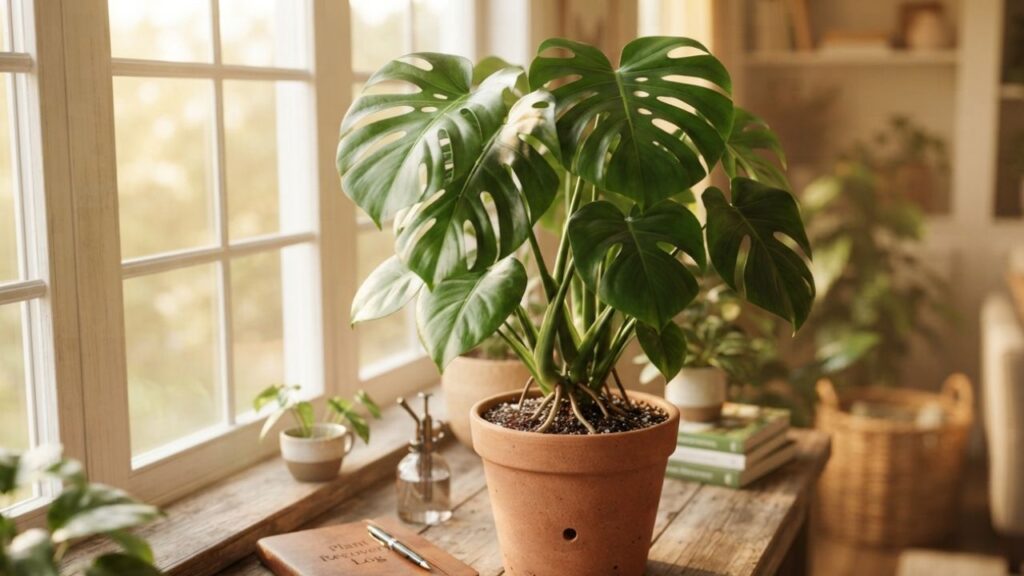
Learning how to improve plant drainage prevents future problems and improves root health.
Good drainage starts with:
- Containers with drainage holes
- High-quality potting mix
- Proper container size
- Healthy root systems
Avoid placing rocks in the bottom of pots.
Despite the popularity of this advice, rocks can trap water higher in the container and keep roots wetter for longer.
The goal is to move excess water out of the container as quickly as possible.
Common Plant Care Mistakes That Kill Plants
After years of growing indoor plants, I continue seeing the same mistakes repeated.
| Mistake | Better Choice |
| Watering on schedule | Check soil first |
| Using oversized pots | Increase size slowly |
| Fertilizing stressed plants | Wait for recovery |
| Ignoring drainage holes | Use proper containers |
| Moving plants repeatedly | Allow adjustment time |
Another common mistake is changing several things at once.
If you change watering, lighting, fertilizer, and location on the same day, it becomes impossible to know what actually helped.
Indoor Plant Care Tips That Improve Recovery
Small habits prevent most plant problems before they start.
These indoor plant care tips improve long-term plant health:
- Rotate plants every few weeks.
- Dust leaves regularly.
- Empty saucers after watering.
- Inspect plants for pests weekly.
- Keep plants away from heating vents.
- Use clean pruning tools.
- Monitor soil moisture regularly.
One of my favorite houseplant recovery tips is keeping a simple notebook for watering dates and changes in care.
Patterns become easier to spot when you write them down.
When a Plant Cannot Be Saved
Not every plant survives.
If the roots are completely black, stems have become hollow, and no healthy growth remains, replacement may be the best option.
That does not mean the experience was wasted.
Most experienced gardeners learned their biggest lessons from the plants they lost.
Every failed plant teaches something useful about watering, lighting, or drainage.
Frequently Asked Questions
Can a dying plant really recover?
Yes. Many struggling plants recover when the underlying problem is identified and corrected early.
What are the first signs of an unhealthy plant?
Yellow leaves, drooping leaves, slow growth, and brown leaf edges are common warning signs.
How long does plant recovery take?
Minor stress can improve within two weeks. Severe damage may require several months.
Should I fertilize a dying plant?
No. Wait until healthy new growth appears before fertilizing.
Can root rot be reversed?
Mild root rot can recover if damaged roots are removed quickly and drainage improves.
How do I know if my plant needs water?
Check soil moisture with your finger instead of following a fixed schedule.
Is repotting a dying plant always necessary?
No. Repot only if roots are crowded or drainage problems exist.
What is the easiest way to prevent plant problems?
Proper watering habits and good drainage prevent most plant failures.
Conclusion
Learning how to bring a plant back to life becomes much easier when you stop treating symptoms and start looking for causes.
Watering mistakes, poor drainage, root damage, and weak lighting account for most plant problems.
Start with soil moisture, inspect the roots, and make one change at a time. Many plants that look beyond saving can recover with patience and steady care.
The goal is not perfection. The goal is learning how your plant responds and adjusting before small problems become big ones.
Last Updated on July 31, 2026 by Saad Abdullah

I enjoy sharing simple gardening ideas, lawn care tips, and honest product reviews that help make outdoor work easier. From home gardening guides to helpful tools and lawn care advice, I write easy-to-follow content to help readers create a healthier and better-looking outdoor space without wasting time or money.