
As an Amazon Associate, I earn from qualifying purchases.
The first fern I brought indoors looked perfect for about two weeks.
Then the leaf tips turned brown. The fronds became dry and brittle, and the plant slowly declined despite regular watering.
That experience taught me that learning how to care for a fern indoors is less about watering more and more about recreating the cool, humid conditions ferns enjoy in nature.
The good news is that once you understand what ferns want, they become surprisingly easy houseplants.
What Makes Ferns Different?
Most houseplants come from warm climates with bright light and periods of dry soil.
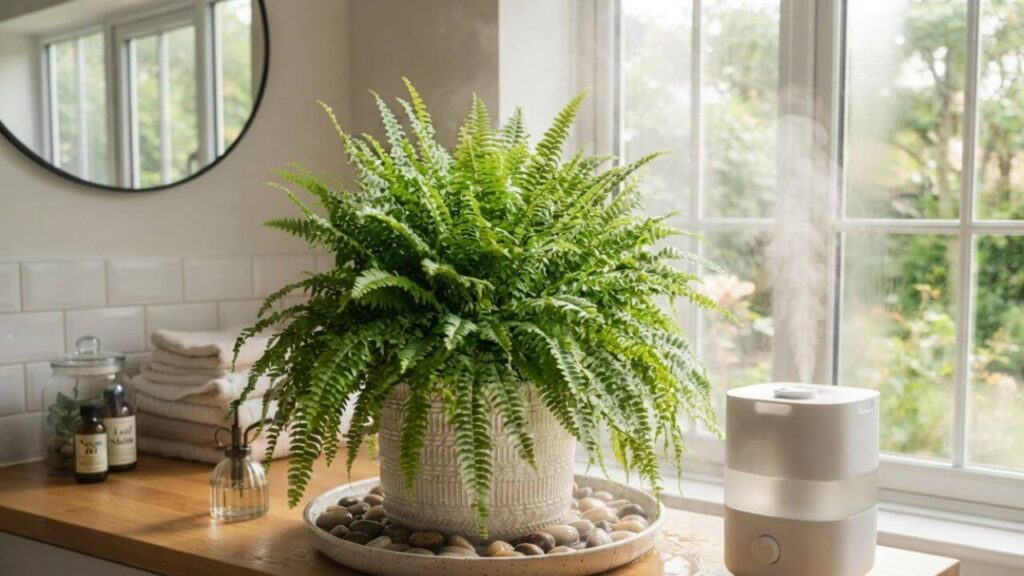
Ferns evolved in forests where temperatures stay moderate, humidity remains high, and sunlight filters through tree canopies. Indoor fern care becomes easier when you try to copy those conditions inside your home.
This explains why ferns struggle near heating vents, sunny south-facing windows, and dry winter air.
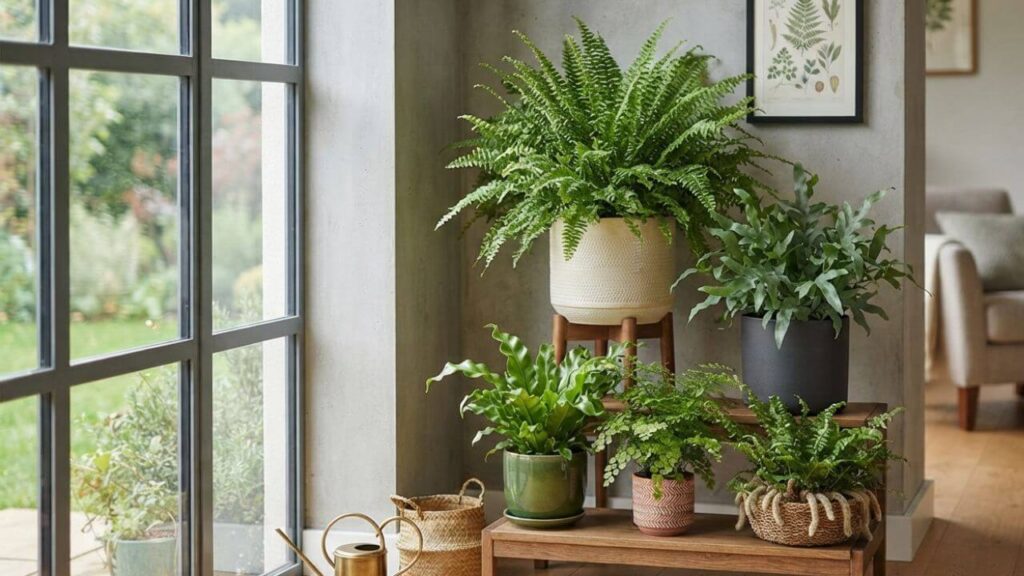
Popular indoor varieties include:
- Boston fern
- Bird’s nest fern
- Kimberly Queen fern
- Maidenhair fern
- Rabbit’s foot fern
While each species has slightly different needs, the care basics remain very similar.
Give Ferns the Right Light
Lighting mistakes cause more fern problems than many beginners expect.
The best light for indoor ferns is bright indirect light. Think about the light under a large tree outdoors rather than direct summer sunshine.
East-facing windows work extremely well for many varieties. North-facing windows also perform well in many homes.
Signs your fern receives too much light include:
- Bleached leaves
- Crispy fronds
- Brown tips
- Faded color
Signs of too little light include:
- Slow growth
- Small fronds
- Weak stems
- Sparse foliage
Many people assume ferns belong in dark corners because they tolerate shade outdoors.
In reality, low light indoor ferns still need more light than most people think.
Watering Before Anything Else
Watering indoor ferns correctly is one of the biggest challenges for most homeowners. Fern roots prefer evenly moist soil, but they do not like sitting in water, so consistency is the goal. Check the top inch of soil every few days and water thoroughly if it feels slightly dry so moisture reaches the entire root ball. If the soil still feels damp, wait another day before watering again. Many gardeners ask how often to water indoor ferns, but there is no perfect schedule because summer heat, winter heating systems, pot size, and sunlight all affect water needs. A better question is not “When should I water?” but rather “Does the soil need water today?” That small shift in thinking helps prevent many common fern problems.
Humidity Matters More Than Fertilizer
Dry indoor air causes more fern failures than nutrient problems.
Most homes maintain humidity levels between 20% and 40%. Many ferns prefer humidity for indoor ferns closer to 50% to 70%.
The difference becomes obvious during winter when heating systems dry the air even more.
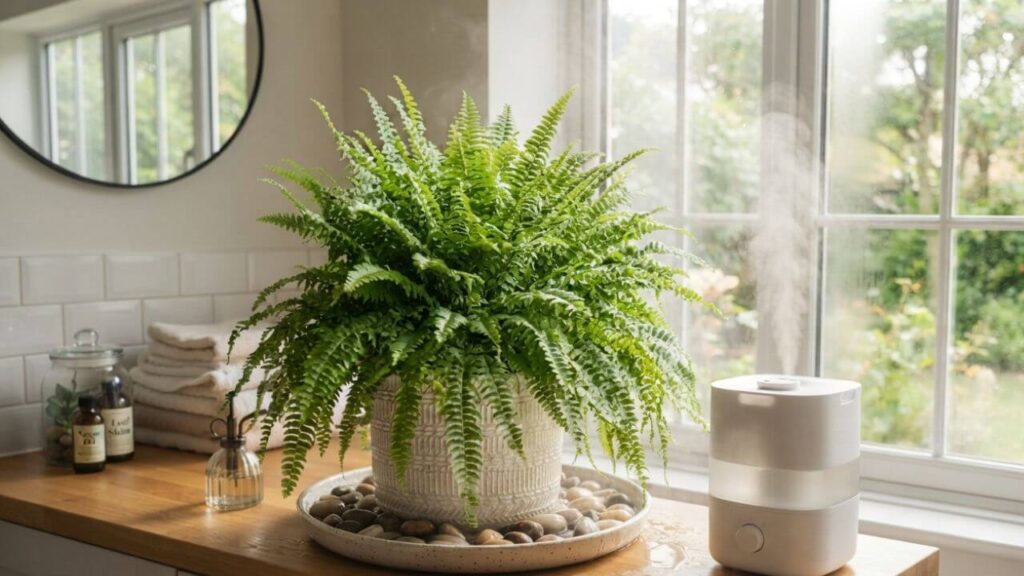
You can increase humidity by:
- Using a humidifier
- Grouping plants together
- Placing pots on pebble trays
- Growing ferns in bathrooms with windows
Many gardeners try misting indoor ferns.
Misting helps for a short time, but the effect disappears quickly. A humidifier provides far better long-term results.
When humidity drops too low, brown leaf tips become one of the first warning signs.
Choose the Best Soil for Indoor Ferns
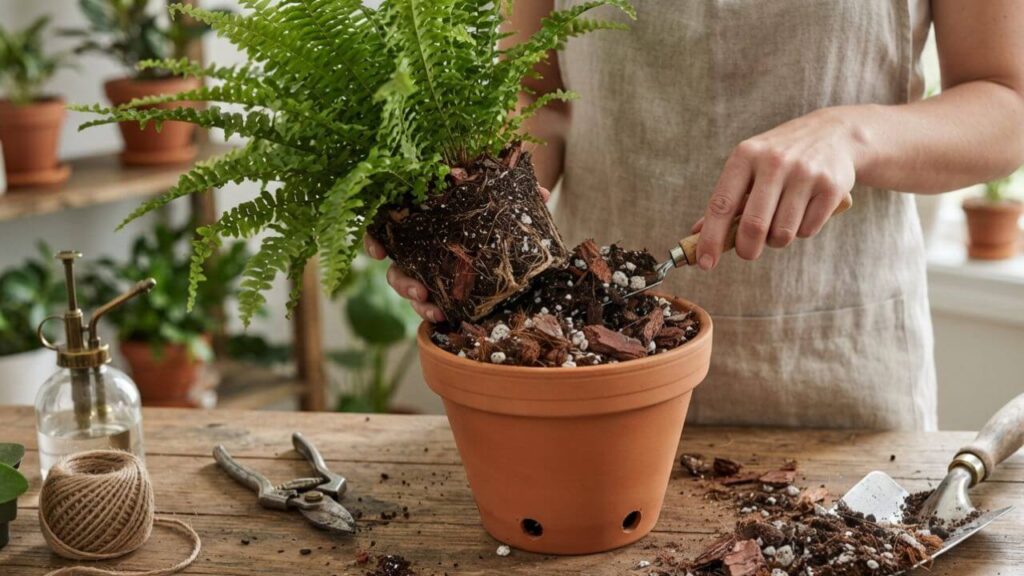
Ferns need moisture retention and drainage at the same time.
The best soil for indoor ferns holds water without becoming compacted.
A good potting mix for ferns contains:
- Peat moss or coco coir
- Perlite
- Pine bark fines
- Compost
Heavy garden soil should stay outdoors.
Garden soil compacts quickly in containers and restricts airflow around roots.
Good potting soil for ferns should feel loose and airy even after watering.
Drainage holes are equally important.
Without drainage holes, even experienced gardeners struggle with houseplant fern care.
How to Improve Drainage?
Poor drainage creates many fern problems.
Yellow leaves, weak growth, and root rot frequently trace back to soil that stays wet for too long.
Learning how to improve plant drainage helps protect roots and reduce disease pressure.
Simple improvements include:
- Choosing pots with drainage holes
- Using quality potting mix
- Emptying saucers after watering
- Avoiding oversized containers
One mistake I made early on was placing decorative rocks at the bottom of pots.
The idea sounds helpful but actually keeps water higher in the container where roots grow.
Better drainage starts with better soil, not rocks.
Fertilizing Indoor Ferns Without Overdoing It
Ferns are not heavy feeders.
Too much fertilizer burns roots and damages delicate foliage.
Fertilizing indoor ferns works best during active growth in spring and summer.
Use:
- Half-strength liquid fertilizer
- Balanced houseplant fertilizer
- Feeding every four to six weeks
Reduce or stop feeding during winter.
New gardeners sometimes add fertilizer to struggling plants.
In reality, stressed plants recover better when watering, humidity, and lighting improve first.
Repotting Indoor Ferns at the Right Time
Repotting indoor ferns becomes necessary when roots outgrow the container.
Signs that a fern needs a larger pot include:
- Roots growing through drainage holes
- Water running straight through the pot
- Slower growth
- Crowded root systems
Choose a container only one size larger.
Large pots hold extra water and increase the risk of root problems.
Spring remains the best season for repotting because plants recover more quickly during active growth.
Fresh soil also refreshes nutrients and improves airflow around roots.
Why Fern Leaves Turn Brown
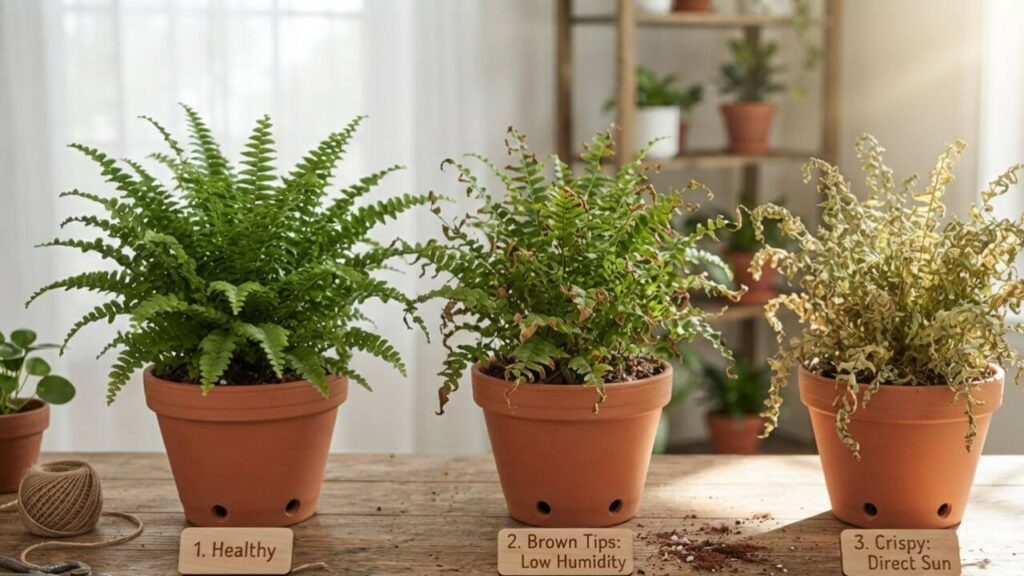
Fern leaves turning brown is one of the most common indoor fern problems.
The cause depends on where the damage appears.
| Symptom | Likely Cause |
| Brown tips | Low humidity |
| Brown edges | Dry soil |
| Yellow then brown leaves | Overwatering |
| Crispy fronds | Too much sun |
Brown fronds rarely turn green again.
Trim damaged leaves with clean scissors to improve appearance and encourage new growth.
The key is fixing the cause before the problem spreads.
Common Mistakes Beginners Make
Most indoor fern failures come from a few repeated mistakes.
| Mistake | Better Approach |
| Direct sunlight | Bright indirect light |
| Watering on schedule | Check soil first |
| Ignoring humidity | Increase moisture in the air |
| Oversized pots | Increase size gradually |
| Heavy fertilizer use | Feed lightly |
Another mistake involves moving ferns repeatedly around the house.
Ferns appreciate stable conditions and respond poorly to constant changes.
Seasonal Changes Affect Indoor Fern Care
Fern care indoors changes throughout the year.
Summer growth increases water needs and fertilizer demand.
Winter creates different challenges.
Heating systems lower humidity and dry soil faster than expected.
During winter:
- Reduce fertilizer.
- Monitor humidity closely.
- Keep plants away from heating vents.
- Check soil more frequently.
Many homeowners lose healthy ferns during winter because they continue summer routines.
Seasonal adjustments make a huge difference.
Expert Tips for Healthy Fern Growth
After years of growing ferns indoors, several habits consistently produce better results.
- Rotate plants every few weeks.
- Remove dead fronds quickly.
- Dust leaves gently.
- Use room-temperature water.
- Check humidity levels regularly.
- Keep plants away from cold drafts.
One lesson I learned the hard way is that ferns reward consistency more than perfection.
Small steady care beats dramatic changes every time.
Frequently Asked Questions
How often should I water indoor ferns?
Check the soil every few days and water when the top inch begins to dry.
Do ferns need direct sunlight indoors?
No. Most ferns prefer bright indirect light rather than direct sun.
Is misting indoor ferns enough for humidity?
Misting helps briefly, but humidifiers and pebble trays provide better long-term humidity.
Why are my fern leaves turning brown?
Low humidity, dry soil, direct sunlight, and overwatering are the most common causes.
What is the best soil for indoor ferns?
Use a loose, moisture-retentive potting mix with good drainage.
Should I fertilize indoor ferns in winter?
No. Most ferns grow slowly during winter and need little or no fertilizer.
Are ferns good low-light houseplants?
Many tolerate lower light, but they still need bright indirect light to thrive.
Conclusion
Learning how to grow ferns indoors becomes much easier once you focus on moisture, humidity, light, and drainage.
Most fern problems come from dry air, poor watering habits, or too much sun. Start with those four areas before reaching for fertilizer or treatments.
With steady care and the right environment, indoor ferns can remain healthy, full, and green for many years.

I enjoy sharing simple gardening ideas, lawn care tips, and honest product reviews that help make outdoor work easier. From home gardening guides to helpful tools and lawn care advice, I write easy-to-follow content to help readers create a healthier and better-looking outdoor space without wasting time or money.