
As an Amazon Associate, I earn from qualifying purchases.
Containers dry out faster on balconies than they do in backyard gardens. Wind, reflected heat, and limited space create challenges that surprise many beginners. These Balcony Garden Tips will help you avoid common problems and grow healthier herbs, vegetables, and flowers in small spaces.
The good news is that balcony gardening rewards smart planning more than large square footage. A well-designed balcony often outperforms a poorly planned backyard garden.
Why Balcony Gardens Need a Different Approach
Balcony gardens operate under different conditions than traditional gardens.
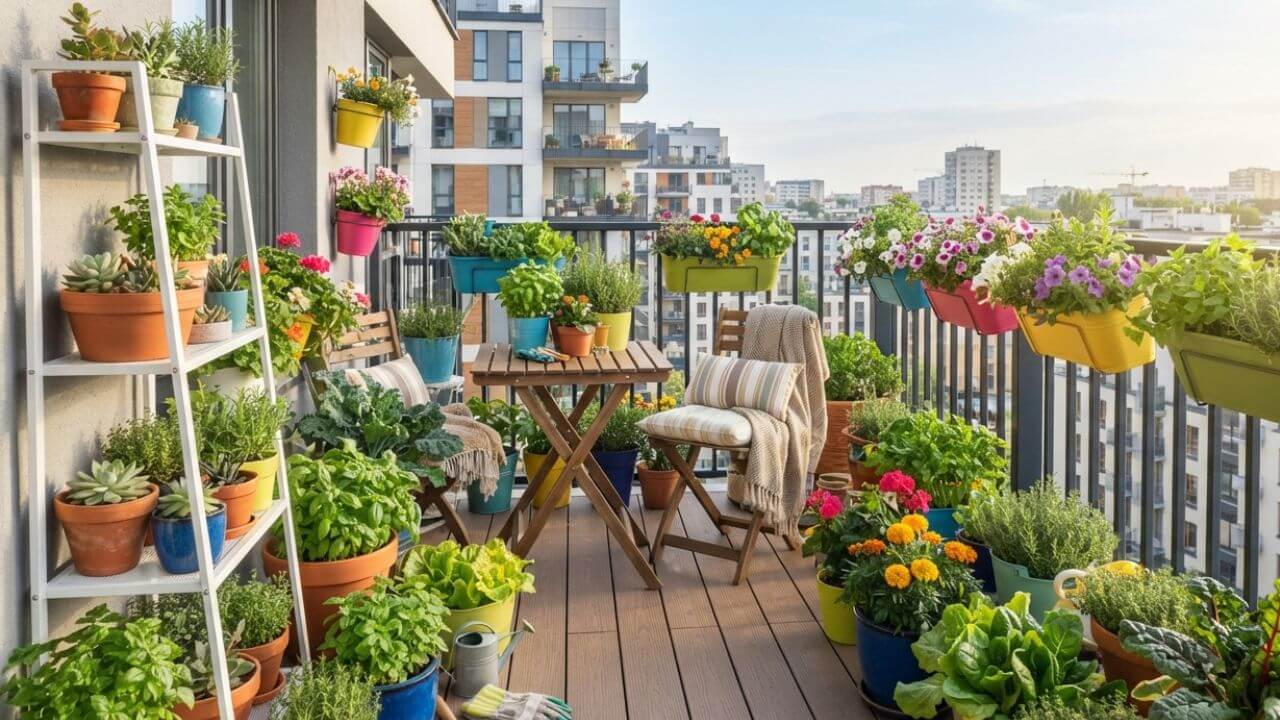
Containers hold less soil, which means roots heat up faster and dry out sooner. Tall buildings create stronger winds that damage stems and increase moisture loss. Concrete walls and floors also reflect heat onto plants during summer afternoons.
Understanding these conditions is the first step toward success.
Balcony Garden Setup Tips
Good planning prevents most beginner problems. A balcony garden has different challenges than a backyard garden, including limited space, stronger winds, and faster drying soil. Spending a little extra time planning the layout can save money, reduce maintenance, and improve plant health throughout the season.
1. Measure Sunlight Before Buying Plants
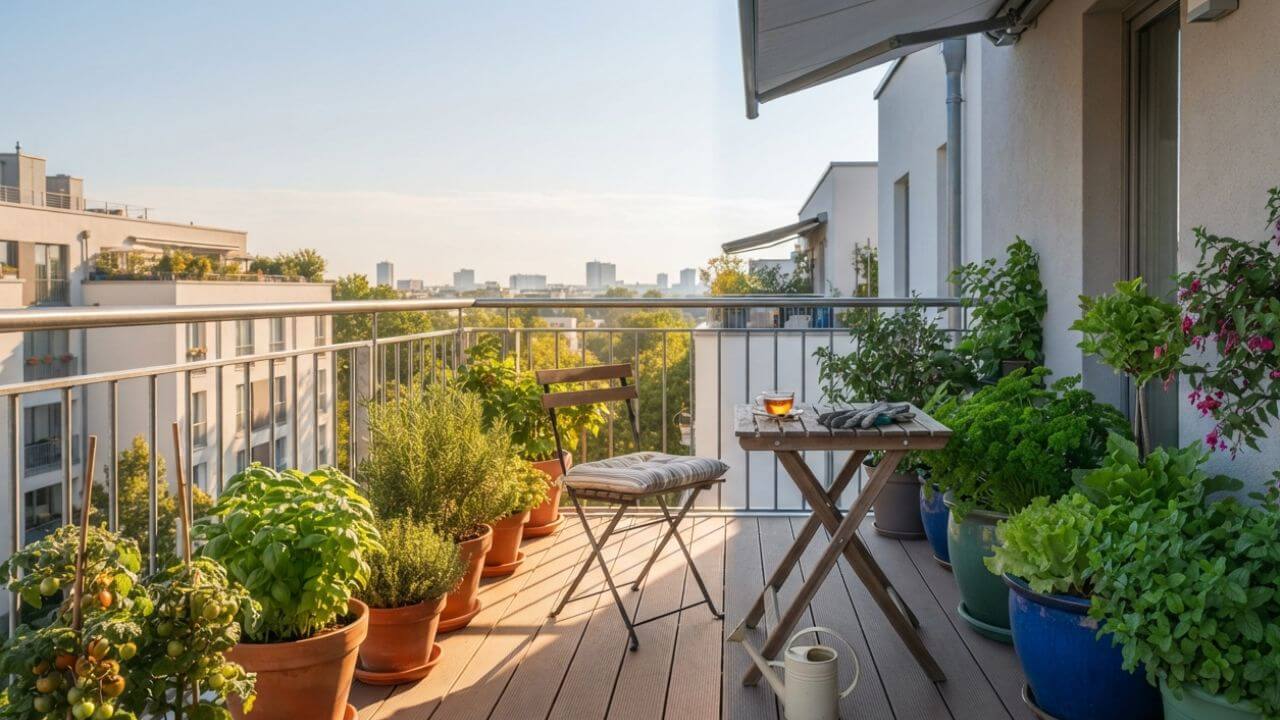
Sunlight determines which plants will succeed and which plants will struggle. Before buying seeds, herbs, flowers, or vegetables, observe your balcony for one full day and record how many hours of direct sunlight it receives.
- 6 to 8 hours: Full sun
- 3 to 6 hours: Partial sun
- Less than 3 hours: Shade
Tomatoes, peppers, basil, and rosemary prefer full sun. Mint, parsley, lettuce, and many leafy greens perform better with partial shade.
I recommend checking sunlight during both spring and summer because nearby buildings and trees can change light conditions throughout the year. This simple step prevents expensive mistakes and reduces plant replacements later.
2. Check Balcony Weight Limits
Containers become much heavier than many beginners expect. A large planter filled with wet soil can weigh more than 50 pounds, and several containers grouped can place significant pressure on one area of the balcony.
Spread containers evenly instead of clustering them in a single corner. Larger containers should stay close to walls where balconies provide the strongest support.
If you live in an apartment building, review building guidelines before installing raised beds or large planters.
3. Understand Wind Exposure
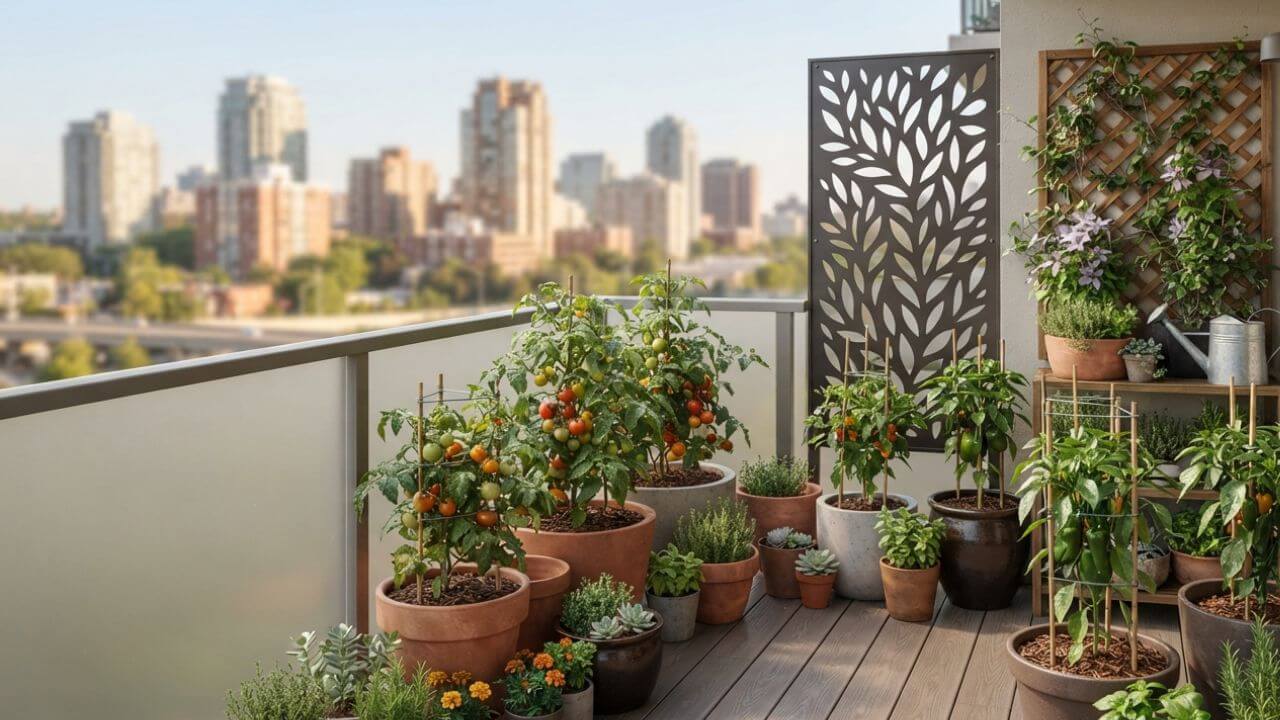
Upper floors experience stronger and more frequent winds than ground-level gardens. Wind dries soil faster, damages leaves, and can even knock over lightweight containers.
Watch how plants respond during breezy afternoons. Constant movement, leaning stems, and torn leaves are signs that additional protection is needed.
Possible solutions include:
- Grouping pots together
- Installing decorative screens
- Using lattice panels
- Choosing heavier containers
Wind protection becomes especially important for tomatoes, peppers, and climbing vegetables.
4. Plan for Drainage
Good drainage protects both plants and balconies. Containers should allow excess water to escape quickly without leaving roots sitting in soggy soil.
Use containers with drainage holes and place saucers underneath to protect balcony flooring. Avoid allowing water to drip continuously onto neighboring balconies below.
If standing water remains in a pot for more than a few minutes after watering, improve drainage by adding fresh potting mix or switching containers.
Small Balcony Garden Tips
Small spaces benefit from smarter layouts rather than fewer plants. A well-designed balcony garden can produce surprising amounts of herbs, flowers, and vegetables without feeling crowded.
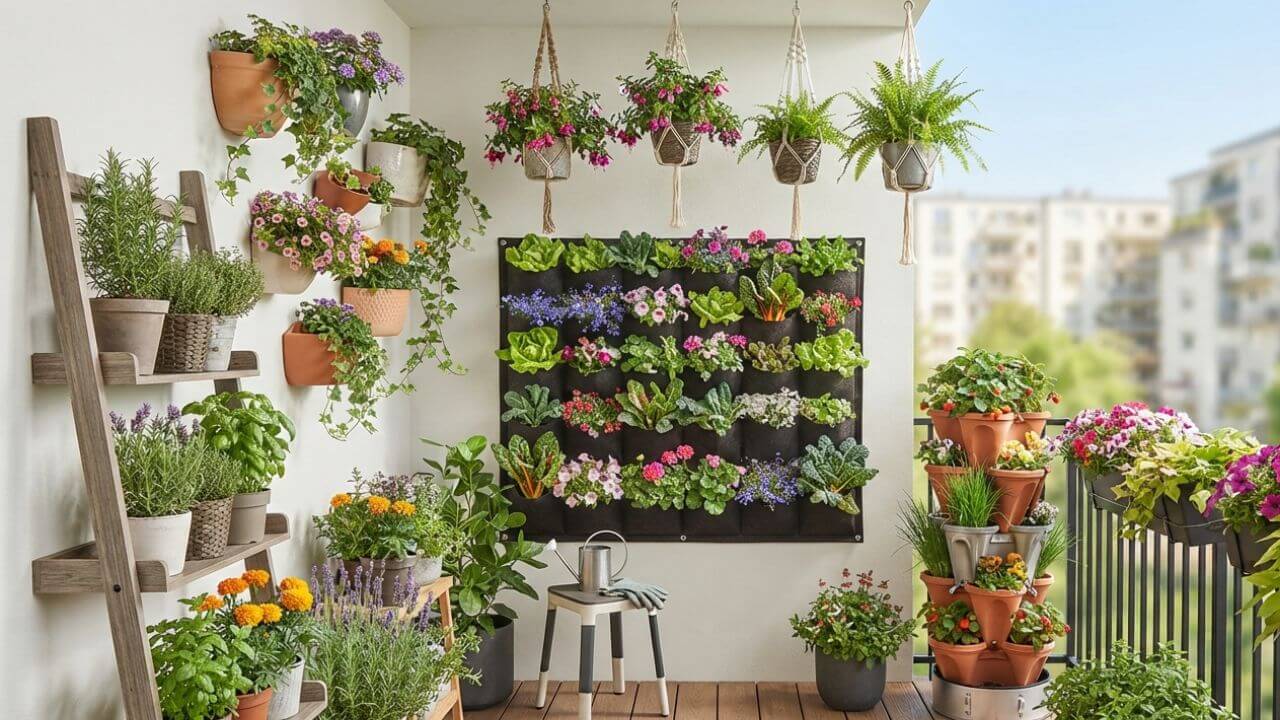
5. Use Vertical Space
Walls are valuable gardening space that many homeowners ignore. Vertical systems allow plants to grow upward instead of outward.
Good options include:
- Wall planters
- Hanging baskets
- Pocket planters
- Ladder shelves
- Trellises
Vertical gardening can double growing capacity while preserving valuable floor space for seating and movement.
6. Install Railing Planters
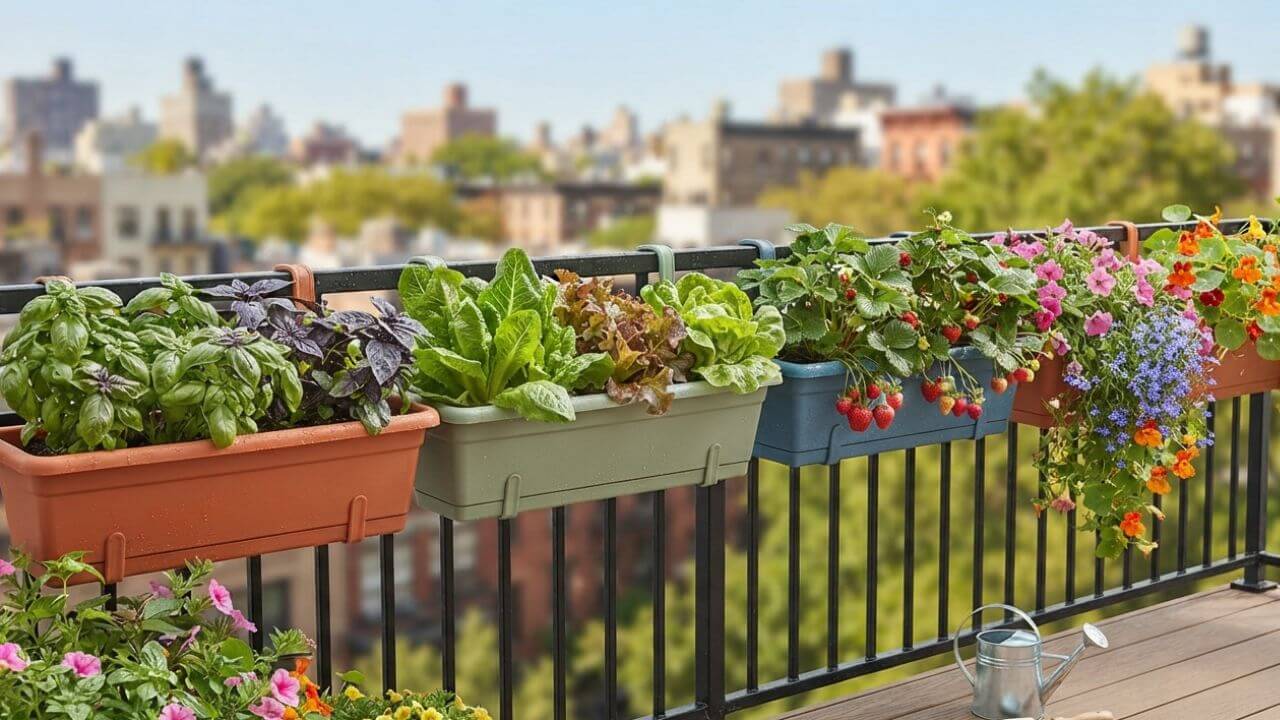
Railing planters turn unused balcony edges into productive growing areas.
These containers work especially well for herbs, lettuce, strawberries, and trailing flowers because they receive excellent airflow and sunlight. Keeping plants at eye level also makes harvesting easier and encourages more frequent use.
For the best results, use lightweight potting mix and avoid overloading a single section of railing.
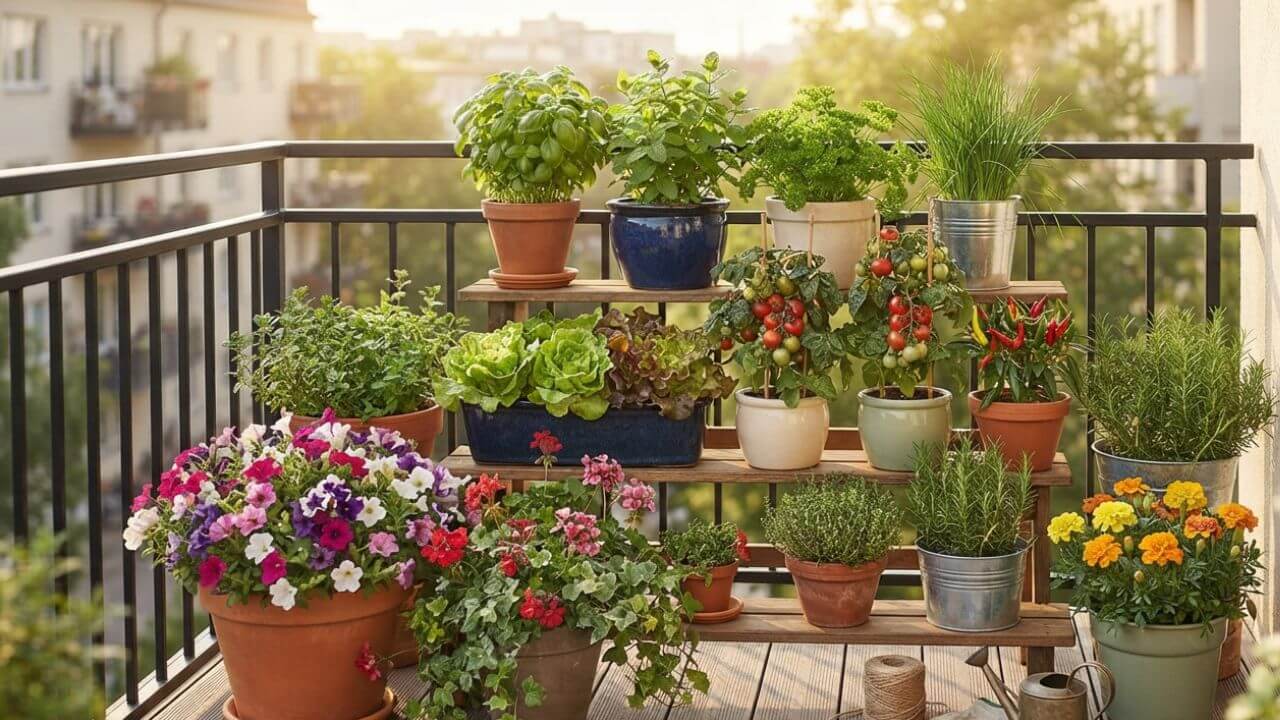
7. Add Tiered Shelving
Tiered shelves increase production without reducing usable living space.
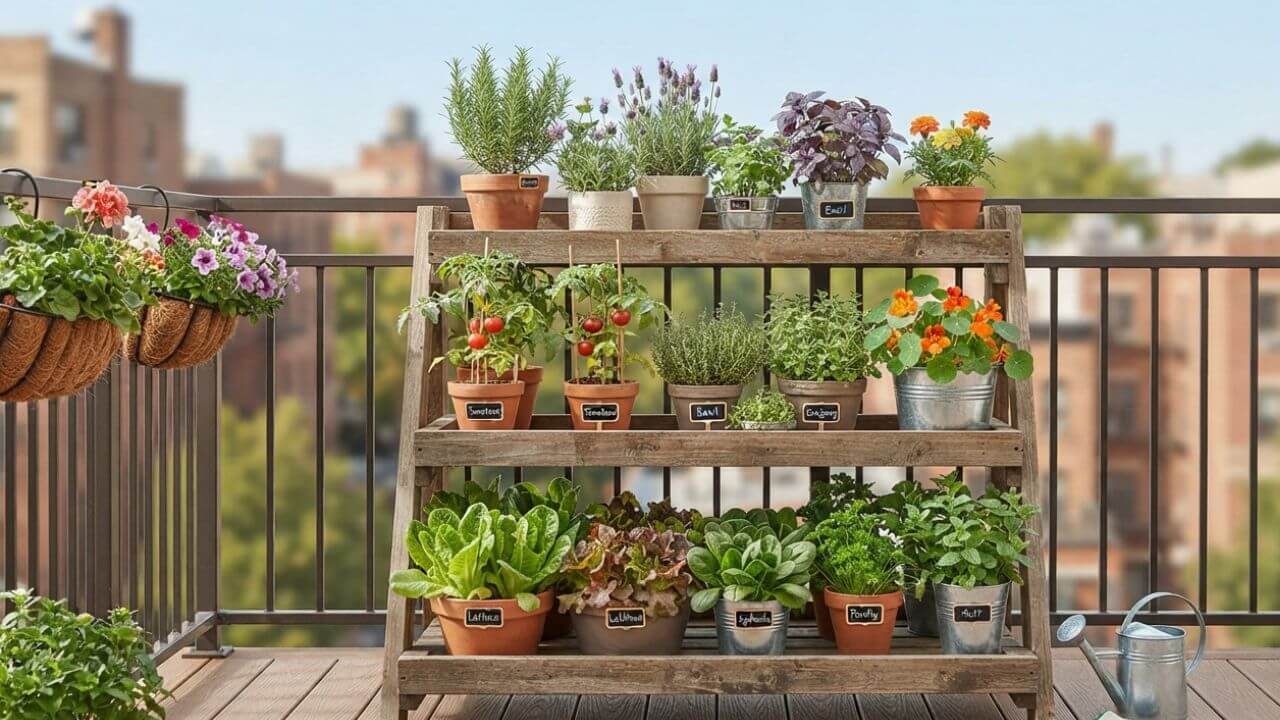
A simple three-tier plant stand can hold more than ten containers while occupying less than four square feet. Shelves also help organize plants according to their sunlight needs, with sun-loving plants on the top and shade-tolerant varieties below.
In my experience, tiered shelving provides one of the biggest improvements for small balconies.
8. Choose Multi-Purpose Containers
Furniture that serves multiple purposes makes balconies feel larger.
Examples include:
- Benches with built-in planters
- Storage boxes with planting sections
- Planters with trellises
- Raised beds with seating edges
These solutions maximize productivity while maintaining a clean and open appearance.
Balcony Container Gardening Tips
Containers directly affect plant health, watering needs, and maintenance requirements.
9. Choose Larger Pots
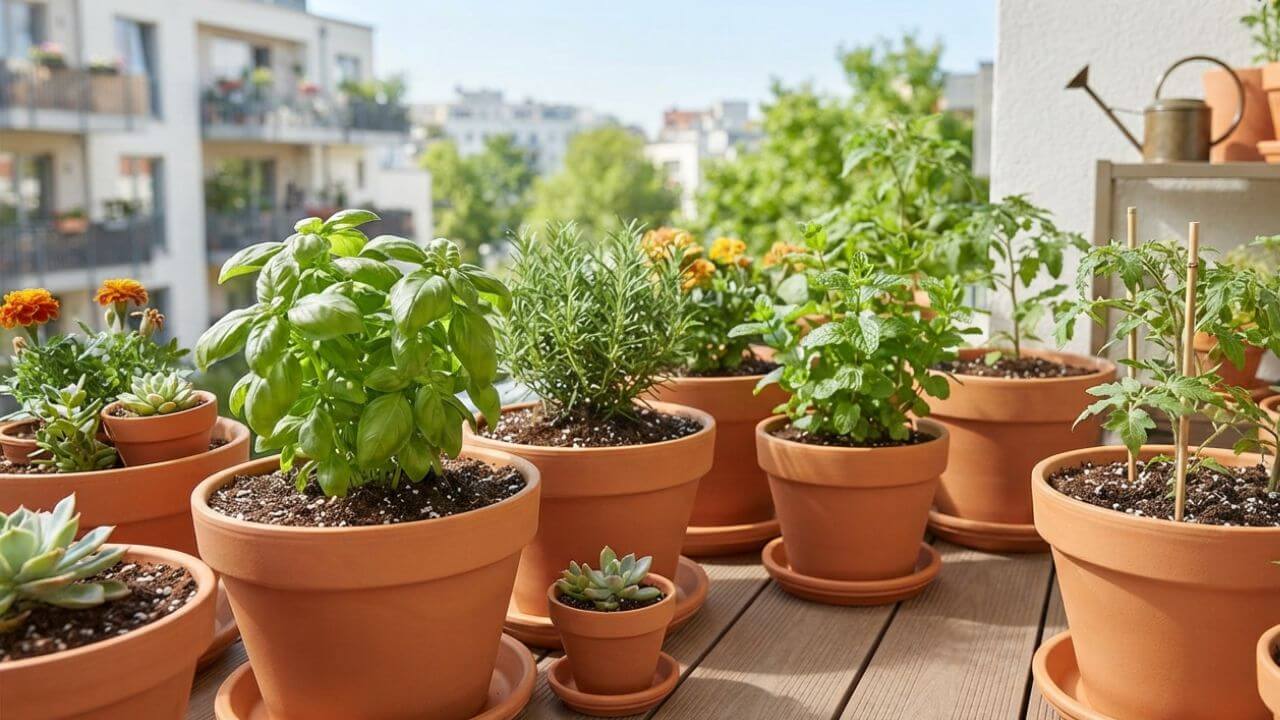
Larger containers hold moisture longer and create more stable temperatures for roots. Small containers may require watering twice daily during summer heat.
I recommend choosing the largest container your space comfortably allows. Larger pots also support stronger root systems and healthier plants.
10. Always Use Drainage Holes
Drainage holes are essential for healthy roots.
Without proper drainage, water accumulates in the bottom of containers and creates ideal conditions for root rot and fungal disease.
If you fall in love with a decorative container that lacks drainage holes, drill holes before planting or use it as an outer decorative pot.
11. Use Lightweight Potting Mix
Garden soil performs poorly in containers because it becomes compacted and restricts root growth.
Quality potting mix provides:
- Better drainage
- Improved airflow
- Easier root development
- Reduced soil compaction
Adding perlite or compost can improve performance even further.
12. Group Plants by Water Needs
Grouping plants with similar moisture requirements simplifies maintenance and prevents watering mistakes.
Good combinations include:
Higher moisture needs:
- Basil
- Parsley
- Lettuce
Lower moisture needs:
- Rosemary
- Thyme
- Oregano
This strategy saves time and improves plant health.
Balcony Watering Tips
Watering mistakes kill more balcony plants than pests or diseases.
13. Water Early in the Morning
Morning watering reduces evaporation and allows plants to prepare for afternoon heat.
Wet leaves also dry faster in the morning, reducing fungal problems.
14. Check Soil Before Watering
Never water based solely on the calendar.
Insert your finger into the top inch of soil and water only when it feels dry. This simple habit prevents both overwatering and underwatering.
15. Reduce Summer Evaporation
Containers lose moisture quickly during hot weather.
Ways to reduce evaporation include:
- Applying mulch
- Using larger pots
- Grouping containers together
- Providing afternoon shade
These small adjustments can reduce watering frequency significantly.
16. Consider Self-Watering Containers
Self-watering containers provide a reservoir beneath the soil surface that supplies moisture gradually to roots.
They work particularly well for herbs, tomatoes, and leafy greens. They are also extremely helpful during vacations and summer heat waves.
Best Plants for Balcony Gardens
Some plants naturally adapt to containers better than others.
| Type | Recommended Plants |
| Herbs | Basil, mint, parsley, chives |
| Vegetables | Lettuce, peppers, cherry tomatoes |
| Flowers | Marigolds, petunias, geraniums |
These remain some of the best plants for balcony gardens because they produce reliable results in limited spaces and container environments.
Apartment Balcony Garden Tips
Apartment balconies create unique growing conditions that require slightly different strategies.
17. Protect Plants from Wind
Heavy containers and grouped pots improve stability during storms and strong winds.
Tall plants may also benefit from stakes or small supports.
18. Use Reflected Heat Wisely
Concrete walls and windows reflect heat back toward plants.
Peppers, tomatoes, and basil often benefit from this extra warmth, while lettuce and spinach may require protection during hot afternoons.
19. Keep Walkways Open
A crowded balcony becomes difficult to maintain and less enjoyable to use.
Leave enough room for:
- Watering
- Harvesting
- Cleaning
- Seating
A comfortable garden gets more attention and better long-term care.
Vertical Balcony Garden Ideas
Vertical gardening can double or even triple production in small spaces.
Popular options include:
- Wall planters
- Pocket gardens
- Ladder shelves
- Hanging baskets
- Stackable containers
In my experience, ladder shelves provide one of the best balances between appearance, accessibility, and productivity because they allow each plant to receive different amounts of sunlight.
Balcony Plant Care Tips
Consistent care matters more than complicated routines.
20. Fertilize Regularly
Container plants use nutrients much faster than plants growing in the ground.
Feed herbs, flowers, and vegetables every two to four weeks during active growth using a balanced fertilizer designed for container gardens.
21. Inspect Plants Weekly
A quick weekly inspection helps catch small problems before they become major issues.
Check for:
- Yellow leaves
- Pests
- Dry soil
- Damaged stems
- Discolored foliage
Five minutes each week can prevent many of the most common balcony gardening problems and keep plants productive throughout the season
Balcony Garden Maintenance Tips by Season
Every season requires different tasks.
Spring
- Refresh soil
- Plant annuals
- Apply fertilizer
Summer
- Monitor moisture
- Provide shade during extreme heat
Fall
- Harvest remaining vegetables
- Remove dead plants
Winter
- Protect tender plants
- Store unused containers
Balcony Gardening Mistakes to Avoid
The most common mistakes include:
- Overwatering
- Ignoring sunlight
- Choosing oversized plants
- Using containers without drainage
- Overcrowding the balcony
Avoiding these mistakes improves success dramatically.
Sustainable Balcony Gardening Tips
Sustainable practices reduce waste and save money.
Good options include:
- Reusing containers
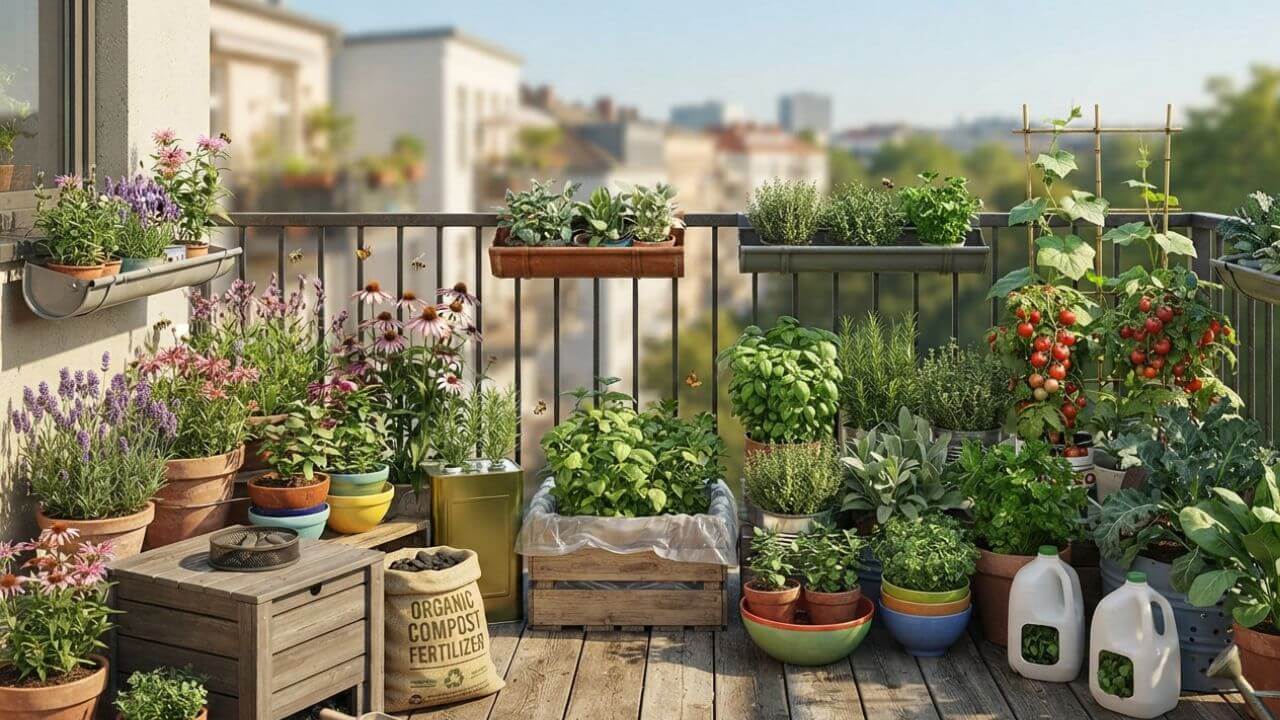
- Composting kitchen scraps
- Collecting rainwater where allowed
- Growing native flowers
- Using organic fertilizers
These methods support pollinators and improve long-term soil health.
Frequently Asked Questions
What are the easiest plants for balcony gardens?
Basil, mint, lettuce, marigolds, and cherry tomatoes are excellent beginner choices.
How often should balcony plants be watered?
Most containers need water when the top inch of soil feels dry.
Can vegetables grow successfully on balconies?
Yes. Peppers, tomatoes, lettuce, and herbs perform very well in containers.
What is the biggest balcony gardening mistake?
Overwatering remains the most common problem for beginners.
Are vertical gardens worth it?
Yes. They maximize production while preserving valuable floor space.
Conclusion
Successful balcony gardening depends more on planning than square footage. The right containers, better watering habits, and smart use of vertical space can transform even a tiny balcony into a productive garden.
Start with a few reliable plants, learn how your balcony behaves throughout the day, and expand slowly. Small improvements each season quickly lead to bigger harvests and healthier plants.

I enjoy sharing simple gardening ideas, lawn care tips, and honest product reviews that help make outdoor work easier. From home gardening guides to helpful tools and lawn care advice, I write easy-to-follow content to help readers create a healthier and better-looking outdoor space without wasting time or money.