
As an Amazon Associate, I earn from qualifying purchases.
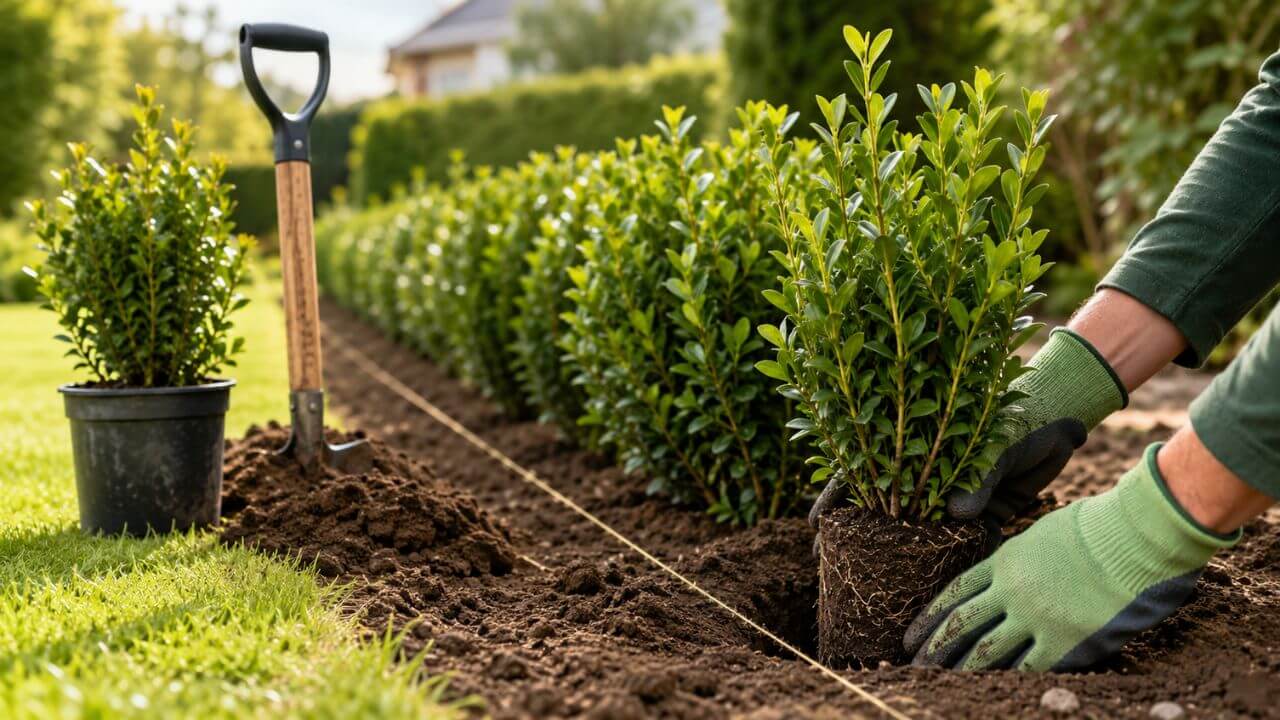
To plant a hedge, choose plants suited to your climate, prepare a wide planting area, space plants according to mature size, and plant them at the correct depth. Water deeply after planting and maintain steady moisture while roots establish.
How to plant a hedge starts with choosing plants that match your climate, soil, and sunlight. The planting method also matters because poor spacing or planting depth can cause problems later. A new hedge needs enough room for root development, steady moisture, and good drainage. Whether you want backyard privacy, a property border, or a simple garden screen, careful planting gives your hedge a much better start.
1. Decide What You Want the Hedge to Do
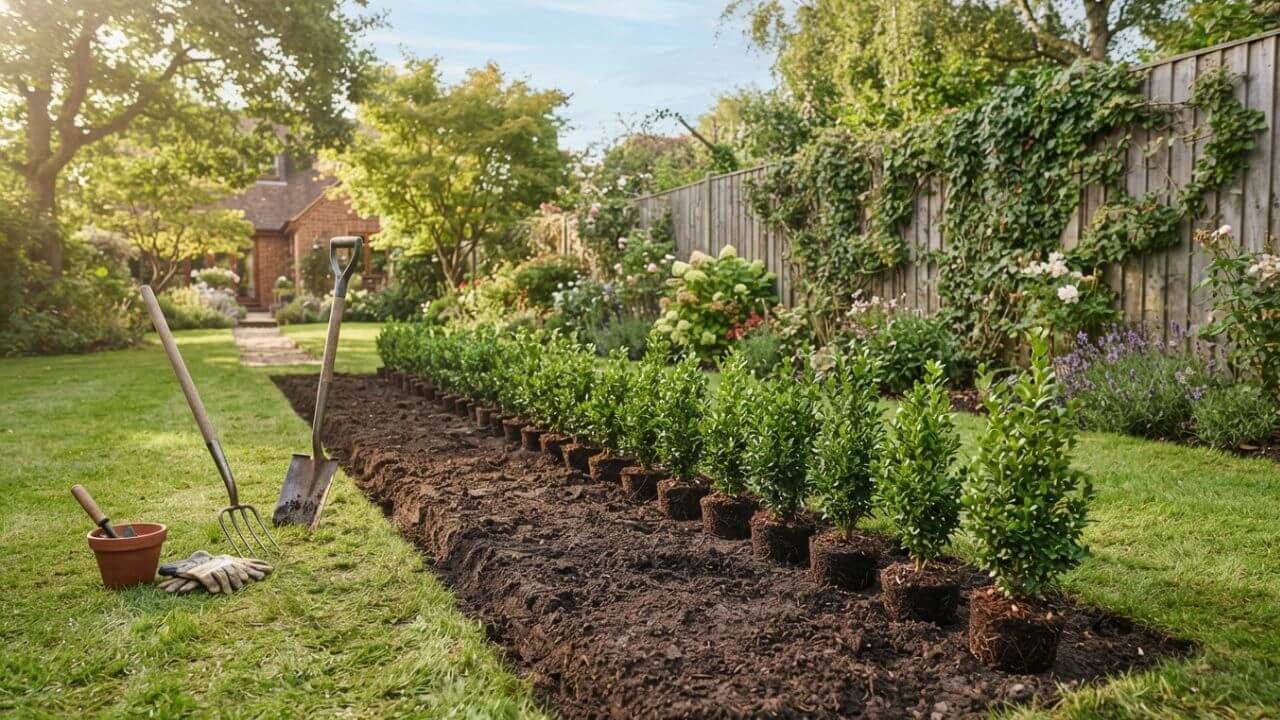
Before buying plants, decide why you want the hedge. Your goal affects the plant type, spacing, mature height, and maintenance you will need.
A privacy hedge needs plants that can reach the desired height and produce dense foliage. A low garden border needs shorter plants that respond well to regular shaping.
Think about these questions:
- Do you need privacy all year?
- How tall should the hedge become?
- How wide can it grow?
- Is the site sunny or shady?
- How much pruning can you handle?
- Does your area have hot summers or cold winters?
- Do you need a drought-tolerant plant?
For year-round screening, evergreen hedge plants can be useful because they keep their foliage in winter. Deciduous shrubs can work well if seasonal privacy is acceptable.
Do not choose a plant only because it is labeled “fast growing.” A fast-growing shrub that becomes too large for your yard can create more work later.
2. Choose Hedge Plants That Fit Your Location
The best hedge plant is one that can grow well in the conditions you already have. Start by checking your USDA hardiness zone and the plant’s recommended growing conditions.
Sunlight is also important. Some hedge plants for full sun need several hours of direct light each day. Others tolerate partial shade and may perform better under trees or beside buildings.
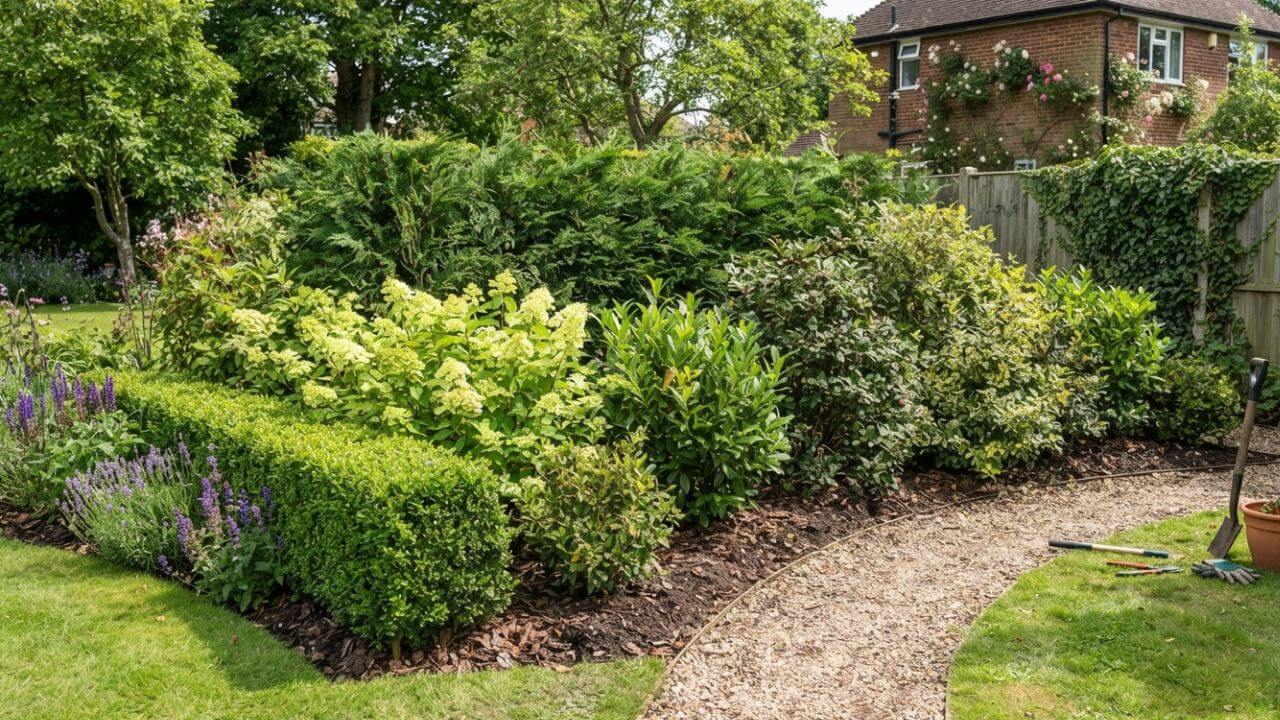
Soil and drainage matter too. A plant that prefers dry, well-drained soil may struggle in a low area that stays wet after rain.
Some commonly used hedge plants include:
| Plant type | Good use | Important consideration |
|---|---|---|
| Arborvitae | Tall evergreen privacy | Needs enough room |
| Holly | Evergreen screening | Check variety and climate |
| Privet | Dense hedge | Some species can be invasive |
| Boxwood | Formal low hedge | Slower growth |
| Yew | Dense evergreen hedge | Toxic if eaten |
Plant choices vary by region. Check local extension recommendations before purchasing large numbers of plants. This is especially important for potentially invasive species.
3. Choose the Best Time to Plant a Hedge
The best time to plant a hedge depends on the species and your climate. For many parts of the United States, spring and fall offer good planting conditions.
Fall can work well because cooler air reduces stress while soil can remain warm enough for root growth. Spring also gives plants time to establish before winter.
Avoid planting during extreme heat, frozen ground, or severe drought. Newly planted shrubs have limited roots and can lose water faster than they can replace it.
If you live in a mild climate, your planting window may be longer. If you live where summers are very hot or winters are severe, timing becomes more important.
A simple rule is to plant when weather is mild and the soil can be worked without becoming muddy or extremely dry.
4. Measure the Hedge Before You Dig
Good planning prevents many hedge problems. Mark exactly where you want the hedge to grow before digging any holes.
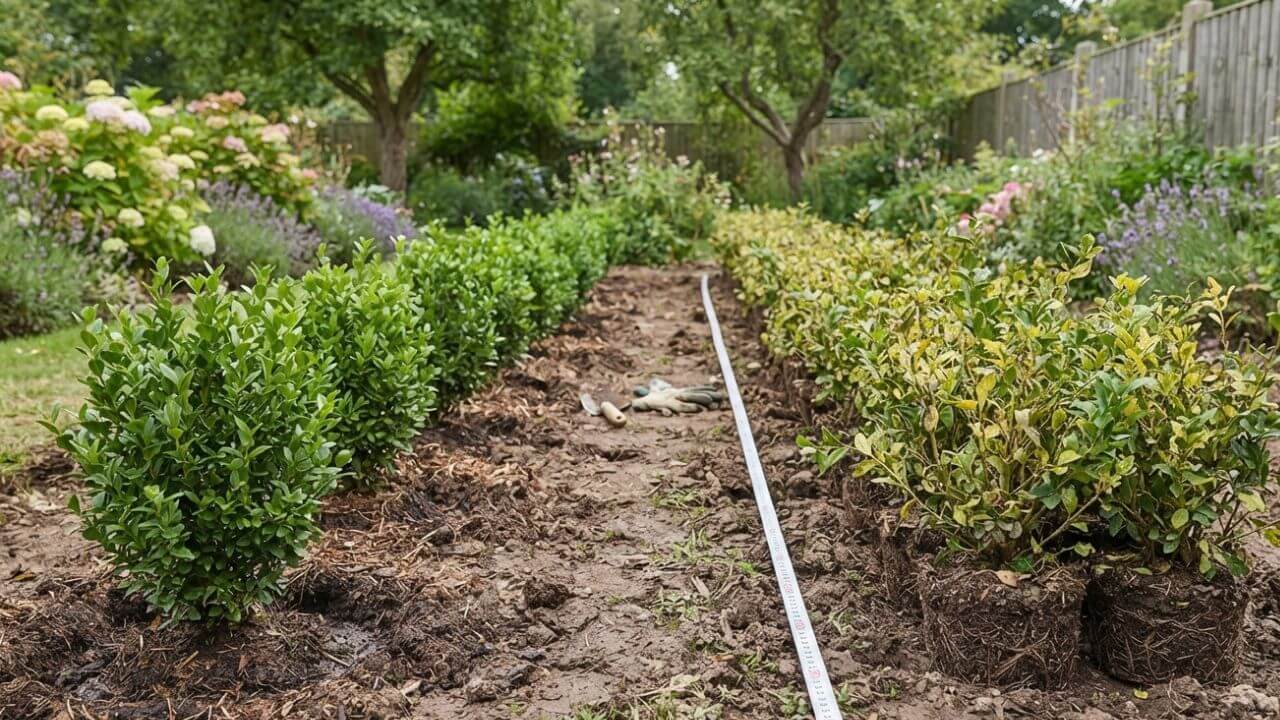
If you want a straight hedge, place stakes at both ends of the planting area. Stretch a string between them. Use this line as your guide while positioning each plant.
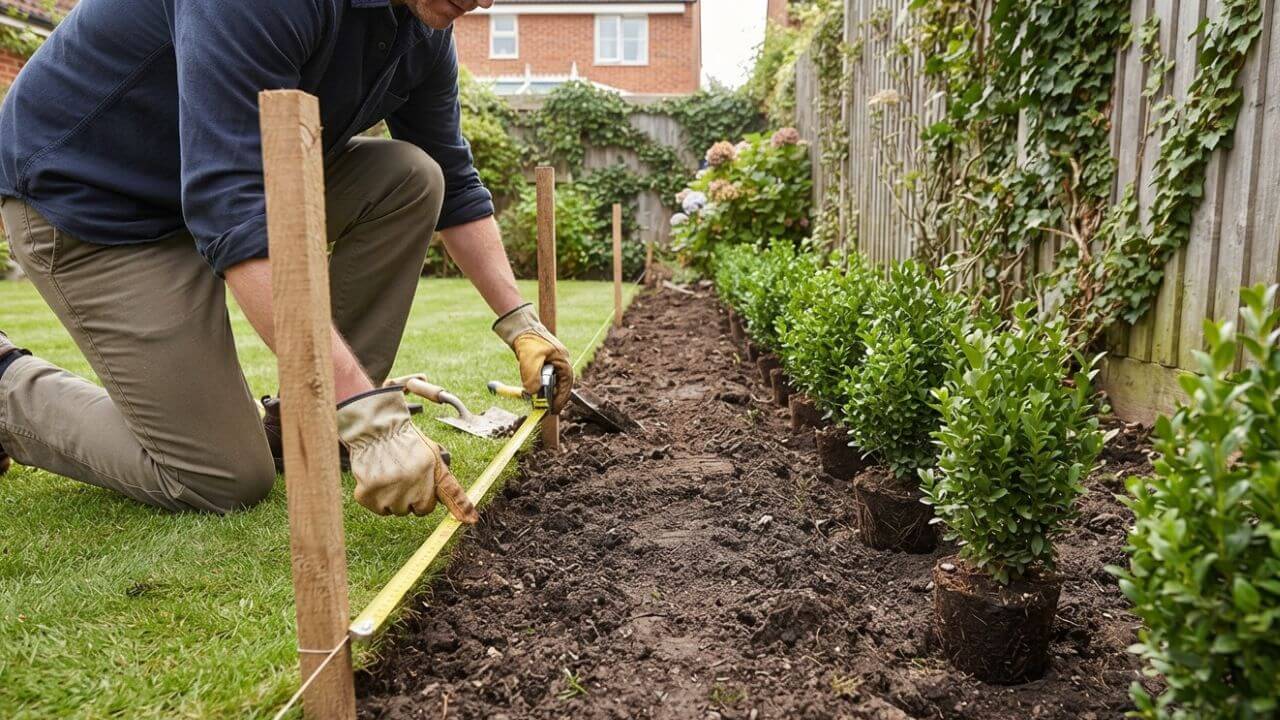
For a hedge along a fence, do not automatically plant directly against the fence. Leave enough space for the plants to reach their mature width and for you to prune the back side.
Also check for underground utilities before digging. In the United States, contact 811 before starting digging work to have underground utility lines marked.
Measure the total planting distance. Then use the plant’s recommended mature spacing to calculate how many plants you need.
5. How Far Apart Should Hedge Plants Be?
How far apart to plant hedge plants depends on the species and the look you want.
A formal privacy hedge usually needs closer spacing than a loose shrub border. However, planting plants extremely close together does not always create a better hedge.
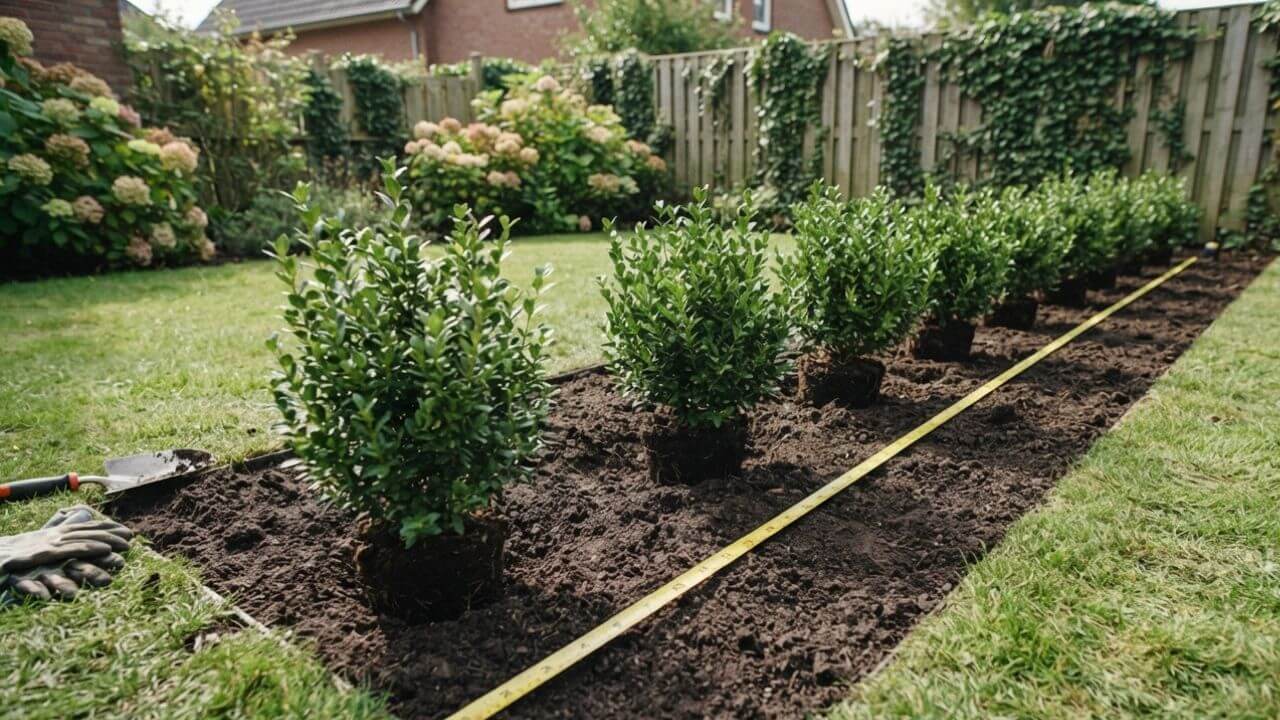
When shrubs mature, crowded roots compete for water and nutrients. Dense foliage can also reduce airflow.
Use the recommended spacing for your specific plant. As a general planning method, some shrubs can be planted around half to two-thirds of their mature width apart for a quicker screen, but this is not a universal rule.
For example, a shrub with a mature width of 6 feet needs more space than one that stays 3 feet wide.
Always check the nursery label or local extension guidance for the exact variety you are planting.
6. Prepare the Soil Before Planting
Good soil preparation for a hedge should focus on drainage, root growth, and the needs of the plant.
Start by removing grass and weeds from the planting strip. Grass can compete with young shrubs for water and nutrients.
Loosen compacted soil across the planting area. If you are planting a long row, preparing a wider continuous bed can encourage roots to spread.

A soil test can tell you if the soil has major nutrient or pH problems. Do not add large amounts of fertilizer simply because you want faster growth.
The best soil for hedge plants varies by species. Many shrubs prefer well-drained soil with enough organic matter to hold moisture without staying saturated.
If your site stays wet for days after rain, solve the drainage problem before planting. Adding fertilizer will not fix waterlogged roots.
7. Dig the Right-Sized Planting Hole
For container-grown shrubs, make the hole about as deep as the root ball and wider than the root ball.
A wide hole gives roots loose soil to move into. The planting hole does not need to be extremely deep.
The top of the root ball should sit level with the surrounding soil. In heavy or poorly drained soil, planting slightly high may help prevent the root ball from sitting in excess water.
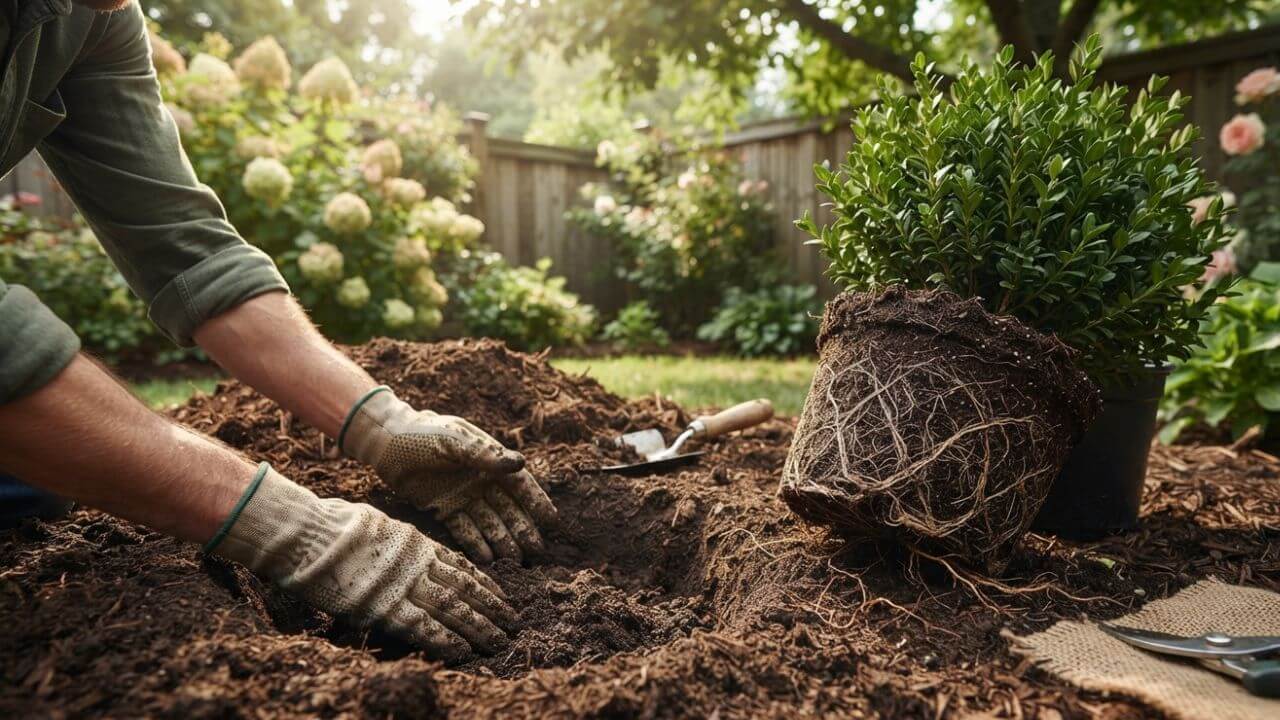
Avoid digging a deep hole and filling it with loose soil. The plant may settle lower than intended after watering.
If the roots circle tightly around the container, gently loosen or correct them according to the plant’s needs. Do not aggressively tear healthy roots.
8. How to Plant Hedge Plants Correctly
Now you can start planting the hedge row.
Place the first plant beside your planting line. Step back and check its position before adding soil. Continue checking the line and spacing as you work.
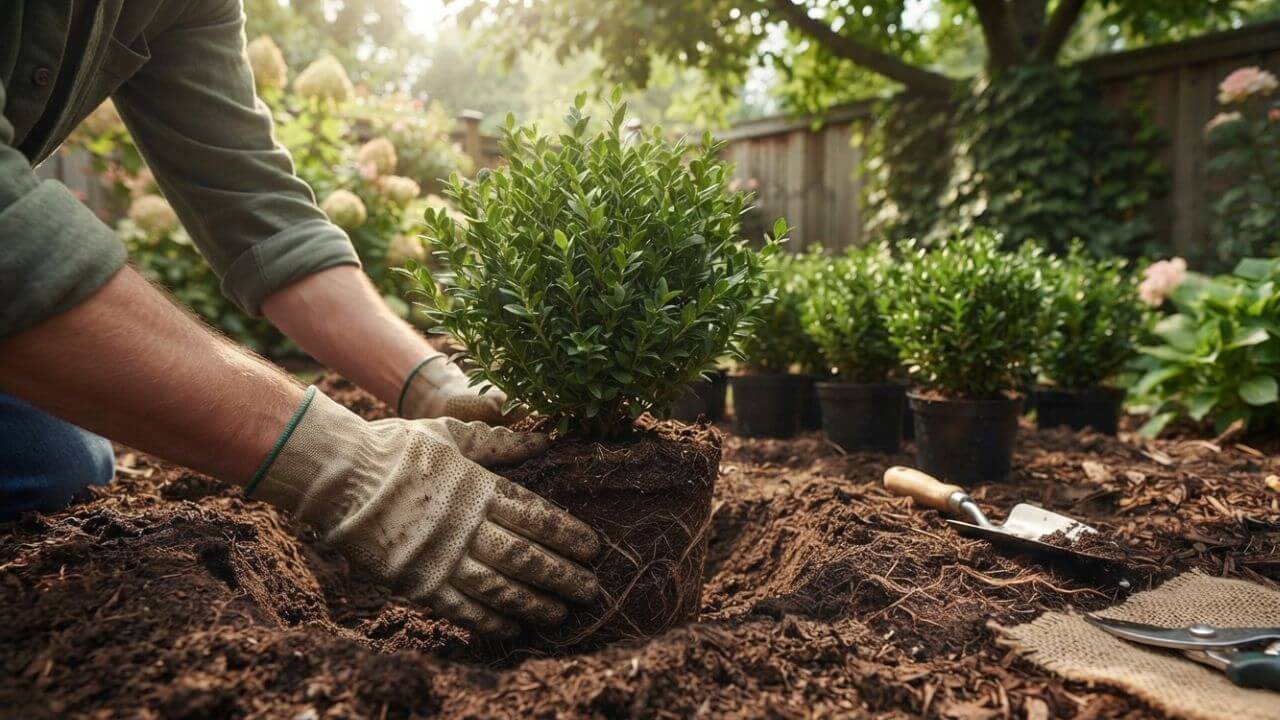
Remove the plant from its container carefully. Do not pull hard on the stem.
Set the root ball into the hole. Check the planting depth before backfilling.
Add the original soil around the root ball. Gently firm the soil with your hands to remove large air pockets. Do not compact it heavily.
Water thoroughly after planting. This settles the soil and gives the roots access to moisture.
Repeat the process for each plant while maintaining consistent spacing.
9. How to Plant a Hedge in a Straight Line
A straight hedge looks much more professional, especially along a driveway, fence, or property boundary.
The easiest method is to use stakes and string. Place a stake at each end of the hedge and stretch the string tightly between them.
For a long hedge, add extra stakes so the line does not sag or move.
Measure the distance between plants instead of estimating by eye. A small spacing error repeated across 20 plants can create a noticeable problem.
For a more natural hedge, you can use a gentle curve instead of a perfectly straight line. Mark the curve with a garden hose before digging.
10. How to Plant a Hedge Along a Fence
How to plant a hedge along a fence depends on the fence location and the mature size of the plants.
Do not plant shrubs so close that mature branches become trapped against the fence. Leave enough room to reach the plants for pruning and inspection.
Think about the mature width. If a shrub eventually becomes 5 feet wide, planting it only a few inches from a fence can create a maintenance problem.
Also consider who owns the fence and property line. Keep the hedge on your side of the property boundary unless you have a clear agreement with your neighbor.
Check local rules if the hedge will become tall enough to affect visibility near driveways or roads.
11. Water Newly Planted Hedge Plants Properly
How to water newly planted hedges is one of the most important parts of early care.
Water deeply after planting. Then monitor the soil around the root ball and adjust watering based on weather and soil conditions.
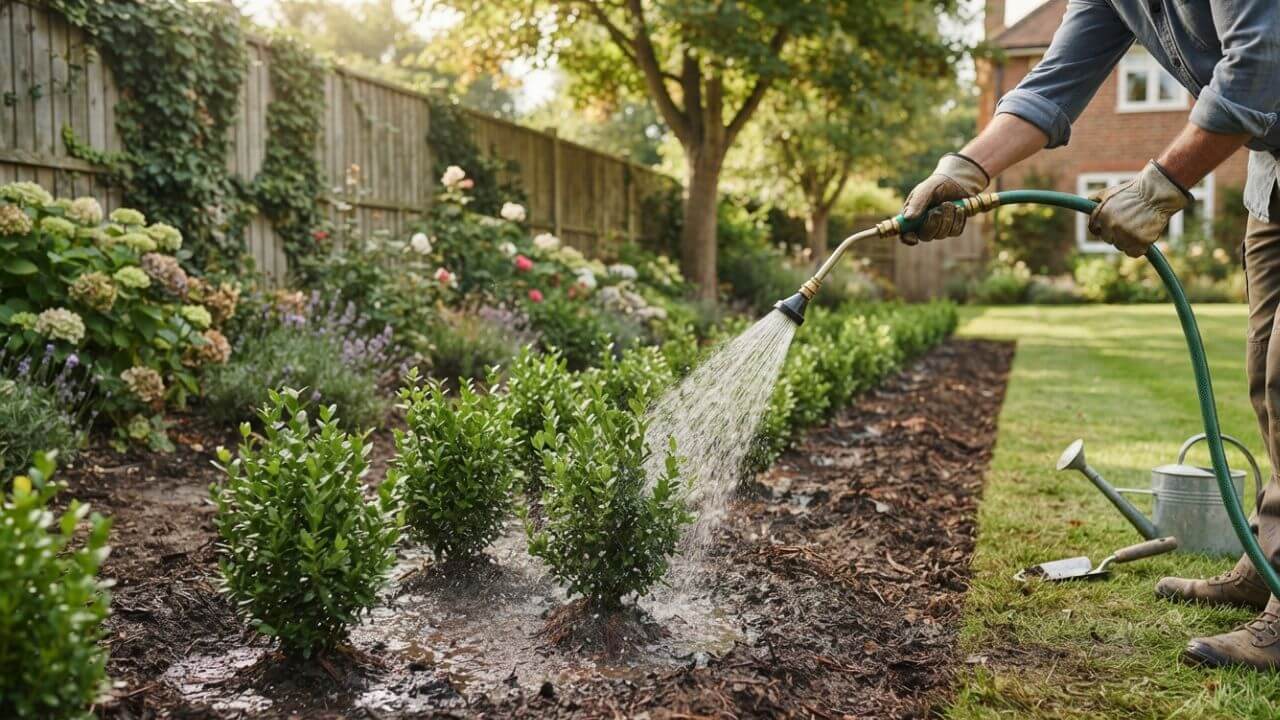
Do not use a fixed schedule without checking the soil. Hot, windy weather can dry plants quickly, while rain can provide enough moisture for several days.
During the establishment period:
- Check soil moisture regularly.
- Water deeply when the root zone starts to dry.
- Increase monitoring during hot weather.
- Reduce watering after heavy rainfall.
- Make sure excess water can drain away.
The goal is consistent moisture, not constantly wet soil.
Overwatering can cause root problems. Underwatering can cause wilting, leaf drop, and poor establishment.
12. Add Mulch Around the New Hedge
Mulch can help reduce moisture loss and weed competition. A 2- to 3-inch layer of organic mulch works well for many landscape shrubs.
Spread mulch over the root zone, but keep it away from the stems. Do not create a thick mound against each plant.
Suitable materials can include:
- Shredded bark
- Wood chips
- Pine bark
- Leaf-based organic mulch
Mulch also helps reduce temperature swings in the soil. As it breaks down, it adds organic matter to the surface.
Do not use mulch as a substitute for proper watering. Young plants still need enough moisture during dry periods.
13. Should You Fertilize a New Hedge?
New plants do not always need fertilizer immediately after planting. Their first priority is establishing roots.
If your soil test shows a nutrient deficiency, use a fertilizer appropriate for the plant and follow the product label.
The best fertilizer for hedge plants depends on the species and soil. A slow-release product may be useful for established landscape plants because it releases nutrients gradually.
Avoid heavy nitrogen applications. Too much fertilizer can damage roots and encourage weak growth.
If your hedge grows well without fertilizer, there may be no reason to add more. Healthy leaves, steady new growth, and good root development are better indicators than trying to maximize growth speed.
14. How to Care for Newly Planted Hedges
New hedge plant care should focus on root establishment rather than forcing rapid top growth.
Keep the planting area free from competing weeds. Inspect the plants regularly for wilting, unusual leaf color, pest damage, and broken branches.
Avoid heavy pruning immediately after planting unless the species requires initial training. Some plants benefit from early pruning to encourage branching, while others need time to recover from transplanting.
Watch the soil closely during the first growing season. This is when many new hedges fail because the root ball dries out.
A newly planted hedge may look quiet above ground while roots develop below the soil. That does not mean the plant is failing.
15. How to Make a Hedge Grow Thicker
If your goal is a dense hedge, focus on branching rather than height alone.
Once plants are established, appropriate pruning can encourage lateral branches. For many hedge shrubs, trimming the growing tips helps redirect growth into multiple branches.
Do not shear every plant into a narrow wall without checking its natural growth habit. Some shrubs respond better to selective pruning.
Keep the lower part of the hedge slightly wider than the top. This allows more sunlight to reach lower branches and can help prevent a bare base.
Good light, water, spacing, and nutrition also support dense growth.
16. How to Make a Hedge Grow Faster
There is no safe shortcut that makes every hedge grow rapidly. How to make a hedge grow faster starts with reducing stress.
Give plants the light they need. Maintain appropriate soil moisture. Control weeds and avoid root competition.
Choose fast-growing hedge plants if speed matters. But remember that fast-growing plants can require more pruning later.
Do not use excessive fertilizer to force growth. If the plant lacks sunlight or water, extra fertilizer will not solve the underlying problem.
Healthy roots are the foundation of healthy top growth. Give the hedge time to establish before expecting rapid expansion.
17. Evergreen or Deciduous Hedge?
Choosing between evergreen and deciduous plants depends on the purpose of the hedge.
Evergreen hedge plants keep foliage through winter in suitable climates. They are useful when year-round privacy matters.
Deciduous plants lose their leaves during part of the year but can provide flowers, fall color, berries, or wildlife value.
Consider this simple comparison:
| Type | Main benefit | Main drawback |
|---|---|---|
| Evergreen | Year-round foliage | Some need more maintenance |
| Deciduous | Flowers or fall color | Loses leaves |
| Native shrub | Suited to local conditions | Appearance varies |
For a privacy screen, evergreen plants are not automatically the best choice. A well-adapted deciduous hedge may perform better on a difficult site.
18. Common Hedge Planting Mistakes
Avoid these common mistakes when planting a hedge:
Planting too deeply: This can restrict healthy root function and cause moisture problems.
Planting too close: Mature plants may compete for water and become difficult to maintain.
Ignoring drainage: Constantly wet soil can damage roots.
Using too much fertilizer: Extra fertilizer does not guarantee faster growth.
Watering only the surface: Shallow watering can encourage shallow roots.
Ignoring mature size: Small nursery plants can become large landscape shrubs.
Choosing the wrong plant: A plant that does not suit your climate or sunlight may never perform well.
Mulching against stems: Constant moisture around stems can create problems.
Skipping utility checks: Always check for underground utilities before digging.
FAQ
What is the best time to plant a hedge?
Spring or fall can be good planting seasons for many hedge plants. The best timing depends on your local climate, plant species, and weather conditions. Avoid extreme heat, frozen soil, and severe drought.
How far apart should hedge plants be planted?
Spacing depends on the species, mature width, and desired density. Follow the recommended spacing for the specific variety. Do not base spacing only on the current size of nursery plants.
How deep should hedge plants be planted?
Plant the root ball at about the same depth it grew in its container. The top of the root ball should not sit deeply below the surrounding soil.
How often should I water newly planted hedges?
Check the soil around the root ball regularly and water when it starts to dry. Newly planted hedges need more attention during hot, dry, or windy weather.
Should I fertilize a hedge right after planting?
Not always. Healthy new plants can establish without immediate fertilizer. A soil test can show whether nutrients are needed. If you fertilize, use the correct product and follow its label.
Conclusion
Learning how to plant a hedge is easier when you plan the finished hedge before putting the first plant in the ground. Choose plants that match your climate, sunlight, soil, and desired mature size.
Mark the planting line, measure spacing carefully, prepare the soil, and plant each root ball at the correct depth. Water deeply after planting and keep the soil consistently moist while the roots establish.
Then focus on long-term care. Control weeds, use a suitable layer of mulch, avoid unnecessary fertilizer, and prune according to the plant’s growth habit. These simple steps can help turn a row of young shrubs into a healthy, dense hedge that provides privacy, structure, or a clean garden border for years.

I enjoy sharing simple gardening ideas, lawn care tips, and honest product reviews that help make outdoor work easier. From home gardening guides to helpful tools and lawn care advice, I write easy-to-follow content to help readers create a healthier and better-looking outdoor space without wasting time or money.